
Understanding Forestry Mulching Prices and Project Costs
- Mike Walker
- 2 days ago
- 14 min read

When you start looking into forestry mulching, the first question on everyone's mind is always: "What's this going to cost me?" The short answer is that prices typically run from $1,500 to $3,500 per acre or $150 to $300 per hour. But that's just a ballpark.
The final number really depends on the unique challenges your Central Florida property throws at us. Think of it as a combination of machine time, operator skill, and the specific terrain we're tackling.
How Forestry Mulching Prices Are Calculated
Getting a handle on forestry mulching costs means understanding the three main ways contractors price their work. It’s rarely a simple flat fee. Instead, the pricing model is matched to the specific demands of your land—whether it's an hourly rate, a day rate, or a per-acre price.
Each approach is designed for different situations. It’s a lot like choosing between a taxi for a quick trip across town versus renting a car for a long road trip. One is perfect for short, specific jobs, while the other gives you better value over a larger area.
The Three Main Pricing Models
So, what are your options? Most quotes you'll see fall into one of these three buckets:
Hourly Rate: This is the go-to for smaller, more detailed jobs. Think clearing tight spaces around your house, carving out a trail, or navigating a property littered with obstacles. You pay for the exact time the machine is running, which makes it fair for everyone.
Day Rate: A day rate makes sense for those medium-sized projects that will definitely take a full day or more but are tricky to price by the acre because the vegetation is all over the place. It gives you cost predictability without locking you into a huge project price.
Per-Acre Rate: This is the industry standard for bigger, more uniform properties, especially anything five acres or more. If you have a large tract of land with consistent overgrowth, this model almost always offers the best bang for your buck.
This visual guide gives a pretty clear breakdown of the typical price ranges you can expect for each model.
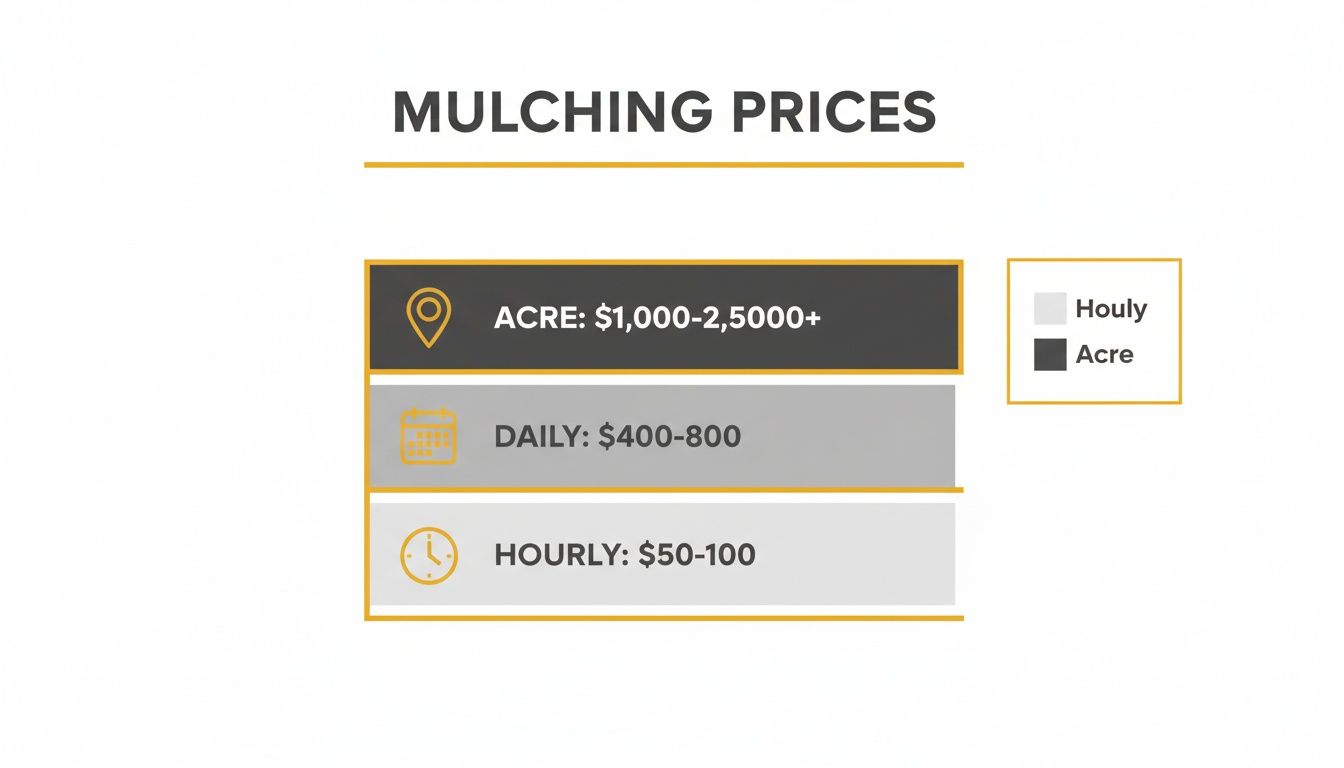
As you can see, the per-acre rates get much more attractive as the property size increases, while hourly rates give you the flexibility needed for smaller, more precise work.
To give you a better idea of how these models compare for projects right here in Central Florida, we've put together a simple table.
Typical Forestry Mulching Pricing Models in Central Florida
Pricing Model | Typical Price Range (Central FL) | Best For |
|---|---|---|
Hourly Rate | $150 - $300 | Small lots (under 2 acres), selective clearing, trail cutting, or properties with many obstacles. |
Daily Rate | $1,200 - $2,000 | Medium projects (2-5 acres) with varied vegetation density or complex terrain. |
Per-Acre Rate | $1,500 - $3,500 | Large, open tracts of land (5+ acres) with relatively uniform brush and tree density. |
Ultimately, these pricing models are all about efficiency. It's no surprise that in busy North American markets, hourly mulching rates average $150-$300, because the speed and effectiveness of this method can save developers a whopping 25-40% on their total site prep budgets compared to traditional land clearing.
If you're new to all this, it might be helpful to check out our guide on what forestry mulching is and how it works to get a feel for the process itself.
Key Factors That Influence Your Final Quote
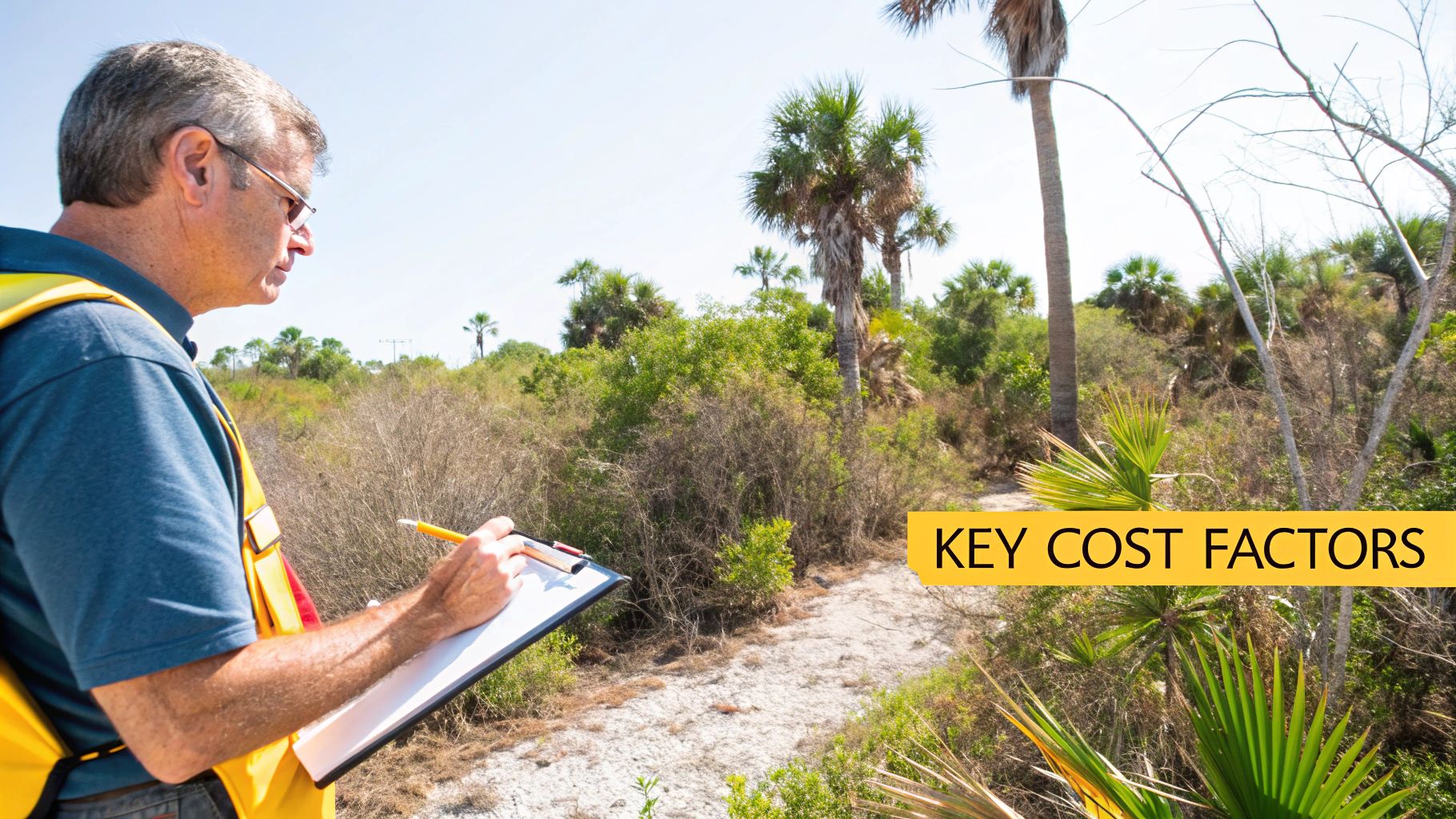
You might be looking at two 5-acre lots and wondering why the quotes to clear them are thousands of dollars apart. The answer isn't in the acreage alone—it's in the unique personality of your land. Forestry mulching prices aren't a one-size-fits-all deal; they're a direct reflection of the time, fuel, and machine wear needed to do the job right.
Think of it this way: a contractor is estimating how many hours their machine will be running on your property. Every hidden stump, thicket of palmettos, or steep incline adds more time to that clock.
Let’s break down the big variables that really move the needle on your final quote.
Vegetation Density and Type
The first thing we look at is what's actually growing out there. A property with some light, grassy overgrowth and a few scattered saplings is a world away from a plot that's been choked out for decades by dense palmettos, thick tangled vines, and mature hardwoods.
The type of vegetation matters just as much. Softwoods like pine are much easier for a mulcher to chew through. Tough hardwoods like oak, on the other hand, demand more horsepower and are much harder on the machine's cutting teeth.
Analogy: Clearing sparse weeds is like running a lawnmower—it's quick and straightforward. But tackling dense, woody underbrush is like hacking your way through a jungle with a machete. It’s slow, tough work that takes a lot more time and energy.
Terrain and Accessibility
The lay of the land itself plays a huge role. A flat, dry, wide-open field is the dream scenario, letting the mulcher run at full tilt. But here in Central Florida, we know properties often come with their own unique set of challenges.
These are the kinds of things that can slow the work down and bump up your forestry mulching prices:
Steep Slopes or Hills: Operating heavy machinery on an incline isn't just slow, it requires a ton of skill and caution.
Wet or Swampy Areas: Soft, mucky ground is a mulcher's enemy. If the machine can't get traction, it can get stuck, and we sometimes have to bring in specialized low-ground-pressure equipment.
Rocky Soil or Debris: Hidden rocks, old stumps, or buried construction junk can snap a mulcher's teeth in an instant, leading to costly downtime for repairs.
Limited Access: If we can't easily get the equipment onto your property because of narrow gates, tight turns, or no clear entry point, just getting started becomes a job in itself.
Desired Finish and Project Scope
What do you want the place to look like when we're done? The level of detail you're after is a major factor in the final cost. A quick "once-over" to knock down the brush is a lot faster—and cheaper—than creating a fine, park-like finish.
It really comes down to two different approaches:
Rough Cut: This is usually a single pass that shreds the vegetation and leaves a coarser layer of mulch. It's perfect for creating fire breaks or just taking back an overgrown field.
Fine Finish: This takes more finesse. We'll make multiple passes, grinding the material into smaller, finer pieces to create a smooth, manicured look that's ready for a homesite or landscaping.
The overall size of your property also influences the pricing model. While a bigger project obviously has a higher total cost, the per-acre rate often goes down. That's because we gain a lot of efficiency on larger jobs. Knowing the different types of land clearing mulchers and their capabilities also helps you understand how the right machine affects the final product. When you keep these key factors in mind, you'll have a much better idea of what to expect and can have a more productive conversation with your contractor.
Real-World Forestry Mulching Cost Examples
Talking about pricing factors is one thing, but seeing how they play out on actual properties here in Central Florida is what really makes it click. This is where abstract numbers turn into real-world project budgets.
To connect the dots, let's walk through three common scenarios we see all the time. Each one has its own set of challenges and goals, perfectly illustrating how things like vegetation density, terrain, and the final look you're going for come together to shape the final price tag.
Sample Forestry Mulching Project Estimates
The table below breaks down estimated costs for three typical land clearing projects in Central Florida. It's designed to give you a clearer picture of how the project's scope and complexity directly influence the investment required.
Project Scenario | Property Size & Location | Key Services | Estimated Cost Range |
|---|---|---|---|
Residential Homesite Prep | 1-acre lot in Orange County | Clear dense underbrush, palmettos, and small trees (<6" diameter) for a new home build. | $2,000 – $2,800 |
Agricultural Fence Line | 2-mile x 30ft path in Osceola County | Clear a functional access path through dense, invasive Brazilian pepper trees and vines. | $1,800 – $2,500 |
Selective Commercial Clearing | 5-acre parcel in Volusia County | Clear all undergrowth and small trees while carefully preserving mature hardwoods. | $10,000 – $15,000 |
As you can see, the "per-acre" price isn't a simple calculation. A small, detailed job can cost as much as a larger, more straightforward one because of the machine time and precision required. Let's dig into the details of each scenario.
Scenario 1: The Residential Homesite
Imagine a family in Orange County who just bought a 1-acre lot for their dream home. The catch? It’s completely overgrown with decades of neglected brush, thick palmettos, and a ton of small nuisance trees under 6 inches in diameter. Their goal is simple: clear the entire acre down to a clean, mulch-covered surface so they can start site prep for construction.
The Challenge: The vegetation is incredibly dense, which means the machine has to work harder and longer to process all that material. While access is easy, the lot is right next to other homes, so the operator needs to be meticulous and careful.
The Pricing Model: For a smaller, detailed job like this, an hourly or full-day rate makes the most sense.
The Bottom Line: You’re looking at an estimated cost of $2,000 - $2,800.
This price covers turning that entire acre of jungle into a neat layer of fine mulch, which is great for stabilizing the soil and keeping weeds from immediately popping back up.
Scenario 2: The Agricultural Fence Line
Now picture a rancher out in Osceola County. They need to clear a 30-foot-wide path along a 2-mile fence line on their 10-acre property. The whole stretch is choked out by invasive Brazilian pepper trees and a mess of tangled vines, making it impossible to inspect or repair the fence. The goal here is pure function—get a truck through.
The Challenge: The Brazilian pepper is dense and woody, so it demands a powerful mulcher. Plus, the work is linear, stretching over a long distance instead of a contained square lot.
The Pricing Model: A per-day rate is perfect here. It gives the rancher a fixed cost for a job that will likely take a full day, maybe a little more.
The Bottom Line: The estimated cost lands between $1,800 - $2,500.
For landowners in Seminole or Lake counties, tackling invasive species this way is a smart investment. Mulching costs 30-50% less per acre than traditional excavation and enriches the soil by recycling organic matter, completely avoiding the $5,000-$20,000 haul-off fees common with debris removal. You can explore more on these service market insights from datainsightsmarket.com.
Scenario 3: The Developer's Parcel
Finally, let’s look at a developer in Volusia County getting a 5-acre parcel ready for a new commercial project. The land is a mix of thick underbrush and scattered mature pines and oaks. The objective is to clear out all the undergrowth and small trees but—and this is key—leave the big, valuable hardwoods standing for the final landscape design.
The Challenge: This is a selective clearing job on a larger scale. The operator has to be a real pro, skillfully maneuvering a massive machine around dozens of "keeper" trees without nicking their trunks or damaging their critical root systems.
The Pricing Model: Even with the selective clearing requirements, a per-acre rate is the most efficient way to price a project of this size.
The Bottom Line: The total estimate is $10,000 - $15,000, which breaks down to about $2,000 - $3,000 per acre.
What About Other Land Clearing Costs?
Your forestry mulching quote is going to cover the main event: turning all that overgrown brush and small trees into a clean, manageable layer of mulch. But sometimes, a property has needs that go beyond what the mulcher can tackle on its own. It's smart to know about these potential "à la carte" services ahead of time so you can build an accurate budget and avoid any surprises.
Think of it like getting your car detailed. The standard package gets the inside and outside looking great. But if you've got deep scratches that need paint correction or want the engine steam-cleaned, those are add-ons. It’s the exact same idea in land clearing. Specialized tasks demand different equipment and extra time, and that can change your total investment.
Services That Are Often Billed Separately
When you get a quote, it's a good idea to ask exactly what's included and what isn't. Some jobs are almost always quoted as separate line items because they just aren't part of a typical forestry mulching job. Be ready to talk through these common additions with your contractor.
These services usually include:
Oversized Stump Grinding: A mulcher can make short work of small stumps, but anything over 8-10 inches in diameter is a different beast. For those, you need a dedicated stump grinder—a specific machine that's brought in just to obliterate those big, stubborn stumps well below ground level.
Hauling Large Logs and Debris: Forestry mulching is designed to leave all the organic material on-site, which is great for the soil. But what if you have huge logs from old fallen trees, or you just want a perfectly clean slate with no large wood chunks left behind? Hauling that material away is an extra service.
Herbicide Application: To keep aggressive, unwanted plants like Brazilian pepper from staging a comeback, a targeted herbicide treatment might be necessary. This is a critical step for long-term control, but it's a separate chemical application process that happens after the clearing is done.
Why Are These Services Extra?
These aren't just small add-ons; they often require completely different machinery, specialized operators, and their own disposal or treatment plans. A stump grinder is not a mulcher, and hauling away heavy logs requires a grapple truck and a big dump trailer.
It really comes down to using the right tool for the job. A mulcher is a high-volume machine built for shredding brush, not for surgical stump removal or hauling logs. Separating these costs means you only pay for the specific services your property actually needs.
For example, not every project even needs stump grinding. If you're just cutting a firebreak through the woods, leaving larger stumps might be totally fine. By itemizing these services, contractors can give you a transparent, customized quote that matches your goals.
If you're weighing different clearing methods, our detailed guide on land clearing costs per acre can give you a wider view. The key is to discuss these potential add-ons upfront so your final quote truly reflects the full scope of work.
The Long-Term Value of Professional Mulching
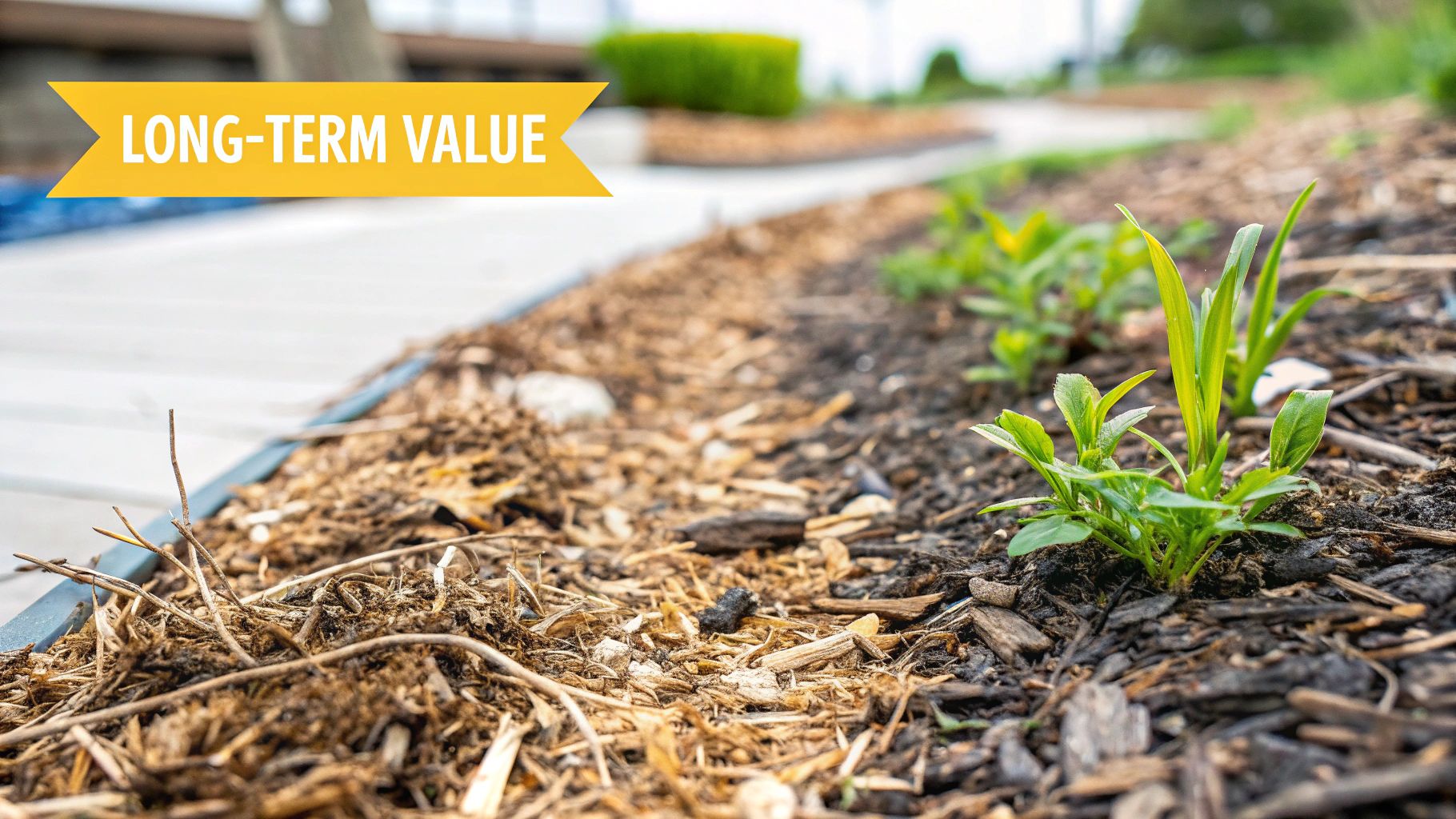
When you’re looking at quotes, it's easy to get fixated on the initial price tag. But experienced property owners know that forestry mulching isn't just an expense—it's a smart investment in your land's future health, usability, and bottom line.
Think of it this way: you’re not just clearing land. You're setting the stage for long-term benefits that cheaper, more destructive methods can never offer.
One of the biggest payoffs is the natural, protective layer of mulch left behind. This isn't just for looks. In a place like Florida, where we get those intense downpours, that organic blanket shields your soil from erosion, keeping valuable nutrients right where they belong.
Enhancing Soil Health and Reducing Future Work
Instead of paying to haul away all that valuable organic material, mulching puts it right back into the ground. As the wood chips and shredded vegetation break down, they slowly release nutrients, enriching the topsoil and improving its ability to hold moisture.
This natural fertilization process creates a much healthier foundation for whatever you plan to do next, whether it’s landscaping, planting, or just letting native grasses take hold.
Even better, that fresh layer of mulch is a fantastic natural weed barrier. By blocking sunlight from reaching the soil, it dramatically cuts down on the regrowth of pesky invasive brush and weeds. This single benefit can save you a fortune in time and money you would have otherwise spent on constant mowing or herbicide treatments.
Forestry mulching transforms a land-clearing expense into a long-term investment. By improving soil health, preventing erosion, and suppressing weeds, you reduce future costs and enhance your property's natural ecosystem.
Speed, Efficiency, and Property Value
For contractors and developers, we all know that time is money. Forestry mulching is a game-changer for project timelines. A site can be made build-ready 3-5 times quicker than with old-school methods like bulldozing. Faster prep means you can start building sooner and see a return on your investment that much faster.
If you’re a landowner in Central Florida, maybe in a county like Brevard or Osceola with an overgrown lot, the advantage is just as clear. You're turning a tangled mess into nutrient-rich ground cover in one simple, efficient step.
Ultimately, a clean, usable, and well-maintained property is a more valuable one. Making the choice to professionally mulch your land boosts its curb appeal and functionality, directly contributing to increasing property value. It shows you’re a responsible steward of your land—a decision that pays you back in both environmental health and financial returns for years to come.
How to Get a Reliable Forestry Mulching Quote
Figuring out the quoting process for forestry mulching is the key to avoiding headaches and making sure you hire the right crew for the job. Getting a solid estimate is about more than just the final number; it’s about establishing trust, clarity, and clear expectations right from the very beginning.
To get the most accurate forestry mulching prices, you have to give contractors a clear picture of what they’re walking into. Think of yourself as the director of your own land-clearing movie. The more details you provide upfront, the more precise their quote will be, which means fewer surprises down the road.
Prepare Your Property Information
Before you pick up the phone, do a little homework and pull together some key details about your property. This prep work makes the entire quoting process go smoother for everyone involved.
Define Your Goals: What’s the endgame here? Are you clearing a spot for a new home, cutting in a firebreak to protect your property, or just trying to take back a pasture from the overgrowth? Be specific about what you want the finished product to look like.
Know Your Acreage: You need a solid estimate of the total area you want cleared. If you're not sure, you can use a free online mapping tool to draw out the boundaries and get a measurement.
Take Photos and Videos: A picture really is worth a thousand words in this business. Snap some clear photos and maybe a short video showing the density of the vegetation, the general size of the trees, and any potential obstacles like steep hills or tight access points.
Ask the Right Questions
When you start talking to contractors, don’t be shy about asking questions. A good, reputable operator will be more than happy to give you straight answers—it’s a sign of their experience and transparency. To get a sense of what makes a provider trustworthy, it can be helpful to see how successful companies like NZ Garden Pros build their business through solid customer reviews.
A detailed, written quote protects both you and the contractor. It should clearly outline the scope of work, what services are included, what costs extra, and the total investment required.
Finally, always insist on getting a comprehensive written estimate. This document should spell out the exact areas to be mulched, confirm that the company carries liability insurance, and clearly list what is not included—things like grinding massive stumps or hauling away debris. Think of this document as your project roadmap; it ensures everyone is on the same page before the first machine ever touches your property.
A Few Final Questions
To wrap things up, let's go over some of the most common questions we get from property owners about the whole forestry mulching process and what it costs. Getting these answers straight will give you a solid footing before you start your project.
Is Mulching Cheaper Than Bulldozing?
Yes, it almost always is when you look at the total project cost. The initial quote for bulldozing might look similar, but forestry mulching saves you a ton of money on the back end. You don't have to pay for hauling and dumping all the debris, which can easily add thousands of dollars to a traditional land clearing job.
Mulching is a one-and-done deal, handling everything in a single, efficient pass.
Do I Need a Permit in Central Florida?
This is a big one, and the answer is: it depends. Permit rules can change quite a bit from one county or city to the next, especially if your land has protected wetlands or specific types of trees.
Your best bet is always to check directly with your local planning or environmental protection department. A good, reputable contractor will know the local rules and can usually help you navigate that process.
How Long Does It Take to Mulch One Acre?
On a typical acre with medium-density brush, you can expect the job to take somewhere between four to eight hours. But that's just an average—the reality can swing wildly depending on the terrain and just how thick the growth is.
For instance, a mostly open field with some light brush might be done in a couple of hours. On the flip side, an acre completely choked out by dense palmettos and stubborn hardwoods could easily take a full day or more to clear right.
Can You Mulch on Wet Florida Soil?
An experienced crew can definitely work on damp or soft ground. We use specialized low-ground-pressure machines that are designed to float over the soil and minimize disturbance.
However, if the ground is completely saturated or swampy, we'll likely have to wait for things to dry out a bit. Pushing it in those conditions isn't safe for the equipment and can do more harm than good to your land.
Ready to see what your overgrown property could become? The team at Palm State Clear Cut has the right equipment and years of hands-on experience to tackle your Central Florida land clearing project the right way. Get your free, no-obligation quote today!
Comments