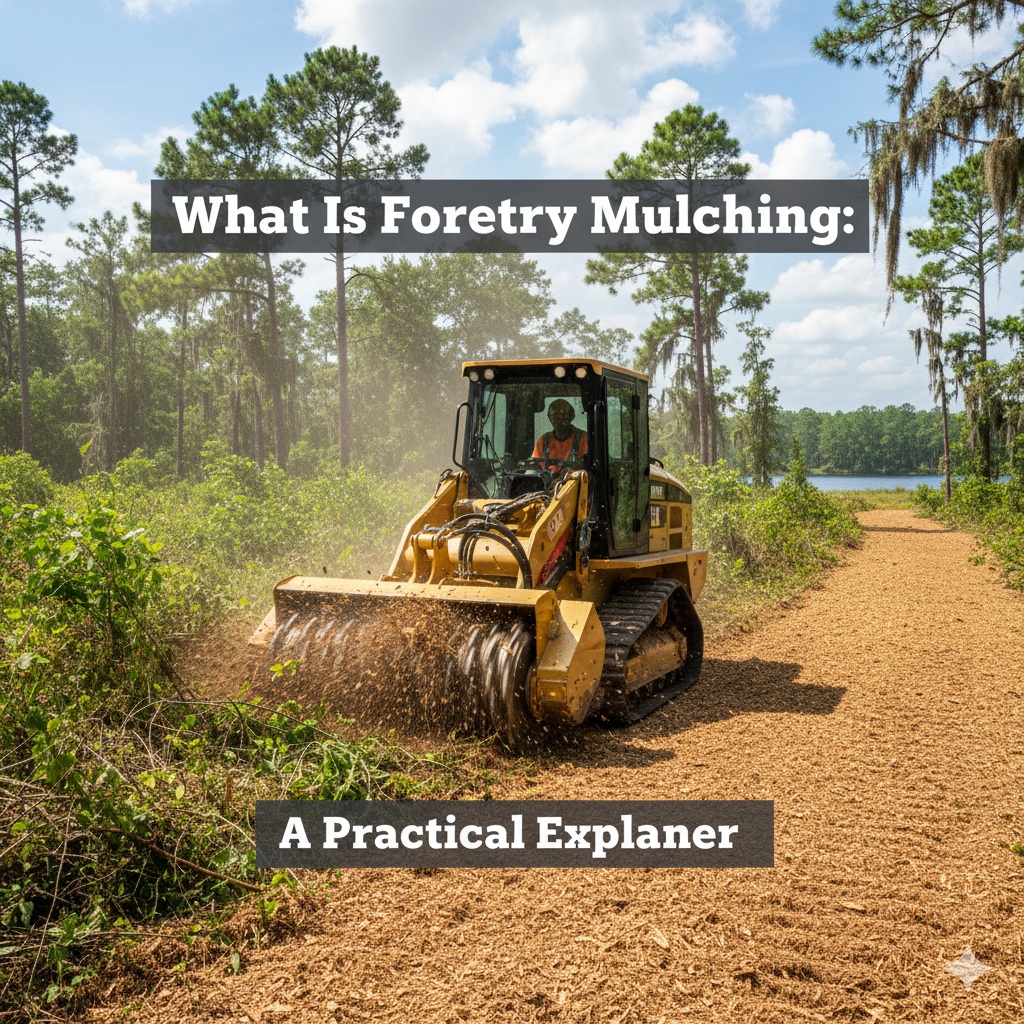
Forestry mulching is one of the smartest and most efficient ways to clear land. It’s a single-pass process where one machine does all the work—cutting, grinding, and shredding trees, stumps, and thick brush right where they stand. All that overgrowth is instantly turned into a natural, protective layer of mulch.
The Ultimate Land Clearing Solution
Think of it like a beast of a lawn mower, but built for a wild forest. That’s the easiest way to understand what forestry mulching is. Instead of juggling a whole crew and multiple pieces of heavy equipment for cutting, hauling, and getting rid of debris, mulching uses just one specialized machine to handle everything on-site.
This machine—usually a powerful skid steer or a dedicated tracked carrier—is fitted with a heavy-duty mulching head. This attachment is basically a rotating drum armed with incredibly tough steel teeth. As the operator moves through the property, it literally erases overgrown brush and small to medium-sized trees, leaving a nutrient-rich blanket of mulch in its place.
This is a world away from traditional land clearing. The old-school approach often means bringing in bulldozers that scrape away the crucial topsoil, creating massive piles of debris that have to be either burned or hauled off at a huge expense. Forestry mulching skips all that destructive, costly hassle. It’s a much lighter touch, a non-invasive technique that keeps the soil’s structure and integrity intact.
One Machine, One Simple Process
The real beauty of this method is how straightforward and eco-friendly it is. You don’t have to worry about getting separate burn permits or paying steep fees for debris removal. The entire job is self-contained.
The core idea is simple but brilliant: turn the problem (the overgrowth) into the solution (a protective layer of mulch). This doesn’t just clear your land; it immediately starts improving it by stopping erosion and feeding organic matter back into the soil.
This technique is quickly becoming the go-to for modern land management, and for good reason. Its popularity is even reflected in the global market for the machinery itself, which is expected to hit USD 771 million by 2031. This trend shows a major shift toward smarter, more sustainable land clearing methods. You can dig deeper into the industry’s growth and its environmental benefits by checking out market research insights.
The mulch left behind acts as a natural shield. It protects the ground from the harsh Florida sun and heavy rains, and as it slowly breaks down, it enriches the earth underneath.
To give you a clearer picture, here’s a quick breakdown of what makes this process so effective.
Key Aspects Of Forestry Mulching At A Glance
| Aspect | Description |
|---|---|
| Method | A single machine with a mulching head cuts, grinds, and shreds vegetation on-site. |
| Equipment | Typically a skid steer or tracked carrier with a rotating drum attachment and steel teeth. |
| Outcome | Unwanted vegetation is converted into a layer of natural mulch spread across the property. |
| Soil Impact | Minimal disturbance. The topsoil is preserved, and the root structure remains intact. |
| Debris | No piles of debris are left behind, eliminating the need for hauling or burning. |
| Environmental Benefit | The mulch layer prevents soil erosion, retains moisture, and enriches the soil as it decomposes. |
As you can see, forestry mulching is an all-in-one solution that delivers a clean, usable, and healthier piece of land.
How the Forestry Mulching Process Actually Works
Watching a forestry mulcher tear through thick brush can look like a bit of magic, but it’s really a carefully planned process blending brute force with precision. It all starts long before the engine roars to life, with a professional walking your property to get the lay of the land.
During this initial site evaluation, we’re looking at everything—the types of trees and brush we’re dealing with, how dense it is, the slope of the terrain, and what the soil is like. We’re also scouting for any hidden surprises like big rocks or old fence lines. This step is absolutely essential for mapping out the best strategy and, just as importantly, choosing the right machine for the job.
Choosing the Right Tools for the Job
Not all mulchers are built the same, and picking the right one is key to a successful project. If you’re looking to clear out an overgrown lot in a residential neighborhood or selectively thin trees without damaging the keepers, a nimble skid-steer with a mulching head is usually the way to go. Its smaller footprint lets it dance around obstacles with ease.
But for tackling huge tracts of dense woods, you need the big guns. That’s when a dedicated, heavy-duty tracked mulcher comes into play. These are the tanks of the land clearing world, built to handle rough terrain and thick vegetation without breaking a sweat.
The business end of the machine—the cutting head—is just as important. There are two main flavors:
- Carbide Teeth: Think of these as powerful grinders. They are incredibly tough and designed to pulverize dense hardwoods and stand up to rocky soil. It’s all about brute force.
- Knife-Style Blades: These are more like sharp chisels, slicing through softer woods to produce a finer, more uniform layer of mulch. They give the land a cleaner, more finished look.
If you want to dive deeper into the different kinds of machinery, check out this excellent guide to underbrush clearing machines.
The real art is in matching the machine and the cutting head to the specific challenges of your property. Get that right, and you get a job done efficiently, safely, and with a result that truly transforms your land.
The Mulching Process Step by Step
With the right equipment on-site, the operator gets to work. The machine moves methodically through the overgrowth, using the mulching head to grind down trees and brush from the top down.
This top-down method isn’t just for show; it’s a safer, more controlled way to bring down vegetation. It also gives the operator incredible precision, allowing them to take out a mess of invasive Brazilian Pepper trees while leaving a beautiful, mature oak standing just a few feet away completely untouched.
As the machine grinds away, it chops everything into small, manageable pieces and spreads them evenly over the ground.
This simple graphic shows you exactly what’s happening—turning a tangled mess into a clean, usable space.
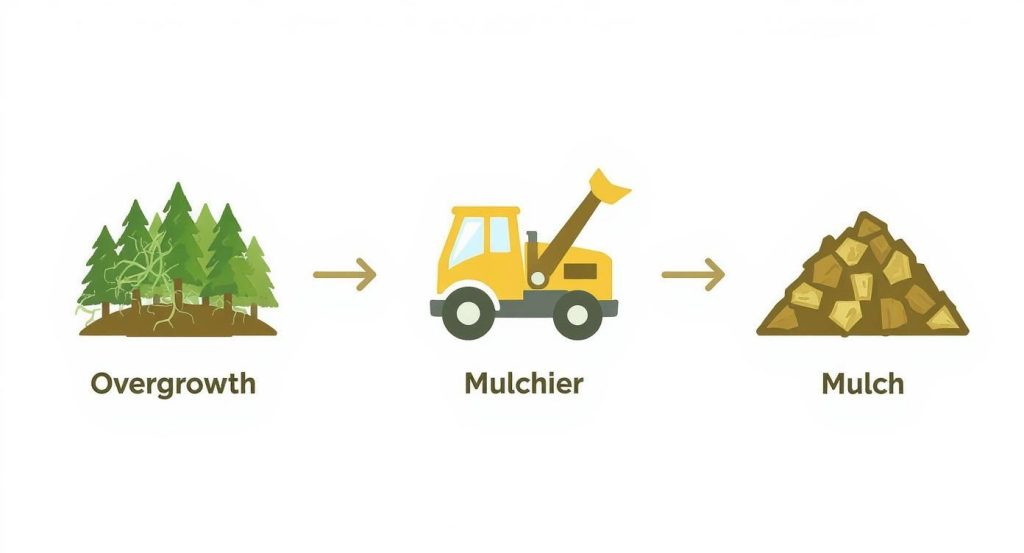
The best part? It’s all done in a single pass. The problem vegetation is gone, and in its place is a natural, protective blanket of mulch that immediately starts improving the soil.
The Real Benefits of Forestry Mulching
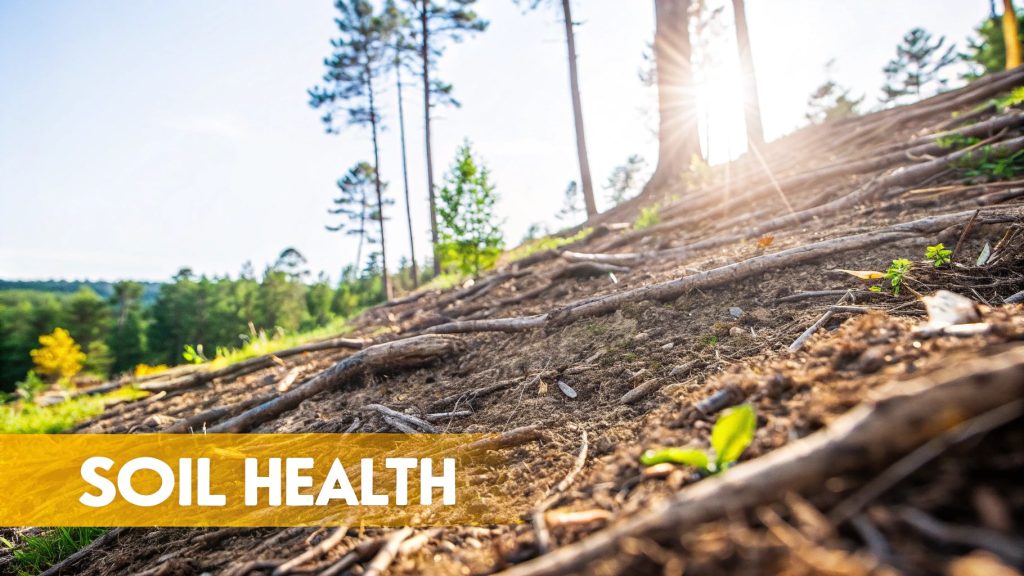
When you’re looking at a piece of overgrown property, it’s easy to think bulldozing is the only answer. But choosing forestry mulching isn’t just a different method—it’s a fundamentally smarter approach with benefits that go way beyond just getting the land cleared. It’s a decision that impacts the health of your soil, your budget, and the final look of your property.
Unlike a bulldozer blade that scrapes away the precious topsoil, a mulcher is surprisingly gentle. It leaves the soil structure and the delicate root systems of the trees you want to keep completely intact.
This single-pass process avoids the kind of massive ground disturbance that causes serious erosion problems. Instead of leaving behind bare, vulnerable dirt, you get a protective blanket of organic mulch. This layer acts like a natural sponge, helping the ground hold onto moisture while shielding it from those heavy Central Florida downpours.
What It Means for Your Wallet and Your Schedule
For most property owners, the most immediate “aha!” moment is seeing the impact on their budget. Traditional land clearing is a long, drawn-out affair: you cut, you pile, you haul, and then you either pay to dump it or get permits to burn it. Every single one of those steps adds another line item to the final invoice.
Forestry mulching rolls all those jobs into one efficient operation.
There are no separate bills for hauling crews, no landfill tipping fees, and no jumping through hoops for burn permits. The “waste” is instantly recycled into a valuable resource right on site, which adds up to some serious cost savings.
This isn’t a niche service, either. The growing preference for this efficient method is clear in the market trends. The global forestry mulchers market was valued at a whopping USD 615 million in 2023 and is on track to hit USD 1.02 billion by 2032, with North America leading the charge. You can dig into the details of this market growth on wiseguyreports.com.
Superior Results, Especially on Tricky Land
On a practical level, you just can’t beat the versatility of a forestry mulcher. These machines have low ground pressure, which means they can work on steep hills, in wet or swampy conditions, and in sensitive areas where a bulldozer would get stuck or cause permanent damage. This opens up possibilities for clearing land that you might have previously written off as inaccessible.
Forestry Mulching vs Traditional Land Clearing
Sometimes seeing the options side-by-side makes the choice obvious. Here’s a quick rundown of how mulching stacks up against the old-school methods.
| Method | Soil Impact | Debris Removal | Cost Efficiency | Permitting |
|---|---|---|---|---|
| Forestry Mulching | Minimal disturbance, enriches topsoil with organic matter. | Not needed. Debris becomes a protective ground cover. | High. It’s an all-in-one process with no hauling or disposal fees. | Typically none required for the clearing process itself. |
| Traditional Clearing | High disturbance. Bulldozing strips topsoil, causing compaction and erosion. | Required. Debris must be hauled away or burned, adding extra steps and costs. | Low. Multiple separate costs for cutting, piling, hauling, and disposal. | Often requires costly and time-consuming burn permits. |
At the end of the day, forestry mulching delivers a cleaner, healthier, and more cost-effective result. It transforms an overgrown mess into a valuable, improved piece of property without the headaches and hidden costs of traditional clearing.
Common Uses for Forestry Mulching
When people hear “forestry mulching,” they sometimes picture massive, industrial-scale projects. But honestly, its real magic lies in its versatility. This isn’t just for huge tracts of land; it’s a practical fix for all sorts of everyday challenges property owners in Central Florida run into.
Think about that overgrown back acre you’ve been meaning to tackle for years. Imagine turning that tangled mess into a safe play area for your kids or a beautiful garden. That’s a perfect job for a forestry mulcher. It’s the ideal tool when you need a surgical touch, not a wrecking ball.
Residential and Recreational Land Improvement
For homeowners, the possibilities are almost endless. The selective nature of the work means an experienced operator can thin out dense woods, shredding invasive species and underbrush while carefully leaving mature, healthy trees completely untouched.
This opens the door to a lot of popular projects:
- Lot Preparation: Before you can build that dream home, you need a clean slate. Mulching clears a lot for new construction in a fraction of the time, all without gouging the topsoil. You get a build-ready site that’s also naturally stabilized against erosion.
- Creating Usable Space: That jungle of palmettos and vines behind your house? We can turn that into a functional, beautiful extension of your yard.
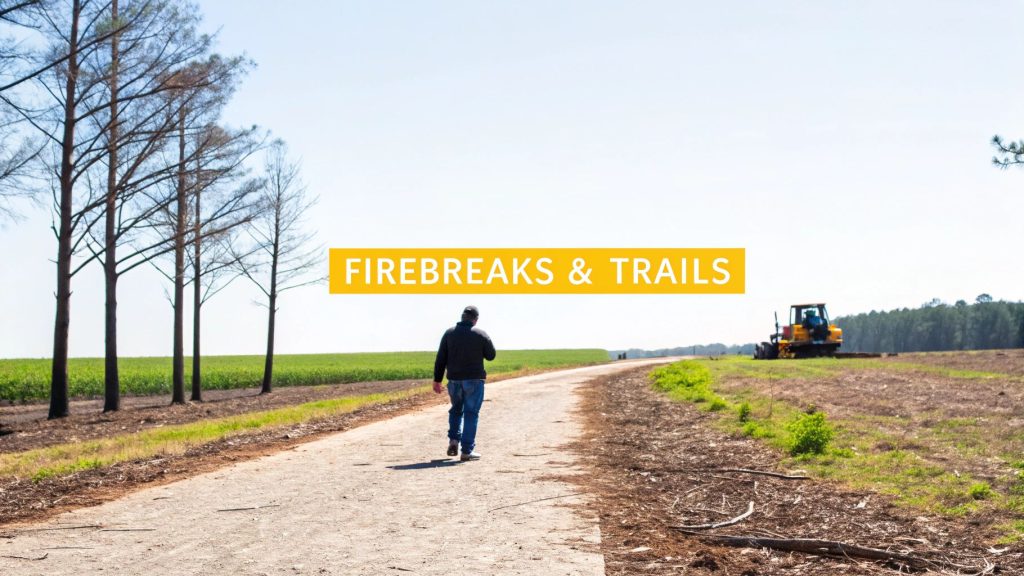
- Hunting and Hiking Trails: Carving out clear, accessible paths through a wooded property is a straightforward job that dramatically improves how you can access and enjoy your land.
- Wildfire Mitigation: Creating defensible firebreaks around your home is one of the most critical steps you can take to protect your property, especially in our fire-prone areas.
Agricultural and Commercial Applications
Get beyond the backyard, and forestry mulching proves to be a true workhorse for farms, ranches, and commercial properties. Its power to chew through tough vegetation while treading lightly on the land makes it an invaluable tool for boosting a property’s productivity and safety.
A rancher, for instance, can reclaim pastureland that’s been swallowed up by thick brush, quickly turning it back into productive grazing area for livestock. In the same way, a farmer can clear overgrown fence lines to improve access and security without tearing up adjacent fields.
The real advantage is the same no matter the job: it eliminates the vegetation problem and improves the land at the same time. There’s no debris to haul away and no risk of degrading the soil—just immediate, usable results.
Other key commercial uses we see all the time include:
- Utility Easement Maintenance: Keeping rights-of-way clear for power lines and pipelines is non-negotiable for safety and access. Mulching is far faster and less disruptive than sending in a crew with chainsaws and chippers.
- Real Estate Development: Smart developers use mulching to instantly boost the curb appeal of land parcels for sale, helping potential buyers see the true potential hidden beneath the overgrowth.
- Habitat Restoration: Conservation groups often rely on mulching to selectively remove invasive plant species, which gives native vegetation the room it needs to thrive and restore a balanced, natural ecosystem.
How Much Does Forestry Mulching Cost?
Let’s get right to it: the first question on every property owner’s mind is, “What’s this going to cost me?” One of the best things about forestry mulching is that the pricing is usually more transparent than traditional land clearing, which often comes with a laundry list of separate fees. Still, there’s no magic one-size-fits-all number. Your final quote is a careful calculation based on what your specific piece of land throws at us.
The single biggest factor that drives the price is the density of the vegetation. Think about it: a field with some light brush and a few small trees is a much faster job than a tangled mess of invasive hardwoods. What we’re cutting down matters, too. Grinding through tough, old oak trees takes a lot more horsepower, time, and fuel than chewing up softer pine.
Key Factors That Shape Your Estimate
Several key variables come together to build your final price. Any good contractor will walk your property to assess these things firsthand before giving you a solid estimate.
Here’s what we’re looking at:
- Acreage: It all starts with the total size of the job.
- Terrain Difficulty: Is the land flat and easy, or are we dealing with steep hills, rocky soil, or swampy spots? Tough terrain slows down the machines and can require specialized equipment, which affects the cost.
- Accessibility: How easy is it to get our heavy equipment to the worksite? Long, narrow paths or remote locations can add to the setup time.
- Desired Finish: A quick, rough-cut pass to knock down overgrowth will cost less than a job where you want a finer, almost park-like mulch finish.
Generally, you’ll see jobs priced a few different ways: by the hour, by the day, or by the acre. Hourly rates are great for small, specific tasks, but for bigger projects, a per-acre price is usually better because you know the total cost right from the start. For a much deeper dive into these pricing models, check out our complete forestry mulching cost per acre guide.
The real value of forestry mulching shines when you stack it up against the old way of doing things. Our single price rolls everything into one—cutting, hauling, burning, and cleanup—which often makes it the smarter, more economical choice in the long run.
Looking at the industry right now, recent data shows the national average for forestry mulching falls somewhere between $370 to $450 per acre. For the big, high-production machines, daily rates can climb as high as $2,600, but that reflects just how much ground they can cover in a short time. This cost has been influenced by the move toward more advanced, eco-friendly machinery and the need to handle increasingly complex terrain. You can see more about forestry mulching service market trends at researchandmarkets.com.
How to Hire the Right Mulching Contractor

You’ve decided forestry mulching is the way to go. Great! But your job isn’t done yet—choosing the right professional is every bit as important as choosing the right land clearing method.
The quality of the final result, the safety of everyone involved, and the health of your property all come down to the person running the machine. This is one of those times where digging a little deeper than the initial quote pays off big time.
Any contractor worth their salt will be an open book about their business. The first thing you should ask about is their insurance—specifically, general liability and workers’ compensation. This is the absolute bare minimum, as it’s what protects you from any liability if an accident happens on your property. Don’t be afraid to ask for proof. A pro will have it ready.
Key Questions for Your Potential Contractor
Before you even think about signing a contract, you need to have a conversation. How a contractor answers your questions tells you a lot about their experience and how they operate. A confident, clear answer is a good sign; hesitation or vague responses should give you pause.
Here are the essential questions to ask:
- Can you show me some of your past work? A picture is worth a thousand words, but seeing a finished job on a property similar to yours is even better. Ask for references or a portfolio.
- What kind of equipment are you running? You don’t need to be a machinery expert, but a well-maintained machine shows professionalism. It also means fewer breakdowns and delays for your project.
- How do you break down your pricing? Get a detailed, itemized quote. You want to understand if they charge by the hour, day, or acre, and what’s included in that price.
- What’s your plan for protecting the trees I want to keep? A seasoned operator will know exactly how to maneuver around your prized oaks or property lines without causing damage.
A suspiciously low bid is often the biggest red flag. While affordability is important, a price that is significantly lower than competitors could indicate a lack of proper insurance, poorly maintained equipment, or inexperience.
Finally, do a quick digital background check. Look up reviews on sites that aren’t their own website to get an honest picture of their reputation. These extra steps ensure you end up with a trustworthy expert who will handle your forestry mulching project safely and leave your land looking fantastic.
For a more detailed guide, check out our tips for finding forestry mulching services near you.
A Few Common Questions About Forestry Mulching
Even after seeing what forestry mulching can do, most folks still have a few questions. I get it. It’s a big decision for your property. Let’s walk through some of the most common things people ask before they get started.
Is Forestry Mulching Bad for the Environment?
Not at all. In fact, it’s one of the best things you can do for your land compared to old-school clearing methods. Traditional clearing often involves bulldozing, which scrapes away the precious layer of topsoil, and then you’re left with massive piles to burn or haul off to a landfill.
Forestry mulching does the exact opposite. It takes all that vegetation and turns it right back into a protective, nutrient-rich layer on top of your soil. This blanket of mulch prevents erosion, helps the ground hold onto moisture (a huge plus here in Florida), and slowly breaks down to feed the soil. You get your land cleared without the burn piles, air pollution, or soil damage.
How Long Does the Mulch Take to Decompose?
That really depends on a few things: our humid Florida climate, the type of wood we’re mulching, and how much rain we get. Generally, the finer mulch from softer woods like pine can break down in just a year or two.
The chunkier pieces from tough hardwoods like oak might stick around for several years. Think of it as a slow-release fertilizer for your land. It’s not just getting rid of the overgrowth; it’s building a healthier foundation for whatever you want to do next.
That mulch layer isn’t just leftover debris; it’s a long-term investment in your soil’s health. It acts as a natural fertilizer and a shield against erosion, immediately improving the quality of your land from day one.
Can Forestry Mulching Be Done in Any Weather?
Pretty much, yes. Forestry mulching is incredibly versatile when it comes to weather. The machines we use run on tracks, which spreads their weight out and gives them very low ground pressure. This means they can work on soft, damp ground that would swallow a heavy bulldozer or leave deep, damaging ruts in your property.
Of course, we’ll pause for safety if there’s a lightning storm or a torrential downpour. But for the most part, we can keep working in conditions that would bring other land clearing operations to a complete standstill.
Will Vegetation Grow Back After Mulching?
You might see some regrowth, especially from stubborn plants that can sprout back from their root systems. But here’s the key difference: that thick layer of mulch acts like a natural weed barrier, smothering most new growth by blocking out the sunlight.
The regrowth you do get is far slower and less aggressive than what you’d see on bare, cleared ground. For areas where you need it to stay perfectly clear, a little follow-up maintenance or a targeted spot treatment might be necessary down the road. But the overwhelming jungle-like problem? That’s solved for good.
Ready to see how forestry mulching can transform your overgrown property? The team at Palm State Clear Cut has the experience and equipment to handle any land clearing challenge in Central Florida. Get your free, no-obligation quote today and take the first step toward reclaiming your land. Visit us at https://palmstateclearcut.com to learn more.