
A Florida Farmer's Guide to Land Clearing for Farming
- Mike Walker
- 3 days ago
- 19 min read

When you think about turning a wild, overgrown piece of land into a thriving farm, the first thing that comes to mind is usually heavy equipment. But the real work starts long before a single engine roars to life. It all begins with a walk.
Successfully clearing land for farming isn't just about knocking down trees and brush. It’s about transforming that acreage into a productive asset, whether you're dreaming of pastures for cattle, neat rows of crops, or a flourishing citrus grove. The goal is to create a clean slate perfectly suited to your agricultural plans.
Your Pre-Clearing Property Assessment
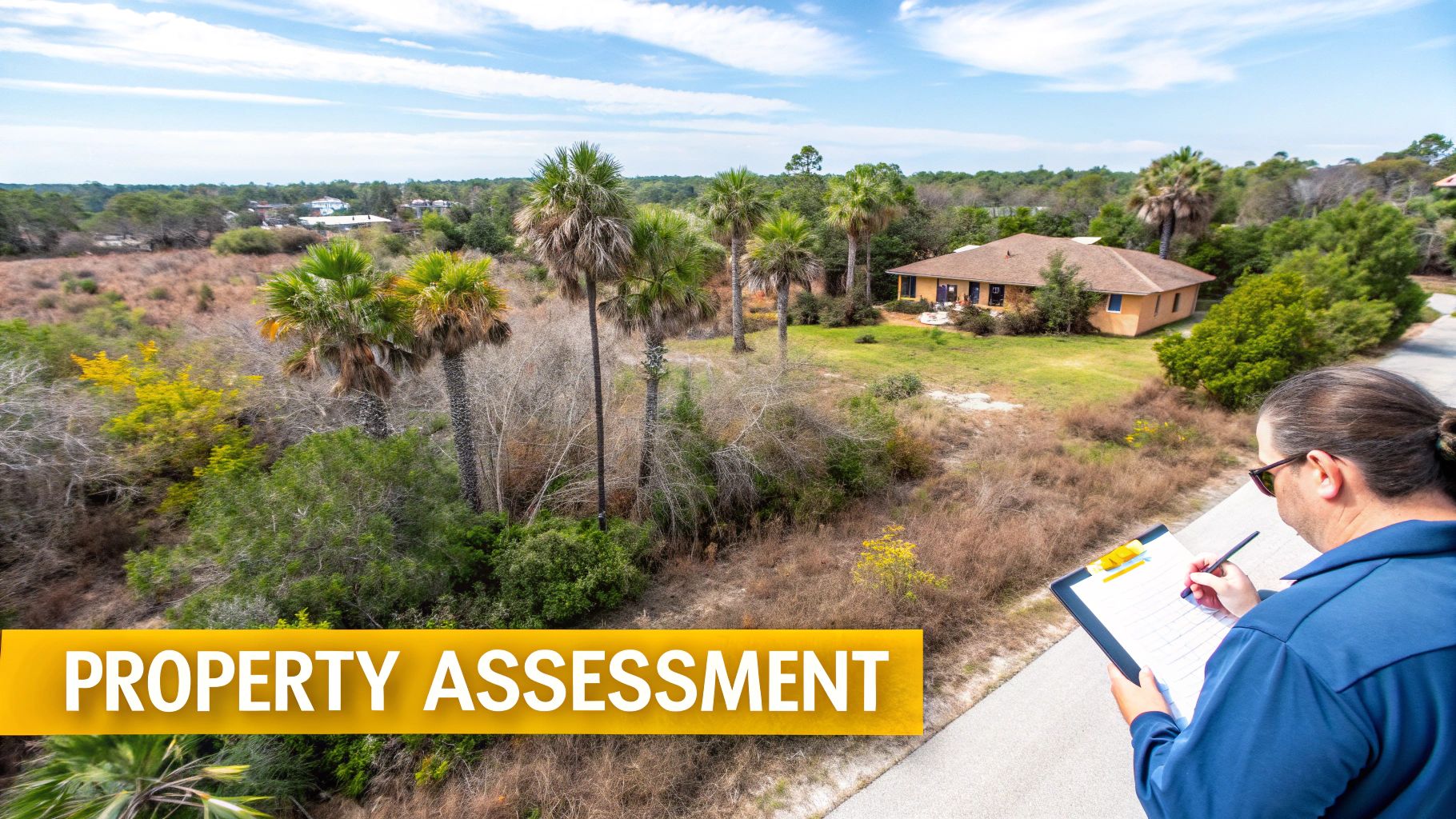
Before you even think about getting quotes, pull on your boots and walk your property. This isn’t just a casual stroll—it’s the most important step in the entire project. What you learn out there will shape your budget, your timeline, and the final outcome. Getting this right from the start saves you from costly headaches down the road.
Think of it as drawing a detailed map before a long journey. The notes you take and the observations you make will directly influence every decision that follows, from the type of equipment you’ll need to the permits you might have to pull.
Identifying Key Vegetation and Obstacles
First things first, you need to take inventory of what you're up against. Central Florida land is a unique mix, and you can’t treat a patch of palmettos the same way you’d treat a stand of hundred-year-old oaks.
Palmetto Scrub and Light Brush: This is classic Central Florida. It's relatively easy to handle with equipment like forestry mulchers, which can turn it into mulch in a single pass with minimal soil disturbance.
Pine and Oak Forests: Mature trees, especially our tough, deep-rooted live oaks, are a different beast. This job calls for heavy machinery and a plan for what to do with the stumps—grind them, or pull them completely?
Invasive Species: Keep a sharp eye out for the usual suspects: Brazilian Pepper, cogon grass, and Old World climbing fern. Spotting these early is critical. Some clearing methods can actually make an infestation worse by spreading seeds or roots. A pro can help you devise a strategy to not only remove but also control these aggressive invaders.
A thorough vegetation survey isn't just about what you see on the surface. It's about understanding the root systems, density, and potential for regrowth, all of which dictate the most effective and cost-efficient clearing strategy.
This process is nothing new; farmers have been shaping the planet for thousands of years. In fact, nearly half of the world's habitable land is now used for agriculture, a direct result of these same efforts on a global scale. You can learn more about the global impact of converting land for agriculture on Our World in Data.
To help you organize your thoughts during your property walk, here’s a quick checklist of what to look for.
Initial Land Assessment Checklist for Central Florida Farms
Assessment Area | Key Considerations | Why It Matters for Farming |
|---|---|---|
Vegetation Type & Density | Differentiate palmettos, pines, hardwoods, and vines. Note the density—is it sparse or a jungle? | Determines the equipment needed (mulcher vs. dozer) and impacts the overall cost and timeline. |
Soil Conditions & Topography | Is the ground sandy, clay-based, or wet? Note any slopes, hills, or low-lying areas that hold water. | Affects machine accessibility, erosion risk, and drainage needs for future crops or pasture. |
Obstacles & Hazards | Look for old fences, concrete slabs, large rocks, wells, or sinkholes. | Hidden obstacles can damage equipment and cause significant delays and extra costs if not found early. |
Property Lines & Access | Clearly identify your boundaries. How will heavy equipment get onto the site? | Prevents disputes with neighbors and ensures a logistical plan is in place for machinery access. |
Environmental Features | Identify any wetlands, protected gopher tortoise burrows, or mature "heritage" trees. | These features are often protected by local or state regulations and will require special permits and planning. |
Walking the land with these points in mind will give you a much clearer picture of the project scope before you ever make a phone call.
Aligning Clearing with Your Agricultural Vision
What’s the end goal here? The answer completely changes how you should approach land clearing for farming. Different uses require very different levels of site preparation.
For example, clearing for a cattle pasture is a whole different ballgame than prepping for a citrus grove. Pastureland can often get by just fine with stumps ground flush to the surface, which is a standard result of forestry mulching. That method even leaves behind a beneficial layer of organic material that helps prevent erosion and builds up the soil.
But if you’re planning to plant row crops that need tilling, you’ll need a much cleaner finish. That usually means complete removal of stumps and major roots to create a smooth, workable seedbed. Defining your vision upfront makes sure you don’t overspend on services you don’t need—or worse, end up with a piece of land that isn’t ready for what you have planned.
Sorting Out Florida's Land Clearing Permits and Rules
In Central Florida, clearing land for a farm or pasture involves a lot more than just firing up the heavy equipment. You've got to work through a maze of state, county, and local rules designed to protect our pretty unique environment. Jumping into a land clearing for farming project without the right paperwork isn't just a simple oversight—it can lead to some serious fines and stop-work orders that bring your whole project to a grinding halt.
Think of the permitting process as your project's insurance policy. It's there to make sure your plans for the land line up with the environmental care Florida requires. If you skip this step, the penalties can easily cost more than the clearing job itself, turning what should have been a good investment into a major headache.
What's the Deal with Agricultural Exemptions?
The good news for farmers is that not every single land clearing job needs a permit. Florida law carves out some specific exemptions for what they call "bona fide agricultural operations." But here's the catch: just owning a piece of rural land doesn't automatically mean you're exempt. You have to be able to show that the land is genuinely going to be used for farming, like planting crops, raising cattle, or growing timber.
Counties like Polk, Lake, and Osceola each have their own way of looking at these exemptions. Simple, routine stuff like clearing out a fence line or tidying up an existing pasture usually falls under the exemption. But if you're talking about clearing several acres of native Florida habitat to start a brand new farm, that’s a completely different ballgame and almost always means you'll need a permit.
My Two Cents: Don't ever just assume your project is exempt. The smartest thing you can do is make a quick call to your county's planning and zoning department. Misunderstanding an agricultural exemption is probably one of the most common—and expensive—mistakes I see landowners make.
It often boils down to a simple question: is this a little backyard garden project, or are you setting up a commercial farm? Clearing 20 acres for a new citrus grove is worlds away from tilling a small plot for personal use.
The Key Agencies and Environmental Watch-Outs
When you do need a permit, you'll probably find yourself talking to a few different agencies. Each one has its own turf, and sometimes their responsibilities overlap, which can make things feel a bit confusing. Knowing who’s in charge of what will help you get your ducks in a row.
County Zoning and Planning Departments: This is almost always your first stop. They handle the local land use permits and are the ones who can tell you if your project is going to trigger a review from other state agencies.
Florida Department of Environmental Protection (FDEP): The FDEP steps in when your project could affect state waters, wetlands, or any protected wildlife. They're the guardians of Florida's water quality.
Water Management Districts (WMDs): Here in Central Florida, we're covered by the South Florida and St. Johns River Water Management Districts. They're focused on anything that impacts water resources, from drainage to wetland preservation.
Dealing with these agencies becomes absolutely critical when your property has certain features that are heavily protected around here.
Common Red Flags on Central Florida Land
Some things on your property are immediate red flags that will demand a professional look-over and some special permits. Trying to ignore them is just not an option.
Wetlands: Florida is serious about its "no net loss" policy for wetlands. If your clearing plan even touches a wetland area, you're going to need an Environmental Resource Permit (ERP). This usually means you'll have to create a mitigation plan to make up for any impact.
Gopher Tortoise Burrows: The gopher tortoise is a protected species, and the law is crystal clear. Before you clear anything, you need a survey done by a licensed agent. If they find burrows, you absolutely must get a relocation permit from the Florida Fish and Wildlife Conservation Commission (FWC).
Heritage Trees: A lot of our counties have rules to protect big, old trees, especially our iconic live oaks. If you cut down a tree that's been designated a "heritage" or "specimen" tree without a specific permit, you're looking at massive fines—sometimes calculated by the inch of the tree's diameter.
Let me paint a picture for you. Imagine a farmer in Osceola County starts clearing 15 acres for a new pasture, thinking he's covered by an ag exemption. Then an inspector shows up and finds a few active gopher tortoise burrows and sees that the clearing has pushed into a protected wetland. The result? Work stops immediately. He's facing thousands in fines and a months-long delay while he scrambles to hire environmental consultants and get the right FWC and ERP permits.
This kind of real-world mess is totally avoidable with a little homework upfront. The goal is to work with the system, not fight it. That way, your land clearing project gets started on the right foot, legally and environmentally.
Choosing Your Land Clearing Method and Machinery
Alright, you’ve sorted through the initial site assessment and have a handle on the permits. Now comes the fun part: deciding how you're actually going to clear that overgrown plot. This isn't just about picking a machine; it's a foundational choice that will shape your budget, project timeline, and—most importantly—the future health and productivity of your farm. You're not just clearing trees; you're setting the stage for growth.
Here in Central Florida, it usually comes down to two main options: modern forestry mulching or the old-school approach with a bulldozer. Both will get the land cleared, but the way they treat your soil is night and day. Understanding the difference is critical to hitting your goals, whether that's lush pasture for livestock or perfectly prepped soil for row crops.
Forestry Mulching: A Sustainable First Choice
Lately, forestry mulching has become the go-to for a lot of agricultural projects, and for good reason. It’s a pretty slick process. A single machine, like a skid-steer or an excavator with a powerful mulching head, chews up trees, brush, and everything else right where it stands. The whole operation is efficient, selective, and surprisingly gentle on the land.
Instead of scraping away your precious topsoil, mulching lays down a protective blanket of organic material. This "mulch mat" starts paying dividends almost immediately.
Erosion Control: Florida’s sandy soil loves to wash away, especially during our summer downpours. That layer of mulch holds everything in place, preventing your best soil from ending up in a ditch.
Soil Enrichment: As that mulch breaks down, it’s basically composting in place. It feeds vital nutrients back into the ground, improving the soil structure and giving your future pasture or crops a serious head start.
Moisture Retention: The mulch acts like a sponge, helping the soil hold onto moisture. That’s a massive advantage during our inevitable dry spells.
Because it’s just one machine doing the work, you also get far less soil compaction compared to the constant back-and-forth of bulldozers and other heavy iron. If you want to get into the nuts and bolts, we've put together a guide on the best equipment for land clearing in Florida.
Now, let's look at the different ways you can get this done. We've put together a quick comparison to help you weigh the options based on what matters most for your future farm.
Comparison of Land Clearing Methods for Farming
Method | Best For | Soil Impact | Typical Cost | Key Benefit |
|---|---|---|---|---|
Forestry Mulching | Pasture creation, general farm prep, conservation-minded projects. | Low. Preserves topsoil and adds organic matter. Minimal compaction. | Moderate. All-in-one process, no hauling costs. | Soil Health: Immediately improves soil structure and prevents erosion. |
Traditional Dozing | Preparing land for deep tilling, row crops, or construction where a clean slate is needed. | High. Strips topsoil, causes significant compaction. | Low to High. Lower initial cost, but debris hauling/burning adds up. | Total Removal: Clears large stumps and roots completely for tillage. |
Controlled Burns | Underbrush management in existing pastures or pine stands, ecological restoration. | Varies. Can enrich soil but poses risk if not managed correctly. | Low. Primarily labor and planning costs. | Ecological Reset: Effectively clears undergrowth and promotes native grasses. |
Each method has its place, but for most new farm ventures in Florida, the long-term soil benefits of mulching are tough to beat.
Traditional Dozing and Root Raking: When Is It Necessary?
When you picture land clearing, you probably see a bulldozer pushing over trees. That classic method, often followed up with a root rake to pull up what’s left underground, definitely works. It’s the best way to get rid of massive stumps and root systems completely, which you might need to do if you’re planning on tilling the soil for row crops.
But let’s be honest, this approach is brutal on the land. Dozing strips away everything, including that nutrient-rich topsoil that took nature years to build. You’re left with huge piles of debris that have to be burned or hauled off, which means more time and more money. Plus, the heavy equipment compacts the soil so badly it can be hard for roots to grow and water to drain properly.
It really boils down to your end goal. If you absolutely need a perfectly clean slate for deep plowing, dozing is on the table. But for pastures, tree groves, or general farm prep, the soil-preserving power of forestry mulching is almost always the smarter play.
The bigger picture here is significant. Agriculture is a huge driver of deforestation worldwide. A study published in Science found that from 2011 to 2015, farming was behind 90-99% of deforestation in the tropics. What’s worse is that a lot of that cleared land was abandoned and never even became productive. Choosing a sustainable method like mulching helps make sure the land you clear becomes a valuable, long-term asset. You can read more about the connection in this report from Science.org.
This flowchart gives you a good idea of the permit process, which is something you’ll tackle before you even think about which machine to bring in.
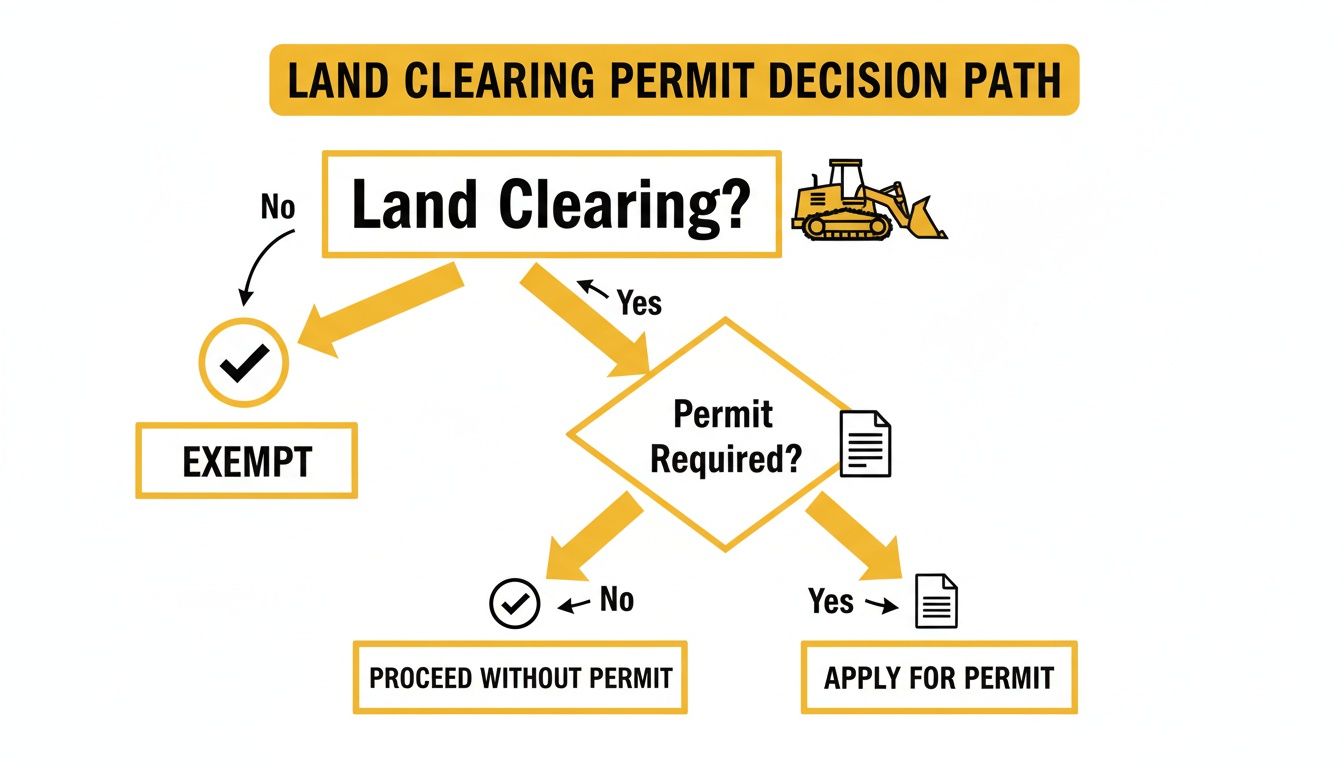
As you can see, even if you think you’re exempt, it’s always best to check. Many clearing projects will require a permit before a single tree comes down.
Controlled Burns: A Limited and Regulated Option
Prescribed burns are another tool people ask about, but they’re in a totally different category. Here in Florida, burns are highly regulated and used mainly for ecological management—like restoring native habitats or reducing wildfire risk—not for clearing a property from scratch.
You can't just go out and light a fire. You need to get an authorization from the Florida Forest Service, have a certified burn manager on site, and follow a detailed burn plan. While it's great for clearing out underbrush and encouraging native grasses, it won't take care of a dense stand of trees. Think of it more as a maintenance tool for an existing pasture, not a primary clearing method for a brand-new farm.
Budgeting Your Project and Hiring a Professional
Before you even think about breaking ground on a land clearing for farming project, you need to get real about the numbers. Building a solid budget isn't just a suggestion—it's the only way to avoid nasty financial surprises and make sure your project doesn't stall out halfway through.
There’s no magic "per-acre" price that fits every situation. The cost is all about the specifics of your land. The total acreage is a big piece of the puzzle, but the density and type of vegetation are just as crucial. Clearing five acres of light palmetto scrub is a world apart from tackling five acres of old-growth oak and pine. The terrain matters, too. A flat, dry piece of land is always going to be easier, faster, and cheaper to clear than a sloped, swampy, or rocky one.
Breaking Down Contractor Pricing
When you start getting quotes from land clearing contractors here in Central Florida, you'll find they usually price their work in one of three ways. Knowing the difference will help you compare your bids apples-to-apples.
Hourly Rate: This is pretty common for smaller or unpredictable jobs. It can be a win if the work gets done fast, but you're taking a risk—if the crew hits a snag, the clock keeps ticking and your costs can climb.
Day Rate: This is a set price for a full day of work with a specific piece of equipment and an operator. It gives you a bit more certainty than an hourly rate, but you need to have a very clear idea of what can realistically be done in a single day.
Project-Based Quote: For most agricultural projects, this is the gold standard. The contractor gives you one fixed price for the entire scope of work. It’s the most predictable way to budget.
The only quote you should trust is one that comes after an on-site visit. Any reputable contractor will tell you they need to walk the property to see the vegetation, terrain, and any potential headaches before they can give you a firm price.
It's worth remembering the bigger picture. The push for more agricultural land is a global phenomenon. For instance, converting forests for cattle pasture has been a massive driver of deforestation worldwide. Between 2001 and 2015, this practice was responsible for an estimated 45.1 million hectares of tree cover loss—a shocking 36% of all agriculture-related deforestation.
Vetting and Hiring the Right Professional
Let me be blunt: choosing your contractor is the single most important decision you will make. A suspiciously cheap bid from some guy with a beat-up machine and no insurance can quickly turn into your most expensive mistake. A true professional isn't just there to run a dozer; they're there to protect you from liability and ensure your land is actually ready for farming.
As you map out your budget, don't forget to look into potential funding sources. Programs like Florida agricultural grants can offer a huge boost for farming projects. For a deeper dive into what you can expect to pay, check out our guide on the real cost of clearing an acre of land.
Before you sign on the dotted line, you need to ask some tough questions. Here’s what I always recommend:
Are you licensed and insured? This is a deal-breaker. Ask for a copy of their general liability and worker's compensation insurance certificates. If they can’t provide them, walk away. Without proper insurance, you could be on the hook for any accident or damage.
What’s your experience with ag projects? Clearing land for a house pad is not the same as prepping a pasture. You need someone who gets what you're trying to do and can recommend the right methods to preserve soil health for your crops or livestock.
What equipment are you bringing? A good contractor won't just list their machines; they'll explain why they chose them for your specific job. They should be able to tell you why a forestry mulcher makes more sense than a bulldozer for your particular goals.
Is debris hauling and disposal in the quote? Don't assume. The last thing you want is to be left with giant piles of roots and logs. Get it in writing what the final site condition will be and who is responsible for all the cleanup.
Can I talk to some of your recent clients? An experienced contractor with a good reputation will be proud of their work and happy to provide references from similar jobs.
Hiring a local, insured expert who knows the ins and outs of Central Florida’s environment isn't an expense—it's an investment in the future of your farm. It's how you get a fair quote, a safe worksite, and a piece of land that's truly ready to become a productive asset.
Post-Clearing Soil Management and Regrowth Control
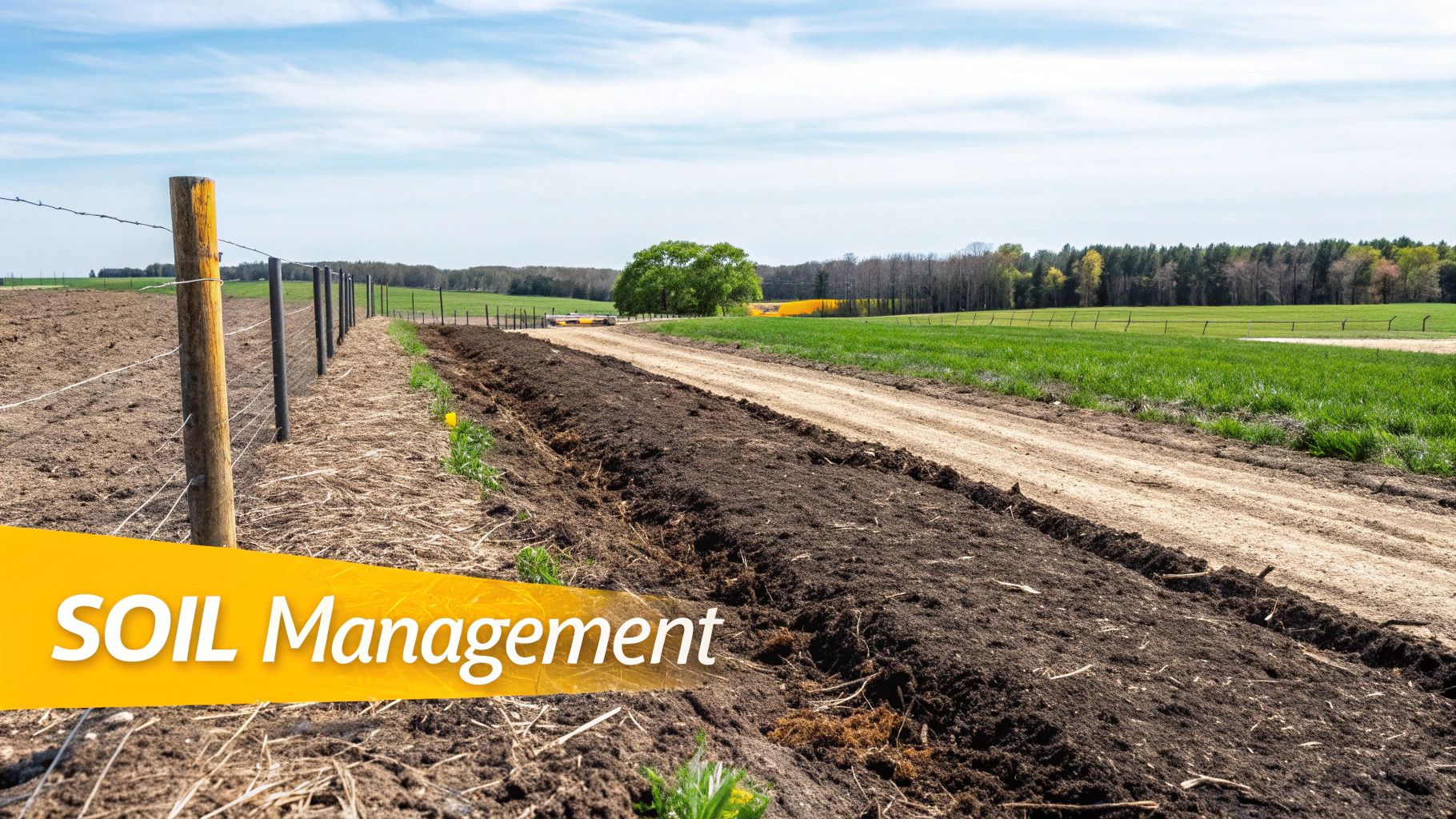
Once the heavy equipment rolls off your property, the real work of turning raw earth into a productive farm truly begins. This post-clearing phase is where the long-term success of your project is decided. It all comes down to two things: protecting your newly exposed topsoil and stopping unwanted plants from staging a comeback.
This is all about being proactive. Here in Central Florida, our sandy soils can wash away in a heartbeat during one of our notorious summer downpours. If you don't stabilize the ground, you risk losing valuable topsoil, creating nutrient-poor patches that will hamstring your farming goals for years.
Protecting Your Most Valuable Asset: Your Soil
Your first job after clearing is all about erosion control. Exposed soil is vulnerable soil. Wind and rain can strip away that fertile top layer in no time, leaving you with much less productive ground.
The good news is, there are some really effective ways to keep your soil right where you want it.
If you went with forestry mulching, you've already got a great head start. That layer of organic material acts like a natural shield, absorbing rain, slowing down runoff, and holding the soil in place. It also helps retain moisture and enriches the soil as it decomposes—a perfect foundation for new pasture grass or cover crops.
For land cleared with more traditional methods, you need to act fast.
Silt Fencing: Get silt fences up along the downslope perimeters of your cleared land. It's a simple but critical first step. These temporary fences trap sediment carried by rainwater, keeping it on your property and out of local waterways.
Cover Crops: Planting a fast-growing cover crop like rye, clover, or buckwheat is one of the best moves you can make. Their roots create a web that binds the soil, while the leaves protect the surface.
Contour Plowing: If your land has any kind of slope, tilling and planting along the land's contours—instead of straight up and down—will dramatically cut down on water runoff and erosion.
The goal is simple: never leave large areas of bare soil exposed for long. Think of cover crops and mulch as a living, breathing armor for your land, safeguarding it while it transitions to its new purpose.
Getting these techniques right is key to a sustainable outcome. To really dig into this, you can learn more about https://www.palmstateclearcut.com/post/what-is-soil-stabilization-and-how-does-it-protect-your-land.
Winning the Battle Against Unwanted Regrowth
Nature hates a vacuum, and your newly cleared land is prime real estate for opportunistic weeds and brush. From stubborn palmetto roots sending up new shoots to invasive vines trying to reclaim their territory, you absolutely need a vegetation management plan. Without one, you’ll be fighting the same battle again in just a year or two.
The key here is to be strategic, not destructive. You're not looking for a scorched-earth approach that harms your soil's beneficial microbes. Instead, you want to focus on targeted strikes that take out problem species without causing a lot of collateral damage.
Long-Term Vegetation Management Solutions
A solid long-term strategy usually mixes mechanical and chemical controls. After the initial clearing, you might run a mower or disk over the area to knock back the first wave of regrowth. This works well for a lot of common brush and weeds.
But for the really persistent invasive species we see in Florida, like Brazilian Pepper or cogon grass, you often need a more direct approach. These plants can quickly take over a field, choking out the grasses or crops you actually want. Their aggressive nature means you have to get them at the root.
To effectively manage this post-clearing vegetation, it’s often worth considering professional weed spraying services. When done by licensed pros, precision herbicide applications can target these nuisance plants with minimal impact on the surrounding soil. This targeted control is essential for establishing a healthy pasture or crop field, ensuring your investment in land clearing for farming pays off with a thriving, low-maintenance agricultural asset for years to come.
Common Questions About Land Clearing for Farming
When you're standing at the edge of an overgrown property, envisioning a future farm, a lot of questions pop up. It's a big undertaking, and in Central Florida, the path from tangled brush to a productive piece of land has its own unique set of challenges. We get asked the same questions all the time, so let's tackle them head-on with some straight-from-the-field answers.
This isn't about generic advice; it's about giving you practical, real-world information to help you move forward with confidence and make smart choices for your property.
How Long Does It Take to Clear Land for a Small Farm?
Honestly, there's no single answer to this one. The timeline for clearing land can swing wildly depending on what's actually on your property. Every parcel tells a different story.
For instance, a 5-acre lot with just light brush and palmetto scrub could be a quick job. A professional crew with a powerful forestry mulcher might knock that out in just two to four days. It's a relatively straightforward process where the machine can work efficiently.
But let's say that same 5-acre piece is choked with dense hardwoods, has soggy, low-lying areas, or needs every last stump ground out for row crops. Now you're easily looking at a week or more. The type and density of the vegetation are the biggest variables. Don't forget to tack on the permitting process, too—that alone can add several weeks before a single machine even shows up.
The only way to get a truly reliable timeline is to have a contractor walk the property with you. A professional on-site evaluation will account for the trees, soil, access points, and everything else that affects the clock, giving you an estimate that actually means something.
Is Forestry Mulching Better Than Bulldozing for Farm Prep?
For the vast majority of farm and pasture projects here in Florida, forestry mulching is absolutely the way to go. While bulldozing certainly clears land, it can do some serious damage to your most valuable asset: your topsoil.
Think of bulldozing as a brute-force approach. It scrapes away the good topsoil, creates huge piles of debris you have to pay to haul off or burn, and severely compacts the ground. That compaction is bad news for future crops, as it can choke out root growth and lead to major erosion issues when our heavy rains hit.
Forestry mulching, on the other hand, is much more surgical. It's a clean, one-step process where the machine grinds up vegetation right where it stands, blanketing the ground with a protective layer of organic material. This mulch gives you several immediate wins for your future farm:
It helps our sandy soil hold onto precious moisture.
It acts as a natural shield against erosion from downpours.
Over time, it breaks down and feeds the soil with nutrients.
Bulldozing has its place for heavy-duty earthmoving or building a pad site, but for prepping pastures or planting fields where soil health is everything, mulching is the smarter, more sustainable play.
What Should I Do with Stumps and Roots?
How you handle stumps and roots comes down to two things: your clearing method and what you plan to do with the land afterward. What works for a cattle pasture is a totally different game than what you need for a tilled vegetable garden.
With forestry mulching, the stumps are usually cut flush to the ground, and the root systems are left in place to decompose naturally. This is a fantastic way to prevent soil erosion because those roots continue to hold everything together. If you need a perfectly smooth finish for haying or specific types of planting, we can always grind the stumps down further below the surface.
Traditional bulldozing rips everything out—stumps, roots, and all. This approach leaves you with big holes to fill and grade, plus massive debris piles that add a lot of cost and hassle to the project. For most agricultural uses, like establishing a new pasture, leaving the roots in the ground is the most eco-friendly and budget-friendly option.
How Do I Stop Invasive Plants from Taking Over After Clearing?
This is a big one. You absolutely must have a plan for what comes after the clearing is done. Disturbed soil is like a welcome mat for aggressive invasive plants, especially notorious ones like Brazilian Pepper and cogon grass. They can overrun a freshly cleared field in a heartbeat, choking out the very grasses or crops you want to grow.
Just clearing the land is only half the battle. Preventing regrowth is the other half. An effective long-term strategy often involves some follow-up management. This could mean a carefully targeted herbicide application designed to knock out invasive species before they get a foothold. It's smart to work with a company that handles both the initial clearing and the follow-up vegetation control—it's a complete solution that protects your investment.
At Palm State Clear Cut, we specialize in turning overgrown land into productive agricultural properties. We handle everything from the initial forestry mulching to post-clearing vegetation control to ensure your land is truly ready for its next chapter. Contact us today for a free on-site quote.
Comments