
What Is Soil Stabilization and How Does It Protect Your Land
- Mike Walker
- Jan 26
- 12 min read

Soil stabilization isn't just a technical term—it's the process of turning weak, unreliable ground into a strong, stable foundation. Think of it as giving your property a solid backbone, transforming loose or shifting dirt from a major liability into a trustworthy asset for whatever you plan to build.
This is absolutely essential for preventing erosion, supporting structures, and ensuring the long-term integrity of your site.
What Does Soil Stabilization Really Mean?
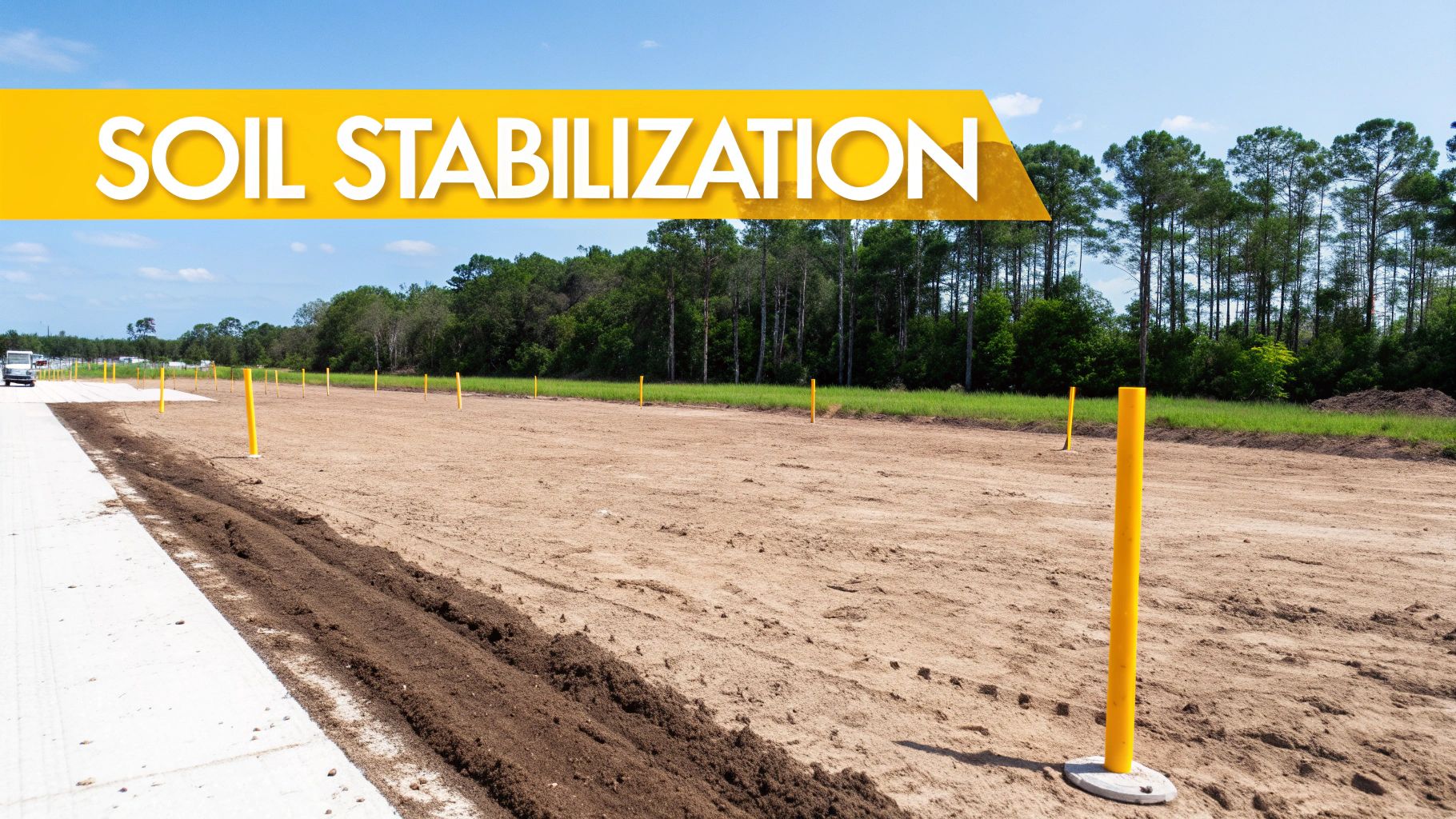
At its heart, soil stabilization is the foundational first step in any responsible land development project. Without it, the ground you’re building on could be prone to shifting, washing away, or simply failing to support the weight you put on it. This is especially true here in Central Florida, where our sandy soils and high water tables create some unique challenges for construction and landscaping.
Imagine trying to build a house on a pile of dry beach sand—it would constantly settle and move. Soil stabilization techniques prevent exactly that. By changing the soil's physical and chemical properties, we can effectively bind the particles together to create a solid, dependable base that will stand the test of time.
The Purpose and Core Approaches
The goals of any stabilization project are pretty straightforward but incredibly impactful. By improving the ground beneath your feet, you gain several key benefits that protect your investment and ensure your project is a success.
Boost Load-Bearing Capacity: This strengthens the soil so it can safely support buildings, driveways, roads, and other heavy structures without sinking or cracking.
Control Dust and Erosion: It keeps valuable topsoil from being washed away by our heavy rains or blown away by the wind, which is a huge issue right after land clearing.
Manage Water Content: This reduces the soil's tendency to swell and shrink as moisture levels change—a major culprit behind foundation cracks and uneven surfaces.
We achieve these goals through three main strategies: physical, chemical, and biological methods. The growing need for these solutions is pretty clear when you look at the numbers. The global soil stabilization market was valued at USD 30.57 billion in 2023 and is expected to climb to USD 43.31 billion by 2030. You can dig into the latest industry analysis to see what's driving this trend. This growth just goes to show how critical stabilization has become for modern infrastructure.
To give you a clearer picture, let's break down the main categories of soil stabilization.
A Quick Look at Stabilization Methods
Method Type | Core Concept | Best For |
|---|---|---|
Physical | Compacting or mixing different soil types to improve density and strength. | Creating a dense, stable base for roads, foundations, and simple erosion control. |
Chemical | Adding agents like lime, cement, or polymers to bind soil particles together. | Dramatically increasing strength and durability for heavy-duty applications. |
Biological | Using plants and natural materials to anchor soil and prevent erosion. | Environmentally-friendly erosion control, especially on slopes and shorelines. |
Each of these approaches has its own set of tools and applications, and the right choice always depends on the specific conditions of your site.
The Three Core Methods of Soil Stabilization Explained
When you hear the term soil stabilization, it’s helpful to think of it like a toolbox. Inside, you’ve got three main categories of tools—physical, chemical, and biological—and each one is designed for a specific job. Picking the right tool comes down to your soil's condition, the goals for your project, and the unique challenges of your site, like the notoriously sandy, water-logged ground we often deal with here in Central Florida.
Let's open up this toolbox and take a closer look at how each method works to build a strong, reliable foundation for your land.
Physical Stabilization: The Power of Compaction
Physical, or mechanical, stabilization is the most direct approach you can take. Think about tamping down coffee grounds in an espresso machine to get a firm, dense puck. That’s pretty much what we're doing to the soil. This method doesn't add any new materials; instead, it focuses on improving the soil’s existing properties through force and strategic blending.
The most common technique by far is compaction, where heavy rollers press down on the soil to squeeze out air pockets and increase its density. This simple process makes the ground much stronger and far less likely to settle or shift over time. Another go-to physical method is using geotextiles. These are specialized fabrics you might lay down before adding gravel for a new driveway. The fabric acts as a separator, keeping the rock from sinking into soft Florida sand while also stopping the soil underneath from washing out during our heavy rains.
By rearranging and densifying existing soil particles, physical stabilization boosts the ground's natural strength without altering its chemical makeup. It's often the first line of defense for creating a solid base.
Chemical Stabilization: The Super Glue Approach
Sometimes, physical methods just can't get the soil to the strength level you need. That's when we turn to chemical stabilization. This technique involves mixing additives into the soil that act like a super-glue, chemically binding loose particles together into a solid, almost rock-like mass. It’s an incredibly effective way to transform weak, unstable soil into a durable, load-bearing surface.
A few common chemical agents include:
Lime: This is the perfect choice for clay-heavy soils. It reacts directly with the clay minerals to reduce plasticity and swelling, which is a major issue in some parts of Florida.
Cement: Works wonders in sandy or granular soils, creating a strong, rigid base that’s almost like a weak form of concrete.
Polymers and Resins: These are more advanced additives that offer targeted solutions, like improving water resistance or creating surfaces that are strong yet have a bit of flexibility.
The market for these solutions is booming. In fact, the global soil stabilization market was valued at USD 31,251.5 million in 2024, with chemical methods being a huge part of that growth. New, more sustainable innovations are hitting the market all the time to meet this demand. You can explore more details on these market trends to see just how quickly the industry is evolving. This approach provides a level of strength that is hard to beat, making it ideal for foundations, road bases, and other high-stress applications.
Biological Stabilization: The Living Root System
Last but not least, we have biological stabilization, which is all about working with nature instead of against it. This method uses vegetation to create a living, breathing erosion control system. Picture it as weaving a natural net of roots throughout the topsoil to hold everything securely in place. It's a fantastic eco-friendly and self-sustaining solution for long-term stability.
The most popular biological technique is hydroseeding. This is where a slurry of seed, mulch, fertilizer, and a bonding agent is sprayed onto a vulnerable slope. The mulch gives the soil immediate protection from erosion while the seeds take root, eventually growing into a dense mat of vegetation. These root systems are incredibly effective at preventing topsoil loss on newly cleared properties, especially along the banks of ponds or drainage canals here in Florida. This approach turns a barren patch of land into a resilient, green landscape that naturally fights erosion for years to come.
Choosing the Right Stabilization Technique
So, you know what soil stabilization is, but how do you pick the right tool for the job? It’s not a one-size-fits-all situation. The best method for your property boils down to a few key factors: your project's goals, the specific problems with your soil, your budget, and how quickly you need the work done.
Making the wrong choice can be a costly mistake. For instance, a simple mechanical compaction job is quick and easy on the wallet, but it won’t do much for the soupy, unstable muck we often find near Central Florida’s wetlands. It’s great for firming up a base for a shed but falls flat when you need serious, deep-down stability.
On the flip side, chemical additives can work miracles, creating an incredibly strong, rigid base that’s perfect for heavy-duty foundations or commercial driveways. But that kind of industrial-strength performance comes with a higher price tag and requires a pro to handle it safely and correctly. It’s a classic trade-off between power and price.
Finding the Right Balance
Then you have biological solutions like hydroseeding. These are fantastic for creating a living, self-sustaining barrier against erosion that actually gets stronger over time. They’re the go-to for locking down slopes or pond banks, but they need time—weeks, sometimes months—to really take root and mature. That makes them a non-starter for something that needs to bear weight right away, like the foundation for a new home.
This decision tree can help you start narrowing down the options. Just connect your main goal—whether it's brute strength, better compaction, or long-term erosion control—to the methods designed to deliver it.
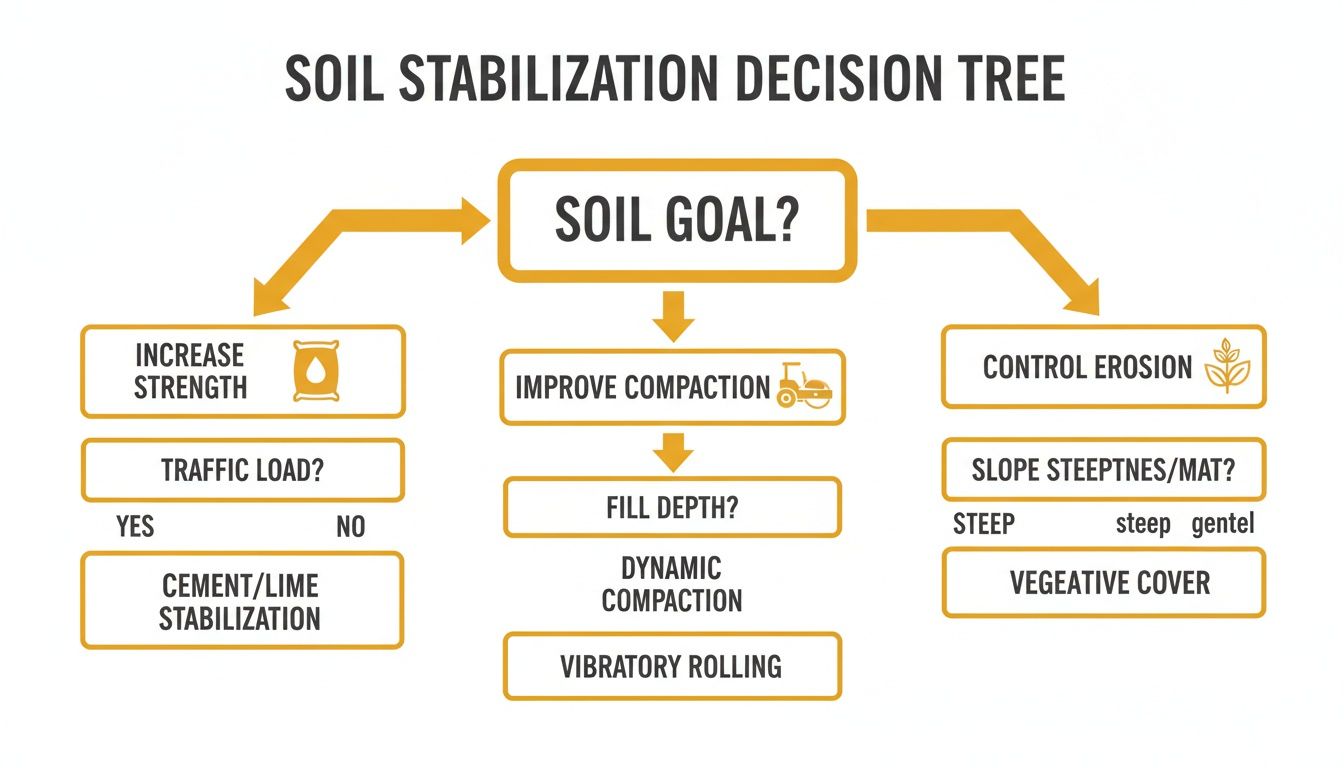
As you can see, if you’re building something heavy and need a rock-solid foundation, you’re likely headed down the chemical path. If your main worry is watching your topsoil wash away, biological solutions are your best bet.
Comparing Soil Stabilization Methods
To make the choice even clearer, let's put these methods head-to-head. Here’s a simple breakdown of the pros and cons for each, focusing on how they stack up right here in our unique Central Florida environment.
Understanding these trade-offs is the key to a successful soil stabilization strategy. The "best" method is simply the one that most effectively solves your specific problem without over-engineering the solution or overlooking long-term needs.
This table will help you weigh the critical variables before you commit to a plan.
Method | Pros | Cons | Best For Central Florida... |
|---|---|---|---|
Physical | Cost-effective, immediate results, and environmentally friendly. | May not be strong enough for very poor soils; can be less effective in high-moisture areas. | Firming up sandy soil for driveways, creating a base for sheds, or general site grading. |
Chemical | Provides exceptional, long-lasting strength and durability. | Higher cost, requires professional application, and may have environmental restrictions. | Building foundations, supporting heavy structures, and stabilizing roadways on weak ground. |
Biological | Self-sustaining, aesthetically pleasing, and excellent for long-term erosion control. | Takes time to establish; not suitable for immediate load-bearing needs. | Securing pond banks, preventing soil loss on slopes, and vegetating newly cleared land. |
Each approach has its time and place. The trick is matching the right one to your land's specific personality and your project's demands.
Warning Signs Your Property Needs Soil Stabilization
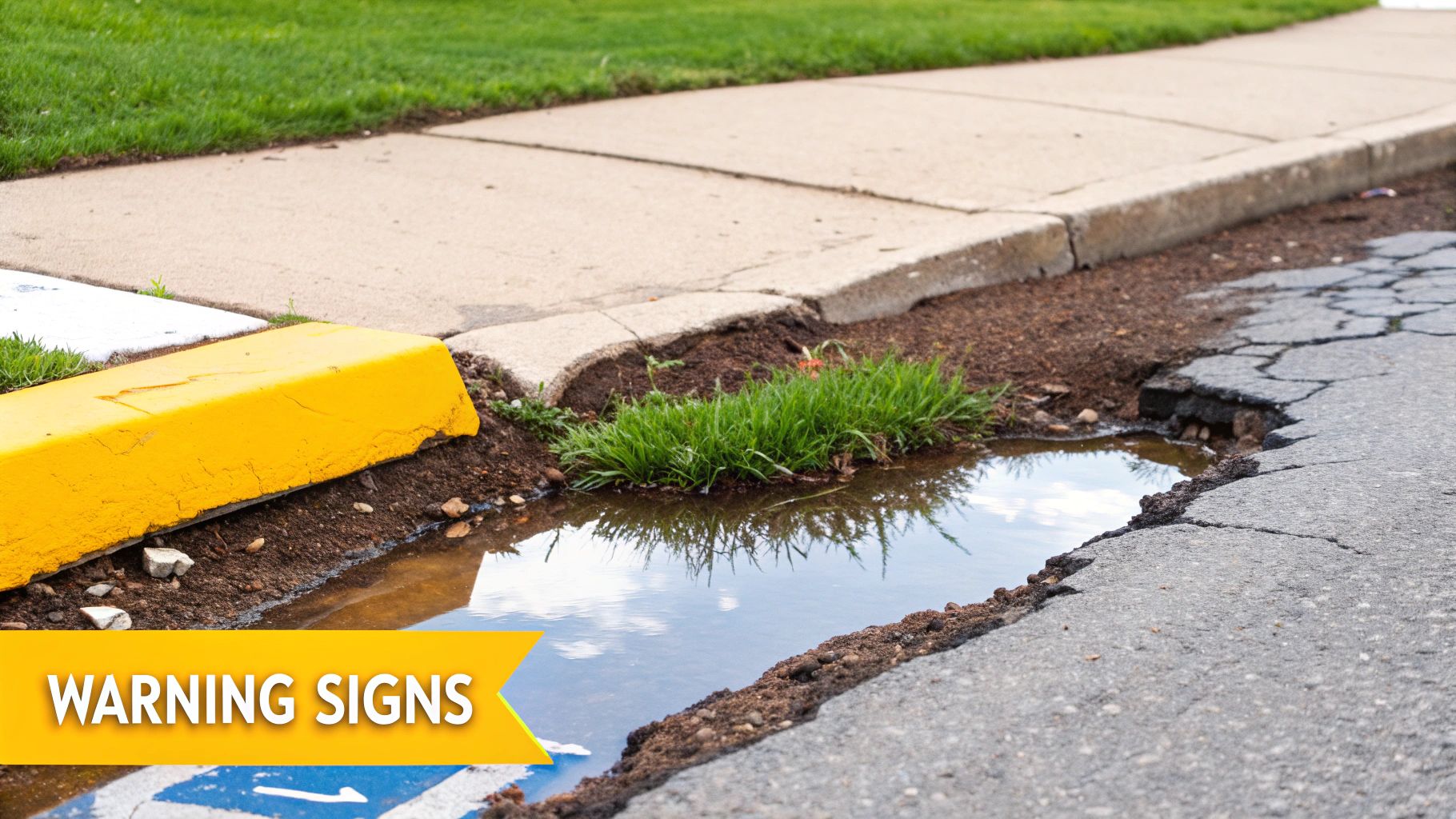
Your land rarely keeps its problems a secret. Unstable soil often sends out clear distress signals long before a major failure occurs. Learning to read these signs is the key to proactive property management, allowing you to address the root cause with soil stabilization before minor issues spiral into costly, complex repairs.
These indicators are more than just cosmetic blemishes; they're symptoms of a deeper problem with the ground’s ability to support itself and any structures built on it. Here in Central Florida, our combination of sandy soil and a high water table makes properties especially vulnerable.
Visual Clues on the Surface
The most obvious warning signs are often right under your feet. These surface-level problems show that the soil is either losing its structure, holding too much water, or unable to bear weight properly. Keep an eye out for these red flags:
Persistent Puddles: If you have areas where water pools for days after a typical Florida downpour, it’s a strong sign of poor drainage. The soil is likely too compacted or simply too weak to let water pass through.
Barren Patches: Are there spots where grass, plants, or trees just refuse to grow? This often points to soil that is too loose, washed out, or nutrient-deficient because of constant erosion.
Visible Erosion: Look for small gullies, ruts, or areas where topsoil is clearly washing away. This is a direct signal that your land is losing its battle with gravity and rainfall. Our guide on how to prevent soil erosion on your property offers more detailed solutions for this.
Structural Signs of Trouble
While surface issues are a concern, problems affecting your structures are far more serious. When the soil beneath a building or paved surface shifts, the damage can be significant and expensive.
The ground beneath a structure is its silent partner. When that partner becomes unreliable—shifting, sinking, or swelling—the relationship turns destructive, and the evidence shows up in the form of cracks and misalignment.
If you're seeing cracks or unevenness in concrete, these could be serious warnings. They often point to an urgent need for soil stabilization to prevent major foundation repair. Pay close attention to hairline fractures in driveways, sidewalks, or building foundations. A patio that has started to sink or tilt is another classic indicator, as are fence posts that have become loose and wobbly. These are all signs of an unstable base that needs immediate attention.
How Stabilization Transforms Your Land Clearing Project
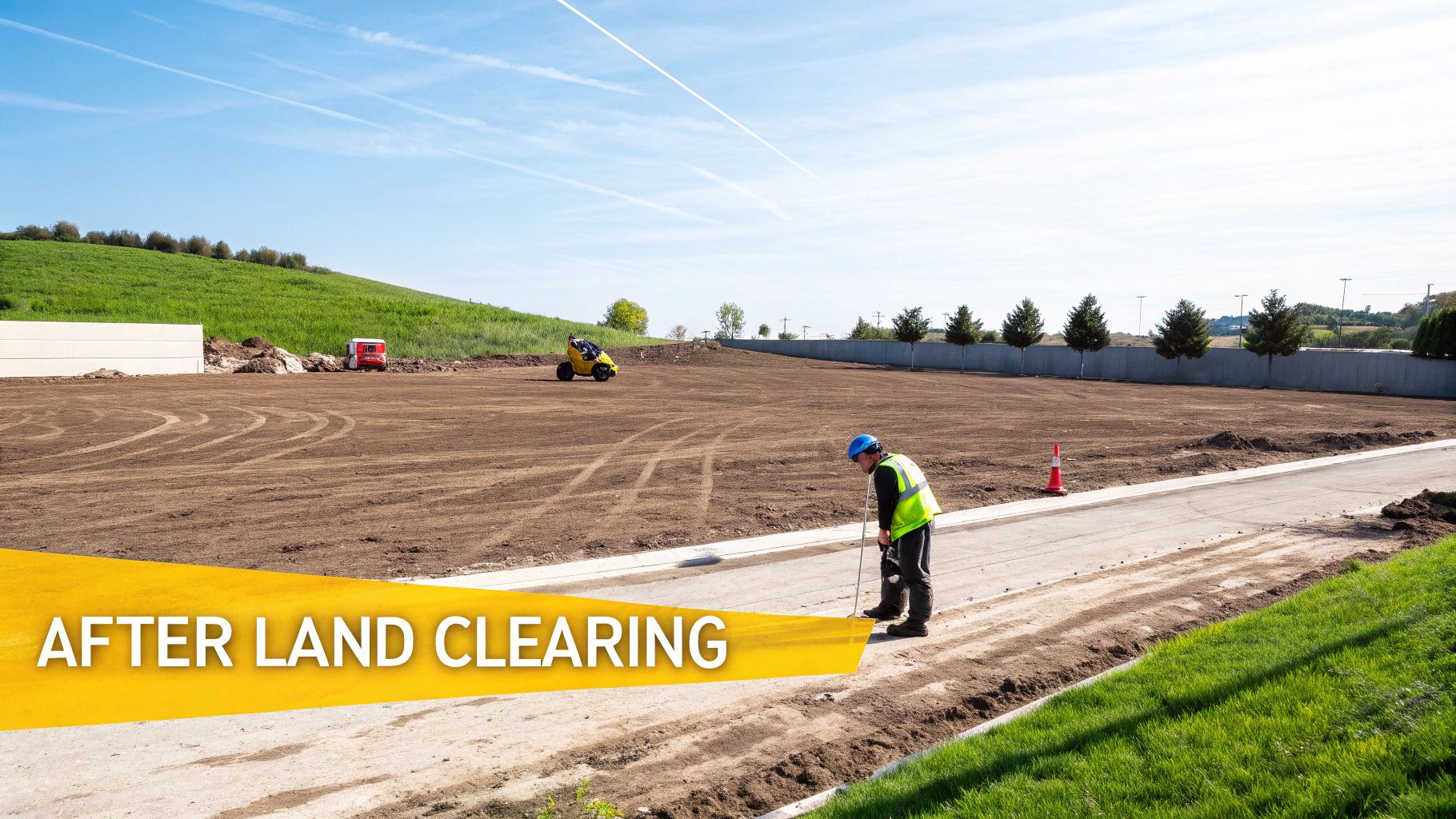
Land clearing is the exciting first step in reclaiming your property, but it’s only half the story. The real work begins the moment heavy machinery leaves, exposing raw topsoil to Florida's intense sun and torrential rains. Without a follow-up plan, your newly cleared lot is incredibly vulnerable to erosion, washouts, and instability.
This is where understanding what is soil stabilization becomes crucial. Think of it as the essential second act that secures your investment. It’s the process of taking that exposed, fragile ground and transforming it into a strong, resilient foundation ready for construction, landscaping, or agricultural use. It locks everything in place, preventing your valuable topsoil from disappearing with the next storm.
From Cleared Lot to Solid Ground
Integrating stabilization into your land clearing timeline isn't an afterthought; it's a strategic move that saves time and money. After the vegetation is mulched and stumps are ground down, the next immediate steps should involve preparing the soil for its long-term purpose.
This phase typically includes:
Grading: Reshaping the land to ensure proper drainage, preventing water from pooling and creating muddy, unstable zones.
Compaction: Creating a firm, dense base where structures or driveways are planned.
Erosion Control: Applying solutions like hydroseeding to lock down vulnerable slopes and prevent soil loss.
This integrated approach ensures your site doesn’t just look clean but is fundamentally sound from the ground up. You can explore a detailed walkthrough of this process in our guide on land preparation for building a house in Central Florida.
A cleared lot is a blank canvas, but a stabilized lot is a secure foundation. Ignoring this step is like building a house without ensuring the ground beneath it is solid and dependable.
When you’re tackling a major project like building a custom home, proper land preparation and soil stabilization aren't just recommended—they're fundamental to long-term success. By proactively managing the soil, you turn a potential liability into a permanent asset, making sure your project starts, and stays, on solid footing. This foresight is what protects your land’s value and prepares it for whatever you have planned next.
Knowing When to Call a Soil Stabilization Professional
There’s a lot to be said for a can-do attitude on a property project, but soil stabilization is where that enthusiasm meets the hard realities of science and engineering. Knowing when to hand the reins over to a professional isn't admitting defeat—it's the smartest move you can make to protect your investment and avoid major headaches later on.
Frankly, trying to fix complex soil issues without the right expertise can lead to results that are ineffective at best and downright dangerous at worst. An improperly stabilized site is more than just a problem; it's a serious liability. When certain factors are in play, a professional’s touch becomes non-negotiable.
Key Triggers for Professional Intervention
Some projects just come with higher stakes and demand an expert’s eye from day one. If your site plan involves any of the following, it’s time to pick up the phone.
Large-Scale Projects: Any work intended to support a building foundation, a commercial driveway, or a public road absolutely requires a professional assessment.
Challenging Soil Types: Deep, mucky, or highly expansive clay soils are a different beast entirely. These conditions present complex geotechnical challenges that DIY methods simply can't solve.
Regulatory Compliance: Most construction projects have to meet strict local building codes that dictate soil compaction and strength requirements. A pro ensures you not only meet but also document these standards correctly.
A soil stabilization professional doesn't just show up and apply a product; they conduct a full diagnosis. Through critical soil tests, they pinpoint the exact cause of the instability and prescribe the right solution to guarantee long-term success.
This is a level of detail that only an experienced team can deliver. They bring specialized equipment for everything from accurate testing to precise mixing and application, making sure the job is done right the first time. For more tips on finding the right crew, check out our guide on how to choose a site preparation contractor near you.
Ultimately, hiring a professional is the safest and most cost-effective path to achieving a durable, stable property that’s ready for whatever you have planned.
Common Questions About Soil Stabilization
Even after getting the hang of the different methods, you probably still have some practical questions about what a soil stabilization project actually involves. Let's tackle some of the most common things property owners ask when they're considering this crucial step.
How Long Does Soil Stabilization Last?
This really comes down to the method we're talking about. Chemical stabilization, where we mix in additives like cement or lime, is designed to be a permanent fix for the life of whatever you're building on top of it. It creates a solid, unified base that isn't going anywhere.
Mechanical compaction is also incredibly durable, but in high-traffic areas or places that get hammered by Florida's weather, it might need some monitoring over the years. On the other hand, biological methods like hydroseeding actually get stronger and more effective over time. As those root systems grow and mature, they weave the soil together, offering fantastic, long-term protection against erosion.
Is Soil Stabilization an Expensive Process?
The cost can swing pretty widely depending on the technique we use and the size of your property. For straightforward projects, basic mechanical compaction is usually the most budget-friendly way to go.
Chemical additives will cost more, though common binders like lime are more affordable than some of the specialized polymers out there. It’s better to think of this as an investment, not just another line item on a bill.
The price of proactively stabilizing your soil is almost always less than the cost of fixing foundation failures, repairing erosion damage, or dealing with major construction delays down the road.
Can I Do Soil Stabilization Myself?
For a tiny project, like firming up the ground for a small garden path, sure, some DIY approaches can work. But once you're talking about anything that needs to support a structure—foundations, driveways, or serious erosion control—you absolutely need a professional.
An expert has the gear to run the right soil tests, knows which method will work for your specific land, and has the heavy equipment to get it done right and up to code. Getting it wrong isn't a small mistake. It can compromise the safety and integrity of your entire project, leading to massive expenses and even structural failure. The risk just isn't worth the potential savings.
When your project demands a professional touch to ensure a stable, secure foundation, Palm State Clear Cut has the expertise and equipment to get the job done right. We handle everything from erosion control and vegetation stabilization to precise material placement, securing your Central Florida property for the long term. Get your free quote by visiting us at https://palmstateclearcut.com.
Comments