
Site Preparation Contractors Near Me: How to Choose the Right Pro
- Jan 15
- 14 min read
Before you can even think about pouring a foundation, that raw piece of land needs to be transformed into a build-ready site. This is the crucial first step where you'll be searching for site preparation contractors near me, and for good reason. These specialists handle everything from forestry mulching to the final grading, and for landowners here in Central Florida, hiring the right local pro is the single most important decision for getting a project off the ground successfully.
Transforming Your Land Starts With The Right Pro
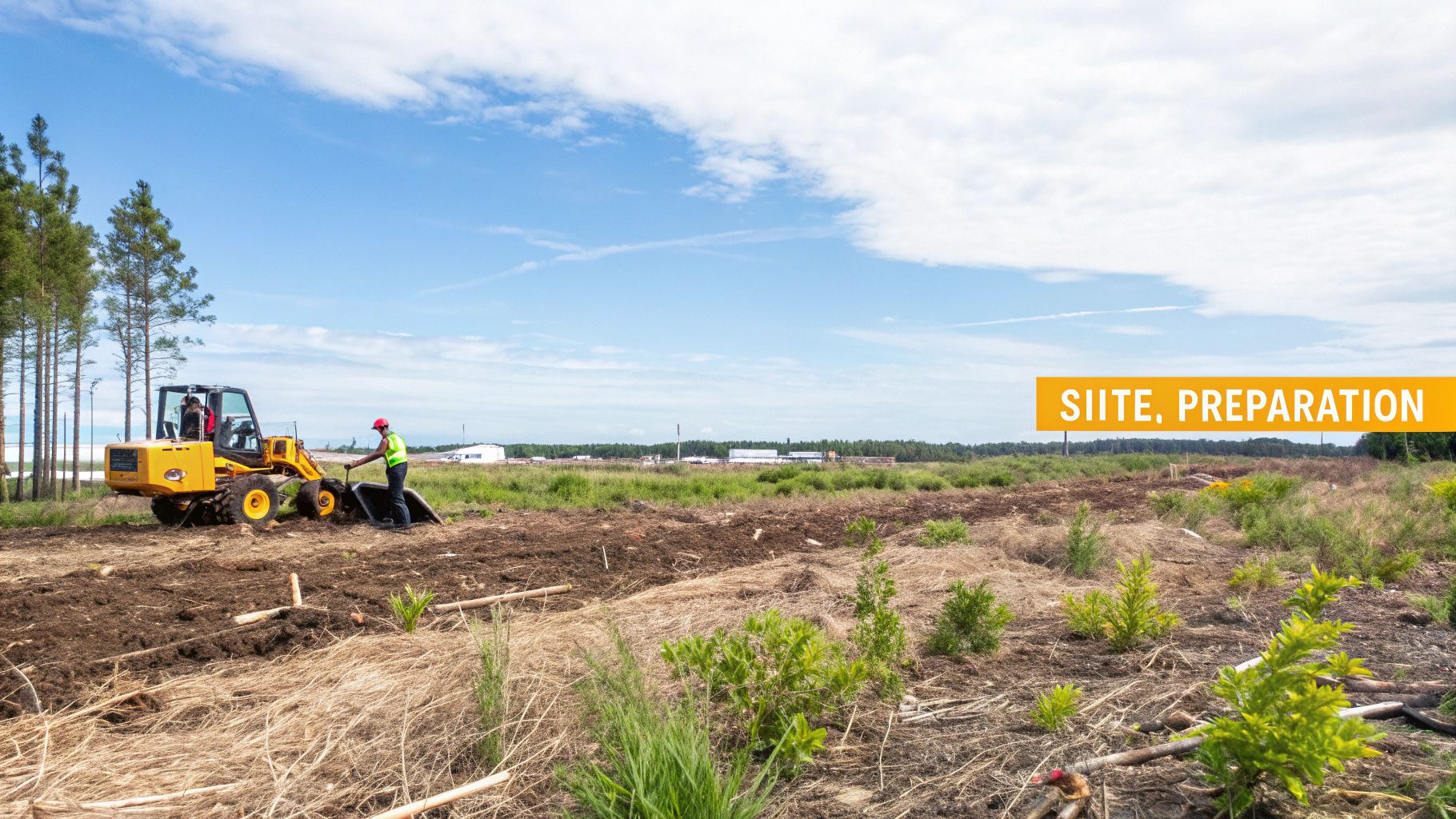
The journey from an overgrown lot to a clean slate for a home or commercial building isn't as simple as just knocking down a few trees. It's a strategic process, one that sets the stage for every single thing that comes after. Professional site prep is the foundational work that guarantees stability, proper drainage, and the long-term health of your project. Skip this or get it wrong, and you're setting yourself up for a world of hurt—think costly soil erosion, foundation nightmares, or a never-ending battle with invasive plants.
Your site prep contractor is really the first—and most important—partner in your construction or land improvement project. They have the heavy machinery, the technical know-how, and the local knowledge to properly evaluate and prepare your property. They are the ones who create that clean, stable, and perfectly contoured canvas for your builders, landscapers, or farming plans.
More Than Just Dirt Work
The scope of real site preparation goes way beyond just moving dirt around. A skilled contractor brings a whole suite of services to the table, all tailored to your specific goals and the unique challenges of your land. In Central Florida, that local expertise is absolutely vital. Our environment throws curveballs that demand a seasoned approach.
Key aspects of professional site preparation include:
Vegetation Management: This is more than just clearing. It might mean selectively thinning trees, grinding down stumps, and removing stubborn brush to open up a usable space while keeping the beautiful, mature trees you want to save.
Grading and Drainage: This is non-negotiable. Proper grading makes sure water flows away from your future buildings, preventing pooling and the kind of water damage that can ruin a structure from the ground up.
Soil Stabilization: Contractors use specific techniques to stop erosion, especially on sloped land or lots near water. This protects both your investment and the local ecosystem.
Debris Removal: A truly build-ready site is a clean site. A pro handles the complete removal and proper disposal of all the cleared vegetation and other debris.
The quality of your site preparation directly impacts the integrity and longevity of your entire construction project. Cutting corners here often leads to expensive structural repairs and drainage nightmares down the road.
Navigating this process means you need to know what you're looking for in a professional. For a deeper look into that selection process, check out our guide on finding a land clearing contractor near me in Central Florida. At the end of the day, investing in an expert team ensures the vision you have for your property is built on solid ground—literally.
A Breakdown Of Key Site Preparation Services
When you start looking for a "site preparation contractor near me," you'll find the term covers a whole lot more than just knocking down a few trees. It’s a meticulous process that transforms raw, unusable land into a build-ready asset. To get a real sense of the work involved, it helps to understand what groundwork in construction entails—it truly is the foundation for everything that comes next.
This kind of foundational work is in high demand, thanks to a buzzing construction and real estate market. The global site preparation market was valued at a massive $305.06 billion and is expected to grow to $323.37 billion in the next year alone. That boom highlights just how critical it is to find a contractor who knows exactly what your specific piece of land needs.
Forestry Mulching And Traditional Land Clearing
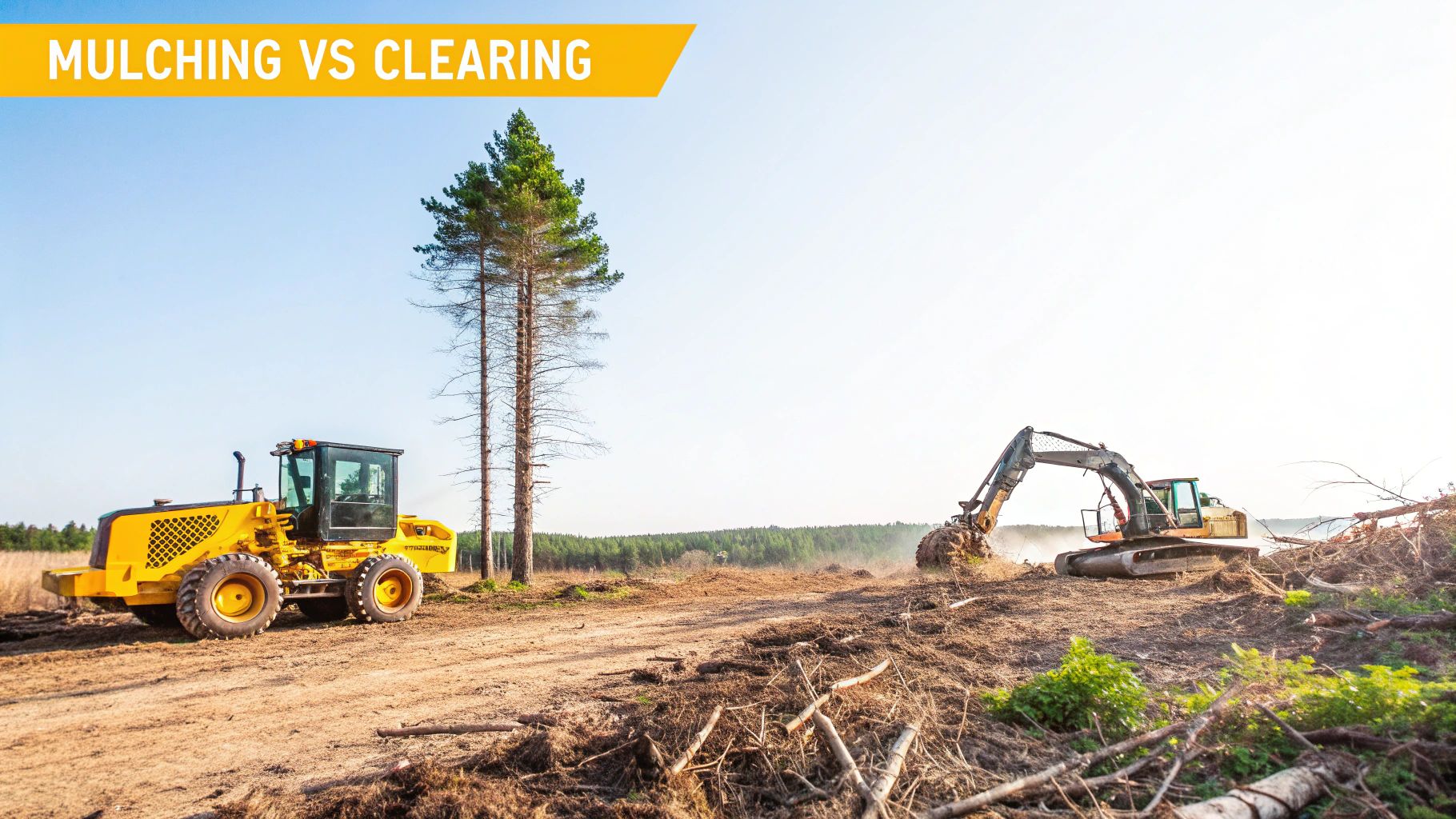
Two of the most common services you’ll come across are forestry mulching and traditional land clearing. They might sound similar, but they're used for very different reasons.
Forestry mulching uses a single, powerful machine to cut down and grind up vegetation, spreading the resulting mulch over the soil as a protective layer. It’s a fantastic method for minimizing soil disturbance and fighting erosion. Think of clearing out thick underbrush on a wooded lot in Seminole County while leaving all the beautiful mature oaks untouched—that’s a perfect job for mulching.
Traditional land clearing, on the other hand, is the heavy-duty option. This involves removing absolutely everything—trees, undergrowth, stumps, and root systems—usually with bulldozers and excavators. You need this approach when you're preparing a commercial lot in Osceola County for a new building foundation or parking lot, where the ground has to be completely clear.
If you want to dig deeper into the specifics, our guide on what land clearing is and the steps involved is a great resource.
Key Takeaway: Forestry mulching is an ecological choice for managing vegetation and improving soil health, while traditional clearing provides the blank slate necessary for major construction.
The right choice really boils down to your end goal. If you’re looking to thin out dense growth for fire prevention or carve out some walking trails, mulching is your best bet. But if you’re pouring a concrete slab, traditional clearing is non-negotiable.
Site Preparation Services At A Glance
To help clarify what you might need, here’s a quick breakdown of common services and where they fit best.
Service | Primary Purpose | Best For Projects Like... |
|---|---|---|
Forestry Mulching | Selectively clear vegetation, improve soil health, and reduce fire risk by turning trees and brush into a protective mulch layer. | Thinning overgrown lots, creating recreational trails, clearing underbrush around homes, and preparing land for pasture or agriculture. |
Traditional Land Clearing | Completely remove all vegetation, including stumps and roots, to create a bare, buildable plot of land. | Preparing sites for new home construction, commercial buildings, subdivisions, and roadway development. |
Brush & Stump Grinding | Eliminate leftover stumps and dense brush below ground level after tree removal, creating a smooth and usable surface. | Finishing a cleared lot, prepping for landscaping or lawn installation, and removing tripping hazards. |
Fence Line Clearing | Create wide, clear paths along property lines to install or maintain fences and establish clear boundaries. | Large residential estates, agricultural properties, ranches, and commercial land management. |
Selective Tree Thinning | Carefully remove specific trees to improve the health and growth of remaining trees, open up views, and manage forest density. | Improving the aesthetics and ecological health of a wooded property, or reducing competition for sunlight and resources. |
Each service plays a distinct role, and a good contractor will help you identify the precise combination needed for your project's success.
Essential Supporting Services
Beyond the big two, a professional site prep team offers several other critical services. These are the details that separate a roughly cleared lot from a truly project-ready property.
Brush and Stump Grinding: After trees come down, stumps are a stubborn and hazardous obstacle. Grinding them down below the surface is the only way to get a smooth grade, prevent annoying regrowth, and create a clean, finished look.
Fence Line and Perimeter Clearing: Having clearly defined property boundaries is non-negotiable for security and management. Contractors create wide, accessible corridors along your property lines—an absolute must for large agricultural properties in Polk County or sprawling residential estates.
Selective Tree Thinning: Sometimes, the goal isn't to clear everything. Selective thinning is about surgically removing certain trees to boost the health of the ones you want to keep, open up a beautiful view, or reduce competition for sunlight.
Bringing these services together is what turns a raw piece of land into a safe, accessible, and perfectly prepared site for whatever you have planned next.
Solving Central Florida’s Unique Land Challenges
Prepping a site in Central Florida isn't just about moving dirt around; it's a constant negotiation with a very specific and often feisty ecosystem. Between our sandy soils, biblical deluges in the summer, and plant life that grows like it's in a sci-fi movie, you need a local expert. A generic, one-size-fits-all approach just won't cut it here.
What works on a rocky hillside up north could be an absolute disaster on your property. Imagine clearing a sloped lot near one of Polk County's lakes without the right plan. One good downpour, and you're watching your valuable topsoil slide right into the water. A contractor who knows this area anticipates that and immediately gets stabilization measures in place to protect your land and our local waterways.
Tackling Aggressive Invasive Species
Here in Central Florida, we're in a never-ending battle with invasive plants that can swallow a property whole. The two heavyweights you'll run into most often are Brazilian Pepper and cogongrass, and both require a specialized game plan to get rid of for good.
Just cutting them down is like putting a band-aid on a broken leg. You're actually making the problem worse.
Brazilian Pepper: This isn't just a weed; it's an invader. It forms dense, impassable thickets and spreads like wildfire. If you don't kill the root system completely, it'll just send up a dozen new shoots for every one you cut.
Cogongrass: Known for its thick, tangled mat of roots, cogongrass is a bully that chokes out everything native. It also creates a serious fire hazard. Just mulching it without a follow-up herbicide strategy is a rookie mistake—you're basically spreading its root fragments (rhizomes) everywhere, setting the stage for an explosive comeback.
A true local pro knows that total eradication is the only real answer. This means more than just yanking them out; it often involves a carefully timed herbicide application to make sure these pests don't haunt your property six months down the road.
Hiring someone who doesn't know these plants by sight is a recipe for a long, expensive headache. You need a contractor who can identify them on the spot and has a proven plan to get them gone—for good.
Erosion Control And Firebreak Creation
Beyond the jungle of invasive plants, landowners here have to worry about erosion and wildfire. Our summer storms can turn a newly cleared lot into a mudslide in minutes. An experienced crew plans for this, using tools like silt fencing and smart, subtle grading to control water flow and keep your soil right where you want it.
Creating firebreaks is another non-negotiable, especially on larger suburban or rural lots. These are simply strategically cleared paths that act as a barrier to slow or stop a wildfire in its tracks. A knowledgeable contractor doesn't just clear a random line; they design and cut effective firebreaks that genuinely protect your home and property. It’s a critical service in a state as fire-prone as Florida. For anyone managing larger wooded parcels, this is essential knowledge; we cover it in more detail in our guide to forestry land clearing in Central Florida.
These are the proactive steps that separate a quick-and-dirty clearing job from a smart, long-term land management solution.
How To Vet Contractors And Compare Bids Like An Expert
Getting a few quotes for your project is the easy part. The real work begins when you sit down to actually compare them. Let me tell you from experience: the lowest price is rarely the best value, and a vague, one-page proposal is almost always a sign of future headaches.
To really dig in and evaluate a site preparation pro, it helps to understand what contractor management entails from the get-go. A good proposal should feel less like a price tag and more like a detailed roadmap for your project.
Deconstructing The Proposal
When those bids land in your inbox, look for the ones that clearly break down every phase of the work. A true professional's quote will read like a plan. It should explicitly state what equipment they intend to use—from forestry mulchers to excavators—because that choice directly impacts the project's efficiency and your final cost.
Most importantly, the proposal absolutely must include proof of general liability and workers' compensation insurance. Don't be shy about asking for the certificates. Never, ever hire a contractor without personally verifying these documents. A lack of proper insurance is a massive red flag that puts all the financial and legal risk squarely on your shoulders as the landowner.
A contractor's proposal should also show they understand the unique challenges of your property.
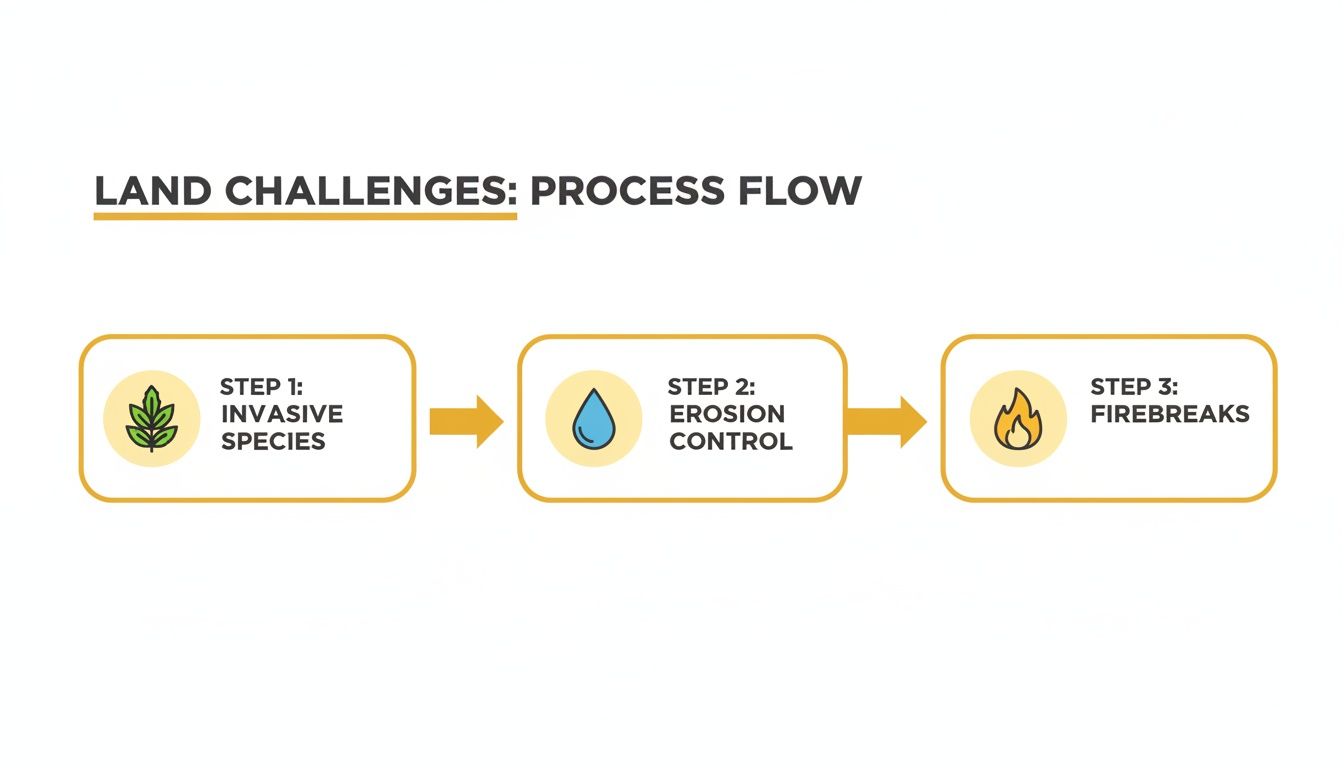
This process shows how interconnected these tasks are. A good contractor knows you can't just clear trees without thinking about what comes next, like controlling erosion or managing invasive species—all critical elements for any Central Florida project.
Red Flags And Critical Questions
Beyond the paperwork, trust your gut. An unusually low bid often means someone is cutting corners, whether it’s on equipment maintenance, insurance coverage, or proper debris disposal. This is a fragmented industry where good local experts thrive. In the U.S., the site preparation market is made up of around 39,200 companies pulling in $144 billion annually. The average company has just 10 workers, which really highlights how important it is to find a reputable local operator you can trust.
Watch out for vague language. Phrases like "clear as needed" or "handle debris" are too ambiguous and leave you open to surprise charges. A professional proposal will specify exact boundaries, clearing methods, and disposal plans.
When you get them on the phone, have a list of questions ready. These aren't just for your peace of mind; they're designed to gauge a contractor's real-world expertise and professionalism.
Here are a few you should definitely ask:
Experience: "Can you show me a few projects you've completed that are similar in size and scope to mine, preferably right here in this county?"
Process: "What's your specific plan for controlling erosion on my property, both during and after the clearing is done?"
Contingencies: "How do you handle the unexpected? What if you find protected wildlife or hit a patch of extremely wet soil?"
Compliance: "Are you up-to-date on all the local ordinances for tree removal and environmental protection in this area?"
Asking direct, thoughtful questions does more than just get you answers. It signals to the contractor that you're an informed and serious client. This simple step helps ensure you find a true partner for your project, not just the cheapest guy with a bulldozer.
Budgeting For Your Project: Costs, Permits, And Timelines
Let's cut to the chase. Every landowner I talk to has the same three questions right out of the gate: How much will it cost, what permits do I need, and how long is this actually going to take?
While every piece of land has its own personality, understanding the big variables will help you set a realistic budget and a sensible timeline from the get-go.
The price for site preparation isn't some flat-rate service. It’s a direct reflection of the effort required to tame your property. With major infrastructure growth, the global site preparation market is booming, expanding from $311.79 billion to $335.16 billion recently. This demand shows just how critical this work is, and why it's so important to get detailed quotes that match your specific project. For a deeper dive into these numbers, you can check out a recent site preparation contractor market analysis.
Key Cost Drivers On Your Property
Several factors are going to move the needle on your final quote. Think of these as the main ingredients that dictate the complexity and time needed for the job.
Total Acreage: This one's the most straightforward. More land simply means more machine hours and more manpower.
Vegetation Density: Are we talking about a few scattered pines or a full-blown jungle of palmettos, vines, and thick underbrush? The denser the growth, the more intensive the clearing.
Terrain and Accessibility: A flat, dry lot with easy road access is always going to be less expensive to clear than a sloped, swampy parcel tucked away at the end of a narrow dirt path.
Specific Services: Forestry mulching has a different cost structure than traditional land clearing that involves digging out every last stump and hauling all the debris away.
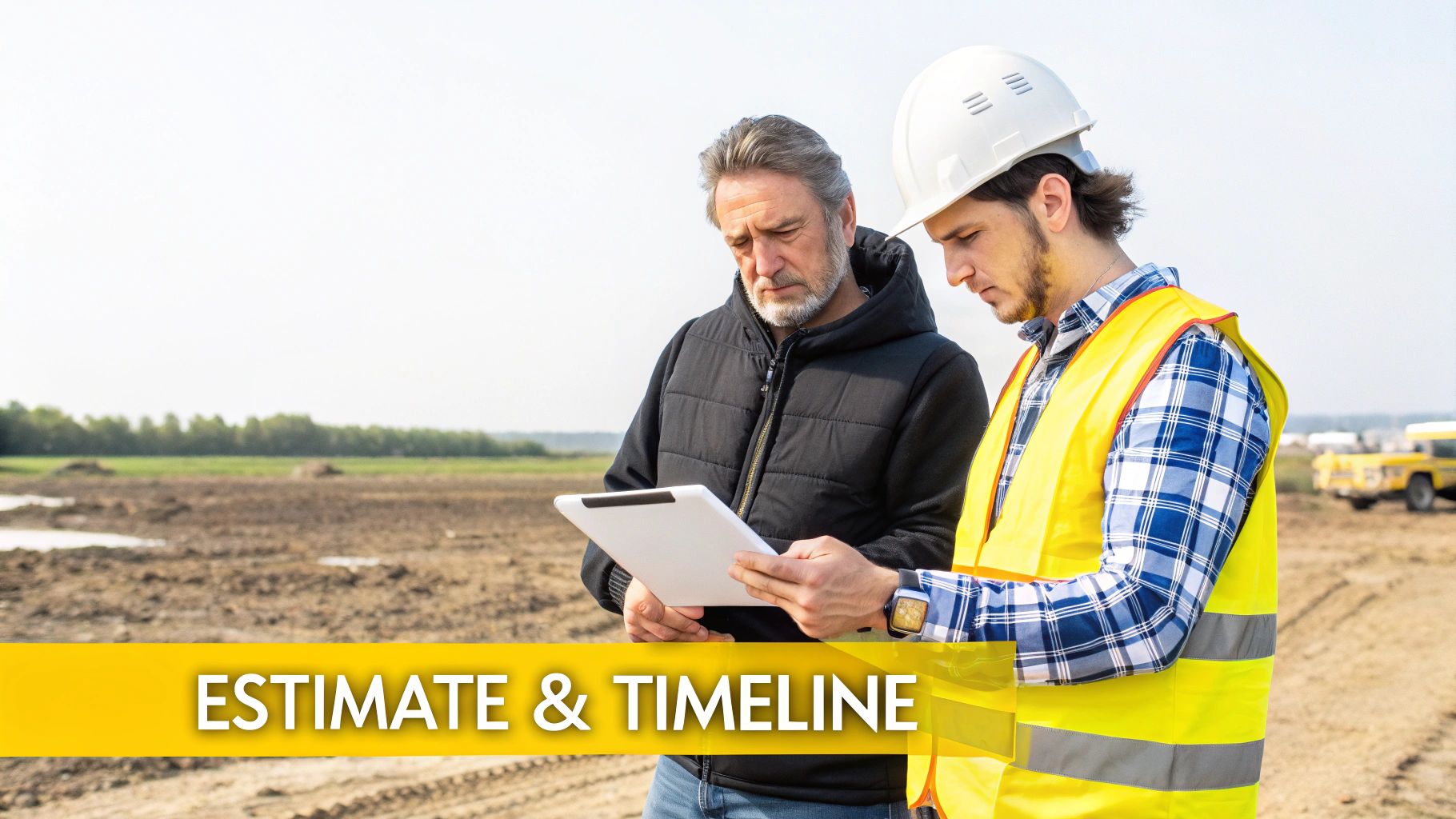
A true professional won't toss out a vague "ballpark" number over the phone. They’ll insist on walking the property with you to see these factors for themselves before putting together a detailed, written estimate.
Navigating Permits And Project Timelines
The whole permitting process can feel like a headache waiting to happen, but for most basic clearing jobs, it's often simpler than you'd think.
Here in Central Florida, many counties don't require a specific permit for standard vegetation removal on private land, especially if it's for agricultural use or just general maintenance.
However, the second your project involves changing the grade of the land, touching anything near a designated wetland, or taking down protected trees (like certain heritage oaks), you absolutely need to get in touch with your local county planning and zoning department. A reputable contractor will know these rules inside and out and guide you on when official paperwork is needed. They should never start work that requires a permit until you have that approved document in hand.
Once you get the green light, a typical project follows a pretty clear path:
Initial Contact and Site Visit: This usually happens within a few days of your first call.
Proposal and Agreement: You should get a detailed quote in your inbox within 2-3 business days after the site visit.
Scheduling: Once you sign on the dotted line, you're on the calendar. This could be anywhere from one to three weeks out, depending on how busy the crew is.
Execution and Cleanup: A simple one-acre lot might take 1-3 days. A larger, more overgrown site could easily take a week or more.
Final Walkthrough: The job isn't done until you walk the property with the crew leader to make sure everything looks exactly how you envisioned it.
Your Site Preparation Questions Answered
When you start searching for "site preparation contractors near me," it's natural for a flood of questions to follow. This is a major investment in your property, and you deserve to feel confident about every single step. Let's tackle some of the most common questions we hear from landowners just like you.
What Is The Difference Between Land Clearing And Forestry Mulching?
This is a fantastic question, and getting the answer right is key to a successful project. The two services sound similar, but they achieve completely different outcomes. Think of it like this: traditional land clearing creates a totally blank canvas, while forestry mulching is all about selectively managing what's already there.
Traditional land clearing is the heavy-duty option. It’s a full-scale removal of everything—trees, stumps, roots, the works. All that debris gets hauled off-site, leaving you with bare ground. This is exactly what you need when you're laying a foundation for a new home, pouring a commercial slab, or putting in a driveway where the ground has to be perfectly clean for excavation.
Forestry mulching, on the other hand, is a far more surgical and earth-friendly method. A single, powerful machine moves through the property, cutting and grinding vegetation right where it stands. The resulting material is spread across the ground as a natural layer of mulch. This is the go-to choice for thinning out overgrown woods, carving out trails, or taming unruly underbrush without tearing up the soil. It's faster and a huge help in preventing erosion.
The bottom line is simple: Clearing is for building. Mulching is for managing and improving the land you have.
Do I Need To Be Present While The Work Is Being Done?
You definitely don't need to set up a lawn chair and watch for the entire project, but being there at the very beginning is absolutely critical. We always urge clients to be on-site for the initial walkthrough with the crew leader.
That first meeting is your golden opportunity to physically point out property lines, flag specific trees you’re determined to save, and walk through the exact scope of the job. It's the single best way to prevent miscommunication and ensure everyone is on the same page before a single engine starts. A pro contractor will keep you in the loop with photos and updates, but nothing beats that initial face-to-face conversation for getting a project started on the right foot.
How Do You Handle Protected Trees Or Sensitive Areas?
Any reputable site prep contractor starts with a detailed pre-work assessment to map out sensitive zones. This isn't something they do alone; it’s a collaborative walk-through where you and the contractor identify and flag anything that needs protection. Here in Florida, that often means certain grand oaks, wetland boundaries, or any other areas you want left untouched.
From there, it’s all about skill. Experienced machine operators use precision and careful maneuvering to work around these features. They know the local regulations inside and out and will create clear buffer zones to ensure these areas aren't just avoided, but completely unharmed. That commitment to doing things right is the hallmark of a true professional and protects both your land and you from costly fines.
What Happens To The Debris After The Job Is Finished?
What becomes of all the leftover material depends entirely on the service you choose, and it's a detail you'll want to see spelled out clearly in your contract.
With forestry mulching, the answer is easy—the "debris" is the whole point! It becomes a nutrient-rich layer of mulch that's left right on-site to feed the soil and stop erosion. Nothing gets hauled away.
For traditional land clearing, a full-service contractor will have debris hauling and disposal built right into their proposal. They’ll load up every last tree, stump, and pile of brush and make sure it’s disposed of legally and responsibly. You're left with a perfectly clean, obstruction-free site, ready for whatever comes next.
Ready to get your Central Florida property cleared the right way? The team at Palm State Clear Cut has the local expertise and professional equipment to handle any project, big or small. Contact us today for a free, no-obligation quote!

Comments