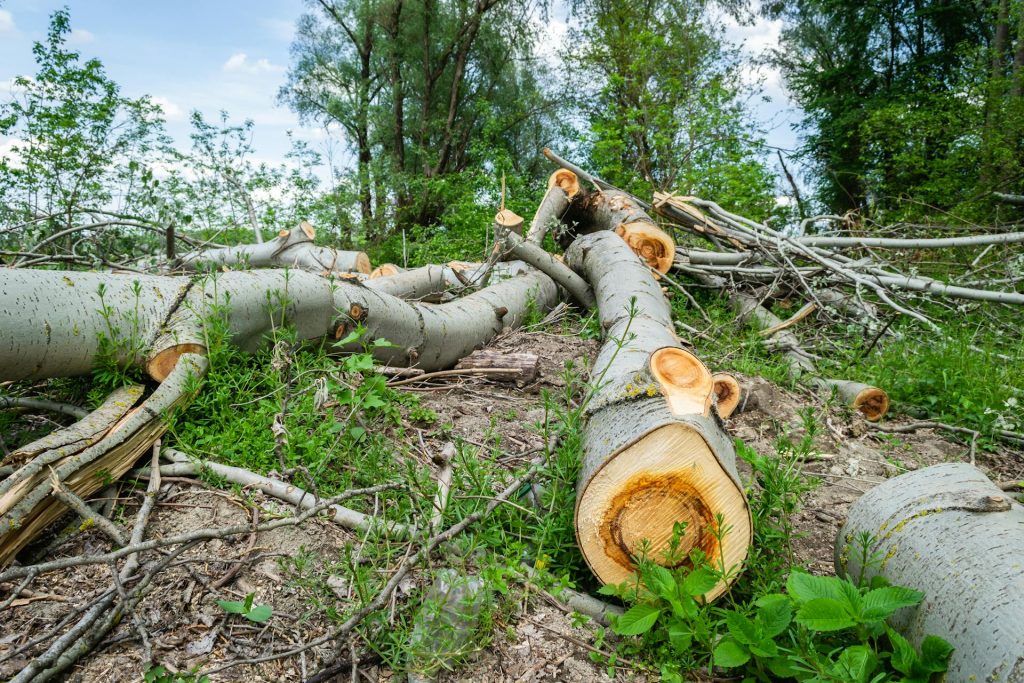
When people talk about forestry land clearing, they’re talking about a whole lot more than just knocking down trees. It’s a strategic, careful process of removing trees, stubborn overgrowth, and stumps to get a piece of property ready for its next chapter. It’s not about bulldozing everything in sight; it’s a calculated effort to take an overgrown, unusable plot and turn it into a clean slate for whatever you have planned.
What Forestry Land Clearing Really Means for Your Property
Imagine you’ve got a beautiful piece of land here in Central Florida, but it’s a tangled mess—an impassable jungle of palmettos, invasive vines, and thick underbrush. We see it all the time. This is where forestry land clearing becomes the critical first step. It’s the bridge between just owning land and actually being able to use it.
This process isn’t about destruction. It’s about intentionally reclaiming your property. Think of a sculptor carefully chipping away at a block of stone to reveal the art within. A professional crew uses specialized equipment to selectively get rid of the unwanted vegetation while keeping the land’s integrity and value intact.
From Overgrown to Opportunity
At its core, the goal of forestry land clearing is to unlock a property’s hidden potential. Whether you’re dealing with a dense patch of woods in Osceola County or a sprawling lot out in Volusia, clearing the land opens up possibilities that were completely buried by nature’s clutter.
A professional clearing project brings some major benefits:
- Improved Usability: It takes a wild, inaccessible area and transforms it into a functional space where you can build a home, plant crops, or even create a few recreational trails.
- Enhanced Safety: Getting rid of dense undergrowth, dead trees, and other fire hazards makes your property much safer for your family, any animals you have, and the structures you plan to build.
- Increased Property Value: A clean, easy-to-access lot is worlds more attractive to potential buyers. It adds immediate curb appeal and boosts its market worth.
A Responsible Approach to Land Management
Now, the term “clearing” might sound a bit aggressive, but modern methods are all about being good stewards of the land. We’re losing millions of hectares of forest around the world every year, which really drives home why responsible land management is so important. For landowners in Central Florida, unchecked overgrowth can actually mimic these destructive patterns on a smaller scale.
Professional forestry land clearing uses advanced techniques like mulching and selective thinning to clear parcels with minimal soil disturbance. This approach prevents erosion and gets sites ready for homes, farms, or utilities without causing the kind of permanent damage seen in large-scale deforestation. You can learn more about global deforestation trends on globalissues.org.
When you hire a professional service, you aren’t just clearing land—you are making a strategic investment. This initial step sets the foundation for your entire project, ensuring the final result is stable, sustainable, and ready for whatever you have planned next.
Choosing the Right Land Clearing Method
Picking the right land clearing method is a lot like choosing the right tool for a home renovation. You wouldn’t grab a sledgehammer to hang a picture, right? The same logic applies here. Each technique we use is designed for a specific purpose, and the best one for your Central Florida property really depends on what you plan to do with it.
The most important question is: what’s the end goal? Are you clearing a small lot in Orange County for your dream home, prepping a few dozen acres in Polk County for a new crop, or just trying to get a handle on overgrown brush to cut down on fire risk? Knowing your destination is the first step in picking the right path to get there.
This simple flowchart can help you start thinking about the possibilities for your newly cleared property.
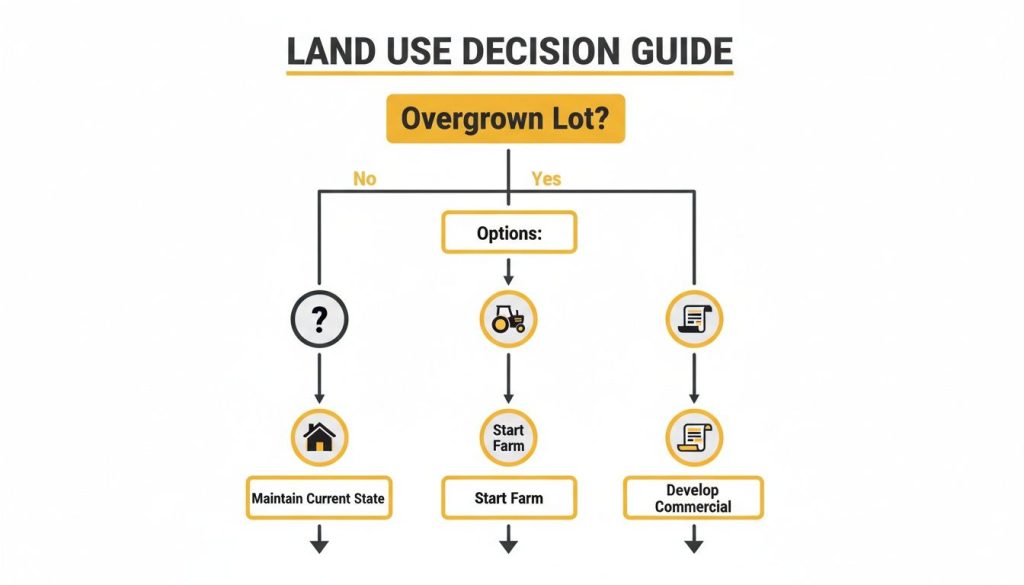
As you can see, once that overgrowth is gone, you open up a world of potential for building, farming, or other developments. That’s why the method you choose from the get-go is so critical.
Forestry Mulching: The Forest Lawnmower
Forestry mulching has become one of the most popular and environmentally friendly ways to clear land, and for good reason. Think of it as a powerful, all-in-one machine—a giant lawnmower for the woods. It drives right over unwanted trees and brush, shredding everything on the spot and turning it into a protective layer of natural mulch.
The whole process is incredibly efficient and has very little impact on the soil itself. There’s no need to haul debris away or deal with massive burn piles, which saves both time and money. That fresh layer of mulch helps stop soil erosion, holds in moisture, and slowly breaks down to feed the soil with nutrients. If you want a deeper dive, check out our guide on what forestry mulching is and how it works.
- Best For: Environmentally sensitive spots, lots with dense brush and small-to-medium trees, and any project where you want to keep your topsoil intact.
- Key Equipment: A single piece of machinery, usually a skid steer or compact track loader, equipped with a specialized mulching head.
Traditional Mechanical Clearing: The Heavy Lifter
This is what most people picture when they think of “land clearing.” It’s the old-school approach using heavy machinery like bulldozers and excavators to push down trees, scrape the land, and pile up all the debris. It’s a brute-force method that’s incredibly effective at stripping a site down to bare dirt.
You’ll often see this technique used for major construction projects where a perfectly clean and level slate is non-negotiable. But it’s a much more disruptive process. It tears up the topsoil, can cause serious erosion if not managed carefully, and leaves you with a big pile of debris that has to be either hauled off or burned.
Traditional clearing is all about total removal. It’s the go-to when a property needs to be completely re-graded for something big, like a commercial building foundation or a new housing development.
Stump Grinding: The Eraser
Whether you’ve mulched bigger trees or used traditional methods to clear them, you’re almost always left with stumps. Stump grinding is the specialized service that comes in to “erase” them. A machine with a high-speed cutting wheel grinds the stump and its main roots into small wood chips, leaving the ground nice and level.
This is a must-do step for any area that’s going to become a lawn, a driveway, or a building pad. Those leftover stumps aren’t just ugly—they’re tripping hazards, can attract pests like termites, and make any future landscaping or construction a real headache.
Comparison of Land Clearing Methods
To make the decision a bit easier, here’s a side-by-side look at the most common land clearing techniques we use here in Central Florida. This table breaks down what each method is best for, along with the main pros and cons you should consider for your specific project.
| Technique | Best For | Pros | Cons |
|---|---|---|---|
| Forestry Mulching | Selective clearing, erosion control, and sites with thick underbrush. | Minimal soil disturbance, no hauling costs, returns nutrients to the soil. | Not ideal for removing very large trees; leaves a mulch layer. |
| Mechanical Clearing | Large-scale development, site preparation for construction, complete vegetation removal. | Fast for large areas, removes all debris including roots, creates a bare slate. | High soil disturbance, risk of erosion, requires debris disposal. |
| Stump Grinding | Preparing cleared land for lawns, building, or landscaping. | Creates a smooth, hazard-free surface; prevents pest infestations. | An additional step after tree removal; chips must be managed. |
Ultimately, the best forestry land clearing technique for your property is the one that lines up with your budget, your timeline, and what you see for your land down the road. The surest way to get it right is to talk with an experienced contractor who can walk your property, understand your goals, and recommend the method that will deliver the results you’re looking for.
Navigating Florida’s Permits and Environmental Rules
Clearing your land in Central Florida successfully involves a lot more than just firing up heavy machinery. You’ve got to navigate a landscape of state and local regulations. While the legal and environmental side of forestry land clearing can feel a bit tangled, it’s a non-negotiable part of any responsible project. These rules aren’t there to give you a headache; they exist to protect Florida’s one-of-a-kind ecosystems for all of us.
Think of the permitting process as your project’s blueprint. You wouldn’t dream of building a house without proper architectural plans, and you shouldn’t start clearing land without getting the right approvals in place. This step is your insurance against hefty fines and frustrating delays, and it confirms your project is in line with community and environmental standards. A seasoned local contractor is your best guide here, handling the paperwork and making sure every single box is checked.
Understanding Local Permit Requirements
Here in Central Florida, permit requirements can be a real patchwork, changing quite a bit from one county to the next. What you need for a project in a dense Brevard County neighborhood could be worlds away from the rules for a sprawling rural lot in Osceola or Volusia. Typically, permits get triggered by things like the size of your property, how many trees you plan to take down, or if you’re near any sensitive areas.
Here are a few of the common permits you might run into:
- Tree Removal Permits: Most counties have rules to protect their tree canopy. You’ll likely need a permit to take down trees over a certain diameter, especially “heritage” or “specimen” trees that are particularly large, old, or significant.
- Land Clearing or Grubbing Permits: For bigger jobs, a general land clearing permit might be on the list. This usually means you need to submit a site plan showing exactly what will be cleared and what you’ll leave untouched.
- Environmental Resource Permits (ERP): This one is a big deal. If your property has or is even close to wetlands, streams, or other waterways, this permit from the Florida Department of Environmental Protection (FDEP) or a local water management district is almost always required.
This is where a local expert really proves their worth. They know the ins and outs of each county’s specific rulebook, which helps cut through the red tape and dodge the common mistakes that can bring a project to a screeching halt.
Key Environmental Considerations in Central Florida
Florida’s environment is a delicate balancing act, and responsible land clearing means working with it, not against it. Protecting our natural resources isn’t just a nice idea—it’s the law. Two of the biggest factors for any forestry land clearing project in our neck of the woods are wetlands and protected wildlife.
A core principle of responsible land management in Florida is avoidance and minimization. The goal is always to design a project that first avoids impacting sensitive environmental areas. If that’s not possible, the next step is to minimize the impact as much as possible.
Protecting Wetlands and WaterwaysWetlands are the kidneys of Florida, acting as natural water filters and providing essential homes for wildlife. Because they’re so vital, state and federal laws are extremely strict about any activity that might harm them. Before a single machine starts, a professional will survey your property to flag any potential wetlands and set up protective buffers to keep all work a safe distance away.
Managing Protected Species HabitatCentral Florida is home to quite a few protected species, but the gopher tortoise is one you’ll hear about most. They are a keystone species, which means their burrows provide a safe haven for over 350 other types of animals. It is illegal to harm a gopher tortoise or mess with its burrow without specific permits from the Florida Fish and Wildlife Conservation Commission (FWC). A good land clearing contractor will always start with a thorough site survey to spot any burrows. If any are found, they’ll work with a licensed FWC agent to safely and humanely relocate the tortoises before clearing begins, making sure your project moves forward legally and ethically.
Budgeting for Your Land Clearing Project
Two questions always come up first: “How much is this going to cost?” and “How long will it take?” There’s no simple, one-size-fits-all answer. The budget and timeline for a forestry land clearing project are completely shaped by the unique features of your property.
Think of it like planning a road trip. The final cost and travel time depend entirely on where you’re going, the car you’re driving, and the road conditions you hit along the way. Clearing land is no different.
The big variables are the total acreage, how thick the vegetation is, the difficulty of the terrain, and the exact clearing method we use. A flat, one-acre lot with just light brush is a quick, easy trip. But a hilly, five-acre property choked with mature trees and tangled vines? That’s a much longer, more complex expedition.
Key Factors That Shape Your Project Cost
Knowing what drives the cost helps you set a realistic budget. Each of these elements presents a different challenge, demanding specific equipment, time, and labor to handle right.
Here’s a breakdown of what influences the final price tag:
- Property Size and Accessibility: It’s simple—a larger property takes more time and resources. But just as important is how easily our crews and heavy machinery can get onto the site in the first place.
- Vegetation Density: Clearing out a few scattered saplings and some light undergrowth is a world away from tackling a dense forest of mature hardwoods and thick, stubborn vines.
- Terrain and Soil Conditions: Here in Central Florida, we see it all. Steep slopes, rocky ground, or swampy, wet soil can slow everything down and may require specialized equipment, which adds to the cost.
- Chosen Clearing Method: Forestry mulching often has a different price structure compared to traditional bulldozing, which comes with extra expenses for hauling away or burning all the debris.
For a deeper dive into these variables, our detailed guide breaks down specific examples and helps you understand how much it costs to clear an acre of land in Central Florida.
A Look at the Typical Project Timeline
While the timeline also depends on the specific job, most professional land clearing projects follow a pretty predictable path. Seeing the whole process laid out helps you know what to expect from our first phone call to the final walkthrough.
From Quote to Completion: The Land Clearing Journey1. Initial Consultation & Quote (1-3 days): It all starts with a site visit. We’ll walk your property to see the scope, talk about your goals, and give you a detailed, transparent estimate.2. Scheduling & Permitting (1-4 weeks): Once you give us the green light, we get you on the schedule. This phase also includes securing any local or state permits, which can sometimes stretch the timeline a bit.3. The Clearing Work (1-5+ days): This is when the real action begins. A straightforward one-acre lot might just take a day, but a complex five-acre project could easily take a week or more.4. Final Cleanup & Walkthrough (1 day): After the main clearing is done, we do a final cleanup and walk the property with you to make sure you’re 100% happy with the results.
This structured process ensures your project moves along smoothly and without any surprises. It’s also worth noting that landowners navigating local regulations can sometimes find funding that aligns with state-specific initiatives, like certain Florida agricultural grants. Properly managed clearing prevents the kind of invasive regrowth that plagues unprepared sites, ensuring your land is ready for its next chapter without causing erosion or other environmental headaches.
How to Choose the Right Land Clearing Contractor

Picking the right partner for your forestry land clearing project is easily the most important decision you’ll make. The difference between a smooth, successful job and a complete nightmare almost always comes down to the crew you hire. A great contractor is more than just someone who can operate a machine; they’re your project manager, your guide through local regulations, and a trusted advisor, all rolled into one.
Make the wrong choice, and you could be looking at project delays, surprise costs, damage to your property, or even fines for not following environmental rules. The goal is to find a pro who not only has the right equipment but truly gets the unique challenges of working in Central Florida’s diverse landscape.
Verifying Credentials and Experience
Before you even think about getting quotes, you need to do a little homework. The very first step is making sure any contractor you’re considering is properly licensed to work in your county and carries the right insurance. This part is absolutely non-negotiable.
You need to see proof of two critical types of coverage:
- General Liability Insurance: This is what protects your property from any accidental damage that might happen while they’re working.
- Workers’ Compensation: This covers their team if someone gets hurt on your job site, which protects you from being held legally and financially responsible.
Once you’ve checked the paperwork, look for a solid track record of local projects. A company that has already completed jobs in your area will know the soil, the typical vegetation, and the specific quirks of the local permitting office.
Never be shy about asking for proof of insurance and licensing. A reputable contractor will have these documents on hand and will be glad you asked. This simple check is your first line of defense against uninsured, fly-by-night operators.
Assessing Their Equipment and Process
You can tell a lot about a company by the state of its equipment. A contractor who invests in modern, well-maintained machinery—like high-performance forestry mulchers and powerful stump grinders—is set up to handle your project safely and on time. Outdated or poorly maintained gear is a recipe for breakdowns, delays, and sloppy work.
During your first conversation, ask them to walk you through their process. A transparent contractor should be able to explain everything from their initial site visit and environmental checks to the final cleanup. This includes how they plan to deal with debris and whether they follow all transport laws, including federal and state DOT regulations for dump trucks.
Critical Questions for Every Potential Contractor
To properly vet your options and find the best fit, go into the conversation with a list of questions. Their answers will tell you a lot about their expertise, how reliable they are, and the kind of service you can expect. Choosing the right partner is everything, and we’ve got more tips in our guide on finding a land clearing contractor near me in Central Florida.
Here’s a checklist of must-ask questions:
- Can you provide a detailed, itemized quote in writing?
- What’s your plan for protecting the trees and parts of the property I want to keep?
- Are you familiar with the specific permit process in my county?
- What does your timeline look like from start to finish?
- How do you handle surprises, like finding protected wildlife or buried junk?
By taking these steps, you put yourself in a great position to confidently hire a trustworthy professional who will deliver quality results and turn your vision for your property into reality.
Preparing Your Land for What Comes Next
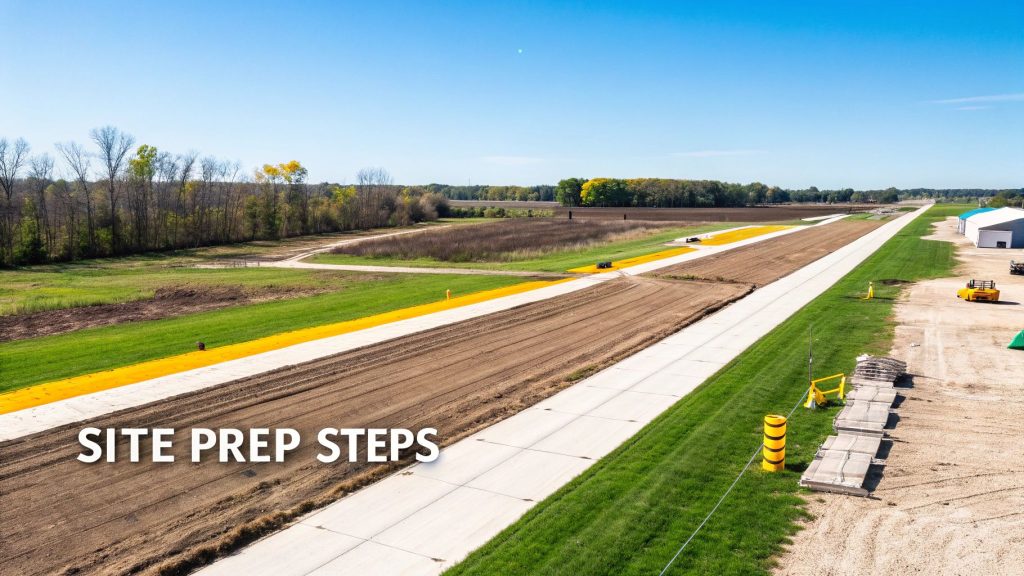
Successfully clearing your property is a huge milestone, but the job isn’t quite done when the last tree is gone. Professional forestry land clearing is all about setting your property up for whatever you have planned next, and that means looking beyond the initial clearing. If you skip proper site preparation, you’re just inviting a whole new set of problems down the road.
Think of it like priming a canvas. The clearing process gives you a clean slate, but it’s not the finished masterpiece. The crucial follow-up services are what protect that canvas, ensuring your investment holds its value and is ready for use for years to come.
Preventing Future Headaches
One of the biggest post-clearing challenges, especially here in Central Florida, is stopping aggressive and unwanted regrowth. Nature moves fast to reclaim its territory, and our notorious invasive species don’t waste any time. This is where a strategic follow-up plan becomes absolutely essential.
These preventative steps save you a ton of time and money in future upkeep:
- Invasive Species Control: We go after the stubborn plants that can quickly overwhelm a cleared lot, like the infamous Brazilian Pepper or tough cogon grass.
- Precision Herbicide Application: A carefully targeted application can stop invasive root systems from sprouting back, keeping your land clear without causing collateral damage to the surrounding environment.
True site preparation isn’t just about what you remove. It’s about what you do to keep unwanted vegetation from coming back. This forward-thinking approach transforms a one-time project into a lasting solution.
Ensuring Long-Term Stability and Safety
Beyond keeping weeds at bay, preparing your land is about making it stable and safe for your future plans. This is a big deal in Florida, where our heavy rains can cause serious soil erosion on freshly exposed ground.
Key services for safety and stabilization include:
- Erosion Control Measures: We can implement solutions like silt fences or other soil stabilization techniques to keep your valuable topsoil right where it belongs, protecting both your property and nearby waterways.
- Creating Firebreaks: Clearing strategic buffer zones around your property is one of the single most effective ways to protect your future home or business from the ever-present threat of wildfires.
While global deforestation is a real concern, recent data shows that focused efforts can actually reduce tree cover loss. For property owners in places like Osceola or Lake counties, this just goes to show the value of a professional, controlled approach. Modern forestry mulching and stump grinding allow for targeted clearing with minimal environmental impact, preparing land for new homes or agriculture in a way that’s truly sustainable. You can read more about global deforestation and conservation efforts at carbonbrief.org.
Your Top Land Clearing Questions, Answered
Even with all the information on methods and regulations, you probably still have some practical questions about what a forestry land clearing project actually entails. Getting clear, straightforward answers is the best way to finalize your plans and move forward with confidence. Let’s tackle some of the most common questions we hear from property owners all across Central Florida.
How Long Does It Really Take to Clear One Acre?
This is easily one of the most common questions we get, and the honest answer is: it depends entirely on your specific piece of land. Think of it like mowing your lawn—a flat, open yard is a quick job, but one filled with thick weeds, tree stumps, and uneven ground takes a lot longer. The timeline for clearing an acre is shaped by the density of the vegetation, how rough the terrain is, and the method we use.
That said, a professional crew with modern, high-powered equipment can work incredibly fast. For a fairly typical one-acre lot here in Central Florida, it often takes just one to three days to get the entire job done, from the first cut to the final cleanup.
Is Forestry Mulching Actually Better Than Traditional Clearing?
For the vast majority of Florida properties, the answer is a resounding yes. While traditional clearing certainly has its uses, forestry mulching brings some major environmental and practical wins to the table, making it the go-to choice for a huge range of projects. It’s simply a smarter, less invasive way to manage land.
Forestry mulching is often the superior option because it works with the land, not against it. By avoiding major soil disturbance, it preserves the delicate topsoil, controls erosion, and returns valuable organic matter right back into the ground where it belongs.
This approach also means you don’t have to deal with hauling debris off-site or getting burn permits, which simplifies the whole project and can bring down the total cost.
What Happens to All the Trees and Brush You Clear?
Where all that vegetation ends up comes down to the clearing method used on your project. Each technique handles the leftover debris differently, which impacts both your property and the local environment. Knowing the outcome is key to picking the right service for your land’s future.
Here’s a simple breakdown of what to expect:
- With Forestry Mulching: Every last tree and bit of brush is shredded on-site into a nutrient-rich layer of mulch. This natural blanket gets spread evenly across your property, where it immediately starts retaining moisture and enriching the soil as it breaks down.
- With Traditional Clearing: The debris is typically gathered into large piles. From there, it’s either hauled away to a disposal facility, burned on-site (if you can get the right permits), or ground down with a massive tub or horizontal grinder, all depending on your specific project goals.
Ready to get answers tailored to your specific property? The team at Palm State Clear Cut is here to provide a free, no-obligation quote and walk you through every step. Visit us at https://palmstateclearcut.com to schedule your consultation.