Before you even start Googling “land clearing contractor near me,” a little prep work can save you a world of headaches and a good bit of cash. The secret is to get a crystal-clear picture of your project’s scope and your property’s unique needs before you ever pick up the phone. This simple step up front is the key to getting accurate quotes and kicking off a project that runs smoothly from day one.
Getting Your Property Ready for a Land Clearing Contractor
The path to a build-ready lot starts long before you hear the first engine roar to life. Doing your homework first makes your conversations with contractors way more productive and ensures their estimates actually reflect the real work involved. This is all about mapping out your vision and understanding the physical and legal lines you need to color within.
Think of it like drawing up a blueprint. If you don’t have one, you’re just asking contractors to guess, and that’s a recipe for confusing prices and problems down the road.
Define Your Project Scope and Goals
First things first: what’s the end game here? Are you clearing a lot for your dream home, prepping pasture for horses, or maybe cutting a firebreak around your property? The “why” dictates the “how.” Building a house, for example, demands that every stump and root comes out. Clearing a pasture? You might just need some selective clearing and mulching.
The best way to get specific is to get your boots on the ground. Walk the property and start marking things up with brightly colored flagging tape or stakes. Pinpoint these key areas:
- Property Lines and Setbacks: Mark your boundaries clearly. If you’re even a little unsure, now is the time to get a professional survey done. It’s money well spent.
- “Keep” Trees and Vegetation: Got a gorgeous old oak or some heritage palms you want to save? Tag them. A skilled contractor knows how to work around these natural treasures.
- The Clearing Zone: Mark the exact footprint of the area you need cleared. This visual guide is worth a thousand words when you’re explaining the job to a contractor.
If you want to go deeper on this initial phase, our guide on how to master land preparation for building with key steps is a great resource. It’s got a detailed checklist to make sure you don’t miss a thing.
Research Local Central Florida Regulations
Central Florida is a classic patchwork of counties and towns, and every single one has its own rulebook. You can’t assume that what flies in Orange County is the same in Polk or Brevard. Before you start calling for quotes, do a little digging into the local requirements.
Here’s what to look for:
- County-Specific Ordinances: Jump on your local county government’s website and look for rules about tree removal, land clearing, and permits.
- HOA Covenants: If you’re in an HOA, dust off those covenants. They often have strict rules about what you can and can’t do with your land.
- Environmental Overlays: Make sure you know if any part of your property falls into a protected zone, like wetlands or a conservation area. These can seriously impact your plans.
Taking the time to understand the local rules doesn’t just speed up the permit process—it shows contractors you’re a serious client who has done their homework. This groundwork makes the whole project more efficient for everyone involved.
Responsible land management is a big deal. The world recently lost 8.1 million hectares of forest, an area the size of Ireland, which released a staggering amount of carbon dioxide. It’s a sobering reminder of how professional, conscientious contractors play a huge role in balancing development with environmental stewardship. As you plan, also consider how new tech like drone operations transforming land surveying can give you an incredibly detailed and accurate map of your land’s topography. This kind of data is a massive leg up in the planning stage.
Navigating Central Florida’s Unique Environmental Rules
Clearing land in Central Florida isn’t just about moving dirt and felling trees. It’s about navigating a sensitive and heavily regulated ecosystem. When you’re looking for a “land clearing contractor near me,” you need a team that understands this complex landscape—not just someone with a bulldozer. Their local expertise is your best defense against steep fines and project-killing violations.
Before any equipment even thinks about rolling onto your property, you need a clear plan. This flowchart breaks down the essential decision path you should follow.
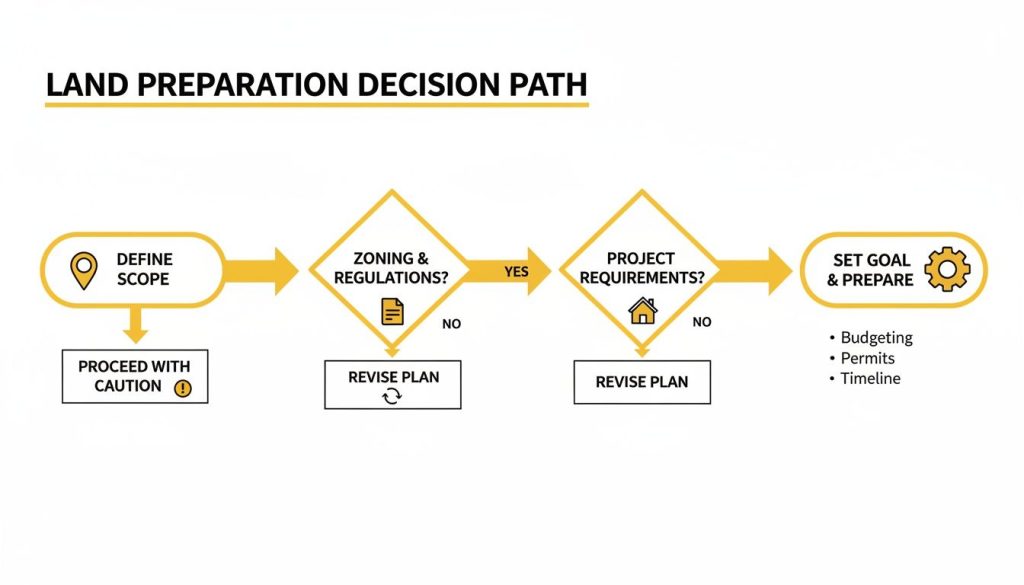
Think of this as your road map. Understanding these local rules is a critical, non-negotiable step that shapes your entire project from start to finish.
Dealing with Protected Wetlands and Wildlife
Central Florida is defined by its water. From cypress swamps and marshes to man-made retention ponds, it’s very common for properties to contain or border designated wetlands. These areas are fiercely protected by agencies like the Florida Department of Environmental Protection (FDEP) and local Water Management Districts.
Attempting to clear within a wetland or its required buffer zone without the right permits is a serious offense with severe penalties. A qualified contractor will immediately spot potential wetland areas. If there’s any doubt, they’ll insist on a formal survey, known as a wetland delineation, to be absolutely sure.
Protected wildlife is another huge factor here. The Gopher Tortoise, a keystone species in our state, is a perfect example. Their burrows are protected by state law, and accidentally disturbing one can bring your project to a screeching halt and result in hefty fines. An experienced crew is trained to spot these burrows and will work with a licensed agent to safely and legally relocate the tortoises before any work begins.
The Challenge of Invasive Plant Species
Not all green is good. Central Florida is battling its fair share of aggressive, invasive plants. Species like the Brazilian Pepper Tree, Melaleuca, and Old World Climbing Fern can completely take over a property, choking out native plants and creating dense, impenetrable thickets.
Just cutting them down won’t solve the problem. In fact, it often makes it worse. Many of these invasive plants can resprout from the tiniest piece of root left in the ground, coming back with a vengeance in just a few months. A true professional will recommend a much more thorough strategy:
- Proper Removal: This often means pulling out the entire root system to stop any chance of regrowth.
- Herbicide Application: Targeted, licensed herbicide treatments are usually necessary to kill the plant for good.
- Specialized Disposal: You can’t just leave some invasive species on-site as mulch; their seeds will spread. They need to be hauled away and disposed of correctly.
Don’t underestimate how critical it is to handle invasive species correctly from the get-go. A contractor who just mows them down is creating a bigger, more expensive headache for you down the road. Make sure their plan includes complete eradication, not just a temporary haircut.
Regional Factors You Cannot Ignore
Beyond the official rules and regulations, the land itself presents practical challenges. A knowledgeable local contractor will know how to anticipate and plan for these Central Florida-specific conditions.
Soil and Terrain Considerations
Florida’s soil is famously sandy. This can make it unstable, especially after one of our classic afternoon downpours. A good contractor assesses the soil type to bring the right equipment—machinery that won’t excessively compact the soil or cause unnecessary disturbance. They’ll also have a plan for erosion control from day one, which is often a requirement for getting a clearing permit in the first place.
Hurricane Season Preparedness
Living and working in Central Florida means dealing with hurricane season, which runs from June through November. This is just a fact of life here. An experienced contractor understands this risk and will build contingencies right into your project timeline. They know how to properly secure a job site when a storm is brewing and are prepared for the wet, mucky conditions that often follow a major rain event. That kind of foresight prevents needless delays and keeps your project moving forward, even when the weather isn’t cooperating.
How to Decode Estimates and Land Clearing Costs
Getting a few quotes for a land clearing job can be confusing. It often feels like you’re trying to compare apples, oranges, and chainsaws. To make a smart decision, you have to look past the final number and understand how a professional contractor actually puts an estimate together.
The goal isn’t just to find the lowest price. It’s about finding the best value and making sure you don’t get hit with surprise costs down the road. A transparent, detailed quote is the first sign you’re dealing with a real pro—it shows they’ve thought through every single step of your project.
Understanding the Pricing Models
Contractors in Central Florida usually price their work in one of three ways. The right one for you really depends on your property. Knowing the difference will help you understand why one quote might look totally different from another.
- Per-Acre Pricing: This is the go-to for larger, more uniform pieces of land. It gives you a predictable, easy-to-understand cost, but it really only works well when the trees, brush, and terrain are pretty much the same across the whole property.
- Hourly Rate: For smaller jobs, tricky lots, or projects where you need to be selective about which trees to save, an hourly rate is often the fairest approach. It’s flexible, but you’ll want to get a solid estimate on the total number of hours they expect the job to take.
- Flat Project Fee: This is an all-in price for the entire job, from the minute they show up until the last stick is cleared. Homeowners often prefer this because it provides total cost certainty, bundling all the labor, equipment, and disposal fees into one clear number.
To get a better handle on how these numbers come together, you can dig deeper into Florida’s real cost to clear land explained in our detailed guide.
Key Factors That Influence the Final Price
You can have two five-acre lots side-by-side, and one could cost twice as much to clear as the other. The final price tag always comes down to the specific challenges your property presents. Any contractor worth their salt will walk your land to see these things for themselves before they even think about giving you a formal quote.
Here’s what they’re looking for:
- Vegetation Density: Is your land just lightly wooded with some scattered palmettos? Or is it a full-blown jungle of invasive Brazilian Pepper and vines so thick you can’t walk through it? The more stuff that has to go, the more time and machine power it’s going to take.
- Type of Trees: Clearing a field of slash pines is one thing. Tackling a forest of tough, dense hardwoods like Live Oak is another ballgame entirely. The size and type of trees dictate the kind of heavy equipment needed for the job.
- Terrain and Accessibility: A flat, dry, open lot is the easy button. But a sloped, soggy property with only a narrow path for heavy machinery? That’s a logistical puzzle that adds time, complexity, and cost.
- Debris Removal Method: What’s going to happen to all the cleared material? Forestry mulching, which grinds everything up right on site, is usually the most cost-effective and eco-friendly option. If everything needs to be hauled away to a landfill, you’ll be paying extra for trucking and disposal fees, which can add up fast.
An estimate that doesn’t factor in these on-the-ground details is just a wild guess. A true professional takes the time to understand your property’s unique layout to give you a quote you can actually rely on.
What a Comprehensive Estimate Should Include
A real estimate is way more than a number scribbled on a piece of paper. It should be a detailed breakdown that shows you exactly what you’re paying for. You want to see a quote that itemizes each part of the job so there are no gray areas.
A good estimate will typically break down the costs into clear line items. This transparency helps you compare quotes fairly and understand the full scope of work.
Sample Land Clearing Cost Breakdown
| Service Item | Typical Cost Range (per acre) | Key Factors Influencing Cost |
|---|---|---|
| Mobilization & Demobilization | $500 – $1,500+ | Distance to site, type and size of equipment being transported (e.g., excavator vs. mulcher). |
| Clearing & Grubbing | $1,200 – $5,000+ | Density of vegetation, type of trees (pines vs. hardwoods), removal of stumps. |
| Debris Disposal/Processing | $800 – $3,500+ | Method used (mulching, burning, hauling), local landfill fees, volume of material. |
| Permit & Environmental Fees | $200 – $1,000+ | Varies widely by county and city; based on actual fees for required permits. |
| Final Grading / Site Prep | $1,000 – $4,000+ | Desired level of smoothness, amount of soil to be moved, need for drainage solutions. |
This table gives you a framework for what to expect, but your actual costs will depend entirely on the specifics of your land.
The industry behind this work is massive. The global land clearing equipment market is valued at a staggering $3,863.5 million, all driven by the need for development and sustainable forestry. This investment means modern contractors are running machines that can cut fuel consumption by up to 20% and work much faster than older equipment.
When you get a quote, you’re not just paying for a person’s time—you’re paying for access to this powerful, efficient technology that gets the job done right.
The Right Questions to Ask Potential Contractors

Picking the right land clearing contractor is easily the most important decision you’ll make in this entire process. It’s what separates a project that hums along smoothly from one that becomes a tangled mess of delays, unexpected costs, and headaches.
To find a true pro, you have to go way beyond the basic “Are you licensed and insured?” question. This is your playbook for the interview. Asking the right questions will cut through the noise and reveal a team’s real-world experience, their professionalism, and whether they’re truly a good fit for your specific Central Florida property.
Digging Into Experience and Equipment
First things first, you need to know if they’ve actually dealt with the kind of challenges your property presents. A contractor whose main business is clearing flat, dry pine forests might be completely out of their element on a swampy lot choked with invasive Brazilian Pepper.
Start with questions that get to the heart of their operational know-how:
- What’s your experience with [mention your specific issue, like Gopher Tortoise relocation, wetland flagging, or invasive species removal]? You’re listening for a confident, detailed answer, not something vague.
- What specific equipment do you plan to use on my property, and why that machine? A real expert will explain why a forestry mulcher is a better choice than a bulldozer for your soil type, or why a specific size excavator is necessary.
- Is your equipment owned or rented? How do you handle maintenance? Owned, well-maintained equipment is usually a sign of a stable, serious operation. Constant breakdowns with rental gear can bring your project to a screeching halt.
- Can you show me a portfolio of similar jobs you’ve recently done in this county? Seeing is believing. Ask for pictures or even addresses of completed projects that look like yours.
A contractor’s ability to clearly explain their strategy and justify their equipment choices is a huge indicator of their expertise. If they can’t tell you the ‘why’ behind their plan, that’s a major red flag.
It also helps to have a basic grasp of understanding contractor management principles from their side of the table. A little insight into what a well-run operation looks like makes it easier to spot one.
Verifying Credentials and Safety Records
This part is completely non-negotiable. Having the right paperwork protects you from massive liability and ensures the job is done to a professional standard. Don’t just take their word for it—ask to see the proof.
Make sure you get your eyes on this documentation:
- Proof of General Liability and Workers’ Compensation Insurance: Ask for the actual certificate of insurance. A legitimate company will have it ready without any hesitation. This is what protects you if an accident happens on your land.
- State and Local Licenses: Double-check that they hold all the necessary licenses to operate in your specific Central Florida county or city.
- Safety Record: Ask them about their safety program and their incident rate. A company that takes safety seriously is a company that takes professionalism seriously across the board.
Think of these documents as your shield. Without them, you could be on the hook financially for injuries or property damage, turning your dream project into a legal and financial nightmare.
Checking References and Spotting Red Flags
Finally, you need to talk to their past clients. A list of references is a good start, but what you ask those references is what really counts. Dig into their communication style, timeliness, and whether the final bill was a surprise or matched the initial estimate.
As you talk to contractors and check their references, keep your radar up for these warning signs:
- Vague, evasive answers about permits or environmental rules.
- High-pressure tactics to sign a contract on the spot or demands for a huge cash deposit.
- A bid that’s so low it seems too good to be true (it almost always is).
- Poor communication, like taking days to return a call or not giving you a straight answer.
- Any hesitation to provide proof of insurance or a list of people you can call.
Finding the right “land clearing contractor near me” isn’t just about hiring a crew; it’s about building a partnership based on trust and proven skill. With these questions in your back pocket, you can get past the sales pitch and hire a team you can count on to do the job right.
Diving Into Modern Land Clearing Equipment and Methods
Land clearing today isn’t just about raw power and pushing dirt around. The game has changed. The equipment and techniques a real pro brings to your Central Florida property are smarter, faster, and way healthier for your land than the old-school “scrape it bare” approach.
When you’re looking for a local land clearing contractor, knowing what’s in their toolbox is crucial. It helps you understand their plan and feel confident you’re making the right choice.
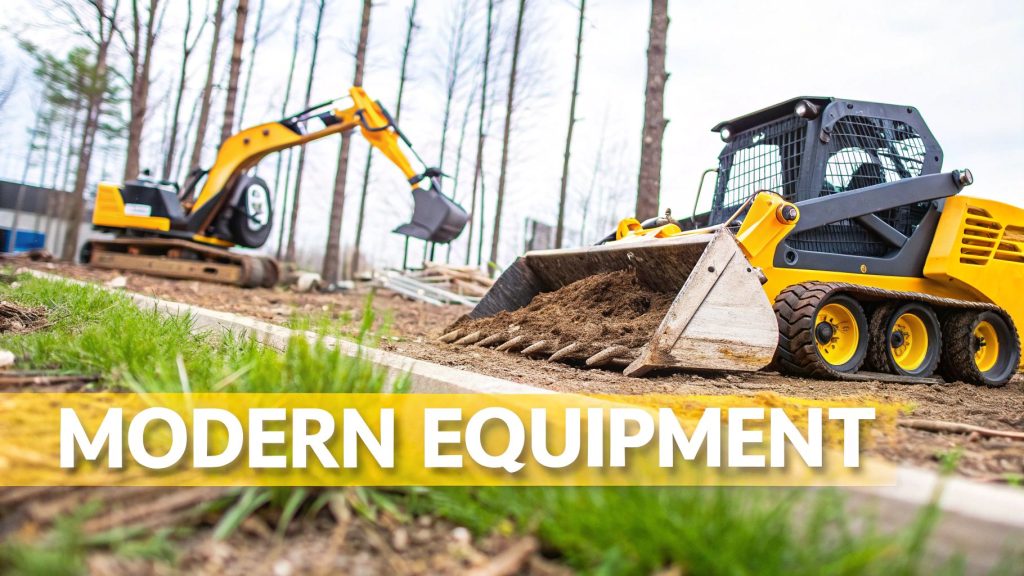
Understanding the difference between dozing and mulching isn’t just about getting bogged down in technical details. It’s about knowing what your property will look like—and feel like—when the job is done. This knowledge empowers you to have a meaningful conversation with a contractor, ensuring their method aligns perfectly with your goals.
Forestry Mulching: The New Standard
Hands down, one of the biggest leaps forward in our industry is forestry mulching. It’s a pretty slick process where a single machine cuts, grinds, and turns everything from brush to good-sized trees into a layer of natural mulch, right on the spot.
This method has quickly become a go-to for us and our clients for a few key reasons:
- No Piles, No Burning: You can forget about the extra cost of hauling away mountains of debris or the headache of getting burn permits. It’s all handled in one pass.
- Soil Health is a Priority: That layer of mulch is like a protective blanket. It shields your topsoil from our intense Florida downpours, stops erosion in its tracks, and slowly breaks down to feed the soil.
- A Lighter Touch: Modern mulchers run on tracks, which spread the machine’s weight out. This means way less soil compaction compared to the heavy, churning tires of older equipment.
While it’s not the answer for every single job, forestry mulching is a fantastic, eco-friendly option for selective clearing, taming overgrown underbrush, and prepping land without totally stripping it bare. To get a better sense of the machinery involved, check out our deep dive in this guide to underbrush clearing machines.
Traditional Clearing: When You Need a Blank Slate
Of course, the trusty bulldozer and excavator still have their place. When the goal is a perfectly clean slate for a new home foundation, driveway, or major grading work, this “clearing and grubbing” method is often necessary.
A dozer can efficiently push over trees and scrape the surface, while an excavator has the precision to dig out stubborn stumps and root systems. It’s the right call for new construction, but it’s a more disruptive process. It churns up the topsoil and leaves you with massive debris piles that have to be either hauled off or burned, adding more steps—and costs—to the project.
A true professional doesn’t have a favorite method; they have the right tool for the job. Often, the best plan is a hybrid approach—maybe mulching the undergrowth around the property line while using an excavator to grub out the specific footprint of the house.
The Right Machine for Your Specific Job
The equipment that shows up on your property tells you a lot about the contractor’s strategy. A nimble skid-steer with a mulching head is perfect for tight residential lots or thinning out palmettos and brush without harming those beautiful old live oaks you want to keep.
For clearing larger acreage with bigger trees, you need more muscle. That’s where a dedicated tracked forestry mulcher or a powerful excavator with a grinding attachment comes into play.
The shift toward this technology is happening for a reason. The global market for forestry equipment is on track to hit $771 million by 2031. Contractors are investing heavily in these machines because they can slash project costs by 30-50% compared to older, more labor-intensive methods. It’s a clear sign that modern, responsible land clearing isn’t just a trend—it’s the future.
Common Questions About Hiring a Land Clearing Contractor
Once you’ve done your homework and narrowed down your list of potential contractors, a few practical questions almost always come to mind. Getting straight answers to these common concerns is the final step in firming up your plans and making sure there are no surprises down the road.
Here’s what we hear most often from landowners across Central Florida when they’re ready to hire a land clearing team.
How Long Does Land Clearing Typically Take?
The timeline for a land clearing project can swing wildly. The biggest factors are always the size of your property, how thick the vegetation is, the clearing method we’re using, and—of course—Central Florida’s notoriously unpredictable weather.
A straightforward, one-acre residential lot with just light brush might be cleared and mulched in only 1-3 days. Easy enough.
But if you’re looking at a larger, ten-acre tract choked with mature trees, that project could easily stretch over several weeks. This is especially true if you need extensive stump and root removal for a construction pad. Any professional contractor worth their salt will walk the property with you and give you a realistic timeline that accounts for all these variables.
Keep in mind that Florida’s hurricane season, which runs from June through November, can throw a wrench in any schedule. An experienced local contractor will have a game plan for weather delays, but it’s always a good idea to build a little extra time into your own project calendar, just in case.
What Happens to All the Removed Trees and Debris?
You’ve got a few different options here, and the right one really comes down to your budget and what you plan to do with the land afterward. This is something you absolutely need to hash out with your contractor before signing on the dotted line, as it has a major impact on the final cost.
These are the most common ways to handle the debris:
- Forestry Mulching: This is usually the most efficient and environmentally friendly route. The machinery grinds up all the trees and brush into a protective layer of mulch, which is left right on site. It’s fantastic for preventing erosion and slowly adds nutrients back into the soil as it decomposes.
- Hauling Away: If you need a perfectly clean slate to start building, all the debris can be loaded up and hauled to a proper disposal facility. Just be aware that this service adds a significant cost to the overall project.
- On-Site Burning: This is a possibility, but it’s heavily regulated here in Florida. You need specific permits from the Florida Forest Service, and a reputable contractor will handle that entire process. It’s not always an option, though, depending on the county and current weather conditions.
Am I Responsible for Getting the Project Permits?
No, a professional, full-service land clearing company should handle all the permitting as part of their job. Frankly, this is one of the biggest reasons you hire a pro in the first place. It’s a hallmark of a reliable company. They know exactly what’s required by your county, the local Water Management District, and any other agencies like the Florida Fish and Wildlife Conservation Commission (FWC) that might have a say.
However—and this is important—while the contractor is the one who pulls the permits, the landowner is ultimately responsible for compliance.
Always, always ask for copies of the approved permits before a single machine starts running. It’s a simple step that ensures everything is legitimate and protects you from the headache of potential fines or stop-work orders. When you’re searching for a “land clearing contractor near me,” what you’re really looking for is a partner who makes this whole process transparent and worry-free.
At Palm State Clear Cut, we stake our reputation on clear communication and getting the job done right. If you have more questions or want an expert to take a look at your Central Florida property, we’re ready to help with a free, no-obligation quote.
Let us help you prepare your land the right way. Visit us at https://palmstateclearcut.com to get started.