
When you start looking at the numbers, the cost to clear land in Florida can feel all over the map. You’ll see figures anywhere from $1,500 to over $6,000 per acre, but most landowners end up somewhere around the $3,000 mark. That’s a pretty big window, and it’s because the final price really depends on what your specific piece of land looks like—how thick the vegetation is, what the terrain is doing, and exactly what you need done.
Your Guide to Florida Land Clearing Costs
Before you can pour a foundation, put up a fence, or start any kind of construction, you have to get the land ready. Think of it as preparing a blank canvas for your project. This first step is crucial because it sets the stage for everything that comes after, but figuring out the budget can feel like trying to hit a moving target.
There’s no one-size-fits-all price tag for clearing land. It’s best to think of it in terms of effort. Clearing a half-acre lot that just has some light brush and a few small trees is like tidying up a messy room. But tackling a five-acre tract of dense Florida jungle packed with mature oaks and stubborn palmettos? That’s a full-scale demolition job. Each one requires a completely different set of tools, machinery, and man-hours, which all directly shape the final cost.
Breaking Down the Price Tiers
To help you get a clearer financial picture, we can break projects down into different tiers based on how complex they are. This chart gives you a good visual of what to expect for light, average, and heavy clearing jobs.
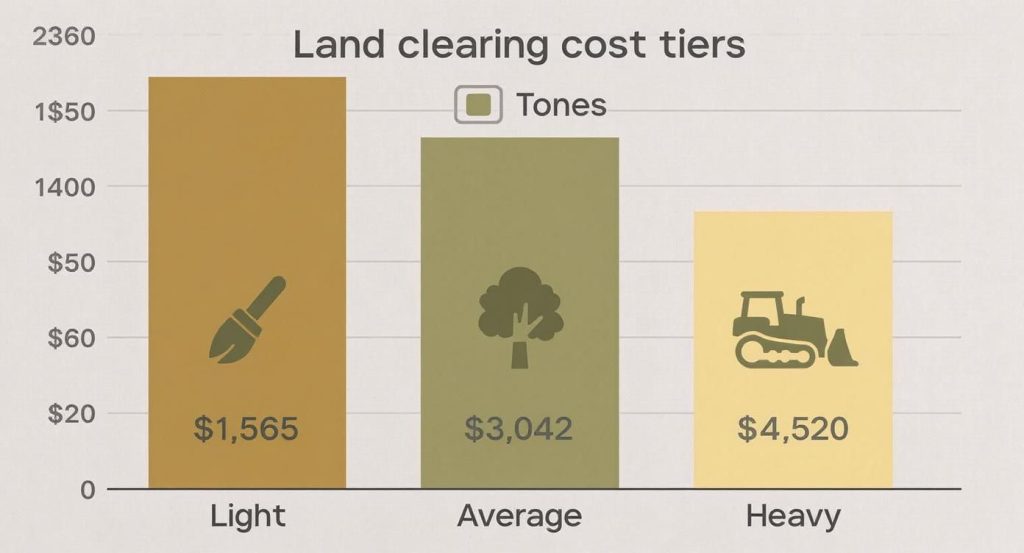
As you can see, the jump from a simple “light” clearing to a “heavy” one is huge. The investment needed can easily triple, which is why it’s so important to know what you’re dealing with from the start.
These numbers line up pretty well with what’s happening nationally. Looking at 2025, land clearing prices across the country generally fall between $1,565 and $4,520 per acre. The exact price gets pushed and pulled by factors like the type of vegetation, the slope of the land, how easy it is for crews to get equipment on-site, and local labor rates. It all goes to show why a custom quote is the only way to go. You can learn more about the specific land clearing cost factors and see how they’re calculated.
Key Takeaway: While looking at per-acre averages is a good place to start, remember that your property’s unique personality—especially the density of its trees and undergrowth—is what really drives the final price. The only way to get a truly accurate number is to have a professional walk the land and give you a detailed assessment.
Key Factors That Determine Your Final Price
Figuring out the cost to clear a piece of land isn’t like picking an item off a shelf with a set price tag. It’s much more like commissioning a custom build—the final price is a unique blend of size, materials, and complexity specific to your property. No two parcels of land in Central Florida are the same, and these subtle (and not-so-subtle) differences are what create the wide price ranges you’ll see.
A professional contractor doesn’t just pull a number out of thin air. They’re carefully evaluating several key variables that directly impact the time, equipment, and crew needed for the job. Getting a handle on these factors will help you see your land through a contractor’s eyes and understand why one quote might be wildly different from another.
Land Size and Accessibility
Of course, the total acreage sets the baseline for the project’s scale, but it’s not the only factor. A five-acre, perfectly square lot is a completely different challenge than five acres stretched out long and thin along a winding road. Your property’s shape directly affects how efficiently our heavy machinery can move and work.
Just as important is accessibility. Can we easily get a large truck and trailer to your property from a main road? A narrow dirt path, a tight turn, or low-hanging tree canopies can create a logistical headache, forcing us to use smaller, less efficient equipment or add extra labor just to get set up. This is a common hurdle with more rural or undeveloped lots here in Central Florida.
Vegetation Density and Type
This is probably the single biggest driver of your final land clearing cost. A property with just some light grass and a few scattered saplings is a world away from one choked with decades of dense overgrowth. We have to assess both the density (how packed-in everything is) and the type of vegetation.
Just think about these different scenarios:
- Light Underbrush: This is your classic Florida mix of palmettos, small shrubs, and tall grasses. It’s the easiest and most affordable to clear, often handled quickly with a forestry mulcher.
- Moderately Wooded: Here, you have a combination of underbrush and medium-sized trees like pines. This requires more powerful equipment and more time on site.
- Heavily Forested: This is land dominated by large, mature hardwoods—think of those majestic live oaks. Felling these giants, digging out their massive stumps, and hauling away the timber is a serious, labor-intensive process that costs significantly more.
It’s also worth noting that invasive species like Brazilian Pepper can complicate a job. These aggressive plants often need specific removal methods to make sure they don’t grow right back, which can add to the final invoice.
Topography and Soil Conditions
The lay of the land, or its topography, plays a huge part. A flat, even property is the dream scenario. But many Florida properties have slopes, dips, or low-lying wet areas that demand more careful navigation and sometimes specialized equipment to work safely and effectively.
Soil type matters, too. Central Florida is famous for its sandy soil, which is generally easy to work with. But running into unexpected rock formations, dense clay, or a high water table can slow the entire project down and cause extra wear and tear on our machinery. A good contractor needs to know what they’re digging into to give you an accurate price.
Specific Services Required
Finally, the cost to clear land is shaped by exactly what you need done. “Clearing” is a catch-all term that can mean many different things, and each service comes with its own price tag.
Your project might just need one of these, or a combination of several:
- Forestry Mulching: Grinding up trees and brush and leaving the mulch behind as a protective ground cover.
- Bulldozing: Pushing over trees and scraping the land down to the bare dirt.
- Stump Grinding: Getting rid of stumps left behind after trees have been cut down.
- Grading and Leveling: Reshaping the land to ensure water drains properly and to create a flat, buildable surface.
- Debris Hauling: Loading up all the cleared material and legally disposing of it off-site.
Each of these tasks requires different machines and different skills. A full-scope project involving felling, stump removal, grading, and hauling will naturally cost much more than a simple mulching job. When you break it down like this, it becomes much clearer where your money is going.
A Breakdown of Land Clearing Services and Costs
When you start thinking about the cost to clear land, it’s easy to get fixated on a single per-acre number. But the reality is a little more nuanced. Land clearing isn’t a single action; it’s a menu of specialized services, and the final price tag depends entirely on what your specific property needs.
Think of it like taking your car to a mechanic. You don’t just pay for a “car fix.” The final bill breaks down the cost of an oil change, a tire rotation, and maybe a new filter. It’s the same with clearing land—the total invoice is the sum of the individual jobs performed. Let’s break down what those jobs look like.
Forestry Mulching: An Eco-Friendly Powerhouse
One of the most popular and efficient methods we use today is forestry mulching. It’s pretty impressive to watch. A single, powerful machine moves across the property, grinding up trees, brush, and undergrowth right where they stand, turning it all into a natural layer of mulch. This one-step process means there’s no need to haul debris away or deal with burn piles, which saves a significant amount of time and money.
And that mulch isn’t just leftover debris—it’s a huge benefit to your land. This organic layer protects against soil erosion, helps the ground retain moisture for any trees you leave behind, and slowly breaks down to feed the soil. It’s the perfect choice for projects where you want to tame the overgrowth quickly without tearing up the topsoil.
Forestry mulching is often priced by the hour for smaller jobs, usually between $200 to $400 per hour, based on the machine’s size. For larger properties, a per-acre rate makes more sense. We dive much deeper into the specifics in our complete guide on the forestry mulching cost per acre.
Traditional Clearing: Bulldozing and Excavation
Sometimes, you need a completely clean slate, especially if you’re pouring a foundation for a new home or building. That’s where traditional methods like bulldozing and excavation come in. This is a much more intensive approach. We bring in heavy equipment, like a dozer, to push over trees and scrape the land down to bare dirt.
While it’s incredibly effective for total vegetation removal, it’s a multi-step process with its own set of costs:
- Debris Piling: All the uprooted trees, stumps, and brush get pushed into massive piles.
- Hauling or Burning: Those piles have to go somewhere. They’re either hauled off to a disposal site or burned on-location (which requires permits and the right weather conditions).
- Soil Disruption: This method definitely churns up the topsoil, which means you’ll almost always need follow-up grading to get a smooth, level surface back.
Because of the extra steps and machinery involved, this method can take longer and cost more than mulching.
Before we move on, it helps to see these methods side-by-side to understand which one might be the best fit for your specific project goals.
Comparison of Common Land Clearing Methods
| Method | Best For | Average Cost Structure | Pros | Cons |
|---|---|---|---|---|
| Forestry Mulching | Selective clearing, preserving topsoil, overgrowth removal, trail cutting. | Per Hour or Per Acre | Fast, one-step process; enriches soil; minimal ground disturbance; no hauling/burning costs. | Not ideal for removing root systems; may leave larger chunks of wood. |
| Bulldozing/Push-Over | Preparing lots for new construction; complete vegetation removal, including roots. | Per Acre | Removes everything, leaving a bare site; effective for large-scale clearing. | High soil disturbance; requires separate debris disposal (hauling/burning); can be slow. |
| Excavation/Grubbing | Removing stumps and large root systems; precision clearing for foundations. | Per Hour or Per Project | Completely removes root balls; creates a clean slate for building. | Very invasive to the soil; slower process; creates large holes that need backfilling. |
| Hand Clearing | Small lots, sensitive areas, or highly selective tree/brush removal. | Per Hour or Day Rate | Extremely precise; lowest environmental impact; can work on steep slopes. | Very slow and labor-intensive; not practical or cost-effective for large areas. |
Each technique has its place, and the right choice depends on your budget, timeline, and what you plan to do with the land afterward.
Essential Follow-Up Services
Clearing the trees is often just the first step. To get a site that’s truly ready for construction or landscaping, you’ll probably need a few of these follow-up services.
Stump Grinding and RemovalAfter trees are cut, you’re left with stumps. Leaving them in the ground is not just an eyesore; it can be a tripping hazard and an invitation for termites and other pests. Stump grinding chews the stump down below ground level, while full removal yanks the entire root ball out. Grinding is almost always the faster and more affordable option.
Site Grading and LevelingIn Florida, proper drainage isn’t a luxury—it’s a necessity. Grading is the process of reshaping the land to make sure rainwater flows away from where you plan to build. This prevents flooding and protects your foundation. It’s an absolutely critical step, especially after a disruptive clearing method like bulldozing.
Debris Hauling and DisposalIf you opt for a method other than forestry mulching, you’ll have a mountain of debris to deal with. Hauling involves loading all that green waste onto large trucks and taking it to a landfill or processing facility. This service adds significant costs for the labor, equipment, and disposal fees, which are calculated based on the sheer volume of material.
Navigating Permits and Environmental Hurdles
The quote you get from a land clearing contractor is a huge piece of the financial puzzle, but it’s rarely the final number. A big chunk of the total cost to clear land comes from navigating a maze of local permits and strict environmental rules. Trying to sidestep these “hidden” costs isn’t just a bad idea—it can lead to project-stopping fines and massive headaches.
Think of it this way: your contractor’s estimate is the price of the car. The permits, surveys, and environmental compliance are the title, registration, and insurance. They’re the non-negotiable costs you have to pay to legally get your project on the road. In Florida, these aren’t just suggestions; they are serious legal requirements designed to protect our state’s unique and fragile ecosystems.
Why Permits Are Non-Negotiable
Getting the right permits from your local county or municipality is the absolute first step you must take before a single tree is touched. These documents are your official green light to alter the landscape, ensuring your project lines up with local zoning, land use plans, and safety codes.
Rolling the dice and clearing land without them is a gamble that almost never pays off. County inspectors are always on the lookout, and if they find unpermitted work, they can issue a stop-work order on the spot. This freezes your entire project and usually comes with hefty fines that can make the original permit fee look like pocket change. Getting back on track means dealing with retroactive applications, more fees, and long, frustrating delays.
Florida’s Unique Environmental Protections
Central Florida is a delicate balance of wetlands, protected wildlife, and beautiful old trees. State and federal laws are in place to protect these natural assets, and they have a direct impact on any land clearing project. Understanding these regulations is critical for managing your land responsibly and creating an accurate budget.
Some of the most common environmental hurdles include:
- Wetlands Delineation: If your property is anywhere near a water source, you’ll likely need a survey to map out any protected wetland areas where clearing is either restricted or completely off-limits.
- Protected Species Surveys: Florida takes its wildlife seriously. If your land could be a habitat for species like the gopher tortoise, a certified biologist has to survey the area. If they find any, they have to be relocated—a process that adds both time and significant cost to your project.
- Heritage Tree Ordinances: Many counties have rules to protect large, historic trees like mature live oaks. To remove one of these “heritage” or “specimen” trees, you often need special permission and might have to pay into a tree fund.
Key Takeaway: Environmental compliance isn’t just about dodging penalties; it’s about being a good steward of the land. Factoring in the costs for surveys and potential mitigation work from the very beginning helps ensure your project moves forward smoothly and ethically.
The Hidden Costs of Compliance
All these regulatory steps have their own price tags, which you’ll need to add to your overall budget. A basic clearing permit might only be a few hundred dollars, but the related requirements can add up fast. For instance, a gopher tortoise survey and relocation can run several thousand dollars, depending on how many burrows are found.
These rules also affect your clearing methods. If a survey flags a sensitive area, your contractor might have to switch to more precise (and often more expensive) techniques, like selective hand clearing instead of bringing in the big bulldozers. It’s also crucial to manage the site properly to prevent soil runoff. Learning how to prevent soil erosion on your property can protect both your land and your wallet.
On a global scale, the value of land is also changing because of environmental initiatives. The growing demand for carbon removal and reforestation projects is now a factor in land preparation costs. In areas with dense vegetation, the expense of preparing land for these green projects can reach as high as $2,000 per hectare, reflecting the intensive work needed for responsible environmental management. You can find more insights on this global trend in the full 2025 Land Gap Report.
How to Get an Accurate Land Clearing Estimate
Getting a solid, reliable quote is hands-down the most important step in keeping your land clearing costs under control. If you give a contractor a vague request, you’re going to get a vague estimate—and that’s a recipe for surprise charges down the road.
You need to approach this like you’re hiring for a critical job. The more information and detail you can give a contractor upfront, the more precise and trustworthy their bid will be. This prep work puts you in the driver’s seat, allowing you to compare quotes apples-to-apples and making sure everyone is on the same page before a single machine rolls onto your property.
Your Pre-Quote Preparation Checklist
Before you even think about picking up the phone, a little homework will save you a ton of headaches. Simply walking your property and taking notes on its current state is the best way to communicate your vision clearly.
Follow these steps to get yourself organized:
- Define Your Project Scope: First, what’s the end goal? Are you clearing a lot for a new home, turning woods into pasture, or just carving out a new trail? Write down exactly what you want the finished property to look like.
- Mark Your Boundaries: Grab some stakes or brightly colored flagging tape and clearly mark the perimeter of the area you need cleared. This simple visual guide is a massive help for any contractor doing a site visit.
- Identify the “Keepers”: Have some beautiful old oaks or a specific cluster of trees you want to save? Mark them. A simple ribbon tied around a trunk is the universal signal for an operator to steer clear.
- Take Photos and Videos: A picture really is worth a thousand words here. Snap photos and take videos of the property from different angles. Make sure to get close-ups of any areas with especially thick brush, huge trees, or tricky access points that could complicate the job.
How to Vet Local Contractors
Once you’ve got your project details nailed down, it’s time to find the right pro for the job. Not all land clearing companies are created equal, and doing your homework is key to protecting your property and your wallet. A suspiciously low bid from an unqualified operator can quickly become a very expensive mistake.
When comparing bids, remember that the cheapest option is rarely the best. A professional quote reflects the cost of proper insurance, well-maintained equipment, and an experienced crew—all of which protect you from liability and ensure a high-quality result.
Here’s how to properly vet the companies you’re considering:
- Verify License and Insurance: This one is non-negotiable. Ask for proof of both General Liability and Workers’ Compensation insurance. If they don’t have it and an accident happens on your property, you could be on the hook financially.
- Request Itemized Quotes: A true professional will have no problem providing a detailed breakdown of costs. This should clearly list out charges for specific services (like mulching, stump grinding, or hauling), along with labor, equipment, and any potential permit fees.
- Check Their References: Ask for contact info from a few recent clients who had projects similar to yours. Any reputable company will be happy to provide them. Actually call those references and ask if the project stayed on schedule and, more importantly, on budget.
Smart Ways to Reduce Your Clearing Expenses
Managing the cost to clear land doesn’t have to mean cutting corners or settling for a subpar result. With a bit of strategic planning and a few smart decisions, you can bring your expenses down considerably while still hitting your project goals. It’s really about working smarter, not harder, and finding ways to turn potential costs into assets.

One of the best ways to pad your budget is to look at the resources already sitting on your property. If your land has mature hardwoods like oak or pine, don’t just see them as obstacles—see them as a potential revenue stream. Selling valuable timber to a local sawmill can put a surprising amount of cash back in your pocket, sometimes enough to cover a big chunk of the clearing bill.
Be Strategic with Your Clearing Method
The method you go with will have a direct impact on your final invoice. Sure, traditional bulldozing gives you a completely bare slate, but it often tacks on extra expenses for hauling away massive piles of debris. If you communicate your end goal clearly to your contractor, you might find there are more affordable and efficient alternatives.
For instance, if you’re not planning to pour a foundation right away, forestry mulching is a fantastic choice. This method grinds up all the vegetation right on-site, which means you can say goodbye to costly hauling and disposal fees. As a bonus, the mulch creates a natural, protective layer that helps stop soil erosion in its tracks.
For landowners on a tighter budget, another route is to explore some DIY methods for the smaller stuff. Our guide on how to clear land without heavy equipment offers practical tips for tackling light brush and minor debris on your own, which can shave off the total hours you’d otherwise pay a professional for.
Timing and Minor Tasks Can Make a Difference
Believe it or not, when you schedule your project can affect the price. Land clearing contractors usually have a busy season and an off-season. If you can book your project during a slower period, you might find you have more wiggle room to negotiate a better rate.
You can also chip away at the total cost by handling small, manageable tasks yourself—as long as it’s safe.
- Handle Small Debris: If your contractor is felling trees, offer to clear away the smaller branches and brush yourself.
- Repurpose Materials: Instead of paying to have leftover wood hauled off, use it for firewood or to build a natural border for a garden bed.
This proactive approach not only helps your budget but also contributes to more sustainable land management practices. Globally, an increased awareness of both the environmental and economic costs of deforestation has helped slow its rate. In some tropical regions, the cost to clear one hectare can range from $500 to $2,000, highlighting the value of thoughtful clearing. You can explore more about these global trends and discover insights about sustainable land management from the FAO.
Common Questions About Land Clearing Costs
Even with a solid plan in hand, you’ve probably still got a few questions rolling around in your mind about the whole process and the final price tag. That’s completely normal. To help you feel confident about moving forward, we’ve put together some of the questions we hear most often from Central Florida landowners, with clear, no-nonsense answers.
How Long Does It Typically Take to Clear One Acre?
The time it takes to clear a single acre can be anywhere from a single day to a full week. It all comes down to what’s on the property.
For a lightly wooded acre with just some brush and small trees, a professional crew with a forestry mulcher can often get the job done in 1-2 days.
But, if that same acre is packed with dense, mature hardwoods that need to be carefully cut down, followed by serious stump grinding and hauling away all the mess, you’re looking at a project that could easily take 5-7 days or even longer. We also have to consider Florida’s weather; our summer rains can turn a straightforward job into a muddy, drawn-out headache.
What Is the Best Time of Year to Clear Land in Florida?
If you want the smoothest, most efficient project possible, try to schedule your clearing for Florida’s dry season. This generally runs from late fall through late spring, think November to May. The ground is much firmer during these months, making it easier for heavy machinery to get in and out without getting stuck.
Clearing land during our wet summer season is definitely doable, but it has its risks. Saturated soil means equipment can get bogged down, which leads to delays and can drive up labor costs. It also increases the chances of soil compaction and erosion. That said, some contractors might offer better rates during these slower months, so it’s a trade-off worth talking about.
Do I Need Special Insurance for My Project?
While you should always have your standard homeowner’s or landowner’s insurance, the real insurance burden falls on the company you hire. It’s absolutely critical to make sure your land clearing contractor has two specific types of coverage:
- General Liability Insurance: This is what protects your property from any accidental damage their equipment or crew might cause.
- Workers’ Compensation Insurance: This covers their team members if someone gets hurt on the job, which protects you from being held financially responsible.
Before a single tree is touched, always ask your contractor for a current Certificate of Insurance (COI). A reputable company will hand it over without any fuss. This simple piece of paper is your best defense against unexpected accidents.
Is Forestry Mulching Cheaper Than Traditional Clearing?
In most cases, yes. Forestry mulching is almost always a more budget-friendly option compared to traditional methods that involve bulldozing, piling up debris, and hauling it all away.
Mulching is a one-and-done process handled by a single machine, which cuts down big time on labor and equipment rental costs. More importantly, it completely eliminates the need for debris disposal—a line item that can really inflate the bill on a traditional clearing job. While the initial “per acre” price might look similar sometimes, the total project cost for traditional clearing is almost always higher once you factor in the extra work like stump grinding and hauling.
Ready to get a clear, accurate, and transparent quote for your land clearing project? The team at Palm State Clear Cut is here to help you navigate every step, ensuring your property is perfectly prepared for whatever you have planned. Get your free estimate today!