
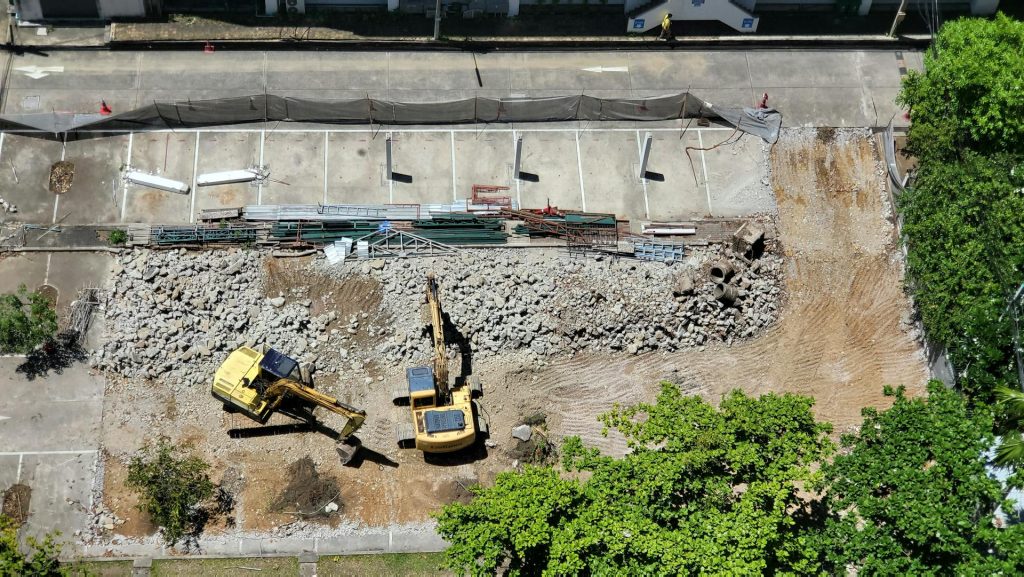
So you’ve found the perfect plot of land in Central Florida for your dream home. It’s an exciting moment, but what comes next is arguably the most critical phase of your entire build: preparing the site itself. This isn’t just about knocking down a few trees; it’s a calculated process of clearing, grading, and stabilizing the ground to create a safe, solid base for your foundation.
Frankly, this is the single most important step before a single bag of concrete is mixed. It’s what ensures your massive investment is built on reliable ground from the very start.
Your Dream Home Starts with Solid Groundwork
The success of your custom home hinges on what happens long before the construction crew shows up. Rushing or skimping on proper land preparation is one of the most expensive mistakes you can make.
Here in Central Florida, we deal with a unique set of challenges. Our sandy soils and intense rainy seasons mean that cutting corners on site work can lead to a world of hurt down the road.
We’ve seen it happen:
- Poor Drainage: Without proper grading, water pools right up against the foundation. This can cause cracks, shifting, and in the worst cases, serious water intrusion.
- Foundation Issues: If the soil isn’t stable or compacted correctly, it will settle unevenly. An unstable foundation compromises the entire structure of your home.
- Permitting Headaches: Counties like Orange, Polk, and Brevard have very specific codes for everything from tree removal and erosion control to final grading. You have to get it right.
- Costly Future Repairs: Fixing a cracked foundation or a yard that turns into a swamp after every rainstorm can cost you tens of thousands of dollars later on.
Investing in professional land preparation is the best insurance policy for your new home. It’s about building with confidence, knowing the ground beneath your feet is as solid as the roof over your head.
The whole process can be boiled down into a few key phases, moving from a raw, overgrown lot to a perfectly prepped construction site.
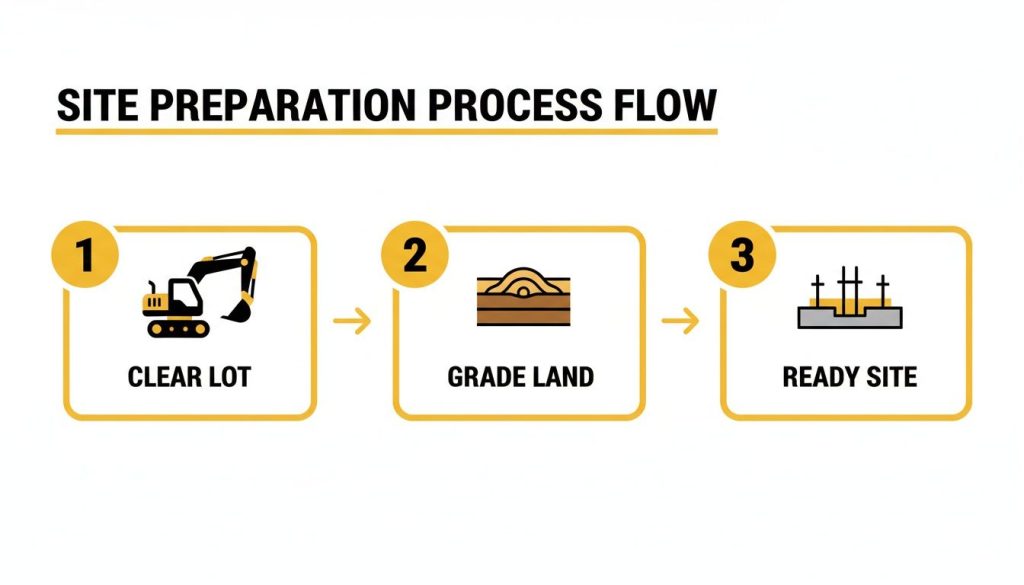
Each of these steps—clearing, grading, and final prep—builds on the last to create a homesite that’s truly ready for construction.
Why Professional Site Prep is More Important Than Ever
Demand for professional site work is climbing, and for good reason. The land clearing attachment market, a solid indicator of construction activity, hit USD 1.25 billion in 2024 and is expected to double by 2033.
This isn’t just about more houses being built; it’s about building them smarter. In Florida, where palmettos and vines can reclaim a property in just a few months, responsible development is key. If you want a more comprehensive look at the entire home-building journey, check out this practical guide on how to start building a house in Florida.
An experienced crew uses specialized equipment and techniques—like stump grinding and strategic grading—to create a perfect building pad and prevent erosion. This avoids costly delays and can prevent foundation repair costs from ballooning by 20-30%.
To give you a clearer picture, we’ve broken down the essential phases of preparing a homesite here in Central Florida.
Key Stages of Central Florida Land Preparation
| Stage | Primary Goal | Why It’s Critical for Your Build |
|---|---|---|
| Assessment & Permitting | Evaluate the land and secure all necessary local permits. | Avoids fines and work stoppages; ensures your project complies with all county codes from day one. |
| Clearing & Debris Removal | Remove trees, underbrush, stumps, and rocks from the build area. | Creates a clean slate and removes organic material that can decompose and cause the ground to settle. |
| Grading & Drainage | Reshape the land to create a level building pad and ensure proper water runoff. | Prevents water from pooling around your foundation, which is the #1 cause of slab and basement issues. |
| Soil Prep & Compaction | Test soil for stability and compact it to create a dense, stable base. | Ensures the ground can support the massive weight of your home without shifting or settling over time. |
Ultimately, meticulous land preparation is all about managing risk. It’s the groundwork that sets your entire project up for long-term success.
Getting Your Florida Lot Cleared and Graded
Once you have your permits in hand, the real work begins. This is the exciting part where a tangled, overgrown piece of land starts to look like a place you can actually build a home. It all comes down to two critical phases: clearing away the vegetation and debris, then meticulously grading the soil to manage Florida’s infamous rain.
Getting this sequence right isn’t just important—it’s foundational to everything that comes after.
The Smart Way to Clear Your Land
First things first, you have to get rid of everything standing between you and your future foundation. We’re talking trees, stubborn palmettos, thick undergrowth, and any random junk that’s been left behind. But how you clear it matters more than you might think, both for your budget and the long-term health of your property.
A Modern Take on an Old Task
The old-school method was simple: bring in a dozer, scrape the lot bare, and haul away mountains of debris. It works, but it’s a brute-force approach that often strips away precious topsoil and leaves you with a massive disposal headache.
Thankfully, there’s a much better way that’s become the go-to method in Central Florida: forestry mulching.
A single, specialized machine cuts, grinds, and shreds all the vegetation right where it stands. The resulting mulch is spread evenly across the lot, creating a protective, nutrient-rich layer. The benefits are immediate:
- No Hauling Fees: You completely sidestep the hefty costs of loading and trucking debris to a landfill.
- Built-in Soil Enrichment: As the mulch breaks down, it feeds vital nutrients back into our sandy Florida soil.
- Natural Erosion Control: This layer of mulch acts like a blanket, shielding the topsoil from being washed away by our heavy afternoon downpours.
Think of it like this: traditional clearing is like ripping a bandage off, taking healthy skin with it. Forestry mulching is more like a targeted treatment that removes the problem while nourishing what remains. It’s a smarter, more sustainable first step in your land preparation journey.
Here in Central Florida, that kind of efficiency is a game-changer. We’ve seen developers and contractors across Osceola and Orange County embrace forestry mulching because it gets the job done without the extra steps of hauling. It can outperform traditional methods by 30-40% in both time and cost savings. When you see how quickly poor prep leads to soil erosion, you understand why this isn’t just a trend—it’s the new standard. If you want to dive deeper, you can read more about land clearing for construction in Central Florida and see why it’s so critical.
Tackling Stumps and Final Debris
With the brush and trees turned to mulch, you’re left with the stumps. Simply burying them is a huge mistake. Stumps are a magnet for termites and other pests, and as their root systems decay over the years, the ground can settle, creating serious problems for your foundation.
The professional solution is stump grinding. A high-powered machine grinds the stump and its major roots into small wood chips, going well below the ground level. Once that’s done, we do a final sweep to pull out any remaining rocks, large roots, or other hidden debris. Now you have a truly clean slate, free of any future surprises.
The Science of Grading for Florida Weather
With a completely clear lot, the focus shifts to grading. This is where we sculpt the land to create a perfectly stable building pad and, crucially, to make sure water flows away from your home. Living in a state that gets over 50 inches of rain a year, this is one step you absolutely cannot skip.
Proper grading means creating a subtle but effective slope—usually a drop of at least six inches over the first ten feet away from the foundation. You’d never notice it just by looking, but that gentle slope is enough to channel thousands of gallons from a summer thunderstorm safely away from your house.
I remember a project in Seminole County where the lot looked perfectly flat. But our laser levels revealed a slight, invisible dip right where the owner’s master bedroom was planned. Without precise grading, every heavy rain would have sent water pooling against that part of the foundation, guaranteeing moisture problems and mold down the road. By reshaping the land just slightly, we created a positive grade that sent all the runoff to a drainage swale.
That’s why professional grading isn’t just about making the land look level. It’s about protecting your biggest investment from the ground up.
Understanding Your Soil and Foundation Prep
What’s happening underground is every bit as important as the house you plan to build on top of it. Once the land is cleared and graded, the real work of land preparation for building a house begins—beneath the surface. This is the stage where we make absolutely certain the ground can support the immense weight of your home for decades to come.
Here in Central Florida, our soil can be a real mixed bag. We see everything from sandy loams to dense pockets of stubborn clay. Whatever is under your lot will directly dictate your foundation design, which is why skipping a thorough soil evaluation is a gamble you just can’t afford to take.
Why Soil Testing Is Non-Negotiable
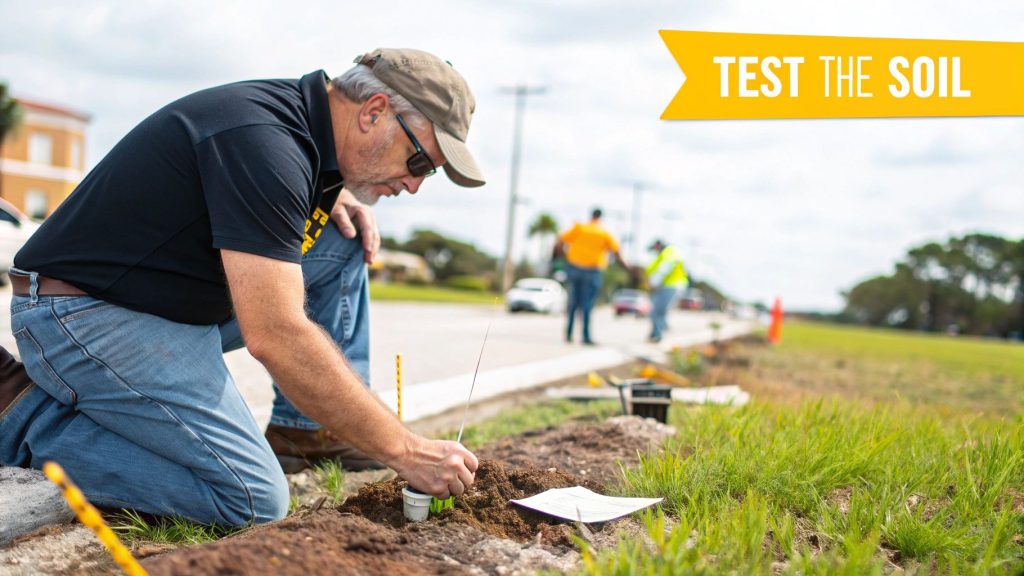
Before a single shovel of dirt is moved for your foundation, a geotechnical engineer needs to perform soil tests. This isn’t just a friendly suggestion; it’s a critical step that informs the entire build. The process involves taking core samples from different spots across your building pad to get a clear picture of the soil’s composition, density, and moisture content.
The results give your builder and engineer crucial intel:
- Load-Bearing Capacity: How much weight can the soil safely hold up? A low capacity might mean you need a beefier, more expensive foundation design to compensate.
- Soil Type: Is it mostly sand, which drains fast but can be unstable? Or is it clay, which holds onto water and can swell or shrink dramatically with the seasons?
- Water Table Level: How close is the groundwater to the surface? This is a huge deal in Florida and has major implications for your foundation and any basement plans.
A professional soil test might run you between $500 and $1,000, but it’s cheap insurance against a catastrophic $50,000 foundation failure down the road. It’s an investment in pure certainty.
Building a Stable Foundation Pad
With the soil report in hand, the crew can get to work preparing the building pad. This is so much more than just pushing dirt around to make it level; it’s about engineering a rock-solid base. The key process here is compaction, and it’s fundamental to a stable home.
Using heavy machinery like vibratory rollers, the soil is compressed in layers, or “lifts,” usually six to twelve inches at a time. This squeezes out air pockets and dramatically increases the soil’s density, creating a stable, interlocking base that won’t shift or settle under the house’s weight. Each layer is tested to make sure it meets the specific density requirements laid out by the engineer—we’re often aiming for 95% or greater compaction.
A properly compacted building pad is the unsung hero of home construction. It distributes the weight of the house evenly, preventing the kind of differential settlement that leads to cracked walls, sticking doors, and severe structural damage.
Think of it this way: would you rather build your house on a loose pile of sand or on solid rock? Compaction essentially turns that loose soil into something much closer to solid rock.
If your lot needs more than just standard compaction, you may need to look into other ground improvements. For a deeper dive, check out our practical guide to soil stabilization techniques for more advanced solutions.
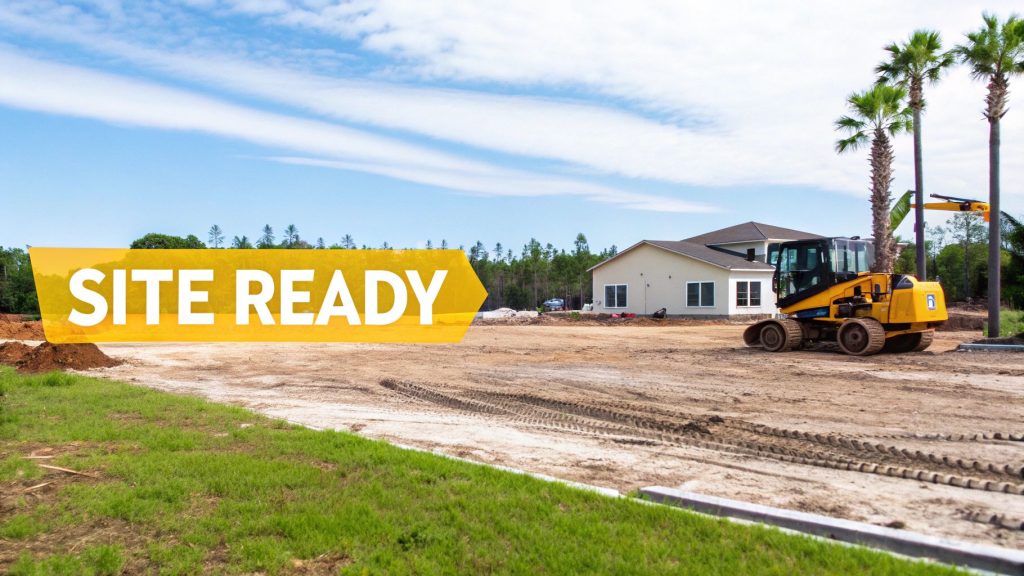
This meticulous process ensures the ground isn’t just level—it’s structurally sound and ready to support your home without fail. It’s the final, critical step before the concrete trucks arrive, turning a cleared lot into a truly build-ready site.
Managing Water Drainage and Utility Access
Once your lot is cleared and graded, the game changes. Now, it’s all about two critical pieces of the puzzle: mastering Florida’s relentless water and mapping out the essential services that will make your house a home. Get these wrong, and you’re looking at serious, expensive headaches down the road. Smart water management is what protects your foundation, and careful utility planning saves you from costly rework during construction.
You simply can’t afford to underestimate Florida’s weather. A pop-up afternoon storm can dump inches of rain in under an hour. Without a proper drainage plan, all that water will find the lowest point on your property—which is often right up against your brand-new foundation.
Taming Florida’s Rainwater
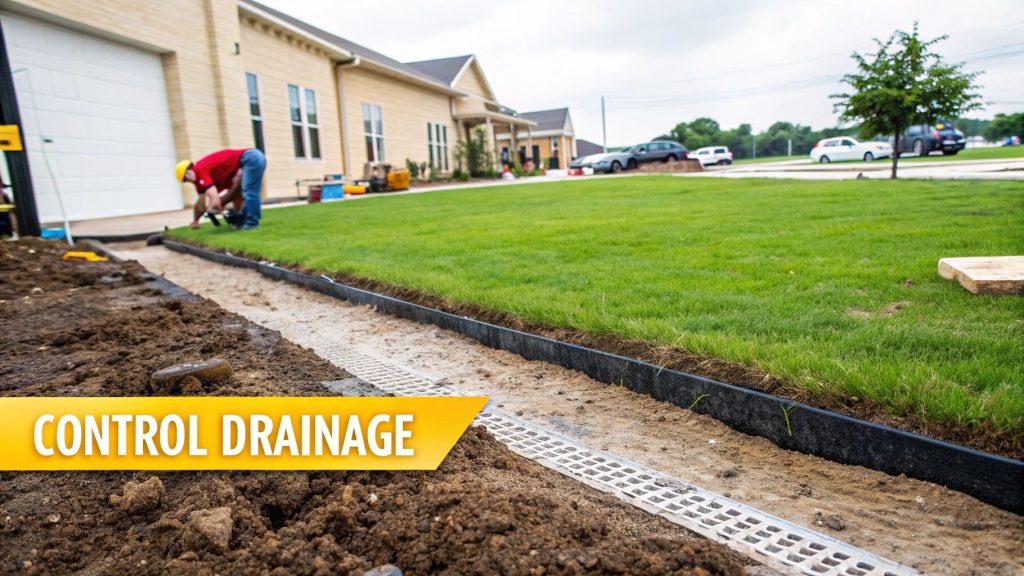
Good drainage is more than just preventing puddles; it’s about protecting the long-term structural integrity of your home. Even on a perfectly graded lot, you need specific systems to channel that heavy rainfall away from the house.
Here are a couple of go-to solutions we see all the time:
- Swales: Think of these as subtle, wide channels built right into your landscape. They’re designed to catch and gently redirect surface runoff toward a safe spot, like a street drain or a retention area.
- French Drains: Got a persistently soggy spot? A French drain is your best friend. It’s essentially a gravel-filled trench with a perforated pipe that collects water from under the surface and carries it away before it can saturate the ground around your foundation.
In counties like Lake and Volusia, local officials are getting more and more strict about erosion control during the building phase. It makes sense—all that loose soil from a freshly prepped site can easily wash into public waterways, creating environmental problems. Because of this, your site plan will almost certainly require specific erosion control measures.
Silt fences are a must-have. These temporary fabric barriers are installed around the perimeter of your lot to trap sediment while letting water pass through. They are your first and best line of defense against runoff while your project is underway.
Another fantastic technique is hydroseeding. This is where a professional sprays a mix of seed, mulch, and fertilizer over the bare soil. It kickstarts rapid grass growth, which locks the soil in place and provides a natural, permanent solution to erosion. For a deeper dive, check out our guide on how to prevent soil erosion on your property.
Planning for Utilities and Site Access
With water under control, it’s time to think about how your home will connect to the world. We’re talking about utilities—water, sewer or septic, electricity, and gas—and ensuring you have a solid, stable path for construction vehicles and, eventually, your own driveway.
Before a single shovel hits the dirt, you have to coordinate with local utility companies. They’ll come out and mark the locations of existing underground lines. Trust me, accidentally hitting a water main or an electrical line is a dangerous, expensive mistake that can bring your entire project to a screeching halt.
Once the existing lines are marked, you can map out the routes for your new services. This involves digging dedicated trenches for water, sewer, and electrical conduits from the street to your house. It’s infinitely cheaper and easier to do this now on open ground than to try and dig them after your landscaping is installed.
It’s also a good idea to get familiar with potential roadblocks, like understanding common natural gas delays that can impact your new home build. Knowing what to expect can help you manage your project timeline.
The same forward-thinking applies to your driveway. You need a designated access route that can handle heavy concrete trucks and delivery vehicles without turning into a mud bog after a storm. This path needs to be cleared, stabilized with a base layer of rock or gravel, and graded properly.
Smart land clearing is at the heart of all this. For example, modern mulching techniques can slash soil disturbance by 70%, which is a huge win for erosion control. For property owners, targeted vegetation management is over 90% more effective at preventing regrowth than just hacking everything down. And methods like stump grinding reduce the amount of debris hauled away, cutting transport emissions by about 25% and protecting Florida’s delicate ecosystems. This kind of careful planning is what truly transforms a raw piece of land into a ready-to-build site.
Budgeting Timelines and Hiring the Right Crew
Once you have a solid grasp of the physical work ahead, the conversation always shifts to logistics. How much will this all cost? How long will it take? And who can you trust to get it done right? These are the make-or-break questions that turn your blueprint into a buildable reality.
Getting a handle on timelines and costs for land preparation for building a house in Central Florida isn’t about finding a magic number. Every property is different, so a one-size-fits-all estimate is a fantasy. But by understanding the variables, you can piece together a realistic budget and schedule.
Decoding Land Preparation Costs
The final invoice for your site prep is a direct result of several interconnected factors. A good quote will break these down for you, but it’s smart to know what drives the numbers before you even make that first call.
The biggest cost drivers are pretty straightforward:
- Lot Size: It’s a simple equation—more acreage means more time, fuel, and labor, which translates directly to a higher cost.
- Vegetation Density: A sparse lot with a few small pines is a world away from clearing one choked with dense palmettos, thick undergrowth, and mature oak trees.
- Required Services: Are we just talking forestry mulching? Or does your project also need extensive stump grinding, major grading to fix a slope, and hauling away debris? Each service is a line item that adds to the total.
- Accessibility: A flat, open lot with easy road access is a much more efficient worksite than a sloped, remote property that’s a challenge for heavy machinery to even get to.
For a typical one-acre residential lot here in Florida, professional land clearing costs often fall somewhere between $1,500 and $5,000. If your project involves serious grading or hauling, expect that figure to climb. The only way to get a true number is with a detailed, on-site quote from a company that knows the area.
Mapping Out a Realistic Timeline
Patience is key in any construction project, and site prep is ground zero. While the actual machine work can seem surprisingly fast, the entire process from start to finish has stages that you just can’t rush.
Here’s what a typical timeline might look like for a standard residential lot:
- Initial Contact & Site Visit (1-3 Days): After you reach out, a professional crew should be able to get out to walk the property with you pretty quickly.
- Quote & Contract (2-4 Days): You’ll get a detailed proposal. This is your time to review it, ask questions, and get the contract signed.
- Permitting (1-4 Weeks): This is often the longest and most unpredictable part. Depending on your county—be it Orange, Polk, or Seminole—getting the necessary land clearing permits can take anywhere from a week to over a month.
- On-Site Work (3-10 Days): Once the permits are in hand, the real work begins. The duration for clearing, grinding, and grading depends entirely on the scope and, of course, the Florida weather.
- Final Walk-Through (1 Day): You and your contractor will walk the finished site together to make sure every detail meets the standards you agreed on.
From that first phone call to having a truly build-ready site, a realistic timeframe is anywhere from three to six weeks. Keep in mind that heavy rains, protected tree assessments, or bureaucratic delays can easily push that schedule out.
Choosing Your Land Clearing Partner
Hiring the right team is the single most important decision you’ll make at this stage. The quality of their work sets the tone for your entire build. A cheap, inexperienced operator can cause expensive problems—like poor drainage or an unstable foundation pad—that you’ll be paying to fix for years.
When vetting a land clearing company, treat it like a job interview. You’re looking for a partner, not just a guy with a tractor.
Be sure to ask these critical questions before you sign anything:
- Are you licensed and insured? This is non-negotiable. Ask for a copy of their general liability insurance and workers’ compensation. If they hesitate, that’s a red flag.
- Can you provide local references? An established, confident company will be happy to connect you with past clients right here in the area.
- What equipment do you recommend for my project? Their answer tells you a lot. A pro will suggest specific machinery (like a forestry mulcher versus a bulldozer) based on your lot’s unique needs, not just on what they happen to have parked in their yard.
- How do you handle surprises? What’s the plan if they uncover an old well or find the soil is far rockier than it looked? A professional will have a clear process for communicating changes and adjusting the plan with you.
Your quote should be more than just a number on a page. Look for a detailed, itemized list of every service. It should clearly spell out what’s included and, just as importantly, what isn’t.
At Palm State Clear Cut, we believe in total transparency. That’s why we provide free, comprehensive quotes so you know exactly what to expect. Finding a reliable partner who delivers on time and on budget is the final, crucial step in getting your land ready. It’s what ensures your dream home starts on the solid foundation it truly deserves.
Common Land Preparation Questions Answered
Starting the journey of preparing land for a new home can feel a little overwhelming, and it’s totally normal to have a lot of questions. We get them all the time from homeowners across Central Florida who are right at the beginning of their project.
To help you move forward with a bit more clarity, we’ve put together some straightforward answers to the most common questions we hear out in the field.
How Long Does The Entire Land Preparation Process Take?
This is probably the number one question we get, and the honest answer is: it depends.
The actual on-site work—the clearing, grinding, and grading—for a typical one-acre residential lot might take anywhere from a few days to two weeks. It’s the other stuff that adds to the clock.
The complete process, from our first phone call to having a truly build-ready site, is longer. You have to factor in the initial site visit, getting a detailed quote, and the biggest variable of all: permitting.
Realistically, you should budget anywhere from three to six weeks for the entire land preparation phase. Things like extremely dense vegetation, unexpected discoveries on the lot, heavy rainy seasons, or delays at the county permit office can definitely extend this timeline. A good contractor will always give you a detailed schedule upfront.
What Permits Are Needed For Land Clearing In Central Florida?
Navigating permits can feel like a maze. The rules change from one county to the next, and sometimes even within the same city. For most projects, you’ll need at least a basic land clearing or grubbing permit before any heavy machinery can start working.
But that’s just the baseline. The permit requirements get more complicated if your property has:
- Protected Trees: Central Florida has ordinances protecting certain trees, especially our beautiful large oaks. Removing them requires a separate permit and often involves an arborist’s report.
- Wetlands: If any part of your property is designated as a wetland, you’re looking at a much more involved environmental permitting process at both the county and state levels. Don’t skip this step.
- Specific Zoning: Some areas have unique restrictions on how much of a lot can actually be cleared.
Your best first move is always to check the website for your local county’s building or environmental department. An experienced land clearing company is invaluable here—they know the local regulations inside and out and can guide you through the exact paperwork your project needs.
Is Forestry Mulching Better Than Using A Bulldozer?
For the vast majority of residential projects here in Central Florida, the answer is a resounding yes.
The traditional method of using a bulldozer certainly gets the job done, but it’s a brute-force approach with some pretty significant downsides. Bulldozing scrapes away valuable topsoil, which you’ll definitely want for landscaping later. It also leaves you with massive piles of debris—trees, stumps, and brush—that have to be either burned (requiring another permit) or hauled away, which gets expensive fast.
Forestry mulching, on the other hand, is a far more elegant and efficient solution. A single machine shreds all the vegetation right where it stands, turning it into a natural, beneficial layer of mulch. This method is faster, more eco-friendly, and leaves your lot in a much healthier state for construction, directly addressing the core needs of land preparation for building a house.
How Much Does Land Preparation For A House Cost?
There’s no flat rate for land preparation because every single property is unique. The final cost is a direct reflection of the specific challenges and requirements of your particular lot.
A simple mulching job on a flat, lightly wooded acre might cost a few thousand dollars. However, a more complex project with dense vegetation, dozens of large stumps to grind, significant grading work to correct a slope, and debris hauling could be substantially more.
The primary factors that will influence your final quote include:
- The size of your property in acres.
- The density and type of vegetation (e.g., light brush vs. mature hardwood trees).
- The specific services required (clearing, stump grinding, grading, etc.).
- The accessibility of the site for heavy equipment.
The only way to get a reliable figure is to have a professional conduct an on-site evaluation. They can walk the property with you, talk through your goals, and provide a detailed, transparent estimate with no surprises.
Ready to get a clear, no-obligation quote for your property? The team at Palm State Clear Cut has the experience and equipment to handle every aspect of your land preparation project, from initial clearing to final grading. Visit us online to schedule your free estimate today!