
How Much Is Land Clearing Per Acre A Complete Cost Breakdown
- Jan 10
- 16 min read
When you ask, "how much is land clearing per acre," the answer almost always starts with, "Well, it depends." Here in Central Florida, that number can land anywhere between $1,500 and $6,000 per acre. The final price tag hinges on what your land looks like right now—how thick the vegetation is, what the terrain is doing, and the clearing method that makes the most sense for the job.
A Realistic Look at Florida Land Clearing Prices
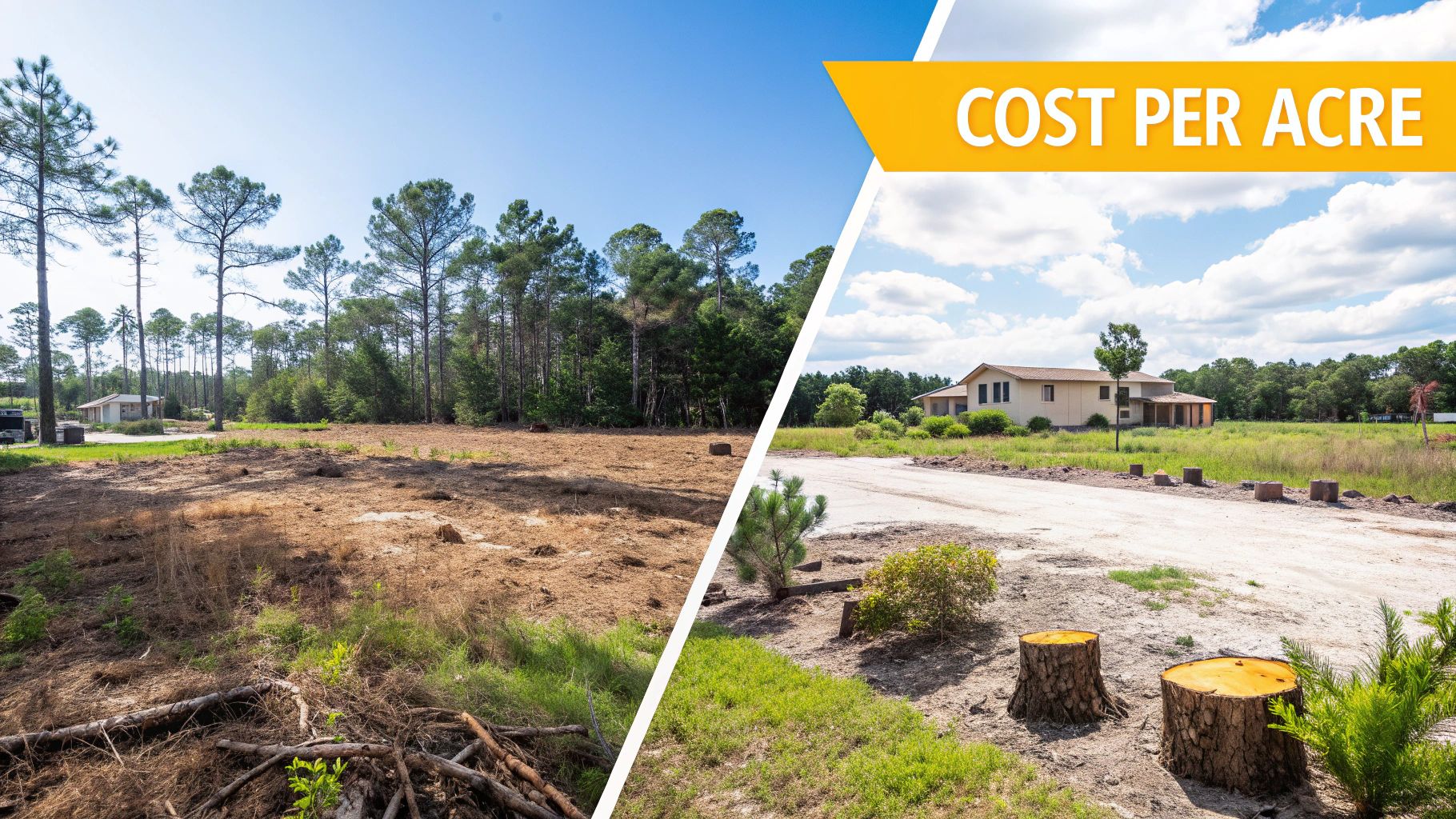
It’s tempting to search for a simple, flat-rate price, but clearing land is a lot more like getting a custom suit than buying a shirt off the rack. National averages you see online often don't account for the unique challenges of our area, from the sandy soil to dense palmetto thickets and those stubborn Florida pine stumps.
Ultimately, the cost is a direct reflection of the labor, machinery, and time needed to get your specific piece of land ready for its next chapter.
Think about the cost in tiers, with each level matching the intensity of the work. Clearing a field that’s just a bit overgrown is a completely different ballgame than tackling a heavily wooded lot that demands serious horsepower. This is exactly why getting a professional to walk the property is the only way to get a truly accurate quote. For a bird's-eye view of the entire process, this complete guide to land clearing is a fantastic resource.
Breaking Down the Cost Tiers
To give you a clearer idea of where your project might fall, let's break it down by complexity. This should help you ballpark a realistic budget.
Light Clearing: This is the most straightforward and affordable tier. We're talking about clearing tall grass, small shrubs, and a few saplings. It's perfect for fields that have been left alone for a few years.
Moderate Clearing: This is the sweet spot for most new homesites. It involves taking out dense brush, thick palmettos, and a mix of small-to-medium trees.
Heavy Clearing: This is reserved for densely forested land. The job here includes removing large, mature trees like oaks and pines, grinding massive stumps, and hauling away a significant amount of debris.
Key Takeaway: The tougher the vegetation and terrain, the more time and heavy-duty equipment are needed—and that’s what drives up the per-acre cost. Knowing what's on your property is the first step toward understanding your total investment.
Central Florida Cost Estimates at a Glance
While nothing beats an on-site assessment, the table below gives you a practical starting point for your budget. These numbers reflect typical conditions we see across Central Florida counties like Orange, Osceola, and Polk.
Estimated Land Clearing Costs Per Acre in Central Florida
Clearing Intensity | Typical Vegetation | Estimated Cost Per Acre |
|---|---|---|
Light Clearing | Overgrown grass, light brush, few saplings | $1,500 - $2,500 |
Moderate Clearing | Dense palmettos, shrubs, small-medium trees | $2,500 - $4,500 |
Heavy Clearing | Mature hardwood/pine trees, large stumps | $4,500 - $6,000+ |
Remember, getting a site ready for a new build involves a lot more than just taking down trees. To learn about all the steps involved, check out our guide on land clearing for construction in Central Florida.
The 7 Key Factors That Drive Your Final Price
Asking "how much does it cost to clear an acre of land?" is a bit like asking how much a custom truck costs. The base model is just a starting point; the final price tag really depends on what you need and the specific challenges of your property. You could have two one-acre lots side-by-side, but their clearing costs could be wildly different because of a few key variables contractors have to wrestle with.
Getting a feel for these factors helps you see your land through a professional's eyes. It clarifies why one job might be a quick, straightforward project while another demands more time, bigger machinery, and a larger budget. Let's walk through each one so you can have a much more informed conversation when you get a quote.
1. Vegetation Density and Type
The single biggest thing that moves the price needle is what's actually growing on your land. A field with some light brush and tall grass is a walk in the park compared to a parcel choked with mature oaks and stubborn palmettos.
Lightly Wooded Land: Think grass, weeds, and small saplings. This kind of job doesn't require the heaviest equipment and can usually be handled quickly, which keeps your costs down.
Heavily Wooded Land: Tackling dense forests with large-diameter trees is a different beast entirely. It demands heavy-duty equipment, more man-hours, and specialized skills, all of which drive the price up significantly.
On a national level, clearing costs can run anywhere from $500 to over $5,600 per acre, with the average landing around $3,777. That huge range is shaped by the type of vegetation, the terrain, and what skilled operators charge in a given area—typically $110 to $250 per hour. You can dig deeper into how those national averages for land clearing are calculated to see all the moving parts.
2. Terrain and Topography
How the land lays out plays a massive role in the project's difficulty and cost. A flat, wide-open lot? That's the dream scenario for any contractor—and your wallet.
But the moment you add slopes, hills, or uneven ground, the complexity skyrockets. Steep grades make it tougher and more dangerous to operate heavy machinery, slowing everything down. And if the crew runs into rocky soil or hidden boulders, that can add hours to the job and even risk damaging equipment—a possibility any good contractor has to build into their pricing.
3. Stump Removal and Grubbing
Cutting down the trees is often just half the job. What you decide to do with the stumps is a major fork in the road for your budget. Leaving them in place is obviously the cheapest route, but it's a non-starter if you're planning to pour a foundation, lay a driveway, or create a smooth pasture.
Key Distinction: Stump grinding chews the stump down below ground level, making the area suitable for new grass or landscaping. Stump grubbing, on the other hand, means ripping the entire stump and its root ball out of the earth. It's a much more intense and expensive process, but it's essential for construction.
The size, wood type, and sheer number of stumps on your acre will directly affect that final number. A handful of small pine stumps is one thing; an acre dotted with ancient oak stumps is a whole other level of work.
4. Site Accessibility
This one's simple: how easily can the crew and their heavy equipment get onto your property? If your land is right off a paved road with a big, open entrance, getting started is easy.
But if the property is remote, landlocked, or stuck at the end of a narrow, muddy path, it creates a logistical puzzle. The contractor might have to build a temporary road just to get their machines in, or they might be forced to use smaller, less efficient equipment. Those kinds of hurdles add time and expense, which will show up on your quote.
5. Debris Disposal Method
Once everything is cleared, you're left with a mountain of organic debris—trees, brush, roots, and stumps. Getting rid of it isn't free, and how you do it will impact the cost.
Hauling Off-Site: This is usually the most expensive choice. It involves the labor to load everything up, plus trucking fees and whatever the local landfill charges for disposal.
Burning On-Site: If local rules allow it, burning the debris can be a more budget-friendly option. It's not as simple as lighting a match, though—it requires permits and careful management to do it safely.
Forestry Mulching: This method turns a problem into a solution by eliminating disposal costs completely. A powerful mulching machine grinds all the vegetation into a layer of natural, nutrient-rich mulch that's spread right back onto the soil, helping prevent erosion.
6. Permit and Surveying Requirements
Before the first machine even starts, you might need to bring in other professionals. A land survey is often the first step to clearly mark your property lines so there's no risk of accidentally clearing a neighbor's land. For a typical lot, this can cost anywhere from $300 to $750.
On top of that, most Central Florida counties require permits for land clearing, especially if you're taking down protected trees or working near wetlands. These permits come with their own fees and can add a few hundred dollars to your upfront costs. A seasoned local contractor will know the ins and outs of the local regulations and can help you navigate the paperwork.
7. Project Size and Economies of Scale
Last but not least, the total size of your project really matters. While clearing more acres means a higher total bill, the price per acre almost always goes down. It all comes down to economies of scale.
There's a fixed cost involved in just getting the crew and equipment out to your site. Spreading that initial cost over ten acres is far more efficient than spreading it over just one. Because of this, most contractors will offer a lower per-acre rate for larger jobs, which can make clearing a bigger parcel more affordable than you might think.
Choosing Your Method: Bulldozing vs. Mulching
When it comes to clearing your land, you really have two main choices, and they're as different as a sledgehammer and a scalpel. Getting a handle on the core differences between old-school bulldozing and modern forestry mulching is the first step to picking the right tool for the job—and ultimately, controlling your land clearing cost per acre.
Think of it this way: bulldozing is the brute-force method. A dozer physically scrapes the land, pushing over trees, tearing out stumps, and stripping away the top layer of soil to completely reshape the ground. It’s powerful and necessary for big earth-moving projects, but it leaves a heavy footprint.
On the other hand, forestry mulching is a much more surgical approach. A specialized machine with a powerful grinding head literally shreds trees and brush right where they stand, instantly turning them into a protective blanket of mulch.
The Bulldozing Approach: A Total Reset
Bulldozing is the classic choice for a reason. When you need a perfectly clean slate for a new building foundation, a road, or a major grading project, nothing else really compares. The goal isn't just to get rid of the vegetation; it’s about re-engineering the land itself.
The process involves a heavy dozer pushing everything over, followed by "grubbing"—the messy work of ripping entire stumps and root balls out of the ground. This leaves you with massive piles of debris (trees, stumps, and dirt) that have to go somewhere.
Debris Management: All that material has to be burned on-site (which means permits) or hauled away to a landfill. Both options add significant trucking and disposal fees to your final bill.
Soil Disruption: Bulldozing strips away the nutrient-rich topsoil, leaving the ground completely bare and vulnerable to erosion, especially during Florida's notorious downpours.
Permitting: Because of the heavy soil disturbance, dozer projects often trigger more complex and expensive permitting requirements from local authorities.
This decision tree gives a great visual of how terrain—a huge factor in choosing your method—affects the per-acre cost.
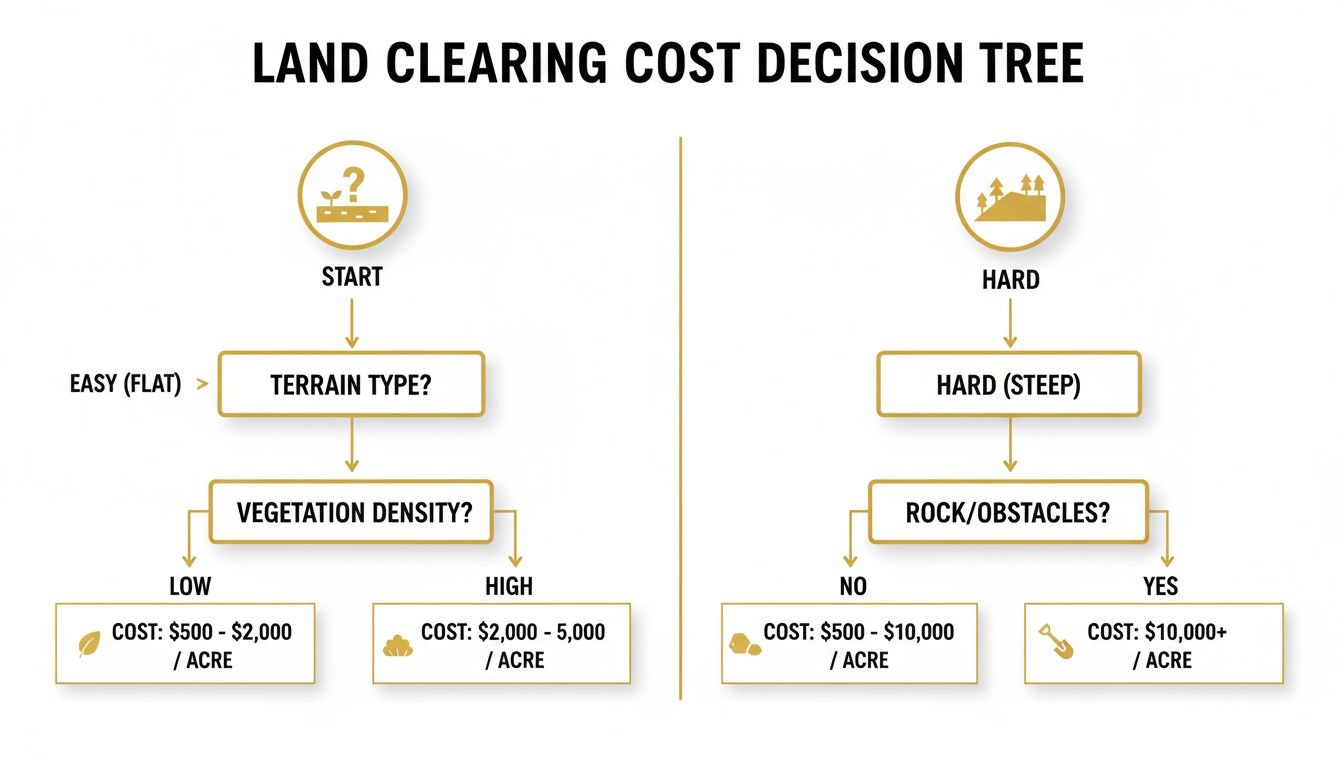
As you can see, tricky terrain not only drives up costs but also makes a less invasive method like mulching look a lot more attractive for preventing serious erosion problems down the line.
Forestry Mulching: The Eco-Friendly Alternative
Forestry mulching has quickly become the go-to method for landowners who want to clear out vegetation without wrecking the underlying ecosystem. It’s a single-machine operation that’s faster, more efficient, and way gentler on your property.
The mulching head grinds trees, brush, and even small stumps into fine wood chips. This material is then spread evenly across the ground, creating a natural mat that immediately starts protecting the soil.
The Mulch Advantage: That layer of mulch is a complete game-changer. It instantly stabilizes the soil to stop erosion, helps hold moisture for any trees you leave behind, and slowly breaks down, feeding valuable nutrients back into the earth.
This method is perfect for projects like:
Cutting new trails or fence lines
Clearing out thick underbrush in a wooded lot
Prepping a site for a new home while saving specific, mature trees
Reclaiming overgrown pastures
Because it's a one-and-done process with no hauling or burning, it can often be a lot more cost-effective. For a closer look at the numbers, check out our guide on forestry mulching cost per acre, where we break down the pricing in detail.
A Head-to-Head Comparison
Choosing the right method really boils down to your end goal. Do you need to fundamentally change the shape of the land, or do you just need to get rid of unwanted vegetation? To make it simple, we've put together a quick comparison to help you see how they stack up.
Forestry Mulching vs. Traditional Bulldozing: A Head-to-Head Comparison
Feature | Forestry Mulching | Traditional Bulldozing (Dozer) |
|---|---|---|
Soil Health | Excellent. Keeps topsoil intact and enriches it with organic mulch. | Poor. Strips topsoil away, leading to compaction and high erosion risk. |
Final Appearance | Clean and park-like. Leaves a natural, protective layer of mulch. | Bare dirt. Requires extra work like seeding to prevent a mud pit. |
Project Speed | Fast. A single machine gets the job done with no follow-up cleanup needed. | Slow. A multi-step process: clearing, piling, and then hauling or burning. |
Cost Factors | Often a lower overall cost since there are no hauling or disposal fees. | Higher costs from the extra labor and fees for debris handling and disposal. |
Best For | Selective clearing, erosion control, underbrush removal, trail creation. | New construction pads, major grading, and complete land reshaping. |
At the end of the day, bulldozing is a necessity when the ground itself has to be moved and leveled for construction. But for nearly every other reason—from improving your property's appearance and usability to taming overgrown land—forestry mulching offers a superior, more sustainable, and often more affordable solution for your Central Florida project.
How Land Clearing Becomes a Smart Investment
It's easy to look at the cost to clear an acre of land and see it as just another expense. But if you shift your perspective, you'll find it's one of the most powerful investments you can make in your property. Land clearing isn’t just about removing things; it’s about adding real, tangible value that you can see, use, and eventually profit from.
Think about two identical parcels of land here in Central Florida. One is a dense, impassable tangle of overgrown brush, stubborn palmettos, and deadfall. The other is clean, open, and easy to walk, with its best features on full display. Which one do you think a potential homebuyer, developer, or farmer would jump at?
The answer is obvious. A cleared lot is a blank canvas, full of possibilities instead of problems. This isn't just a hunch—it's a market reality. A property that is build-ready, farm-ready, or simply usable fetches a much higher price and draws a bigger crowd of interested buyers. You’re essentially removing a huge, costly question mark for the next owner, making your land a far more attractive asset.
Turning Potential into Profit
The real financial magic of land clearing happens when you unlock your property's hidden potential. Overgrown land has a theoretical value, but cleared land has immediate, practical value. By investing in clearing, you're directly converting that dormant potential into measurable equity.
Here’s how that transformation plays out:
Better Marketability: Cleared land simply sells faster. Buyers can instantly picture a homesite, a pasture, or a new building without having to mentally subtract thousands of dollars for the clearing work they’ll have to do.
Increased Property Value: Appraisers and buyers both assign higher values to land that’s accessible and ready for use. The money you spend on clearing often comes back several times over in the final sale price or appraisal.
Improved Usability: Resale value aside, clearing gives you more of your own property to use right now. It opens up space for recreation, gardening, or just enjoying the full expanse of what you own.
A well-executed land clearing project does more than just change the view. It fundamentally upgrades your property's financial status from raw, undeveloped land to a premium, build-ready parcel.
The Proof Is in the Numbers
Looking back at market data, there's a clear, strong link between land improvement and value appreciation. Well-maintained, usable land is a commodity that only grows in worth. National trends really drive this point home.
Between 2008 and 2022, the average value of U.S. farm acreage shot up by an impressive 75%, climbing from $2,170 to $3,800 per acre. Even more telling, cropland—which must be cleared and prepared—saw an 83% jump in value during that same time, rising from $2,760 to $5,050 per acre. This shows the premium the market puts on prepared sites. You can dive deeper into these agricultural land value trends on cushmanwakefield.com.
While your Central Florida lot might be destined for a new home instead of a harvest, the principle is exactly the same. Investing in site preparation makes your land a more valuable and desirable asset, no matter the market.
A Practical Checklist for Hiring Your Land Clearing Contractor
Picking a land clearing contractor is the most critical decision you'll make in this entire process. A great partner keeps your project moving smoothly, safely, and right on budget. But the wrong one? That can quickly spiral into a nightmare of property damage, legal headaches, and fees you never saw coming.
Think of it like hiring a pilot. You wouldn't just grab the cheapest flight available. You’d want to know they’re licensed, experienced, and flying a plane that’s actually been maintained. The same logic applies right here. Before you even think about signing a contract, you have to vet your options to protect yourself and your land.
Consider this checklist your pre-flight inspection. Asking these questions will help you confidently tell the seasoned pros from the risky operators.
Verifying Credentials and Experience
First things first: you need to be sure you're dealing with a legitimate, responsible business. These are the absolute non-negotiables.
"Can I see your proof of insurance?" Don’t be shy about asking for a certificate showing both general liability and workers' compensation. This is what protects you from any liability if there’s an accident or injury on your property.
"Are you licensed and bonded in Florida?" A license proves they meet state requirements, and being bonded gives you financial protection if they can’t finish the job as promised.
"Can you provide references from recent, similar projects?" Don't just get the list—actually call them. Ask about their experience, if the project stayed on budget, and the ultimate question: would they hire the contractor again?
For a deeper dive, our article on finding a land clearing contractor near you in Central Florida has even more pointers for your search.
Clarifying the Scope of Work
A vague quote is a massive red flag. The price means nothing if you don't know exactly what it covers. Getting these details ironed out now is the key to preventing expensive "surprises" down the road.
Crucial Insight: The most common arguments between landowners and contractors stem from a simple misunderstanding of what the initial quote actually included. A professional will always provide a detailed, itemized proposal.
Get crystal-clear answers to these questions:
Does your quote include stump removal? And what kind? Be specific about whether it’s grinding or full grubbing (pulling out the entire root ball).
How will you handle debris disposal? Find out if hauling, burning, or mulching is baked into the price or if it's an extra line item.
What happens if you find unexpected obstacles? Ask how they handle and bill for surprises like buried concrete, big rocks, or old wells.
Is final grading or site leveling part of the package? Never assume a cleared lot is a perfectly level, build-ready one.
Knowing some effective contractor negotiation strategies can be a huge help here, making sure your final contract is comprehensive and fair.
Assessing Their Equipment and Methods
The machinery a contractor brings to the job directly impacts the cost, efficiency, and final look of your property. A crew with modern, well-maintained equipment is simply better prepared to tackle your project the right way.
Ask them about their fleet:
What specific equipment will you use on my property? Are they specialists in low-impact forestry mulching, or is their go-to a bulldozer?
How do you maintain your machinery? Constant breakdowns on your dime lead to nothing but costly delays for your project.
Is your team experienced with this method? You want to ensure the operators are true experts with the machinery they plan to use on your land.
Taking a few minutes to walk through this checklist transforms you from a customer into an empowered project manager. It makes sure you not only understand how much is land clearing per acre but also that you're hiring the right professional who will deliver real value for that price.
Your Top Land Clearing Questions Answered
Even after breaking down the costs, you probably still have a few specific questions. That's completely normal. Getting into the details is what turns a rough estimate into a solid project plan. This section is all about tackling those practical, nitty-gritty questions we hear every day from landowners right here in Central Florida.
Think of it as your quick-reference guide. We’ll get straight to the point on everything from dealing with different tree types to the real-world pros and cons of trying to clear the land yourself.
Does It Cost More to Clear Land with Oak and Pine Trees?
Yes, it absolutely does. A piece of land packed with mature hardwoods like oaks or tall pines is always going to be more expensive to clear per acre than a field of scrub brush and small saplings. It really just comes down to physics and time.
Big, dense trees demand more powerful equipment, whether that's a heavy-duty forestry mulcher or a crew with serious chainsaws. The whole process is slower, and the stumps left behind are a whole different beast—they're bigger and rooted much deeper. Pulling out a two-foot diameter oak stump is a major operation compared to grinding a six-inch pine stump, and that difference shows up directly in labor hours and machinery costs.
When a contractor walks your property, one of the first things they'll do is assess the quantity and diameter of large trees. It's one of the biggest factors that will swing your final quote one way or the other.
Can I Save Money by Clearing the Land Myself?
It's tempting to think about tackling the job yourself to save a few bucks, but this is a classic "penny wise, pound foolish" situation. Renting heavy machinery like a bulldozer or a big skid steer is surprisingly expensive—daily rates can easily run into the hundreds of dollars, and that's before you even add fuel and delivery fees.
More importantly, it's incredibly dangerous to operate this equipment without professional training. The risks are very real:
Personal Injury: These are powerful, unforgiving machines. One wrong move can have serious consequences.
Property Damage: It's easier than you think to accidentally take out underground utility lines or damage beautiful trees you wanted to keep.
Long-Term Headaches: If you don't grade the land correctly, you can create major drainage problems down the road. The sheer weight of the machinery can also compact the soil so badly that nothing will grow there properly.
Hiring a professional isn't just about getting the job done fast. They're insured, they're efficient, and they know how to work with the land to avoid creating new, expensive problems. Any money you might save on a DIY attempt can vanish with a single mistake.
What Permits Are Needed for Land Clearing in Central Florida?
This is where having a local expert on your side really pays off. Permit requirements can change dramatically from one county to the next—what's needed in Orange County might be totally different from Polk or Osceola. Sometimes, the rules even change between neighboring towns or specific zoning areas.
Generally, you might be looking at permits for a few different things:
Tree Removal: Many counties have rules to protect "grand" trees (think of those majestic old oaks) and often require a permit to take down any tree over a certain size.
Environmental Impact: If your property borders wetlands, a conservation area, or is a known habitat for protected wildlife, you can bet there will be extra environmental permits involved.
Soil and Site Work: Any large-scale clearing that involves moving a lot of dirt around will typically require a site development or grading permit.
A reputable local contractor deals with these regulations all the time. They'll know exactly what's required and can guide you through the paperwork, making sure your project stays 100% compliant.
Is Forestry Mulching Better for Environmentally Sensitive Areas?
Without a doubt. Forestry mulching is hands-down the most eco-friendly way to clear land, especially if your property has sensitive features. Traditional bulldozing scrapes the earth bare, destroying the valuable topsoil and disrupting the entire ecosystem. Mulching is a much more surgical and restorative approach.
A forestry mulcher shreds vegetation right where it stands, leaving the soil and the root systems of the trees you're keeping completely undisturbed. The shredded material creates a natural, protective blanket over the ground. This mulch layer immediately starts preventing soil erosion, helps the ground retain moisture, and slowly breaks down to feed the soil. It's the clear winner for land near water, on sloped terrain, or for any landowner who wants to improve their property’s health, not just clear it.
Ready to get a clear, no-nonsense quote for your project? The team at Palm State Clear Cut has the local expertise and modern equipment to handle your land clearing needs efficiently and professionally. We serve landowners across Central Florida and provide free, on-site estimates to give you an accurate answer to "how much is land clearing per acre" for your specific property. Contact us today to schedule your free quote!


Comments