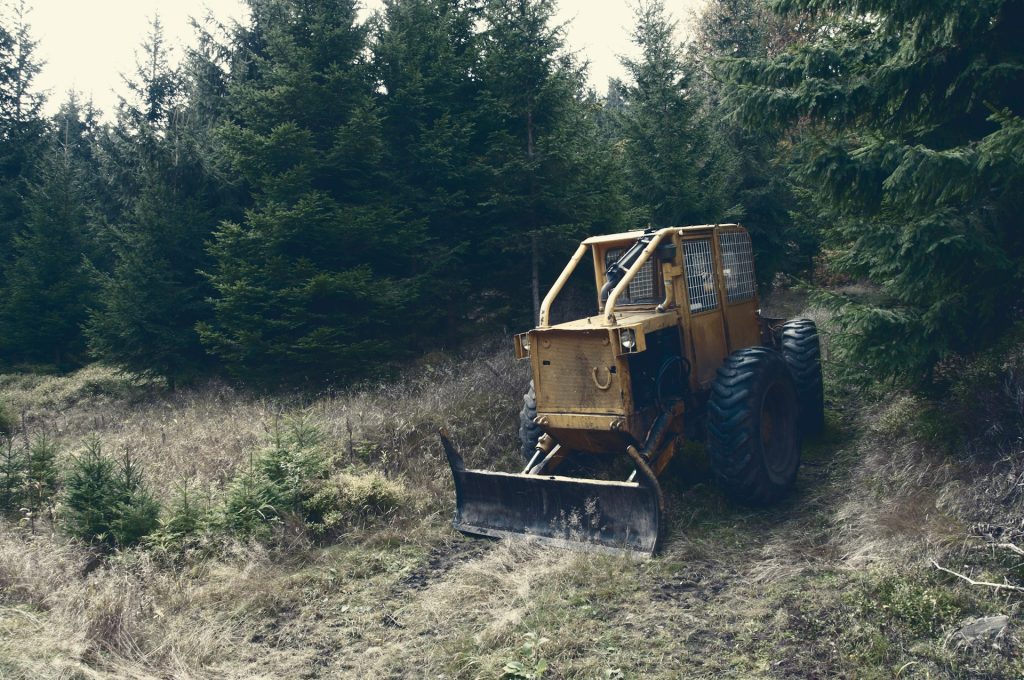
Think of a machine that works like a giant, powerful blender for the forest floor. It moves through dense undergrowth, brush, and small trees, instantly turning everything in its path into a layer of protective mulch. That’s exactly what a land clearing mulcher does, offering a modern, single-pass solution that has become the new standard for landowners and developers getting their sites ready.
How Mulchers Change the Site Prep Game
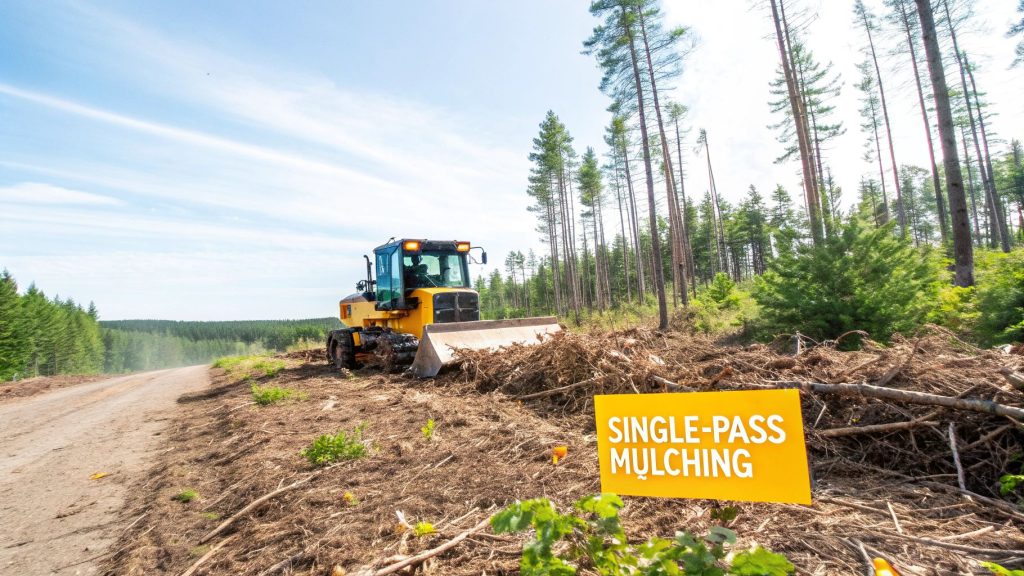
Forestry mulching is a massive leap forward from the old ways of clearing land. In the past, preparing a property was a messy, multi-step process that often did more harm than good to the land itself.
Remember the traditional methods? Bulldozers would come in and scrape the ground bare, taking precious topsoil with them and compacting the earth so hard it was difficult for anything to grow later. This left behind huge piles of debris that then had to be hauled away, chipped, or burned—each a separate, costly task. Burn piles, in particular, pollute the air and usually require special permits, adding another headache to the project.
The Modern Single-Pass Solution
Land clearing mulchers flip that entire script. Instead of fighting nature, these machines work with it. A single piece of equipment moves across the property, grinding up vegetation right where it stands. This completely eliminates the need for a fleet of different machines and the labor costs that come with them.
The benefits are obvious from day one:
- No Debris Piles: Every bit of cleared vegetation becomes mulch and is spread right back onto the ground. No hauling, no disposal fees.
- Soil Health Preservation: The mulching process leaves the delicate soil structure and vital topsoil untouched. This prevents compaction and creates a healthy foundation for whatever you’re planning next.
- Natural Erosion Control: The freshly made mulch acts like a protective blanket, shielding the soil from Florida’s heavy rains and wind.
This single-pass efficiency doesn’t just save time and money; it sets your property up for long-term health and stability. To see how this stacks up against other methods, check out this complete guide to land clearing for construction.
An Eco-Friendly Approach
Beyond the sheer efficiency, the environmental upsides are huge. The mulch created by these machines isn’t waste—it’s a resource. As it breaks down, it slowly feeds the soil with organic nutrients, making it more fertile over time. It also helps the ground hold onto moisture, which means less need for irrigation for any new plantings.
By recycling 100% of the vegetation back into the earth, forestry mulching turns a clearing project into an act of soil enhancement. It’s an investment in the long-term health and stability of your land.
This modern method also avoids the carbon emissions from burning and keeps all that debris out of landfills. If you’re curious to learn more about the mechanics, you can discover more about what forestry mulching is and why it’s such a practical choice for landowners today. It’s simply a smarter, more responsible way to prepare your site for a new home, an agricultural project, or habitat restoration.
Choosing the Right Mulcher for Your Project
Picking the right machine for a land clearing job is a lot like choosing the right tool from a toolbox. You wouldn’t use a sledgehammer to hang a picture frame, and you certainly wouldn’t use a tiny screwdriver on a massive bolt. In the world of land clearing mulchers, it really boils down to two main types of equipment, and each one is built for very different challenges.
The two primary contenders are the versatile skid steer with a mulching attachment and the powerhouse dedicated forestry mulcher. Getting a handle on their strengths and weaknesses is the first step to making sure your project gets done right—on time, on budget, and without headaches.
Skid Steers: The Agile Multi-Tool
Think of a skid steer with a mulching attachment as the Swiss Army knife of land clearing. It’s compact, nimble, and incredibly versatile. Because the mulching head is just an attachment, we can swap it out and use the same machine for grading, hauling, or other essential tasks on the job site.
This agility makes it the perfect solution for specific scenarios:
- Smaller Properties: It’s the ideal choice for clearing residential lots under a few acres where bringing in a giant machine would be total overkill.
- Tight Spaces: Its smaller size lets it weave between mature trees you want to save or get into areas with limited access.
- Selective Clearing: It’s perfect for detailed work like clearing out fence lines, carving new walking trails, or thinning dense underbrush without disturbing everything else.
A skid steer setup has less raw horsepower and hydraulic flow than its bigger cousin. That means it’s at its best chewing through softer woods and smaller-diameter trees, usually up to 6-8 inches. While it’s a master of precision, it’s not built for clearing vast acreage or a forest full of dense, mature hardwoods.
Dedicated Forestry Mulchers: The Specialized Powerhouse
If a skid steer is a multi-tool, a dedicated forestry mulcher is a purpose-built beast. These machines are engineered from the ground up for one mission: to obliterate dense vegetation with relentless force. Everything from their high-horsepower engines and beefed-up hydraulic systems to their reinforced operator cabs is designed for maximum power and safety in tough conditions.
A dedicated mulcher isn’t just a machine with an attachment; its entire system—engine, hydraulics, and chassis—is integrated to deliver relentless power directly to the mulching head. This synergy allows it to tackle massive projects without overheating or breaking down.
These are the machines you call in for the big jobs:
- Large Acreage: They make quick work of clearing 10, 50, or even 100+ acres of thick forest.
- Mature Trees: They have the muscle to grind down large-diameter hardwood trees that would bring a skid steer to a screeching halt.
- Demanding Commercial Projects: This is the go-to equipment for preparing sites for new subdivisions, commercial developments, and large-scale agricultural operations.
To help you see the differences more clearly, here’s a quick comparison of how these two machines stack up for different land clearing scenarios.
Skid Steer Mulcher vs Dedicated Mulcher at a Glance
| Feature | Skid Steer with Mulcher Attachment | Dedicated Forestry Mulcher |
|---|---|---|
| Ideal Project Size | Under 5 acres, residential lots | 5 to 100+ acres, commercial sites |
| Maneuverability | Excellent; great for tight spaces | Limited; needs open areas |
| Tree Diameter | Up to 6-8 inches | Can handle large, mature hardwoods |
| Versatility | High; can swap attachments for other tasks | Low; built specifically for mulching |
| Speed & Efficiency | Slower on large or dense areas | Extremely fast on large-scale projects |
| Best For | Selective clearing, trails, fence lines | Large-scale clearing, site prep |
Ultimately, the choice between these two powerful machines isn’t about which one is “better”—it’s about which one is the right tool for your specific property. Their power comes with a trade-off in nimbleness, but for pure clearing speed on a big project, the dedicated mulcher is in a league of its own.
To see one of these powerhouses in action, you can check out our complete guide to the ASV forestry mulcher.
The Mulching Process from Start to Finish
So, what does a professional land clearing project actually look like when land clearing mulchers get involved? It’s a whole lot more strategic than just turning a machine loose in the woods. The entire process is a carefully planned operation, designed to give you a clean, stable, and build-ready site with maximum efficiency and minimal environmental impact.
It all starts with a thorough evaluation of your property. This isn’t just a quick glance; it’s a deep dive into the specific challenges and opportunities your land presents.
Step 1: The Professional Site Assessment
Before a single tree is touched, a skilled professional will walk your property to conduct a detailed site assessment. This initial step is absolutely critical for mapping out a safe and effective clearing strategy. The goal is to understand every variable that could affect the project.
During this phase, the team is looking at several key factors:
- Vegetation Density: Is the land choked with thick undergrowth and stubborn palmettos, or is it a mature forest with larger trees? The type and density of vegetation dictate the right machine and timeline.
- Terrain and Topography: Are there steep slopes, hidden ditches, or soft, sandy spots? Navigating the terrain safely is the top priority for any operator.
- Soil Type: Central Florida’s sandy soil behaves differently than clay. Understanding the soil helps us prevent unnecessary disturbance and ensures the mulch layer will be effective for erosion control.
- Presence of Invasive Species: We’re on the lookout for aggressive non-native plants like Brazilian Pepper. Identifying these is crucial, as they often require a specific approach to prevent them from growing back even stronger after being mulched.
This assessment ensures we bring the right equipment for your specific job, avoiding costly surprises down the road. This visual guide breaks down the core stages of selecting and using a land clearing mulcher.
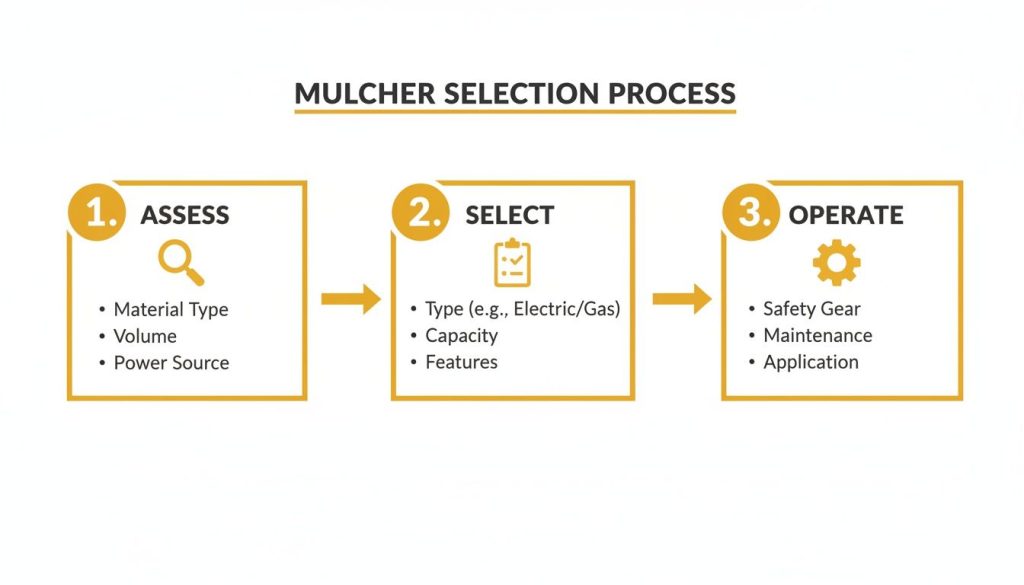
As the infographic shows, a successful project hinges on a methodical approach. It moves from a careful assessment to strategic equipment selection and, finally, to skilled operation.
Step 2: The Operational Clearing Phase
With a solid plan in place, the real work begins. This is where you see the sheer power and efficiency of modern land clearing mulchers in action. A highly skilled operator will methodically work across the property, grinding trees, brush, and undergrowth into a uniform layer of mulch.
Unlike traditional methods that require multiple machines for cutting, piling, and hauling, forestry mulching gets it all done with a single piece of equipment. The operator strategically clears the land, ensuring all targeted vegetation is processed right on-site. The machine moves deliberately, turning dense, inaccessible areas into open, clear ground in a surprisingly short amount of time.
The true magic of the process is its seamlessness. The mulcher grinds and disperses material in one fluid motion, instantly transforming a chaotic landscape into a clean and orderly one without ever scarring the topsoil.
This single-machine approach isn’t just faster; it also dramatically reduces ground compaction compared to having heavy bulldozers and trucks driving back and forth all over your property.
Step 3: The Immediate Outcome—A Build-Ready Site
The moment the land clearing mulcher finishes its work, the transformation is immediate and dramatic. Your property is no longer an overgrown tangle but a clean, accessible site blanketed in a protective layer of organic mulch. This isn’t just a cleared lot; it’s a site that is primed and ready for its next chapter.
That fresh layer of mulch gets to work right away. It naturally suppresses weed growth and shields the soil from Florida’s intense sun and heavy rains. This blanket prevents topsoil erosion, retains moisture, and begins the slow process of returning valuable nutrients back into the earth.
Your property is now ready for construction, agricultural use, or habitat restoration—all accomplished in a single, efficient, and eco-friendly process.
Financial and Environmental Benefits of Mulching
So, why are so many property owners in Central Florida turning to land clearing mulchers for their projects? It usually boils down to two things people really care about: saving a good chunk of change and doing right by the environment. This modern way of prepping a site isn’t just about getting the job done fast; it’s about making a choice that’s both smart for your wallet and responsible for the land.
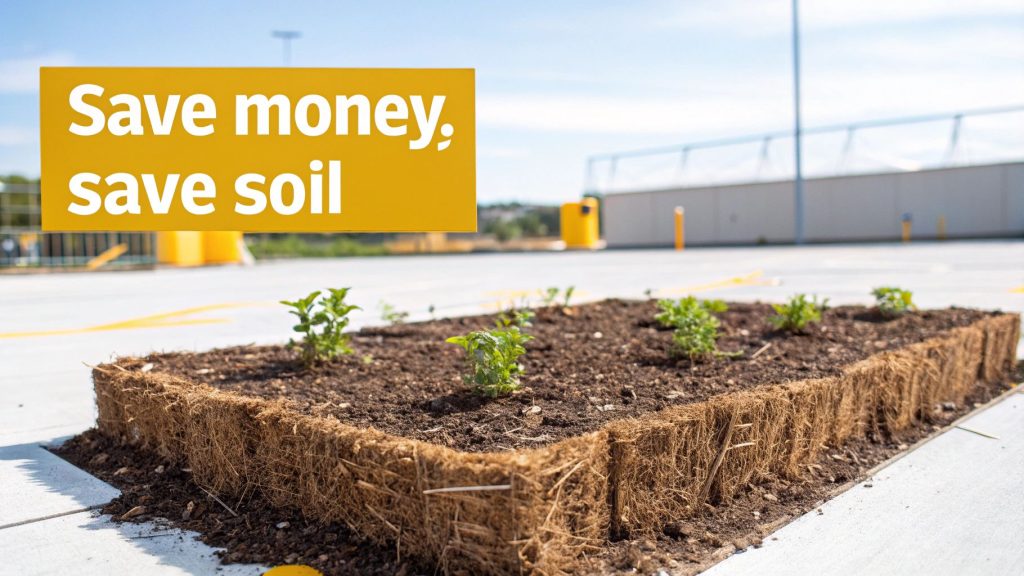
When you look at the numbers, the financial savings are impossible to ignore. Traditional land clearing is a long, drawn-out process with multiple stages and costs that pile up quickly. Mulching rolls all those steps into one clean, efficient operation, erasing several major expenses right off the bat.
Cutting Project Costs
With forestry mulching, you can wave goodbye to the logistical nightmares and surprise fees that come with old-school clearing methods. The whole process is streamlined into a single pass, which means fewer line items on your final bill.
- No Hauling or Disposal Fees: Think about it—since all the trees and brush are processed right on-site, there’s absolutely nothing to haul away. That immediately slashes the cost of dump trucks, the labor to load them, and hefty landfill tipping fees.
- Elimination of Burn Permits: Burning debris is a whole other headache. It means getting permits, dealing with air pollution, and facing serious fire risks. Mulching takes this entire step off the table, saving you time, money, and a lot of worry.
- Reduced Labor and Equipment Hours: Instead of a whole crew running bulldozers, excavators, and chippers, you have one machine and one skilled operator handling the entire job. That massive reduction in equipment and manpower translates directly to a lower project cost.
These efficiencies really add up and can make a huge difference in the overall budget. We dive deeper into the numbers in our guide to understanding forestry mulching cost.
Nurturing the Environment
Beyond the immediate savings, the environmental perks of using land clearing mulchers are even more powerful. This method actually works with the natural ecosystem, turning what would have been waste into a valuable resource that nourishes your property for years to come.
This eco-friendly approach isn’t just a local trend; it’s a global shift. The market for mulcher attachments was valued at $511 million and is expected to hit $762.58 million by 2030. That growth is fueled by a move away from burning—which contributes 15-20% of wildfire emissions—toward mulching, which recycles 100% of the organic material back into the soil.
The layer of mulch left behind creates a protective blanket over the soil, giving you a few key advantages.
The mulch acts like a natural shield. It helps the ground hold onto precious moisture, prevents our heavy Florida downpours from washing away topsoil, and slowly releases vital nutrients back into the earth as it breaks down.
This method aligns perfectly with the principles of good environmental stewardship. You can get a better sense of this by looking into the benefits of environmental management systems (EMS). At the end of the day, mulching isn’t just about clearing land. It’s an investment in the long-term health and stability of your property, making sure the soil stays fertile and strong. It’s one of those rare instances where what’s good for your bank account is also great for the planet.
Know the Rules: Navigating Local Land Clearing Regulations
Getting your property ready involves a lot more than just firing up the machinery. Before a single tree is touched, you need to have a solid grasp of the local rules and a realistic plan. This isn’t just about ticking boxes on a form—it’s about sidestepping hefty fines and project-killing delays.
Many folks are surprised to find out they can’t just clear land whenever they want. Most counties in Central Florida have specific rules about tree removal, especially for protected heritage trees or certain native species. If your work is anywhere near wetlands or conservation areas, you’re almost guaranteed to need special permits from local environmental agencies or the water management district.
Getting this part wrong can bring your whole project to a grinding halt. A professional land clearing partner can guide you through the maze of permits your specific property requires, making sure everything is handled correctly and legally right from the start.
Understanding the Cost of Land Clearing Mulchers
Once you’ve sorted out the red tape, the next big question is always about the bottom line. The cost of a professional mulching service isn’t a simple, flat rate. It’s a custom estimate based on the specific conditions of your property.
Several key things will directly influence your final quote:
- Property Size and Accessibility: A bigger lot will cost more, but it’s not just about acreage. How easily can the machines get to the work area? A flat, open piece of land is much simpler and more affordable to clear than one with steep hills or tricky access points.
- Vegetation Density: A lot with just a bit of undergrowth and a few saplings is a much faster job—and less expensive—than a dense forest packed with mature hardwoods and stubborn palmettos. What you’re clearing and how thick it is are major cost factors.
- Terrain Conditions: The ground itself plays a big role. Is it soft and sandy, or is it rocky and uneven? Tough terrain can slow the whole process down, which impacts the project’s time and cost.
This is exactly why an on-site assessment is so critical. It lets a contractor give you a real, accurate quote based on what they see, not just a vague guess. The growth of this industry shows just how efficient it is. Land clearing mulchers are completely changing how sites are prepared, with the mulching heads market alone valued at $598.38 million in 2025 and expected to double by 2035. You can discover more insights about this growing market and its economic impact.
Setting a Realistic Project Timeline
Finally, it’s important to have a clear idea of how long the job will actually take. Forestry mulching is incredibly quick compared to old-school methods, but the timeline still depends on the same things that affect the price: the size of the lot, how dense the vegetation is, and the terrain.
A common mistake is thinking a multi-acre property can be completely cleared in a single day. While land clearing mulchers are powerhouse machines, a realistic timeline keeps everyone on the same page and prevents scheduling headaches with other contractors down the line.
Here’s a general breakdown of what you can expect:
- Initial Quote and Assessment: This can typically be scheduled within just a few days of your first call.
- Permitting (If Needed): This is the wildcard. A simple permit might only take a week, but more complex ones involving environmental reviews could take several weeks, or sometimes even months.
- The Clearing Work: A standard one-acre residential lot with medium-density brush might take one to two days. A larger, more overgrown 10-acre property could easily take a week or more.
A trustworthy contractor will give you a clear, transparent timeline after they’ve seen the site. This empowers you to confidently plan the next steps for your project.
Finding a Trusted Land Clearing Partner
After digging into the technology, the process, and all the benefits, one thing becomes crystal clear: the success of your project really hinges on the team you hire. The most powerful land clearing mulchers are only as good as the skilled operators running them. Choosing the right partner isn’t just about renting a machine; it’s about investing in a team with deep local knowledge, the right equipment, and a genuine commitment to transforming your property the right way.
This is where everything we’ve talked about—from picking the best machine to managing the environmental side of things—comes together. A real partner doesn’t just clear land; they deliver a complete site preparation solution from start to finish.
More Than Just Mulching
A professional land clearing company offers a full suite of services that cover every single stage of your project. This is what keeps things running smoothly and saves you the headache of juggling multiple contractors for different jobs. It’s the difference between a choppy, piecemeal effort and a fully managed, seamless solution.
You’ll want a partner who can provide:
- Comprehensive Clearing: This goes beyond just the initial mulching. It includes precise stump grinding to leave behind a smooth, build-ready surface.
- Debris Management: While mulching takes care of most of the debris, some projects might need hauling services to get that perfectly clean finish.
- Post-Clearing Vegetation Control: The job isn’t over when the mulcher drives away. A great partner will offer follow-up services like targeted herbicide applications to make sure invasive species don’t come roaring back.
This all-in-one approach ensures your property isn’t just cleared, but truly prepped for long-term health and whatever you have planned next. The demand for these efficient, comprehensive services is booming. The global forestry mulcher market was valued at $850 million in 2025 and is expected to surge toward $1.5 billion by 2033, all driven by the growing need for smart land management. You can read the full research about these market trends to see just how quickly this industry is expanding.
Your Central Florida Land Clearing Experts
At Palm State Clear Cut, we bring together top-of-the-line land clearing mulchers and the hands-on expertise needed to handle any project here in Central Florida. Our team gets the unique challenges of our local terrain and vegetation, from wrestling with stubborn palmettos to getting rid of invasive Brazilian Pepper. We proudly serve counties all across the area, including Brevard, Indian River, Osceola, and Orange.
Choosing a professional service is the final, most important step in turning your vision into reality. It’s the key to transforming your property efficiently, responsibly, and with results that last.
We handle it all, from the first site assessment and clearing to the final stump grinding and vegetation management. We make sure your land is perfectly prepared for its next chapter.
Ready to see what we can do for your property? Contact Palm State Clear Cut today for a detailed, no-obligation quote. Let’s get your project started on solid ground.
Common Questions We Hear About Land Clearing Mulchers
Even after seeing the process in action, you probably have a few specific questions about what to expect on your own property. It’s only natural. We get a lot of the same practical questions from landowners all across Central Florida, and getting them answered upfront is the key to planning your project with total confidence.
Here are the answers to some of the most common questions we hear about land clearing mulchers and the results you can expect.
How Long Does the Mulch Take to Decompose?
This is probably the number one question we get, and the answer really comes down to our unique Florida environment. Here in Central Florida, with all our humidity and subtropical heat, the decomposition process happens pretty fast. That finely shredded material from the mulcher starts breaking down almost right away.
You’ll see the mulch layer break down significantly within 6 to 12 months. As it does, it’s slowly feeding all those valuable organic nutrients back into our sandy soil, which drastically improves its structure and fertility over time. Of course, things like heavy rainfall and direct sun can speed up that natural cycle.
Can Forestry Mulching Be Done in Wet Conditions?
Absolutely. This is one of the biggest advantages of using modern land clearing mulchers, especially here in Florida. They’re built to work effectively in wet or soft ground where other heavy equipment would get hopelessly stuck. Unlike a bulldozer that sinks and creates deep, damaging ruts, most dedicated mulchers run on tracks.
Think of it like snowshoes for heavy machinery. Those tracks spread the machine’s weight over a huge surface area, creating very low ground pressure. This lets the equipment “float” right over soft, mucky soil instead of sinking in and tearing everything up.
This is a game-changer for keeping projects on schedule, even after a classic Florida downpour, and it does a fantastic job of protecting your valuable topsoil.
Is Mulching Effective Against Invasive Species?
Forestry mulching is an incredible first-strike weapon against the tough invasive species we battle here, like Brazilian Pepper, Australian Pine, and Melaleuca. The machine literally grinds them down to nothing, instantly wiping out dense thickets and letting sunlight hit the ground for the first time in years. It’s a critical first step for any real habitat restoration.
But let’s be realistic—mulching alone isn’t a magic wand for these aggressive plants. For complete control, we rely on a proven two-step approach:
- Initial Takedown: The land clearing mulcher comes in and shreds the mature plants, getting rid of the existing overgrowth and wiping out the immediate seed source.
- Strategic Follow-Up: A few weeks later, you’ll see some new sprouts trying to pop up from the old root systems. At this stage, they’re easy to manage with a very targeted, low-volume herbicide application.
Combining these two steps is, hands down, the most effective and responsible way to reclaim your property from invasive vegetation and make sure it doesn’t come roaring back.
What Is the Maximum Tree Size a Mulcher Can Handle?
That all depends on the machine we bring to the job site. As we talked about earlier, there’s a world of difference between a smaller skid steer and a dedicated, purpose-built mulcher.
- Skid Steer with Mulcher Attachment: These are the perfect tool for clearing out thick underbrush and smaller trees. They’ll make short work of anything up to 6-8 inches in diameter.
- Dedicated Forestry Mulcher: These machines are the real heavy hitters. They’re engineered from the ground up for one purpose: turning trees into mulch. They can easily grind hardwoods with diameters of 12-15 inches or even more.
A quick, professional assessment of your property is all it takes to figure out which machine is the right fit. This guarantees we match the right tool to your land’s specific needs, processing every tree safely and efficiently.
At Palm State Clear Cut, we bring state-of-the-art land clearing mulchers and years of hands-on expertise together to transform your property the right way. Ready to see the difference? Get your free, no-obligation quote today at https://palmstateclearcut.com.