
A Florida Homeowner's Guide to Preparing Land for Building a House
- Jan 9
- 16 min read
So, you’ve found the perfect slice of Central Florida to build your dream home. It's an exciting moment, but that overgrown lot full of palmettos and pines isn't quite ready for a foundation. Before you can even think about framing walls, you have to get the land itself prepped and ready—a process that sets the stage for the entire construction project.
Your Blueprint for a Build-Ready Homesite
Turning a raw piece of land into a build-ready site is more than just knocking down a few trees. It's the foundational work that ensures your new home will be stable, safe, and secure for decades. This is where you navigate the crucial steps of surveying, clearing, and grading to create a clean, legal, and properly drained canvas for your builder.
Getting this phase right involves a series of critical stages, each building on the last. It’s a mix of legal due diligence, environmental checks, and some serious heavy lifting with specialized equipment.
The Core Stages of Site Preparation
Think of this as creating a master plan for your property. It’s not just about what you remove but also about how you shape and prepare what's left behind.
Assessment and Planning: It all starts here. A professional survey establishes your exact property lines, while soil tests tell you if the ground can support a structure. This is also when you'll secure the necessary permits from your local Florida county—a step you absolutely cannot skip.
Clearing and Demolition: This is the part most people picture. It's the physical transformation where we come in to remove unwanted trees, invasive plants, old stumps, and any dilapidated structures within your building envelope.
Grading and Drainage: Once the site is clear, the land is sculpted. We create a perfectly level pad for your home's foundation and, just as importantly, ensure rainwater flows safely away from it. In a place with as much rain as Florida, this is non-negotiable.
This simple workflow—survey, clear, grade—is the backbone of every successful site preparation project.
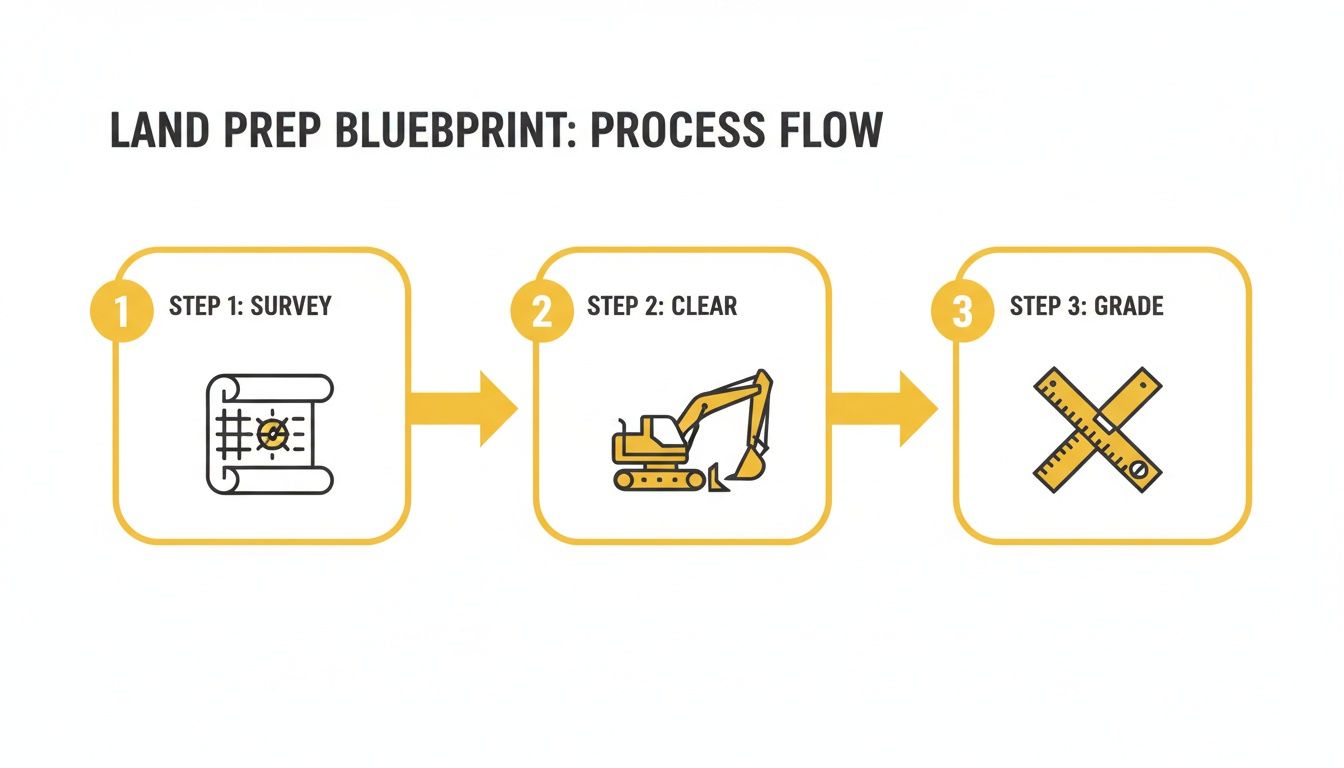
Each step flows logically into the next, transforming a wild plot into a clean, stable, and construction-ready homesite.
To help you keep these essential steps in mind, here’s a quick checklist summarizing the process.
Central Florida Site Prep Checklist
This table breaks down the main stages of preparing your residential lot, highlighting the goal of each step and the key professional you'll be working with.
Stage | Primary Goal | Key Professional Involved |
|---|---|---|
Site Assessment | Understand the property's boundaries, topography, and soil type. | Surveyor, Geotechnical Engineer |
Permitting | Obtain legal approval from local authorities for all work. | You, Your Contractor, or a Permit Runner |
Vegetation Removal | Clear trees, brush, and stumps from the building area. | Land Clearing Contractor (like Palm State) |
Grading & Drainage | Shape the land for a level foundation and proper water runoff. | Land Clearing/Excavation Contractor |
Utility Access | Ensure clear pathways for water, sewer, and electricity lines. | Excavation & Utility Contractors |
Erosion Control | Implement measures to prevent soil loss during and after work. | Land Clearing Contractor |
Following this checklist ensures you're covering all your bases for a smooth transition from raw land to a ready-to-build property.
More Than Just Dirt Work
The machinery and expertise required for this job are part of a massive global industry. In 2023, the land clearing equipment market was valued at about $6.5 billion and continues to grow. For a homeowner, this just underscores that the equipment we use—from powerful forestry mulchers to precision-guided graders—is a serious investment designed to deliver efficient, high-quality results. You can find more insights about this growing market and the technology driving modern land clearing.
A well-prepared site is the best insurance policy you can have for your new home. Skipping steps or cutting corners here almost always leads to costly repairs down the road, from foundation cracks to severe water damage. Investing in professional site work is investing in peace of mind.
Navigating Due Diligence and Permitting
Before the first engine roars to life, a quieter but equally crucial phase of work needs to happen. This is all about the paperwork, the phone calls, and the expert consultations that lay the groundwork for your entire project. It's the due diligence that prevents catastrophic—and expensive—mistakes down the road.
Trying to cut corners here is one of the biggest missteps a future homeowner can make. It might feel like things are moving slowly, but this is the stage where you confirm your dream home can actually be built on your chosen slice of Central Florida. Think of it as creating a solid blueprint before you even think about ordering materials.
The Non-Negotiable Property Survey
Your first call should be to a licensed surveyor. A property survey isn't just a helpful document; it's a foundational tool that officially defines what you own. It creates a legal map showing the exact boundaries, dimensions, and topography of your land.
A survey brings to light critical details you can’t see with the naked eye. It will pinpoint any easements—legal rights for entities like utility companies to access parts of your property. It also flags potential encroachments, like a neighbor's fence that might be creeping over your property line. Getting this sorted out now prevents headaches and legal battles later.
A professional survey is your best defense against boundary disputes and unexpected building restrictions. It provides the legal certainty you need to move forward without constantly looking over your shoulder.
Understanding Central Florida Permitting
With your survey in hand, it’s time to get familiar with your local county or city planning department. Here in Central Florida, counties like Orange, Polk, Osceola, and Brevard each have their own specific rulebooks for land development. Firing up the equipment without the right permits is a surefire way to get hit with hefty fines and stop-work orders.
Typically, you’ll need a few key permits to get a residential lot ready.
Land Clearing or Site Development Permit: This is your main green light to start removing vegetation. The application will usually require your survey, a site plan showing exactly what you intend to clear, and your plan for erosion control.
Building Permit: While your general contractor will pull the full building permit, the site prep portion is a critical first piece. The data from your survey and soil tests feed directly into this larger application.
Tree Removal Permit: Many Florida towns have ordinances protecting mature or "specimen" trees, especially our native oaks. You may need a separate permit to take down trees over a certain diameter, and sometimes the county will require you to plant new trees to compensate.
Working with an experienced site prep contractor like Palm State Clear Cut is a huge help here. We know the local codes and can help make sure your applications are buttoned up, which goes a long way in preventing frustrating delays.
The Importance of Soil Testing
What’s under the surface is just as important as what’s on it. Central Florida is known for its sandy soil and high water table, which creates some unique challenges for building a stable foundation. A geotechnical soil test is how you get the real story.
A geotechnical engineer will take core samples from your homesite to figure out a few key things:
Soil Composition: Is it mostly sand, clay, or organic muck? This determines how the ground will behave under the weight of a house.
Load-Bearing Capacity: How much weight can your soil safely handle? This is non-negotiable information for your structural engineer.
Water Table Level: How close is groundwater to the surface? A high water table can impact your foundation design and rule out things like a basement.
As part of this process, understanding what is a foundation survey is essential for ensuring your home is placed with precision. The data from your soil test directly informs this step, guaranteeing your foundation is designed for your specific property, not some generic template. It’s a proactive measure that helps prevent cracking and settling, protecting your investment for decades to come.
Choosing Your Land Clearing Method
With your permits in hand, the real fun begins. Now it's time to start physically transforming that overgrown lot into a clean slate for your new home. The land clearing method you choose is one of the most critical decisions you'll make in this entire process—it's going to have a direct impact on your budget, your timeline, and the long-term health of your property.
Here in Central Florida, we're not just mowing down tall grass. We're often up against dense palmetto thickets, stubborn pine stands, and invasive species like the notorious Brazilian Pepper. Choosing the right approach isn't just about making a mess; it’s about strategically carving out your homesite while respecting the land it sits on.
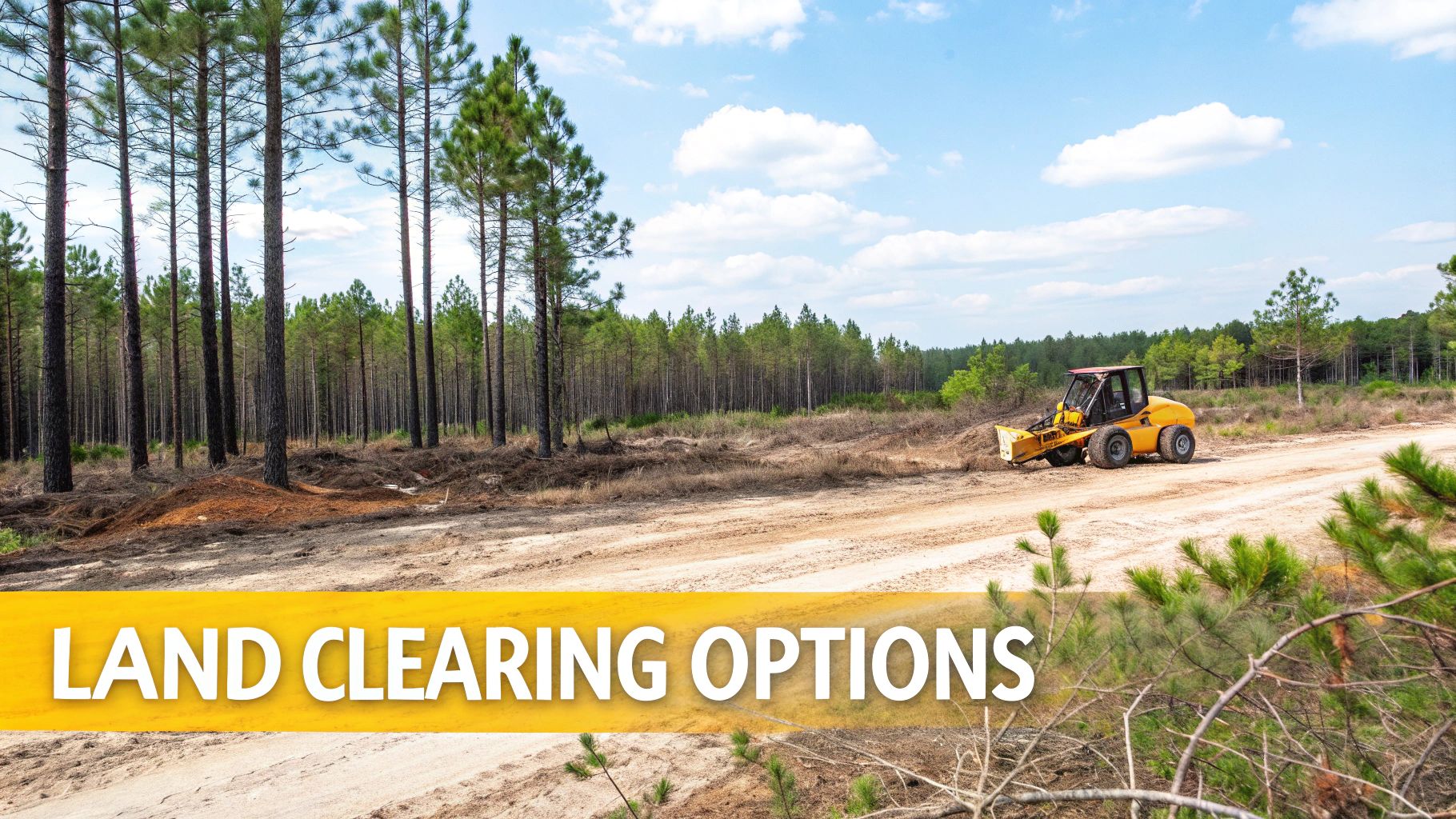
Traditional Methods Versus Modern Solutions
For decades, land clearing meant one thing: bulldozing and burning. This "brute force" method was simple—push all the trees, stumps, and brush into massive piles and either light them up or pay a fortune to haul them away. It definitely gets the job done, but this old-school approach comes with some serious drawbacks.
Topsoil Disruption: Bulldozing scrapes away the nutrient-rich topsoil, leaving the sandy ground underneath exposed and vulnerable.
Costly Hauling: Transporting and disposing of all that debris adds a significant, and often unpredictable, cost to your project.
Environmental Impact: Burning creates air pollution, and hauling everything to a landfill just adds to the waste problem.
Thankfully, there's a much smarter, more efficient, and eco-friendly method that has become the gold standard for responsible site prep: forestry mulching.
The Power of Forestry Mulching
Forestry mulching is an all-in-one solution. It uses a single, powerful machine to cut, grind, and spread vegetation right where it stands. The mulcher essentially turns unwanted trees, brush, and undergrowth into a protective layer of organic material that covers the soil.
For Central Florida landowners, this method is a game-changer.
No Hauling or Burning: Everything is processed on-site. That means no disposal fees and no smoke.
Soil Health: As the mulch layer breaks down, it returns vital nutrients to our sandy soil, improving its structure and fertility.
Natural Erosion Control: That blanket of mulch acts as a natural shield, preventing soil from washing away during Florida’s intense downpours.
This is a bigger deal than you might think. Preparing land for a house is a major interface between development and the environment. Between 2006 and 2010, global construction activity increased the area hit by soil erosion by a staggering 61,600 km² and generated 100.3 billion tons of waste. Those numbers show why thoughtful site prep is so crucial here. Forestry mulching dramatically cuts down on runoff and soil loss, giving you a build-ready site that’s also on good terms with the environment. You can discover more insights about development's environmental impact to see why modern methods are so important.
Want a closer look at how this machinery works? Our guide on land clearing mulchers breaks down exactly what these powerful machines can do for your property.
Handling Stumps and Preserving Trees
Clearing the brush and smaller trees is a huge step, but it's not the whole story. What about the stumps left behind in your building footprint, or that gorgeous live oak you want to keep? This is where a more targeted approach comes in.
Stump GrindingAfter the main clearing is done, any stumps inside your building envelope need to go. A stump grinder is a specialized machine with a high-speed cutting wheel that grinds the stump down to well below ground level. This leaves you with a perfectly clean, level surface for your foundation and eliminates any future risk of rotting wood or termite problems.
Selective Tree RemovalRemember, not every tree has to be cleared. In fact, preserving mature native hardwoods like live oaks can add serious value to your property and provide priceless natural shade. A skilled equipment operator can carefully work around these keeper trees, clearing the undergrowth right up to their trunks without damaging them. This selective, thoughtful approach is what separates a good land clearing job from a great one.
By combining forestry mulching, stump grinding, and selective clearing, a good contractor can tailor the entire process to your specific vision. You get the clear building pad you need while preserving the natural Florida character you fell in love with—all on a foundation that's stable, healthy, and environmentally sound.
Grading for Drainage and Foundation Stability
Once the dense Florida vegetation is gone, the real sculpting work begins. This next phase, grading, is where we shape the raw earth into a stable, precisely sloped canvas for your future home. This isn't just about pushing dirt around; it's a blend of art and science that ensures your house stays high, dry, and structurally sound for decades.
Think of it as setting the stage. The entire goal is to create a perfect pad for the foundation while making absolutely sure Florida’s infamous downpours drain safely away. Skipping this or cutting corners is just asking for a future of water intrusion, foundation cracks, and a never-ending cycle of expensive repairs. It's the critical groundwork that protects your whole investment.
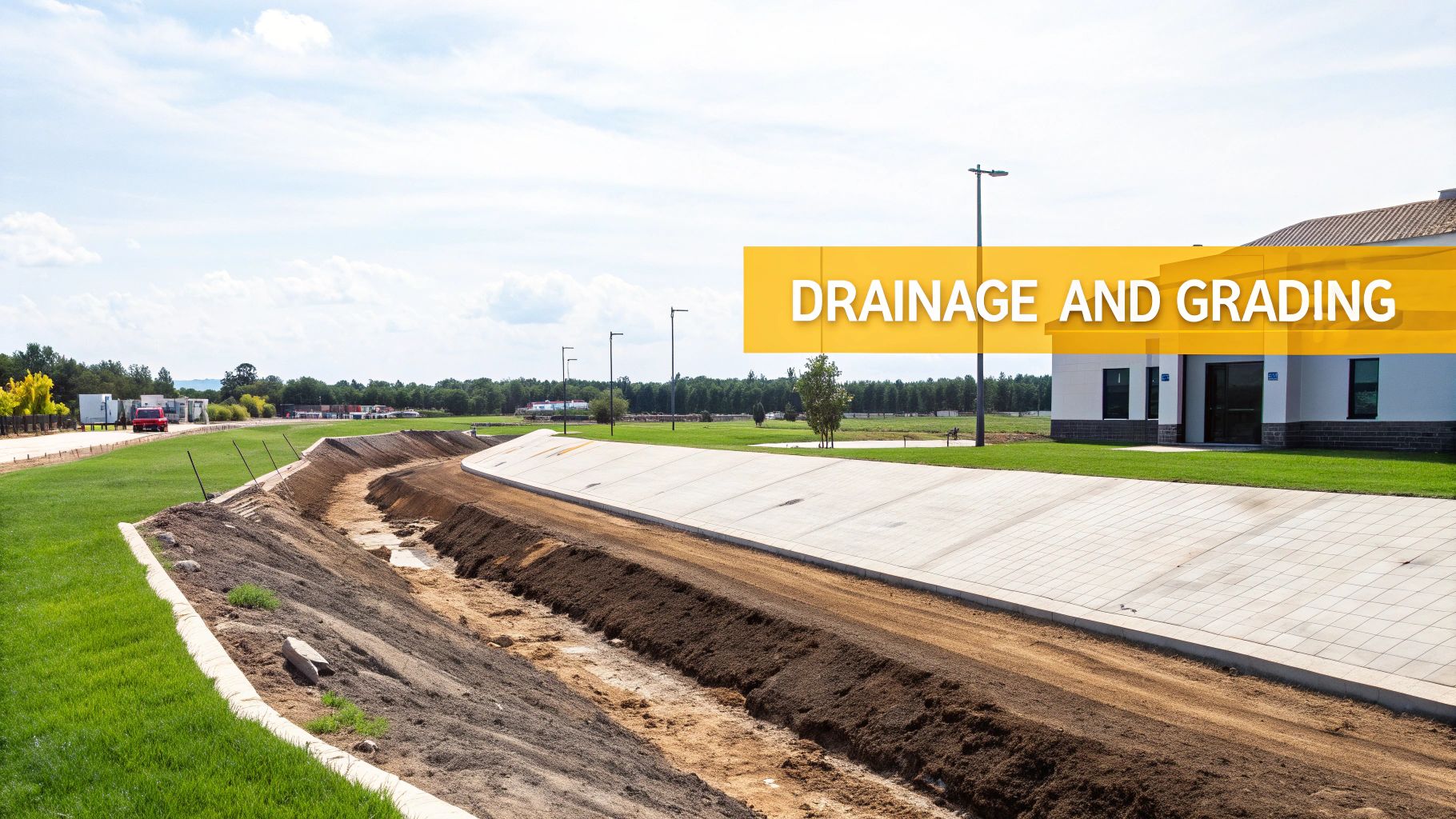
Creating the Building Pad
The first order of business in any grading project is establishing the building pad. This is the perfectly flat, elevated spot where the foundation will be poured. We’re not just scraping the ground level; we're building it up to the exact elevation laid out in your site plans.
Here in Central Florida, that almost always means bringing in fill dirt—typically a specific mix of sand and clay—to lift the home's final elevation above the surrounding land. This is your primary defense against flooding during our intense summer storms. After the fill is brought in, we compact it layer by layer with heavy machinery, creating a dense, solid base that won’t shift or settle under the immense weight of a house.
This kind of detailed site work is a massive industry, with excavation and grading generating around $119 billion annually in the U.S. As building codes get stricter, we're seeing a bigger push for techniques that blend modern engineering with environmental care, aiming to minimize soil disruption wherever possible. You can discover more insights about the evolution of excavation and its industry trends.
Engineering for Florida Rain
With the building pad set, our attention turns to managing water. In Florida, you can't just hope for the best; you have to tell water exactly where to go. We accomplish this by creating a positive grade, which is just a fancy term for a gentle slope that directs every drop of surface water away from the foundation.
The rule of thumb is that the ground should slope away from your house at least six inches over the first ten feet on all sides. This simple gradient is your foundation's best friend.
To handle the sheer volume of runoff, any professionally designed site plan in Florida will include specific drainage features:
Swales: These are shallow, wide channels designed to collect rainwater and guide it away from the house toward a designated drainage area. Think of them as subtle, grassy ditches that blend right into the final landscaping.
Retention Ponds or Areas: Many local regulations now require a system to hold stormwater on-site, preventing it from overwhelming public storm drains. A retention area is simply a low spot on the property designed to collect this runoff and let it slowly soak back into the ground.
These aren't just suggestions—they are engineered solutions required by law and are absolutely essential for a dry, stable home.
Soil Compaction and Stability
Bringing in tons of fill dirt and shaping the land is only half the job. If that new soil isn't compacted correctly, it will settle unevenly under your home's weight, leading to serious structural problems down the road. This is where soil compaction is absolutely critical.
Compaction is the process of using machinery to increase the soil's density, pressing the particles together and forcing out air pockets. This makes the ground firm enough to support the concrete foundation and the entire structure. We use specialized equipment like vibratory plate compactors or heavy rollers to get the job done right, and the results are often verified by a third-party inspector.
For a deeper dive into making sure your ground is solid, check out our guide on soil stabilization techniques.
Getting Utilities Hooked Up and Finalizing the Site
Once your Central Florida land is cleared and graded, it finally starts to resemble a future homesite. This is the exciting part. Now, we move on to bringing in the essential services that turn a raw piece of dirt into a modern, livable property. This last phase is all about creating access—for heavy equipment, for your builders, and, of course, for the utilities themselves.
The heavy lifting is behind you. At this stage, the focus shifts to the more technical details, getting everything ready so your construction crew can hit the ground running. A smooth transition here from the site prep team to the foundation and framing guys is crucial for keeping your project on schedule.
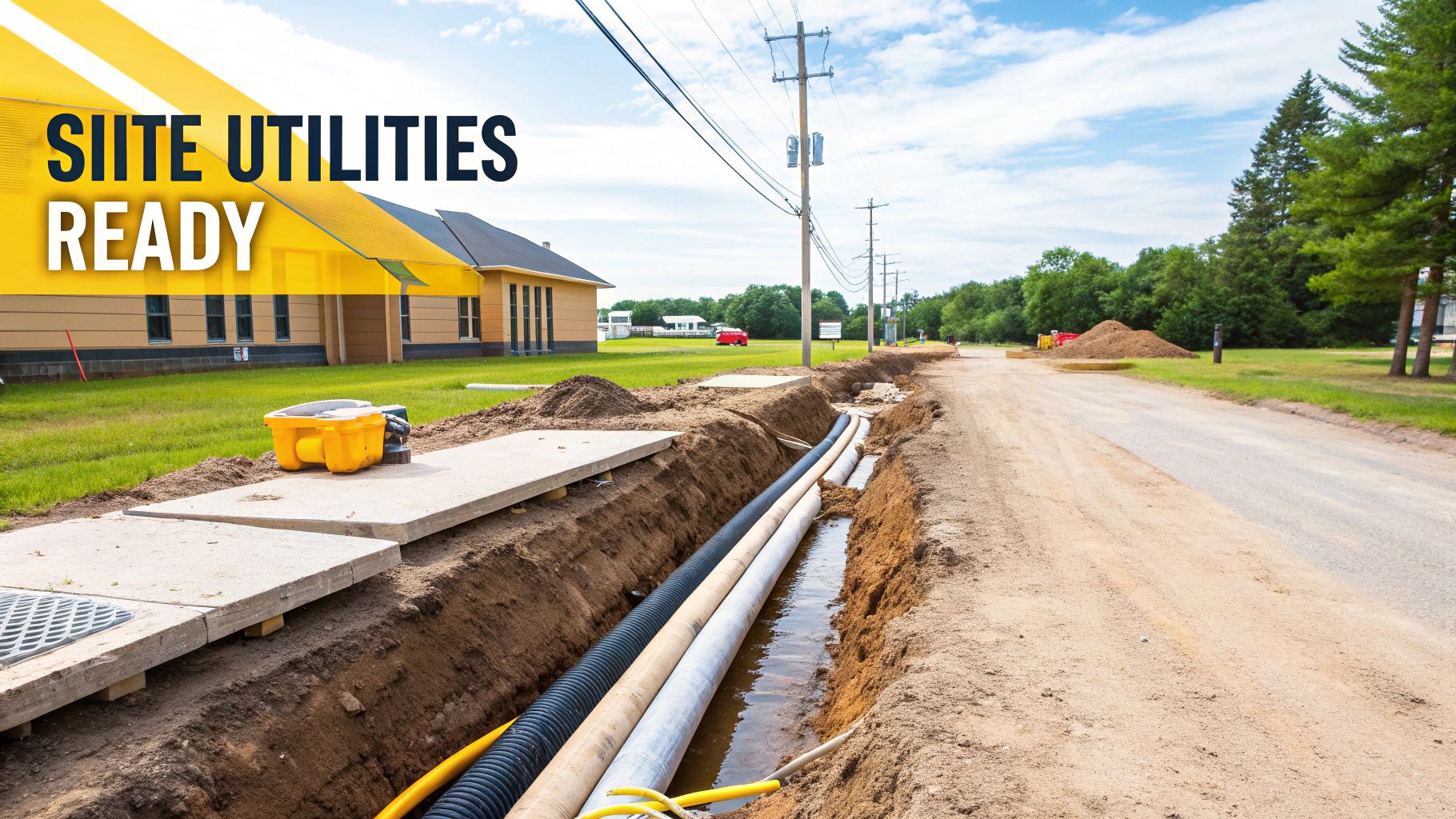
Building a Safe Path for Construction Traffic
Before the first concrete truck or lumber delivery shows up, they need a solid, reliable way to get onto your land. That freshly graded soil isn't designed to handle the weight of heavy vehicles, especially after a classic Florida downpour. That’s why one of the first things we do is install a temporary construction driveway.
This isn't just a patch of dirt. It's usually built with crushed rock, gravel, or even recycled concrete aggregate spread over a tough geotextile fabric. The fabric is key—it stops the stone from just sinking into our sandy soil, giving you a sturdy path that cuts down on mud and keeps trucks from getting bogged down. It’s a small step that prevents some major headaches.
A proper temporary driveway does more than provide access. It protects the final graded surface of your lot from getting torn up by heavy equipment, saving you the hassle and cost of re-grading everything later.
Connecting Your Future Home to the Grid
With a solid driveway in place, it’s time to bring in the power, water, and other essentials. This part of the job requires a ton of coordination between us, your general contractor, and the local utility companies like Duke Energy or FPL.
Here’s a look at how it generally unfolds:
Staking and Marking: We’ll take your approved site plan and mark the exact routes for all the underground lines. This covers everything from water and electricity to communications and sewer or septic connections.
Trenching: Using an excavator, we carefully dig precise trenches to the required depths for each utility. Every trench has to be sloped and positioned just right to avoid running into other lines or interfering with the future foundation.
Coordinating with Providers: Each utility company has its own schedule and specific technical rules. We act as the point person, making sure the trenches are ready for inspection and prepped for when their crews arrive to lay the lines and make the final connections.
When you're mapping out these utilities, it’s smart to bring in specialists for new construction plumbing services to handle the water and drainage systems. Getting this done right from the start is a critical piece of the utility puzzle.
The Finishing Touches That Make a Lot Build-Ready
As the utility work is finishing up, we tackle a few final tasks to officially get the site ready for your builder and to comply with local regulations. These last steps are all about protecting your property and the environment during the construction ahead.
We often do a final dress grading to smooth out any ruts or bumps left over from the trenching, making sure the building pad is perfectly flat for the foundation crew. This is also when we install mandatory erosion control measures. Here in Central Florida, that almost always means putting up a silt fence around the perimeter of the work area. This simple fabric barrier is a must-have—it keeps soil from washing off your property into storm drains during heavy rain, a requirement in just about every county.
This whole process, from that first walk-through to these final touches, is all connected. To see how these pieces fit into the bigger picture, check out our expert guide on land clearing services in Central Florida. With these last steps done, your land is officially prepped and ready—a safe, accessible, and stable platform where your dream home can finally start to take shape.
Common Questions About Preparing Land in Florida
When you're turning an overgrown lot into a future homesite in Central Florida, a lot of questions come up. It's only natural. From how much to budget to how long it'll all take, getting a handle on the key variables helps you plan better and keeps surprises to a minimum. Let's walk through some of the most common questions we hear from landowners just like you.
How Much Does It Cost to Prepare Land for Building a House in Central Florida?
This is the big one, and the honest answer is: it completely depends on your property. There's no one-size-fits-all price tag. Costs can run from just a few thousand dollars for a small, lightly wooded lot to tens of thousands for a big, jungle-like parcel that needs serious grading and soil work. No two pieces of land are ever the same.
A few key factors really drive the final number:
Lot Size and Density: The bigger the lot and the thicker the vegetation, the more machine time and manpower it’s going to take.
Clearing Method: Forestry mulching often ends up being more budget-friendly than old-school methods because you avoid hefty hauling and disposal fees.
Grading Requirements: How much dirt we have to move is a huge part of the cost. A sloped lot needing a lot of cut-and-fill work will be more expensive than a relatively flat one.
Permit Fees: These can vary quite a bit from county to county and can add more to the budget than you might expect.
Utility Trenching: The length and depth of the trenches needed for water, sewer, and power lines will also play a role in the final price.
The only way to get a solid number is to have a professional site prep contractor walk the property with you. They can see all these variables firsthand and give you a detailed, accurate quote.
How Long Does the Land Preparation Process Usually Take?
You'll want to pack your patience for this part. The whole process can take anywhere from a few weeks to several months, and the biggest delay usually isn't the physical work itself. It's the paperwork.
Permitting is almost always the longest part of the journey. Depending on how busy your county's office is and the specifics of your project, getting all your approvals can take anywhere from 30 to 90 days—sometimes even longer.
Once you have permits in hand, things move much more quickly. Clearing and grading an average residential lot might only take a week or two. But you also have to factor in Florida's famously unpredictable weather, especially during rainy season, which can cause delays. A contractor's schedule is another piece of the puzzle. The best advice we can give is to start the due diligence and get your permit applications submitted as early as you possibly can.
Should I Hire Separate Companies for Clearing and Grading?
You could, but it’s almost always smarter, faster, and more cost-effective to find a single, full-service company that does it all. Trying to coordinate multiple contractors can turn into a logistical headache full of scheduling conflicts and "he said, she said" moments.
When you hire one team to handle everything from the initial clearing and stump grinding right through to the final grading, you get some major advantages:
Seamless Workflow: The crew clearing the land already knows the grading plan, so they work with the end goal in mind from day one.
Single Point of Contact: You have one person to call for everything. It simplifies communication and keeps everyone accountable.
Reduced Risk of Rework: An integrated approach helps avoid costly mistakes, like clearing a spot that needs to be re-graded later.
This streamlined process saves you time, money, and a whole lot of stress, making sure each phase of the project flows smoothly into the next.
What Are the Biggest Mistakes to Avoid When Preparing Land?
Getting the site prep right is foundational, and a few common slip-ups can cause major headaches down the road. Just knowing what to watch out for is half the battle.
One of the worst mistakes we see is underestimating the importance of proper drainage. We live in a state known for its torrential downpours. Failing to engineer a plan for all that water is just asking for a flooded yard and, even worse, a compromised foundation. It's a very expensive problem that's so much easier to prevent than to fix.
Another common error is clearing more land than necessary. It's tempting to want a completely blank slate, but this can destroy beautiful, mature trees that add value and character to your property. It can also get you into trouble with local tree ordinances and lead to fines. Thoughtful, selective clearing is always the better way to go.
Finally, a critical mistake is choosing a contractor based only on the lowest price. A budget is important, but a bid that's way lower than the others can be a red flag. It might signal a lack of proper insurance, experience, or the right equipment for the job. Always make sure you're hiring licensed and insured pros who really understand Central Florida’s unique soil and environmental conditions.
Ready to transform your overgrown lot into a perfect, build-ready homesite? The team at Palm State Clear Cut has the experience and equipment to handle every step of the process, from initial clearing to final grading. Contact us today for a free on-site quote and expert guidance for your Central Florida property.