
How to Remove Overgrown Bushes A DIY and Pro Guide
- Mike Walker
- Jan 14
- 17 min read

That tangle of overgrown bushes isn't just an eyesore—it's a common headache for property owners all over Central Florida. The real fix involves more than just a quick trim; it means cutting back the vegetation, tackling the main stems, and getting to the root of the problem to stop it from coming right back. This guide will walk you through exactly how to remove overgrown bushes safely and for good.
Reclaiming Your Yard From Overgrown Bushes
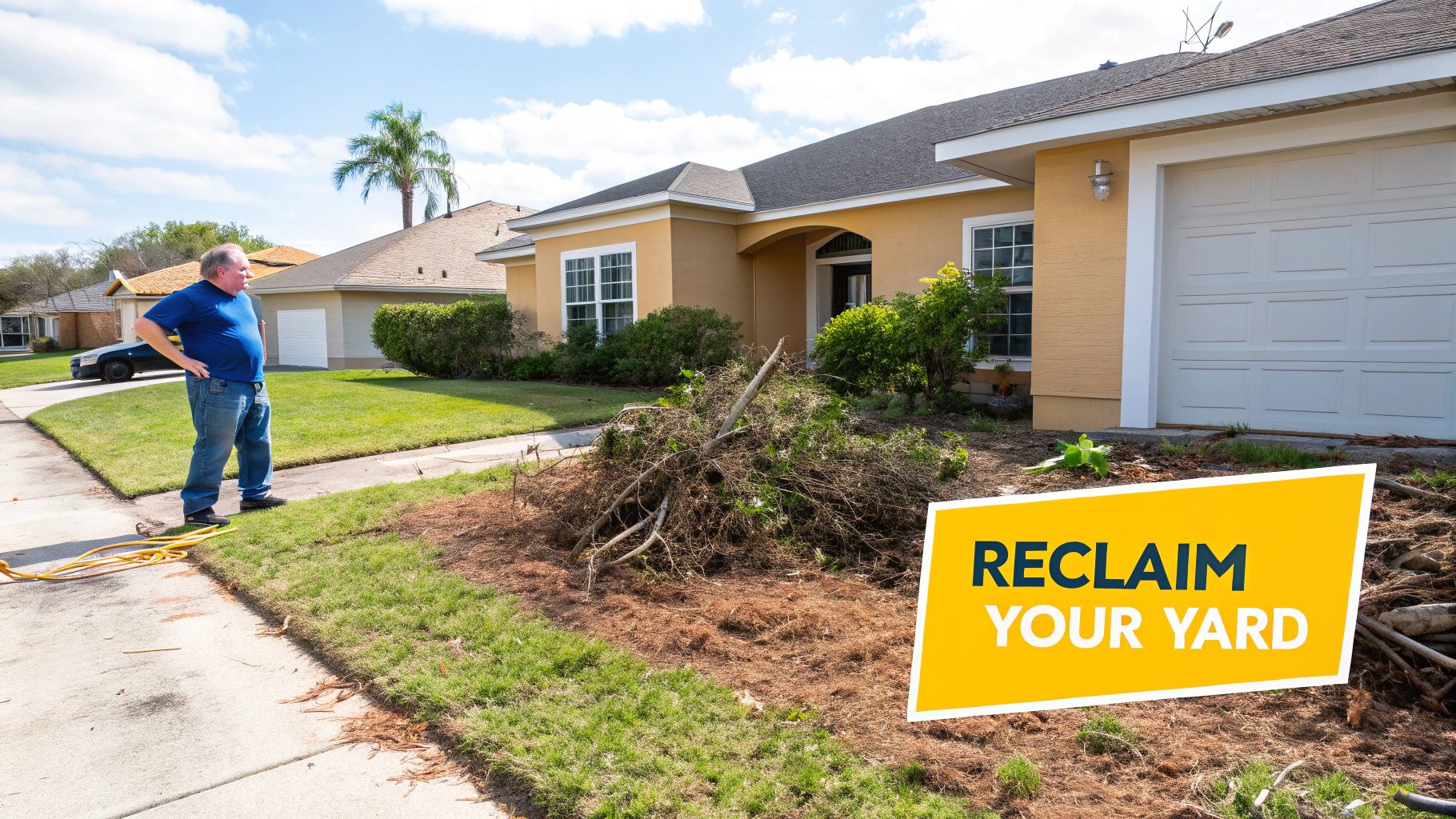
A patch of out-of-control vegetation does more than just drag down your property's curb appeal. It can quickly become a serious fire hazard and a perfect hiding spot for pests. Dealing with it is about restoring safety and making your land usable again.
This guide gives you a real-world look at the entire process, from the first look at the job to the final steps of preventing regrowth. By understanding the effort, tools, and risks involved, you can make a smart choice about whether to roll up your sleeves or call in the pros.
Understanding the Stakes
This isn't just about hacking away at a few branches. Overgrown bushes, especially the invasive types common here in Central Florida, can create serious environmental and financial problems. That unchecked growth can choke out native plants, creep over property lines, and block off valuable buildable space.
Worse yet, many DIY removal attempts don't stick. Without the right techniques and equipment, homeowners often see 70-80% regrowth within a single year. What started as a weekend project quickly turns into a frustrating, recurring battle.
DIY vs. Professional Services
Figuring out whether to tackle this yourself or hire a service is your first big decision. A small, isolated bush might be a perfectly manageable weekend task. But when you're staring down a dense thicket or a large overgrown area, the game changes.
Thinking through this table can help clarify the best path forward for your project.
Bush Removal Project at a Glance
Stage | DIY Approach Considerations | Professional Service Advantage |
|---|---|---|
Assessment & Planning | Misidentifying plants could lead to ineffective removal methods. Underestimating the time and physical effort required is common. | Experts quickly identify species (including invasive ones), assess root systems, and create an efficient, safe plan of attack. |
Tools & Safety | Requires purchasing or renting tools like chainsaws, loppers, and stump grinders. Risk of injury is higher without proper training and PPE. | Pros arrive with specialized, commercial-grade equipment and are fully trained and insured, minimizing risk and liability. |
Execution & Labor | Extremely physically demanding. Can take multiple weekends to complete, especially for larger areas. | A trained crew can often clear in hours what might take a homeowner days or weeks. Their efficiency is unmatched. |
Debris Disposal | You're left with a massive pile of branches and roots. Hauling it yourself can require multiple trips or renting a large dumpster. | Debris removal is part of the service. They chip, mulch, or haul away all green waste, leaving your property clean. |
Final Results | Incomplete root removal often leads to rapid regrowth. The site may be left uneven and unprepared for new landscaping. | Thorough stump and root grinding prevents regrowth. They can also grade the site, preparing it for whatever you have planned next. |
Ultimately, the choice comes down to scale and complexity. A single overgrown azalea is one thing; a quarter-acre of dense, thorny brush is an entirely different beast.
For those bigger jobs, you might find our guide on how to clear overgrown land helpful, as it offers a broader perspective. Professionals bring the kind of efficiency and heavy machinery that can get the job done right the first time, saving you from a world of frustration.
Taking Stock of Your Overgrown Property Before You Start
Before you even think about firing up a chainsaw, the most important part of the job is a thoughtful walkthrough of the property. I know it’s tempting to just dive in—it feels productive, right? But trust me, spending a few minutes planning now can save you from costly damage, unexpected hazards, and hours of wasted effort down the road. This initial assessment is your game plan for the entire project.
The whole point is to figure out exactly what you're up against. How thick is the growth? What kinds of plants are we talking about? And most importantly, what’s hiding in that mess?
Know Your Enemy: Identify the Bushes You Plan to Remove
Not all bushes are created equal, especially here in Central Florida. The first thing you need to do is figure out what’s actually growing on your land, because that determines your entire strategy. A native wax myrtle with its relatively shallow roots is a whole different ballgame than an invasive Brazilian Pepper, which is notorious for its aggressive regrowth and gnarly root system.
Get up close and take a look at the plant's structure:
Root System: Does it have a single, deep taproot or a sprawling network of smaller roots just under the surface? A quick Google search for the plant name will usually tell you what to expect underground.
Growth Habit: Are you dealing with a single, large shrub or a dense thicket of interconnected shoots? Thickets usually demand a more systematic, piece-by-piece approach.
Invasive vs. Native: Invasive species like Brazilian Pepper or Chinese Privet often require much more aggressive removal and follow-up treatment to make sure they don't come roaring back.
Knowing this stuff helps you anticipate how tough the root removal will be and what you’ll need to do long-term to keep it from returning.
Scout for Hidden Dangers
What you can't see is often far more dangerous than what you can. Overgrown lots are famous for hiding hazards that can turn a weekend project into a real emergency. Before you start clearing anything, you have to carefully inspect the entire area.
A classic mistake we see all the time in places like Lake and Seminole counties is a property owner assuming an empty-looking patch of land is clear. They start digging or driving equipment over it, only to discover buried irrigation lines, low-voltage landscape lighting wires, or even old septic tank lids.
Keep a sharp eye out for these common hazards:
Utility Lines: Look for nearby utility boxes, meters, or marker flags. If you have any doubt at all, call 811 to have underground lines marked before you dig. It’s a free service, and it’s the law for a reason.
Irrigation Systems: Sprinkler heads and shallow PVC pipes are incredibly easy to break with heavy tools or machinery. If you can, try to trace the lines from the controller.
Wildlife: Overgrown brush is prime real estate for snakes, wasps, and other critters. Make some noise as you walk the area to give them a heads-up to move along.
Hidden Debris: Be careful of old fence posts, chunks of concrete, or scrap metal that could be lurking in the undergrowth, just waiting to wreck your equipment or cause an injury.
Judge the Scale and Density
Finally, be honest with yourself about the sheer volume of work you're facing. Are we talking about a few overgrown bushes along a fence, or are you looking at a quarter-acre of dense, impenetrable jungle?
A small, manageable area might be the perfect weekend DIY job. But if the overgrowth is incredibly thick, covers a large area, or sits on a steep slope, the physical labor and equipment needed can quickly become more than a homeowner can handle. This reality check will help you decide if your hand tools are going to cut it, or if it’s time to call in a professional land clearing service with heavy machinery like a skid-steer or a forestry mulcher.
Choosing the Right Tools for Bush Removal
Having the right equipment is the difference between a frustrating, dangerous weekend and a job done right. When you tackle a project like this, your toolkit is what will make or break your success. The goal isn’t to own every tool under the sun, but to match the right gear to the scale and toughness of your specific overgrowth.
Let's walk through the equipment in practical tiers, from simple hand tools to heavy-duty machinery. This will give you a real sense of the physical demands at each level so you can decide if your home toolkit is up to the task or if it's time to call in the pros.
Manual Tools for Lighter Work
For smaller, isolated bushes or clearing areas with less dense vegetation, manual tools are often all you need. They give you incredible precision and control, but don’t be fooled—they demand serious physical effort. Think of these as your foundational gear for any clearing project.
Your core manual tools should include:
Loppers: These are your go-to for slicing through branches up to two inches thick. Look for a pair with long handles; that extra leverage will save your back and arms a lot of strain.
Pruning Saw: When branches are too beefy for loppers, a sharp pruning saw is essential. Its curved blade is designed to cut efficiently on the pull stroke, making it surprisingly effective.
Mattock or Pickaxe: When it comes to tackling roots, a mattock is an absolute workhorse. One side has a wide blade for digging and chopping, while the other is a sharp pick for busting up compacted dirt and prying out stubborn roots.
These tools are perfect for a homeowner dealing with a few overgrown shrubs along a foundation or a small patch of brush in the corner of the yard.
Remember, even with manual tools, safety is non-negotiable. Sturdy leather gloves, long sleeves, and safety glasses are the bare minimum to protect yourself from scratches, flying debris, and eye injuries.
Your Bush Removal Toolkit
To make it easier to choose, here's a quick comparison of the most common tools you'll encounter.
Tool Category | Examples | Best For | Key Safety Consideration |
|---|---|---|---|
Hand Tools | Loppers, Pruning Saw, Mattock | Small bushes, precision work, and finishing touches. | Physical strain and fatigue. Always wear gloves and eye protection. |
Powered Hand Tools | Chainsaw, Reciprocating Saw | Thick stems, dense clumps, and speeding up larger jobs. | High risk of serious injury. Requires proper training and full PPE (chaps, face shield). |
Heavy Machinery | Skid-Steer, Forestry Mulcher | Large-scale clearing, acres of land, and extremely dense vegetation. | Operation should be left to trained professionals. Significant property and personal risk. |
Matching the tool to the task not only makes the job faster but also significantly safer.
Powered Hand Tools for Tougher Vegetation
When you're facing thicker stems, dense clumps of bushes, or a larger area, it’s time to step up to powered hand tools. They multiply your effort and dramatically speed up the process, but they also bring a higher level of risk that demands respect and proper handling.
This category includes tools like:
Chainsaw: A small-to-medium chainsaw is invaluable for cutting through thick main stems and larger branches. Proper training and safety gear, including chaps, are absolutely critical when operating one.
Reciprocating Saw (Sawzall): This is a fantastic tool for cutting roots in tight spaces or close to the ground where a chainsaw would be unsafe. A long, aggressive pruning blade can make short work of those underground obstacles.
Brush Cutter: For clearing thick, weedy undergrowth and small saplings around your main bushes, a powerful brush cutter with a blade attachment is far more effective than a standard string trimmer. It helps create a safe working area.
Using these tools requires a clear understanding of their operation and a serious commitment to safety. For a deeper dive, our practical guide on the best equipment for clearing underbrush offers more detailed insights.
Heavy Machinery for Large-Scale Clearing
If your project involves clearing a significant portion of an acre, wrestling with extremely dense vegetation, or removing dozens of large, established bushes, you've moved beyond the scope of DIY tools. This is where professional-grade heavy machinery becomes the only practical solution.
Equipment like a skid-steer with a grapple attachment can rip out entire bushes, roots and all, in a matter of minutes. For even larger jobs, a forestry mulcher is the ultimate tool—it grinds bushes, small trees, and stumps right where they stand, turning them into a beneficial layer of mulch in one pass.
Trying to clear a large, overgrown lot with just a chainsaw and a mattock is not only brutally inefficient but also incredibly dangerous. Understanding your limits is key. When the scale of the job points toward heavy machinery, it's a clear signal that the safest and most effective choice is to hire a professional land clearing service.
A Practical Plan for Removing Bushes and Roots
You've done your assessment and have your tools lined up. Now for the fun part. The trick to taking down an overgrown bush without getting yourself into a tangled mess is to have a game plan. Resist the urge to just start hacking away at the base—that’s how you create a chaotic work zone and risk getting hurt.
Instead, we're going to work from the outside in. The idea is to methodically reduce the bulk of the plant before you ever think about tackling the stubborn core. It’s all about maintaining control and giving yourself a clear, safe space to work.
This diagram shows how the equipment scales up as the job gets bigger.
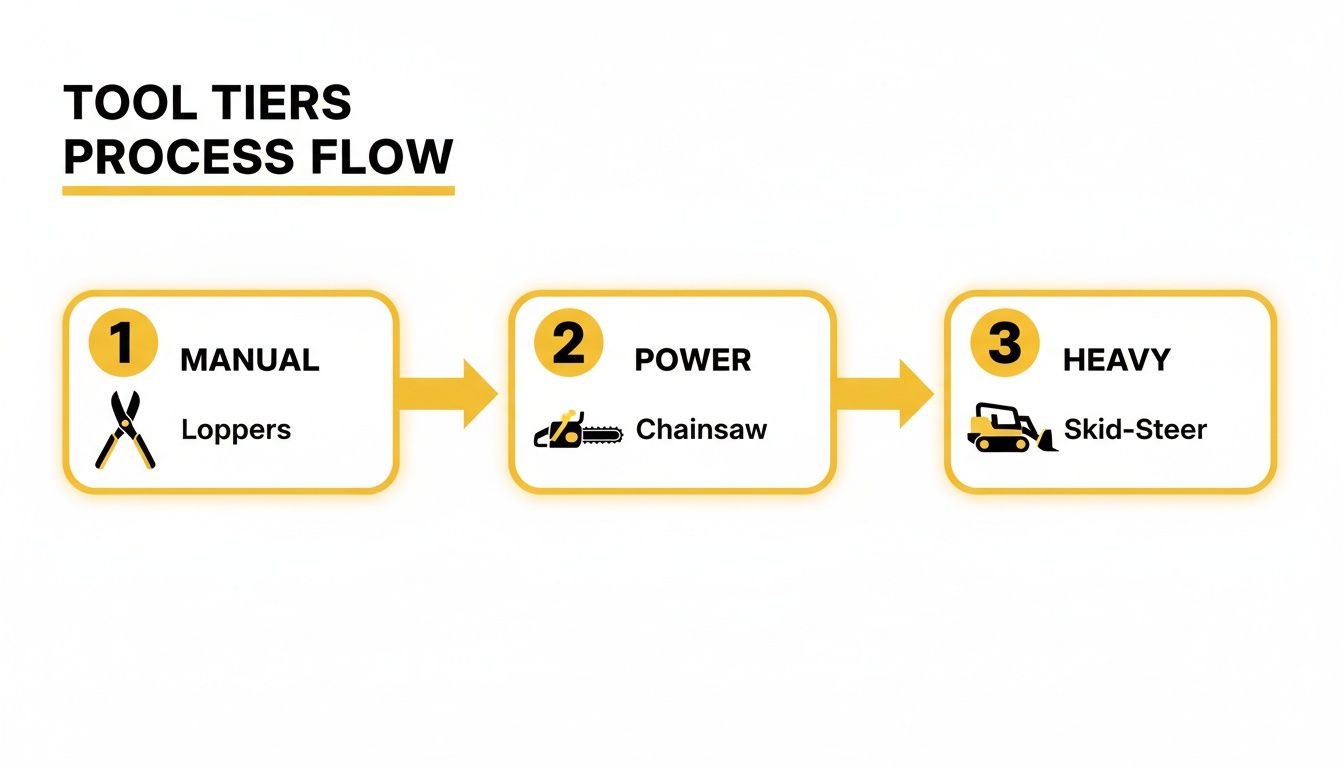
As you can see, you can start small with hand tools, but for major clearing, heavy machinery becomes necessary. It’s all about matching the right tool to the scale of your project.
Cut Back the Outer Growth First
Your first job is to tame the beast. Grab your loppers and pruning saw and start cutting back all the smaller, scraggly branches on the outside. Work your way around the entire perimeter, clearing everything back a few feet from the main stems.
Your goal here is simple: access and visibility. Think of it like peeling an onion; each layer you pull back reveals what you need to do next and makes the job safer. As you cut, toss the branches into a pile well away from where you’re working to keep your footing clear. Soon, you’ll be left with a much less intimidating skeleton of the main trunks.
Tackle the Main Stems and Trunks
With a clear line of sight, you can now zero in on the thick, woody stems at the heart of the bush. For anything up to a few inches in diameter, a reciprocating saw with a good pruning blade is your best friend. For the bigger stuff, it's time to bring in the chainsaw.
Make your cuts about one to two feet above the ground. Don't go flush with the soil just yet. Leaving that bit of a stump gives you a perfect handle for the next phase—getting the roots out. You’ll be glad you have that leverage when you start wiggling and prying the root ball loose.
Think about clearing an old fence line out in a rural spot like Volusia County, where different types of brush have grown together into a wall. By systematically cutting everything back to these manageable stumps, you can work your way down the line without constantly tripping over the mess you just made.
The Challenge of Root and Stump Removal
Here's where the real work begins. Getting the roots and stump out is non-negotiable if you want to prevent regrowth. You have a few ways to go about it, from pure sweat equity to calling in specialized equipment. Your choice will come down to the size of the root system, your own physical limits, and what you’re willing to spend.
For smaller bushes with relatively shallow, fibrous roots, you can usually handle it yourself:
Soak the Ground: If the soil is hard-packed clay, drenching the area a day or two ahead of time will make digging so much easier.
Dig a Trench: Use a sharp spade or a mattock to carve out a trench in a circle, about a foot or two out from the stump's base.
Sever the Roots: As you dig, you’ll start hitting the main roots. Chop through them with your loppers, an axe, or that reciprocating saw.
Leverage and Pry: Once you’ve cut the main anchor roots, grab that one-to-two-foot stump "handle" you left. Rock it back and forth to break the root ball free. A long pry bar shoved underneath can give you the final pop you need to lift it out.
Now, for those big, stubborn bushes with deep taproots, trying to remove them by hand can feel almost impossible. This is where professional services really shine. A stump grinder can turn a massive stump and its main roots into sawdust in just a few minutes.
And if you're clearing a whole bunch of large bushes, a service like forestry mulching is even better. A mulching machine grinds the entire plant—stems, stump, and roots—right into the soil, clearing the land and enriching it all in one go.
Managing Debris and Preventing Regrowth
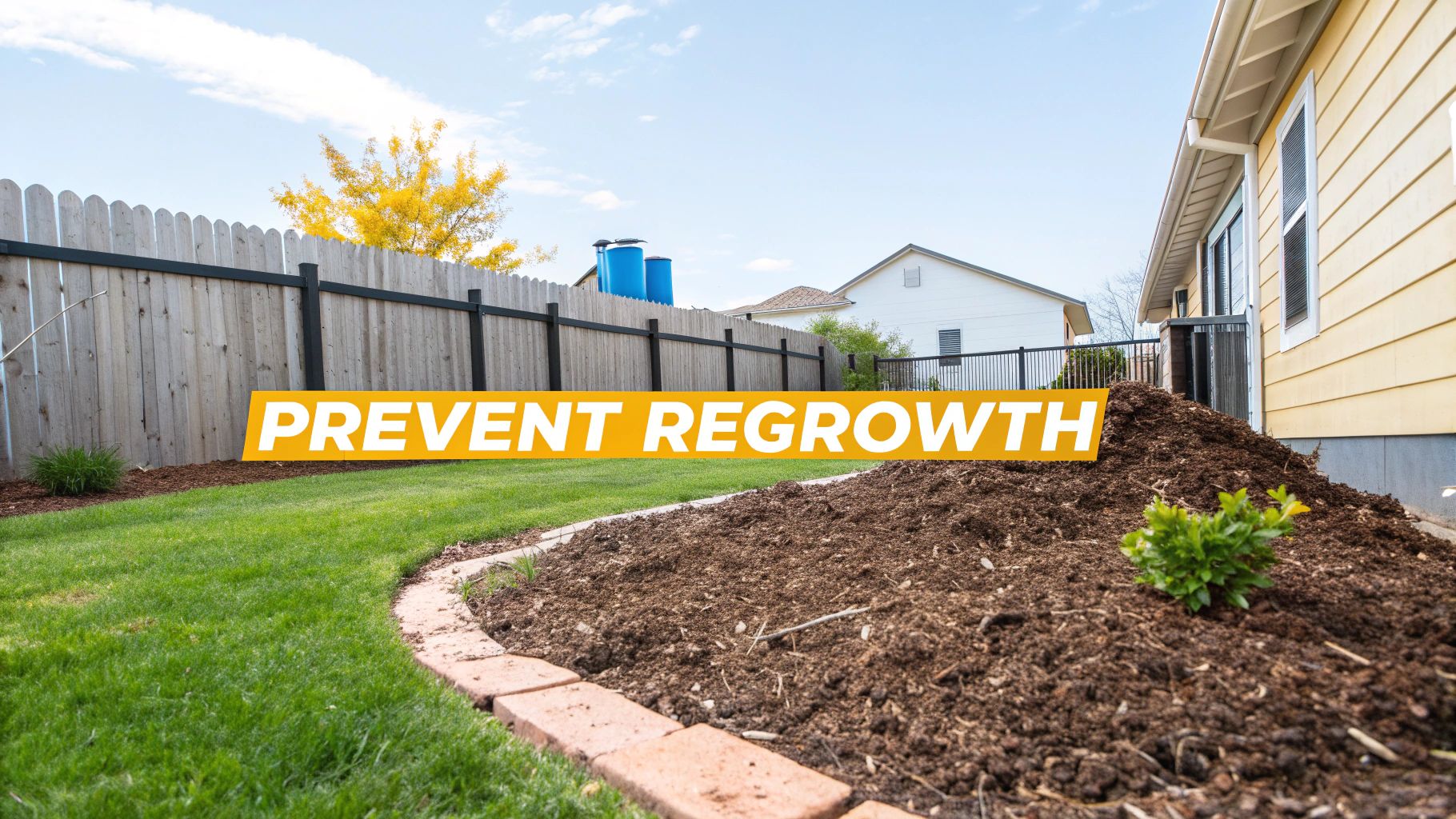
Getting those overgrown bushes cut down is a huge win, but let’s be honest—the job is only half done. Now you’re staring at a mountain of branches, leaves, and those stubborn stumps. This is where a lot of DIY projects lose steam, but with smart debris management and a solid plan to stop regrowth, your hard work will actually last.
What to do with all that green waste is your first big decision. If you only have a small pile, you might be able to bundle it up for curbside pickup. Just be sure to check your local rules first; many towns in Central Florida have strict limits on the size and volume they’ll haul away. For anything more than a minor trim, you'll have a lot of debris to handle. A good homeowner's guide to junk removal can be a lifesaver for figuring out your options.
Your Debris Disposal Options
When you’re facing a serious pile of yard waste, you have a few practical choices. Renting a dumpster is often the most straightforward approach, letting you toss everything in as you go. Just make a point to ask the rental company about any restrictions on yard waste.
Another route is to hire a junk hauling service. They show up, load everything for you, and drive it away. After an exhausting weekend of clearing brush, this can be money well spent. But for bigger projects, there’s an even better method that directly benefits your property.
The Power of On-Site Mulching
Why pay to haul away valuable organic material? Consider turning it into mulch right where you stand. Renting a wood chipper can transform bulky branches into a pile of nutrient-rich wood chips. This isn't just about saving a few bucks on disposal fees; it's about investing in the health of your land.
This fresh mulch becomes your secret weapon for the next critical phase: stopping regrowth. Spreading a thick layer of these wood chips over the cleared area accomplishes several key things at once:
Suppresses Weeds: A 3-4 inch layer of mulch is fantastic at blocking sunlight, which keeps dormant weed seeds from ever sprouting.
Retains Moisture: Here in the hot Central Florida sun, mulch acts like a sponge, helping the soil hold onto precious water and cutting down on your irrigation needs.
Improves Soil Health: As that organic material slowly breaks down, it enriches the soil with vital nutrients, creating a much healthier foundation for whatever you decide to plant next.
Using the debris from the very bushes you just removed is an efficient, eco-friendly solution that sets your property up for long-term success.
Preventing Regrowth with Herbicides
While mulch is an excellent first line of defense, some of the more aggressive or invasive species we deal with require a more direct approach. This is where a targeted herbicide application makes all the difference. The goal here is precision, not widespread spraying.
Immediately after cutting the main stems, apply a concentrated brush-killer herbicide directly to the freshly cut surface of the stump. By doing this right away, you let the plant's own vascular system pull the chemical down deep into the roots, killing it from the inside out. It's a method that is far more effective—and more environmentally responsible—than spraying chemicals all over the area.
Attempting removal without a clear plan for regrowth is a recipe for frustration. Data shows regrowth hits 75% without effective follow-up like herbicide treatments. In contrast, professional services using precision herbicide applications can suppress regrowth by up to 95%, showcasing the importance of this final step. You can explore more about these industry insights into forestry services and their effectiveness online.
Ultimately, preventing regrowth is just as critical as the initial removal. When you combine a physical barrier like mulch with targeted chemical treatments, you ensure that when you clear a piece of land, it stays cleared. This strategic follow-through is the real key to successfully reclaiming your property for good.
When to Call a Professional Land Clearing Service
There’s a real satisfaction in DIY work, but the smartest thing you can do on any land clearing project is know your own limits. Tackling a few overgrown bushes is one thing. Facing down a jungle is another.
Calling in a professional land clearing service isn't about admitting defeat. It's about making a strategic decision to get the job done right, safely, and without turning your weekends into an endless, back-breaking chore.
The scale of the job is usually the first big clue. If your property is pushing past half an acre, the sheer amount of work can sneak up on you fast. What you thought might take a couple of weekends can easily stretch into months, especially with Florida’s knack for surprise afternoon downpours.
Scenarios Demanding Expert Help
Some situations are immediate red flags. They’re clear signs that this has gone beyond a DIY project and requires the kind of heavy machinery and expertise only the pros have.
It’s probably time to make the call if you’re looking at:
Extreme Density: We're talking about undergrowth so thick you can't even walk through it. Your loppers and handsaw won't make a dent. Professionals bring in equipment like forestry mulchers that eat through dense vegetation like it’s nothing.
Large Acreage: Clearing several acres by hand is just not realistic. A professional crew with the right equipment can clear more ground in a single day than a homeowner could in an entire season.
Steep or Uneven Terrain: This is a huge safety issue. Operating any kind of machinery on a slope is incredibly dangerous without the right training and specialized equipment built for stability. It’s not a risk worth taking.
The real value of a professional service isn't just the work itself—it's the problems they prevent. They don't just cut things down; they manage the entire process, from clearing and root removal to grading and erosion control, saving you from costly mistakes and a whole lot of frustration.
The Professional Advantage
Hiring a pro is an investment in getting the job done efficiently and safely. They have access to forestry mulchers, heavy-duty stump grinders, and other specialized gear that can do in hours what would take you days of grueling manual labor. That speed saves you more than just time; it often saves you money when you add up tool rentals and the cost of fixing mistakes.
A good place to start is by reviewing a homeowner's checklist for hiring a professional tree service to make sure you’re bringing in a qualified, reputable company.
Ultimately, professionals offer a complete solution. Their expertise in how to remove overgrown bushes for good means they tackle the entire problem, from the visible brush down to the stubborn root systems that cause regrowth.
If you’re weighing your options, getting a handle on the process of finding a local brush removal service in Florida can give you the confidence you need to pick the right team for your project.
Common Questions About Bush Removal in Florida
When you're staring down a wall of overgrown bushes, a lot of questions pop into your head, especially here in Florida with our unique environment and local rules. Getting the right answers upfront helps you map out your project with confidence and avoid those nasty surprises and unexpected costs.
We’ve pulled together some of the most common questions we hear from landowners across Central Florida to give you some clear, practical answers.
What Is the Best Time of Year to Remove Bushes in Florida?
While you can technically clear brush any time of year in the Sunshine State, the sweet spot is definitely during our cooler, drier months. Think late fall through early spring—basically, October through April.
There are a few solid reasons why tackling the job during this window is a smart move:
Less Heat Stress: Let's be honest, clearing brush is hard work. Doing it in 75-degree weather is a whole lot more manageable (and safer) than in the peak of a humid August afternoon.
Reduced Pest Activity: You're far less likely to stumble upon angry wasps, fire ant mounds, or snakes when they're less active in the cooler temperatures.
Firmer Ground: Our summer downpours can turn a property into a swamp. Working on drier, firmer ground means less mess, less soil compaction, and less risk of getting equipment stuck.
Do I Need a Permit to Clear Bushes on My Property?
For most homeowners just cleaning up their yard, the answer is usually no. A permit is not required for simple bush and undergrowth removal on a typical residential lot.
But—and this is a big but—there are a few critical exceptions. You will almost certainly need a permit if your project involves:
Removing protected trees, like our majestic live oaks, which are often shielded by city or county tree ordinances.
Clearing land anywhere near a designated wetland area.
The brush clearing is part of a larger construction or development plan.
Your best bet is to play it safe. A quick call to your local city or county planning and zoning department can clear up any confusion in minutes. That five-minute conversation can easily save you from a world of headaches and potential fines.
How Much Does Professional Bush Removal Cost?
This is the million-dollar question, and the answer is always: "it depends." The cost for a professional crew to come in varies wildly based on the job. Key factors include the total acreage, how thick the vegetation is, how tough the terrain is to access, and what kind of machinery is needed.
A small, easy-to-reach patch of brush might only cost a few hundred dollars. On the other hand, clearing a full acre of stubborn, dense overgrowth could easily run into the thousands. The only way to get a real number is to have a reputable land clearing company come out for a free, on-site estimate.
When the job is just too big to handle on your own, Palm State Clear Cut has the professional equipment and expertise to reclaim your property safely and efficiently. If you need help transforming your overgrown lot, contact us for a free quote.
Comments