Tackling an overgrown property is a massive undertaking, but a smart plan can turn a daunting jungle into a manageable project. Before any heavy machinery even rolls onto the site, the most critical work happens with a pair of boots on the ground and a sharp eye.
Serving property owners across Central Florida, Palm State Clear Cut clears overgrown lots, pastures, and rural acreage, including land clearing and forestry mulching in Ocala and Marion County. Request a free on-site estimate for your property.
Getting these initial steps right is the key to a smooth, cost-effective clearing process.
Your Pre-Clearing Property Assessment
Knowing how to clear overgrown land begins long before you start a single machine. It starts with walking your property, mapping out a strategy that saves time, money, and future headaches. This initial evaluation sets the stage for every decision that follows, from the equipment you’ll need to the permits you might have to pull.
Think of this phase as creating a blueprint for your project. Without one, you’re essentially working blind, risking costly mistakes that could derail your timeline and budget. A proper assessment ensures you’re not just clearing land, but improving it responsibly and efficiently.
Identifying Vegetation and Obstacles
First things first: you need to take a detailed inventory of what you’re up against. In Central Florida, “overgrown” can mean a lot more than just tall grass. You have to identify specific types of vegetation, because each one presents a unique challenge.
- Dense Underbrush: Keep an eye out for thickets of saw palmetto, gallberry, and wax myrtle. These Florida natives can be incredibly dense and tough, often requiring the brute force of a forestry mulcher to process them on the spot.
- Invasive Species: Know your enemy. Brazilian pepper trees, melaleuca, and cogon grass are some of the most common invasive plants in our area. They spread like wildfire and usually require targeted removal plus follow-up herbicide treatments to keep them from coming right back.
- Vines and Creepers: Don’t underestimate stubborn vines like muscadine or poison ivy. They can tangle up in equipment, slow down the work, and complicate the entire clearing process. Spotting them early helps your crew plan for their specific removal.
- Mature Trees: Note the location, species, and health of any large trees. You’ll need to decide which ones you want to keep for shade, aesthetics, or as a natural property line. Protecting these “keeper” trees is a huge part of any professional selective clearing plan.
Beyond the plant life, you’ve got to scout for physical obstacles. Hidden stumps from old clearing jobs, forgotten fence posts, illegally dumped debris, or large rocks can do serious damage to expensive equipment. Marking these hazards on a rough map of your property is a simple but vital safety measure.
Understanding Your Terrain and Soil
The lay of the land dictates what kind of equipment can be used safely and effectively. It’s crucial to walk the entire property to feel out the terrain—things you’d never see from the road. Pay close attention to subtle slopes, low-lying areas that might turn into ponds after a rain, and sandy spots where heavy machinery could get stuck.
A property that looks perfectly flat from a distance can often hide swales or depressions that become mini-wetlands during Florida’s rainy season. Identifying these wet spots early prevents heavy equipment from getting bogged down, saving you from the headache of costly recovery efforts and major project delays.
Knowing your property’s topography is also essential for planning erosion control down the line. Once you clear the vegetation, the soil is exposed. On a slope—even a gentle one—a classic Florida downpour can quickly wash away your valuable topsoil.
Globally, land clearing is often tied to large-scale agricultural conversion. For instance, permanent agriculture has been responsible for approximately 95% of land conversion that results in tree cover loss, totaling a massive 168 million hectares. These large-scale operations use methods like mechanized clearing and selective thinning on a vast scale. You can read the full research about these global land use trends.
To help you get started, we’ve put together a simple checklist. Use this to guide your initial walk-through and make sure you don’t miss any critical details before the real work begins.
Initial Land Assessment Checklist
| Assessment Area | Key Questions to Answer | Why It Matters |
|---|---|---|
| Vegetation Type | What are the dominant plant species? Are there invasive plants like Brazilian Pepper? Are there valuable native trees to save? | Determines the right clearing method (mulching, grinding, etc.) and if follow-up herbicide is needed. |
| Obstacles & Hazards | Are there hidden stumps, old fences, large rocks, or dumped debris? | Prevents costly damage to equipment and ensures crew safety. |
| Topography | Is the land flat, sloped, or uneven? Are there low-lying wet areas or swales? | Affects equipment choice, operational safety, and the need for erosion control measures. |
| Soil Conditions | Is the soil sandy, loamy, or clay-based? Is it compacted or loose? | Influences equipment traction and helps predict how the land will respond to clearing and rainfall. |
| Access Points | Where can heavy machinery safely enter and exit the property? Are there gates or fences to consider? | Ensures a smooth start to the project and avoids property damage. |
| Property Boundaries | Are the property lines clearly marked? Is there any risk of encroaching on a neighbor’s land? | Prevents legal disputes and ensures work is confined to your property. |
This checklist isn’t exhaustive, but it covers the non-negotiables. A careful, methodical assessment is the foundation of a successful land clearing project, ensuring you move forward with a clear plan and no expensive surprises.
Choosing the Right Land Clearing Method
Once you’ve walked your property and have a solid handle on what you’re dealing with, it’s time to pick your strategy. Knowing how to clear overgrown land isn’t just about knocking stuff down; it’s about matching the right method to your goals, your budget, and the reality of your land.
Get this part right, and you can save yourself thousands of dollars and a ton of future headaches. The wrong choice? You could be looking at soil damage, aggressive regrowth, and major project delays. Every technique delivers a different result—one might leave your lot perfectly graded for a foundation, while another is all about reviving the natural ecosystem.
Let’s walk through the most common and effective methods we use right here in Central Florida so you can make a smart call.
This visual decision tree really nails down the process, showing how you should move from assessment to planning before a single machine hits the dirt.
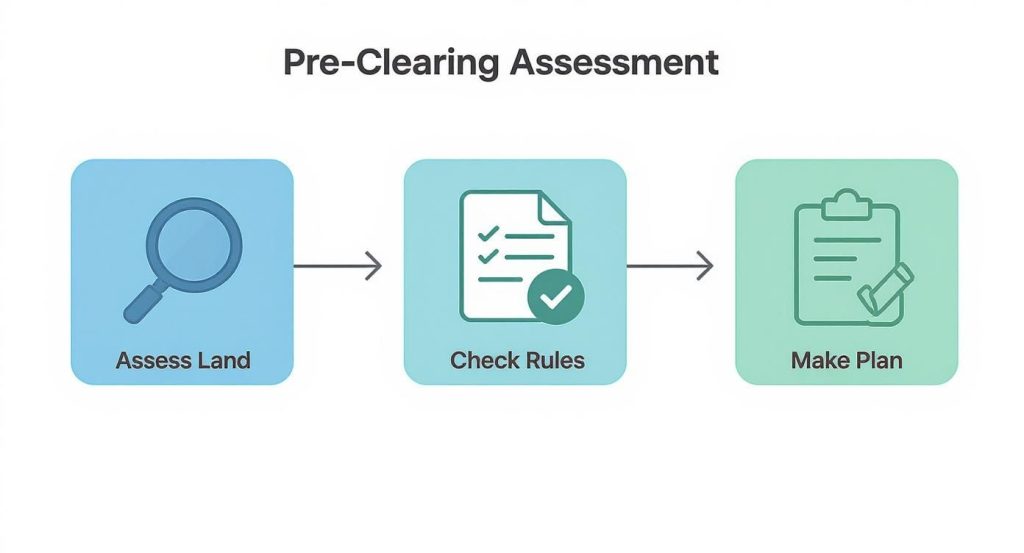
As you can see, a successful project follows a clear sequence. You assess, check the rules, and make a solid plan. Only then do you start the actual clearing.
Forestry Mulching: The Eco-Friendly Powerhouse
Forestry mulching has quickly become the go-to for a lot of landowners, and for good reason. We bring in a single machine—usually a skid-steer or a compact track loader with a serious mulching head—and it goes to work grinding trees, brush, and vines right where they stand.
Everything gets shredded into a nutrient-rich layer of mulch that’s spread evenly across the ground. It’s a clean, efficient process.
The benefits are huge:
- No Hauling, No Burning: Since everything is processed on-site, you completely skip the cost and headache of trucking debris off your property or getting burn permits.
- Better Soil and Erosion Control: That layer of fresh mulch acts like a natural blanket. It holds moisture in the soil, smothers weed seeds, and stops our heavy Florida rains from washing your topsoil away. Over time, it breaks down and feeds the soil.
- Fast and Efficient: For property choked with dense underbrush and smaller trees (we typically tackle anything up to 8 inches in diameter this way), forestry mulching is unbelievably fast.
Forestry mulching is our top recommendation for landowners who want to clear land fast while actually improving it for the long run. It’s perfect for cutting new trails, clearing a homesite while saving those beautiful old oaks, or taming an overgrown pasture without tearing up the ground.
Traditional Clearing: Dozing and Stump Grinding
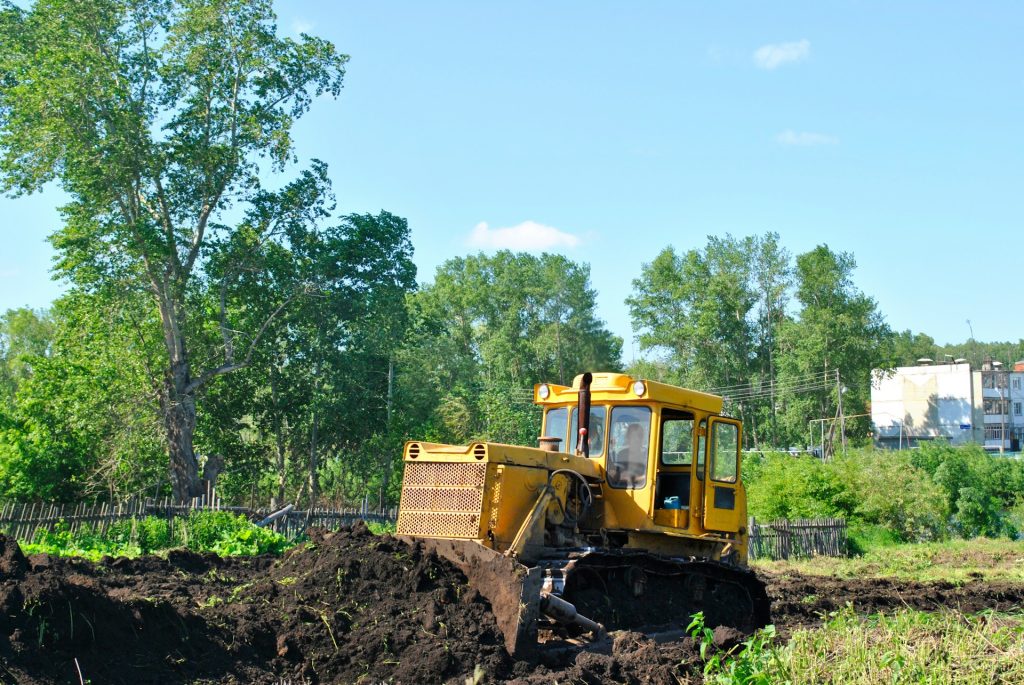
When you need a perfectly clean slate, old-school methods are sometimes the only way to go. This is the heavy-hitter approach, involving a bulldozer to push over trees and scrape the land clear. Once that’s done, we bring in a stump grinder to obliterate any remaining stumps well below the surface.
This is the method you need when you’re prepping for a building foundation, a new driveway, or a septic system—anything where underground roots and stumps are a no-go. But it’s a much more disruptive process. Dozing compacts the soil and can scrape away the valuable topsoil, leaving the land vulnerable to erosion.
For smaller jobs or properties where you want to be gentler on the land, you might even want to look into how to clear land without heavy equipment.
Selective Thinning and Underbrushing
Sometimes, a total clear-out is the last thing you want. Selective thinning is more like surgery than demolition. We strategically remove specific trees, invasive species, and overgrown underbrush to give the “keeper” trees room to breathe and thrive.
This is what we do when a client wants to create that beautiful, park-like feel on their wooded lot, open up a view, or reduce wildfire risk by getting rid of all that fuel laddering up into the canopy. It’s a precision job that requires a skilled operator who can maneuver equipment carefully around the trees you want to save.
We often pair this with forestry mulching to process all the cleared material right on site. The result is a healthier, more beautiful, and more usable property that still feels like natural Florida.
To make things a bit clearer, we’ve put together a quick comparison of the top three land clearing methods. This table breaks down what each is best for, what you can expect to pay, and how it impacts your land.
Land Clearing Method Comparison
| Method | Best For | Average Cost (Per Acre) | Pros | Cons |
|---|---|---|---|---|
| Forestry Mulching | Fast underbrush removal, creating trails, improving soil health, and preserving select trees. | $800 – $2,500 | Enriches soil, prevents erosion, no hauling or burning, very fast. | Not suitable for removing large stumps or preparing a site for a foundation. |
| Dozing & Grinding | Preparing build-ready sites for foundations, roads, pools, or utilities. Total vegetation removal. | $1,500 – $4,000+ | Provides a completely clean slate, removes all stumps and roots. | High soil disturbance, removes topsoil, requires debris hauling. |
| Selective Thinning | Improving forest health, creating park-like settings, managing wildfire risk, and enhancing views. | Varies greatly | Preserves mature trees and ecosystem, improves property aesthetics. | More time-consuming and requires a higher level of operator skill. |
Ultimately, there’s no single “best” way to clear land—it all comes back to your vision for the property. By understanding these core methods, you can confidently choose the one that aligns with your goals and sets your project up for success.
Understanding Equipment Costs and Safety Measures
Knowing how to clear overgrown land goes way beyond just picking a method. You’ve got to take a hard look at the machinery, the real-world costs, and the safety rules that are absolutely non-negotiable. This is heavy-duty work with powerful equipment, and getting a handle on the financial and safety side of things is critical before a single engine starts.
A lot of landowners think about renting equipment to save a few bucks. Honestly, this can turn into a costly and dangerous mistake fast. The professional gear we use—like a high-flow skid-steer with a forestry mulching head or a big excavator for pulling stumps—is in a completely different league than what you’ll find at the local rental yard. Trying to tackle a big job with underpowered equipment just means more time, more fuel, and a much higher risk of something going wrong.
Breaking Down the Costs of Land Clearing
Budgeting for a land clearing project isn’t about finding the lowest hourly rate. The actual cost is a mix of several key factors that any reputable contractor will build into their quote. If you understand these components, you can better compare bids and steer clear of any nasty surprises down the road.
Here’s what really goes into the price:
- Labor: This pays for the skilled, insured operators running the machines. Their experience is what keeps the job moving safely and efficiently, which ultimately saves you money.
- Equipment & Fuel: You’re not just paying for the machine, but also for the diesel it drinks. Professional equipment can burn through dozens of gallons a day, which is a major operational cost.
- Mobilization Fees: This covers getting the heavy equipment to your property and back home again. It requires specialized trucks and trailers, and it’s a real cost of doing business.
- Debris Disposal: If you choose a method that creates big piles of debris, like dozing, you have to factor in the cost of hauling it all away to a proper facility. Those disposal fees can add up in a hurry.
For a more detailed breakdown specific to our area, we’ve put together a guide on the cost to clear an acre of land in Florida.
Prioritizing Safety on the Job Site
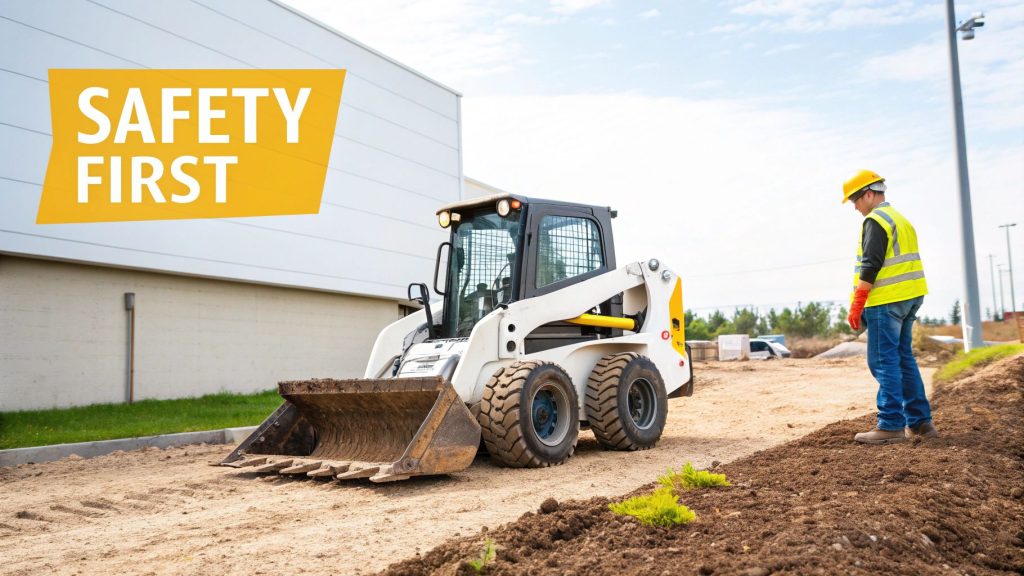
Let’s be clear: land clearing is dangerous work. You’re dealing with powerful machines, unpredictable terrain, and all sorts of hidden obstacles. A real commitment to safety is paramount, and it’s a lot more than just wearing a hard hat.
The pressure to clear land is a global issue. Between 2015 and 2025, the world is losing an average of 10.9 million hectares of forest each year. Clearing land for other uses is a huge part of that, accounting for 34% of all tree cover loss worldwide. You can learn more from these global deforestation insights from Carbon Brief. This really underscores why doing our local work safely and responsibly matters so much.
A professional crew lives by a strict safety checklist.
Before any machine ever touches the dirt, the very first step is to call 811. This service locates and marks all underground utilities—gas lines, water pipes, fiber optic cables. Hitting one of those can be catastrophic, causing massive damage, service outages for the whole neighborhood, and fines that will make your head spin.
Essential Safety Protocols to Follow
Whether you bring in a pro or decide to tackle a small project yourself, these safety rules are non-negotiable. A professional service will handle all of this, but as a landowner, it’s good to know what’s happening on your property.
- Establish a Clear Work Zone: Keep everyone—people, pets, vehicles—far away from the operating equipment. Flying rocks and wood chips can shoot out hundreds of feet with serious force.
- Wear Proper Personal Protective Equipment (PPE): This means hard hats, safety glasses, steel-toed boots, and ear protection. Anyone on the ground should be in high-visibility gear.
- Understand Machinery Limitations: Every machine has its breaking point. Pushing it too hard—like trying to mulch a tree that’s too big—is how equipment fails and people get hurt.
- Be Aware of Overhead Hazards: Always look up before you start work. Dead branches, what we call “widow-makers,” can fall unexpectedly. Power lines and leaning trees are also major threats that can be disturbed by work on the ground.
At the end of the day, hiring a professional service like Palm State Clear Cut isn’t just about speed. It’s about transferring the significant risks of operating heavy machinery to a team that is trained, insured, and properly equipped to manage them.
Managing Debris and Preventing Soil Erosion
Once the vegetation is down, you might think the hard part is over. But honestly, learning how to clear overgrown land is only halfway done. What comes next—dealing with all the debris and protecting the newly exposed soil—is absolutely critical for the long-term health and stability of your property. If you skip this part, you’re setting yourself up for frustrating regrowth and potentially serious environmental headaches.
It’s interesting to think about this on a larger scale. Globally, land restoration is a massive priority. As of 2025, various countries have pledged around 1.01 billion hectares for land-based carbon removal. That’s an area far bigger than what’s practically possible, highlighting a huge gap between environmental goals and what can actually be done on the ground. It really drives home why doing things right at the local level matters so much. You can read more about these global land restoration pledges and see the big picture.
Smart Debris Management Options
Old-school clearing methods like dozing can leave you with gigantic piles of trees, stumps, and brush. You’ve got a few options for dealing with it, and each has its own price tag and set of challenges.
- Hauling Away: This is the most direct approach. We load all the debris into dump trucks and take it to a landfill or a green waste facility. It leaves you with a perfectly clean slate, but it can get expensive fast. Trucking costs and disposal fees can really add up.
- Controlled Burns: In some of Central Florida’s more rural spots, controlled burns are an option. But this isn’t as simple as striking a match. You need a permit from the Florida Forest Service, you have to follow strict safety rules, and the weather has to cooperate. It’s a high-risk method that’s becoming less common because of air quality rules and the obvious fire danger.
The smartest, most efficient solution is to avoid creating those massive debris piles in the first place. This is where forestry mulching truly shines. It grinds all the vegetation into a nutrient-rich mulch and spreads it right back onto the soil, completely eliminating the need for hauling or burning.
This single-step process doesn’t just save you time and money; it actually jump-starts the ecological recovery of your land. We’ve got a whole guide explaining what forestry mulching is and how it works if you want to dive deeper.
Protecting Your Soil from Erosion
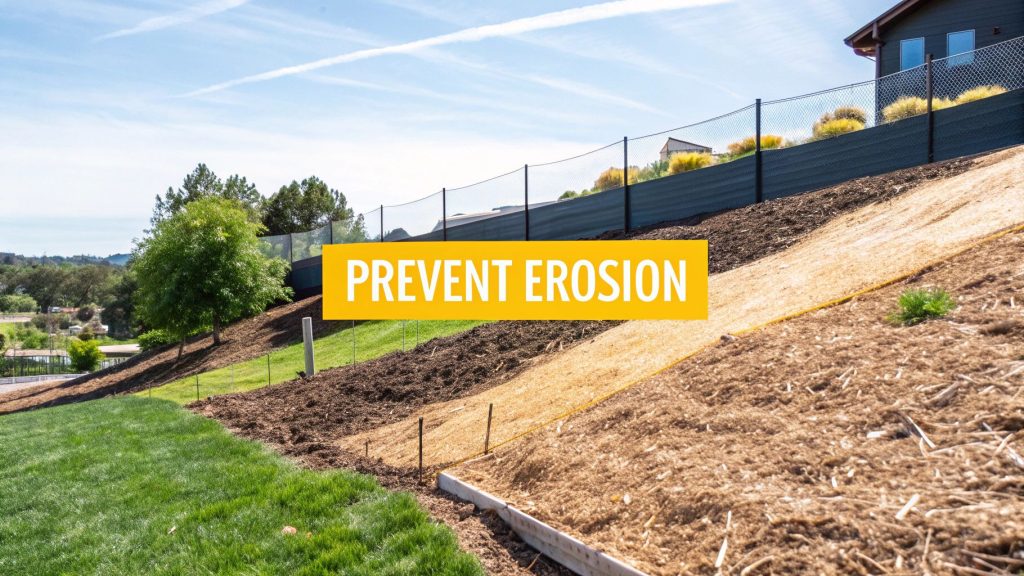
With that protective layer of vegetation gone, your land is vulnerable. Central Florida’s sandy soil, combined with our famous torrential downpours, is the perfect recipe for soil erosion. Losing that precious topsoil degrades your property and can create environmental problems downstream.
The good news is, there are several effective, practical things you can do right after clearing to stop erosion in its tracks.
- Install Silt Fences: These are temporary barriers made of a special fabric stretched between wooden stakes. You install them along the lower edges of your cleared area. They act like a filter, catching sediment carried by rainwater and stopping it from washing off your property and into local waterways.
- Spread Hay or Straw: It sounds simple, but spreading a layer of hay or straw over the bare ground works wonders. It cushions the impact of raindrops, slows down water runoff, and helps the soil hold moisture. This also gives new grass or cover crops a better shot at taking root.
- Plant a Cover Crop: The best long-term solution is to get something growing again. Planting a fast-growing cover crop like ryegrass or millet will quickly stabilize the soil with a dense network of roots. This is a great strategy if you’re not planning to build or landscape the area right away.
Maintaining Your Newly Cleared Land
Getting your property cleared is a huge milestone, but don’t pop the champagne just yet. The real work of owning land in Florida is just getting started. Nature doesn’t quit; the moment you turn your back, weeds, invasive saplings, and stubborn brush will immediately start trying to reclaim the ground you just fought for.
The key is to shift your mindset. This isn’t about one big project; it’s about protecting your investment with a smart, long-term management plan. This doesn’t mean you’ll be battling a jungle every weekend. A little proactive work now saves you from a massive headache later, keeping your land beautiful and usable for years to come.
Creating a Sustainable Management Plan
The best maintenance plan is the one you’ll actually do. For most properties here in Central Florida, that boils down to a consistent mowing or brush-hogging schedule. How often you need to do it really depends on your specific piece of land and, of course, the season.
During our fast-growing spring and summer months, you might find yourself out there every few weeks to keep the grass and weeds from getting out of control. Once things cool down in the fall and winter, you can probably stretch that to once every month or two.
The guiding principle is simple: never let new growth get more than a foot or two high. At that height, it’s an easy job for a heavy-duty mower or a brush hog. But if you let it go until saplings start to take root, you’re right back where you started, facing another expensive clearing project.
Think of it this way: A quick pass with the mower once a month is a simple chore. Letting it go for six months turns that chore back into a full-blown land-clearing project. Consistency is the most powerful and cost-effective tool you have.
This regular cutting does more than just keep things tidy. It actively discourages the tough, woody vegetation you just paid to remove. By constantly cutting it back, you drain the plant’s energy reserves, making it much harder for it to re-establish itself.
Managing Stubborn Invasive Species
While regular mowing takes care of most regrowth, some of Central Florida’s most notorious troublemakers need a more direct approach. We’re talking about Brazilian pepper, cogon grass, and melaleuca. These guys are aggressive, and simply cutting them won’t stop them—in fact, for some species, it can actually encourage them to spread even faster.
For these pests, a targeted herbicide application is usually the only way to win. This is where calling in a professional can make all the difference.
- Targeted Application: A licensed pro can correctly identify the invasive plants and use the right herbicide—one that’s effective on that specific species without nuking all the desirable vegetation around it.
- Timing is Everything: Applying herbicides at the right point in a plant’s growth cycle is critical for success. For many of these invasives, that means hitting them during active growth periods in the spring or fall.
- Follow-Up is Key: One treatment is rarely a magic bullet. A real vegetation management plan includes follow-up treatments to catch any new sprouts that pop up from the seed bank in the soil. This is how you achieve complete eradication over time.
This kind of precise, strategic approach is far more effective and environmentally responsible than just spraying everything. It gets to the root of the problem without causing unnecessary harm to your property’s ecosystem, helping you finally win the war against Florida’s most persistent invaders.
When to Hire a Professional Land Clearing Service
There’s a real satisfaction in tackling a small patch of brush yourself, but knowing how to clear overgrown land also means knowing your limits. Some jobs are just too big, too tangled, or too dangerous to DIY.
Trying to push through without the right experience and heavy-duty equipment often leads to damaged property, serious injury, or a project that bleeds you dry in unexpected costs. It’s not about giving up; it’s about making a smart, strategic call to get the job done right the first time.
Scenarios That Demand a Professional
Certain situations are immediate red flags that you need an expert crew. If your project looks anything like the ones below, it’s time to pick up the phone.
- Large Acreage: Clearing multiple acres is a whole different ballgame. It’s a massive physical undertaking that needs commercial-grade machinery to get done in a reasonable amount of time. A rental skid steer is just going to get chewed up and spit out.
- Extremely Dense Vegetation: If you’re fighting through a wall of mature palmettos, invasive Brazilian pepper, or a thick stand of trees, you’re in for a slow and hazardous battle. Professionals bring the horsepower and specialized attachments to slice through that kind of overgrowth safely.
- Steep or Uneven Terrain: This is a big one. Operating heavy machinery on slopes is a skill that takes years to master. The risk of a rollover is very real and can be fatal. Pros are trained to read the land and navigate tricky terrain without putting themselves or your property at risk.
- Environmentally Sensitive Areas: Does your property border a wetland? Have you spotted a gopher tortoise burrow? Are there protected native trees you need to work around? This is where you absolutely need an expert. Navigating the maze of local and state regulations is critical to avoid thousands of dollars in fines.
Hiring a fully insured professional land clearing company isn’t just about speed. It’s about transferring risk. When you bring in an expert, you’re protected from liability for accidents, property damage, and underground utility strikes—a safety net a DIY project simply doesn’t have.
The Professional Process From Start to Finish
Working with a company like Palm State Clear Cut is designed to be straightforward and stress-free.
It all starts with an on-site consultation. We’ll walk the property with you, listen to what you want to achieve, and get a feel for the real scope of the job.
From there, you’ll get a detailed, written quote that breaks everything down—no hidden fees, no surprises. Once you give the green light, we schedule the job, and our experienced operators show up with the right equipment to get it done efficiently.
When the work is finished, we do a final walkthrough with you to make sure every last detail meets your expectations. We leave you with a clean, usable property that’s ready for whatever you have planned next.
Answering Your Top Land Clearing Questions
Even after you’ve mapped out a plan, a few questions always seem to pop up right when you’re ready to get started. It’s totally normal. Every piece of property is different, and figuring out the real costs, local rules, and best timing can feel like a moving target.
This is especially true here in Central Florida. Our crazy-fast growing season and specific environmental regulations add a few more layers to any project. We’ve been doing this a long time, so we’ve pulled together the questions we hear most often to give you some straight answers before you break ground.
How Much Does It Cost to Clear One Acre of Land in Florida?
This is the big one, and the honest answer is: it varies. In Central Florida, you can expect the cost to clear a single acre to fall somewhere between $500 and over $4,000. That’s a huge range, I know, but the final number really hinges on what’s actually on your property.
A few things that swing the price tag are:
- Vegetation Density: Is it just light brush and tall grass? That’s going to be on the low end. Is it an acre packed with stubborn palmettos, mature oaks, and a mess of invasive vines? That’s a whole different ballgame and will cost a lot more.
- The Method We Use: Forestry mulching is often the most budget-friendly route. It chews everything up on-site, so you skip the extra costs of hauling and disposal. Traditional methods with bulldozers and stump grinders will run you more.
- How Easy Is It to Get To? If your land is hard to reach, has steep grades, or is swampy, we have to factor in more time and specialized equipment, which bumps up the cost.
Because of all these moving parts, the only way to get a true number is with an on-site quote. It’s the only way to build an accurate estimate that’s actually tailored to your land.
Do I Need a Permit to Clear My Land?
The short answer is almost always, “it depends.” Counties like Orange, Seminole, and Lake all have their own specific rules about what you can and can’t do. If you’re just clearing out some small brush on your own lot, you’re probably in the clear.
But you’ll almost certainly need a permit if your project involves:
- Taking down trees over a certain trunk diameter.
- Clearing anywhere near a designated wetland, pond, or stream.
- Working on a property that might have protected species, like the gopher tortoise.
Here’s a pro-tip: Always check with your local county planning and zoning department before a single tree comes down. A quick phone call is free. Fines for unpermitted work can run into the thousands, not to mention the stop-work orders that can derail your entire project.
What Is the Best Time of Year to Clear Land?
Without a doubt, the best time to clear overgrown land in Central Florida is during our dry season. Think late fall through spring, roughly from November to May. Working on dry ground makes a massive difference.
When the soil is firm, heavy machinery can operate way more efficiently. It dramatically lowers the risk of equipment getting bogged down, tearing up your property with deep ruts, and compacting the soil. Plus, clearing during the dry season helps prevent soil erosion—the last thing you want is one of our summer thunderstorms washing away all your valuable topsoil.
Ready to get a clear, accurate quote for your project? The experts at Palm State Clear Cut can walk your property and provide a detailed plan that fits your goals and budget. Visit us at https://palmstateclearcut.com to schedule your free consultation today.