
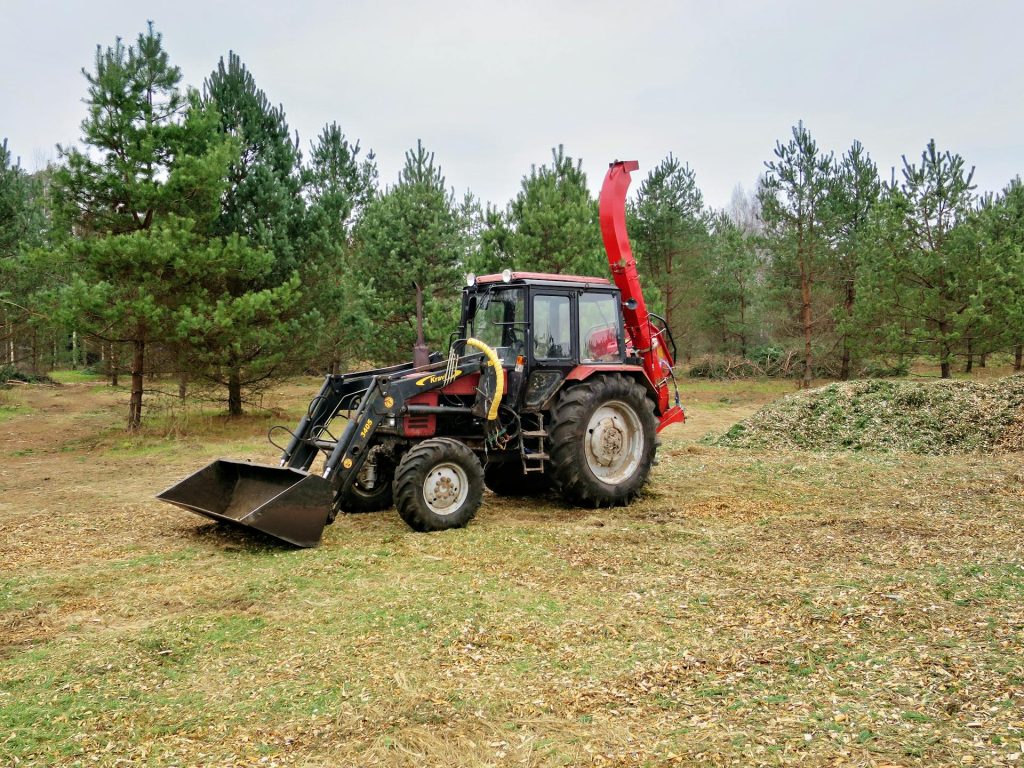
Figuring out the cost to clear an acre of land is a bit like getting a quote for a home renovation—it really depends on what you’re starting with and what you want the finished product to look like. The price can swing from $1,200 to $4,000 per acre, sometimes even more.
Based in Central Florida, Palm State Clear Cut provides professional land clearing across the region, including land clearing and forestry mulching in Marion County and Ocala. Contact us for a free, per-acre estimate on your specific site.
A flat, grassy field is one thing. An acre choked with mature oak trees, stubborn palmetto thickets, and uneven ground? That’s a completely different ballgame, demanding more time, heavier machinery, and a bigger budget.
Your Guide to Florida Land Clearing Costs
The initial condition of your property is the single biggest factor driving the final price tag. Clearing land isn’t a one-size-fits-all service, and understanding the baseline costs is the first step in setting a realistic budget.
Breaking Down the Baseline Costs
On a national level, most landowners end up paying between $1,266 and $3,900 for a typical land clearing project. Simple jobs, like just scraping off grass and some light brush, can be on the lower end, maybe $500 to $1,000 per acre.
But when you get into land with small trees and thicker undergrowth, the price naturally climbs, often landing between $1,000 and $1,500 per acre. For the really tough jobs—think large trees and deep-rooted stumps—you can expect to see costs push past $1,500 to $3,000 per acre. You can dive deeper into these national averages with this helpful farming resource.
To give you a clearer picture, here’s a quick overview of what to expect based on how much work is involved.
Estimated Cost to Clear an Acre of Land by Project Complexity
This table breaks down the typical per-acre cost ranges based on vegetation density and the type of work needed. It’s a great starting point for seeing where your project might fall.
| Clearing Complexity | Typical Vegetation | Estimated Cost Per Acre |
|---|---|---|
| Light Clearing | Grass, weeds, sparse brush, and very small saplings. | $500 – $1,500 |
| Medium Clearing | Dense brush, numerous small-to-medium trees, and some stumps. | $1,500 – $3,000 |
| Heavy Clearing | Heavily wooded with large, mature trees, dense undergrowth, and large stumps. | $3,000 – $6,500+ |
Of course, these numbers are just a guide. They give you a solid baseline for budgeting, but there are always other factors at play. Next, we’ll get into the specific things here in Florida—from our sandy soil to local permit fees—that will shape the final quote you get from a professional land clearing company.
Key Factors That Influence Your Final Price
Those initial per-acre estimates are a great starting point, but the final number on your quote really comes down to the unique character of your property. Think of it like a puzzle—several distinct pieces have to fit together to show you the complete financial picture. No two acres are ever the same, especially here in Florida, where the landscape can change dramatically from one property line to the next.
Getting a handle on these variables is key because they directly impact the labor, time, and specific machinery needed for the job. From how thick the brush is to the slope of your land, each factor adds another layer of complexity and, ultimately, cost. Let’s break down exactly what we look for when we walk your property.
Vegetation Type and Density
By far, the biggest cost driver is what’s actually growing on your land. A grassy field with a handful of saplings? That’s a pretty straightforward project. But an acre packed with stubborn, dense Florida vegetation presents a much bigger challenge.
- Palmetto Thickets: These low-growing palms are notorious for their tough, fibrous root systems that require some serious horsepower to remove effectively.
- Mature Hardwood Trees: Large oaks, pines, or other mature trees demand more time, specialized felling techniques, and heavier machinery for removal and stump grinding.
- Invasive Species: Plants like the Brazilian pepper tree can grow into dense, tangled messes, making the clearing process much more complicated and adding to the labor hours.
This infographic gives you a clear visual of how clearing costs can climb based on how dense the vegetation is.
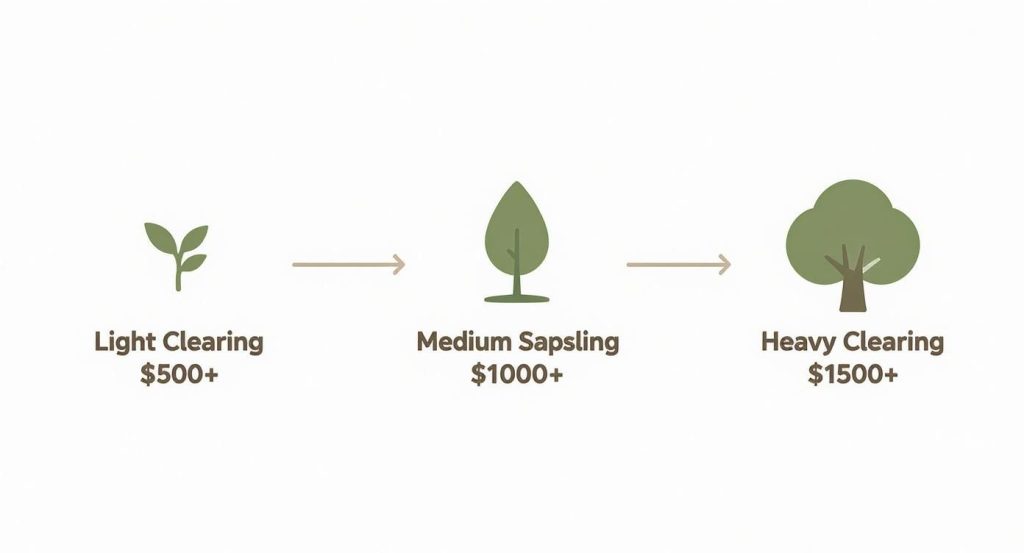
As you can see, a lightly vegetated lot is a world away from a heavily wooded one, where costs can easily triple because of the sheer increase in workload and equipment needed.
Property Accessibility and Terrain
How easily can we get heavy equipment onto and around your property? A flat, open lot right off a paved road is the dream scenario. But many properties in Central Florida have features that can complicate access and drive up the cost.
If a site is remote, has narrow entry points, or sits on a steep slope, our operators have to work more slowly and cautiously. Wet, sandy, or uneven ground also makes it tough to maneuver heavy machinery like bulldozers and forestry mulchers. This might mean we need to bring in specialized equipment or do extra site prep, which all adds to the bill.
“Every acre tells a different story. A quote for a flat, easily accessible parcel will look vastly different from one for a sloped, wetland-adjacent lot, even if they’re the same size. The terrain dictates our tools and our time.”
Soil Conditions and Permitting
Florida’s unique environment brings a few other important factors into play. Our sandy soil is prone to erosion once the vegetation is gone, which sometimes requires us to install silt fences or lay down erosion control blankets to stabilize the site—another added cost.
On top of that, local regulations play a huge role. The cost to clear an acre of land is always shaped by regional rules, and Florida is no exception. While the U.S. average cost per acre in 2025 can range from $1,400 to $6,200, a state like Minnesota might average around $1,837 per acre. This wide gap comes down to local land conditions and market rates. You can dig deeper into these national cost averages and see how different regions stack up. Feel free to learn more about these land clearing cost factors.
The permitting fees themselves can add several hundred dollars to your project before a single machine starts up. Counties often have strict rules about removing protected tree species or clearing land near wetlands, which means you may need surveys and specific approvals that contribute to the total expense.
Debris Disposal Method
Finally, what are we going to do with all the cleared vegetation? The method you choose for debris disposal has a direct impact on your final price.
- Hauling Away: This is usually the most expensive route. It involves loading all the trees, brush, and stumps into dump trucks and taking them to a landfill or processing facility. The cost covers labor, equipment time, and landfill tipping fees.
- Burning: While sometimes cost-effective, burning requires permits and is often restricted by local burn bans, especially during Florida’s dry season. It also has to be managed carefully to ensure safety.
- Forestry Mulching: This method involves grinding all the vegetation right where it stands, leaving the resulting mulch as a natural, soil-enriching ground cover. It completely eliminates hauling and disposal fees, often making it the most economical and eco-friendly choice.
Comparing Land Clearing Methods and Their Costs
Picking the right way to clear your land is just as critical as the decision to clear it in the first place. The method a contractor uses has a direct line to the project’s timeline, the health of your soil afterward, and, naturally, the cost to clear an acre of land. Each technique comes with its own playbook of pros and cons, especially for the unique conditions we see here in Florida.
Think of it like choosing the right tool from your toolbox. You wouldn’t use a sledgehammer to hang a family photo, right? The same logic applies here. The best method hinges on what’s growing on your property, what you plan to do with it, and what your budget looks like.
Traditional Bulldozing or Pushing Over
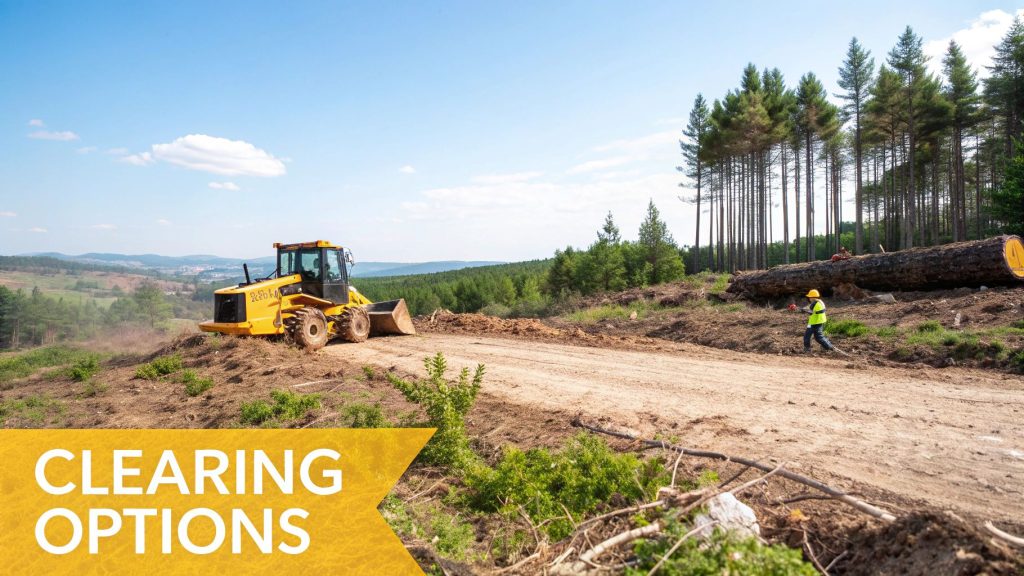
This is the classic, old-school approach most people imagine when they hear “land clearing.” A bulldozer literally pushes everything over—trees, brush, stumps, and all—and shoves it into massive piles for disposal later on. It’s undeniably fast and gets the job done, particularly for wide-open tracts destined for major construction projects.
But that speed comes with a steep price. Bulldozing is incredibly rough on the land, scraping away irreplaceable topsoil and compacting the ground beneath. It also creates a huge new problem: giant debris piles that have to be burned or hauled away, which tacks on significant costs for transport and landfill fees.
Forestry Mulching An Eco-Friendly Alternative
Forestry mulching is a much smarter, more modern way to clear land, and it’s become incredibly popular for good reason. A single machine, fitted with a powerful mulching head, grinds up trees and brush exactly where they stand. It instantly turns unwanted vegetation into a nutrient-rich, protective layer of mulch spread across your property.
This approach is far less invasive than bringing in the bulldozers, and the benefits are huge:
- No Debris Hauling: Since everything is processed right on-site, you completely sidestep the cost and logistical nightmare of hauling debris away.
- Soil Health: That layer of fresh mulch is pure gold for your soil. It prevents erosion, helps the ground retain moisture, and slowly breaks down to feed the soil with organic matter.
- Minimal Ground Disturbance: Mulchers have a much lighter footprint than heavy dozers, which means the precious topsoil and the root systems of any trees you want to keep are left undisturbed.
Forestry mulching turns a major expense—debris disposal—into a major asset for your land. By returning organic matter to the ground, it sets your property up for healthier future growth while saving you money.
Because this method rolls clearing and disposal into one highly efficient step, it’s often one of the most cost-effective solutions out there. We dive deep into the numbers in our guide to the forestry mulching cost per acre.
Manual and Selective Clearing
Sometimes, you need a surgeon’s touch, not a sledgehammer. For smaller lots, ecologically sensitive areas, or projects requiring precision, manual clearing is the answer. This involves a skilled crew using chainsaws, brush cutters, and other hand tools to carefully remove specific trees and undergrowth while leaving desirable plants untouched.
This is the perfect method for properties bordering wetlands, for thinning out an overgrown patch of woods, or for carving out beautiful walking trails without leveling the whole area. It’s definitely more labor-intensive and takes more time, but it offers unmatched precision with the lowest possible environmental impact.
Comparing Land Clearing Methods
So, how do you decide? Choosing the right land clearing method is about balancing your project goals, budget, and concern for the land’s future health. Each technique offers a different set of trade-offs.
To make it easier to see how these common methods compare, we’ve put together a simple table that breaks down their best uses, typical costs, and environmental footprints.
| Method | Best For | Average Cost | Environmental Impact |
|---|---|---|---|
| Bulldozing | Large-scale construction prep, rapid clearing | $2,500 – $6,000+ per acre | High |
| Forestry Mulching | Most projects, soil preservation, budget-conscious | $1,500 – $4,500 per acre | Low |
| Manual Clearing | Sensitive areas, small lots, selective thinning | Varies widely ($3,000+) per acre | Very Low |
Ultimately, the best method for your land depends entirely on your vision for it. The smartest move you can make is to talk through these options with an experienced contractor. They can help you align your goals with the most effective, efficient, and affordable technique for your specific piece of property.
Real-World Florida Land Clearing Scenarios
The numbers are one thing, but seeing how they play out in the real world is what truly helps you budget. Every piece of land in Central Florida has its own unique mix of vegetation, terrain, and challenges that will shape the final quote.
To give you a clearer picture, let’s walk through three common scenarios we see every day. Each one breaks down the estimated costs and shows how different project goals and property conditions lead to very different price tags.
Scenario 1: The Overgrown One-Acre Residential Lot
Picture a one-acre lot in a growing neighborhood, one that’s been left to its own devices for years. It’s now a tangled mess of dense, invasive Brazilian pepper, thick underbrush, and stubborn palmetto clumps—a classic Florida headache. The goal is simple: clear the whole thing for a new home build.
The good news? The land is mostly flat and easy to get to from a paved road. The bad news? The sheer density of the vegetation makes this a medium-to-heavy clearing job.
The biggest hurdle on a lot like this isn’t a few big trees; it’s the solid wall of invasive growth. The key to staying on schedule and on budget is getting rid of all that material as efficiently as possible.
For a situation like this, forestry mulching is almost always the best tool for the job. It completely sidesteps expensive hauling fees by grinding up all the vegetation right where it stands. That overgrown mess is turned into a natural, soil-stabilizing layer of mulch. Of course, before you start, you’ll need a solid game plan; our guide on clearing land for construction can help you map out every step.
Sample Cost Breakdown:
- Initial Site Prep & Permitting: ~$400 (This covers basic permit fees and our initial site assessment).
- Forestry Mulching Services: ~$3,200 (Includes the operator and machine time to shred all brush, small trees, and palmettos).
- Stump Grinding (Optional): ~$600 (For any larger, isolated stumps that have to go before the foundation is poured).
- Total Estimated Cost: $3,800 – $4,200
Scenario 2: The Five-Acre Pasture Conversion
Now, let’s imagine a bigger, five-acre piece of land that the new owner wants to turn into a working pasture for horses or cattle. The property has some scattered pine trees, a few patches of brush, and dozens of old stumps left over from logging years ago. The mission is to create an open, safe field for grazing.
Getting equipment in isn’t too hard, but the property’s size and the sheer number of stumps completely change the scope of work. The owner also wants to keep a handful of mature oaks along the fence line for shade, which requires a more careful approach.
This project needs a one-two punch: selective tree removal for the pines and a heavy-duty stump grinding operation to make the field usable. After that, forestry mulching can make quick work of the remaining brush.
Sample Cost Breakdown (Per Acre):
- Selective Tree & Brush Clearing: ~$1,200 per acre (A mix of hand-felling the larger pines and mulching the brush).
- Extensive Stump Grinding: ~$800 per acre (The high stump count means a lot of machine time).
- Debris Management (Mulching): Included in the clearing cost.
- Total Estimated Cost (Per Acre): $2,000 – $2,500
- Total Project Estimate (5 Acres): $10,000 – $12,500
Scenario 3: The Sensitive Wetland Buffer Zone
For our last example, think about a three-acre property that backs up to a protected wetland. The owner’s goal isn’t a total clear-cut; they just want to create a walking trail and thin out the overgrown vegetation for a better view, all without harming the sensitive ecosystem.
This kind of job is all about precision and a light touch. Heavy equipment like bulldozers is completely off the table.
The only way to do this right is with manual and selective clearing. A skilled crew has to go in with chainsaws and handheld tools to carefully take out specific invasive plants and undergrowth. They have to preserve the native species and avoid compacting the soil anywhere near the wetland boundary. As you can imagine, this is the most labor-intensive method.
Sample Cost Breakdown:
- Environmental Consultation & Permitting: ~$1,000+ (This is often required for any work near protected wetlands).
- Manual Clearing Labor: ~$3,500 per acre (This reflects the much higher cost of skilled, careful, manual work).
- Debris Hauling: ~$700 per acre (Since on-site mulching might disturb the area, the debris has to be carried out and hauled away).
- Total Estimated Cost (Per Acre): $5,200+
How to Get an Accurate Land Clearing Quote
Getting a spot-on quote for your land clearing project isn’t about guesswork—it’s about solid preparation. Think of it like gathering all your ingredients before you start cooking. When you have the right information upfront, the final dish—your quote—comes out just right, with no costly surprises.
The clearer the picture you can paint for a contractor, the faster and more accurately they can nail down the cost to clear an acre of land for your specific job. A little homework before you pick up the phone empowers your contractor to give you a number you can actually budget for, sidestepping those frustrating delays and unexpected bills down the line.

Your Pre-Quote Preparation Checklist
Before you even think about calling for an estimate, grab a notepad and walk your property. Ticking off these key items will make the whole process smoother and get you the essential information any professional clearing company is going to ask for.
- Know Your Property Boundaries: A vague idea of where your property ends just won’t do. You need a property survey to clearly mark the exact corners of the area you want cleared. This is non-negotiable; it prevents accidental clearing on a neighbor’s land and guarantees the quote is for the right acreage.
- Identify All Obstacles (Above and Below Ground): Walk the entire plot and take notes on everything. That means the obvious stuff like old fences, junk piles, or dilapidated sheds, but more importantly, the hidden hazards. You absolutely have to locate and mark any septic tanks, wellheads, underground pipes, or utility lines. Hitting one of those with a bulldozer is a nightmare you can easily avoid with a little prep.
- Define Your Vision and Goals: What’s the end game for this land? Are you clearing a pad for a new home, creating a pasture for horses, or just trying to beat back invasive plants to open up the view? A clear goal helps the contractor recommend the right method, which is often the most cost-effective one, too.
A well-prepared landowner is a contractor’s best partner. When you can point to marked boundaries, identified hazards, and a clear end goal, you’ve already eliminated most of the variables that lead to inaccurate estimates.
Understanding Local Rules and Regulations
Finally, a quick call to your local county or city planning department can save you from some major headaches. You’ll want to ask about any permits needed for land clearing, tree removal, or any work happening near protected areas like wetlands.
Knowing these requirements beforehand shows you’re on top of things and helps factor potential permit fees into the initial conversation. For more specific advice, our homeowner’s guide to Florida land clearing near you dives deeper into navigating these local rules.
By taking these steps, you’re no longer just someone asking for a price. You become an informed partner ready to kick off a successful project. This preparation is the single best thing you can do to get a quote that isn’t just a number, but a reliable roadmap for your project’s budget.
Smart Ways to Manage Your Project Budget
Controlling the cost to clear an acre of land doesn’t mean cutting corners on quality or safety. It’s all about making smart, informed decisions right from the get-go. With a bit of strategy, you can have a huge say in your project’s final price tag and make sure you’re getting the best possible value.
The single most powerful move you can make is to get multiple, detailed quotes. Don’t just accept the first number that comes your way. Inviting at least three reputable companies to walk your property lets you compare not just the bottom line, but also their proposed methods, timelines, and how well they seem to grasp your specific needs.
Take Control with Smart Preparation
Looking for a straightforward way to trim your costs? Handle some of the simple prep work yourself, if you’re able to. Contractors bill for their time, and every minute they spend on tasks you could have done is another minute on your invoice.
Before the crew arrives, think about tackling these minor obstacles:
- Remove old fencing: Pulling down and stacking old wire or wooden fences is a huge help and clears the path for heavy machinery.
- Clear away trash and debris: Get rid of those old tires, scrap metal, or any other junk scattered around the property.
- Document the site: Snap some clear photos and videos of the area to share with contractors. It gives them a much better idea of the job before they even set foot on your land.
This “sweat equity” might feel like a small thing, but it saves valuable machine and operator hours, which translates directly into real savings for you.
A detailed quote is more than just a price—it’s a plan of attack. It shows you how a contractor thinks and whether they’ve actually considered the unique challenges of your property. Vague, one-line estimates are a major red flag.
Discuss Debris Disposal Options
What to do with all the cleared trees and brush is a major line item on any land clearing quote. Hauling everything away is almost always the most expensive route because of the labor, equipment time, and landfill tipping fees involved. This is where a simple conversation with your contractor can unlock some serious savings.
Be sure to ask specifically about the cost difference between hauling and processing the debris on-site. Forestry mulching, for instance, totally eliminates disposal fees by turning trees and brush into a beneficial layer of ground cover right where they stand. While the upfront machine rate might seem similar, the all-in cost is often much lower since you aren’t paying to truck and dump tons of material. By being an active partner in this decision, you can find the most efficient and budget-friendly path forward for your project.
Common Questions About Land Clearing Costs
When you’re staring down a land clearing project, the questions can pile up fast. From wrestling with local rules to figuring out what’s really included in a quote, getting straight answers is the only way to feel good about your investment. This section tackles the most common questions we hear from landowners right here in Florida.
Getting a handle on this stuff ahead of time means no surprises down the road. It helps you ask the right questions and really understand what you’re looking at when contractors hand you their estimates.
Do I Need a Permit to Clear Land in Florida?
More often than not, the answer is yes. Permit requirements can change dramatically from one county to the next, especially if your property is anywhere near wetlands or a conservation area. The same goes for if you’re planning to take down protected trees, like those beautiful mature live oaks.
Your best first step is always to check with your local planning and zoning department before a single machine touches your property. A reputable land clearing company will already know the local ropes and can usually help you navigate the permitting process to make sure everything is buttoned up and legal.
Is It Cheaper to Clear Land in Winter or Summer?
Here in Florida, the season absolutely makes a difference. The dry season, which generally runs through winter and spring, is the sweet spot for clearing land. The ground is much firmer, which means less risk of heavy equipment getting bogged down and tearing up your soil.
While it’s true that some contractors might be busier during these prime months, scheduling your project for the dry season can save you from weather delays and the extra costs that come with slogging through the mud and muck of our summer rainy season.
Does the Cost Include Stump Removal?
This is a huge one, so make sure you ask. The answer isn’t always yes. A basic land clearing job often involves just pushing over trees and brush, which can leave a field of stumps and root systems still in the ground.
Key Takeaway: Always get it in writing whether stump grinding or complete stump removal is part of the base price or a separate line item. This one detail can drastically change the final cost to clear an acre of land and is absolutely crucial if you’re preparing a site for new construction.
It really puts today’s efficiency into perspective when you look back at how things used to be done. In the 19th century, before modern machinery, clearing a single acre of forest took an average of 20 man-days of back-breaking labor just to cut, pile, and burn everything. You can take a deeper dive into these historical labor requirements and see just how far technology has brought us by reading the full research on 19th-century land clearing. It’s a great reminder of the value packed into a professional, modern operation.
Ready to turn your overgrown lot into a clean slate? The team at Palm State Clear Cut has the right equipment and local expertise to handle any Central Florida land clearing project, from forestry mulching to full-scale site prep. Contact us today to schedule your free, no-obligation quote!