
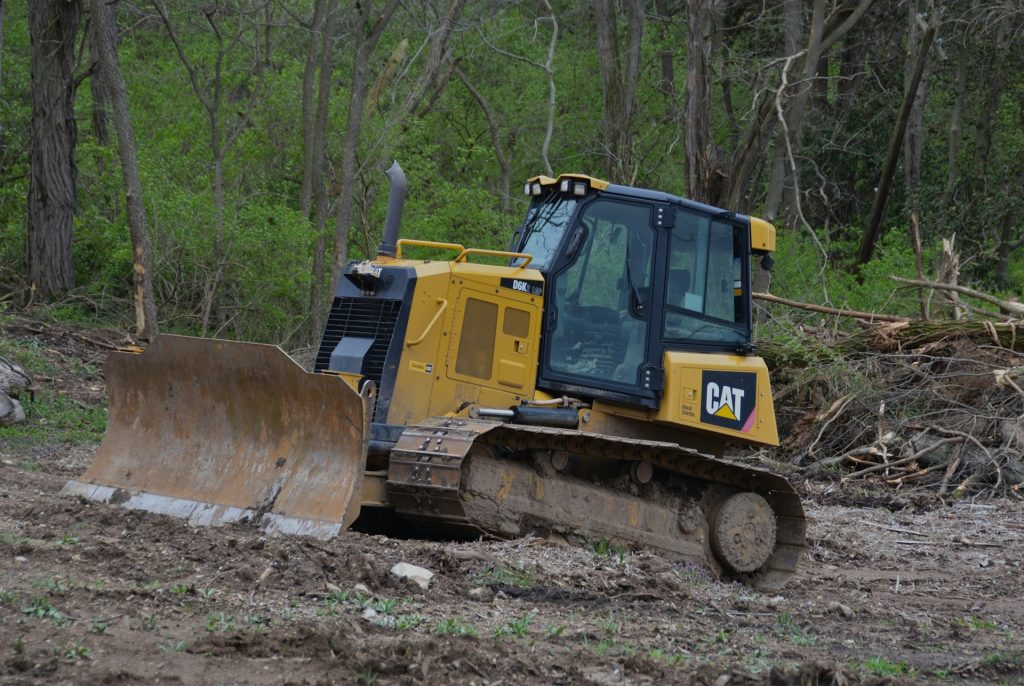
Embarking on a land clearing project in Central Florida is a lot more than just firing up the bulldozers. The real work, the foundational stuff that prevents massive headaches down the road, starts long before any dirt gets moved. This is the phase of diligent research, professional assessments, and securing the right permissions to make sure your project gets off the ground without costly delays, safety issues, or run-ins with regulators.
Once the trees and brush are down, most Florida construction sites need site preparation and grading before building can begin. Palm State Clear Cut handles clearing and prep together across Central Florida.
Your Pre-Clearing Checklist Before Breaking Ground
Jumping the gun on land clearing is a classic, and often expensive, mistake. Before a single tree comes down, you need to walk through a few critical due-diligence steps. This isn’t just bureaucratic red tape; it’s about protecting your investment, keeping everyone safe, and setting your project up for a smooth timeline. Skipping this homework can lead to surprise expenses, legal trouble, and major setbacks.
Think of this checklist as the game plan for your entire clearing operation. It’s the strategic thinking that dictates every move you’ll make later, from picking the right equipment to managing how water flows across your property.
Conduct a Professional Land Survey
First things first: you absolutely need to know what you’re working with. A professional land survey isn’t optional—it’s essential. It nails down your precise property lines, heading off any potential disputes with the neighbors before they can even start.
But it goes deeper than that. A good topographical survey maps out the contours, slopes, and natural features of your land. This data is gold when you’re planning for drainage, figuring out where the foundation will sit, or laying out a driveway. The survey will also be your first alert for any sensitive areas that need to be handled with care, or avoided altogether, like:
- Wetlands: These are heavily protected under both federal and state laws. Trampling through wetlands without the right permits will bring your project to a screeching halt and land you in hot water with some serious penalties.
- Easements: These are legal rights-of-way that give utility companies or others access to a portion of your property. They can put some serious restrictions on where you can build.
- Protected Habitats: Florida is teeming with protected species. A survey can flag potential habitats that might trigger the need for a more in-depth environmental assessment.
Demystify the Permitting Maze
Wading through the world of permits can feel like a full-time job, but it’s a non-negotiable part of clearing land for construction legally. The rules can change dramatically depending on your city, county, and the size of your project. Kicking off this process as early as possible is key, because getting approvals can sometimes take weeks, if not months.
One of the biggest rookie mistakes is thinking one permit covers everything. The reality is you might need separate permits for land disturbance, tree removal, septic systems, and the actual construction—and each could come from a different office.
Here in Central Florida, you’ll generally be dealing with permits at both the local and state levels, which often means starting with your county’s planning and zoning department. They’ll have the specific applications and guidelines you need to follow. If you’re taking down a lot of mature trees, it’s also a good idea to understand the best time of year for tree removal in Central Florida to stay in line with local rules and work with the seasons, not against them.
Locate All Underground Utilities
Hitting an underground utility line is one of the most dangerous and expensive mistakes you can make on a job site. Nick a water main, and you’ve got an instant swamp. Slice a fiber optic cable, and you could knock out internet for the whole neighborhood. And striking a gas or power line? That can be downright catastrophic.
Thankfully, avoiding this is pretty straightforward. Before any digging, grading, or deep clearing begins, you have to contact Sunshine 811. It’s a free service that gets all the local utility companies to come out and mark the approximate locations of their buried lines—electricity, gas, water, sewer, you name it. This isn’t just a good idea; it’s required by law and is a basic safety step for any excavation.
Complete a Thorough Site Assessment
Finally, you need a professional to put eyes on the property. A comprehensive site assessment from an experienced land clearing contractor brings all the pieces together. While a survey gives you the hard data, an on-site assessment gives you the actual strategy.
A seasoned pro will walk the land to get a feel for:
- Vegetation Density: Are we talking light brush and palmettos, or a dense forest of mature oaks?
- Soil Conditions: Is the ground sandy, loamy, or mostly clay? This makes a huge difference in equipment choice and erosion risk.
- Accessibility: How are we getting heavy machinery in, out, and around the site safely?
- Drainage Patterns: Where does the water want to go naturally, and how will clearing the land change that?
This hands-on evaluation is what really helps nail down the most effective and budget-friendly clearing method for your specific piece of land.
Choosing the Right Land Clearing Method for Your Project
Picking the right way to clear your land isn’t a simple, one-size-fits-all decision. The method you go with directly hits your project’s budget, timeline, and what your property looks like when the dust settles. Getting this right from the start saves you from costly headaches down the road and makes sure your land is genuinely ready for whatever comes next.
Every piece of property has its own personality. A parcel choked with thick Florida palmetto scrub demands a completely different game plan than one with a few scattered, mature oak trees. Let’s walk through the most common techniques to figure out which one makes the most sense for your goals.
This chart is a great reminder of the crucial prep work we talked about earlier—the stuff you absolutely have to nail down before you even think about which machine to bring on-site.
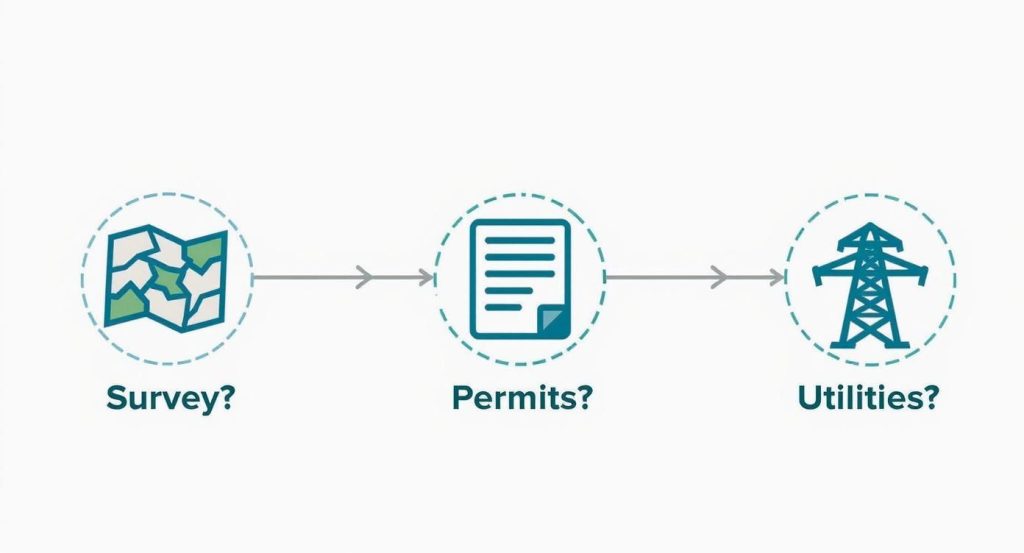
As the graphic shows, getting your surveys done, permits secured, and utilities marked are the non-negotiable first steps. Only then can the real on-the-ground work begin.
To help you compare your options at a glance, we’ve put together a quick comparison of the most common methods we see used here in Central Florida.
Comparing Common Land Clearing Techniques
This table breaks down the key land clearing methods, looking at what they’re best for, what they might cost, and their overall impact on the environment.
| Method | Best For | Average Cost (Per Acre) | Environmental Impact | Debris Handling |
|---|---|---|---|---|
| Forestry Mulching | Dense underbrush, selective tree removal, improving soil health, and projects where hauling debris is impractical. | $400 – $1,500 | Low. Mulch layer prevents erosion and enriches soil. Minimal soil disturbance. | No hauling needed. Debris is converted to mulch and left on-site. |
| Dozer/Excavator | Heavily forested lots, large tree removal, projects requiring significant grading and earthmoving. | $700 – $5,000+ | High. Significant soil compaction and disturbance. Increases erosion risk. | Creates massive debris piles that must be burned or hauled away. |
| Stump Grinding | Removing individual stumps below ground level for lawns, landscaping, or driveways. | $3 – $5 per inch of stump diameter | Low. Localized disturbance around the stump area only. | Produces wood chips that can be used as mulch or easily removed. |
| Full Stump Removal | Clearing areas for building foundations or structures where no root interference can be tolerated. | Varies greatly; often part of a larger clearing package. | High. Leaves a large hole that requires backfilling and compacting. | The entire stump and root ball must be hauled off-site. |
Looking at the options side-by-side really clarifies the trade-offs. Your choice ultimately depends on balancing your budget with your long-term goals for the property.
Forestry Mulching: The Eco-Friendly Powerhouse
There’s a good reason forestry mulching has become so popular here in Florida. The whole process is incredibly efficient—a single machine comes in, grinds up everything from small brush to medium-sized trees, and spreads the resulting mulch right back onto the ground.
The real game-changer is what you don’t have to deal with: massive piles of debris. By turning unwanted vegetation into a natural, protective ground cover, forestry mulching gives you some serious advantages:
- No Hauling Costs: Debris is handled right on-site, which means you can scratch the expensive step of loading and trucking it all to a landfill.
- Healthier Soil: That mulch layer is fantastic for retaining moisture, stopping topsoil from washing away, and slowly breaking down to feed the soil.
- Faster Project Turnaround: With no debris piles to burn or haul, your land is ready for the next step much, much sooner.
This method is perfect for when you need to be selective about what you clear, tame dense undergrowth, or prep a site with minimal soil disturbance. If you want to see the equipment up close, our guide to underbrush clearing machines is a great place to start.
Traditional Dozer and Excavator Methods
When you picture old-school land clearing, you’re probably thinking of bulldozers and excavators. For sheer, raw power, these heavy-duty machines can’t be beaten. They are often the only realistic choice for projects that involve clearing huge, mature trees or moving a lot of earth for grading.
This classic “push-over and pile” approach is fast and effective on heavily wooded lots. But it definitely comes with its own set of challenges. The process leaves behind enormous piles of logs, stumps, and root balls that have to be dealt with—either by hauling them away, burning them (if your local rules allow), or grinding them up.
We often see this with developers who need a completely clear, perfectly graded pad for a new commercial building. In that scenario, the power of an excavator to rip out massive stumps and a dozer to level the terrain is absolutely essential, even with the headache of debris management.
Stump Grinding and Removal for a Clean Slate
Once the trees are down, you’re still left with the stumps. Leaving them in the ground can cause major issues for foundations, driveways, or even just basic landscaping. You’ve basically got two ways to handle them: grinding or full removal.
- Stump Grinding: This involves using a specialized machine to chew the stump down several inches below the soil. It’s much less invasive than pulling the whole thing out and leaves you with a pile of wood chips you can use elsewhere.
- Stump Removal: This means yanking the entire stump and its root ball clean out of the ground, usually with an excavator. It leaves a big hole that needs to be filled and compacted, but it guarantees that no roots will get in the way of future construction.
Deciding between the two really boils down to what you plan to do with the land. If it’s going to be a lawn, grinding is usually fine. But if you’re pouring a foundation for a building, complete removal is the only way to go for a truly stable base.
Figuring Out Debris Management and Site Cleanup
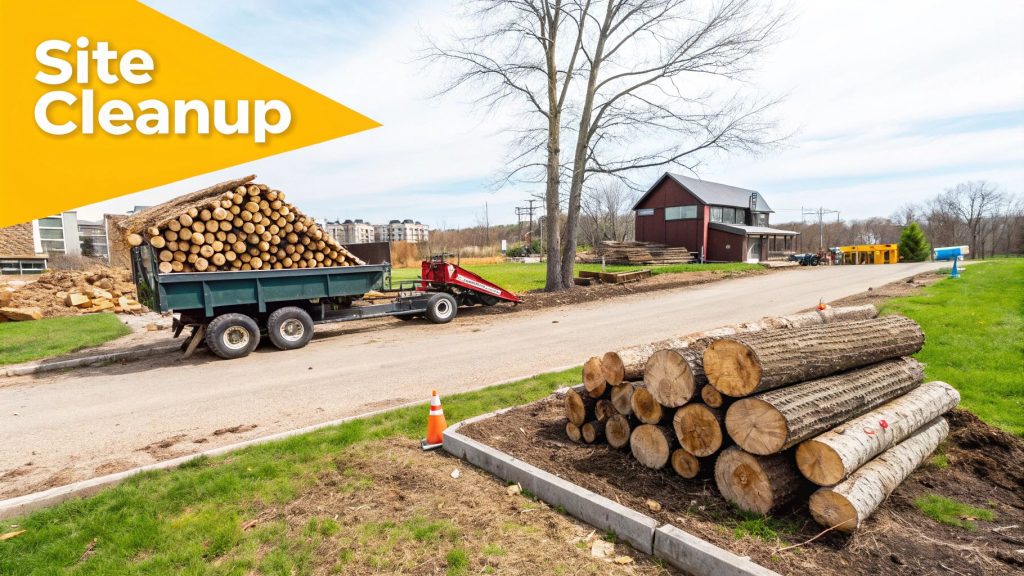
Once the heavy machinery goes quiet, you’re left with a wide-open piece of land and a new challenge: what to do with the mountain of trees, stumps, and brush left behind. This isn’t just about tidying up; it’s a critical step that can throw a wrench in your timeline and budget if you don’t plan for it.
Letting massive piles of organic debris sit around is almost never a good idea. They can quickly become a haven for pests, a serious fire hazard, and a physical barrier to grading or foundation work. How you handle the cleanup after clearing land for construction really comes down to local rules, how much debris you have, and what your budget looks like.
Your Main Options for Debris Disposal
When it comes to dealing with the aftermath, you generally have a few different ways to go. Each has its own price tag and environmental impact, so it’s something you should think about before the first tree even comes down.
Any good contractor will bake debris management into their quote, but knowing what’s involved helps you ask the right questions.
- Haul It All Away: This is the most direct approach. Everything gets loaded into dump trucks or roll-off containers and taken to a proper facility. It’s effective, but it’s usually the priciest option because of hauling costs and the “tipping fees” landfills charge.
- Process It On-Site: This is where you turn the debris into something useful right on your property. A large-scale wood chipper or grinder can turn trees and brush into mulch, which is perfect for spreading to control erosion or for future landscaping.
- Controlled Burning: For some rural properties in Florida, a prescribed burn is a cost-effective way to get rid of huge amounts of wood. But this is a tightly controlled process. You absolutely need a burn permit from the Florida Forest Service, and there are strict rules about weather conditions and how far the pile is from any buildings.
In our experience here in Central Florida, a hybrid approach often makes the most sense. We might haul off the big, awkward stumps and root balls but chip the smaller trees and brush into mulch we can use to stabilize the soil right there on the property.
Getting a Florida Burn Permit
If a controlled burn sounds like a good fit, you need to plan ahead. You can’t just light it up. The Florida Forest Service is serious about preventing wildfires, and getting a permit is the non-negotiable first step.
An official will come out to assess your pile, check its location relative to roads and structures, and look at the weather forecast. You often won’t get the final “go-ahead” until the day of the planned burn, so you have to be ready to move when the conditions are right. Trust me, the fines for burning without a permit are steep—it’s not worth the risk.
Hiring Haulers and Guessing the Volume
If you’re hauling debris off-site, you need to get your logistics in order. It’s more than just calling a guy with a truck.
First, you need a decent estimate of the debris volume, which is measured in cubic yards. An experienced contractor can get a pretty good idea just by looking, but it all depends on the type and density of the vegetation. An acre of thick, mature oaks is going to create a whole lot more debris than an acre of scattered pines and palmettos.
When you hire a hauling service, make sure they have the right tools for the job. You’ll need a grapple truck for heavy logs and stumps. For lighter brush, a big roll-off dumpster might work. Getting an accurate estimate and the right equipment lined up from the start is the key to keeping the cleanup phase from getting out of hand and over budget.
Preventing Erosion and Stabilizing Your Site Post-Clearing
Once the heavy machinery rolls off your property, you’re left with a clean slate. But that wide-open space is also incredibly vulnerable. Here in Florida, all it takes is one of our classic afternoon downpours to turn that beautiful lot into a muddy mess, washing away your valuable topsoil and dumping sediment into nearby waterways.
This isn’t just an environmental problem; it can completely undermine the foundation of your future project.
Taking immediate steps to control erosion and stabilize the soil isn’t just a good idea—it’s a non-negotiable part of the job. It’s a critical requirement for environmental compliance and a smart move to protect your investment. Skip this, and you could be looking at costly fines, frustrating project delays, and some serious drainage headaches down the road.
Your First Line of Defense: Sediment Barriers
Before you even think about the next phase, you have to contain the site. The entire goal here is to keep soil and sediment on your property, where it belongs, and out of storm drains, streams, and wetlands. This is where sediment barriers become your most important tool.
The go-to solution for most sites is a professionally installed silt fence. This is a temporary barrier made from a special geotextile fabric that’s stretched between sturdy wooden or metal stakes. When installed along the downhill perimeter of your cleared area, it lets water pass through slowly while trapping all those loose soil particles.
- Proper Installation is Key: A poorly installed silt fence might as well not be there at all. The bottom of the fabric has to be buried in a trench that’s at least 6 inches deep and then backfilled. This creates a solid seal with the ground, which is essential for it to work.
- Regular Maintenance: Silt fences aren’t a “set it and forget it” solution. They need to be checked regularly, especially after a heavy rain. Look for tears, collapsed sections, and be prepared to remove built-up sediment so they can keep doing their job.
For spots with more concentrated water flow, like ditches or small channels, you might see contractors use wattles (those straw-filled tubes) or erosion control logs to slow the flow and capture sediment.
Temporary Ground Cover Solutions
A silt fence protects the perimeter, but what about the huge expanse of bare soil across the rest of the site? Leaving it exposed is basically an open invitation for wind and water to wreak havoc. You need to get a temporary protective cover down as quickly as possible.
Hydroseeding is a popular and extremely effective method we see a lot. It involves spraying a slurry of water, seed, fertilizer, and a binding mulch directly onto the soil. The mulch gives you immediate protection, and the seeds (usually a fast-growing grass mix) quickly sprout to establish a root system that locks the soil in place.
Another great option is simply applying a layer of straw mulch or hay. Spreading a few inches of straw across the bare ground acts like a shield, softening the impact of raindrops, slowing down runoff, and helping the soil retain moisture.
While land clearing is essential for development, it’s part of a broader global picture of land-use change. Globally, the rate of deforestation—a primary driver for clearing land for construction, agriculture, and other uses—has slowed over the past 25 years, but remains alarmingly high. According to the most recent FAO Global Forest Resources Assessment in 2025, the world is losing 10.9 million hectares of forest each year. Read the full report on global deforestation from the FAO to understand the bigger context.
Establishing Permanent Stormwater Management
Temporary fixes are perfect for the construction phase, but you need a long-term plan to manage stormwater once the project is finished. This usually means reshaping the land to control how water moves across your property for good.
Final grading is probably the most critical piece of the puzzle. Your site needs to be carefully sloped so that water flows away from your building foundation and toward designated drainage areas. This simple step prevents the pooling water that can cause so many structural nightmares.
From there, you can add more permanent features:
- Swales: Think of these as shallow, wide, vegetated channels. They’re designed to slow stormwater down, trap pollutants, and give the water a chance to soak back into the ground.
- Retention or Detention Ponds: On larger properties, these engineered ponds are built to collect runoff. Retention ponds always hold water, while detention ponds just store it temporarily and release it slowly after a storm.
Properly stabilizing your site after clearing land for construction is about so much more than just following the rules. It’s about protecting the value of your land and building a stable, resilient foundation for whatever you plan to build next.
Budgeting for Your Land Clearing Project
Figuring out what it will really cost to clear your land is often the biggest hurdle for property owners. It’s one thing to get a ballpark idea, but the final invoice can be a real shock if you haven’t accounted for all the moving parts.
Think of a clear, realistic budget as your best defense against financial stress. It keeps the project on track and ensures there are no nasty surprises. The final price isn’t just about how many acres you have; it’s a complex equation based on what’s on the land, the lay of the land, and the specific clearing method you go with. Getting a handle on these factors is the first step toward building an accurate financial picture.
Key Factors That Drive Your Project Costs
Every piece of land is unique, and so is the price tag to clear it. When a contractor hands you a quote, that number is built on a careful assessment of several key variables on your property. Understanding these will help you see why one estimate might be worlds apart from another.
The biggest cost drivers are almost always:
- Total Acreage: This one’s pretty obvious. Clearing ten acres will cost more than clearing one. But here’s a pro tip: the cost per acre often drops on larger jobs. That’s because once the heavy equipment is on-site, the crew can work more efficiently over a longer period.
- Vegetation Density and Type: There’s a huge difference between clearing a patch of sandy soil with a few scattered palmettos and wrestling with a dense forest of mature hardwood oaks. Heavier, thicker vegetation demands more powerful machinery, takes more time, and creates a mountain of debris to deal with.
- Terrain and Accessibility: A flat, dry, open lot is a contractor’s dream—it’s the easiest and cheapest scenario. But if your land is sloped, swampy, or tough for heavy equipment to even get to, you can expect labor and equipment costs to climb to handle the challenge.
- Chosen Clearing Method: As we’ve covered, forestry mulching, traditional dozer work, and stump grinding all have different price points. The right method for your goals will directly impact the bottom line. For a much deeper dive, check out our guide that explains the cost of forestry mulching per acre.
Uncovering the Hidden Expenses
The contractor’s main fee is just one piece of the puzzle. A handful of other “soft costs” and related fees can add up fast if you’re not ready for them. It’s crucial to ask if these are included in a quote or if they’ll be billed separately.
Make sure you account for these potential expenses:
- Permit Fees: Your local county or city will have its own set of fees for things like land disturbance, tree removal, and sometimes even burn permits. These can range from a couple of hundred dollars to several thousand.
- Debris Hauling and Tipping Fees: If your clearing method leaves behind piles of debris that need to be hauled off-site, this is a major expense. You’re paying for the trucks, the labor, and the “tipping fee” at the landfill, which is typically charged by weight.
- Equipment Mobilization: Contractors usually charge a one-time fee to get their heavy machinery to and from your property. This “mob fee” is based on the distance and the size of the equipment needed for your job.
- Erosion Control Measures: The cost to install and maintain things like silt fences, wattles, or to apply hydroseed is another line item you need to have on your radar.
The financial cost of clearing land for construction is highly variable and depends on geography, terrain, vegetation, and the scale of the project. In 2025, advanced autonomous machinery has been estimated to reduce labor costs by up to 40% compared to traditional methods used just five years prior, but the initial capital outlay for such technology remains high. Discover more insights about the key factors influencing land clearing costs on Farmonaut.com.
Getting Accurate and Itemized Quotes
To build a budget you can actually count on, you need solid numbers from potential contractors. A vague, one-line estimate is a huge red flag. A true professional will have no problem giving you a detailed, itemized quote that breaks everything down.
When you ask for a quote, make sure it clearly spells out:
- Scope of Work: It should say exactly what areas will be cleared and what methods will be used. For example, “Forestry mulch 2.5 acres in the western parcel” or “Grind 15 oak stumps.”
- Cost Breakdown: Look for separate line items. You want to see the costs for labor, equipment, mobilization, and disposal. This transparency is the only way to compare different quotes fairly.
- Handling of Debris: The quote absolutely must state how debris will be managed. Will it be mulched and left on-site, hauled away, or piled up for you to burn later?
- Exclusions: A good quote also tells you what’s not included, like permit fees or the cost of a boundary survey. This simple step prevents a lot of headaches and arguments down the road.
By getting multiple, detailed quotes and understanding all the potential costs hiding in the shadows, you can create a budget that reflects the true scope of your project. This foresight is what turns an overgrown lot into a build-ready site without the stress of financial surprises.
Got Questions About Clearing Land in Florida? We’ve Got Answers.
When you’re staring at an overgrown lot, a lot of questions pop up. Turning that raw land into a build-ready site can feel like a huge undertaking, but getting clear, straightforward answers makes the whole process less intimidating. We hear the same questions from property owners all the time, so let’s tackle them head-on.
Every piece of property has its own personality and its own set of challenges, but this should give you a solid foundation for what to expect.
How Long Does Land Clearing Usually Take?
This is the big one, and the honest answer is: it depends. The timeline can swing from a couple of days to a few weeks, all based on the size of your lot and just how wild it is.
For a pretty standard one-acre lot for a single-family home—think light brush and some scattered trees—a good crew can often knock it out in one to three days. That usually covers everything from clearing the undergrowth to felling the trees and grinding down the stumps.
Now, if you’re dealing with a bigger tract, say five or more acres of dense Florida jungle with mature hardwoods and thick palmetto scrub, you’re looking at a project that could easily stretch a week or more. The method we use matters, too. Forestry mulching, for instance, is a much faster game than the old-school way of cutting, piling, and hauling everything away.
Can I Keep Some of the Trees on My Property?
Yes, absolutely—and we almost always recommend it! There’s no need to wipe the slate completely clean. Selective clearing is the smart way to go, both for the environment and your property value.
Keeping mature, healthy trees, especially those beautiful Florida live oaks, adds instant character and real monetary value to your future home.
The trick is to have a solid plan before the first machine rumbles onto your property. You’ll want to walk the site with your contractor and physically mark the trees you want to save versus the ones that have to go. When you’re making that “keeper” list, think about:
- Tree Health: Is it strong? Does it look healthy? Prioritize the robust ones.
- Location, Location, Location: Make sure the trees you save won’t cause problems later with your foundation, driveway, or septic system.
- The Right Species: Some native trees are simply tougher and more desirable than others.
A classic mistake we see is leaving a gorgeous oak way too close to the planned foundation. People forget that a tree’s root system is a mirror image of its canopy underground. Those roots can, and will, cause major structural damage down the road. A good rule of thumb is to keep any large trees at least 15-20 feet from where your house will be.
What Is the Best Time of Year to Clear Land in Florida?
Florida’s weather runs the show, and that’s especially true for land clearing. You’ve got the wet season and the dry season, and it makes a huge difference. While we can technically work year-round, the sweet spot is definitely during the drier months, which usually run from late fall through spring (think November to May).
Clearing your land during this window has some major perks:
- The Ground is Firmer: Dry soil can handle heavy equipment. This means less risk of machinery getting bogged down and creating a mess, and it minimizes soil compaction.
- Fewer Rain Delays: Everyone knows about Florida’s summer thunderstorms. Those daily downpours can shut a job down in an instant and turn a worksite into a swamp.
- Safer Working Conditions: Frankly, it’s just safer and more productive for the crew to work when it’s not scorching hot and oppressively humid.
It’s not impossible to clear land in the summer, but it definitely takes more strategic planning. You have to be prepared for muddy conditions and potential delays, which can sometimes bump up the cost.
Ready to turn your overgrown lot into a build-ready property? The team at Palm State Clear Cut has the experience and equipment to handle your project efficiently and professionally. Get your free quote today and take the first step toward breaking ground.