Equipment for Clearing Underbrush: A Practical Guide
- Mike Walker
- Dec 1
- 16 min read
Picking the right equipment for clearing underbrush is what separates a weekend project from a month-long nightmare. Whether you're reclaiming a small backyard from pesky weeds or wrestling acres of wilderness back into shape, your choice of tool is the single most important decision you'll make.
Choosing the Right Tool for the Job
Staring out at an overgrown property can feel like looking at a jungle. It's a tangled mess of vines, stubborn saplings, and thickets so dense you can't see five feet in. It’s easy to feel overwhelmed and not know where to even start.
The secret is simple: match the machine to the mission. Think of it like a chef in a kitchen—you wouldn't use a tiny paring knife on a giant watermelon, and you certainly don't need a massive forestry mulcher to handle a few weeds along the fence line. This one choice impacts everything: your efficiency, your budget, and the final look of your property. Get it wrong, and you're looking at wasted time, money down the drain, and even potential safety risks.
Matching Equipment to Project Scale
So, how do you narrow it down? The best way is to look at three things: the size of your property, how thick the vegetation is, and what the terrain is like. A small, flat yard with some light brush is a world away from a hilly, multi-acre plot choked with mature trees and invasive species.
To make it easier, let's break it down into three common project sizes:
Small-Scale Projects: This is usually anything under an acre. We're talking about clearing out garden beds, cleaning up fence lines, or prepping a small residential lot. The growth is mostly weeds, tall grass, and skinny saplings.
Medium-Scale Projects: These jobs range from one to five acres. Think about maintaining a pasture, carving out new trails, or getting a larger home site ready for construction. The underbrush here is much thicker, with bigger saplings and bushes in the mix.
Large-Scale Projects: Now we're talking five acres or more. This is the heavy-duty work: land development, prepping fields for agriculture, or creating firebreaks. You're dealing with dense woods, mature trees, and often challenging, uneven ground.
This simple breakdown helps you figure out which category your project falls into.

As you can see, there's a clear progression from the small leaf to the big excavator. This visual roadmap gives you a quick answer, pointing you toward the right equipment so you can focus on the tools that actually make sense for your specific situation.
Underbrush Clearing Equipment Selector
To give you a quick cheat sheet, here’s a table that matches the right tools to the job size. Think of it as a starting point to help you zero in on the best options.
Project Scale | Acreage | Primary Equipment | Best For |
|---|---|---|---|
Small-Scale | Under 1 Acre | Chainsaw, Handheld Brush Cutter, Walk-Behind Mower | Tidying up yard perimeters, fence lines, and small, overgrown garden areas. |
Medium-Scale | 1-5 Acres | Skid Steer with Mulching Head, Brush Hog/Rotary Cutter | Clearing small pastures, future home sites, or creating recreational trails. |
Large-Scale | 5+ Acres | Forestry Mulcher, Excavator with Attachments | Large-scale land development, agricultural prep, and creating firebreaks. |
This table should help you quickly identify the kind of machinery we'll be discussing next. As we dive into the specifics of each tool, you'll get a much clearer picture of its strengths, weaknesses, and ideal uses.
When you’re staring down a massive, overgrown property, the game changes. We're not talking about a weekend project anymore; we're talking about bringing in the big guns. For these larger-scale clearing jobs, you need equipment designed to completely reshape the landscape. This is the world of forestry mulchers and excavators with specialized mulching heads.
Think of a forestry mulcher as a sort of "forest blender on wheels." It’s an absolute beast of a machine that doesn't just knock down trees and brush—it pulverizes them right where they stand. With a massive rotating drum armed with steel teeth, it grinds everything from dense palmetto thickets to sizable trees into a layer of natural mulch, all in a single pass.
That one-step process is its superpower. You eliminate the need for separate cutting, piling, hauling, and chipping crews, which makes it incredibly efficient for tackling large acreage. If you want to see exactly how these machines chew through a forest, we've got a full breakdown in our guide on what is forestry mulching and how it transforms landscapes.
When to Bring in the Heavy Machinery
This kind of raw power isn't necessary for every job. Forestry mulchers and large excavators are specialized tools you call on for specific, demanding situations. They're essential when you're facing projects like:
Land Development Prep: Clearing large tracts of land for new residential communities, commercial centers, or industrial parks.
Agricultural Conversion: Taking a wooded plot and turning it into usable pasture or farmland.
Creating Firebreaks: This is a big one here in Central Florida. We carve out wide, clear paths in forested areas to stop wildfires in their tracks.
Right-of-Way Clearing: Maintaining clear, safe corridors for utility lines, pipelines, and access roads that stretch for miles.
A single forestry mulcher can often clear anywhere from one to five acres per day, depending on how thick the vegetation is and what the terrain looks like. That kind of speed makes it the clear winner when time is money and the job is huge.
This isn't just a local need, either. The demand for powerful land clearing equipment is a big deal globally, driven by development and major infrastructure projects. The market was valued at around $3.86 billion in 2025 and it's only projected to grow. This tells you there's a worldwide shift toward more efficient and smarter land management, which keeps pushing the technology forward.
Forestry Mulchers: The Powerhouse of Clearing
A forestry mulcher, whether it's on its own dedicated machine or a powerful skid steer attachment, is the ultimate tool for turning a dense forest into a clean slate in one go.

As you can see, the machine grinds up vegetation on the spot, blanketing the ground with a protective layer of mulch. This is fantastic for preventing immediate soil erosion.
But even these titans have their limits. Their sheer weight can compact the soil if not operated carefully, and they aren't the most nimble machines in tight spots or on really steep hills. The upfront cost to buy or even rent one is significant, so it really only makes sense for projects where that investment pays for itself in efficiency.
Excavators with Mulching Heads
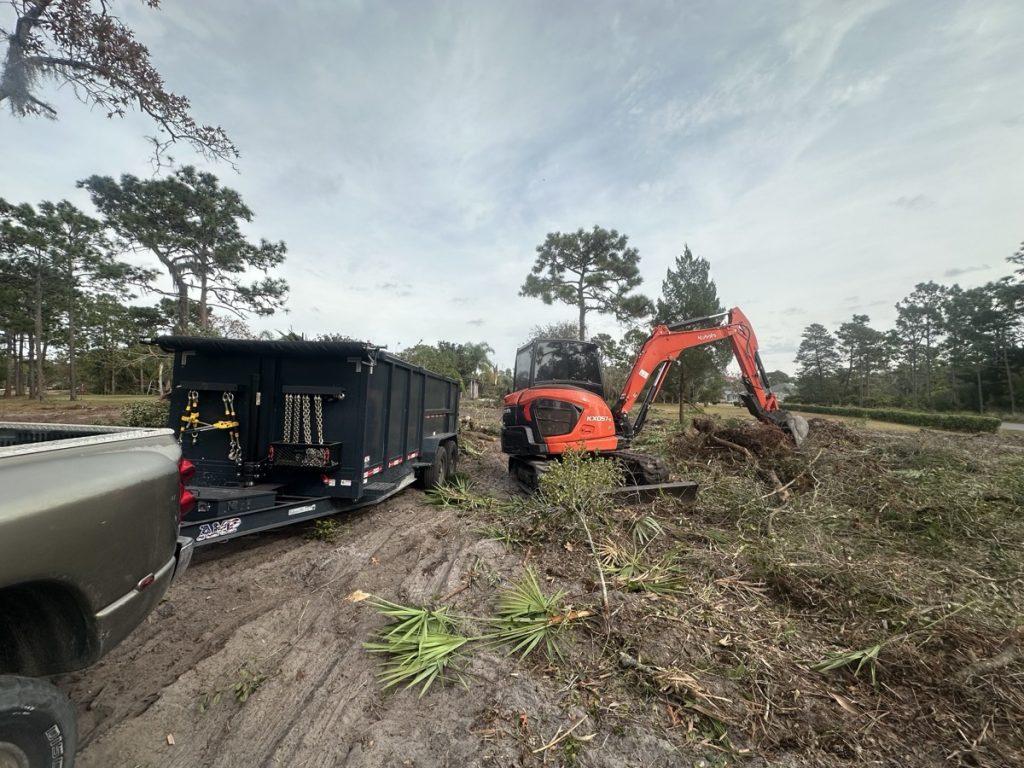
Now, an excavator with a mulching head brings something different to the table: incredible reach and precision. That long hydraulic arm lets an operator clear vegetation on steep banks, across ditches, or in other spots a wheeled machine just can't get to.
This setup is perfect for selectively taking out specific trees or clearing thick brush without tearing up the entire area. It’s the perfect blend of raw power and surgical accuracy, which is a lifesaver on complex job sites with tricky terrain.
Not every land clearing job demands a massive, industrial-grade machine. For landowners wrestling with properties between one and five acres, the sweet spot is often found with tools that are powerful but still manageable. This is where equipment like brush mowers—also called rotary cutters or brush hogs—really come into their own.
Think of a brush mower as a lawnmower on a serious dose of steroids. It’s built from the ground up to demolish the kind of stuff that would bring a standard residential mower to a grinding, smoking halt. We're talking thick grass, stubborn saplings up to a few inches thick, and dense, tangled patches of brush. This makes it the perfect middle-ground solution, giving you way more muscle than handheld tools without the eye-watering cost and sheer size of a forestry mulcher.
There’s a good reason this corner of the equipment market is booming. As more people take on small farms, recreational properties, and larger residential lots, the need for effective land maintenance tools has skyrocketed.
Choosing Your Brush Mower Style
When you’re ready to pick a brush mower, your first big decision is between two main styles: tow-behind models and self-propelled walk-behind units. The right choice really boils down to what equipment you already have and the kind of terrain you’re dealing with.
A tow-behind brush mower, or rotary cutter, is an attachment that hooks right onto the back of a tractor. If you already have a tractor with a Power Take-Off (PTO) system, this is almost always your most powerful and cost-effective bet. These units are generally bigger and chew through a wider path, which makes them perfect for clearing open fields, keeping pasture boundaries in check, and knocking down overgrown areas in a hurry.
On the flip side, a walk-behind brush mower is a self-contained machine you guide from behind, kind of like a super-powered push mower. These are fantastic if you don't own a tractor or if you're working in tighter spaces, on steeper slopes, or around a lot of obstacles. Their agility lets you maneuver around trees, get into tight corners, and blaze new walking trails where a tractor just can't fit.
Key Takeaway: It’s a pretty simple decision. Got a tractor and wide-open spaces? A tow-behind model gives you maximum clearing power. For trickier terrain, tight spots, or if you're tractor-less, a walk-behind unit offers unmatched versatility.
The growing popularity of these tools points to a bigger trend. The global market for brush cutters, a key piece of equipment for clearing underbrush, was valued at around $4.2 billion in 2023. It's expected to surge to nearly $6.7 billion by 2032, pushed by a boom in landscaping and the need for better agricultural land prep. You can dig into more data about this expanding market in recent industry reports to see what’s driving the growth.
Practical Applications for Mid-Sized Clearing
The sheer versatility of brush mowers makes them a go-to for all sorts of common maintenance jobs on medium-sized properties. Because they can handle dense vegetation without tearing up the soil, they're a great choice for keeping your land in check year after year.
Here are just a few scenarios where this equipment really shines:
Maintaining Pasture and Field Edges: Stops woody brush and saplings from creeping in from fence lines and forests.
Clearing New Trails: Easily carves out paths for walking, ATVs, or hunting by cutting down the dense undergrowth.
Reclaiming Overgrown Lots: Helps you take back that neglected corner of your property that’s been lost to thick weeds and small trees.
Pre-Season Hunting Prep: Clears out shooting lanes and access paths on your hunting property, improving both visibility and movement.
At the end of the day, for the landowner with a few acres, a brush mower hits that perfect balance of power, maneuverability, and cost. It’s a true workhorse that lets you keep your property clear, accessible, and well-maintained without having to call in a big land clearing service for every little job. That makes it a must-have tool for anyone serious about managing their land.
Essential Tools for Precision and Cleanup
After the heavy machinery has done its job, the real artistry of land clearing begins. A truly finished project isn't just about knocking down the big stuff; it’s about the fine details, the clean edges, and the meticulous cleanup. This is where precision tools and specialized cleanup equipment for clearing underbrush become indispensable, turning a raw clearing into a polished, professional-looking property.

This final phase relies on a different class of tools. While mulchers and mowers are the broadswords of the operation, chainsaws and pole saws are the scalpels, allowing for surgical precision.
The Precision Crew: Chainsaws and Loppers
Even the most powerful mulcher will leave behind stragglers or can’t quite reach trees in sensitive areas. That’s when the precision crew steps in. These handheld tools are absolutely essential for targeted removal and the kind of detailed work that heavy equipment just can't handle.
Chainsaws: The ultimate workhorse for felling specific trees, cutting fallen logs into manageable sections, and clearing larger limbs that were missed. They are powerful, fast, and simply irreplaceable for any serious clearing job.
Pole Saws: Think of a pole saw as a small chainsaw on an extendable arm. It’s the perfect tool for safely trimming high branches from the ground, getting rid of the need for ladders or risky climbing.
Loppers and Hand Saws: For smaller saplings and thick vines in tight spaces, these manual tools offer total control. They are perfect for detailed work around desirable trees or structures you want to protect.
This focus on specialized tools is part of a larger trend. The forestry equipment market, valued near $10.0 billion in 2025, is projected to hit about $15.8 billion by 2035. This growth is driven by technological advances in mechanized equipment designed for precision and sustainability. You can explore more about the growth of the forestry equipment market and how it’s changing modern land management.
The Cleanup Crew: Wood Chippers and Stump Grinders
Once all the cutting is done, you're left with the aftermath: piles of branches, logs, and stubborn stumps. Managing this debris effectively is what separates a clean job from a messy one. This is where the cleanup crew shines.
A wood chipper is like having a mobile recycling station for your property. Instead of burning or hauling away massive brush piles, you feed them into the chipper, which instantly transforms them into valuable, uniform wood chips. This not only tidies up the site but also creates a useful byproduct right on the spot.
Pro Tip: The mulch created by a wood chipper is perfect for landscaping beds, creating walking paths, or spreading around trees to help retain moisture and suppress weeds. It’s a sustainable way to reuse the cleared material.
Finally, you have the stumps—the last remnants of cleared trees. A stump grinder is the "eraser" that makes them disappear. This machine uses a high-speed rotating wheel with sharp carbide teeth to grind the stump down into small chips, taking it well below ground level.
This leaves a smooth surface, eliminating tripping hazards and allowing you to plant grass or landscape right over the top. Without it, you’re left with unsightly obstacles that can take years to rot away on their own. Together, these tools ensure a clean, professional, and usable final result.
Navigating Safety and Environmental Rules
Running powerful equipment for clearing underbrush is a lot more than just turning a key and hitting the gas. It comes with some serious responsibilities. A successful project isn't just one that gets done on time—it's one that ends safely, follows all the local rules, and doesn't wreck the land in the process. Skipping over these details can land you with hefty fines, project delays, or far worse, a serious injury.

Before you even think about starting the engine, safety has to be your top priority. That starts with actually reading the machine’s operating manual and ends with staying constantly aware of your surroundings on the job.
Your First Line of Defense: Personal Protective Equipment
Personal Protective Equipment (PPE) is your non-negotiable armor out there. It’s the only thing standing between you and flying debris, razor-sharp objects, and incredibly powerful machinery. Never, ever operate equipment without it.
Your basic PPE checklist should always include:
Hard Hat: To protect your head from falling branches or anything else that gets kicked up.
Safety Glasses or Goggles: This is crucial for shielding your eyes from wood chips and dust. A full-face shield is even better, especially when you're running a chainsaw or mulcher.
Hearing Protection: Heavy machinery is brutally loud. Earmuffs or plugs are a must to prevent permanent hearing damage.
Heavy-Duty Gloves: These give you a better grip while protecting your hands from cuts, splinters, and blisters.
Steel-Toed Boots: Protects your feet from falling logs and sharp stumps, and it gives you solid footing on rough, uneven ground.
Think of your PPE as part of the machine. A mulcher needs fuel to run; you need proper gear to run it safely.
Protecting the Land You Clear
Your responsibility doesn't stop with your own safety—it extends to the land itself. Going in too aggressively can cause long-term environmental damage, but you can prevent most of it with a thoughtful approach. The two biggest worries are soil erosion and spreading invasive species.
When you strip away all the vegetation, you leave the topsoil exposed to wind and rain, which can kickstart erosion. This is a huge problem on sloped properties. Simple techniques like leaving a layer of mulch on-site, putting up silt fences, or planting a cover crop after you’re done can help hold the soil in place and keep sediment out of our local waterways.
An equally critical job is making sure you don't spread unwanted plants. Invasive species can easily hitch a ride on your equipment, hiding in mud and debris, and then infest a whole new area. The most effective way to stop them? Thoroughly clean your machinery—especially the tracks, tires, and cutting heads—before and after every single job.
Forgetting to clean your equipment can turn a helpful tool into a delivery service for nasty plants like Brazilian Pepper or Cogongrass here in Florida. To make sure you're getting it right, you can learn more about practical invasive species control methods in our detailed guide.
Understanding Local Permits and Regulations
Finally, never assume you can just fire up the machines and start clearing. Many counties and municipalities have specific rules you have to follow, especially if your property is near sensitive areas like wetlands, conservation easements, or shorelines. You might need a permit before a single tree comes down.
These rules are there for a reason—to protect water quality, wildlife habitats, and the look of the community. Always check with your local planning or environmental department to find out exactly what's required for your property. Starting work without the right permits can get you a stop-work order and some serious financial penalties. That one phone call is a crucial step to make sure your project is legal, responsible, and successful from the get-go.
Deciding Between Renting and Buying Equipment
Okay, so you’ve figured out what kind of equipment you need to clear that underbrush. Now comes the big question: should you buy it, rent it, or just hire a pro to get the job done? This decision is about more than just the price tag—it comes down to how often you'll need the machine, whether you're comfortable behind the controls, and all the hidden costs of ownership.
Getting this wrong can be a costly mistake. Buying a machine you'll only use once is a classic case of throwing money away. On the flip side, renting the same piece of equipment over and over for ongoing work will bleed your budget dry. Let’s walk through the factors to help you make a smart call.
Understanding the True Cost of Ownership
That initial purchase price is really just the down payment. The true cost of ownership is the full picture, and it’s something a lot of first-time buyers don't see until it’s too late. Owning heavy machinery is a serious financial commitment.
Here’s what you’re really signing up for:
Maintenance and Repairs: Heavy equipment needs constant love. We’re talking regular fluid changes, sharpening blades, and replacing parts that wear out. An unexpected breakdown can stall your project and hit you with a massive repair bill.
Fuel and Fluids: Powerful machines like skid steers and mulchers are thirsty. Fuel is a major operating cost that adds up with every hour the engine is running.
Storage: You can’t just leave thousands of dollars of equipment sitting out in the rain, especially in Florida’s humidity. You'll need a secure, covered spot to protect your investment.
Transportation: Unless it’s a small machine, you’re going to need a heavy-duty truck and a proper trailer to haul it around. That’s another major expense if you don’t already have one.
Insurance: Your standard homeowner's policy won't cover this. You'll need a separate liability insurance policy to protect yourself in case of accidents or damage.
Owning equipment really only pencils out if you have constant, year-round clearing work to do. For a one-off project, the total cost of ownership almost always makes hiring a pro or renting the smarter financial move.
Hiring a Pro vs. Buying Equipment
To make this crystal clear, let's lay out the options. Renting can be a great middle ground—you get access to top-tier equipment without the long-term headaches. But remember, you’re the one who has to operate it safely and effectively. For most people tackling a big or tricky job, hiring an expert is simply the most efficient path forward.
And if you're looking for a less machine-heavy method, especially for smaller jobs, you've got options there too. Our guide on how to clear land without heavy equipment has some great tips for getting started.
But when it comes to the big stuff, this table breaks down the core decision.
Cost-Benefit Analysis: Hiring a Pro vs. Buying Equipment
Consideration | Hiring a Professional Service | Buying Equipment (DIY) |
|---|---|---|
Upfront Cost | Moderate to high, but it's an all-in-one price. | Low for a rental, but sky-high for a purchase. |
Hidden Costs | Typically none. The quote is the final price. | Fuel, maintenance, insurance, storage, and surprise repairs. |
Time Commitment | Almost zero. You schedule it, they do the work. | Huge. You handle pickup, operation, maintenance, and return/storage. |
Skill & Liability | None. The pros are experienced, insured, and take on all the risk. | High. You're fully responsible for operating it safely and any damage caused. |
Best For | Large, one-time projects, tricky terrain, or if you're short on time. | Ongoing property maintenance, frequent use, and experienced operators. |
At the end of the day, it comes down to a simple calculation: frequency vs. cost. If your land needs clearing multiple times a year, every year, then investing in your own machine might pay for itself over the long haul. For pretty much everyone else, hiring a professional service gets you the expertise, efficiency, and peace of mind you need without the long-term financial weight.
A Few Common Questions About Clearing Underbrush
Even with a solid game plan, a few questions always pop up right before you get started on a big clearing project. Getting a straight answer can be the difference between a project that goes smoothly and one that becomes a massive headache. Let's tackle a couple of the most common ones we hear from property owners.
Nailing down the "when" and the "how much" is just as important as picking the right equipment for clearing underbrush. It helps you set realistic expectations for your timeline, budget, and what you can realistically handle on your own.
When Is the Best Time to Clear Underbrush?
Hands down, the best time of year to clear underbrush is in the late fall or winter. Think about it—the vegetation is dormant and has way less foliage, which makes it easier to see what you're doing and gives your equipment a much easier time cutting through the mess.
Plus, working in the cooler months has some serious perks:
Less Impact on Wildlife: Most critters are less active, and it’s well after bird nesting season, so you’re causing minimal disruption to the local ecosystem.
Lower Fire Risk: The ground is usually damper and the plants are dormant, which drastically cuts down the risk of a random spark turning into a wildfire.
Stops Invasive Seeds: You’re far less likely to accidentally spread the seeds of invasive plants, which love to go wild in the spring and summer.
By working with the seasons instead of against them, you’re not just making the job easier on yourself—you’re being a better steward of your land. This timing helps ensure the good stuff, the desirable native plants, can make a healthy comeback in the spring.
How Much Does It Cost to Clear One Acre?
This is a tough one because the cost to clear a single acre of land can swing wildly. The final price tag really depends on how dense the underbrush is, what you're actually clearing (light, grassy weeds vs. thick shrubs and small trees), and how steep or tricky the terrain is.
As a ballpark figure, hiring a professional crew here in Central Florida will typically run you anywhere from $500 to over $2,000 per acre. If the job needs heavy-duty equipment like a forestry mulcher, you'll be on the higher end of that scale. For simpler jobs that can be handled with a brush hog, you'll be on the lower end. Renting the equipment is cheaper upfront, of course, but you're trading that savings for your own sweat and time.
Ready to get your overgrown property back without all the guesswork? The team at Palm State Clear Cut has the professional equipment and local know-how to tackle any clearing project safely and efficiently. Get your free, no-obligation quote today!

Comments