
How to Get Grass to Grow Under Trees in Florida
- Mike Walker
- 17 minutes ago
- 14 min read

Growing grass under trees is a classic Florida landscaping challenge. It all comes down to managing the intense competition for light, soil, and water. A few key adjustments—like trimming lower tree branches to let more sun filter through, choosing a tough, shade-tolerant grass like St. Augustine or Zoysia, and enriching the soil with good compost—can completely change the game and give you a fighting chance at a lush lawn.
The Secret to Lush Grass in Shaded Florida Lawns
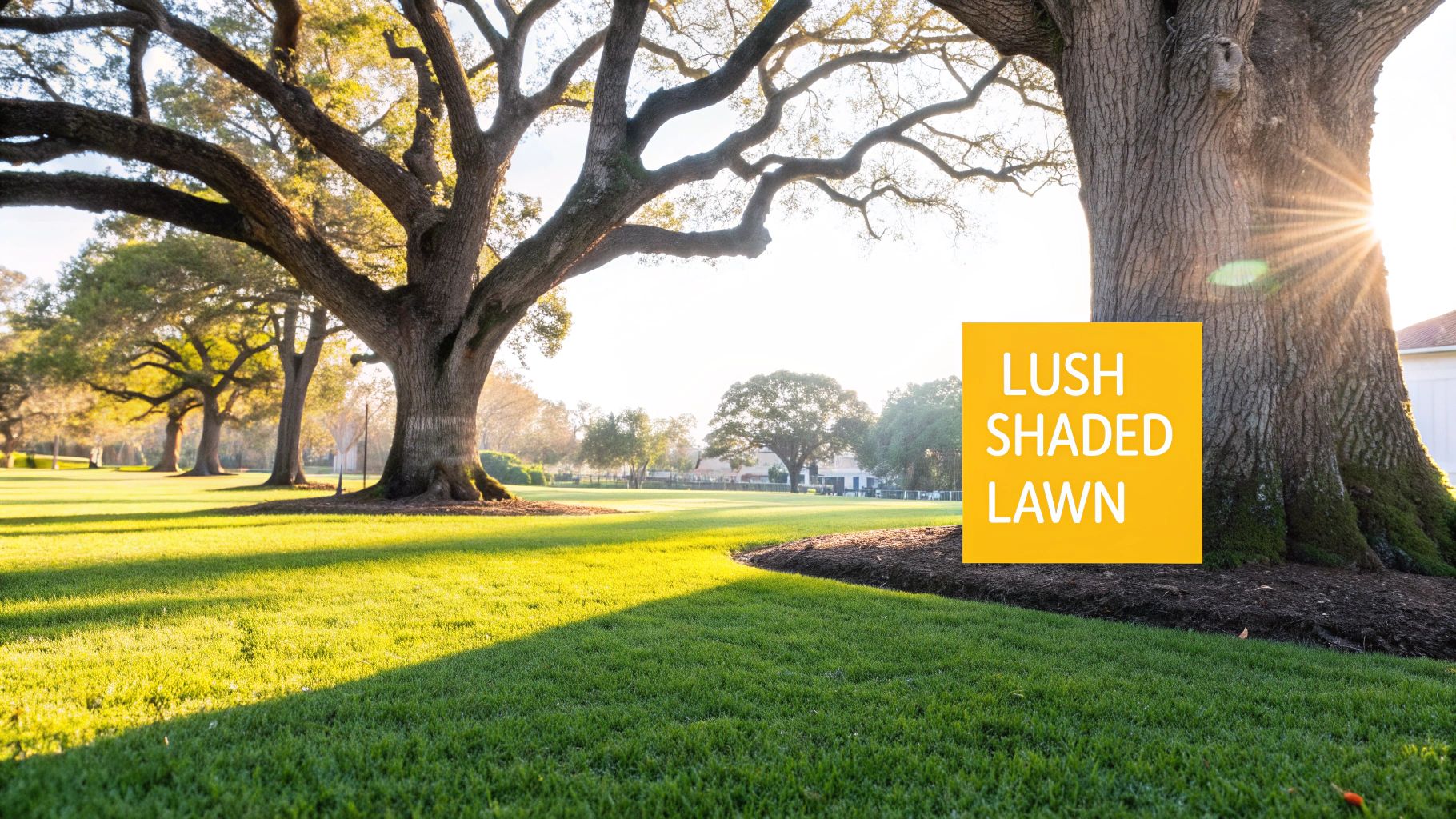
For so many homeowners in Central Florida, that patch of ground under a sprawling live oak or a towering pine is just a stubborn, dusty dead zone where grass simply gives up. It’s a common battle, pitting the dream of a seamless green lawn against the hard reality of nature.
The challenges are real. The dense canopy blocks the sunlight grass desperately needs. The tree’s massive root system is a powerhouse, sucking up water and nutrients long before the turf gets a shot. On top of that, the constant rain of leaves and pine needles can turn the soil acidic, making it a hostile place for most grass types.
But this guide is here to show you that a vibrant lawn in the shade isn't just a fantasy—it’s totally achievable with the right game plan. Success isn’t about fighting your trees; it's about helping them coexist peacefully with your grass.
Finding the Sweet Spot for Shade and Sun
You might be surprised to learn that the relationship between trees and grass is more nuanced than you'd think. While deep, dark shade is a definite lawn-killer, a little bit of cover can actually be a good thing.
It’s all about finding that delicate balance. A global study actually found that grass growth increases with some tree cover, hitting its peak when it gets between 60% and 80% of full sunlight. Here in tropical climates like Florida, some grasses even saw their biomass jump by up to 50% in these conditions. But once that shade level climbs past 80%, the tables turn, and grass yields can plummet by 40%. You can read the full research on grass and tree relationships to dig into the science.
This really drives home how critical proper canopy management is. It’s not enough to just throw down some shade-tolerant seed and hope for the best. You have to actively manage the environment.
Getting this right can transform your lawn care from a frustrating chore into a strategic success. For a deeper dive, check out our comprehensive guide on growing grass under shade trees in Florida.
To help you get started, here's a quick look at the steps we'll be covering. Think of it as your roadmap to a greener, healthier lawn, even in those tricky shaded spots.
Your Quick-Start Plan for Growing Grass Under Trees
Stage | Key Action | Primary Goal |
|---|---|---|
1. Assessment | Analyze sunlight, soil health, and root competition. | Understand the specific challenges of your shaded area. |
2. Preparation | Clear debris, amend soil, and manage tree roots. | Create a welcoming environment for new grass to take hold. |
3. Planting | Choose and install shade-tolerant sod or seed. | Establish a healthy turf foundation that can handle the conditions. |
4. Maintenance | Adjust watering, fertilizing, and mowing practices. | Provide ongoing care tailored to the unique needs of a shaded lawn. |
Following this structured approach removes the guesswork and sets you up for the best possible results.
Getting to Know Your Yard: A Reality Check on Shade and Soil
Before you spend a dime on seed or sod, you have to play detective. Trying to force grass to grow under a tree without understanding the environment is a recipe for frustration. A little reconnaissance work now saves a ton of time, money, and headache later.
The most obvious villain in this story is shade. But not all shade is created equal. The dappled sunlight that filters through a Crape Myrtle is a world away from the deep, constant shade under a massive live oak. Your first job is to figure out exactly what kind of battle you're fighting.
Mapping Your Sunlight
Here’s a simple trick: on a sunny day, go out and snap a picture of the area every hour, from morning to late afternoon. This creates a visual timeline, showing you precisely how many hours of direct, filtered, or full shade that spot gets.
Even the most shade-loving grasses need a minimum of four to six hours of sunlight to survive, and that can be filtered light. You might find the area gets a good dose of morning sun before being plunged into shadow for the rest of the day. That’s critical information for choosing the right grass and building a care plan that actually works.
The goal isn't to get rid of shade completely. It's to understand its daily rhythm. Knowing your light patterns is the difference between picking a solution that thrives and one that's doomed from the start.
What’s Happening Underground
The fight for sunlight is only what you see on the surface. A much tougher competition is happening right under your feet, where your tree’s roots are hogging all the good stuff.
Two major factors are at play here: soil pH and root competition.
Many of our classic Florida trees, especially pines and oaks, drop a constant supply of acidic needles and leaves. As they break down, they lower the soil’s pH, making it hostile territory for most turfgrasses. Your lawn wants a neutral pH, somewhere between 6.0 and 7.0, and you can easily check yours with a cheap soil test kit from any garden center.
At the same time, your grass is in a constant tug-of-war with a massive network of tree roots for every drop of water and every bit of nutrition. It's a battle that’s most intense in the top 4-6 inches of soil, where a staggering 80% of a tree’s fine feeder roots are concentrated. This underground war stunts the growth of both the grass and the tree, creating a landscape that’s always thirsty and hungry. Learn more about this fierce grass-vs-tree conflict.
Understanding these two hidden challenges—acidic soil and relentless root competition—is key. It’s why just adding more water or fertilizer rarely works. You have to address the real problem to finally win the war for green grass under your trees.
Choosing the Right Shade-Tolerant Grass for Florida
You've done the hard work of figuring out your sunlight and soil situation. Now comes the decision that will make or break your entire project: picking the right turf. In Central Florida, with our unique cocktail of heat, humidity, and sandy soil, you can't just grab a bag of "shade mix" from the big box store and hope for the best. You need a grass that’s been proven to handle these exact conditions.
The truth is, most popular lawn grasses are total sun-worshippers. But thankfully, a few champions have been developed specifically to handle lower light. Around here, that conversation almost always narrows down to two top contenders: St. Augustine and Zoysia.
Top Performers for Shaded Florida Lawns
For years, St. Augustine has been the go-to grass for shady Florida yards, and for good reason. Certain varieties are exceptionally good at not just surviving, but actually thriving with less direct sun.
CitraBlue® St. Augustine: This is a real star, developed right here at the University of Florida. It has a beautiful, distinct blue-green color and has shown it can do well with as little as four to five hours of sunlight. A huge bonus is its fantastic disease resistance, which is critical in our humid climate where fungus loves to set up shop in shady, damp spots.
Palmetto® St. Augustine: This is another popular and reliable workhorse. It has a slightly finer texture and a rich emerald green color. Its claim to fame is its ability to hold its color and density in shade, though I’ve found it might need just a little more light than CitraBlue to look its absolute best.
Zoysia grass is another fantastic option, and people often love it for its dense, almost carpet-like feel. It also grows slower, which means less time spent behind the mower. While it generally needs a bit more sun than the best St. Augustine varieties, some types perform quite well in filtered light. For instance, Empire® Zoysia is a tough grass that can handle moderate shade and is known for its excellent drought tolerance once it gets established.
The most important thing to remember is that "shade tolerant" doesn't mean "no sun." Every type of grass needs some direct or filtered light to live. Your choice should directly connect back to the sunlight mapping you did earlier—match the grass to the actual hours of sun your spot receives.
To make it easier to see how they stack up, let’s look at them side-by-side.
Comparing Shade-Tolerant Grasses for Central Florida
Choosing the right grass variety is crucial for a successful lawn in shaded areas. This table breaks down the key characteristics of the top performers in our region, helping you match the perfect turf to your yard's specific needs and your maintenance preferences.
Grass Type | Shade Tolerance | Drought Resistance | Maintenance Level | Best For |
|---|---|---|---|---|
CitraBlue® St. Augustine | Excellent (4-5 hrs sun) | Good | Moderate | Deeply shaded areas needing robust disease resistance. |
Palmetto® St. Augustine | Very Good (5-6 hrs sun) | Good | Moderate | Properties wanting a finer texture and vibrant green color. |
Empire® Zoysia | Moderate (6+ hrs sun) | Excellent | Low | Homeowners who prefer less mowing and have filtered, not deep, shade. |
Ultimately, the best choice depends on your specific conditions. A yard with deep, consistent shade from a large oak tree will benefit most from CitraBlue®, while a lawn with dappled, afternoon light might be a perfect candidate for Empire® Zoysia. Taking the time to select the right player for the game is the single most effective step toward a lush, green lawn under your trees.
Preparing the Ground for a Thriving Lawn
You've picked the perfect shade-tolerant grass, and now it's time to roll up your sleeves. This next part is all about creating an environment where that new turf can actually thrive. Honestly, getting the ground prep right is probably the single most important step in getting grass to grow under trees, and it's where most people go wrong.
First things first, you have to clear away all the competition. That means raking up every last leaf, pine needle, and bit of organic debris that's currently smothering the soil. You also need to pull any weeds or invasive plants that are already hogging the water and nutrients in that spot.
If you're dealing with a larger, more neglected area, a professional service like forestry mulching can be a total game-changer. This method chews up all the unwanted brush and debris and turns it into a layer of beneficial mulch, all without tearing up the topsoil. That's a huge plus because it protects the tree's shallow feeder roots from damage.
Amending the Soil for Success
Once the ground is clear, your attention needs to turn to what's underneath. The soil under a big, mature tree is often a triple threat: it's compacted, acidic, and stripped of nutrients. Your mission is to fix all three.
Your soil test results will tell you exactly what you need to do, but around here in Florida, you'll almost certainly need to address acidic soil by applying dolomitic lime. Just follow the application rates from your test to get the pH into that sweet spot between 6.0 and 7.0.
Next up is fertility and soil structure. Spread a one-to-two-inch layer of high-quality, screened compost over the entire area. This is non-negotiable. That organic matter will help our sandy soil hold onto water and provides a slow-release buffet of nutrients for your new grass. It's a simple step that makes a world of difference in how resilient your lawn will be.
I see this mistake all the time: people bring in a rototiller and go to town right up to the tree trunk. Don't do it. Aggressive tilling will absolutely shred a tree's vital feeder roots, which are concentrated in the top few inches of soil. Instead, just gently work the amendments into the top inch or two with a stiff rake. Better yet, just lay them on top and let nature do the work. Protecting the tree's health is always the top priority.
Seeding or Sodding The Right Way
With the soil prepped and ready, you're faced with a choice: seed or sod. Both work, but they demand slightly different approaches, especially when you're working in the shade.
For Seeding: The name of the game is seed-to-soil contact. After you broadcast the seed, lightly rake it into the surface. Then, cover everything with a very thin layer of peat moss or clean straw. This keeps it moist and hides it from hungry birds.
For Sodding: Lay your sod pieces down snugly against each other, but make sure to stagger the seams like you're laying bricks. This prevents water from just running off in channels. Once it's all down, go over it with a light roller to press the roots firmly into the soil you just prepared.
This simple flowchart can help you decide between two of Florida’s most popular shade-tolerant grasses based on how much work you want to put in.
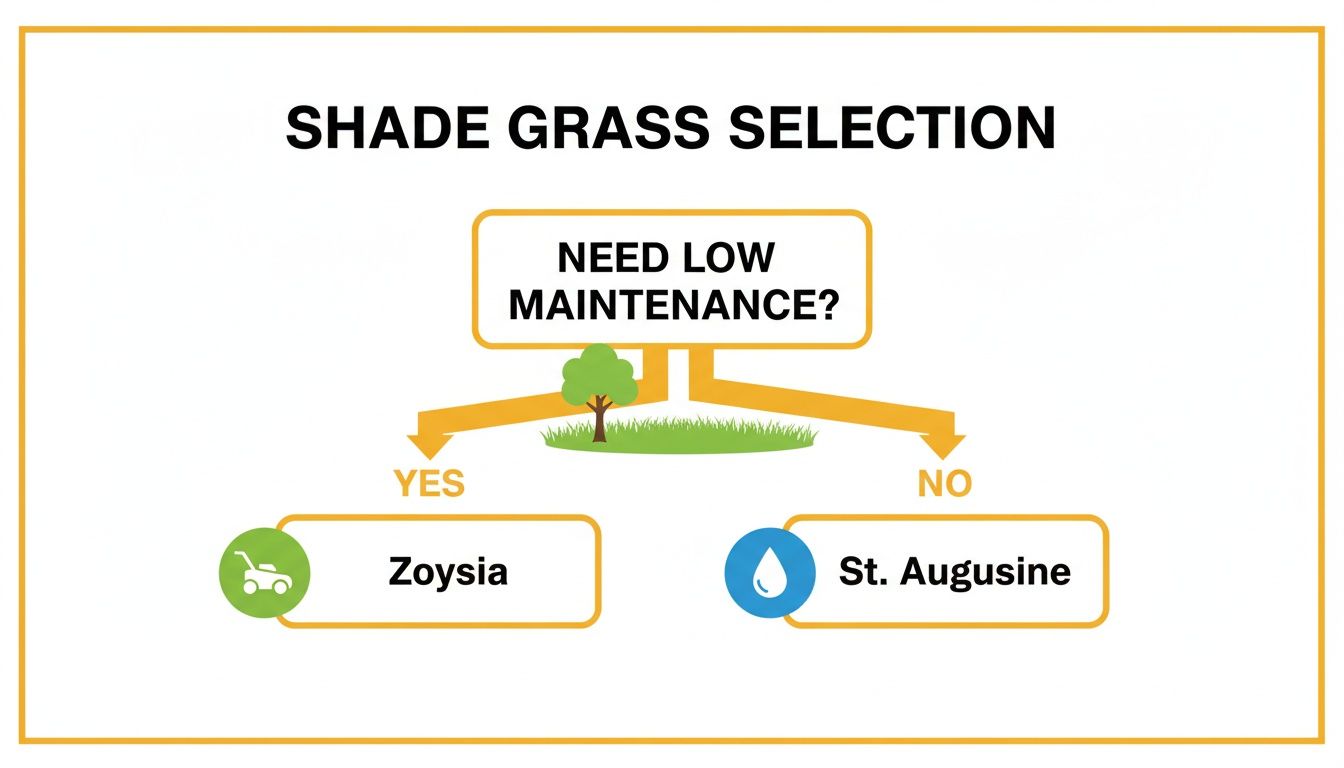
As you can see, it really comes down to your lifestyle. If you want less mowing, Zoysia is your friend. If you don't mind a bit more watering and upkeep, St. Augustine is a fantastic choice.
Taking the time to improve the ground like this doesn't just help the grass; it contributes to the health of the entire landscape. For a deeper dive into this, check out our practical guide to soil stabilization techniques.
Managing the Canopy to Let the Light In
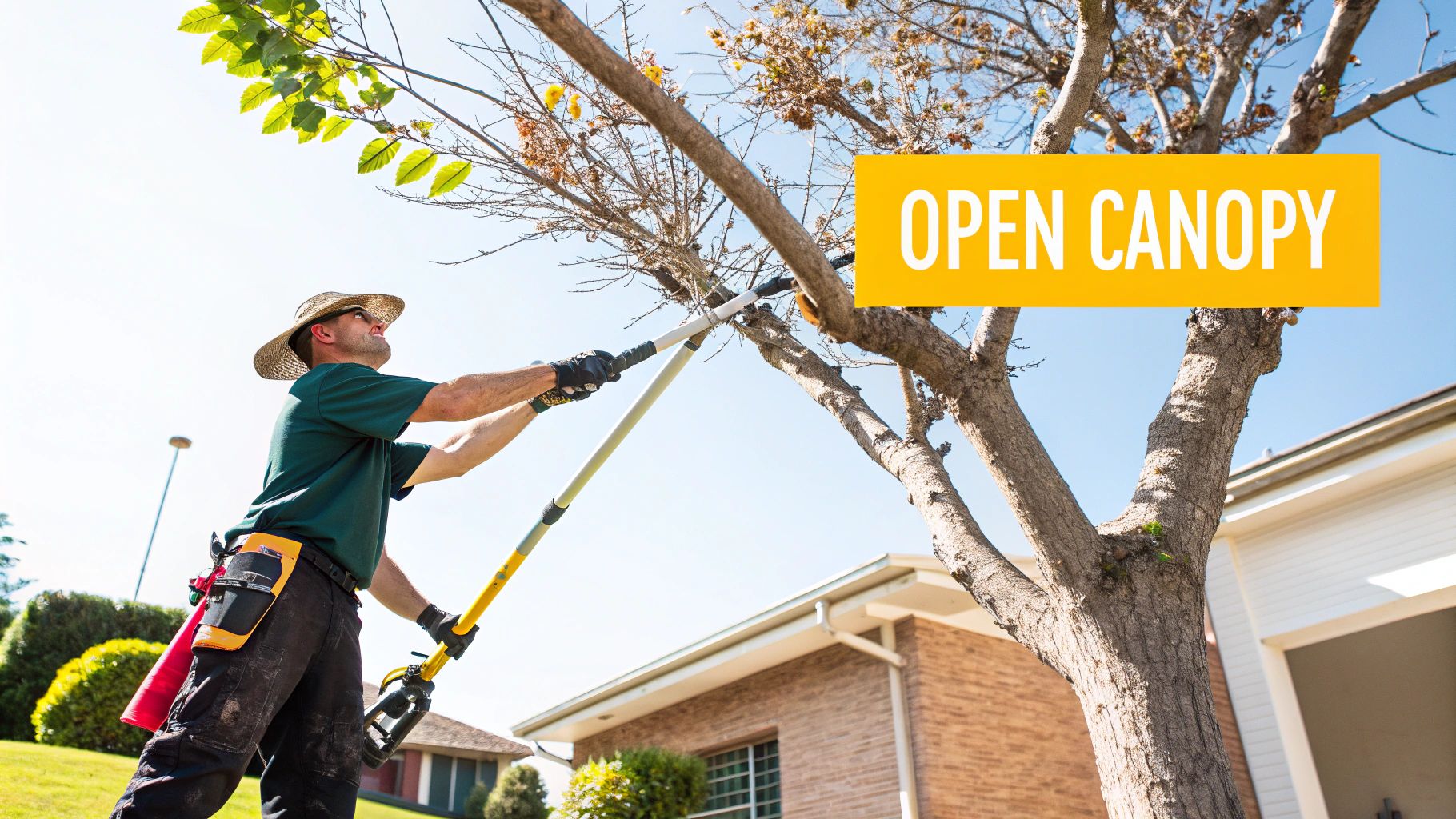
You can have the best soil and the toughest shade-tolerant grass seeds, but one thing will always hold the trump card: light. If enough sun can't hit the ground, even the most promising turf will get leggy, thin out, and eventually give up.
This is why managing your tree canopy isn't just a helpful hint—it’s a non-negotiable step.
The goal isn't to clear-cut your way to a full-sun yard. Far from it. We're aiming for a healthy balance, transforming that deep, dark shade into what we call "dappled sunlight." Think of it as a soft, filtered light that can actually reach the grass blades below. That’s where a professional touch with tree trimming makes a world of difference.
Creating Dappled Sunlight
Opening up a dense canopy without hurting the tree involves a couple of key techniques. Each one plays a specific role in creating the perfect environment for grass to grow.
Canopy Raising (or Limbing Up): This is exactly what it sounds like. We selectively remove the lowest branches of a tree, which lifts the entire canopy higher off the ground. It’s a game-changer for letting in that valuable low-angle morning and afternoon sun.
Selective Thinning: This is more of an art form. A certified arborist will carefully remove specific branches from the inside of the tree's crown. This doesn't change the tree's overall shape but reduces its density, allowing sunlight to filter straight down through the leaves.
The real magic happens when you combine these two. By raising the bottom and thinning the middle, you create a brighter, healthier microclimate underneath where grass finally has a fighting chance to thrive.
Strategic pruning does more than just let in light. It also dramatically improves air circulation. The stagnant, humid air trapped under a thick canopy is a perfect breeding ground for fungal diseases that can wipe out a new lawn. Getting the air moving helps keep grass blades drier and healthier.
The Science of Balance
The relationship between trees and the grass beneath them is well-understood. Studies of savanna ecosystems show that grass cover plummets once tree density crosses a 30-40% threshold. But here's the good part: by strategically thinning the canopy, grass biomass can jump by as much as 60%.
We see this right here in Central Florida. When land is cleared for firebreaks, the grass cover under oaks and pines can shoot up to 55-70% in just a couple of seasons. That's a massive increase from the 10-15% cover you see before clearing. It also helps stabilize the soil, allowing it to hold 20% more moisture.
Think of canopy management as an ongoing collaboration with your landscape. A smart, professional approach keeps your trees healthy while giving you that lush lawn you're after. For more details on the right way to do it, check out our guide to safely removing tree limbs.
And while you're planning your perfect shady spots, you might also find some great backyard pavilion ideas to create other comfortable retreats in your yard.
Long Term Care for Your Shaded Lawn
Getting your new grass to take hold under a tree is a huge win, but the real secret to keeping it looking great is changing up your long-term care routine. A shaded lawn just doesn't play by the same rules as one baking in the full Florida sun. If you treat it the same, you're on a fast track to weak, thinning turf.
The biggest mistake I see homeowners make is overwatering. Shaded spots stay damp longer, and those big tree roots are already pulling massive amounts of water from the soil. Forget the frequent, shallow sprinkles. Your goal here is deep and infrequent watering.
Give the area a good, thorough soak—aiming for about one inch of water—but only do it when the top few inches of soil actually feel dry. This simple shift encourages the grass to send its roots down deep, making it tougher and better able to compete for resources.
Smart Mowing and Feeding Strategies
Your mowing habits also need a serious adjustment. It might feel counterintuitive, but you have to resist the urge to cut the grass short for that super-manicured look. In the shade, you need to do the exact opposite.
Crank that mower deck up to its highest setting. You’re aiming for a blade height of 3 to 4 inches. Taller grass blades have more surface area, which lets them capture every last bit of filtered sunlight for photosynthesis. Honestly, this is one of the easiest and most effective things you can do to help your lawn generate the energy it needs to survive in a low-light spot.
Fertilizing requires a more delicate touch, too. Pounding the area with heavy doses of quick-release nitrogen is a waste of time and money. The tree’s aggressive root system will greedily snatch up most of it before your grass ever gets a taste.
The trick is to use a slow-release, balanced fertilizer and apply it in the fall. At that point, the tree's most active growth period has slowed down. This timing ensures more of the nutrients actually feed the turf, strengthening its roots for the winter instead of just fueling more canopy growth on the tree.
Finally, you have to stay on top of debris. A thick blanket of fallen leaves or pine needles can quickly smother your new grass. It blocks what little light is available and traps moisture, which is an open invitation for fungal diseases.
Make it a habit to rake or use a leaf blower regularly, especially in the fall, to keep the turf clean and let it breathe. This kind of consistent, adapted care is how you not only get grass to grow under trees but keep it healthy and green for years to come.
Your Top Questions About Shaded Lawns Answered
Even with the best game plan, growing grass under trees always throws a few curveballs. Let's tackle some of the most common issues and frustrations Central Florida homeowners run into.
What Should I Do About Exposed Tree Roots?
It's a familiar sight: big, beautiful tree roots snaking across the surface. Your first instinct might be to bury them, but you should never pile on a thick layer of topsoil. Doing so can literally suffocate the tree.
If you just need to smooth things out a bit before laying sod, a very thin layer—we’re talking no more than one inch—of a compost and sand mixture can work. But for those really prominent surface roots, the best move for the health of your tree is to stop fighting it. Instead, create a mulch bed around the tree's base. It looks clean, and your tree will thank you for it.
Why Is Moss Taking Over and How Do I Stop It?
If you're seeing a lot of moss, it's basically your lawn's way of telling you something is wrong. Moss is a dead giveaway that the area is too shady, stays too damp, and the soil is probably too acidic for grass to stand a chance.
You can find products to kill the moss, sure, but it's just going to come right back unless you fix the real problems. The only lasting solution is to improve the sunlight by thinning out the tree canopy above and correct the soil's pH with lime. This makes the environment tough for moss but perfect for turf.
At a certain point, you have to recognize when you're fighting a losing battle. If an area gets less than four hours of sunlight, you might spend endless time and money for mediocre results. That's when it's time to embrace a beautiful, low-maintenance alternative.
When Is It Better to Give Up on Grass?
Sometimes, you can do everything right and still not get the results you want. If you've amended the soil, thinned the canopy, and used the best shade-tolerant grass you can find but are still looking at a patchy, sad-looking lawn, it might be time for a new strategy.
Areas with heavy foot traffic, incredibly dense shade, or just overwhelming root competition can make growing a healthy lawn next to impossible. In these spots, it’s often smarter to work with the conditions instead of against them. Think about switching to shade-loving groundcovers like mondo grass or Asiatic jasmine, or just create a simple, elegant mulch bed.
Ready to get some much-needed sunlight to those shady spots and build the perfect foundation for a new lawn? The expert team at Palm State Clear Cut specializes in professional forestry mulching and selective tree thinning. We can help you manage your canopy and prepare your site without harming your valuable trees. Get a free quote from Palm State Clear Cut and take the first real step toward a healthier landscape.
Comments