
A Florida Homeowner's Guide to Growing Grass Under Shade Trees
- Mike Walker
- Dec 8, 2025
- 17 min read

Let's be honest, trying to grow a lush carpet of grass under a sprawling Florida oak often feels like a losing battle. It’s a common frustration, but it’s not just a simple lack of sunshine; it's a perfect storm of challenges unique to our Central Florida environment.
Success isn't about finding a magic "shade-tolerant" seed. It’s about understanding what you’re up against and making a smart plan to tilt the odds back in your favor.
Why Growing Grass in Florida's Shade Feels Impossible

So many homeowners here in Central Florida dump time and money into new sod or seed, only to watch it get thin, patchy, and eventually give up by the end of the season. If this sounds familiar, know that it isn't your fault—it's usually a case of fighting the wrong enemy.
The hard truth is that a mature tree's dense canopy creates its own little micro-environment, one that is actively hostile to most types of turf. It's an ecosystem war right in your backyard, and the tree has a massive home-field advantage.
The Real Reasons Your Shaded Grass Fails
Before you can fix the problem, you have to diagnose it correctly. The failure of grass in shady spots is rarely about one thing; it’s a combination of interconnected issues.
Intense Root Competition: That beautiful, mature oak has a vast network of shallow roots that are absolute champs at sucking up every available drop of water and nutrient from the topsoil. Your grass is left with the scraps, fighting a battle for resources it can't win.
Acidic and Compacted Soil: Over time, falling leaves and bark from trees like oaks and pines break down, gradually lowering the soil's pH. This makes the soil too acidic for grass to properly absorb nutrients. Add in foot traffic and the sheer weight of the tree, and you get compacted soil that chokes out the grass roots, starving them of oxygen.
Reduced Air Circulation: A thick, low-hanging canopy is like putting a lid on your lawn. It traps humidity and stops air from moving around at ground level. In our steamy Florida climate, this is an open invitation for fungal diseases like brown patch and powdery mildew to move in and wipe out your already-stressed turf.
Blocked Sunlight and Rain: It's obvious the canopy blocks sun, but it also acts like a giant umbrella. It can intercept a surprising amount of rainfall, leaving the ground underneath bone-dry even after a decent shower. This just adds another layer of stress on the grass.
This combination of factors creates a vicious cycle. The grass gets weak from a lack of light and water, becomes a prime target for disease due to the poor airflow, and can't even get the nutrients it needs from the acidic, compacted soil.
To help you visualize a better strategy, here's a quick summary of the core principles we'll be covering. Think of these as the foundation for turning that barren patch into a healthy, green space.
Florida's Four Keys to a Thriving Shaded Lawn
Strategy | Key Action | Why It's Critical in Florida |
|---|---|---|
Increase Light & Air | Professionally thin the tree canopy. | Reduces humidity, which helps prevent common fungal diseases like brown patch that thrive in our damp climate. |
Fix the Foundation | Amend the soil with lime and compost. | Corrects the acidic soil common under oaks and pines, unlocking nutrients that your grass needs to survive. |
Choose the Right Plant | Select proven shade-tolerant turfgrass. | St. Augustine 'Bitter Blue' or 'Seville' are better equipped to handle the lower light conditions. |
Adjust Your Care Routine | Water deeply but less often; mow higher. | Encourages deeper root growth to better compete with tree roots and lets the grass blades capture more sunlight. |
By tackling each of these issues systematically, you can break that cycle of decline and give your lawn a real fighting chance. This guide will walk you through how to do it.
These efforts are all part of a larger plan for maintaining a healthy and balanced property. Taking a moment to understand what is vegetation management and why it matters can give you a bigger-picture perspective. Growing grass under a tree isn't impossible—it just requires a smarter approach.
How to Assess Your Yard's Light and Soil
Before you even think about buying sod or amending your soil, you’ve got to become an expert on your own yard. Growing grass under the sprawling live oaks of Central Florida isn’t about luck; it’s about knowing exactly what you’re up against. This means playing detective and diagnosing the two biggest culprits holding your lawn back: sunlight and soil.
Think of it this way: you’re gathering intel. You need to understand the daily light patterns, what’s happening in the soil, and the hidden battle between your tree's roots and your turf. This initial homework is the bedrock of your entire project and will guide every decision you make from here on out.
Creating Your Yard's Shade Map
"Shade" is too vague a term. To have any shot at success, you need to know the difference between the deep, all-day shade near a tree trunk and those pockets that get a few precious hours of sun. The best way to do this is with a simple technique called shade mapping.
Here’s a practical, no-fuss way to get it done on a sunny day:
Morning Observation (around 9 AM): Snap a few photos of your yard or just sketch a quick outline on paper. Mark the areas bathed in full sun and those completely in shade.
Midday Check-in (around 1 PM): Head back out and update your map. You’ll see right away how much the shade patterns have shifted as the sun climbed higher in the sky.
Afternoon Assessment (around 4 PM): Do one last check to mark the final sun and shade spots. This last look is key, as it shows you which spots get that intense, baking afternoon sun, even if it's just for a short while.
Once you’ve done this, you'll have a real-world, visual record of your yard's light. It will clearly show which zones get less than four hours of direct light—the point where even the toughest shade-tolerant grasses start to give up. You’ll also be able to distinguish between areas with dappled light versus those in constant, dense shade.
The goal isn’t to find a magical patch with eight hours of perfect sun. It's to find the spots that have a fighting chance. An area that gets even four hours of morning sun has dramatically better odds than a spot that gets none.
Understanding the Soil Under Your Trees
The ground beneath a mature Florida oak or pine is often a brutal environment for grass. Decades of falling leaves and needles have likely made the soil acidic, while the tree's massive root system has compacted the earth and is hogging every last drop of water and nutrients. You need to know what you’re really dealing with.
A simple DIY soil test is a great place to start, and you can grab an inexpensive kit at any local garden center. The number you’re most interested in is the soil pH. Most Florida turfgrasses thrive in a slightly acidic to neutral pH, somewhere between 6.0 and 7.0. It's incredibly common to find pH levels of 5.5 or lower under big trees, which basically locks out key nutrients and starves the grass.
Beyond pH, you’ll want to check for two other big problems:
Compaction: Take a screwdriver and try to push it into the soil. If you hit a wall of resistance just an inch or two down, your soil is almost certainly compacted. This chokes out grass roots, preventing air and water from getting through.
Root Competition: Get down on your hands and knees. Can you see a thick mat of fine, fibrous tree roots right at the surface? If you can't dig without hitting a web of roots, any new grass you plant is in for a serious fight for its life.
The intensity of shade directly impacts a plant's ability to grow. Research shows that dense canopies severely limit how much plants underneath can bulk up. Interestingly, while some woody plants struggle immensely in shade, shallow-rooted grasses can sometimes outcompete them by being more efficient at capturing surface water. It's a great illustration of how critical resource competition is in these low-light spots. You can dive into the detailed findings on how shade affects plant growth and competition in this study on woody plants and grasses.
By combining your shade map with these soil insights, you’ll have a clear, data-driven picture of your yard's unique challenges. This isn't just theory; it’s the actionable intelligence you need to build a targeted plan for finally getting grass to grow under those trees.
Choosing the Best Shade-Tolerant Grass for Florida
Picking the right grass for a shady spot in your Central Florida yard is the moment of truth. This is where you either set yourself up for a beautiful, low-stress lawn or sign up for another season of frustration and wasted effort.
Let's be clear: those generic "shade mix" bags from the big-box stores just won't cut it here. Our intense sun, sandy soil, and humid air demand specific, battle-tested varieties of warm-season grasses. You need something that can genuinely handle lower light while still fighting off local pests and diseases.
This decision is about more than just a name on a bag. It’s about matching the right plant to the specific challenges you've already identified in your yard—the light, the soil, the tree roots. The choice you make now will directly impact how much work you'll be doing later and how your lawn holds up when the summer heat is on.
Think of it as answering three core questions: How much light does this spot really get? What's the soil like under that tree? And how bad is the competition from tree roots? Answering these honestly is the only way to pick a plant that actually has a fighting chance.
Top Performing Shade-Tolerant Grasses
When it comes to growing grass under shade trees in our part of the world, two types of turf consistently come out on top: St. Augustine and Zoysia. But—and this is a big but—not all varieties are created equal. Knowing the difference is what separates a thriving lawn from a patchy mess.
St. Augustine Grass Varieties
This is the quintessential Florida grass, famous for its broad, lush blades and aggressive growth. The good news is that turf scientists have developed specific cultivars just for better performance in the shade.
'CitraBlue' St. Augustine: Developed right here by the University of Florida, 'CitraBlue' is a real standout. It has a gorgeous, distinctive blue-green color and has shown fantastic shade tolerance, holding its own with as little as four to five hours of sun. Even better, it's known for its superior resistance to diseases like gray leaf spot, which is the bane of most damp, shady spots.
'Palmetto' St. Augustine: For years, 'Palmetto' was the gold standard for shaded lawns. It has a slightly finer texture and a classic rich emerald color. While its shade tolerance is good, I’ve found it can struggle with chinch bugs more than some of the newer varieties. It's still a solid choice, but you have to stay on top of pest management.
When I'm comparing St. Augustine varieties for a client's shady yard, 'CitraBlue' usually gets the nod for its modern disease resistance and overall toughness in low light. Still, 'Palmetto' is a proven performer if shade is your main enemy and you're prepared to be proactive about pests.
Zoysia Grass Varieties
If you want a dense, almost carpet-like feel, Zoysia is your grass. It’s generally more drought-tolerant than St. Augustine once it’s established, and its fine-bladed varieties give a high-end, manicured look.
'Zeon' Zoysia: People often call this the "barefoot grass" for a reason. 'Zeon' has a super-fine texture and looks great in areas getting just four to five hours of sun. It has low water requirements and is a go-to for luxury landscapes.
'Empire' Zoysia: This variety has a slightly wider blade than 'Zeon', but it's incredibly tough. It handles drought like a champ and has solid shade tolerance, making it a great, lower-maintenance choice for homeowners who want a durable lawn that still looks fantastic.
Choosing the right plant is the most important investment you can make in your shaded landscape. It's the difference between constantly fighting nature and working with it to get a beautiful, lasting result.
Comparing Florida's Best Grass and Groundcover for Shade
To make the decision easier, here's a quick analysis of the top turfgrass and groundcover choices for our shaded Florida yards, breaking down their key traits.
Plant Type | Shade Tolerance | Drought Tolerance | Maintenance Level | Best For |
|---|---|---|---|---|
'CitraBlue' St. Augustine | Excellent | Moderate | Moderate | High-humidity areas prone to fungus; a modern, resilient lawn. |
'Palmetto' St. Augustine | Good | Moderate | Moderate-High | Established landscapes where a traditional, lush look is desired. |
'Zeon' Zoysia | Good | High | Moderate-High | Manicured, high-end lawns; areas with foot traffic. |
'Empire' Zoysia | Good | Excellent | Moderate | Practical, durable lawns that need to withstand heat and drought. |
Asiatic Jasmine | Superior | Superior | Very Low | Deep shade under large trees where nothing else will grow. |
Mondo Grass | Excellent | High | Low | Edging, borders, or creating a grass-like look in impossible spots. |
This table should help you match the plant's strengths to your yard's specific needs and your own tolerance for maintenance.
When Grass Just Isn't the Answer
Look, sometimes you have to know when to fold 'em. There are spots where no amount of wishful thinking will make turf grow. If you're dealing with less than four hours of direct sun or a suffocating mat of surface tree roots, continuing to fight for grass is a losing battle.
This is where you get smart and switch to groundcover alternatives. Instead of a sad, patchy lawn, you can create a lush, green, and practically maintenance-free area.
Asiatic Jasmine (Trachelospermum asiaticum): This is the undisputed champion for tough, shady spots in Florida. Once it's established, it forms a dense, glossy green mat that chokes out weeds, needs almost no water, and thrives in the deepest shade. It's the perfect "set it and forget it" solution under massive live oaks.
Mondo Grass (Ophiopogon japonicus): For a more grass-like look, Mondo Grass is a fantastic choice. It grows in neat clumping tufts and comes in different sizes, including a popular dwarf variety ('Nana'). It's perfect for creating a clean, uniform look when filling in areas where turf just gave up.
Prepping Your Soil and Trees for a Healthy Lawn
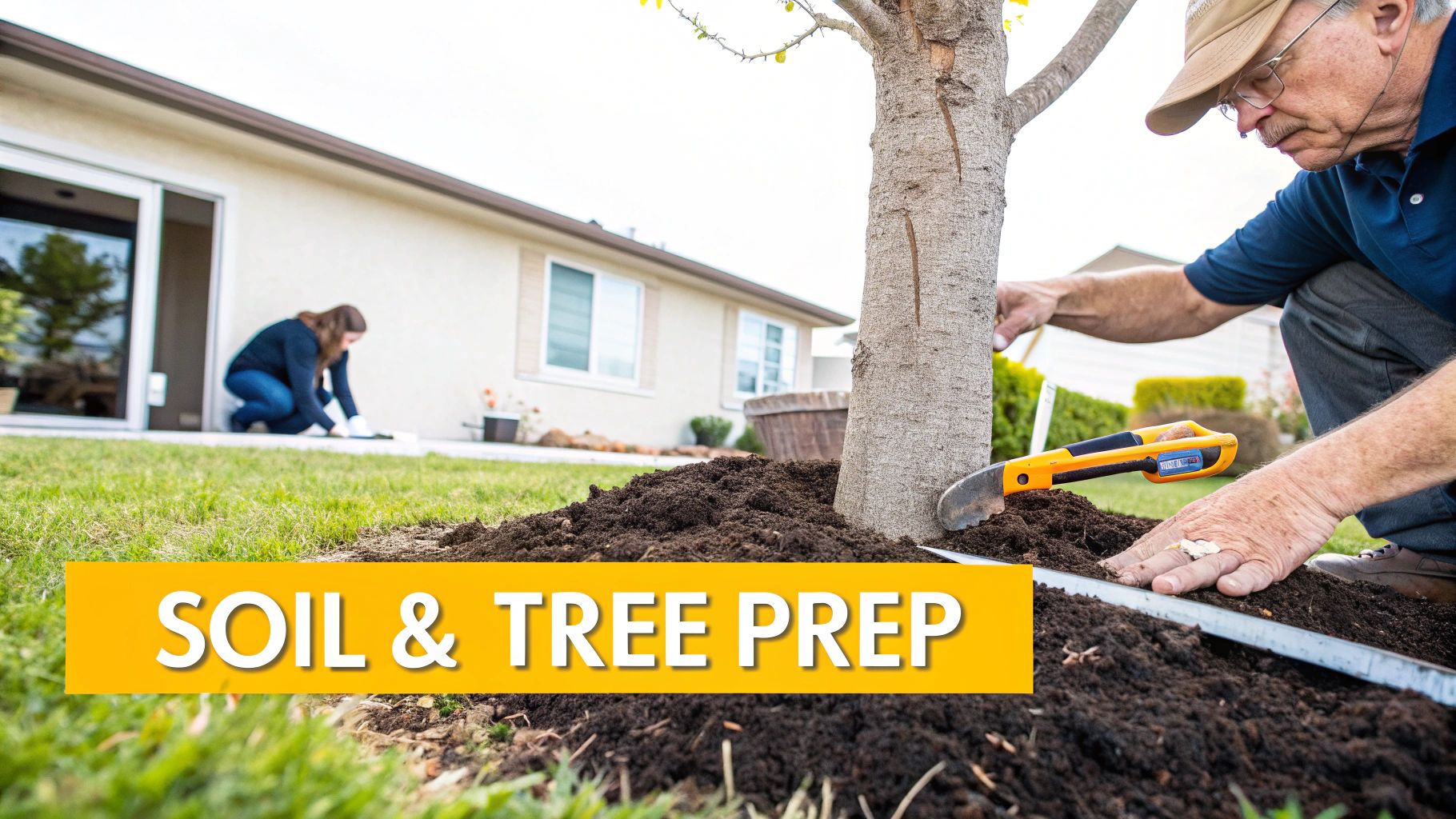
Successfully growing grass under shade trees is about more than just picking the right turf. You have to physically change the environment to give that grass a fighting chance. Before you even think about laying a single piece of sod, you need to deal with the two biggest bullies on the block: the tree itself and the soil it completely dominates.
Honestly, this prep work is the most important part of the whole process. It’s all about strategically letting in more sunlight, breaking up hard-packed soil, and getting the nutrient balance right. If you skip these steps, it’s like trying to build a house on a shaky foundation—it’s only a matter of time before it all falls apart.
Letting the Light In with Strategic Pruning
That dense, sprawling canopy of a mature Florida oak is your main opponent. The goal isn’t to butcher the tree, but to open it up selectively so that precious sunlight can finally hit the ground. This also does wonders for airflow, which is crucial for preventing the fungal diseases that just love our humid, stagnant shade.
Two specific pruning techniques really move the needle:
Canopy Thinning: This is the careful, targeted removal of certain branches throughout the tree's canopy. A skilled arborist will look for crossing limbs, weak branches, and just general overcrowding to create a more porous, open structure. The difference is huge—you get dappled sunlight filtering down instead of a solid wall of shade.
Crown Raising (or Lifting): This technique is all about taking off the lowest-hanging limbs. By raising the bottom edge of the canopy to at least eight to ten feet off the ground, you let that low-angle morning and afternoon sun slice right in, hitting spots that would otherwise be in shadow all day long.
A professional arborist can thin a canopy by up to 20-25% without doing any harm to the tree. That one step can be the difference between a lawn that struggles and one that thrives, proving trees and grass really can get along.
Reviving the Soil Underneath
The ground beneath a big tree is often a nightmare for turfgrass. It’s compacted, acidic, and has been stripped of nutrients by the tree’s massive root system. You have to actively rebuild this soil to make it a place where new grass actually wants to grow.
First, tackle the pH. As we've mentioned, the soil under oaks and other trees here is often very acidic. Applying dolomitic lime based on your soil test will bring that pH back up into the ideal 6.0 to 7.0 range, which unlocks the nutrients your new grass needs to absorb.
Next, it's time to bring some life back to the dirt. Spread a one- to two-inch layer of good-quality compost or rich topsoil over the entire area. This organic matter is a game-changer:
It breaks up compaction and improves the soil structure.
It boosts water retention, a huge help for grass survival.
It provides a slow, steady source of essential nutrients.
Gently rake the compost into the top few inches of the existing soil, being careful not to hack away at major tree roots. This creates the perfect nutrient-rich, aerated seedbed for your new turf. For an even bigger boost, check out our guide on unlocking the power of mulching for sustainable land management benefits to learn more about the advantages of adding organic material.
A Smarter Maintenance Plan for Shaded Grass
Getting shade-tolerant grass to take hold is a huge win, but the real work has just begun. Grass growing under a big oak or magnolia is living a completely different life than the turf basking in full sun. It’s in a more fragile, low-energy state, and the standard “mow, water, and feed” plan you use elsewhere will quickly send it into a death spiral.
Lawn care in the shade isn't about working harder; it’s about working smarter. You need a more thoughtful approach. By tweaking how you mow, water, and fertilize to fit this unique microclimate, you can keep that shaded lawn healthy and tough enough to thrive.
Adjust Your Mower for Maximum Sunlight
One of the easiest yet most effective changes you can make is simply to mow higher. Think of each grass blade as a tiny solar panel, soaking up sunlight to create food. In a shaded spot, every last millimeter of that surface area is precious.
Crank your mower deck up to its highest setting. You’re aiming for a cut height of 3.5 to 4 inches for popular Florida varieties like St. Augustine and Zoysia. That extra height gives the blades more surface area to catch the dappled light filtering through the tree canopy. A super-short, crew-cut lawn might look sharp out in the open, but in the shade, it’s a recipe for starvation.
Mowing high does more than just help with sunlight. Taller grass naturally shades out weeds and encourages the roots to dig deeper, making your turf a better competitor against the tree’s massive, thirsty root system.
You’ll also find yourself mowing less often. Grass in the shade grows slower, so it doesn't need a weekly trim. Just keep an eye on it and mow only when needed, making sure you never chop off more than one-third of the blade at a time. This simple rule dramatically reduces the stress on these already-vulnerable plants.
Rethink Your Watering and Fertilizing Strategy
The world under a tree canopy is a strange mix—the soil can be dusty dry thanks to the tree's roots, yet the air can feel humid and stagnant. This requires a careful balance when it comes to watering and feeding to sidestep common problems like fungus and weak, spindly growth.
Water Deeply, Not Daily
Your goal is to get water past the tree’s surface roots and down to the grass roots. Light, frequent sprinkles do the opposite; they encourage shallow rooting, which makes the grass even weaker and less able to compete for resources.
Switch to a deep-and-infrequent watering schedule. Give the shaded zones a good soak with about one inch of water, just once a week, during the growing season. This forces the grass to send its roots searching deeper for moisture, building a much stronger foundation. And always water in the early morning. This gives the blades all day to dry out, which is your best defense against fungal diseases in our classic Florida humidity.
Fertilize for Resilience, Not Speed
Shaded grass doesn't need a push to grow fast. In fact, hitting it with too much fertilizer—especially a high-nitrogen blend—is one of the fastest ways to kill it. All that nitrogen just forces a flush of weak, flimsy growth that’s a magnet for pests and disease.
Go Light on the Feed: Use a balanced, slow-release fertilizer at about half the rate you’d use on the sunny parts of your lawn.
Time It Right: A light feeding in the spring after the grass is fully green and another in the fall to help it store energy for winter is plenty.
Power Up with Potassium: Look for a fertilizer with a good amount of potassium (the 'K' in N-P-K). Potassium is the key to root health, disease resistance, and overall stress tolerance for turf.
There’s solid science behind this careful approach. Research shows that low light drastically reduces a grass plant's root mass and development. The plant tries to compensate by growing longer, wider leaves to catch more light, but this happens at the expense of its root system and energy reserves, making it weaker over time. You can explore the full research on tropical grass species here to see just how much shade impacts grass physiology.
This is exactly why our maintenance strategy has to focus on supporting the roots, not just forcing top growth. And remember, keeping your trees properly thinned is an ongoing part of this process. For a refresher on pruning techniques that let more light through, check out our guide on 8 essential methods for trimming limbs on trees in 2025. The harmony between your tree care and your lawn care is the real secret to long-term success.
Got Questions About Your Shady Florida Lawn? We've Got Answers
Even with the perfect game plan, trying to get grass to thrive under Florida's gorgeous shade trees can leave you scratching your head. Over the years, we've heard just about every question from homeowners trying to turn a patchy, sad-looking spot into a respectable lawn. Let's tackle some of the most common ones head-on.
Is My Yard Just Too Shady for Grass?
This is the big one. How do you know if you're fighting a battle you just can't win? I always tell people to follow what I call the "four-hour rule."
If the area gets less than four hours of direct, unfiltered sunlight per day, even the toughest shade-tolerant grass is going to struggle and eventually give up. You'll see those thin, leggy blades and weak, patchy spots that just never seem to fill in.
My Two Cents: On a clear, sunny day, take a peek at the spot at 9 AM, noon, and 3 PM. If it’s stuck in deep shade for most of that time, it's a sign to pivot. Constantly throwing money and effort at it will only lead to frustration.
When you're dealing with that much shade, your best move is to work with it, not against it. Think about a beautiful groundcover like Asiatic Jasmine or Mondo Grass. Or, you could create a clean, attractive mulch bed around the tree's base. Both options give you that lush, green look without the endless headache.
How Should I Fertilize Grass in the Shade?
This is a non-negotiable: you absolutely have to fertilize shaded grass differently than the rest of your lawn. It’s one of the biggest keys to long-term success. Grass in the shade grows a lot slower, which means it needs way less nitrogen.
One of the most common mistakes I see is over-fertilizing. It forces a quick burst of weak, tender growth that becomes a magnet for fungal diseases and pests—problems that already love damp, shady spots.
Here's a smarter way to feed your shaded turf:
Go Light on the Rate: Use a balanced, slow-release fertilizer at about half the rate you'd use for the parts of your lawn baking in the sun.
Put the Focus on Potassium: Look for a fertilizer blend where the third number (K for potassium) is on the higher side. Potassium is a workhorse nutrient for stress tolerance, root health, and disease resistance—everything that struggling grass needs more of.
Time it Right: A light feeding in the spring after the grass starts growing and another in the fall to help it build up root reserves is plenty.
Can I Just Toss Some Seed Under My Oak Tree?
It’s tempting, I get it. But just scattering grass seed under a big, mature oak tree in Florida is a recipe for failure. For one, our most popular turf, St. Augustine, doesn't even grow from seed—it spreads with runners (stolons).
And even if you’re using a grass like Zoysia that can be seeded, broadcasting it onto unprepared ground won't fix the real issues. The new seedlings are immediately in a losing battle with the tree's massive root system for every drop of water and nutrient. On top of that, the poor light and acidic soil just aren't a welcoming environment for them.
Before you spend a dime on seed or sod, you have to address the underlying problems first. That means getting the tree's canopy professionally thinned, aerating the compacted soil, adding some lime and compost to balance it out, and getting a good watering schedule in place. Only then does new grass even stand a chance.
What Lawn Diseases Pop Up in Shady Areas?
Put shade and Florida humidity together, and you've created a perfect breeding ground for fungal diseases. The lack of good airflow and the fact that moisture lingers on the grass blades for hours is like rolling out the welcome mat for problems.
Keep an eye out for these two common culprits:
Powdery Mildew: It looks just like it sounds—like someone dusted your grass blades with a fine white powder. It usually won't kill the lawn, but it will definitely weaken it.
Brown Patch Fungus: This one shows up as ugly, expanding circles of brown, dead-looking grass. In the right conditions, it can spread fast and do some serious damage.
Your best defense is being proactive. Water early in the morning so the sun has time to dry the grass blades. And seriously, getting the tree canopy thinned out and the lower limbs raised will do wonders for air circulation, making the whole area much less inviting for fungus.
At Palm State Clear Cut, we know that a healthy landscape often starts with a healthy relationship between your trees and your lawn. If selective tree thinning is what your yard needs to finally thrive, our expert team can help create that perfect balance of light and shade. For a free quote on our services, visit us online.
Comments