When you start looking at clearing a piece of property, the first question on your mind is almost always, “What’s this going to cost me?” For most residential or commercial projects, the cost of clearing an acre of land will land somewhere between $2,000 and $6,500.
But that’s just a ballpark figure. Think of it like the sticker price on a truck before you add any options—the final number really depends on the specifics of your land.
Your Quick Guide To Land Clearing Costs Per Acre
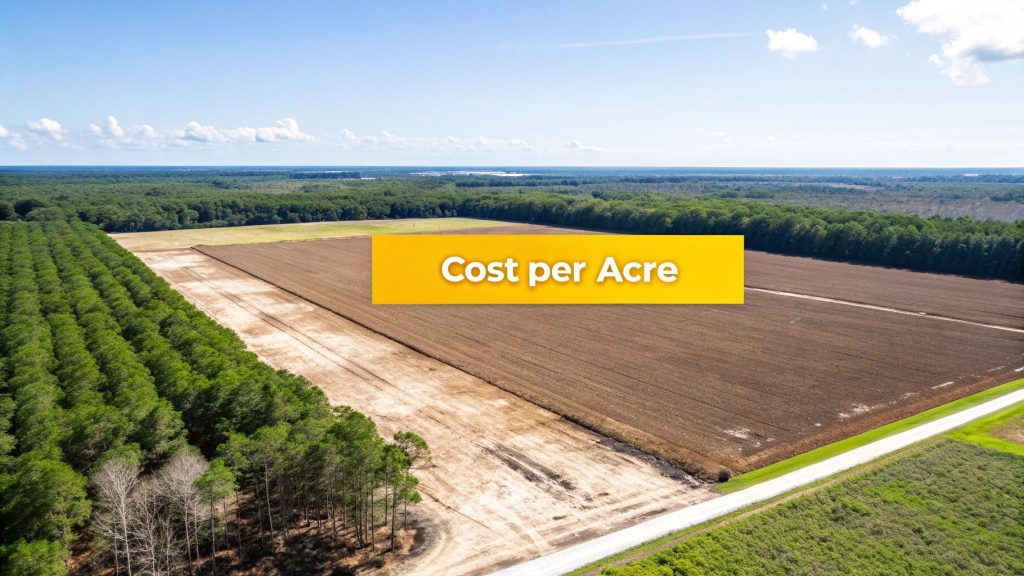
Getting a handle on the cost to clear an acre is the first real step toward making your vision for the property a reality. While every job is different, the price is shaped by a handful of predictable variables. Is your land covered in light brush and a few small saplings, or are you dealing with a dense forest of mature oaks and pines? That difference alone can swing your quote from one end of the spectrum to the other.
This initial price range gives you a crucial frame of reference. As you read on, you’ll see exactly how factors like how thick the vegetation is, how tough the terrain is, and which clearing method you choose all build on that base price. Our goal is to pull back the curtain on the quoting process so you can anticipate costs and make the right calls for your Central Florida project.
Key Factors Influencing Your Estimate
So, what makes one job a $2,000 project and another a $6,500 one? It all comes down to the land itself. A flat, easy-to-reach parcel with just a bit of growth is a straightforward job. On the other hand, a sloped, rocky acre packed with big trees demands more powerful machinery, specialized skills, and a lot more time—all of which drive up the cost.
This isn’t just a local trend; it’s true across the country. National averages for commercial land clearing typically run from $1,565 to $4,520 per acre, and the price is always dictated by those same core factors. A project on lightly wooded flatlands will always be more budget-friendly than clearing a dense forest on rocky hills that require heavy-duty equipment and skilled operators. For more perspectives on this, bucktowngradingandconstruction.com offers additional insights.
The most significant mistake landowners make is underestimating the impact of density and terrain. An acre is an acre, but a lightly brushed field and a forgotten jungle are two completely different projects in the eyes of a contractor.
To give you a clearer picture of what to expect, the table below breaks down how different site conditions can push your estimate toward the lower or higher end of the scale.
Quick Cost Estimate Factors Per Acre
This table gives you a snapshot of the primary factors that influence the total cost of clearing one acre. It helps illustrate why a quote can vary so much from one property to another.
| Cost Factor | Low-End Estimate (Light Clearing) | High-End Estimate (Heavy Clearing) |
|---|---|---|
| Vegetation Density | Light brush, grass, few saplings | Dense, mature hardwood trees and thick undergrowth |
| Terrain & Accessibility | Flat, clear access for heavy machinery | Steep slopes, wetlands, limited or difficult access |
| Stump Removal | No stumps or grinding of small stumps | Removal of large, deep-rooted stumps |
| Debris Disposal | Mulched and left on-site (forestry mulching) | Hauling away large logs, stumps, and debris |
As you can see, a project’s complexity is what truly determines the final price tag. An easy job with on-site mulching will always be more affordable than a difficult one requiring extensive stump removal and hauling services.
The 7 Key Factors That Drive Land Clearing Prices
Why can’t you get a simple, flat-rate price for clearing land? It’s because every single property in Central Florida is unique. The final quote for the cost of clearing an acre of land is a direct result of the specific work needed on your site—much like a mechanic can’t give you an accurate repair cost without first looking under the hood.
To get a real sense of what your project might cost, you need to see your property through a contractor’s eyes. These seven factors are what we look at during every site assessment, turning a ballpark range into a precise, actionable quote for your project.
1. Vegetation Type And Density
The biggest driver of your final cost is, without a doubt, what’s actually growing on your land. An acre of sparse palmetto bushes and tall grass is a completely different job than an acre packed with mature, 100-foot-tall oak trees and a jungle of undergrowth.
Think of it in terms of the time and machinery required. Light brush can often be taken care of quickly with a single machine like a forestry mulcher. A dense forest of hardwoods, on the other hand, demands more powerful equipment, more man-hours, and a much more involved process to cut, process, and handle the debris.
- Light Clearing: This is mostly grass, small shrubs, and saplings less than 3 inches in diameter. These jobs fall on the low end of the cost spectrum.
- Moderate Clearing: A mix of thick brush, tangled undergrowth, and a good number of small-to-medium trees (3-8 inches in diameter).
- Heavy Clearing: This is the most intensive work. We’re talking large, mature hardwood trees (over 8 inches in diameter), dense thickets, and deep, stubborn root systems. This represents the highest potential cost.
2. Stump Grinding And Removal Needs
After the trees are down, you have to decide what to do with the stumps. Simply leaving them in place is the cheapest route, but it’s rarely a practical one if you plan to build, farm, or even just have a clean-looking lawn. Removing them adds a separate cost to the project.
Stump grinding uses a specialized machine to chew the stump down below the ground, while a full removal means digging out the entire stump and its root ball. The size, type of tree, and sheer number of stumps will dictate this part of the cost. An acre with a dozen massive, deep-rooted pine stumps is going to be a bigger job than clearing one with a few shallow palm stumps.
3. Terrain And Soil Conditions
The land itself plays a huge role. A perfectly flat, dry, and stable acre is the dream scenario—it allows our heavy machinery to move around safely and work at peak efficiency.
But Central Florida is full of surprises. Many properties have features that add time and risk to the job, and that’s always reflected in the price.
A project’s difficulty is often defined by its limitations. Steep slopes require specialized equipment and careful operating procedures, while wetlands demand adherence to strict environmental regulations and may limit machine access entirely.
Here are some common terrain challenges that can increase costs:
- Steep Slopes or Hills: This makes operating heavy machinery trickier and introduces safety risks.
- Wetlands or Soft Ground: May require special low-ground-pressure equipment or mean we have to wait for the dry season to get to work.
- Rocky or Hard Soil: This can cause extra wear and tear on our equipment, which slows the whole process down.
4. Site Accessibility
This one is simple: how easily can we get our heavy equipment to the worksite? If we can pull a large truck and trailer carrying a bulldozer or forestry mulcher right up to the area you want cleared, things get started smoothly.
Access becomes a cost factor when the site is tucked away or difficult to reach. Things like narrow gates, long, muddy driveways, or needing to cross a neighbor’s property can create logistical headaches. In extreme cases, if we can’t get our big machines in, we have to use smaller, less efficient equipment, which means the job takes longer and costs more in labor.
5. Debris Disposal Method
Once everything is cut down, all that green waste has to go somewhere. How we handle disposal has a direct impact on the final cost of clearing an acre of land.
The most popular, cost-effective, and eco-friendly option is usually forestry mulching. This process grinds all the vegetation into a nutrient-rich layer of mulch that’s left right on site. It completely eliminates hauling and landfill fees. In contrast, older methods like piling and burning (which isn’t always permitted) or hauling everything away in dump trucks add significant labor, fuel, and disposal costs to the bill.
6. Permitting And Regulatory Requirements
Before we even start the engines, we have to check with local city and county authorities. Getting the right permits is a crucial step that protects you, our crew, and the local environment.
The cost and complexity of this can vary wildly. Some rural properties have very few clearing regulations, while land in more urban or environmentally sensitive areas can have incredibly strict rules. Things like your property’s zoning, its proximity to wetlands, or the presence of protected tree species can trigger a need for detailed surveys and applications, adding administrative time and costs to the project.
7. Additional Services Required
Finally, the base cost of clearing can go up depending on what other services you need to get your land ready for its next chapter. These are usually quoted as separate line items but are part of the total project budget.
Some common add-on services include:
- Grading and Leveling: Reshaping the land to ensure proper water drainage or to create a perfectly flat pad for a new home.
- Erosion Control: Installing silt fences or spreading seed and straw to keep the soil in place after it’s been cleared.
- Herbicide Application: A follow-up treatment to prevent aggressive or unwanted weeds and brush from growing back.
Comparing Methods: Forestry Mulching Vs. Traditional Dozing
Picking the right way to clear your land isn’t just about getting the job done. It’s about choosing a process that lines up with your budget, your timeline, and what you ultimately want to do with the property. When you start looking into the cost of clearing an acre of land, you’ll quickly find two main camps: modern forestry mulching and traditional dozing. Each one offers a totally different way to get to a clean slate.
Think of forestry mulching as a specialized, all-in-one tool. A single, powerful machine moves across your land, simultaneously cutting down and grinding up trees, brush, and overgrowth. It turns everything into a useful layer of mulch that’s left right on the ground. It’s a one-and-done kind of deal.
Then you have the traditional method, which is more like a multi-stage assembly line. It’s a bigger production involving several heavy machines—bulldozers to knock everything down, excavators to pile it up, and big trucks to haul it all away. It’s the old-school way that’s been around for decades, but it comes with more moving parts and its own set of costs.
The Modern Approach: Forestry Mulching
Here in Central Florida, forestry mulching has become the go-to for a lot of landowners, and for good reason. It’s a one-machine, one-operator process that’s incredibly efficient and much easier on the environment.
The machine’s grinding head essentially shreds vegetation on contact, leaving behind a valuable blanket of organic material. This mulch layer immediately helps prevent soil erosion, holds in moisture, and slowly breaks down to feed the soil. Because you’re not creating big debris piles to burn or haul off, you often sidestep extra permit headaches and completely eliminate disposal fees.
The Old-School Method: Dozing And Hauling
Traditional clearing with a bulldozer is a much rougher process. A dozer literally shoves trees over and scrapes the ground clear, creating massive piles of debris. From there, you have to deal with those piles—either by burning them (if local regulations even allow it) or loading them onto trucks to be hauled off to a landfill.
While it’s certainly effective for stripping a site down to bare dirt, this method leaves the soil compacted and exposed, making it highly vulnerable to erosion from our Florida downpours. It also demands a bigger crew and a whole fleet of equipment, which translates to a longer, more complicated project that can drive up costs once you add in hauling and dump fees.
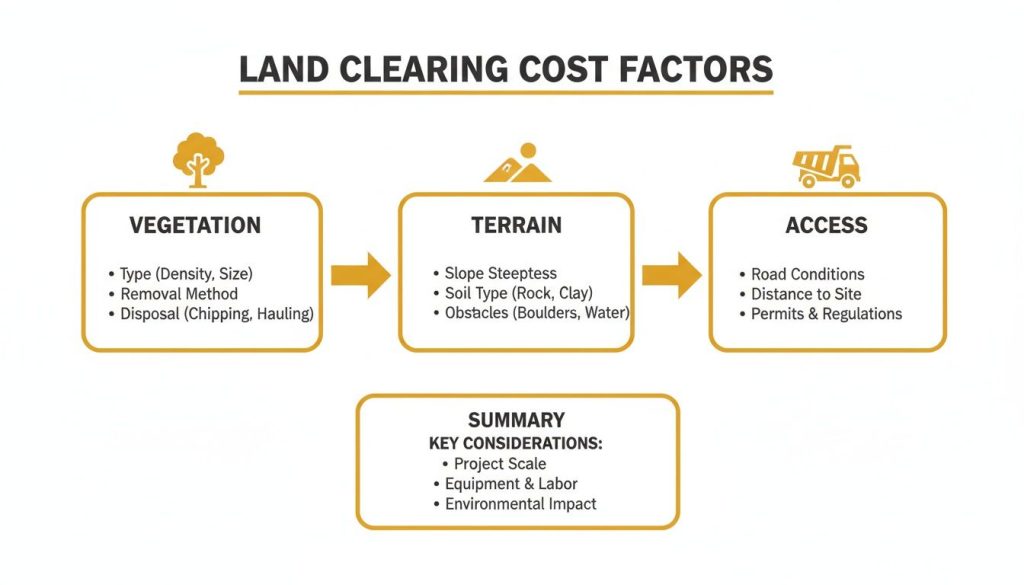
As the infographic shows, things like thick vegetation, steep terrain, and tricky site access will drive up the cost no matter which method you choose. The shift toward more efficient technology is a direct response to these challenges. In fact, the forestry mulching machine market was valued at $561 million in 2025 and is expected to hit $771 million by 2031—proof that people are catching on. These machines grind everything in a single pass, which can slash disposal fees by up to 50% compared to bulldozing. For developers, that can mean saving 20-30% per acre while causing far less soil disruption.
If you want to dive deeper into the numbers, check out our guide on understanding forestry mulching cost.
Forestry Mulching Vs. Traditional Clearing: A Head-To-Head Comparison
To really make the right call for your project, it helps to see how these two methods stack up against each other on the factors that matter most.
| Feature | Forestry Mulching | Traditional Clearing (Dozer & Haul) |
|---|---|---|
| Environmental Impact | Low. Enriches soil with mulch, minimal soil disturbance. | High. Strips topsoil, causes soil compaction, high erosion risk. |
| Project Timeline | Fast. Single-step process completed with one machine. | Slow. Multi-step process requiring several machines and coordination. |
| Final Appearance | Clean, natural look with a protective layer of mulch. | Bare dirt, exposed soil, and potential for large burn scars. |
| Overall Cost | Often lower due to no hauling or disposal fees. | Can be higher due to labor, multiple machines, and debris removal costs. |
| Permitting | Simpler. Often avoids the need for burn or disposal permits. | More complex. May require permits for burning and hauling. |
At the end of the day, your choice really boils down to your end goal. If you’re looking for a fast, eco-friendly solution that actually improves your land’s health, forestry mulching is almost always the winner. But if your project requires a completely bare site for major foundation work and you have the budget for the extensive cleanup, traditional methods might be necessary.
By understanding the pros and cons, you can more accurately predict the true cost of clearing an acre of land and pick the method that delivers the best value for your Central Florida property.
How to Create a Rough Project Estimate Yourself
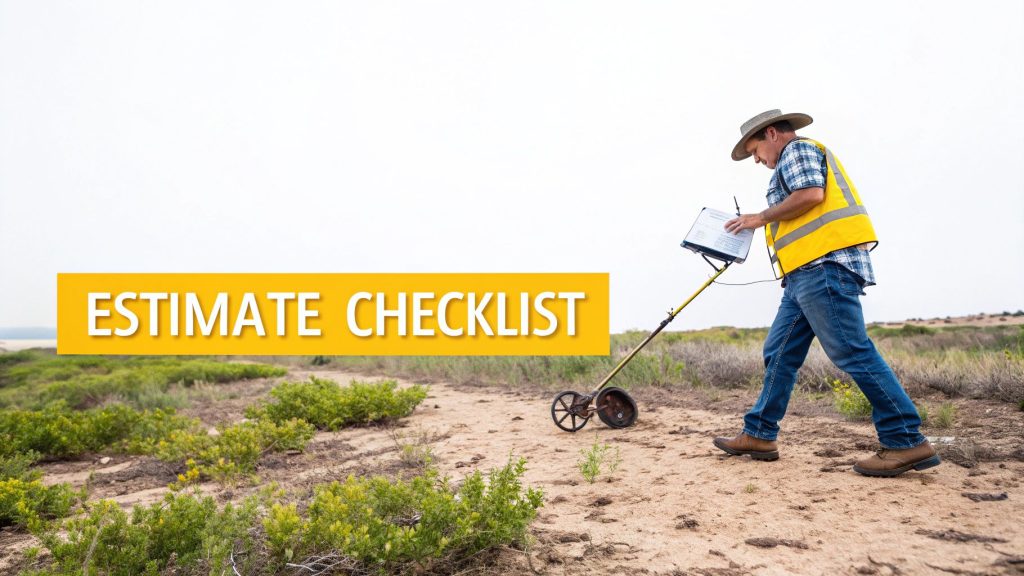
Before you even think about picking up the phone to call a contractor, you can get a surprisingly accurate feel for your project’s scope by just walking the property. This isn’t about nailing down a price to the penny. It’s about understanding the same variables a professional will be looking for.
Think of it like a pre-inspection. When you create your own rough estimate, you’re empowered to ask the right questions and have a much more productive conversation when you’re ready for an official quote. This simple process turns abstract cost factors into tangible things you can see and touch on your own land.
Step 1: Walk The Land And Assess Vegetation
First things first, you need to get a clear picture of what actually has to be removed. Grab a notepad or just use your phone and take a walk around the entire perimeter of the acre you want cleared.
As you go, make notes on the main types of vegetation and how dense they are. Try to group what you see into a few simple categories:
- Light Growth: Is it mostly tall grass, weeds, and small palmetto bushes? This is the easiest and most affordable kind of clearing job.
- Moderate Growth: Are you seeing a lot of thick underbrush, tangled vines, and a good number of small trees or saplings (less than 8 inches in diameter)?
- Heavy Growth: Is the land covered in large, mature trees like oaks or pines (over 8 inches in diameter)? Is the undergrowth so thick you can barely push your way through it?
The more detailed your notes are, the better you’ll be able to see where your project falls on the cost spectrum. Don’t forget to flag any particularly huge or problematic trees that might need special attention.
Step 2: Analyze The Terrain And Accessibility
Next, shift your focus from what’s on the land to the land itself. The condition of the ground and how easy it is to get to are massive factors in deciding the equipment and time needed for the job.
As you walk, keep an eye out for anything that isn’t perfectly flat and dry. These features almost always add time and complexity to a project, which naturally bumps up the cost.
Key things to check for:
- Slope and Grade: Note any significant hills, steep slopes, or ditches. Running heavy machinery on uneven ground takes more skill and time.
- Ground Condition: See any low-lying areas that look like they hold water? Soft, muddy, or sandy soil can make it a real challenge for heavy equipment to operate efficiently.
- Site Access: How would a big truck and trailer even get to the work area? Look for narrow gates, low-hanging tree limbs, or anything else that could block access.
A critical part of any site assessment is imagining a 40-foot truck trying to navigate the entrance. If access is tight, it can limit the type of machinery used, potentially increasing the project timeline and labor costs.
Step 3: Determine Your Stump And Debris Plan
Finally, think about what you want the finished site to look like. Your decisions here have a direct impact on the final steps of the clearing process—and the costs that come with them.
First, decide on the stumps. Do you want them completely gone, or is it okay if they’re ground down below the surface? Or maybe you’re fine with them being cut flush with the ground? Full removal is the most expensive option, while leaving them is the cheapest but often isn’t practical for future plans.
Then, figure out the debris. Do you prefer the eco-friendly (and often more affordable) option of having everything mulched and left on-site to enrich the soil? Or does your project require every log, stump, and branch to be hauled away to a landfill? Hauling adds significant labor, fuel, and disposal fees to the final bill.
It helps to see how these costs fit into the bigger picture. On a global scale, land management is a massive industry. Projections show that annual expenses for carbon mitigation efforts alone range from $2 to $393 billion USD. These numbers show that the costs private landowners face are just one piece of a much larger economic and environmental puzzle. You can read the full research on these global economic models to get a better sense of the scale.
Navigating Permits And Project Timelines
Hiring a land clearing contractor is a major step, but it doesn’t mean the heavy machinery shows up the next day. Before any dirt gets moved, there are some critical planning and administrative hurdles to clear. Understanding the permit process and setting a realistic project timeline are just as important as knowing the final price tag for clearing an acre.
Think of it as getting the blueprints for a house before you start buying lumber. These preliminary steps make sure your project is legal, efficient, and in line with local environmental rules. Trying to skip this part is a recipe for costly fines, frustrating delays, and major headaches down the road.
Why Permits Are A Non-Negotiable First Step
Before a single tree is touched, you have to check with your local Central Florida city or county authorities. Every single jurisdiction has its own set of rules, and what’s perfectly fine on one side of the county line might be strictly prohibited on the other.
Permitting isn’t just bureaucratic red tape; it serves a real purpose. It protects local ecosystems, ensures you’re complying with zoning laws, and verifies that the project won’t mess with sensitive areas like wetlands or protected wildlife habitats.
Several factors can trigger the need for specific permits:
- Zoning Designation: The rules for residential land are often completely different from those for commercial or agricultural properties.
- Environmental Overlays: If your land is near wetlands, conservation areas, or floodplains, expect extra scrutiny and a more involved review process.
- Protected Species: The presence of gopher tortoises, certain types of oaks, or other protected plants and animals can dictate exactly how—or even if—clearing can happen.
A good, responsible contractor will help you navigate these requirements. It’s a key part of the service. For a deeper dive into what this involves for new construction, you can read our detailed Florida guide on clearing land for construction.
Setting Realistic Project Timelines
Once the necessary permits are in hand, the project can finally move into the operational phase. A clear timeline helps manage everyone’s expectations and keeps the job on track. While every project has its own quirks, most follow a pretty predictable sequence of events.
Understanding the full project lifecycle, from paperwork to the final walkthrough, is crucial. The time spent on-site with machinery is often just one part of a much larger and more detailed process.
Here’s a typical breakdown of how a land clearing project unfolds:
- Initial Quote and Site Walkthrough: This usually takes just 1-3 business days from your first call. We’ll meet you on your property to walk the land and get a solid handle on the scope of work.
- Permit Application and Approval: This is the big variable. Depending on the county’s workload and how complex your project is, this can take anywhere from a few weeks to several months.
- On-Site Clearing Work: For a moderately wooded single acre, the actual clearing often takes 1-3 days using an efficient method like forestry mulching.
- Additional Services: If your project includes grading, erosion control, or herbicide treatments, that can add another 1-2 days to the job.
- Final Walkthrough: We’ll walk the property with you one last time to make sure you are completely satisfied with the result.
This structured approach doesn’t just clarify the schedule; it treats your initial cost as a long-term investment in your property’s value. In fact, responsible land management offers a significant return. According to the UN Convention to Combat Desertification, every dollar invested in land restoration yields between $7 and $30 in economic returns, reframing the clearing cost as a valuable investment in your land’s future.
Getting An Accurate Land Clearing Quote
After looking at all the variables that go into the cost of clearing an acre of land, one thing becomes crystal clear: you can’t get a reliable quote without a professional actually walking the property. Those online calculators and rough estimates are fine for a starting point, but they simply can’t see the unique story your land has to tell.
Getting a firm, accurate number for your project always starts with an on-site consultation. It’s the only way for an expert to see the specific challenges and opportunities your land presents, which ensures the price you’re given is the price you’ll actually pay.
Our Transparent Quoting Process
Here at Palm State Clear Cut, we believe in a straightforward, no-obligation process. When you reach out for a free estimate, you’re not getting a sales pitch—you’re starting a simple, transparent conversation designed to give you complete clarity and confidence.
This process guarantees there are no surprises down the road. It all begins with talking about what you want to achieve with your property.
A quote is more than just a number; it’s a project plan. A detailed, on-site assessment ensures that the plan aligns perfectly with your vision and your land’s specific conditions, preventing costly misunderstandings later.
Here’s exactly what you can expect when you request your free estimate from us:
- Initial Conversation: First things first, we listen. We want to understand your vision. Are you clearing a spot for a new home, creating a pasture for horses, or prepping for a commercial development? Knowing your end goal is the crucial first step.
- On-Site Walkthrough: Next, one of our experts will schedule a time to walk the property with you. This is where the real work happens—we’ll assess all the key cost drivers like vegetation density, tricky terrain, accessibility issues, and any hidden obstacles.
- Detailed, Written Quote: After the walkthrough, you’ll get a comprehensive written quote from us. This document won’t be a one-liner; it will clearly outline the full scope of work, the specific equipment we’ll use, a realistic project timeline, and a firm price tailored to your acre.
Choosing the right partner for a job this big is essential. To help you make a smart decision, we put together a guide on finding a land clearing contractor in Central Florida with some valuable tips.
A Few Common Questions About Land Clearing Costs
As you get closer to starting your project, you’re probably running a few final questions through your mind. It’s completely normal. Getting clear on these details helps you budget accurately and pick the right method for clearing your acre, making sure you get the best possible outcome. Here are some quick, no-nonsense answers to the questions we hear most often.
Is Forestry Mulching Really Cheaper Than Bulldozing?
Yes, in most scenarios, forestry mulching is definitely the more budget-friendly option. The savings come from cutting out the single biggest expense in old-school land clearing: getting rid of the debris. When you use a dozer, you end up with massive piles of trees, stumps, and brush that have to be loaded up and hauled away.
That traditional doze-and-haul method tacks on extra costs for:
- Extra Labor: You need a crew just to load all that material onto trucks.
- Hauling Fees: Every single dump truck run to the landfill costs money.
- Landfill Tipping Fees: The disposal site charges you to dump the green waste.
Forestry mulching completely sidesteps those expenses. It turns all that vegetation into a beneficial layer of mulch that stays right where it is, enriching your soil. This makes it not only a smarter financial choice for most Central Florida properties but an environmentally sound one, too.
How Long Does It Actually Take To Clear One Acre?
The time it takes to clear a single acre really hinges on how thick the vegetation is and what the terrain is like, but we can give you a solid ballpark.
For a typical, moderately wooded acre, a skilled operator with a modern forestry mulcher can usually get the job done in 1 to 3 days. If you’re just dealing with light brush and a few saplings, it might only take a day. On the flip side, an acre that’s choked with huge, mature hardwoods and a thick, tangled understory could easily take longer.
The biggest variable isn’t just the size of the area, but the volume of vegetation on it. Think of it this way: clearing a sparse field is a sprint, but clearing a dense jungle is a marathon.
Can I Save Money By Clearing The Land Myself?
It’s tempting to think about DIY land clearing to cut down on costs, but this route often comes with a lot of hidden expenses and some pretty serious risks. Renting heavy equipment like a bulldozer or a big skid steer can set you back hundreds of dollars a day, and that’s before you even factor in fuel and delivery fees.
Even more important is the safety issue. Operating this kind of machinery without years of training is incredibly dangerous and can lead to severe injury or costly damage to your property. When you hire a professional service, you’re not just paying for the machine; you’re paying for the operator’s experience, their efficiency, and their insurance—which protects you from any liability. For the vast majority of landowners, hiring an insured, experienced company is the smarter, safer, and, in the long run, more cost-effective decision.
Ready to see what your property could become? Palm State Clear Cut offers free, no-pressure quotes all across Central Florida. Let our experts walk your land, give you a detailed plan, and provide a firm price to make your vision a reality. Get your free estimate today!