
How to Grow Grass Under Trees in Central Florida Lawns
- Mike Walker
- Jan 11
- 13 min read

Growing grass under trees is more of an art than a science. It's not about just throwing down some seed and hoping for the best. To actually succeed, you need to tackle the root causes: improving light conditions, amending the soil, and choosing a shade-tolerant turfgrass variety. This three-pronged attack is what gives your grass a real fighting chance against the tree.
Why Grass Struggles Under Florida Trees
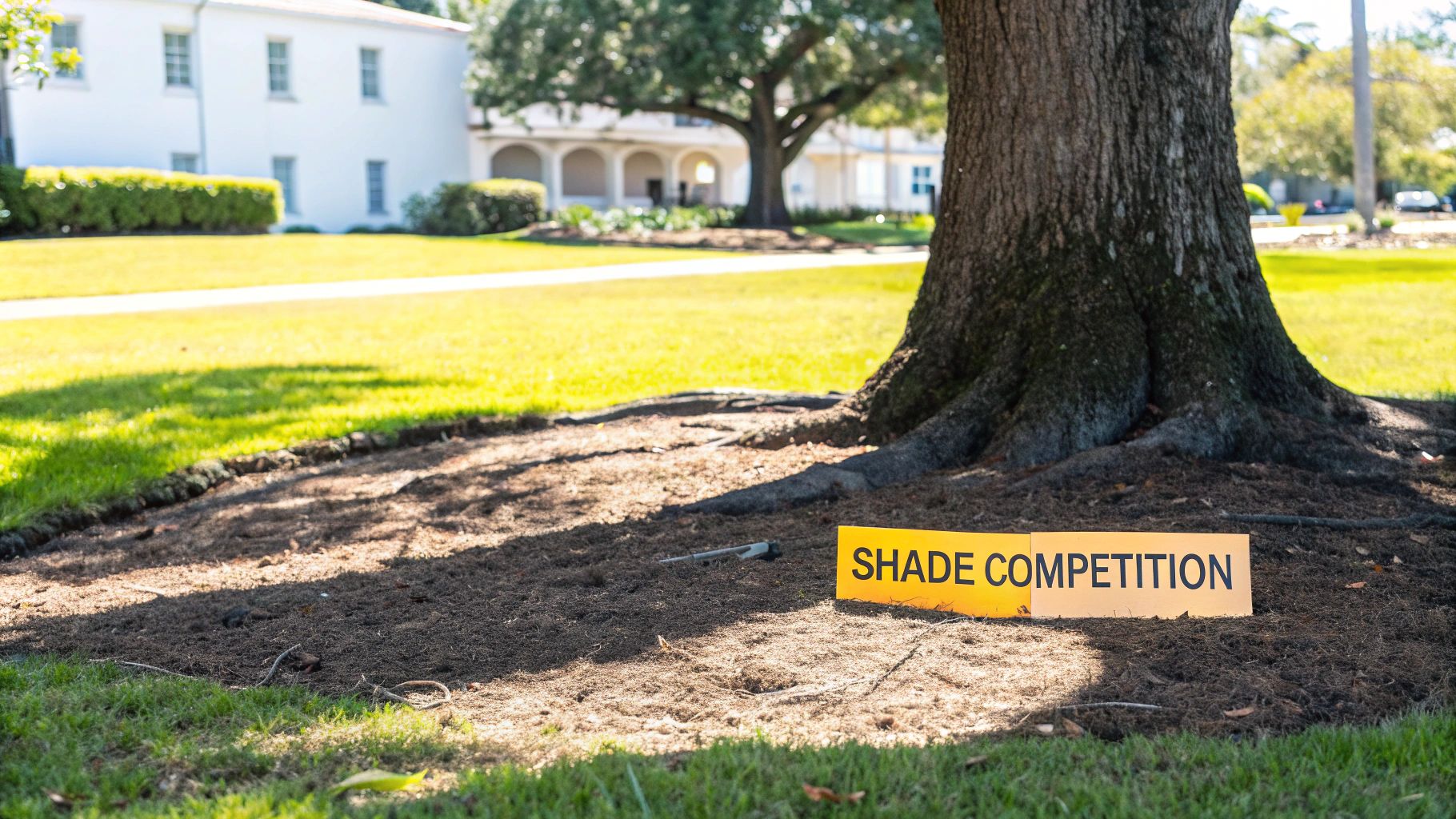
That stubborn, bare patch of dirt under your beautiful live oak isn't your fault. It’s the scene of an intense, natural turf war. Simply scattering seed into the shade almost never works because you’re fighting a two-front battle—one above ground and one below.
Understanding these challenges is the first real step toward turning that patch of dirt and frustration into a lush, green carpet.
The Competition for Sunlight
The most obvious problem is the shade itself. A dense tree canopy acts like a giant umbrella, blocking the sunlight grass needs for photosynthesis. Without enough light, grass blades get thin and spindly, stretching for any ray they can find before eventually giving up.
It’s a bigger problem than most people realize. Light levels can plummet by 60–90% under a thick canopy compared to an open patch of lawn. Most turfgrasses need a solid four to six hours of direct sun. Under a mature oak, though, the usable light can fall below 20–30%, even in the middle of the day.
The Underground Battle for Resources
Down below, an even tougher fight is going on. The tree's roots and the grass are both going after the same limited water and nutrients in the top few inches of soil.
Water Hogging: A mature tree has a massive root system that is incredibly good at soaking up any available moisture. This often leaves the surrounding soil bone-dry, especially during Florida's dry spells, making it impossible for shallow-rooted grass to survive.
Nutrient Depletion: Those same tree roots are masters at pulling essential nutrients like nitrogen and potassium out of the soil, essentially starving the grass. In fact, up to 90% of a tree’s fine feeder roots are packed into the top six to twelve inches of soil—the exact same place your grass is trying to get established.
Overcoming these obstacles takes a bit of strategy. It’s not about forcing grass to grow where it can’t, but about tilting the odds in its favor. While this article zeroes in on Florida lawns, you can find a comprehensive guide on how to grow grass in shade that offers a broader perspective for other regions.
Diagnosing Your Shade and Soil Conditions
Before you even think about buying grass seed or laying down sod, you need to become a bit of a detective in your own backyard. Getting grass to thrive under trees is all about understanding the unique challenges of your specific spot. This isn't a one-size-fits-all problem; it's about making a plan that fits the reality of your yard.
Your first job, and honestly the most important one, is to conduct a shade audit. Trees don't just cast one big, static shadow. That patch of light and shade is constantly shifting as the sun arcs across the sky, and it changes with the seasons, too. Nailing down this light pattern is the key to picking the right plant for the right place.
Performing a Shade Audit
The best way to do this is simple: just watch. Go out and look at the area under the tree at different times of the day—morning, midday, and late afternoon.
Dappled or Filtered Light: Are you seeing shifting patterns of sun peeking through the leaves? This kind of light, even for a few hours, can often support the more shade-tolerant types of turfgrass.
Partial Shade: Does the spot get a solid block of 3 to 4 hours of direct, uninterrupted sunlight but is shaded for the rest of the day? If so, you're in a pretty good position for some grass varieties.
Full or Deep Shade: Is the area almost constantly in shadow? If it gets next to no direct sun, grass just isn't going to happen. It's time to think about attractive alternatives like mulch or a hardy groundcover.
Jotting down these observations helps you create a light map of your yard, showing you exactly where you have a fighting chance. Getting a clear diagnosis of your shade levels is the critical first step. For a deeper dive into making the most of these conditions, it's worth reviewing the principles of shade gardening.
Assessing Soil and Root Competition
Next up, you have to figure out what's going on beneath the surface. The soil under a mature tree is a tough neighborhood for grass. It's often compacted, acidic, and stripped of nutrients because the tree's massive root system has already claimed everything for itself.
A simple "screwdriver test" can tell you a lot. Grab a long screwdriver and try pushing it into the soil in a few different spots. If it sinks in easily, your soil is in decent shape. But if you have to lean on it or it only goes in a couple of inches, you're dealing with severe soil compaction. That dense, hard-packed earth is like a wall, blocking water, air, and nutrients from ever reaching the grass roots.
Pro Tip: While you're testing the soil, pay attention to the tree's surface roots. Gently probe around to get a feel for where the biggest roots are. You'll want to avoid damaging them later, so knowing their location is key. Hacking into any root thicker than a pencil can seriously injure your tree.
This underground battle is often where homeowners lose the war before it even begins. You absolutely have to address compacted, nutrient-poor soil. You can learn more about tackling these tough ground conditions in our practical guide to soil stabilization techniques. Getting this foundation right sets the stage for everything else.
Preparing The Ground For Healthy Growth
Once you’ve diagnosed what’s really going on in your yard, the real work begins. I’ve seen it time and time again: success in growing grass under trees has far less to do with the specific bag of seed you buy and everything to do with the groundwork you put in beforehand. This is where you physically change the environment to give that new turf a fighting chance against those big, established trees.
Let's be honest, the soil under a mature tree is a tough neighborhood for a tiny grass seedling. Years of foot traffic, falling rain, and a dense web of tree roots have likely turned it into a hard, compacted surface. This creates an almost solid barrier that stops water, oxygen, and nutrients from getting to where the shallow roots of new grass need them most. Your first mission is to break up that compaction.
Amending The Soil And Managing Roots
A common mistake is just dumping a few bags of topsoil over the area, but this can actually suffocate the tree's surface roots and do more harm than good. Instead, the goal is to improve what you already have, creating a looser, richer soil structure.
Here's how we tackle it:
Core Aeration: This is the single most effective, tree-safe way to relieve compaction. A mechanical core aerator pulls out small plugs of soil, creating little channels that allow air and water to penetrate deep into the root zone without shredding major tree roots.
Organic Matter: Right after aerating, spread a one- to two-inch layer of high-quality organic compost over the area. Rake it in gently, letting it fill those new aeration holes. This does wonders for enriching the soil, helping it hold moisture, and providing a slow, steady food source for your new grass.
This quick snapshot shows why those initial diagnostic steps are so crucial for shaping your prep work.
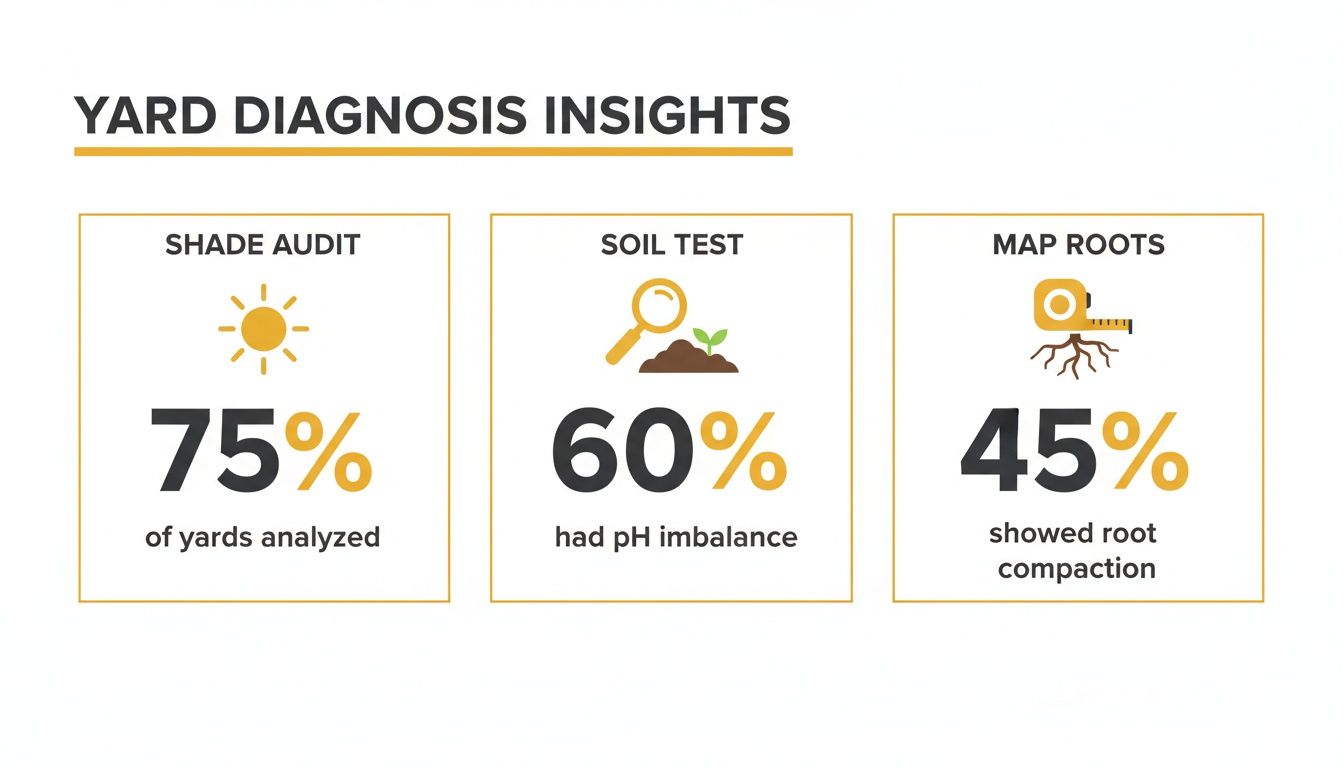
By figuring out your exact shade, soil, and root situation first, you can create a targeted plan instead of just guessing.
Creating A Protective Mulch Ring
One of the best things you can do for both your tree and your future lawn is to create a grass-free zone right around the trunk. I consider this "mulch buffer" non-negotiable for long-term success. It completely eliminates the most intense area of competition at the tree's base and, just as importantly, protects the bark from getting nicked and damaged by mowers and string trimmers.
Create a circle of mulch that extends at least 2-3 feet out from the trunk. If you can, take it all the way out to the tree's dripline (the edge of its canopy). Think about it: the vast majority of the fine, delicate feeder roots for both grass and trees—often over 70%—are packed into the top few inches of soil. By removing the grass right there, you cut down on that direct conflict for water and nutrients. You can learn more about how mulching can benefit your entire landscape in our detailed guide.
Urban forestry studies consistently show that replacing turf with mulch around a tree’s base boosts the tree’s fine-root density and overall growth. Trying to force grass to grow right up to the trunk almost always results in a weaker tree and a struggling patch of turf because the competition for resources in that small space is just too intense.
By taking the time to properly prepare the soil and strategically reduce competition with a mulch ring, you're building the best possible foundation. This prep work dramatically increases the odds that your efforts will pay off with a healthy, lasting lawn under your beautiful trees.
Smart Maintenance for Shaded Lawns
Getting grass to finally take root under a tree is a huge win, but the job isn't over. You can't just start treating this delicate new turf like the rest of your sun-drenched lawn. It’s operating under a completely different set of rules now.
The secret to keeping that shaded grass healthy for the long haul is smart, specialized maintenance. This isn't about more work, but a different kind of work. Your goal is to nurture a plant that’s already stressed from low light and fierce root competition.
Adjust Your Mowing and Watering Habits
The most critical changes you can make are to your mowing and watering routines. For grass under trees, these two habits are the foundation of its survival. The key is simple: mow higher and water deeper.
Letting your shaded grass grow taller is non-negotiable. Jack your mower deck up to its highest setting and aim for a blade height of 3 to 4 inches. Longer grass blades have more surface area, which lets them capture every last bit of filtered sunlight to fuel photosynthesis. It’s a small change that makes a massive difference.
When it comes to watering, think "deep and infrequent." A light, daily sprinkle is the worst thing you can do. It encourages shallow roots for both the grass and the tree, which just makes them fight each other even more for moisture. Instead, give the area a good, long soak once a week so the water penetrates deep into the soil. This pushes the grass to grow a stronger, more resilient root system.
The biggest mistake homeowners make is treating shaded grass exactly like the turf basking in full sun. Taller mowing and deep watering aren't just suggestions; they are fundamental requirements to compensate for the stressful, low-light environment.
A Smarter Fertilization and Cleanup Strategy
Fertilizing grass in the shade requires a delicate touch. It might seem logical to load up weak-looking grass with nutrients, but over-fertilizing can be a death sentence. Too much nitrogen forces weak, spindly growth that’s a magnet for fungal diseases—and those diseases absolutely thrive in cool, damp, shady spots.
Your best bet is to use a balanced, slow-release fertilizer at about half the rate you’d use on the sunny parts of your lawn. This provides a gentle, steady stream of nutrients that supports strong roots without encouraging vulnerable top growth. A single application in the spring is usually all you need.
Finally, you have to be vigilant about cleanup, especially in the fall. A thick blanket of fallen leaves will completely block what little sunlight your grass gets, effectively smothering it in a matter of weeks. Rake or blow leaves off these shaded areas right away to keep the turf breathing.
This same diligence applies to fallen twigs and branches all year. Sometimes, the canopy itself is the problem. If you notice it’s getting too dense, strategic pruning might be necessary. You can learn more in our guide to safely removing tree limbs. Proper pruning doesn’t just help your lawn; it also keeps your tree healthy and strong.
Knowing When to Bring in a Professional
You can do everything right—aerate the soil, add the best amendments, and sow the perfect shade-tolerant grass seed—but sometimes the biggest roadblock is literally right above you. A mature, dense tree canopy can cast so much shade that even the most resilient turf varieties will eventually give up. This is where a strategic call to a professional tree service can make all the difference.
It’s not about giving up; it’s about knowing when you need a different set of tools and expertise. Bringing in a certified arborist isn't just for saving sick or dying trees. Their skill is essential for carefully reshaping the canopy to let in more light, which can dramatically boost your chances of success, all while protecting the health of your valuable trees.
Strategic Pruning for More Sunlight
The most effective thing a pro can do for your lawn-under-a-tree project is selective thinning and canopy raising. While you might be able to snip a few low-hanging branches, significant structural work on a mature tree is a job for a professional. They have the knowledge to improve light penetration without compromising the tree's health or its natural beauty.
An arborist can help in a couple of key ways:
Canopy Thinning: This isn't just random cutting. It's a precise process of removing select interior branches to allow sunlight to filter through the entire canopy. Think of it as installing a natural skylight, turning deep, solid shade into a more welcoming dappled light.
Crown Raising (or Lifting): By removing the lowest major limbs, an arborist opens up the space underneath. This allows more angled sunlight to hit the ground during the early morning and late afternoon. It also improves air circulation, which is a huge help in reducing the risk of fungal diseases that can plague new turf.
Hiring a certified arborist is a non-negotiable investment. Bad pruning, often called "lion-tailing," strips out all the interior branches, leaving foliage only at the very tips. This can severely weaken the tree and make it a prime candidate for damage in the next big storm. A professional ensures the cuts promote both sunlight and long-term tree health.
Advanced Site Clearing and Preparation
For larger properties here in Central Florida, especially those with stubborn undergrowth or old tree stumps, professional site prep is often a must. Trying to tackle it yourself can be a slow, back-breaking chore that often doesn't get the job done right.
If you're starting with a challenging site, these services are game-changers:
Forestry Mulching: This is the most efficient way to clear out competitive undergrowth like palmettos, tangled vines, and invasive shrubs. A single machine grinds everything up on site, turning that unwanted vegetation into a natural layer of mulch that actually enriches the soil as it breaks down. It's far faster and more eco-friendly than trying to clear it all by hand.
Stump Grinding: Leftover stumps are more than just an eyesore. Their decaying roots can attract pests and create an uneven surface that's impossible to mow properly. A professional stump grinder can chew a stump down well below ground level, completely removing the obstacle so you can finally establish a smooth, level lawn.
In the end, knowing when to call for backup is the mark of a smart homeowner. By investing in professional tree work and land clearing, you’re not just solving a problem—you’re creating the perfect foundation for a thriving, beautiful landscape.
Common Questions About Grass and Trees
Even with the best plan, you're bound to have questions pop up when you're trying to grow grass under trees. It’s a common challenge here in Central Florida. Let's walk through some of the things homeowners ask most often to get you on the right track.
Can I Just Spread Topsoil Over Tree Roots and Seed It?
This is a gut reaction for many people, but it’s a critical mistake that can seriously damage, or even kill, your beautiful mature trees.
Piling more than an inch or two of new soil over the existing ground literally suffocates a tree's feeder roots. These delicate roots are clustered right near the surface because they need oxygen to breathe, and burying them cuts off that essential supply.
A much better, tree-friendly method is to improve the soil you already have. You can use a core aerator to open up compacted ground and then top-dress the area with a thin layer of quality organic compost. This approach gives the soil a boost without smothering your tree's root system.
What Time of Year Is Best for Planting Grass in Central Florida?
For the warm-season grasses we have in Central Florida, the sweet spot for planting is from late spring through early summer. There are a few good reasons for this timing.
Rainy Season: This lets the new grass tap into our consistent summer rains, saving you a ton of watering.
Warm Temperatures: The heat is exactly what these grasses need for quick germination and strong, steady growth.
Long Daylight Hours: More sun gives the young grass blades the fuel they need to build a robust root system before the cooler, drier months hit.
Planting during this window gives your new lawn its best shot at success.
Trying to get a lawn going in the late fall or winter is just setting yourself up for a headache. The cooler temps and shorter days slow everything to a crawl. The young grass stays weak and just can't compete with the tree for water and nutrients when spring rolls back around.
Will More Fertilizer Make My Thin Grass Thicker?
In a shady spot, the real problem is almost always a lack of sunlight, not a lack of food. It feels like the right move to feed struggling grass, but over-fertilizing can actually create more problems.
When you push too much fertilizer, especially the high-nitrogen kind, it forces the grass to grow weak, spindly blades. This lanky, fragile grass is a prime target for fungal diseases and pests, which just love the cool, damp environment under a tree canopy.
The right move is to fix the light problem first with some selective tree pruning. After that, you can support healthy growth with a balanced, slow-release fertilizer applied at about half the recommended rate.
What Are My Options If Grass Just Wont Grow?
Look, sometimes an area is just too dark for any type of turfgrass to survive, even the most shade-tolerant varieties. When you get to that point, it’s time to stop fighting a losing battle and start working with your landscape.
You could switch to handsome, low-maintenance groundcovers that are built for deep shade, like Asiatic Jasmine or Mondo Grass.
Another great option—and one that's fantastic for your tree—is to simply expand the mulch bed all the way out to the tree's dripline. This gives you a clean, purposeful look, gets rid of the competition for good, and dramatically improves the health of your tree.
When you're dealing with a really dense canopy or a mess of undergrowth, bringing in a professional is often the smartest move. Palm State Clear Cut is an expert in selective tree thinning and forestry mulching, creating the perfect light and soil conditions for a landscape to flourish. See how our services can completely change your property by visiting us at https://palmstateclearcut.com.
Comments