
Central Florida Tree Removal: when is best time to cut down trees
- Mike Walker
- Dec 7, 2025
- 18 min read

Ask any seasoned arborist when to take down a tree, and they'll likely point to the dormant season, which generally runs from late fall to early spring. Here in Central Florida, that usually means November through February. The cooler temperatures slow down sap flow and bug activity, which makes the whole process cleaner, safer, and less stressful for the surrounding landscape.
But anyone who's lived here knows our subtropical climate plays by its own rules. That adds a few extra layers to the decision that every property owner needs to understand.
The Best Time for Tree Removal in Central Florida
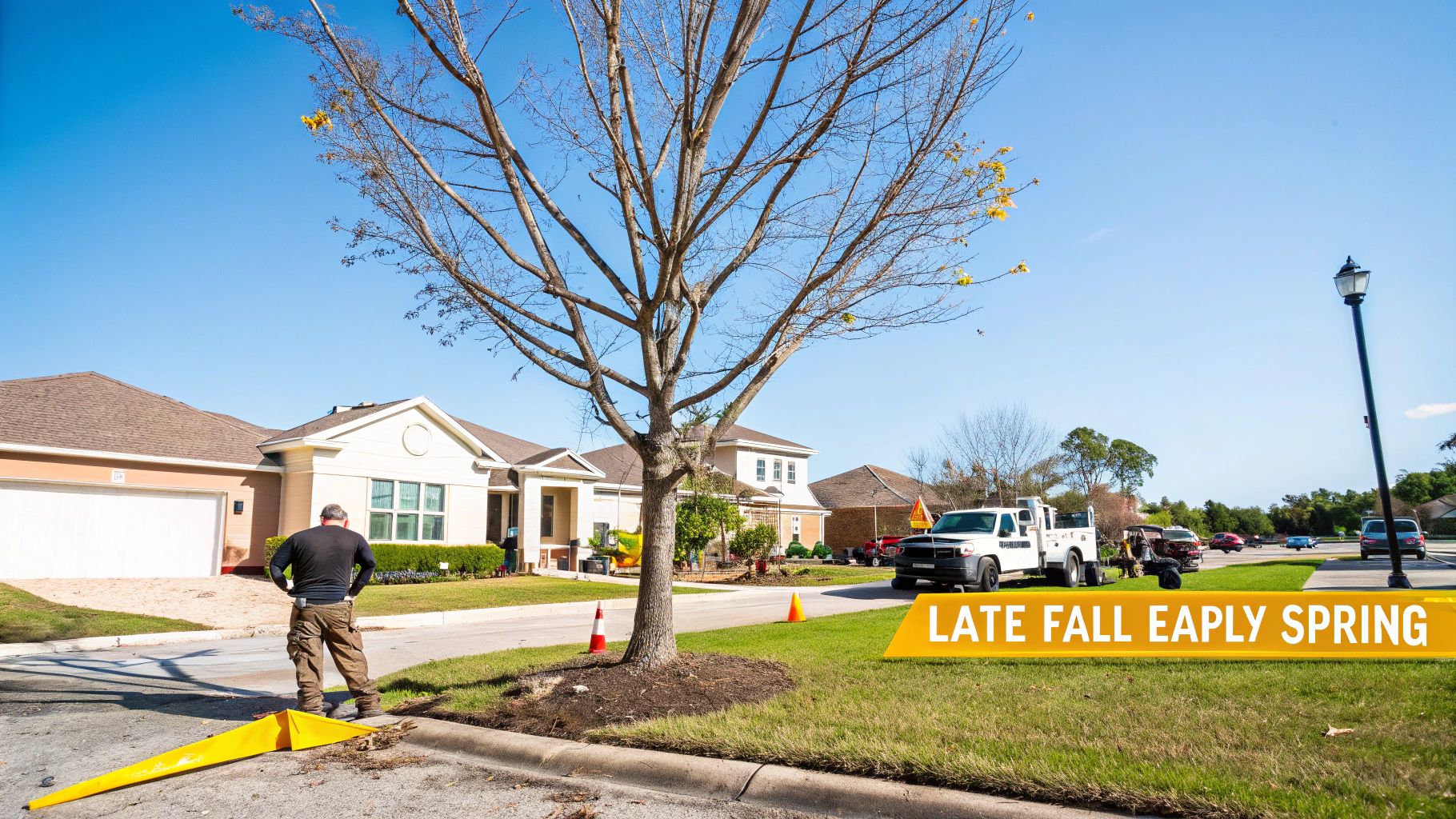
Figuring out the best time to cut down a tree isn't as simple as circling a date on the calendar. It's a strategic decision, balancing tree biology with our unique regional weather patterns. While the "dormancy" rule is a great starting point, our trees never really go into that deep, northern-style sleep.
Even so, this "minimal dormancy" period gives us a distinct edge. When you prune or remove a tree in the cooler months, it's under far less stress. With less fluid pumping through its system, pruning wounds can compartmentalize and heal much more effectively.
This isn't just folklore; it’s a principle rooted in forestry. Timber harvested in winter has long been prized for its superior quality. In fact, wood cut during dormancy can have 20-30% lower moisture content than wood from a summer harvest. As documented by sources like the U.S. Forest Service, this lower moisture content means the wood dries faster and has better structural integrity.
Beyond Dormancy: Local Factors You Cannot Ignore
Here in Central Florida, however, a tree's internal clock is only half the story. Our local climate throws some serious curveballs into the mix. Ignore them, and a straightforward job can quickly turn into a dangerous, expensive mess.
You absolutely have to factor in these local conditions when timing your tree removal:
Hurricane Season (June 1 - November 30): Trying to do non-emergency tree work during these months is a gamble, plain and simple. Unpredictable storms and soggy ground create huge hazards. The smart move is to get proactive removal done before the season kicks into high gear.
Wildlife Nesting Seasons: Spring is a flurry of activity for local birds and other wildlife. Disturbing an active nest isn't just bad form; it can have ecological and even legal repercussions.
Summer Wet Season: Those daily afternoon downpours can make your property a swamp. Heavy equipment can get bogged down, tear up your lawn, and create serious safety issues on unstable soil.
Understanding these local nuances is what separates a smooth, successful project from a complete logistical nightmare. The "best" time is always a balance between the ideal biological window and the safest practical opportunity.
We built this guide to help you sort through these complexities. We'll break down how your specific goals—whether you're dealing with an emergency removal, selectively thinning a wooded area, or clearing a whole lot—will shape your ideal timeline. By getting a handle on tree health, safety, and our regional climate, you can make a confident decision that protects your property and gives you peace of mind.
To give you a clearer picture, here's a quick breakdown of how the seasons stack up for tree removal in our area.
Central Florida Tree Removal Timing At-a-Glance
Season | Key Considerations for Tree Removal | Recommendation Level |
|---|---|---|
Winter (Dec - Feb) | Cooler temps, reduced sap flow, minimal pest/disease activity. Less stress on landscape. Best access for heavy equipment. | Highly Recommended |
Spring (Mar - May) | Active wildlife nesting season. Increased sap flow. Weather is generally stable, but scheduling around wildlife is crucial. | Recommended (with caution) |
Summer (Jun - Aug) | Peak hurricane and wet season. Saturated ground, high risk of storms, and increased stress on surrounding plants. | Not Recommended (Emergencies only) |
Fall (Sep - Nov) | Hurricane season is still active through November. Ground may still be wet. Conditions improve later in the season. | Proceed with Caution (Late Fall is better) |
Ultimately, planning ahead is your best strategy. Let's dive deeper into why this timing matters so much for your specific project.
Why Your Timing for Tree Removal Matters
Thinking about taking down a tree is a lot like planning a major surgery for your property. Timing isn't just a minor detail—it's absolutely critical to a successful outcome. Cutting down a tree might seem straightforward, but when you do it is just as important as how. The right timing can be the difference between a clean, safe job and a costly, complicated disaster.
Scheduling your tree removal correctly affects everything from the health of your remaining landscape to the safety of the crew doing the work. It’s a decision that has to factor in tree biology, local weather patterns, and even wildlife behavior. The key is to shift your mindset from "When can I get it done?" to "When should I get it done?" That's the first step toward making a smart, strategic choice.
Protecting Your Landscape and Tree Health
When you cut down a tree, you're creating a massive wound in your property's ecosystem. Time that "surgery" poorly, and you’re basically inviting complications. For example, removing a tree during its peak growing season when sap is flowing heavily can be like ringing a dinner bell for pests like beetles and borers. These insects are drawn to the scent of fresh-cut wood and can quickly infest the new stump or, worse, move on to attack your other healthy trees.
On top of that, certain tree diseases, especially fungal ones, love to spread their spores during warm, damp weather. Cutting a diseased tree during these periods can release a cloud of infectious agents that can easily take hold in other trees on your property. This is particularly true for diseases like oak wilt, where bad timing can be devastating.
A tree cut during its dormant phase is less vulnerable. The reduced flow of sap makes it less attractive to pests, and the cooler, drier air of late fall and winter minimizes the risk of spreading fungal diseases. It's a proactive measure that protects your entire landscape.
This idea of dormancy is also key when you're trying to figure out if a tree needs to be removed at all. Sometimes a tree that looks dead in the winter is just resting. You can learn more about how to tell the difference in our guide on how to know if your tree is dead or dormant.
Considering the Environmental Impact
Your property doesn't exist in a bubble; it's part of a larger ecosystem, and tree removal has ripple effects. Scheduling work during the spring, for instance, directly conflicts with the primary nesting season for many of Central Florida’s bird species. Disturbing or destroying an active nest isn't just harmful to wildlife—it can also be illegal under the Migratory Bird Treaty Act.
Another huge environmental factor here is soil stability. Central Florida's sandy soil is already prone to erosion, a problem that our intense summer wet season makes much, much worse.
Saturated Ground: Heavy rains turn the ground soft and muddy, making it easy for heavy equipment to get bogged down, create deep ruts, and tear up your lawn.
Root System Loss: When you remove a large tree, you’re also removing a critical root network that was holding all that soil in place.
Increased Runoff: Without that tree to absorb thousands of gallons of water, heavy rainfall can wash away topsoil, leading to property damage and runoff pollution.
Timing the removal for the drier, cooler months helps you sidestep these issues, preserving your topsoil and preventing your yard from turning into a muddy, destructive worksite.
Prioritizing Human Safety
Above all else, safety is the most powerful reason to schedule tree removal carefully. Tree work is consistently ranked as one of the most dangerous jobs in the country, and when you add Florida's volatile weather into the mix, the risk skyrockets. The summer brings a double threat of extreme heat and unpredictable thunderstorms. Heat exhaustion can cloud judgment and slow down a worker's reaction time, while a sudden lightning strike is a lethal danger.
And then there's hurricane season, which officially runs from June 1 to November 30. Trying to do any non-emergency tree removal during this period is just asking for trouble.
Unpredictable Storms: A tropical storm or hurricane can spin up quickly, turning a planned project into an emergency situation with high winds and flying debris.
Saturated Soil: As we mentioned, wet ground makes the entire area unstable. This can cause heavy equipment to slip or even tip over, and it can affect the way a tree falls in unpredictable ways.
By scheduling proactive tree work well before hurricane season starts, you’re dealing with potential hazards under controlled, safe conditions—not reacting dangerously in the middle of a storm.
A Seasonal Guide to Central Florida Tree Removal
Figuring out the best time to cut down a tree in Central Florida isn't as simple as just picking a date on the calendar. Our unique subtropical climate gives us specific windows of opportunity and other times that are just plain risky. If you want a safe and efficient tree removal, you need to understand this seasonal playbook.
Let’s walk through the Central Florida year, season by season. Each one brings its own set of challenges and advantages that will shape your decision. This guide will help you think like a seasoned arborist and make the right call for your property.
The Ideal Window: Late Fall to Early Spring
The absolute best time for tree removal around here is from late November through February. This is our version of a "dormant" season. While our trees don't go to sleep like they do up north, this is their quietest time, and the cooler, drier weather creates perfect conditions for tree work.
During these months, sap flow is at its lowest point. That’s a huge plus. It means less mess when cutting, but more importantly, it puts less stress on the surrounding landscape. It's a well-known fact in forestry that trees cut when sap is low are less likely to attract fungus and pests after the job is done. You can see more data on this in studies about global forestry practices and their outcomes.
Another major benefit is that the ground is typically much firmer and drier. This is a game-changer, especially when heavy equipment is needed. Firmer soil means:
Less chance of machinery getting bogged down or tearing up your lawn.
A safer, more stable work area for the crew.
Minimal soil compaction, which protects the roots of other trees you want to keep.
This cool-season window is the time for proactive, non-emergency tree work. If you have a tree you've been meaning to remove, scheduling it during this period is your safest and most strategic move.
The Cautionary Period: Spring
Once the weather warms up from March through May, Central Florida really comes alive. The pleasant weather is nice, but this season brings some serious environmental factors into play that require a much more careful approach. This is the peak nesting season for countless local and migratory birds.
These birds are protected by federal law, and their active nests cannot be disturbed. Any professional arborist will—and must—do a thorough check for nests before firing up a chainsaw. Finding one can put your project on hold for weeks until the baby birds are old enough to leave, making spring a frustratingly unpredictable time to schedule a removal.
On top of that, trees are in full-on growth mode. Sap is pumping hard to fuel all the new leaves and branches. While it's not as risky as the peak summer, it can make the removal process messier and a bit more disruptive to the local ecosystem.
The interconnected risks of tree health, the environment, and safety change all year long, as this graphic shows.
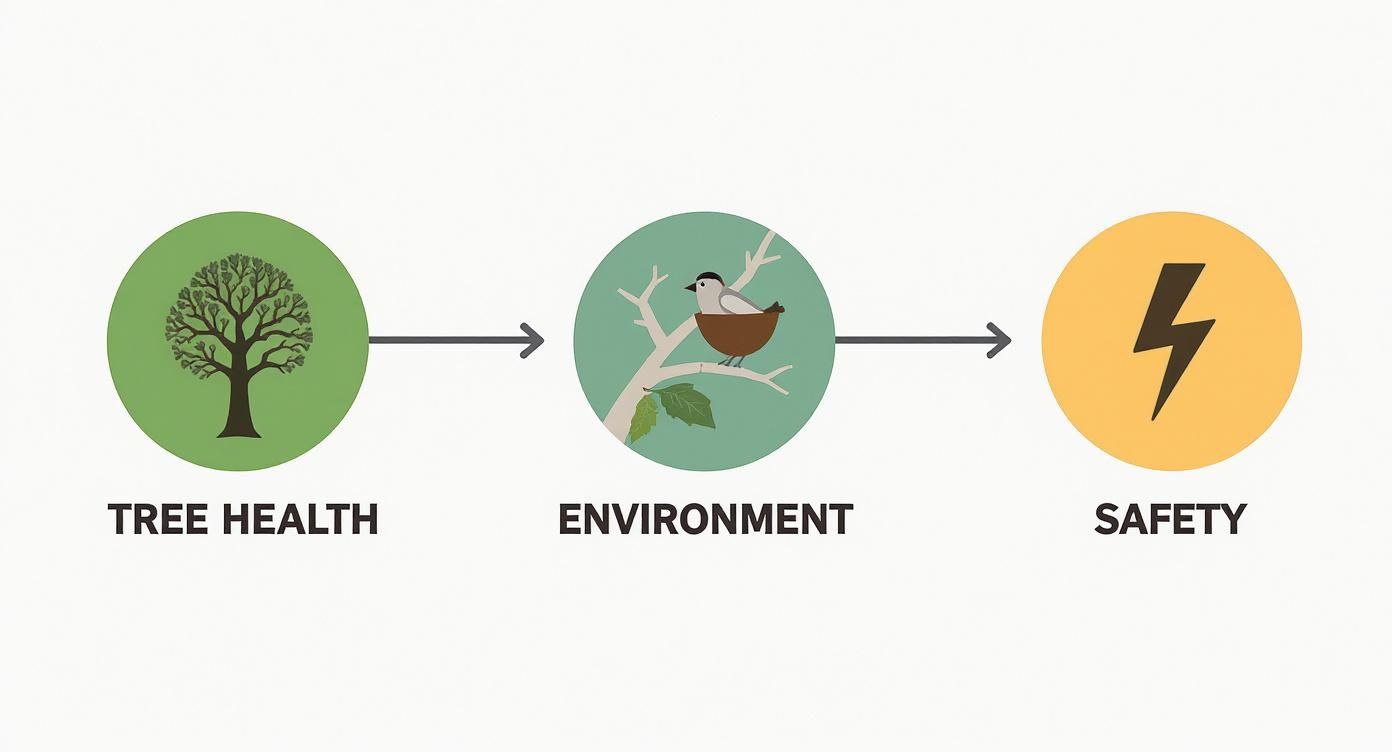
It’s a good reminder of how timing your removal correctly—taking care of a problem tree during the "dormant" season—causes the least environmental disruption and makes the whole job safer.
High Risk and High Urgency: Summer
Summer in Central Florida, from June through August, is dominated by two things: the wet season and hurricane season. This one-two punch makes summer the most dangerous and difficult time for tree removal. The only time you should schedule tree work during these months is for a true emergency, like a storm-damaged tree that's about to fall on your house.
The daily downpours saturate the ground, making it incredibly soft and unstable. This creates a hazardous work site where heavy equipment can easily get stuck, and the ground itself is compromised. Add in the oppressive heat and humidity, and you have a recipe for heatstroke for tree crews doing one of the most physically demanding jobs out there.
The constant threat of hurricanes adds a whole other layer of extreme risk. It’s far, far better to be proactive and get rid of hazardous trees before June 1st than to deal with them in the middle of a storm.
The Wet Season Hangover: Early Fall
From August through October, the challenges of summer linger. The peak heat might be fading, but the ground is still a swamp from months of daily rain. We’re also still squarely in hurricane season, so the risk of severe weather hasn't gone away.
Trying to do any large-scale removal or land clearing during this time can cause serious, lasting damage to your property. The mix of wet soil and heavy machinery often leads to:
Severe Lawn Damage: We’re talking deep, ugly ruts that can take months and a lot of money to fix.
Soil Compaction: Heavy equipment can crush the soil structure, which can choke out and kill the roots of surrounding plants and trees.
Erosion Problems: If your property has any slope, disturbing the wet soil can cause it to wash away in the next big rain.
Things finally start looking up by late October and into November as the rain subsides and the temperatures cool, bringing us right back into that ideal removal window.
How Your Goal Shapes the Removal Timeline
Trying to find one "best time" to cut down a tree is a bit like asking for the "best time" to drive your car. The answer completely changes depending on whether you're rushing to the ER or planning a scenic road trip. Your goal is the single most important factor that dictates the timeline.
A tree that's threatening your roof demands a totally different approach than one you're clearing for a future pool. The urgency and the purpose of the job change everything.
We’ll walk through three common scenarios here in Central Florida. Each one shows how the "why" behind the project—from a sudden emergency to careful landscape planning to large-scale construction—creates its own unique schedule with its own set of rules.
Scenario One: Emergency Tree Removal
When a tree becomes an immediate hazard, the best time to remove it is right now. Urgency trumps everything else—season, weather, even the time of day. This is the emergency room trip; waiting simply isn't an option.
In our region, an emergency can be sparked by a few all-too-common events:
A lightning strike splits a massive water oak down the middle.
A violent summer squall with high winds starts to uproot a tall pine.
You spot large, shelf-like mushrooms at the base of a tree, signaling advanced internal rot.
A tree is leaning dangerously toward your house after days of heavy rain have saturated the ground.
In these situations, the immediate danger to people and property is the only thing that matters. The risk of the tree falling is far greater than the inconvenience of working in the rain or at night. This is absolutely not a DIY job—it requires a specialized crew with the right experience to safely handle unstable trees.
Scenario Two: Proactive Thinning and Landscape Health
This is the polar opposite of an emergency. Here, the goal is to improve the health and beauty of your property by selectively removing a few trees. Maybe you're taking out a crowded tree to give a prize specimen more sun, or removing a species known for disease before it can spread.
For this kind of work, timing is everything. The ideal window is our mild dormant season (late November to February). Think of this like scheduling a routine, non-urgent surgery—you pick the time that guarantees the smoothest recovery.
Removing trees during dormancy minimizes stress on the entire landscape. The reduced sap flow in the targeted tree means a cleaner cut and, more importantly, makes the area less attractive to pests and diseases that could harm the trees you want to keep.
This is the most strategic and controlled way to manage your property. You have plenty of time to get quotes, check a company's credentials, and schedule the work for a time when the ground is firm and dry. This ensures minimal damage to your lawn and the root systems of your other plants.
Scenario Three: Large-Scale Land Clearing for Construction
When you're clearing an entire lot for a new building, the timeline shifts yet again. Tree biology takes a backseat to logistics, regulations, and heavy equipment access. The goal here is simple: prepare a buildable site as efficiently and legally as possible.
The most critical factor is avoiding the summer wet season. Bringing heavy machinery like forestry mulchers and bulldozers onto saturated Florida soil is a recipe for disaster. You’ll get deep ruts, severe soil compaction, and expensive delays when equipment gets stuck in the mud.
The best window for land clearing is during the drier part of the year, usually from winter through late spring. This schedule also has to make room for a few other crucial steps:
Permitting: Getting the right county or city permits can take weeks, sometimes months. You have to start this process long before you plan to break ground.
Environmental Surveys: Nesting seasons for protected wildlife, like gopher tortoises or certain birds, can bring a project to a dead stop. You must schedule your clearing around these protected windows.
Aftercare Planning: The job isn't done just because the trees are gone. You need a plan for what comes next. For example, understanding the pros and cons of different stump-clearing methods is a key part of site prep. You can learn more by exploring our detailed guide on stump grinding vs stump removal to see which approach works for your construction plans.
To make this even clearer, let's compare these three scenarios side-by-side.
Timing Your Tree Cutting Based on Your Project Goal
Project Goal | Primary Timing Factor | Best Season (Central FL) | Key Consideration |
|---|---|---|---|
Emergency Removal | Immediate Hazard | Any Time | Safety is the only priority; act immediately. |
Selective Thinning | Tree & Landscape Health | Late Fall to Winter | Minimizes stress on remaining trees and prevents pest infestation. |
Land Clearing | Equipment Access & Permitting | Winter to Late Spring | Avoids the wet season to prevent machinery issues and costly delays. |
As you can see, there’s no single right answer. The "when" is always determined by the "why."
By aligning your project with the right season and timeline, you set yourself up for a process that is not only safer and more efficient but also perfectly tailored to achieve your specific property goals.
The Non-Negotiables: Permits and Professionals
Figuring out the right time of year to take down a tree is a great start, but it’s really only half the battle. Before the first cut is ever made, you have to get a handle on two things that will protect your property and your wallet: local permits and professional qualifications.
Getting this part wrong can turn a simple tree removal into an absolute nightmare of fines and legal troubles.
Here in Central Florida, you can't just fire up a chainsaw and cut down any tree you feel like. Most of our cities and counties, from Orange to Brevard, have tree ordinances in place to protect our local canopy. These rules get especially tough when you're dealing with big, healthy "specimen" trees or protected native species like our beloved Live Oaks.
Trying to remove a regulated tree without the right paperwork can lead to steep fines and immediate stop-work orders. Your very first move should be to check your local city or county website—or just give their planning and zoning department a call—to learn the rules for your property.
The Massive Risk of Hiring Uninsured Workers
Once you have your permits sorted, the next big decision is who you're going to hire. This is where a lot of people make a mistake that can cost them dearly. It’s tempting to take that low-ball cash offer from a "tree guy" with a pickup and a chainsaw, but you’re taking a huge gamble.
Tree removal is one of the most dangerous jobs out there. If an uninsured worker gets hurt on your property, you could be on the hook for their medical bills. And if their work accidentally drops a limb on your roof, your neighbor’s fence, or a power line? You’ll be paying for all of those repairs out of your own pocket.
Hiring a company without proper insurance is like driving without car insurance. It feels fine until something goes wrong, and then it becomes a life-altering financial disaster. Don't risk your home and savings just to save a few hundred bucks.
Certified Arborist vs. Tree Cutter: There's a Big Difference
It’s also crucial to understand that not all tree services are created equal. There's a world of difference between a standard tree cutter and an ISA (International Society of Arboriculture) Certified Arborist.
A certified arborist is a true professional who has passed rigorous exams covering everything from tree biology and soil science to the safest work practices. They don't just cut down trees; they understand the entire ecosystem. They can give you expert advice on which trees are worth saving, how to protect them during work, and the safest, most efficient way to perform a removal.
While a tree cutter knows how to run a saw, an arborist brings science and strategy to the job. This is especially critical for tricky removals near houses, power lines, or other valuable trees. They know the best time to cut down trees not just for scheduling, but for the long-term health of your entire property.
This kind of strategic thinking is also used in large-scale forest management. For example, forestry experts use global data to plan their work; you can see how tree cover data is analyzed at Global Forest Watch to time cuts that reduce wildfire fuel loads before dry seasons. A professional arborist brings that same level of strategic planning to your yard to prevent future risks.
Leaving your property clear and stable is another sign of a true professional. A botched tree removal can cause major ground disturbance and erosion. That’s why you need a solid plan for what comes next. For some guidance on this, take a look at our article on how to prevent soil erosion on your property.
Questions to Ask Every Tree Service
Before you let anyone start work, arm yourself with these essential questions. This is how you weed out the amateurs and find a real pro.
Can I see a copy of your General Liability and Workers' Compensation insurance certificates? Don't just take their word for it—ask to see the actual documents.
Do you have an ISA Certified Arborist on your team? This is your confirmation of their expertise.
Can you give me a detailed, written estimate? It should clearly spell out the entire scope of work, including cleanup and options for stump removal.
What's your plan to protect my home and landscaping? A professional will be able to explain their strategy for using ropes, cranes, or ground mats to prevent damage.
Common Questions About Tree Removal Timing
Working through the specifics of tree removal can seem a little daunting, but once you grasp the main ideas, it all starts to click. To bring everything together, let's tackle some of the most common questions we get from property owners right here in Central Florida. These straight-to-the-point answers should help lock in the key lessons and give you the confidence to make a smart, safe call.
Can I Cut Down a Tree During Hurricane Season?
This is a big one, and the answer is you really shouldn't unless it's a true emergency. The whole point of being proactive with your trees is to spot and handle any hazards before hurricane season kicks off on June 1st. Trying to schedule regular work during these high-risk months is just asking for trouble.
Our weather is notoriously fickle. A job that starts on a perfectly calm, sunny morning can turn into a battle against a violent thunderstorm with high winds and lightning in the blink of an eye. On top of that, the ground is often soaked, which makes it unstable for heavy equipment and can even change how a tree is expected to fall.
Now, if a storm rolls through and damages a tree, turning it into an immediate threat to your home or family, that’s different. In that case, an emergency removal by a qualified professional is absolutely necessary. For everything else, waiting for the safer, drier months from late fall to early spring is always the smarter play.
What Is the Cheapest Time of Year to Have a Tree Removed?
You’ll generally find better prices and more open schedules during the off-season. For tree professionals in Central Florida, that slow period typically runs through the late fall and winter, from about November through February.
Once late spring hits, demand for tree services goes through the roof. You have homeowners scrambling to get ready for hurricane season and, unfortunately, dealing with the aftermath of summer storms. This surge in demand naturally leads to longer wait times and higher prices.
By planning your non-emergency tree work for the cooler months, you can often lock in a better rate from a top-notch company. But here’s a critical piece of advice: never, ever choose a tree service based on price alone. Make sure they are fully insured and properly certified—it’s the only way to protect your property and your wallet from a job gone wrong.
Do I Need a Permit to Cut Down a Tree on My Property?
The classic answer is a firm "it depends." Tree regulations can be wildly different from one city or county to the next here in Central Florida. Local governments create these tree ordinances to protect our urban canopy and preserve the character of our communities.
Here are a few general rules of thumb:
Protected Trees: Taking down a large, healthy tree of a protected species—like one of those magnificent Live Oaks—almost always requires a permit. These are often called "specimen" or "heritage" trees for a reason.
Invasive Species: On the flip side, removing invasive species like the Brazilian Pepper or Australian Pine is often encouraged and might not require any paperwork at all.
Size and Health: The tree's condition also plays a big role. You're far less likely to need a permit to remove a small, dead, or clearly hazardous tree than you are for a large, thriving one.
Your first move should always be to check the official website for your city or county's planning and zoning department. A certified arborist will also know the local rules like the back of their hand and can guide you through the permitting maze.
What Happens to the Stump After the Tree Is Removed?
This is a common point of confusion, and it’s a great question to ask. A standard tree removal service covers felling the tree, cutting it as flush to the ground as possible, and hauling away all the wood and debris. The stump that’s left behind? That's usually handled by a separate, add-on service.
That service is called stump grinding. It involves a powerful machine that basically chews up the stump and its main roots, grinding them down several inches below the soil. This turns the solid stump into a pile of wood chips you can use for mulch or have hauled away. Grinding is what allows you to plant grass, lay sod, or put in a new garden bed, completely erasing any trace that a tree was ever there.
When you get a quote, make sure you clarify with your tree care provider whether stump grinding is included. It’s usually listed as a separate line item, so you know exactly what you're paying for. Getting this straight from the start helps you budget properly and avoids any surprises on the final bill.
Making the right call on when to remove a tree is all about protecting your property, your safety, and your budget. For professional guidance tailored to your specific situation here in Central Florida, you need to trust the experts. Palm State Clear Cut offers comprehensive land clearing and tree services with the right equipment and experience to get the job done safely and efficiently. Schedule your free, no-obligation quote by visiting us at https://palmstateclearcut.com today.
Comments