
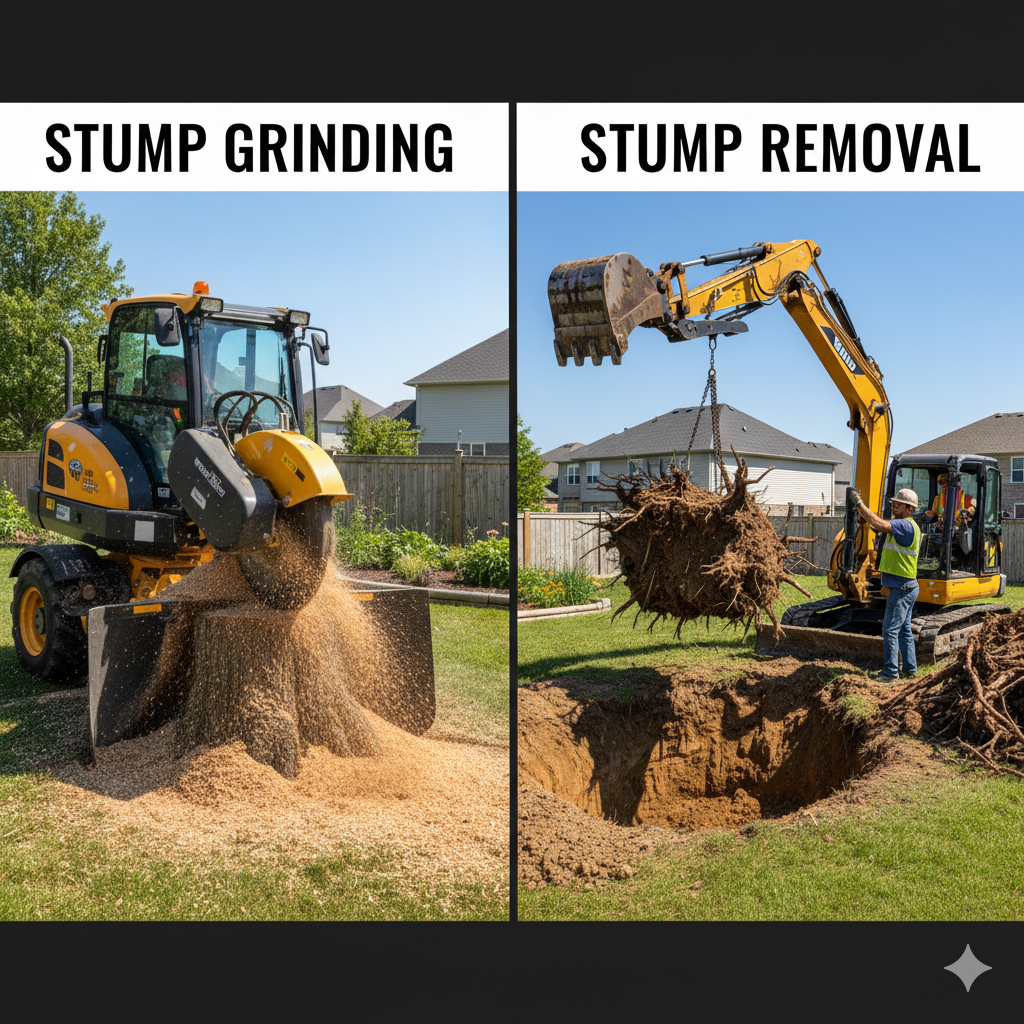
When a tree comes down, the stump left behind can be a real headache. The fundamental difference between stump grinding vs stump removal is pretty straightforward: grinding shreds the stump down below the soil line but leaves the root system intact, while removal yanks the entire stump and its main roots right out of the ground, leaving a big hole. Which one you choose really boils down to what you plan to do with the land, what your budget looks like, and how fast you need it done.
Understanding Your Stump Clearing Options
Choosing between grinding and removal is one of the first big decisions you’ll make on any Central Florida land clearing project. Both will get rid of an unwanted stump, but they are worlds apart in terms of process, cost, and the long-term effect on your property. There’s no single “best” method—it’s all about what aligns with your goals, whether you’re just trying to get a smooth, mowable lawn or prepping a site for a new foundation.
To make the right call, you need to understand the trade-offs. Things like future land use, how much you can disturb the soil, and your overall project budget are huge factors. For example, a homeowner who just wants to get rid of a tripping hazard in the backyard has completely different needs than a developer clearing a lot for construction. This guide will walk you through the differences so you can pick the right path for your property.
Stump Grinding vs Stump Removal: A Quick Comparison
Before we get into the nitty-gritty of each method, the table below gives you a high-level look at how they stack up. It’s a quick reference that highlights the key distinctions that will guide your decision.
| Factor | Stump Grinding | Stump Removal |
|---|---|---|
| Process | Grinds stump 6-12 inches below ground, leaving roots. | Excavates the entire stump and major root ball. |
| Site Impact | Minimal disruption to the surrounding landscape. | Highly disruptive, leaves a large crater. |
| Cost | More affordable; priced per stump or by diameter. | More expensive due to labor and heavy machinery. |
| Timeline | Fast; typically completed in a few hours. | Slower; can take a full day or more. |
| Byproduct | Creates a pile of woodchips (mulch). | Creates a large hole and debris for disposal. |
| Future Land Use | Ideal for planting grass or small shrubs. | Necessary for construction, paving, or replanting trees. |
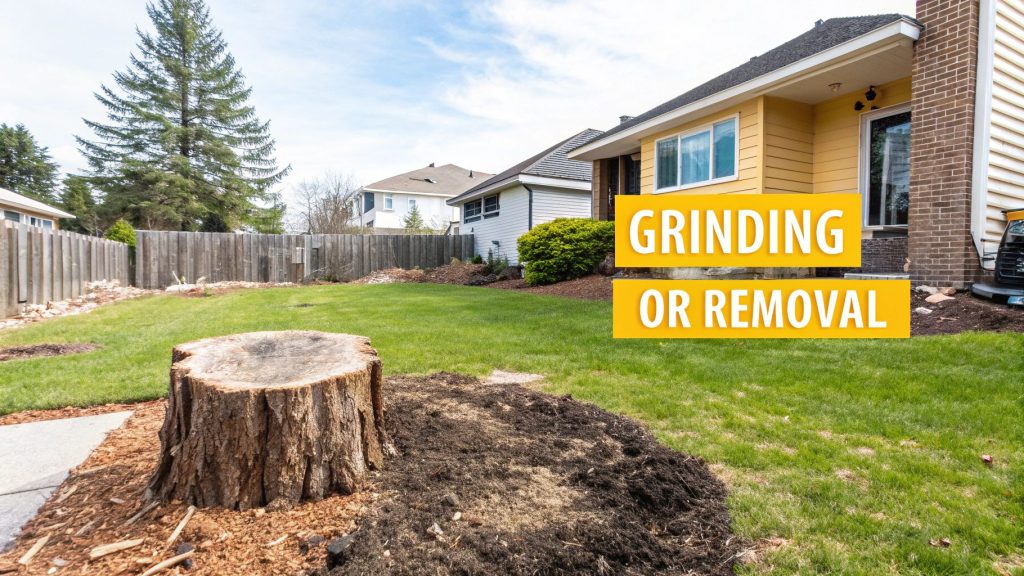
As you can see, the trade-offs are clear. Stump grinding is a faster, less invasive, and more budget-friendly option that works for most residential situations. On the other hand, stump removal is the complete, albeit more intensive, solution required for major land development where any underground obstacles have to go. Getting these core differences down is the first step in choosing the perfect service for your Central Florida property.
Understanding The Stump Removal Process
Before you can decide between stump grinding and stump removal, you need a clear picture of what each method actually involves on your property. While both services get rid of an unwanted stump, their processes, equipment, and impact on your land are worlds apart. Visualizing the job from start to finish is the best way to understand the trade-offs you’ll be making in terms of cost, labor, and landscape disruption.
How Stump Grinding Works
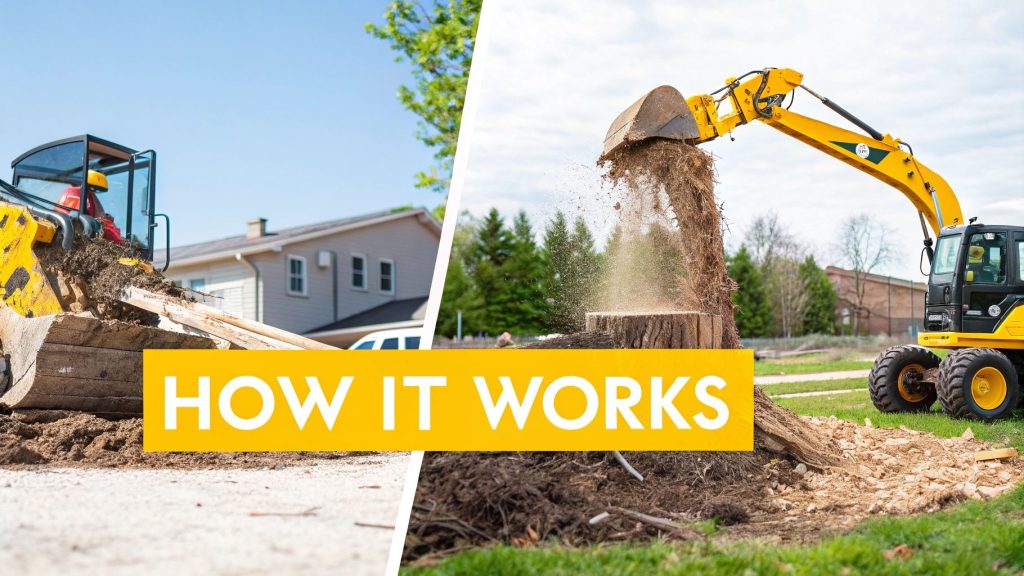
Think of stump grinding as a surgical approach. It relies on a specialized machine—the stump grinder—which uses a high-speed rotating wheel with carbide teeth to literally shred the stump into small woodchips. It’s like a powerful, industrial-strength cheese grater for wood, methodically chipping away at the stump layer by layer.
A professional crew starts by clearing any rocks or debris around the stump that could damage the grinder. They then position the machine over the stump and lower the cutting wheel. By moving it back and forth, the machine grinds the wood down, typically reaching 6 to 12 inches below ground level. That’s usually deep enough to lay down topsoil and sod, effectively making the stump vanish from sight.
The real goal of grinding isn’t total eradication; it’s cosmetic and functional removal. The whole process is designed to be minimally invasive, preserving your lawn and landscape while getting rid of the visible obstacle.
The main byproduct is a big pile of woodchips mixed with soil. This organic material is perfect for backfilling the shallow hole left behind, but many of our clients also repurpose it as natural mulch for their garden beds. The deep root system is left in the ground, where it will decompose naturally over the next several years.
The Stump Removal Method Explained
Stump removal, on the other hand, is a much more intensive and disruptive process. This is the complete excavation of the stump and its entire root ball, leaving absolutely nothing behind. It’s less about precision and more about brute force and total extraction.
To pull this off, heavy machinery is almost always a necessity. The process usually looks like this:
- Excavation: A backhoe or excavator digs a wide trench around the stump’s perimeter to expose the main anchor roots.
- Root Severing: Those large roots are cut using chainsaws, axes, or the hydraulic force of the excavator itself, disconnecting the stump from its underground network.
- Extraction: Once it’s free, the entire stump and its attached root ball—which can weigh hundreds, sometimes thousands, of pounds—are hoisted out of the ground.
What you’re left with is a massive crater in your yard, often several feet wide and deep. This hole requires a significant amount of new soil or fill dirt before the area is usable again.
From an efficiency and safety standpoint, stump grinding often has the upper hand. It involves less manual labor and smaller machinery, which lowers the risk of serious injury. A skilled operator with a good grinder can turn an average-sized stump into woodchips in an hour or less with very little disruption. Professional services report a 90% success rate with these operations, largely thanks to modern equipment and strict safety protocols. As noted by industry resources like Angi.com, the choice between grinding and removal often boils down to this balance of thoroughness versus disruption.
When it comes to deciding between stump grinding and stump removal, two things usually matter most: your budget and your timeline. The money and time you’ll need for each service are wildly different, and that’s because the labor, equipment, and overall impact on your property are worlds apart. Getting a handle on these differences is the first step to making a smart call for your Central Florida land.
Stump grinding almost always comes out on top as the more economical and faster option. The process is lean, usually just needing one specialized machine and a single operator. That efficiency means lower costs and a quicker job, which is why it’s the go-to for most residential yards and light commercial projects where the main goal is just getting the ground level again.
On the other hand, stump removal is a much bigger production. We’re talking heavy machinery like excavators, a lot more manual labor to dig out and chop up massive root systems, and the logistics of hauling away a huge stump and root ball. All those moving parts naturally drive up the price and the time it takes to get the job done.
Financial Breakdown: Grinding Versus Removal
The price gap between the two methods can be pretty wide. Stump grinding is the clear winner for your wallet, often coming in 40–60% cheaper than a full removal. You can typically expect to pay between $75 and $400 per stump for grinding. In contrast, a complete removal will run you anywhere from $150 to $800 per stump. That cost difference really blows up with bigger stumps and their sprawling root systems, as the digging and disposal work grows exponentially.
Here’s why the costs are so different:
- Equipment: Grinders are relatively small and much cheaper to run than the backhoes or excavators needed for a full pull.
- Labor: Grinding is usually a one-person job that’s over in a fraction of the time. Removal often requires a whole crew and many more hours on site.
- Disposal: Grinding leaves you with useful mulch, which gets rid of disposal fees. Removal creates heavy, awkward waste that has to be trucked off-site, adding another expense.
If you’re tackling a larger project, it’s helpful to see how these individual stump costs add up. For a bigger-picture view on clearing budgets, check out our guide on the cost to clear an acre of land in Florida.
To give you a clearer idea, here’s a look at how costs and timelines typically stack up based on stump size.
Estimated Cost And Time Per Stump
| Stump Size | Grinding Cost (Est.) | Grinding Time (Est.) | Removal Cost (Est.) | Removal Time (Est.) |
|---|---|---|---|---|
| Small (<12″) | $75 – $150 | 30 – 60 min | $150 – $300 | 2 – 4 hours |
| Medium (12-24″) | $150 – $250 | 60 – 90 min | $300 – $550 | 3 – 5 hours |
| Large (>24″) | $250 – $400+ | 2 – 3 hours | $550 – $800+ | 6 – 8+ hours |
As you can see, the differences in both cost and time commitment become much more dramatic as the stumps get larger.
Comparing Project Timelines
Time is money, and this is another area where stump grinding really shines. The speed of the grinding process is one of its biggest draws.
A standard stump grinding job is something we measure in minutes or hours, not days. This means less disruption to your property and lets you get on with your landscaping plans right away.
Let’s break down a typical timeline:
- Stump Grinding: A small stump (under 12 inches) can be gone in just 30-60 minutes. A medium one might take 60-90 minutes, and even a beast of a stump is usually ground down in two to three hours.
- Stump Removal: This is a much longer haul. A single stump removal can easily take around five hours, and for the big, stubborn ones, you could be looking at six to eight hours—or even more.
The aftermath also adds to your timeline. Grinding leaves a shallow hole full of woodchips you can immediately cover with topsoil and seed. Removal, however, leaves a massive crater that has to be backfilled, compacted, and given time to settle before you can even think about new planting or construction. That alone can add days, if not weeks, to your project schedule.
Comparing Long-Term Landscape Impact
When you’re weighing stump grinding against stump removal, you’re not just picking a service for today. You’re making a choice that will shape your landscape for years. The long-term effects on your soil, future planting options, and even your yard maintenance routine are completely different for each method. One offers a gentle, organic transition, while the other gives you a clean—but far more disruptive—slate.
Stump grinding is the less invasive option, hands down. It works to preserve the delicate balance of your landscape. Because the grinder only shreds the visible stump down below the soil line, the surrounding turf and garden beds are left largely untouched. The massive root system is left underground to decompose naturally, which slowly enriches the soil as it breaks down.
Of course, this slow decomposition process comes with a few things to keep in mind. The remaining roots can sometimes attract pests like termites or carpenter ants as they decay. On top of that, certain tenacious Florida tree species might try to send up new sprouts from the old root system, so you’ll want to keep an eye on the area.
The Ecological Footprint Of Each Method
The environmental impact is where these two methods really part ways. Stump grinding keeps the ecological disruption to a bare minimum. It avoids major soil disturbance, which helps prevent erosion and maintains the soil structure you already have. The byproduct—a pile of woodchips—is a fantastic organic resource.
The woodchips created during grinding aren’t waste; they’re a resource. By repurposing them as natural mulch, you return organic matter to the earth, helping your soil retain moisture and keeping weeds down.
This approach is all about sustainable, low-impact land management. If you want to take full advantage of this byproduct on a larger scale, you should check out the benefits of professional forestry mulching services for bigger land clearing jobs.
Stump removal, in contrast, has a much larger environmental footprint. The process requires heavy machinery and serious excavation, which compacts the soil and can disrupt the local ecosystem. The huge, empty hole it leaves behind is prone to erosion until it’s properly backfilled and stabilized. This method fundamentally changes the landscape in an instant.
Soil Health And Future Planting
Your plans for the space should be a major factor in your decision. Stump grinding creates a spot where you can immediately add some topsoil and plant grass or shallow-rooted flowers. The soil is only disturbed in a small, localized area.
On the other hand, stump removal clears out the ground completely, making it the only real choice if you plan to:
- Build a foundation: Any new structure, from a shed to a home extension, needs stable, root-free ground.
- Install a pool or patio: Old roots would get in the way of excavation and could create cracking risks down the road.
- Replant a large tree: A new tree can’t establish a healthy root system if it has to fight with the decaying roots of the old one.
While stump grinding leaves behind roots that can take over 10 years to fully decompose, it leaves your yard’s soil mostly undisturbed, which is great for minimizing erosion. Stump removal is far more invasive, disturbing large patches of soil that can lead to erosion or require a significant landscape redesign. You have to balance the immediate win of full removal with the eco-friendly benefits and minimal site disruption of grinding. You can find more insights on this comparison over at FieldingTreeCare.com.
Ultimately, the choice comes down to your vision. Grinding is about working with the natural decomposition process for a gradual, less disruptive result. Removal is about getting immediate and total control, creating a blank canvas at a higher environmental and structural cost to your yard.
When To Choose Grinding Or Removal
So, how do you make the final call in the stump grinding vs stump removal debate? It really boils down to one simple but critical question: What are your plans for this exact spot? Your answer will immediately point you toward the right service for your goals, budget, and property’s future. One is a quick, cosmetic fix, while the other is a complete reset for major projects.
We can simplify this decision by looking at some real-world scenarios you’d find right here in Central Florida. Let’s break down where grinding is the clear winner and when nothing short of full removal will do the job.
This decision tree infographic is a great way to visualize the core choice. Are you just trying to get your lawn back in shape, or are you planning new construction or a major planting project?
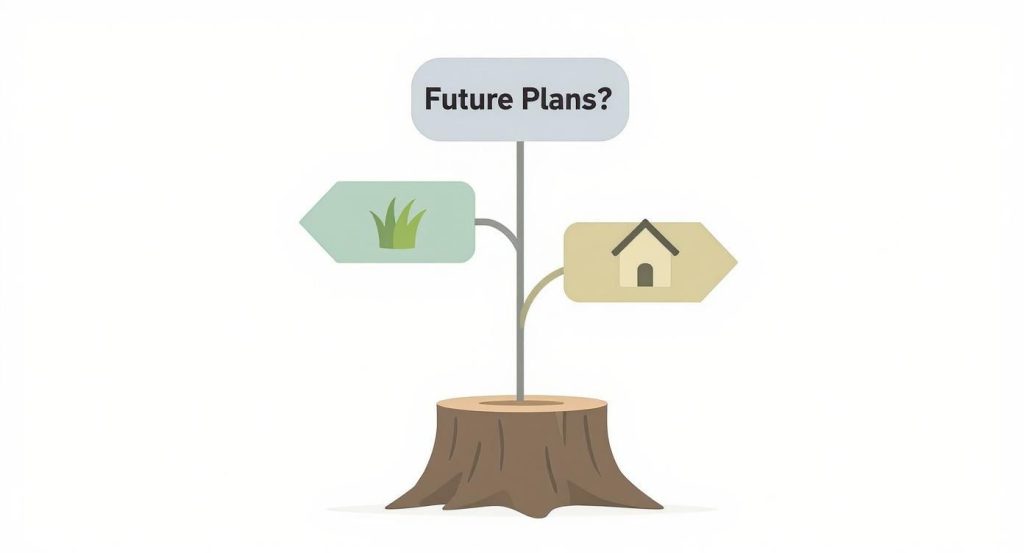
As the visual shows, your intended use of the land is the deciding factor. It clearly separates simple yard maintenance from more intensive development work.
Scenarios Where Stump Grinding Is The Best Choice
For the vast majority of residential situations in our area, stump grinding is the go-to method. It strikes the perfect balance of speed, low cost, and minimal disruption, making it the ideal fix when you just want the stump gone without tearing up your whole yard.
You should definitely opt for stump grinding if your project looks like this:
- Improving Lawn Appearance and Safety: Your main goal is getting rid of a tripping hazard and making your lawn smooth and easy to mow. Grinding is perfect for this. We’ll grind down the visible stump, and you can fill the spot with topsoil and seed it for a seamless lawn.
- Working with a Limited Budget: Let’s be practical—cost matters. Grinding is consistently 40-60% cheaper than full removal. When you need great results without the hefty price tag, grinding delivers.
- Needing a Fast Solution: If you want the job done quickly with zero fuss, nothing beats grinding. Most stumps can be ground down in less than two hours, letting you get back to enjoying your yard that very same day.
- Removing a Purely Cosmetic Issue: For that ugly stump sitting in a garden bed or landscaped area, grinding is a targeted fix. It gets rid of the eyesore without disturbing your nearby plants or hardscaping.
Stump grinding is fundamentally a surface-level solution. It’s designed to restore the look and function of your landscape quickly and efficiently, making it the go-to for homeowners focused on aesthetics and immediate usability.
This method is all about practicality. You get a clean, level surface without the expense and headache of a major excavation. Over many years, the leftover roots will simply decompose naturally underground.
When Complete Stump Removal Is Necessary
While grinding works for most, some jobs demand a more aggressive approach. There are specific times when anything less than complete excavation just isn’t an option. Stump removal is an intensive, all-or-nothing process reserved for projects where the ground must be completely clear of all obstructions—both seen and unseen.
You absolutely must choose full stump removal for these kinds of projects:
- Preparing for a New Foundation: Planning to build anything? A home addition, garage, shed, or even a large deck foundation requires the entire stump and its root system to be gone. If left behind, those roots would decay, creating voids underground that could seriously compromise the stability of your new foundation.
- Installing a Swimming Pool or Patio: Just like with a foundation, any in-ground installation requires totally clear soil. Roots will get in the way of excavation and, over time, could push up against pool walls or patio slabs, causing cracks and very expensive damage.
- Replanting a Large Tree in the Same Spot: A new tree can’t establish itself if its roots are fighting for space with the dense, decaying root system of the old one. Full removal gives a new tree the clean, unobstructed soil it needs to grow a healthy root ball.
- Eradicating Diseased or Pest-Infested Roots: If the original tree was taken down because of a fungal disease like root rot or a pest problem like termites, leaving the roots in the ground is a huge risk. These problems can easily spread through the soil to other healthy trees and plants on your property. Removal is the only way to guarantee the problem is gone for good. If you’re worried about persistent roots or regrowth, you might want to learn more about using herbicide applications to prevent future vegetation issues.
At the end of the day, the choice between stump grinding and stump removal is a practical one. Grinding is for reclaiming your yard; removal is for rebuilding on it. By thinking through your future plans, you can confidently pick the Palm State Clear Cut service that will perfectly prepare your land for whatever comes next.
Partnering With Land Clearing Experts
Figuring out whether to go with stump grinding vs. stump removal really just boils down to your specific goals for the property. Grinding is a quick, low-impact fix that’s perfect for getting your lawn back in shape. On the other hand, removal gives you a completely clear foundation, which is what you need for any new construction. The right choice is the one that lines up with your budget, timeline, and what you envision for the land.
Making the right call upfront saves a ton of headaches and money down the road, and it keeps the project safe. If you rush into the wrong method, you could be looking at surprise costs, delays, or even long-term problems with your landscape. This is where getting some professional advice really pays off.
Why a Professional Consultation Matters
Talking with a local land clearing expert like us at Palm State Clear Cut brings everything into focus. Our team gets the unique challenges here in Central Florida, from how sandy soil impacts digging to the ridiculously stubborn root systems of native trees like live oaks. We can look at your property with a trained eye and spot potential issues before they turn into expensive problems.
A professional consultation helps you:
- Evaluate Site-Specific Factors: We’ll analyze the soil type, check the size and species of the stump, and see how close it is to buildings or underground utilities.
- Clarify Project Requirements: We can confirm whether your plans for a new patio or foundation absolutely demand a full removal or if grinding will suffice.
- Navigate Local Regulations: We make sure all the work is in line with any local land use rules or disposal ordinances you might not know about.
Choosing the right stump clearing method isn’t just about getting rid of an obstacle; it’s about setting your property up for future success. A professional assessment guarantees you get the right service for the right reason.
Whether you need the speed and lower cost of stump grinding or the absolute clean slate of a complete stump removal, working with an expert ensures the job gets done right. We can help you weigh the pros and cons based on your actual property, delivering a safe, successful result every time.
Frequently Asked Questions
You’ve compared the methods, the costs, and how each approach impacts your property. Still, a few practical questions often pop up when you’re deciding between stump grinding vs stump removal. Getting these details sorted out helps ensure your Central Florida land clearing project is a success from day one. Here are the clear, straightforward answers to the questions we hear most often.
What Happens To The Woodchips After Grinding?
Once a stump is ground down, you’re left with a good-sized pile of woodchips and soil. This isn’t junk—it’s actually a great organic resource. Most of the time, we use these chips to fill back in the shallow hole where the stump used to be.
This is a smart move because as the woodchips break down, they release valuable nutrients back into the earth, enriching your soil. Many of our clients also use the extra chips as natural mulch for their garden beds or around trees, which helps the ground hold moisture and keeps weeds down. If you’d rather not keep them, we can always haul the chips away for an extra fee.
Do The Remaining Roots Cause Problems?
That’s a fair question, since grinding leaves the tree’s root system in the ground. For the vast majority of tree species, these roots simply rot away naturally over a few years with no trouble at all. However, there are a couple of things to keep in mind.
- Pest Attraction: Decaying wood can sometimes attract insects like termites or carpenter ants, but this is far from a guarantee.
- Minor Regrowth: Some tough tree species might try to send up a few small shoots from the leftover roots. You can usually knock these back easily with a lawnmower or a quick trim.
- Fungal Growth: It’s not uncommon to see mushrooms pop up as the roots decompose. This is just a normal sign of nature’s recycling process at work.
The one big exception? If the original tree was diseased, we always recommend complete stump removal. This is the only way to be sure you’re not letting pathogens spread to other healthy trees and plants on your property.
Is A Permit Required For Stump Removal?
For most residential jobs here in Central Florida counties like Orange, Seminole, or Brevard, the answer is no. You will not need a permit for basic stump grinding or removal, as it’s typically considered routine landscape work.
That said, permits can come into play if your project is on a much larger scale—like clearing a whole lot full of stumps, being part of a major construction plan, or if the work touches protected wetlands or conservation zones. It never hurts to check with your local city or county planning department just to be safe.
How Should I Prepare My Property Before Service?
A little prep work on your end makes the entire job safer and more efficient for everyone. When you help us get set up, we can get the work done faster and cleaner.
Here’s a quick checklist of what to do before our crew shows up:
- Clear the Area: Move any patio furniture, garden gnomes, potted plants, kids’ toys, or other items away from the stump.
- Mark Utilities: If you have any shallow sprinkler lines, irrigation heads, or landscape lighting wires nearby, please mark them clearly so we can steer clear.
- Secure Pets: For their own safety and the focus of our crew, please make sure all pets are kept inside or in a secure spot far from the work area.
Taking these few simple steps helps us get right to work, saving time and making sure everything goes off without a hitch.
Ready to clear your land with confidence? The team at Palm State Clear Cut has the expertise and equipment to handle any stump, big or small. Contact us today for a free, no-obligation quote and let’s get your property ready for its next chapter.