
A Landowner’s Guide to Preparing Land for Building in Florida
- Mike Walker
- Jan 12
- 17 min read

Before you even think about firing up a bulldozer, the most critical work happens on paper and with a pair of boots on the ground. Preparing your land for construction is a careful sequence of steps: a thorough site assessment, securing all the right local permits, and then, finally, the physical clearing and grading.
This initial planning is the bedrock of your entire project. Get it right, and you set yourself up for success; get it wrong, and you're looking at costly delays and legal headaches down the road.
Your Pre-Construction Land Prep Blueprint
Think of this initial phase as your due diligence. It’s less about heavy machinery and more about understanding your property's unique quirks, uncovering potential roadblocks, and mapping out a realistic budget and timeline. I've seen it time and again—skipping these foundational steps is one of the most expensive mistakes a landowner can make.
Assess Your Land Thoroughly
First things first: you need to know exactly what you're dealing with. A professional site assessment is far more than just a casual walk-through. Before any dirt is moved, a comprehensive land survey is non-negotiable for understanding your property's exact boundaries and topography. If you're new to this, learning how to survey land can provide some practical insight.
This initial evaluation needs to dig into several key areas:
Soil Composition: Is your soil sandy, clay-heavy, or full of rock? Here in Central Florida, our sandy soil often needs specific compaction methods to create a stable foundation for building.
Topography and Slope: Knowing the natural lay of the land is everything. It dictates your drainage plan and helps pinpoint the best spot for your home or building.
Existing Vegetation: Take stock of what's growing. Identifying native trees, invasive species, and any protected plants will define the scope of clearing needed.
Water Features: Do you have wetlands, a pond, or even a stream that only appears in the rainy season? These features almost always come with major regulatory setbacks that limit where you can build.
Understand Zoning Laws and Secure Permits
Navigating the local bureaucracy is an absolute must. Every county, from Orange to Brevard, has its own unique zoning regulations and permit requirements that spell out what you can and can't do with your land. Trying to sidestep this process is a recipe for disaster, often leading to stop-work orders and hefty fines.
A common misconception is that owning the land gives you free rein to clear it however you see fit. The reality is that local ordinances exist to manage development, protect natural resources, and ensure public safety. Your first stop should always be your local county or city building department.
The proper workflow—from assessment to permitting—is the only way to ensure your project starts off on the right foot.
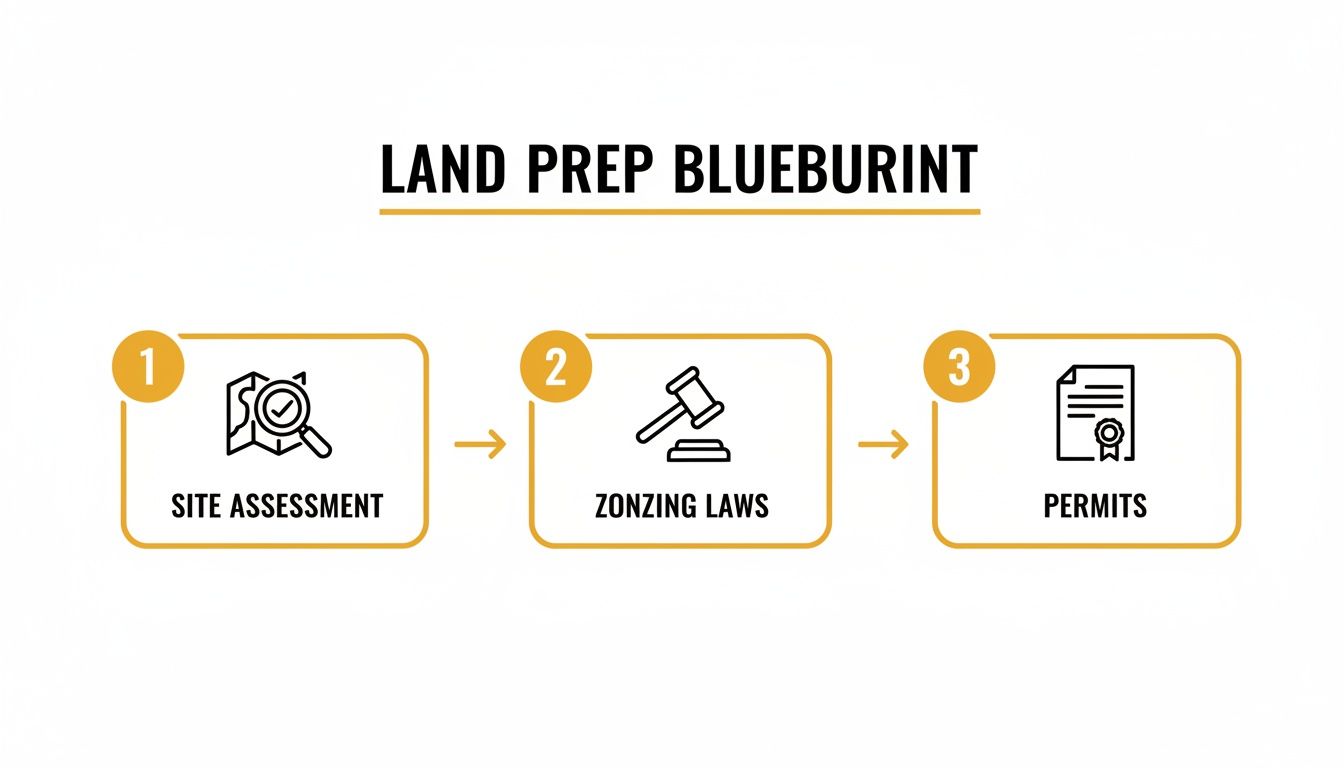
This process makes it clear: the legal and analytical work has to come before any physical site work begins. It’s the key to a smooth, headache-free project.
The demand for build-ready land has exploded, turning this initial prep phase into a massive industry. In fact, the global market for land clearing equipment hit a value of USD 6.5 billion in 2023 and is expected to climb to USD 9.8 billion by 2032. This isn't just a local trend; it reflects the booming pace of construction worldwide.
To keep these crucial first steps organized, here's a quick checklist of what you need to cover before clearing begins.
Initial Site Preparation Checklist
This table breaks down the essential pre-clearing steps every landowner in Central Florida should tackle.
Phase | Key Actions | Why It's Critical |
|---|---|---|
Due Diligence | - Professional Land Survey- Soil Testing- Topographical Mapping | Identifies property boundaries, foundation stability, and drainage challenges before they become expensive problems. |
Regulatory Compliance | - Research Local Zoning Ordinances- Identify Setbacks & Easements- Apply for Clearing/Grading Permits | Ensures your project is legal from day one, avoiding fines, stop-work orders, and potential lawsuits. |
Environmental Review | - Identify Protected Species (flora/fauna)- Delineate Wetlands- Check for Gopher Tortoise Burrows | Protects you from violating federal and state environmental laws, which carry significant penalties. |
Completing this checklist systematically will save you time, money, and a world of frustration as you move forward with your project.
Choosing Your Land Clearing Method
With your surveys done and permits in hand, it’s time to get your hands dirty—or rather, time for the heavy machinery to get to work. Transforming an overgrown Central Florida lot into a clean slate for building isn't about brute force. It's about making a smart, strategic choice that sets the stage for your entire project.
The method you choose has a real impact on your budget, your timeline, and the long-term health of your property. Forget the old days of just scraping the land bare and burning everything. Modern techniques are smarter, faster, and much better for your land.
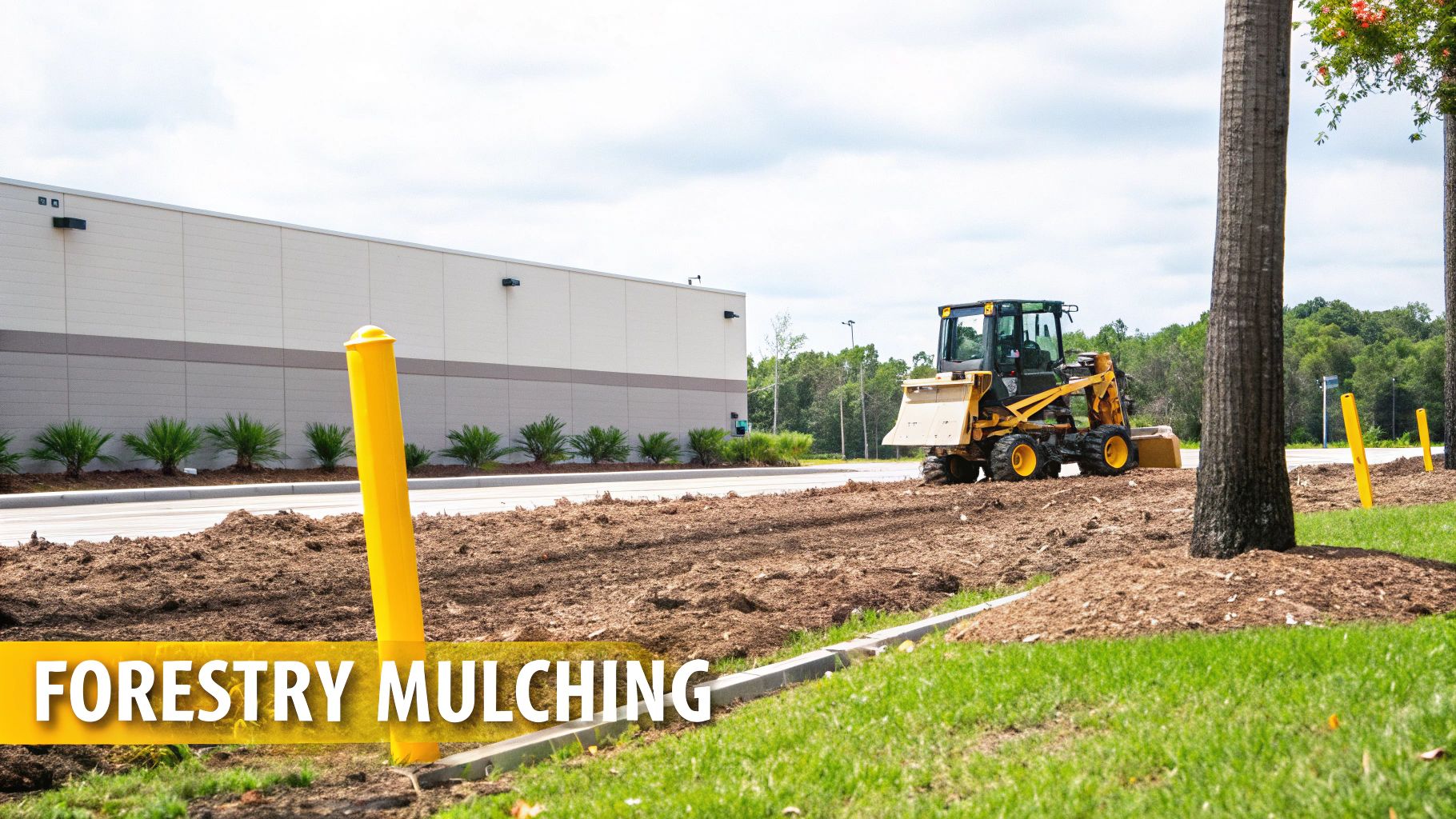
Forestry Mulching: The Modern Approach
There's a reason forestry mulching has become the go-to method for site preparation around here. Instead of ripping everything out of the ground and leaving you with massive debris piles, this technique uses one specialized machine to shred unwanted brush, vegetation, and trees right where they stand.
What you're left with is a clean, accessible site covered in a natural layer of protective mulch. This isn't just a byproduct; it's a huge asset for your land.
Erosion Control: That fresh mulch blanket is your best defense against Florida's torrential downpours. It absorbs the rain's impact and keeps your precious topsoil from washing away.
Moisture Retention: The mulch acts like a sponge, helping the ground hold onto moisture. This is a massive plus for any future landscaping and reduces stress on the trees you've decided to keep.
Soil Enrichment: As that organic material breaks down, it feeds the soil, returning vital nutrients and creating a healthier foundation for years to come.
Forestry mulching is also incredibly efficient. You completely eliminate hauling and disposal fees for all that cleared vegetation, which can save you a surprising amount of money. If you want to see exactly how it works, check out our comprehensive landowner's guide to forestry mulching services.
Traditional Clearing Methods and Their Downsides
Of course, the old ways are still around. Traditional "push and pile" clearing uses bulldozers to knock everything down and scrape the land clean. Then you're faced with two options: haul the debris away or burn it.
While this approach might make sense for massive commercial developments, it comes with some serious drawbacks for most residential and small commercial projects. The heavy equipment compacts the soil, and scraping away all the surface vegetation also strips away the nutrient-rich topsoil. You’re left with a barren lot that’s a prime target for erosion and will need a lot of help to support healthy grass or plants.
On top of that, burning debris is a logistical headache. It’s heavily regulated in most Florida counties due to air quality concerns and fire risks, often requiring its own set of permits. And hauling it off-site? That can easily add thousands of dollars to your site prep budget.
For the vast majority of landowners in Central Florida, forestry mulching offers a superior balance of speed, cost-effectiveness, and environmental responsibility. It leaves your land in better condition than it found it, setting a healthier foundation for everything that comes next.
The industry is clearly shifting this way. The demand for precise, low-impact clearing equipment is booming—the U.S. land clearing attachment market is expected to grow from around USD 629 million in 2024 to USD 1.26 billion by 2034. It's a clear sign that builders and landowners recognize the value of methods that protect the soil.
Stump Removal: The Non-Negotiable Final Step
No matter which clearing method you choose, you absolutely have to deal with the stumps. Leaving them in the ground is just asking for trouble down the road. This is one corner you can’t afford to cut.
Stumps might look harmless, but they create major problems:
Pest Infestations: Rotting wood is a five-star resort for termites, carpenter ants, and other pests. A stump near your new foundation is like putting out a welcome mat for them to move right into your home.
Ground Settling: As a stump and its huge root system decay, they create empty pockets underground. The soil will eventually collapse into these voids, causing settling that can crack your foundation, driveway, or patio.
Construction Obstructions: You can’t properly dig utility trenches, pour a solid foundation, or grade a site with stumps in the way. They obstruct everything.
The solution is professional stump grinding. A high-speed machine grinds the stump down to well below ground level, mixing the wood chips with the soil. This gets rid of the physical obstruction and eliminates the future risk of pests and settling, giving you a truly clean slate to build on.
Grading and Drainage for a Stable Foundation
With your land cleared and the stumps ground down, it's time to start sculpting the earth itself. This isn't just about making a flat spot for a concrete truck; it's a precise process of setting the right grade and drainage to protect your foundation for decades to come.
You can think of this as creating the permanent shape of your property. It’s a make-or-break step that dictates how water behaves during every single Florida downpour.
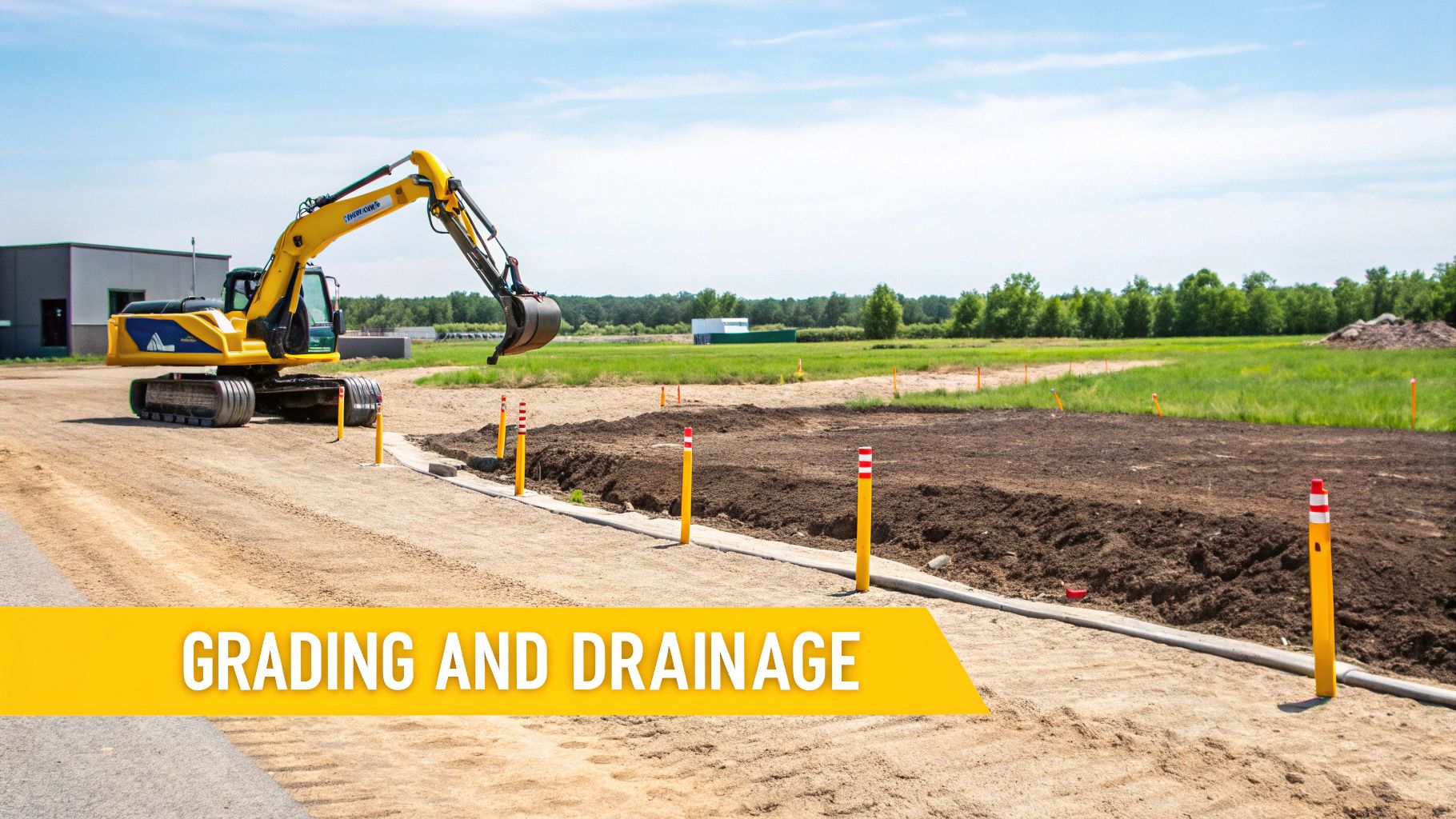
This phase shifts your project from clearing away vegetation to actually engineering the soil. Get it right, and you're setting the stage for a stable, long-lasting building. Get it wrong, and you're looking at potential foundation issues, water intrusion, and landscape erosion—problems that are incredibly expensive to fix down the road.
Establishing the Proper Rough Grade
The first big goal here is to establish the rough grade, which is the foundational shaping of your entire site. The whole point is to make sure water flows away from your future building pad, preventing moisture from ever sitting against your foundation walls. In a state like Florida, where we can get slammed with several inches of rain in a single afternoon, this is non-negotiable.
A professional grading crew will use survey stakes and laser levels to meticulously shape the land. The industry standard is to create a slope that drops at least six inches over the first ten feet away from the foundation. It might not sound like a lot, but that minimum grade is what actively channels water away from your home.
This is more than just pushing dirt around. It often means bringing in fill dirt to build up low spots or cutting down high areas to get the contour just right. It’s a careful balance of cut and fill to create a stable, properly sloped building area.
The Importance of Soil Compaction
Once the rough grade is set, that soil has to be compacted. This is the process of mechanically increasing the soil's density, squeezing out air pockets to create a solid base that won't settle over time. Loose, uncompacted soil is like a sponge—it can shift and compress under the massive weight of a building, leading to ugly cracks in your foundation.
This step is especially critical here in Central Florida. Our sandy soil is naturally prone to shifting, so you can't skip this. Crews use heavy equipment like vibratory plate compactors or sheepsfoot rollers to methodically press the soil down layer by layer.
A pro will always perform compaction in "lifts," or layers, typically 6 to 12 inches thick. Trying to compact a deep layer of soil all at once just doesn't work. The force won't reach the bottom, leaving a hidden weakness right under your foundation.
To make sure the job is done right, a geotechnical engineer will often perform a compaction test. They use a special gauge to measure the soil's density and check it against a lab standard, confirming it meets the specific requirements for your building plans.
Designing Effective Drainage Solutions
While proper grading is your first line of defense, a dedicated drainage system is the key to managing heavy rainfall. The goal is to collect and divert water safely off your property without causing erosion or flooding your neighbors. The right system really depends on your property's specific lay of the land and soil type.
Here are a few common solutions we see all the time in Central Florida:
Swales: These are just broad, shallow channels, usually covered in grass. They're designed to slow down and direct surface runoff toward a safe discharge point, like a storm drain.
French Drains: A French drain is basically a gravel-filled trench with a perforated pipe inside. It’s fantastic for collecting subsurface water that could otherwise saturate the ground around your foundation.
Catch Basins: These are the grated boxes you see at low points on a property. They catch surface water and funnel it into an underground pipe system, moving a lot of water away very quickly.
Understanding how to manage Florida’s unique soil challenges is a huge part of this process. If you’re interested in the nitty-gritty, you can learn more by exploring a practical guide to soil stabilization techniques that the pros use.
Properly stabilizing the soil before you build is a critical investment. Getting the grading, compaction, and drainage right from the start ensures your land is truly ready for a stable, secure foundation.
Navigating Environmental and HOA Regulations
Getting your land ready for construction in Central Florida isn’t just about moving dirt around. It’s more like a delicate dance with a complex web of environmental laws and community rules. If you misstep with either one, you could bring your project to a grinding halt, facing steep fines and seriously frustrating delays. This is where your homework really pays off, protecting your investment and our local ecosystem.
The way we prep a site has lasting environmental effects, which is why modern site work is leaning more and more into smart practices like erosion control and responsible vegetation management right from the get-go. Between 2006 and 2010 alone, global construction activities added 61,600 km² to soil erosion-affected areas and created over 100 billion tons of waste. By using better methods like selective tree retention and forestry mulching —which leaves a natural, protective mat on the soil—we can drastically cut down on that long-term damage.
Tackling Environmental Hurdles
Central Florida is home to some incredibly sensitive ecosystems and protected wildlife, and they all demand careful consideration. Before a single tree comes down, you absolutely need a thorough environmental review. This isn't just a good idea; it's mandated by state and federal law.
Your first move should be hiring an environmental consultant. These folks are the experts at spotting potential red flags on a property that could tangle up your project. They're trained to see issues the rest of us would walk right past.
A few common environmental challenges we see all the time in our area include:
Wetlands Delineation: Florida is serious about protecting its wetlands. You'll need an expert to officially map out—or "delineate"—any wetland boundaries on your land. Building too close to these zones without the right permits is a major violation.
Protected Tree Species: Many counties have ordinances protecting "heritage" or "specimen" trees, like our beautiful, sprawling live oaks. You can't just take a chainsaw to them. Removing one often requires a special permit and sometimes a mitigation plan, like planting several new trees to make up for it.
Protected Wildlife: The gopher tortoise is a perfect example. As a threatened species, its burrows are protected by law. If you find burrows on your site, you’ll have to work with a licensed professional to safely and legally relocate the tortoises. This is a formal process that requires a specific permit from the Florida Fish and Wildlife Conservation Commission (FWC).
Don't think of these as minor details you can sort out later. Failing to address environmental factors properly can lead to state agencies shutting down your project and hitting you with fines that can climb into the tens of thousands of dollars. Bringing in a professional from the start is the best insurance against these kinds of costly headaches.
Understanding HOA and CDD Rules
If your property is part of a planned community, get ready for another layer of rules. Homeowners Associations (HOAs) and Community Development Districts (CDDs) have their own covenants and restrictions that often go far beyond what the county requires. These rules are legally binding and are all about maintaining a consistent look and feel throughout the neighborhood.
These community guidelines can touch on nearly every part of your site prep and construction. They are often surprisingly specific and can dictate things you might never have considered.
Common HOA and CDD Restrictions
Before you even think about planning the work, get your hands on a copy of the community’s architectural review guidelines. You'll want to pay close attention to the rules on:
Area of Regulation | Typical Requirements |
|---|---|
Tree Removal | Many HOAs are very strict about which trees can be removed, even if the county doesn't protect them. |
Work Hours | Most communities limit construction noise to specific times (e.g., 8 AM to 5 PM, weekdays only). |
Debris and Materials | There are often rules about where you can store materials and how fast you have to get rid of debris. |
Fences and Sheds | Your plans for temporary construction fencing or storage sheds will almost certainly need the HOA board's blessing. |
Submitting your site preparation plans to your HOA or CDD for approval is a mandatory first step. Their review process can take several weeks, so be sure to build that time into your project schedule right from the beginning. Getting their official, written approval before you start is every bit as important as getting your county permit. Successfully navigating both sets of rules is the key to a smooth start for your project.
Budgeting Your Land Preparation Project
Sooner or later, every landowner lands on the two big questions: "What's this really going to cost?" and "How long is this whole thing going to take?" Getting your land ready for a new build is a major investment, and there's no better way to avoid stress down the road than by setting a realistic budget and timeline right from the start.
The final price tag isn't just one number; it’s the sum of many different services, and each one has its own cost drivers. Everything from the density of trees on your lot to how busy your local permitting office is will play a role in the final calculation.
Breaking Down the Core Costs
When you start budgeting, it's easy to focus just on the clearing, but that's only one piece of the puzzle. Several key expenses make up the total investment, and understanding them helps you see exactly where your money is going.
Surveys and Permits: Before a single machine touches your property, you'll be paying for boundary and topographic surveys, soil tests, and a handful of permits. These upfront "soft costs" can run anywhere from $1,000 to over $5,000, depending on your project's complexity and local county fees.
Land Clearing: This is often the largest line item on the invoice. The final cost is heavily swayed by the clearing method you choose and the current condition of the site. For a deep dive into local pricing, you can learn more about how much it costs to clear an acre in Central Florida.
Grading and Fill Dirt: Getting the site level and ensuring proper drainage is non-negotiable. Costs can jump significantly if you need to bring in a lot of fill dirt, which is typically priced by the truckload.
Utility Connections: Bringing water, sewer, and power to your build site can be a surprisingly big expense. It can sometimes cost $10,000 or more if the main utility lines are a long way from your property line.
Remember, these figures are just a starting point. A heavily wooded, one-acre lot with wetland complications is always going to cost more to prepare than a flat, lightly treed parcel.
Pro Tip: Always, always add a contingency fund to your budget. We recommend 10-15% of the total estimated cost. This buffer is your safety net for the unexpected—like hitting a layer of rock during excavation or a permit delay that throws off your schedule.
Mapping Out a Realistic Project Timeline
Time is just as critical as money. The journey from an overgrown lot to a perfectly graded, build-ready pad can take anywhere from a few weeks to several months. Understanding the sequence of events and where delays can pop up is key.
A typical project moves through several phases, and they don’t always flow seamlessly from one to the next.
Cost and Timeline Estimator for Central Florida Land Prep
To help you get a clearer picture, here’s a table that breaks down some general estimates for the different stages of preparing land in our area. Think of it as a rough guide to help you start planning.
Service | Typical Cost Range (per acre/project) | Estimated Timeline | Key Factors Influencing Cost |
|---|---|---|---|
Permitting & Surveys | $1,500 - $6,000 | 4 - 12 weeks | County backlogs, survey complexity, need for environmental studies. |
Forestry Mulching | $1,200 - $3,500 per acre | 1 - 3 days per acre | Density of vegetation, type of trees, terrain accessibility. |
Stump Grinding | $200 - $800+ (project based) | 1 - 2 days | Number and size of stumps, accessibility for equipment. |
Rough Grading | $2,000 - $7,000+ per acre | 2 - 5 days | Amount of cut/fill needed, soil type, need for imported fill dirt. |
Utility Installation | $5,000 - $25,000+ | 2 - 8 weeks | Distance to main utility lines, trenching difficulty, local utility fees. |
As you can see, the single biggest variable is often the permitting process. Some Central Florida counties can turn around a simple clearing permit in a month, while others might take three months or longer, especially if environmental reviews are needed. And of course, we can't forget about the weather—Florida's hurricane season is another wild card that can cause unavoidable delays.
The absolute best way to get a reliable quote and a realistic schedule is to bring in a professional site preparation contractor. They have the on-the-ground experience to anticipate potential headaches and navigate the local bureaucracy, keeping your project on track and your budget in check.
Common Questions About Preparing Land for Building
As you get into the thick of preparing your land for construction, you're going to have questions. It’s a complicated process with a lot of moving pieces, and getting straight answers can make a world of difference. We've pulled together some of the most common—and urgent—questions we hear from landowners to help you sidestep the usual hurdles and keep your project moving.
How Long Does It Take to Get Land Ready for Building in Florida?
This is usually the first thing people ask, and the honest answer is: it depends. The whole process can be as quick as a few weeks or stretch out over several months. It all comes down to a few key variables.
For a smaller, relatively clear lot where the permitting process is straightforward, you might only be looking at 2-4 weeks of actual site work once the permits are in hand. But if you're dealing with a large, heavily wooded property with environmental flags like wetlands, that timeline could easily extend to 3-6 months. Keep in mind, the permitting process alone can take anywhere from 30 to 90 days in many Central Florida counties before a single machine can even start.
The main things that influence your timeline are:
Property Size and Condition: It’s simple—more acres and thicker vegetation mean more time is needed to clear it all out.
Permitting Efficiency: Your local building department's backlog and the complexity of their requirements can be the single biggest bottleneck in your entire schedule.
Weather: Here in Florida, the rainy season and the ever-present threat of hurricanes can bring work to a screeching halt with no notice.
What Is the Difference Between Forestry Mulching and Traditional Land Clearing?
Getting a handle on this is critical, both for your budget and for the long-term health of your property.
Traditional land clearing is what most people picture: bulldozers pushing everything down, piling it up, and then either burning it or hauling it off. This method really tears up the topsoil, leaving the ground bare and wide open to erosion.
Forestry mulching, on the other hand, is a much more modern and surgical approach. It uses a single machine to shred trees and brush right where they stand, instantly turning them into a protective layer of natural mulch.
Forestry mulching is faster, eliminates hauling and disposal fees, and actively prevents soil erosion. As the mulch decomposes, it returns vital nutrients to the ground, enriching your soil and setting a healthier foundation for future landscaping. It's an environmentally superior and often more cost-effective choice for most residential projects.
Do I Need a Permit for Clearing My Land in Central Florida?
Yes. In almost every single case, you absolutely do. I can't stress this point enough.
Most jurisdictions here in Central Florida—that includes Orange, Osceola, and Brevard counties—require permits for any significant land clearing, grading, or even just removing a few large trees.
These permits aren't just bureaucratic hoops to jump through. They exist to make sure your project is in line with crucial regulations, such as:
Local Zoning Laws: This confirms your plans match how the land is supposed to be used.
Environmental Protections: It's all about safeguarding things like gopher tortoise habitats or protected wetlands.
Stormwater Management Plans: This ensures your site work won't cause flooding problems for your neighbors down the road.
Trying to clear your land without a permit is a huge gamble. You’re risking immediate stop-work orders, steep fines, and even being forced to undo all the work you’ve already paid for. It's just not worth it.
Can I Save Money by Clearing the Land Myself?
The thought of saving some cash with a DIY approach is always tempting, but when it comes to site preparation, it's rarely a good idea. The risks and hidden costs almost always wipe out any money you thought you were saving.
Professional-grade equipment, like a forestry mulcher or a bulldozer, is incredibly expensive to rent and extremely dangerous if you don't have extensive training. One little mistake—like grading the land improperly and causing water to pool against your future foundation, or accidentally taking down a protected heritage tree—can cost you thousands of dollars in repairs and fines.
When you hire an insured, experienced professional crew, you're paying for peace of mind. They know the job will be done right, safely, and efficiently the first time. They understand the local rules, have the right machinery, and can handle unexpected problems, which ultimately saves you money and a world of headaches.
Ready to get your Central Florida property build-ready without the guesswork? The team at Palm State Clear Cut has the experience and equipment to handle every stage of your site preparation, from forestry mulching to final grading. Get your free, no-obligation quote today!
Comments