
A Landowner's Guide to Clearing Underbrush in Woods Safely
- Mike Walker
- Jan 4
- 15 min read

Clearing underbrush is simply the process of getting rid of unwanted vegetation, invasive plants, and all that dense, tangled growth in a wooded area. Think of it as the foundational step for improving the health of your woods, seriously reducing wildfire risk, and getting your land ready for whatever you have planned next.
Planning Your Underbrush Clearing Project
Before you even think about pulling the first weed or firing up a single piece of equipment, know this: a successful project starts with a solid plan. This is where you figure out what you're really dealing with, nail down your goals, and make sure you're doing everything safely and by the book.
Rushing this initial phase is a recipe for disaster. It often leads to expensive mistakes, a damaged ecosystem, or even legal hot water. A little thoughtful planning now sets the stage for a safe, effective clearing job.
Take the time to walk your property with a critical eye. I mean really look at it, don't just glance it over. This is hands-down the most important first step.
Assess Your Property and Define Goals
First things first, know exactly where your property begins and ends. A recent survey is gold, but at the very least, find your property markers. The last thing you want is to accidentally clear a chunk of your neighbor's land.
Next, you have to identify what’s hidden. Are there underground utility lines for water, gas, or electricity? Before any digging or heavy equipment shows up, you absolutely must call 811 to have them marked.
At the same time, you need to be crystal clear on what a "win" looks like for your project. Your goals are going to drive your entire strategy.
Fire Mitigation: Is your main priority creating a defensible space around your home? This means clearing out flammable brush within a specific radius—a non-negotiable task in fire-prone states like Florida.
Aesthetic Improvement: Maybe you’re just trying to open up the view, carve out some walking trails, or make your woods more enjoyable for recreation.
Habitat Restoration: Do you want to knock out invasive species to give native plants a fighting chance? This requires knowing which plants to save and which ones have to go.
Land Use Preparation: Is this the first step toward building a home, creating a pasture, or some other development? If your clearing project is part of a larger wildlife management plan, like getting a spot ready for planting, you might find this guide to planting a food plot for deer really helpful.
Understand Local Regulations and Permits
This isn't just about paperwork; it's about avoiding hefty fines and frustrating project delays. The rules for clearing underbrush can change dramatically from one county to the next, especially in environmentally sensitive areas. Here in Central Florida, counties like Orange or Volusia have very specific rules about tree removal, wetland protection, and protected species like the Gopher Tortoise.
Pro Tip: Never assume your project is too small to need a permit. A quick call to your local county planning or environmental protection department can save you thousands in potential fines. Be specific and ask about land clearing, tree removal thresholds, and any ordinances related to native vegetation.
Responsible land management has a bigger impact than you might think. On a global scale, deforestation rates have slowed to 10.9 million hectares per year during 2015-2025. That’s a 38% drop from the 1990s, which shows that smart clearing and preservation strategies really can work together.
Here in Florida, where over 4,000 brush fires burn an average of 20,000 acres every year, clearing overgrown land is a direct way you can help reduce that risk. You can learn more about how these practices affect forestry worldwide from recent land use reports.
Choosing the Right Underbrush Clearing Method
Once you have a solid plan, the next big decision is how you're going to clear that underbrush. This isn't a one-size-fits-all job. The right approach hinges on your property's specific challenges, your budget, and how much sweat equity you're willing to put in.
We'll walk through the three main ways landowners get this done: the old-school manual approach, heavy-duty mechanical clearing, and the increasingly popular forestry mulching technique. Each has its place, and understanding the differences is the key to a smart, cost-effective project.
Manual Clearing: The Hands-On Approach
Manual clearing is exactly what it sounds like—relying on hand tools and good old-fashioned hard work. We’re talking chainsaws for small trees, loppers for stubborn vines, and brush axes or machetes for everything else. It’s an intimate way to work your land, giving you total control over every single plant you take out.
This method is perfect for smaller, more delicate projects. If you have less than an acre or need to surgically remove invasive species while saving native plants, manual clearing offers that precision. It’s also the only real option for steep, rocky, or soggy ground where you just can't get heavy equipment.
The downside? It's slow and physically grueling. If you're paying a crew, manual clearing can quickly become the most expensive route for larger properties. You’re also left with piles of debris that need to be hauled, chipped, or burned, which adds another layer of work and cost.
This decision tree can help you map out the first steps of any clearing project, from assessing your land to checking on permits.
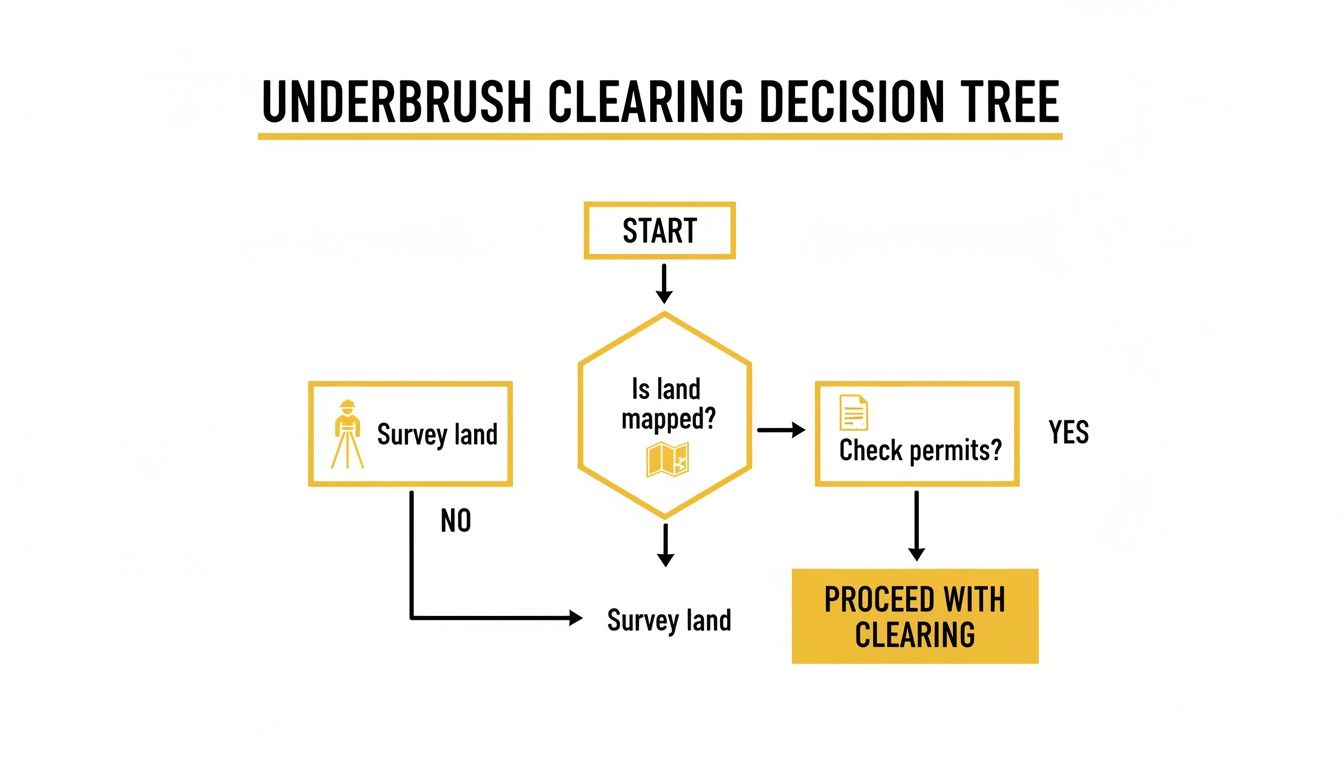
As you can see, solid planning comes first, making sure you’ve handled boundaries and regulations before you even think about which tool to pick up.
Mechanical Clearing: Power and Speed
When you've got a lot of ground to cover and time is short, mechanical clearing enters the picture. This involves heavy equipment like skid-steers with grapple or shear attachments, or even small dozers, to push, uproot, and pile vegetation. It’s worlds faster than doing it by hand.
Mechanical clearing is a strong choice for medium-to-large properties where the main goal is to clear the land fast for construction or farming. It easily handles bigger trees and thicker brush that would take forever with a chainsaw.
But all that power has a trade-off. Heavy machines can cause serious soil compaction and disturbance, which often leads to erosion issues down the road. It’s also a blunt instrument—you end up with a bare-earth finish that can damage the root systems of the trees you wanted to keep. And just like with manual clearing, you’re still left with huge piles of debris that have to be dealt with. You can dive deeper into the specific equipment in our guide to underbrush clearing machines.
Forestry Mulching: The Efficient and Ecological Option
Forestry mulching is the modern solution that strikes a fantastic balance between speed and environmental care. This method uses a single machine with a specialized mulching head that grinds up trees and brush right where they stand. Everything is instantly turned into a natural layer of mulch and spread across the ground.
This approach is a game-changer because it completely eliminates the debris removal step. No hauling, no burning, no extra disposal costs.
That fresh layer of mulch helps hold moisture in the soil, prevents erosion, and naturally keeps weeds from coming back by blocking sunlight.
It's an incredibly versatile option for all kinds of projects, from creating firebreaks and clearing fence lines to restoring overgrown land. Mulchers can handle varied terrain and are nimble enough to work around the trees you want to save, minimizing damage.
The global market for these machines was valued at $531 million in 2024 and is expected to hit $771 million by 2031—a clear sign of their growing popularity. A single machine can clear 3-5 acres a day, often cutting project costs by 40-60% compared to traditional methods burdened with debris hauling fees. It's a powerful tool for smart, sustainable land management.
Comparison of Underbrush Clearing Methods
To make the decision easier, here's a side-by-side look at how these three methods stack up against each other.
Method | Typical Cost per Acre | Clearing Speed | Labor Requirement | Environmental Impact |
|---|---|---|---|---|
Manual Clearing | $2,500 - $6,000+ | Very Slow | Very High | Low (if done selectively), but debris disposal can be an issue. |
Mechanical Clearing | $1,000 - $4,000 | Fast | Moderate | High (soil compaction, erosion risk), requires debris disposal. |
Forestry Mulching | $800 - $2,500 | Very Fast | Low | Low (no soil disturbance, mulch improves soil health, no debris). |
Ultimately, the best method comes down to your project's scale, goals, and budget. While manual work is great for precision on small lots, and mechanical clearing offers raw speed, forestry mulching provides a balanced, eco-friendly solution that is often the most cost-effective for the majority of landowners.
Essential Gear and On-Site Safety Practices
Let’s be blunt: clearing underbrush isn’t a casual weekend chore. It's tough, physical work loaded with potential risks. Thinking of safety as an optional extra is a recipe for disaster. Proper preparation, the right equipment, and staying alert are what really separate a job well done from a trip to the ER.
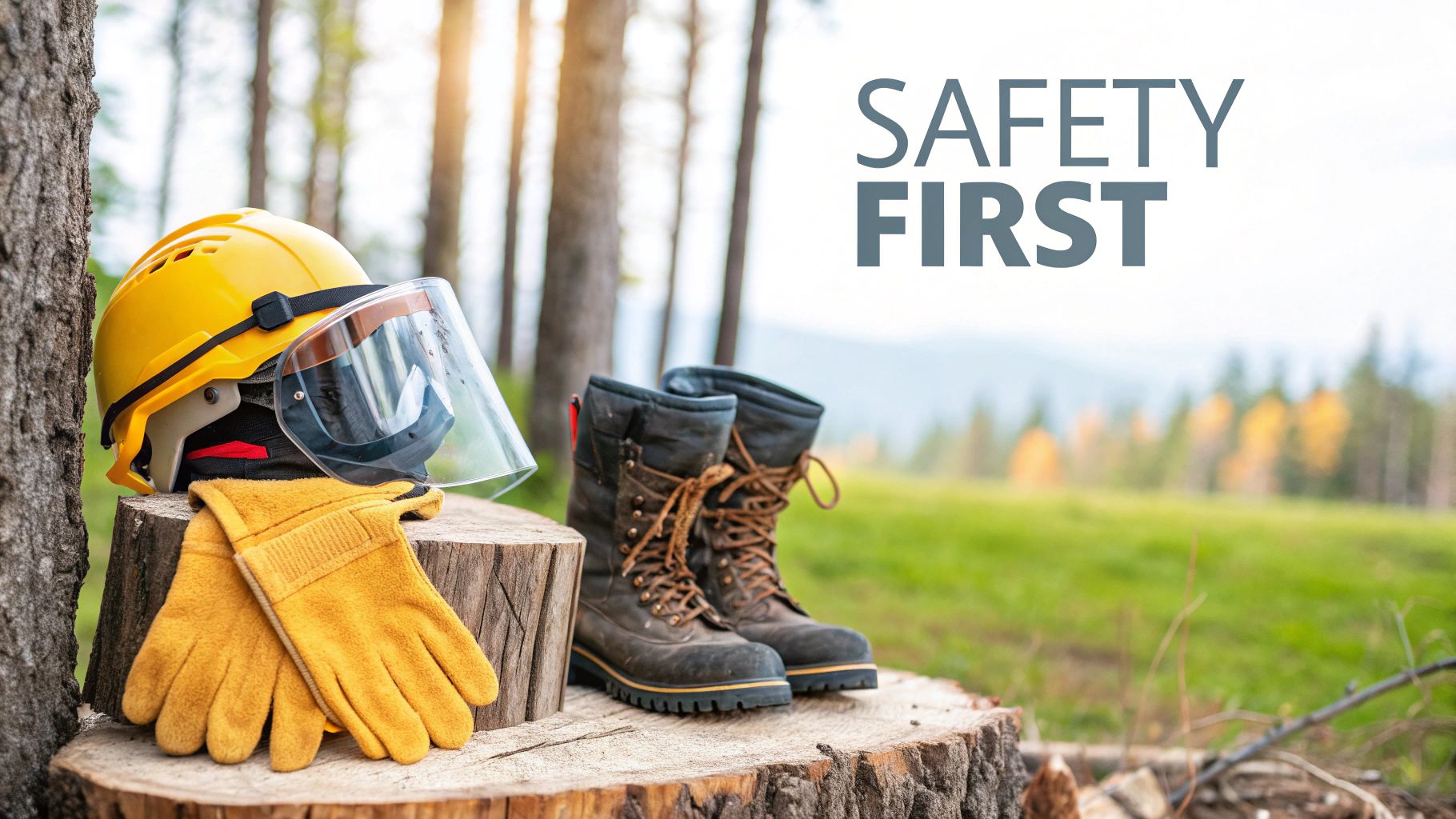
Before you even think about starting a chainsaw, you need to be kitted out from head to toe. This isn't just about looking professional—it’s about shielding yourself from flying debris, razor-sharp tools, and tricky terrain.
Your Personal Protective Equipment Checklist
Your Personal Protective Equipment (PPE) is your first and most important line of defense. Don't ever cut corners here. Every single piece has a critical job to do.
Head and Face Protection: A hard hat is non-negotiable. Falling branches are a real threat. You'll also want a full-face shield or, at a minimum, safety glasses to keep wood chips, twigs, and dust out of your eyes.
Hearing Protection: Chainsaws, wood chippers, and mulchers are loud enough to cause permanent hearing damage. Earmuffs or good-quality earplugs are an absolute must.
Hand Protection: You need to protect your hands from thorns, sharp branches, and tools. A solid pair of leather or synthetic work gloves is essential. For more detailed advice, check out a complete guide to cut-resistant gloves to make sure your gloves match the task at hand.
Leg and Foot Protection: If you’re running a chainsaw, chainsaw chaps are mandatory. They are designed to stop a moving chain on contact. Pair those with steel-toed boots that give you good ankle support and a solid, non-slip grip for walking over uneven ground.
Want a deeper dive into the machinery itself? Our article on equipment for clearing underbrush is a great resource to read alongside your safety prep.
On-Site Safety Protocols
Having the best gear is only half the equation. Your behavior on the worksite is just as critical. The key is situational awareness.
Before you start, walk the entire area you intend to clear. Look up. You're searching for "widow-makers"—those dead, hanging branches or precarious trees that could fall at any moment. Mark them, deal with them first, or steer clear of them completely.
Pay just as much attention to the ground. Hidden stumps, unexpected holes, and uneven ground can send you tumbling, which is incredibly dangerous when you’re holding a running piece of equipment.
A critical but often overlooked safety measure is establishing a clear work zone. If you're working with others, maintain a safe distance—at least two tree lengths apart—and always know where everyone is. Never work directly uphill or downhill from another person.
Navigating Environmental Hazards
Out in the woods, you're dealing with more than just the work itself. Here in Florida, that means being ready for some very specific environmental and biological risks.
Wildlife Encounters: Stay vigilant for venomous snakes like water moccasins and rattlesnakes, which love to hide in dense brush. Wasps, hornets, and fire ants are also a common nuisance, so have a plan if you get stung.
Heat and Hydration: Florida's heat and humidity can bring on heat exhaustion or heatstroke faster than you'd think. Get an early start, take frequent breaks in the shade, and drink way more water than you feel you need.
Poisonous Plants: Learn what poison ivy, poison oak, and poison sumac look like. Long sleeves and pants create a physical barrier, but you should always wash your skin and clothes thoroughly after coming in from the field, just in case.
Managing Debris and Protecting Your Land
So, the underbrush is down. After all that hard work, it’s tempting to think the job is over, but this is where a new, critical phase begins. What you do with that huge pile of branches, logs, and leaves will make or break the long-term health of your land.
This is the point where you have to switch hats from a "clearer" to a "land manager." How you handle the debris and protect that newly exposed soil is the difference between a successful project and a future full of erosion and weed problems.
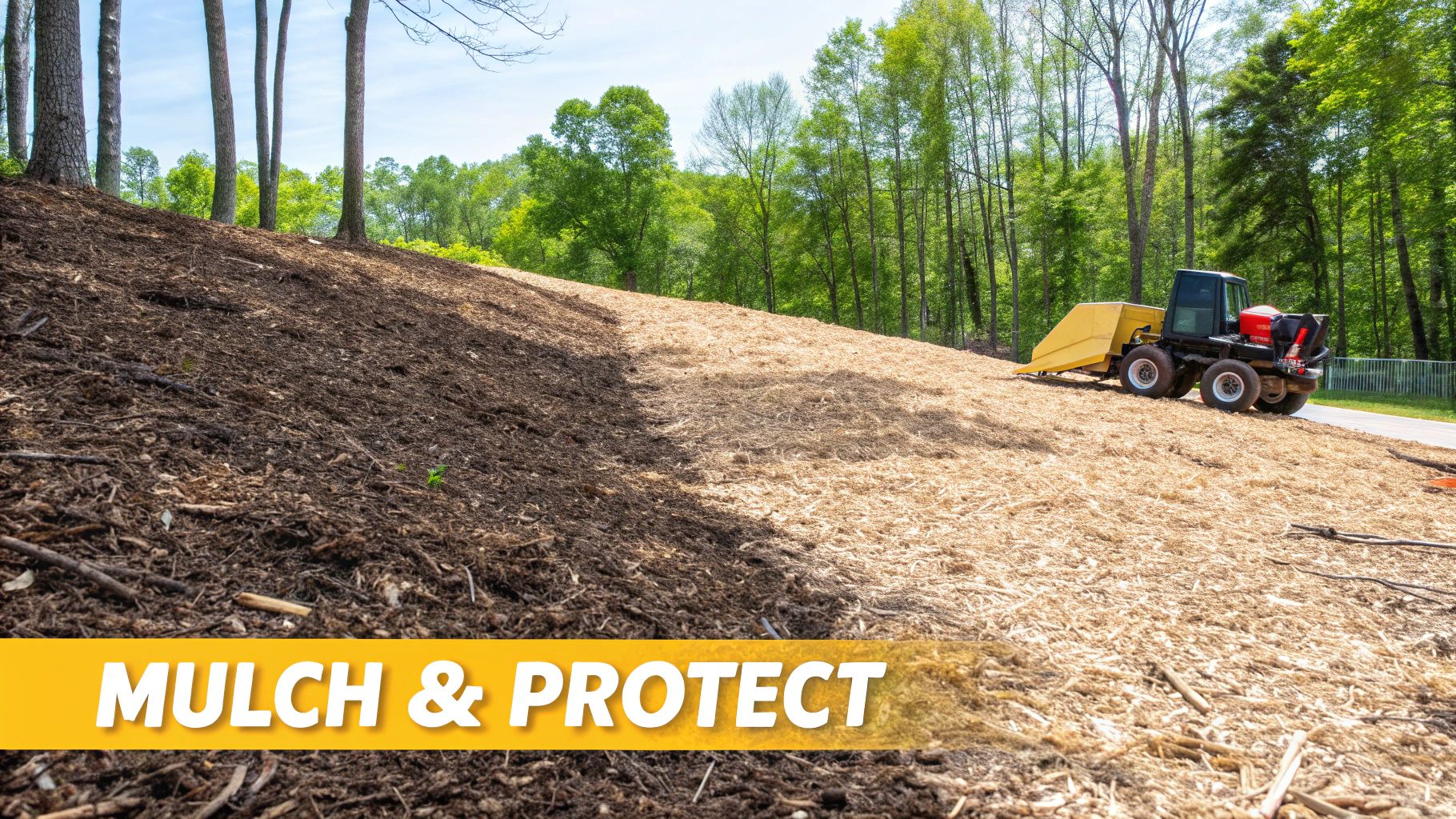
Options for Handling Cleared Debris
You’ve got a few traditional routes for getting rid of all that debris. Each has its pros and cons, and here in Central Florida, you've got to be extra mindful of local regulations, especially when it comes to fire.
Controlled Burning: Piling everything up and burning it can seem like the quickest solution. But it’s not that simple. You’ll need a permit from the Florida Forest Service, and you can only burn under specific weather conditions (windy days are a definite no-go). Plus, you're incinerating valuable organic material that your soil could have used.
Chipping: Renting an industrial wood chipper—or hiring a service that has one—is a great way to recycle. You can turn those messy piles into clean wood chips for paths or landscaping. The downside? It’s a ton of work feeding all that material into the machine.
Hauling Away: This is the most direct approach: load it all up and haul it to a landfill or green waste facility. It gets the property clean, but it’s almost always the most expensive option once you factor in dumpster fees and transport costs.
The global land clearing equipment market hit around $6.5 billion in 2023 for a reason. Modern machines don't just clear land; they're designed for efficiency and sustainability. The right equipment can cut project timelines by up to 50% while actively protecting the soil—a huge win for any landowner.
The Mulch Advantage for Soil Protection
This is where forestry mulching really shines. It completely sidesteps the debris problem. Instead of creating massive piles you have to deal with later, a mulcher processes everything on the spot and spreads a nutrient-rich layer of organic material right back onto the ground.
It's a one-and-done solution. The process of clearing underbrush in woods becomes an act of immediate land improvement. This isn't just about saving the time and money you'd spend on hauling; it's a direct investment in your soil's future. For a closer look at how it all works, check out our guide to land clearing and mulching.
Preventing Erosion on Newly Cleared Land
Bare soil, especially on a slope, is a recipe for disaster during a classic Florida downpour. Our intense rainstorms can strip away precious topsoil in minutes, carving out ugly gullies and washing sediment into nearby waterways.
That fresh layer of mulch is your best line of defense. It works in a few key ways:
It Absorbs Impact: The mulch acts like a cushion, softening the blow from heavy raindrops so they can’t dislodge soil particles.
It Slows Water Flow: As water runs across the ground, the mulch creates thousands of tiny barriers, slowing it down and giving it time to soak in rather than run off.
It Retains Moisture: The mulch layer holds onto rainwater like a sponge, keeping the soil beneath it hydrated and healthy.
On steeper hills or in very sensitive areas, you might want to add silt fences or erosion control blankets for extra security until new, desirable plants can establish their roots.
Suppressing Weeds and Improving Soil Health
That mulch layer does more than just stop erosion—it's also your secret weapon for easier long-term maintenance. By covering the soil, it blocks the sunlight that invasive species and opportunistic weeds need to sprout. It's a natural form of weed control that dramatically cuts down on future work.
And the benefits don't stop there. Over time, that organic material decomposes, slowly feeding nutrients back into the ground. Think of it as a slow-release fertilizer that improves soil structure and creates a healthy environment for the native plants you actually want to see grow. This approach turns a simple clearing project into an act of ecological restoration.
When to Hire a Professional Land Clearing Service
There’s a special kind of pride that comes from rolling up your sleeves and transforming your own property. But let's be honest—there's a huge difference between a challenging weekend project and one that's genuinely in over your head. Knowing when to trade in the loppers for the phone to call a pro is a critical decision that impacts your safety, your wallet, and the final look of your land.
The urge to save a buck by doing it all yourself is powerful, but it can be a false economy. Once you start factoring in equipment rental, fuel, the risk of damaging something (or yourself), and the sheer amount of time you’ll sink into it, you might find that hiring experts is the smarter, more cost-effective move.
Signs Your Project Requires a Pro
Some jobs just scream "professional." If your property checks any of these boxes, it's time to seriously consider bringing in a company like Palm State Clear Cut.
Significant Acreage: Manually clearing anything over an acre is a monumental undertaking. Professionals with forestry mulchers can knock out in a single day what might take a landowner weeks, or even months, to wrestle with by hand.
Extremely Dense Growth: Is your property a tangled mess of vines, briars, and saplings so thick you can barely push your way through? That's when a professional crew becomes essential. They have the right machinery and the know-how to tackle that kind of impenetrable growth safely and efficiently.
Tricky or Dangerous Terrain: Steep slopes, rocky ground, or swampy, wet areas dramatically increase the risk of injury, especially with heavy equipment. Professional operators are trained to navigate these challenging landscapes, minimizing risks to people and property.
Large Trees: If your "underbrush" problem includes a significant number of trees larger than a few inches in diameter, you've moved beyond basic clearing. This requires specialized equipment and expertise for safe felling and removal.
The Value Beyond Just Clearing
Hiring a professional service is about more than just renting a machine and an operator. You’re paying for a complete solution, and the real value lies in the expertise and security they bring to the table.
First and foremost is safety and liability. A reputable company is fully insured. That means if an accident happens—whether it's property damage or, worse, an injury—you are protected. You really can't put a price on that kind of peace of mind.
Then there's the efficiency and equipment. Pros own and maintain industrial-grade machinery that is far more powerful and effective than anything you can rent from the local hardware store. An experienced operator knows exactly how to use this equipment to its full potential, ensuring the job gets done right—and fast—the first time.
A professional assessment can also catch things you might miss, like the presence of protected species such as Gopher Tortoises or subtle signs of an erosion problem that needs immediate attention. That ecological knowledge is a critical part of doing this kind of work responsibly.
Choosing a Reputable Contractor
Once you've decided to hire out the work, the next step is finding the right team. Not all land clearing companies are created equal. You need a partner who is reliable, knowledgeable, and transparent from the start.
Here are a few tips for vetting potential contractors:
Check for Insurance: This is non-negotiable. Always ask for proof of general liability and workers' compensation insurance. Don't just take their word for it.
Ask for References: A confident, experienced company will be more than happy to provide references or show you a portfolio of their recent work in your area.
Get a Detailed, On-Site Quote: Be wary of any company that gives you a vague price over the phone. A true professional will insist on walking your property to understand the scope, identify challenges, and give you a precise, written estimate.
Discuss the Process: Ask them about their specific methods for clearing underbrush in woods. What do they recommend for your property and why? Do they use forestry mulching? How will they handle the debris? A good contractor will walk you through their entire process and answer every question you have.
Got Questions? We’ve Got Answers.
Even after you've mapped out a plan, it's natural to have a few lingering questions before you start clearing underbrush. Getting these common concerns sorted out is often the last step needed to move forward with real confidence.
Think of it this way: clear, straightforward answers help you set realistic expectations for your budget, timeline, and the project's impact on your land.
How Much Does It Cost to Clear Underbrush in Florida?
The million-dollar question! While costs vary quite a bit, most Florida landowners can expect to pay somewhere between $500 and $2,500 per acre. Where your project falls in that range really boils down to three things: how thick the growth is, how rough the terrain is, and which clearing method you choose.
Manually clearing with chainsaws and hand tools, while very precise, is incredibly labor-intensive. For anything over an acre, it often ends up being the most expensive route.
On the other hand, forestry mulching is usually the most cost-effective solution for larger parcels. That's because it’s a one-and-done process—cutting, grinding, and spreading the material in a single pass. This completely sidesteps the hefty debris hauling fees that can easily tack on thousands to your final bill.
The only way to get a truly accurate number is to have a professional walk your property. Always get a detailed, on-site quote from a reputable company that’s tailored to the unique conditions of your land.
What’s the Best Time of Year to Clear Woods in Florida?
For most of us here in Florida, the sweet spot for clearing underbrush is during the cooler, drier months. You're typically looking at the window from late fall through early spring—roughly October through April.
Tackling the job during this period has some real advantages.
You dodge the brutal summer heat and humidity, which makes it safer for everyone working on-site.
Fewer afternoon thunderstorms mean fewer weather delays.
The ground is drier, which drastically reduces soil compaction and damage from heavy equipment.
This timeframe also happens to be outside the primary nesting season for most of Florida’s wildlife, making it a more ecologically responsible time to work. While professionals like us can operate year-round, scheduling your project in this window usually makes for a much smoother, more efficient process.
Will Clearing Underbrush Harm Local Wildlife?
This is a fantastic and important question. The honest answer? It all depends on how the work is done. When done irresponsibly, any land clearing can be destructive. Old-school methods that involve bulldozing not only scrape away precious topsoil but can completely wreck a local ecosystem.
But that's not how modern, sustainable clearing works.
Forestry mulching, for instance, is a highly selective process that leaves the soil structure and the root systems of your keeper trees completely untouched. The machine grinds up the unwanted vegetation right where it stands, creating a protective blanket of mulch instead of leaving behind bare, vulnerable dirt.
This mulch layer is a huge win for the environment. It prevents erosion, helps the soil hold onto moisture, and slowly returns organic nutrients to the ground as it decomposes. A responsible contractor will always survey the property for protected species, like the Gopher Tortoise, before a single machine ever touches your land.
When done thoughtfully, removing invasive species and overgrown brush actually improves forest health and creates a better, more supportive habitat for native wildlife in the long run.
Ready to see what a professional, eco-friendly approach can do for your overgrown property? The team at Palm State Clear Cut specializes in transforming wooded lots across Central Florida using state-of-the-art forestry mulching and land clearing techniques. Get your free, on-site quote today at https://palmstateclearcut.com.
Comments