So, you’re standing at the edge of a property in Central Florida, looking at a tangled mess of dense brush, invasive plants, and stubborn trees. It’s impossible to walk through, let alone build on or farm. This is the starting point for countless projects, and land clearing is the essential first step that turns this chaos into a clean slate.
Think of it as landscaping, but on a much grander scale. The goal is to remove all the unwanted vegetation to get the property ready for whatever you have planned. But here’s the thing: how you clear the land matters. A lot. The method you choose has huge implications for your project’s timeline, your budget, and the long-term health of your soil.
Transforming Overgrown Land into a Clean Slate
At its core, land clearing and mulching is a process that uses specialized machinery to cut, grind, and shred vegetation—trees, stumps, brush, you name it—right on-site. The magic is in what happens next. Instead of hauling all that debris away, this method turns it into a natural, protective layer of mulch, putting valuable organic matter right back into the ground. It’s a single-step approach that’s often faster, more affordable, and much kinder to the environment than old-school methods.
Traditional Clearing Versus Modern Mulching
For decades, the go-to method was brute force. Bring in the bulldozers, push everything over, scrape the land bare, and then deal with the massive piles of debris. This usually meant either burning it (hello, air pollution) or paying a fortune to have it hauled off to a landfill. While it gets the job done, this approach is incredibly harsh. It leads to severe soil compaction, kicks off erosion problems, and strips away precious topsoil.
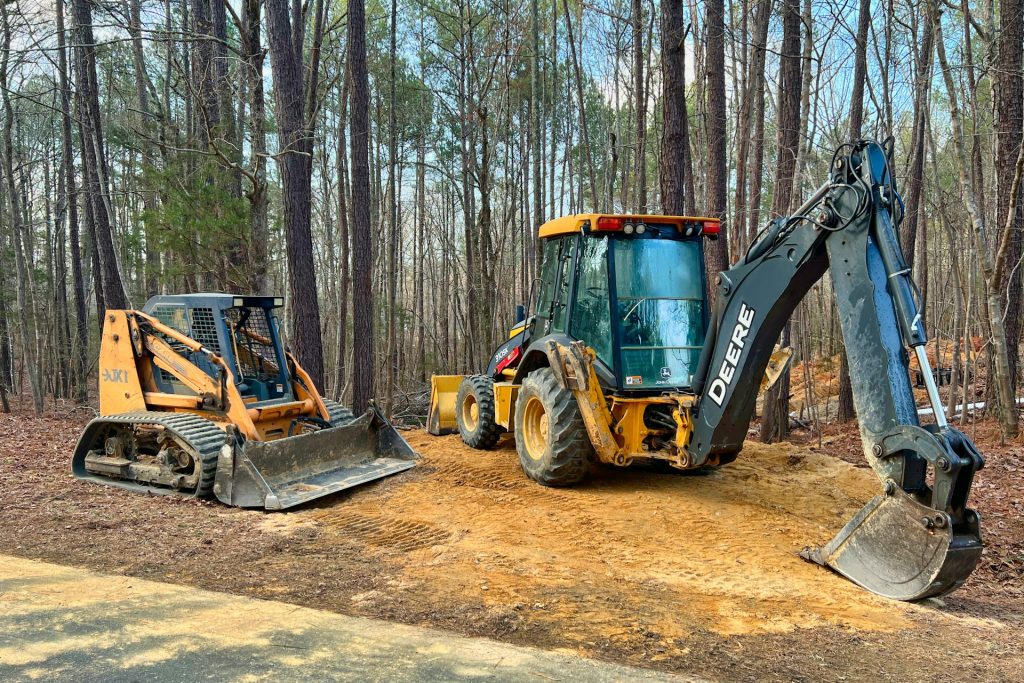
Modern forestry mulching is a smarter, more surgical alternative. We use a single machine—usually a compact track loader or an excavator with a specialized mulching head—to shred vegetation right where it stands. The shredded material is spread evenly across the ground, creating a protective blanket with a ton of benefits.
By returning nutrients directly to the ground, forestry mulching kickstarts a natural decomposition process. This not only enriches the soil but also helps suppress weed growth and retain moisture, giving your land a healthy foundation for future growth.
Comparing Land Clearing Methods at a Glance
To really get a feel for the difference, it helps to see the two approaches side-by-side. Traditional clearing is all about removal, while land clearing and mulching is about recycling nutrients back into the ecosystem. That one distinction changes everything, from the health of your soil to the final cost of your project. For a deeper look at these advantages, you can explore the power of mulching for sustainable land management in our detailed guide.
The table below gives you a quick, high-level overview of the key differences so you can see your options clearly.
| Factor | Traditional Clearing (Bulldoze & Burn) | Forestry Mulching |
|---|---|---|
| Soil Impact | High risk of compaction and topsoil removal. | Minimal soil disturbance; adds nutrients back. |
| Debris | Creates large piles that need to be burned or hauled. | No debris piles; all material is recycled on-site. |
| Timeline | Multi-step process (clearing, piling, hauling/burning). | Single-step process, often completed much faster. |
| Environmental | Can lead to erosion, air pollution from burning. | Prevents erosion and improves soil health. |
| Cost | Often involves separate fees for hauling and disposal. | Typically a single, all-inclusive cost. |
As you can see, the choice goes far beyond just getting rid of trees and brush. It’s about setting your property up for long-term success, and forestry mulching gives your land the best possible start.
Choosing the Right Land Clearing Method
Picking the right approach for clearing your land is a lot like choosing the right tool for a job. You wouldn’t use a sledgehammer to perform surgery, and the same logic applies here. The best method isn’t a one-size-fits-all solution; it hinges entirely on your property’s unique landscape and what you plan to do with it once it’s cleared.
Making a smart decision means understanding the real-world trade-offs between old-school techniques and modern practices like forestry mulching. Each one has its own set of pros and cons that will directly affect your project’s budget, timeline, and environmental impact.
Detailed Land Clearing Method Analysis
To help you see the bigger picture, we’ve put together a detailed breakdown of the most common land clearing techniques. This table evaluates each one based on its ideal use case, effectiveness, cost, and overall footprint on the land.
| Method | Best For | Pros | Cons | Environmental Impact |
|---|---|---|---|---|
| Bulldozing | Immediate construction, large-scale agriculture, complete vegetation removal. | Removes roots and stumps effectively; clears large areas quickly. | Causes severe soil compaction and erosion; requires costly debris removal. | High; strips topsoil and risks air pollution from burning. |
| Forestry Mulching | Improving soil health, creating trails, managing undergrowth, selective clearing. | Minimal soil disturbance; recycles nutrients on-site; prevents erosion. | Does not remove roots below ground; may require time for mulch to decompose. | Low; enhances soil and creates a natural habitat for microorganisms. |
As you can see, the decision often boils down to the final state you want your land to be in. Do you need a perfectly flat, root-free surface ready for a concrete slab, or are you looking to enhance the health and usability of your property for years to come?
Traditional Methods: Bulldozing and Burning
For decades, the go-to method for any serious land clearing project was the bulldozer. This approach is all about brute force—using heavy machinery to push over trees, rip out stumps, and scrape the ground clean. It gets the job done when your main goal is to wipe the slate clean for immediate construction or agricultural tilling.
But that raw power comes with a price. Bulldozing creates significant soil compaction, making it difficult for anything to grow later and often messing with natural drainage. It also strips away the precious, nutrient-rich topsoil, leaving the land exposed and vulnerable to erosion, especially with Central Florida’s heavy downpours.
Then you have to deal with the aftermath: massive piles of debris. You’re left with two main choices:
- Hauling: This involves loading up all that debris and trucking it to a landfill. It’s expensive, slow, and adds a major line item to your project budget.
- Controlled Burning: While burning gets rid of the debris on-site, it requires permits, pumps carbon into the atmosphere, and is a serious fire risk if not handled by seasoned experts.
Key Takeaway: Bulldozing is a powerful but highly disruptive method. It’s best reserved for large-scale development where complete root removal is non-negotiable, but be prepared for potential damage to the long-term health of your soil.
Modern Precision: Forestry Mulching
Forestry mulching presents a much more surgical and eco-friendly alternative. Instead of scraping the land bare, this process uses a single machine with a specialized mulching head to shred trees, brush, and undergrowth right where they stand. What you’re left with isn’t a barren plot, but a protective blanket of organic mulch spread evenly across your property.
This technique is perfect for projects aimed at land improvement, getting rid of invasive species, or carving out recreational trails. The mulch layer naturally smothers weeds, helps the soil hold onto moisture, and slowly breaks down, feeding vital nutrients back into the ground. It’s a complete reversal of the bulldozing process—instead of stripping the soil, you’re actively improving its structure and preventing erosion.
Better yet, since the whole job is handled by one machine, the impact on the ground is minimal. The specialized equipment we use for land clearing and mulching is often lighter and designed to spread its weight, avoiding the deep soil compaction that plagues traditional methods. You can learn more about the machinery in our guide to underbrush clearing machines.
Globally, land use choices matter. Agriculture, for example, is the biggest driver of deforestation worldwide. Cattle ranching alone was responsible for clearing an estimated 45.1 million hectares of forest between 2001 and 2015. By choosing a more responsible method like forestry mulching, you’re contributing to a more sustainable way of managing land right here in Central Florida.
A Look Inside the Forestry Mulching Process
Ever wonder what actually happens during a land clearing and mulching project? It’s more than just a big machine rolling onto your property. From our first conversation to the final walkthrough, it’s a methodical process designed to transform your land exactly the way you envision, safely and efficiently.
The whole thing kicks off with a detailed look at your property. Think of it as a diagnostic check-up, where a professional crew gets a feel for every variable that could affect the job. This isn’t just a quick glance from the road—it’s a deep dive into the specifics of your land.
The Initial Site Assessment
Before a single engine starts, an expert needs to walk the land. This initial assessment is absolutely crucial for mapping out a solid plan and giving you an accurate quote. The goal here is simple: understand what we’re working with and what you want to accomplish.
During this stage, we’re evaluating a few key things:
- Vegetation Density: Are we talking about light brush and a few saplings, or are we up against a wall of dense, mature hardwoods? The thickness and type of growth directly impact the time and equipment needed.
- Terrain and Topography: Flat, open land is pretty straightforward. But slopes, hidden ditches, swampy spots, or rocky soil throw in challenges that demand careful planning and a skilled operator.
- Project Goals: What’s the end game? Clearing a spot for your new home? Creating a pasture for horses? Maybe you just need some ATV trails cut through the woods or want to get aggressive overgrowth under control. Your vision dictates our entire approach.
This visual guide breaks down how we think through a land clearing project from start to finish.As you can see, a successful job doesn’t start with a machine—it starts with a detailed plan built on a thorough assessment.
Prepping the Site for Action
Once the assessment is done and we have a game plan, we move into site prep. This is all about setting the stage for a smooth and safe operation. It’s a bit like a surgeon prepping an operating room; every little detail is important.
The crew will usually tackle a few key tasks:
- Marking Boundaries: We clearly define the work area. This is essential to make sure we only clear what’s supposed to be cleared, leaving your favorite live oak or sensitive wetlands completely untouched.
- Identifying Hazards: The team will flag any potential dangers, like old wells, septic tanks, massive rocks, or underground utility lines. In any land clearing and mulching job, safety is always priority number one.
- Establishing Access: We map out a clear path for the machinery to get in and out, which helps minimize any disturbance to the rest of your property.
A professional crew doesn’t just clear land; they manage it with precision. The prep work is what separates a clean, controlled project from a chaotic one, protecting both the property and the people involved.
The Mulching Operation in Action
With the site prepped and ready, the main event can begin. A specialized machine, usually a compact track loader armed with a powerful mulching head, gets down to business. This is nothing like a bulldozer just knocking things over. It’s a high-powered grinder that shreds vegetation right where it stands.
The operator moves methodically through the designated area, cutting, grinding, and shredding trees and brush into fine pieces. The mulching head can be tilted up to tackle standing trees, lowered to grind stumps flush with the ground, and swept across the surface to clear out thick undergrowth. What’s left behind is a beautiful, uniform layer of natural mulch spread evenly across the soil.
How long does it take? That really depends on what we found during the assessment. A single acre of light brush might only take a few hours. That same acre, if it’s packed with hardwoods, could easily take a full day or more. For most of our residential projects here in Central Florida, clearing 1 to 1.5 acres of moderate growth is a pretty typical full day’s work.
But we’re not quite done when the primary clearing is finished. The final phase is all about cleanup and adding those finishing touches. This could mean doing one last pass to make sure the mulch is spread out just right, clearing any debris from driveways, and doing a final walkthrough with you to guarantee the results are everything you hoped for. It’s this meticulous process that leaves your property clean, accessible, and ready for whatever you have planned next.
Navigating Florida’s Environmental Regulations
Clearing land in Central Florida isn’t as simple as firing up the heavy machinery. It’s a process that demands a real respect for our unique local ecosystem and a solid understanding of a complex web of state and county rules. Responsible land clearing and mulching isn’t just a nice-to-have; it’s a legal and environmental must.
Jump the gun without knowing the regulations, and you could be looking at hefty fines, frustrating project delays, and even permanent damage to your property and the surrounding habitat. Before a single tree comes down, it’s absolutely vital to do your homework and team up with a crew that knows the lay of the land—both literally and legally.
Understanding Your Responsibilities
Here in Florida, owning a piece of land comes with some serious environmental responsibilities. You can’t just bulldoze a property without thinking about how it will affect local wildlife, water systems, and protected plants. This is especially true in fast-growing areas across Orange, Seminole, and Osceola counties.
Every city and county has its own playbook, but you’ll almost always run into rules about:
- Tree Ordinances: Many counties have strict protections for “grand” or “specimen” trees, like our iconic mature live oaks. Taking one down without the right permit can lead to some eye-watering penalties.
- Protected Species: Central Florida is home to a lot of protected wildlife, with the gopher tortoise being a prime example. State law demands a survey for their burrows. If any are found, a certified agent has to handle a formal relocation before any clearing can begin.
- Wetland Delineations: Clearing too close to a designated wetland area is a definite no-go. These zones are crucial for filtering our water and supporting wildlife, so their buffer zones have to be respected. A professional can help you pinpoint exactly where those boundaries are.
The Permit Process in Central Florida
Trying to figure out the permit process can feel like a headache, but it’s a step you simply can’t skip. Your very first move should always be a call to your local county or city planning and zoning department. They are the final word on what your specific property requires.
When you call, have your property address or parcel ID number handy. Don’t be shy—ask direct questions about land clearing permits, tree removal rules, and any environmental overlays on your land. Taking this one step upfront will save you a world of trouble later on. For a deeper dive, our guide on what Florida homeowners need to know before clearing land breaks it down even further.
Expert Insight: Always get permit requirements in writing. A quick “yes” over the phone isn’t enough to protect you. A professional land clearing company will almost always help with this verification, making sure every legal box is checked before the work starts.
These local rules are part of a much bigger picture. Land use changes have reshaped the entire planet, with activities like land clearing and mulching being a huge piece of that puzzle. One massive study found that nearly 32% of the Earth’s land surface was altered by people between 1960 and 2019, mostly for farming, cities, and deforestation. You can read more about these global land dynamics over at Nature.com.
Environmental Benefits of Responsible Mulching
This is where an eco-friendly method like forestry mulching really shines, lining up perfectly with Florida’s environmental priorities. Unlike old-school bulldozing that scrapes the ground bare and leaves it wide open to erosion, mulching actually protects and restores the land.
For starters, that layer of mulch acts like a natural sponge during Central Florida’s heavy downpours. It soaks up the impact of the rain, stopping our valuable topsoil from getting washed away into nearby streams and wetlands. It’s a simple but powerful defense against soil degradation.
What’s more, as that organic mulch breaks down, it feeds the soil with essential nutrients. This whole process improves the soil’s structure, helps it hold more water, and builds a healthier foundation for whatever you plan to grow next. It’s a sustainable cycle that gives back to the land, ensuring it stays healthy and productive for years to come.
Breaking Down Land Clearing and Mulching Costs
Trying to pin down a flat-rate price for land clearing is a bit like asking for the cost of a taxi before you’ve told the driver where you’re going. The final bill is completely shaped by the unique conditions of your land and exactly what you need done.
Several key variables have to be factored in to come up with a final quote. Once you understand what they are, you’ll be able to look at estimates with a clearer eye and see the real value behind the numbers. A professional quote isn’t just a guess; it’s a careful calculation based on the specific challenges your property presents.
The Core Factors That Drive Your Quote
The three biggest things that move the needle on cost are the size of the area, what’s growing on it, and how easy it is to get to. Each one plays a huge role in how much time and what kind of resources are needed to get the job done right.
- Acreage: This one’s the most straightforward. Clearing five acres is naturally going to cost more than clearing one, but you’ll often see the price per acre drop on bigger jobs because of the efficiencies we gain on-site.
- Vegetation Density and Type: This is a massive variable. A property with just some light, scattered underbrush is a much quicker job than one completely choked with invasive Brazilian pepper trees and mature hardwoods. Denser growth and bigger trees demand more powerful equipment and more hours on site.
- Terrain and Accessibility: A flat, dry, wide-open field is what we all hope for. But in Central Florida, we often run into steep slopes, rocky soil, or swampy areas that can slow down our machinery and require more skilled operation, which definitely impacts the project’s timeline and cost.
Think of it this way: The land itself sets the terms. A one-acre lot of thin palmettos is a sprint, while a one-acre jungle of old oaks and thick vines is a marathon. The effort and time required are vastly different, and the price will reflect that.
Common Pricing Models Explained
In the land clearing business, you’ll mostly run into two main ways of pricing a job. Each has its place, and the right one depends on what your project looks like.
Hourly Rates: For smaller or more unpredictable jobs, an hourly rate makes the most sense. We often use this for selective clearing or when working on tricky terrain where it’s tough to estimate a precise timeline. Rates can run anywhere from $175 to $300+ per hour, depending on the machinery we need to bring in.
Per-Acre Rates: This is the go-to model for larger projects because it gives you a clear, upfront cost for the whole job. Here in Central Florida, you can expect per-acre costs to start around $1,200 for very light clearing and go up to over $4,000 for extremely dense vegetation. This all-inclusive price makes it much easier to budget for your project.
At the end of the day, a quote you can trust from a company like Palm State Clear Cut will always be based on a thorough on-site assessment. This is the only way to make sure the pricing is fair, transparent, and accurately reflects the work needed to completely transform your property.
Of course. Here is the rewritten section, crafted to sound like a human expert and match the provided examples.
Common Questions About Land Clearing and Mulching
Once you get a handle on the process and the local rules, the practical questions start popping up. It’s one thing to understand the theory, but another to picture what your property will actually look like when the work is done. Answering these common questions helps clear up any lingering uncertainty and makes sure you’re fully prepared for the next steps.
Here’s what we hear most often from landowners in Central Florida when they’re thinking about land clearing and mulching.
How Long Does the Mulch Layer Last?
This is probably the first question everyone asks. The truth is, there’s no single answer. How long that organic blanket of mulch sticks around really depends on the type of trees we cleared, our Florida climate, and how much rain you get.
As a general rule, you can expect the mulch to last anywhere from one to three years. Softer woods, like pine, break down pretty quickly, which is great for getting nutrients into the soil fast. Tougher hardwoods, like our local oaks, will hang around for much longer, giving you extended weed control. This slow, steady decomposition is exactly what you want—it’s like a time-release fertilizer for your land.
Can I Build on the Land Right After Mulching?
This is a big one, especially if you’re prepping a site for a new home. The short answer is no, not right away. Forestry mulching is a fantastic way to clear the slate and get your soil in great shape, but it leaves the root systems of the trees just under the surface.
If you’re planning to pour a concrete slab for a house, garage, or workshop, there’s one more step you’ll need. After we’ve mulched the property, the site will need stump grinding or root raking to pull out those remaining roots. This ensures you have a stable, solid base to build on.
Think of forestry mulching as the perfect first phase of a two-part process for any new construction project.
What Happens to the Tree Stumps?
Our forestry mulchers are powerful machines designed to work right at ground level. The grinding head can take a stump and chew it down completely flush with the soil, leaving you with a smooth surface you can drive a truck over. It’s the ideal finish for creating new pastures, cutting trails, or just opening up a recreational area. For most land improvement projects, this is all you need.
But it’s important to know the difference between this and total stump removal:
- Mulching to Grade: We grind the stump down so it’s level with the ground. The main root ball is still there, just underground.
- Stump Grinding: This is a separate process. We bring in a specialized machine to completely pulverize the stump and its main roots, usually digging 6-12 inches below the surface.
While we’re focused on improving your property, it’s worth remembering the bigger picture. Deforestation has been a global issue for centuries, with the world losing an area of forest about 1.5 times the size of the United States since 1700, according to data from Our World in Data. This is why choosing sustainable, low-impact methods like mulching is so critical for responsible land stewardship right here in Florida.
At Palm State Clear Cut, we’re here to walk you through every step, from answering your first questions to shaking hands after a job well done. If you’re ready to see what your Central Florida property can become, let’s talk. You can get a free, no-pressure quote by visiting us at https://palmstateclearcut.com.