
A Guide to Land Clearing in Agriculture
- Mike Walker
- Dec 23, 2025
- 16 min read

Before you can plant a single seed or let a single head of cattle graze, you have to prepare the field. Agricultural land clearing is that critical first step, the process of turning a patch of raw, overgrown earth into a productive landscape ready for crops or livestock. It’s about more than just knocking down trees; it’s the foundational work that determines the success of everything that follows.
Why Land Clearing Is the Foundation of Modern Farming
Think of it like building a house. You wouldn't start putting up walls on a lumpy, cluttered plot of land full of rocks and debris. You'd grade it, clear it, and create a solid, level foundation first. That’s exactly what land clearing does for a farm. It prepares the "canvas" so your agricultural vision can come to life without fighting against the land itself.
This isn't just about making space. It's a strategic process that unlocks your property's true potential. Farmers and ranchers invest in clearing for a few key reasons, all of which boil down to better productivity and a smoother operation.
Core Objectives of Agricultural Clearing
At its heart, the goal is always to make the land more valuable and useful. This usually breaks down into one of these common objectives:
Expanding Cropland: Clearing new ground is the most direct way to plant more acres, which means bigger yields and more revenue.
Creating Pastureland: For anyone running livestock, turning wooded or brushy areas into open pasture is essential for grazing and growing the herd.
Reclaiming Overgrown Land: So many properties have old fields that have been forgotten, left to become a tangled mess of weeds and invasive plants. Clearing this land brings it back into the fold, making it productive once again.
This initial investment in clearing is what makes all the next steps—planting, irrigating, harvesting—run smoothly and efficiently. Without a properly prepared site, every other part of farming becomes a frustrating uphill battle.
Historically, the push for more farmland has reshaped our planet. While deforestation has slowed down a bit in recent years, the 20th century saw a massive surge in forest loss. The world has lost about one-third of its total forests since ancient times—an area twice the size of the United States. Shockingly, about half of that loss happened in the last 100 years alone, mostly driven by the need to feed a growing population. You can dig into the data on global forest change over at ourworldindata.org.
Thankfully, modern approaches have shifted toward sustainability. Today's responsible land clearing methods, like forestry mulching, are a world away from the disruptive techniques of the past. Instead of just scraping the land bare, we now focus on achieving agricultural goals while protecting the soil and the surrounding ecosystem. It’s all about building a productive farm that’s set up to thrive for generations to come.
Choosing the Right Land Clearing Method for Your Farm
Picking the right approach for your agricultural land clearing project is a bit like a farmer choosing between a plow, a cultivator, or a disc harrow. Each tool has a specific job, and grabbing the wrong one can lead to poor results, wasted effort, and even damage to your most valuable asset—your soil.
Getting this choice right from the jump is the key to preparing your land efficiently and sustainably for whatever comes next.
This decision is critical whether you're converting woodland for row crops, establishing new pastures for livestock, or just trying to reclaim fields that have been left to go wild. This visual guide can help you think through your primary goals for the land.
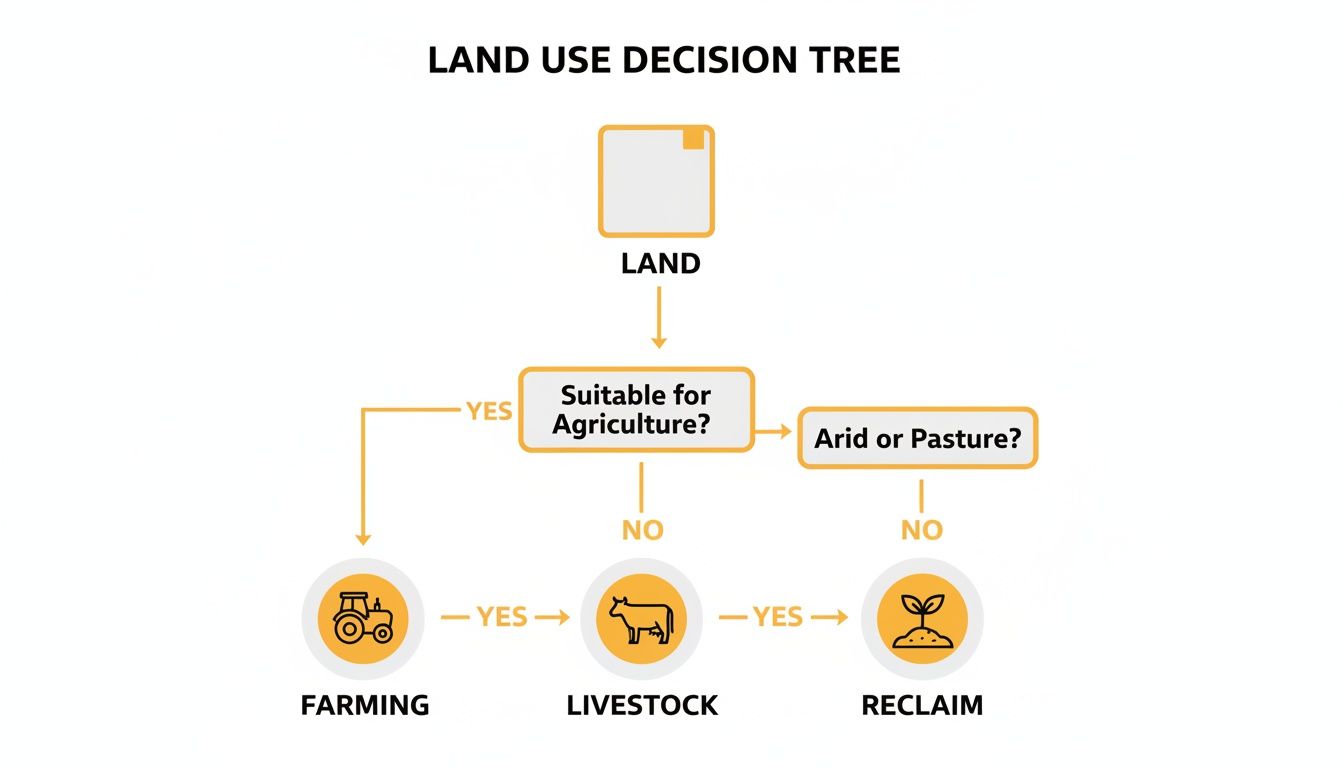
As you can see, your end goal—farming, ranching, or reclamation—points you toward the best way to prep your property. Let's break down the four most common methods to see how they stack up.
Forestry Mulching: The One-Step Solution
Imagine a single machine that can walk into a dense, overgrown area and, in one pass, turn trees and underbrush into a protective blanket of mulch. That’s forestry mulching in a nutshell. It’s a low-impact, selective method that shreds vegetation right where it stands, leaving the soil structure and root systems totally intact.
This technique is a game-changer for agricultural work. The layer of mulch it creates acts as natural erosion control, helps the ground hold onto precious moisture, and smothers weed growth right from the start. Over time, all that organic material breaks down, enriching your topsoil with valuable nutrients. For a deeper dive, check out our guide on how forestry mulching works.
Ideal For: Prepping land for grazing, cutting firebreaks, selectively thinning trees, and any project where soil health is the number one priority.
Key Advantage: It’s a single-step process that clears the land and nourishes the soil at the same time, all with minimal ground disturbance.
Mechanical Clearing: The Traditional Powerhouse
When you picture old-school land clearing, you’re probably thinking of bulldozers and excavators. This method, often called dozing or grubbing, is the brute-force approach. Heavy machinery pushes over trees, scrapes the surface clean, and rips out stumps and roots, leaving nothing but bare earth behind.
While it's undeniably effective for total vegetation removal, this method comes with some serious risks. The sheer weight of the equipment can cause severe soil compaction, making it tough for future crop roots to take hold and for water to drain properly. It also scrapes away the nutrient-rich topsoil, which can take decades to recover. Plus, all that debris has to be piled up and either burned or hauled off, adding extra steps and costs.
Mechanical clearing gives you a completely clean slate, but it often comes at the expense of your soil's long-term health. The process is disruptive by nature and demands careful management to prevent environmental damage like erosion.
Controlled Burning: A Tool for Renewal
For centuries, fire has been used to manage large landscapes. A controlled or prescribed burn is the carefully planned use of fire, under very specific weather conditions, to clear out underbrush, unwanted grasses, and small trees. It's a fast and relatively cheap way to clear huge tracts of land.
The fire returns nutrients to the soil quickly as ash, which can kickstart the growth of native grasses perfect for livestock. But this method has some serious drawbacks. It requires a ton of planning, permits, and expert oversight to keep the fire from getting out of control. The smoke can also create air quality problems, and if the burn gets too hot, it can sterilize the soil by killing off its microbial life.
Herbicide Application: The Chemical Approach
Finally, there’s herbicide application, which uses chemicals to kill off unwanted vegetation. This approach is highly effective for targeting invasive species or wiping out weeds and grasses over a large area without disturbing the soil. It's a common first step in "no-till" farming or for keeping fence lines clear.
The main worries with herbicides are environmental. You have to consider the risk of chemical runoff into nearby water sources and the potential harm to non-target plants and wildlife. It’s also a much slower process, since you have to wait for the vegetation to die, and it doesn't actually remove the dead material—that usually requires a second clearing method.
To help you weigh your options, we've put together a simple comparison of these four popular methods.
Comparison of Agricultural Land Clearing Methods
Method | Best For | Environmental Impact | Average Cost | Key Advantage |
|---|---|---|---|---|
Forestry Mulching | Selective clearing, soil preservation, preparing pasture | Low: Minimal soil disturbance, enriches topsoil | Moderate | One-step process that improves soil health. |
Mechanical Clearing | Complete removal of all vegetation for crops or construction | High: Major soil compaction, erosion, topsoil loss | Moderate to High | Provides a completely bare, workable surface. |
Controlled Burning | Large-scale clearing of underbrush and grasses | Moderate: Air pollution, risk of escape, soil damage | Low | Fast, cost-effective for vast areas. |
Herbicide Application | Invasive species control, large-area weed management | Moderate to High: Chemical runoff, non-target harm | Low to Moderate | Effective for targeted removal without soil impact. |
Ultimately, choosing the right method for your farm comes down to balancing your budget, your timeline, and what you want to achieve with your land long-term. Each technique offers a different set of trade-offs between speed, cost, and its impact on the environment.
Your Blueprint for a Successful Clearing Project
Proper agricultural land clearing doesn't start when the first engine roars to life. It begins much earlier, with a solid, strategic blueprint. Rushing this stage is like trying to build a house without architectural plans—it's a surefire way to end up with costly mistakes, frustrating delays, and a result that just doesn't work.
Think of this planning phase as crafting a detailed business plan for your land's future. Every single decision you make here directly impacts the project's efficiency, budget, and ultimate success. A well-thought-out plan is your best defense against surprises and ensures every action moves you closer to your goal.
Define Your Agricultural Objectives
First things first, you have to get laser-focused on your "why." What is the end game for this piece of land? The answer to that question will shape the entire scope of the project.
Pasture for Grazing: A 20-acre pasture for cattle means you'll need to clear out the dense brush, but you might want to strategically leave some large shade trees. The goal here is creating wide-open, accessible land with plenty of potential for good forage.
Row Crops: Turning a 5-acre plot into a field for organic vegetables requires a completely different approach. You'll need total vegetation and stump removal to make way for tilling and planting. The soil has to be perfectly prepped, with zero obstacles left behind.
Orchard or Grove: If you're planning to plant citrus or pecan trees, you'll be doing more selective clearing. This involves creating precise rows while possibly leaving natural vegetation to act as windbreaks or buffers.
Having a clearly defined objective is your project's North Star. It guides every decision that follows, from the clearing method you choose to the type of erosion control you need. Without that clarity, you risk either overspending on work you didn't need or cutting corners and getting a poor outcome.
Conduct a Thorough Site Assessment
Once your goals are set, it's time to become an expert on your own property. A site assessment is far more than a casual walk-through; it's a deep dive into your land's unique personality. To map out your farm's layout with precision, many modern farmers use agriculture GPS tracking to create detailed digital maps that are invaluable for planning.
During your assessment, you need to document several key factors:
Topography: Is the land flat, gently sloping, or steep? Hilly terrain brings a higher risk of soil erosion and demands much more careful equipment operation.
Soil Type: Are you dealing with sandy, well-draining soil, or is it heavy clay that compacts easily under pressure? Your soil type will dictate which machines are right for the job and the best time of year to get started.
Existing Vegetation: What exactly are you clearing? You need to identify the density and type of vegetation—is it light brush, invasive species like the notorious Brazilian Pepper, or mature oak and pine trees? This will determine the equipment and level of effort required.
Water Features: Take careful note of any creeks, ponds, wetlands, or drainage areas. These are environmentally sensitive zones that will require protective buffer zones and, almost certainly, special permits.
Navigate Permits and Regulations
One of the most critical steps—and one that's surprisingly easy to overlook—is getting the right permits. Agricultural land clearing is regulated at the local, state, and sometimes even federal levels to protect water quality, wildlife habitats, and other natural resources.
Trying to skip this step is a recipe for disaster. It can lead to hefty fines and stop-work orders that bring your entire project to a screeching halt. Your first calls should be to your county's planning and zoning department and the Florida Department of Environmental Protection (FDEP). They'll give you a checklist of requirements based on your project's size and location.
Common permits often relate to tree removal, wetland impacts, and stormwater management. Taking care of this upfront ensures your project is not only successful but also fully compliant with the law from day one.
Understanding the Equipment and Real Costs
Turning overgrown acreage into productive farmland requires some serious muscle, and that muscle comes in the form of heavy machinery. Choosing the right equipment for your agricultural land clearing project is the first step toward understanding the real costs involved. Every machine is a specialized tool, and using the right one for the job keeps your project efficient and protects your budget from nasty surprises.
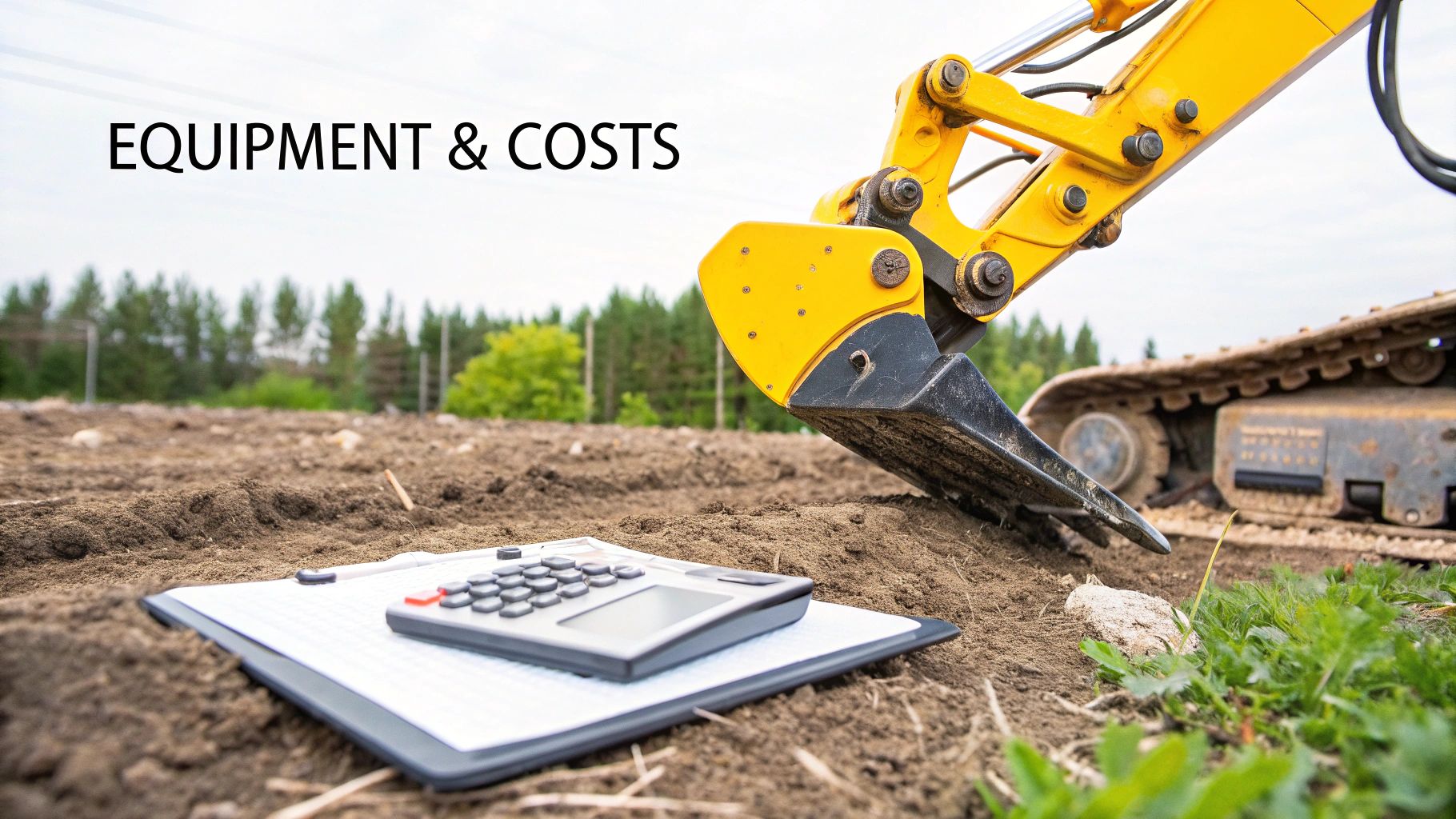
Let's meet the heavy hitters of the land clearing world. These are the machines that do the hard work, transforming dense vegetation into a clean slate ready for planting or grazing.
The Key Players in Land Clearing
Forestry Mulchers: Think of these as the versatile all-stars of modern land clearing. A forestry mulcher uses a powerful rotating drum packed with specialized teeth to shred trees, brush, and stumps right where they stand, turning everything into a beneficial layer of mulch.
Bulldozers: The classic workhorse. Bulldozers are built for one thing: brute force. They excel at pushing over large trees, clearing massive amounts of debris, and grading the land to create a perfectly level surface for farming.
Excavators: With their long arms and powerful buckets, excavators are the surgeons of the operation. They’re perfect for digging out stubborn stumps (a process called grubbing), clearing ditches, and carefully plucking out specific trees without disturbing the surrounding area.
Stump Grinders: After the trees are gone, the stumps remain. A stump grinder uses a high-speed cutting wheel to chew the stump down below the soil surface, getting rid of hazards and letting you farm or build directly over the spot.
For a deeper dive into the machinery we use, our guide on the best equipment for clearing underbrush offers a practical look at the tools that get these projects done.
Decoding the Pricing Models
With the equipment sorted, the next big question is always about the bottom line. The price of agricultural land clearing isn't a simple, one-size-fits-all number. It’s shaped by your property's unique challenges and how a contractor bills for their services.
Most professional services use one of two main pricing structures:
Per-Hour Rates: This is common for smaller jobs or projects where the conditions are a bit unpredictable. You pay for the time the operator and equipment are on your property, which can range from $150 to over $400 per hour depending on the machinery.
Per-Acre Rates: For larger, more straightforward projects, a flat rate per acre is often the way to go. This gives you a clear, fixed cost upfront. These costs can vary dramatically, from a few hundred dollars for light brush to several thousand for a dense, mature forest.
The biggest things driving your costs are vegetation density and the terrain. Clearing light grass and shrubs is far cheaper and faster than tackling a forest of 10-inch diameter oak trees on a steep, rocky slope.
DIY vs. Professional Services
The thought of renting some equipment and clearing the land yourself might seem like a great way to save a buck, but it often comes with hidden costs and serious risks.
The DIY Approach:
Equipment Rental: Renting a bulldozer or mulcher can cost thousands of dollars per week.
Fuel Costs: These machines are thirsty, guzzling dozens of gallons of diesel every day.
Learning Curve: Operating heavy equipment safely and effectively takes real skill. One mistake can lead to damaged machinery, a poorly cleared lot, or worse—serious injury.
Hiring a professional service like Palm State Clear Cut means you're not just paying for a machine; you're investing in expertise. Our experienced operators work faster and safer, and they deliver a better final result. In the long run, this often saves you money by avoiding costly errors and project delays.
Beyond the initial work, efficient asset and inventory management practices are key to long-term cost control, just as any good contractor manages their tools. When you factor in the value of your own time and the peace of mind that comes with a guaranteed professional outcome, the choice becomes much clearer.
Protecting Your Land During and After Clearing
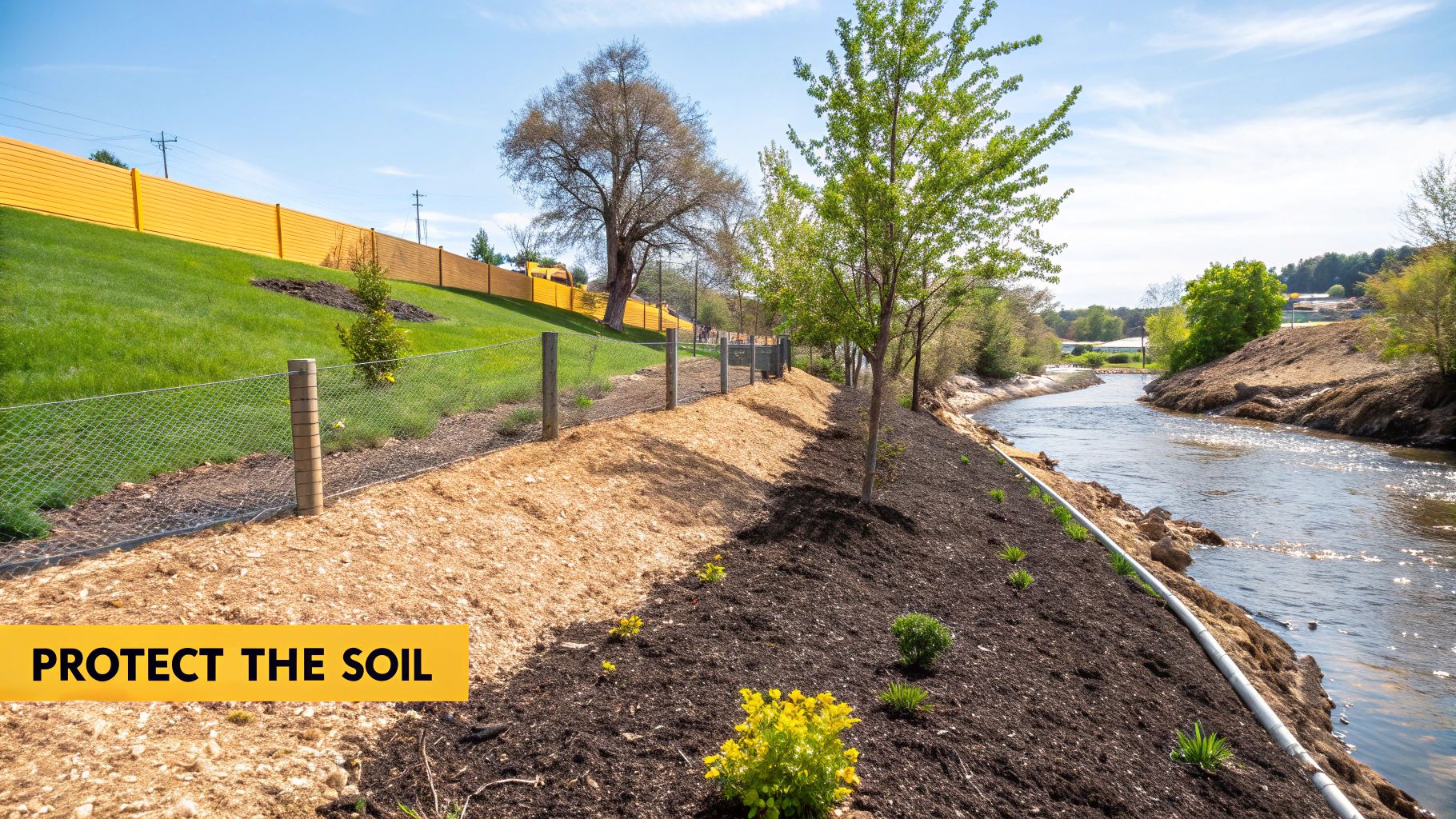
Turning raw land into a productive farm isn’t just about clearing trees; it's about being a good steward of the environment. The moment you remove the natural vegetation, you expose the soil, leaving it vulnerable—much like a patient right after surgery. Taking proactive steps to protect it isn't just a "nice-to-have," it's absolutely essential for keeping your land healthy for generations to come.
Without a solid plan, agricultural land clearing can quickly lead to serious environmental headaches. The biggest immediate threats are soil erosion from Florida's heavy rains and wind, uncontrolled water runoff that chokes nearby waterways with sediment, and disrupting the local ecosystem. A truly successful project is one that hits your farming goals while keeping these impacts to a minimum right from the get-go.
This commitment is more important than ever. Recent analysis shows that agriculture is now the top driver of global deforestation, accounting for about 86 percent of all forest loss in the last decade. This just goes to show the immense pressure our natural landscapes are under from the expansion of crop and livestock operations.
Smart Strategies for Erosion Control
Once that protective layer of trees and brush is gone, your topsoil is at the mercy of the elements. Picture a steep driveway in a downpour; without proper drainage, the water will carve out destructive channels. The goal is to slow that water down and keep your soil exactly where you want it.
Effective erosion control starts before the first machine ever touches the property and continues long after the work is done. Here are a few of the most effective best practices:
Install Silt Fences: These temporary fabric barriers are a must. They let water seep through but catch and hold back loose sediment, preventing it from washing away. They're usually placed along the downhill edges of the cleared site.
Maintain Buffer Zones: Never clear right up to the edge of a creek, pond, or wetland. Leaving a strip of untouched vegetation acts like a natural sponge, filtering runoff and protecting the water quality.
Use Cover Crops: As soon as a section is cleared, get something growing. A fast-growing cover crop like rye or clover will establish a root system that acts like a net, holding the soil together and stopping it from blowing or washing away.
The best defense is a good offense. Your choice of clearing method can be your first and most effective line of defense against erosion. Forestry mulching, for instance, creates its own natural erosion control by blanketing the ground with organic material.
The Mulch Blanket: Nature's Solution
Forestry mulching isn't just about getting rid of vegetation; it's a soil preservation strategy. By shredding everything on-site and spreading it evenly, you create a protective "blanket" that delivers a ton of benefits.
This layer of mulch acts as a natural shield. It softens the impact of heavy rain, which cuts down on soil splash and runoff. It also helps the ground hang onto moisture—a huge plus in Central Florida's notoriously sandy soils. As this organic matter breaks down, it enriches the topsoil with nutrients, building a healthier foundation for your future crops or pasture. You can dive deeper into different methods in our practical guide to soil stabilization techniques.
Preserving Habitats Through Selective Clearing
Responsible land clearing doesn't have to mean wiping the slate clean. Selective clearing is a more thoughtful approach where you identify and keep beneficial trees and plant communities.
By leaving some mature native trees, you can create natural shade for livestock, build windbreaks to protect your crops, and maintain crucial habitat for local wildlife like birds and pollinators. This practice helps you strike a smart balance between your agricultural needs and the health of the surrounding ecosystem. It ensures your farm becomes a productive part of the landscape, not an isolated plot.
Common Questions About Farm Land Clearing
Even with the best-laid plans, you're bound to have questions when it comes to a big project like clearing agricultural land. Getting the right answers is what separates a smooth project from a stressful one. Let’s tackle some of the most common questions we hear from landowners to give you the clarity you need to move forward.
How Long Does Agricultural Land Clearing Usually Take?
There's no single answer here—the timeline for clearing land can vary wildly. The biggest driver is simply the scope of the job.
Think of it like this: clearing a small, 5-acre lot with just some scattered brush and a few small trees? That might only take a couple of days, especially with a fast method like forestry mulching. But if you’re looking at 50 acres of dense Central Florida oak and pine forest on hilly ground, you could easily be looking at several weeks of serious work.
Several things will really dictate your project’s schedule:
Property Size: More land simply takes more time.
Vegetation Density: Light brush and grass is a world away from clearing a thick forest of mature trees.
Land Topography: Flat, easy-to-access land is always faster to clear than steep slopes or swampy spots.
Clearing Method: Forestry mulching is typically much quicker than old-school methods that involve hauling away or burning all the debris.
Weather: Florida's unpredictable thunderstorms can bring any project to a halt, causing delays.
The only way to get a truly accurate timeline is to have a professional walk the property. An experienced contractor can assess all these factors and give you a realistic schedule you can plan around.
When Is the Best Time of Year to Clear Land?
Timing is everything, particularly when you’re bringing heavy equipment onto Florida soil. For most of us here in Central Florida, the dry season—running from late fall through late spring—is the absolute best time for land clearing.
Working when the ground is firm and dry gives you a few major advantages. It dramatically cuts down on the risk of equipment getting stuck in the mud, which keeps the project on schedule. More importantly, it minimizes soil compaction, that squashing of the soil that can seriously hinder future pasture or crop growth.
"Clearing during the dry season isn't just about convenience; it's a strategic move to protect your soil's health. Firmer ground supports heavy equipment better, preventing the deep ruts and compaction that can take years to recover from."
Fewer rain delays also mean your project is far more likely to stay on track and on budget. While you can clear land at other times of the year, aiming for the dry season really sets your project up for success.
What Are the Critical First Steps After Clearing Is Complete?
Once the last tree is down and the machines have rolled away, you're left with a blank canvas. But the job isn't done—in many ways, it's just getting started. What you do next will set the stage for the long-term health and productivity of your land.
Your number one priority should be stabilizing the soil. Freshly cleared ground is extremely vulnerable to being washed away by Florida's heavy rains or blown away by the wind.
Follow these essential first steps to protect your investment:
Establish Ground Cover: This is non-negotiable. Get something on the ground immediately. Plant a fast-growing cover crop like rye or clover, spread seed for your future pasture, or lay down a protective blanket of hay or mulch. This creates a root system that literally holds your soil in place.
Conduct Soil Testing: This is the perfect time to find out what you're working with. A simple soil test will show you the pH and nutrient levels, telling you exactly what amendments—like lime to balance acidity or specific fertilizers—you need to create the perfect growing environment.
Implement a Drainage and Management Plan: Figure out how water is going to move across your new field. This could mean grading the land to direct runoff, digging swales, or installing other erosion control measures. You also need to start keeping an eye out for any regrowth of invasive plants so you can get them under control before they get a foothold.
Taking these steps right after clearing transforms your land from a vulnerable site into a stable, healthy foundation ready for whatever you have planned.
Ready to turn your overgrown property into productive farmland? The team at Palm State Clear Cut has the equipment and expertise to handle your agricultural land clearing project from start to finish. Get your free, no-obligation quote today!
Comments