
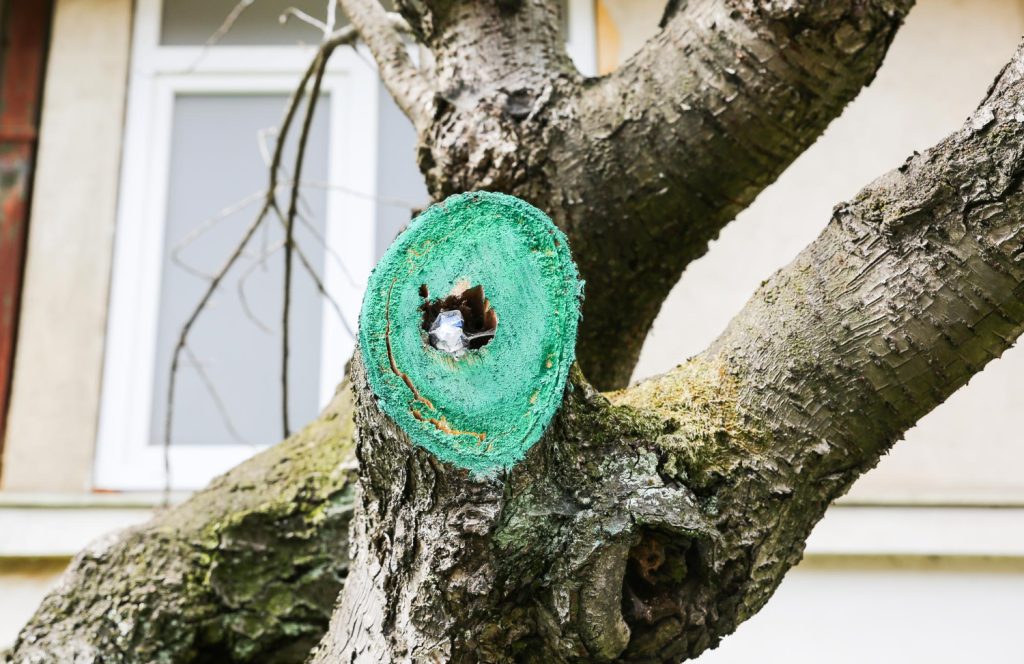
It’s a question I hear all the time: should you seal a tree cut? This has been a hot-button topic for ages, but the modern consensus is pretty clear: most of the time, you don’t need to seal small pruning cuts. Trees have a fantastic, built-in ability to heal themselves, and sometimes our attempts to “help” can actually get in the way.
The Great Debate on Sealing Tree Wounds
For a long time, the go-to advice was to slather every single pruning cut with some kind of sealant, usually a tar-based product. This practice really took off in the mid-20th century as a way to shield trees from infection and pests.
But as forestry science has evolved, we’ve learned this isn’t always the best move. In fact, research shows that some sealing methods can trap moisture and inhibit the very healing process we’re trying to support. You can dig into some of the historical findings and their impact on modern forestry to see just how much our understanding has changed.
Here’s the thing: trees don’t heal like we do. They don’t form scabs. Instead, they compartmentalize. This amazing process is called Compartmentalization of Decay in Trees (CODIT). The tree forms protective chemical and physical walls around the wound, effectively boxing off the damaged area to stop decay from spreading.
For routine pruning of small branches—think anything under two inches in diameter—leaving the cut exposed is best. The open air helps dry the surface, letting the tree’s natural defense system kick into gear without interference.
When Sealing a Cut Is Necessary
So, when is it the right call to seal a tree cut? The decision really boils down to the size of the wound and the specific risks your tree is facing.
You should definitely grab the sealant in a few key scenarios:
- Large, Unavoidable Wounds: If a huge limb snaps off in a storm or has to be removed for safety reasons, you’re left with a massive exposed surface. A wound that’s several inches across is like a wide-open door for pests and pathogens.
- Disease-Prone Species: Some trees are just more susceptible to diseases that sneak in through fresh wounds. Here in Central Florida, a perfect example is the live oak, which is highly vulnerable to the deadly oak wilt fungus. Sealing cuts on these specific trees is a crucial preventive step.
- Jagged or Damaged Wounds: A clean, smooth cut from a sharp saw gives a tree the best chance to heal. But storm damage often leaves behind torn, ragged bark that can pool water and invite decay. Sealing can protect these messy wounds while the tree starts the compartmentalization process.
To make it even simpler, here’s a quick-reference table to help you decide.
Decision Guide To Seal or Not to Seal
| Situation | Recommendation | Reasoning |
|---|---|---|
| Routine Pruning | Do Not Seal | Small cuts (<2 inches) heal best when left exposed to air, allowing the tree’s natural defenses (CODIT) to work efficiently. |
| Large Wounds | Seal Promptly | Cuts over 3-4 inches create a large, vulnerable area that is slow to close, inviting pests and disease. A sealant provides a necessary barrier. |
| Storm Damage | Seal Promptly | Jagged, torn wounds from storms collect moisture and are prime spots for decay. Sealing protects the wound while the tree recovers. |
| Oak Wilt Prone Areas | Seal ALL Cuts | For oaks in areas with oak wilt, even small cuts should be sealed immediately to prevent the fungus-carrying beetle from being attracted to the sap. |
This table should help you make the right call in most situations you’ll encounter in your yard.
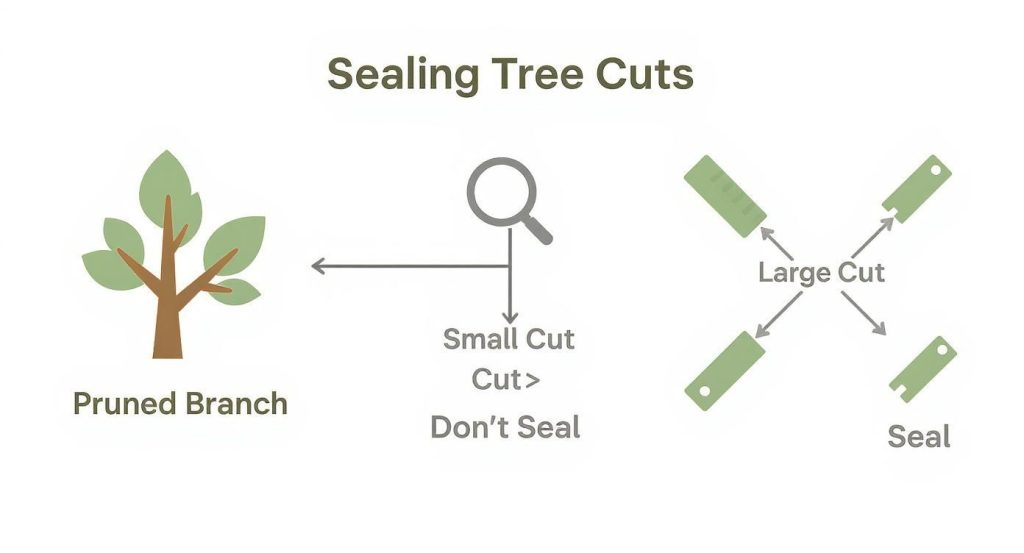
As the diagram shows, the guiding principle is straightforward: small, clean cuts are best left to their own devices, while large, significant wounds need a helping hand with a protective sealant.
Expert Takeaway: Try not to think of sealant as a “cure,” but more like a temporary shield or a bandage. Its main job is to protect a large, vulnerable wound from immediate threats while the tree gathers its own powerful internal defenses to create a permanent, natural barrier.
Choosing the Right Materials and Tools for the Job
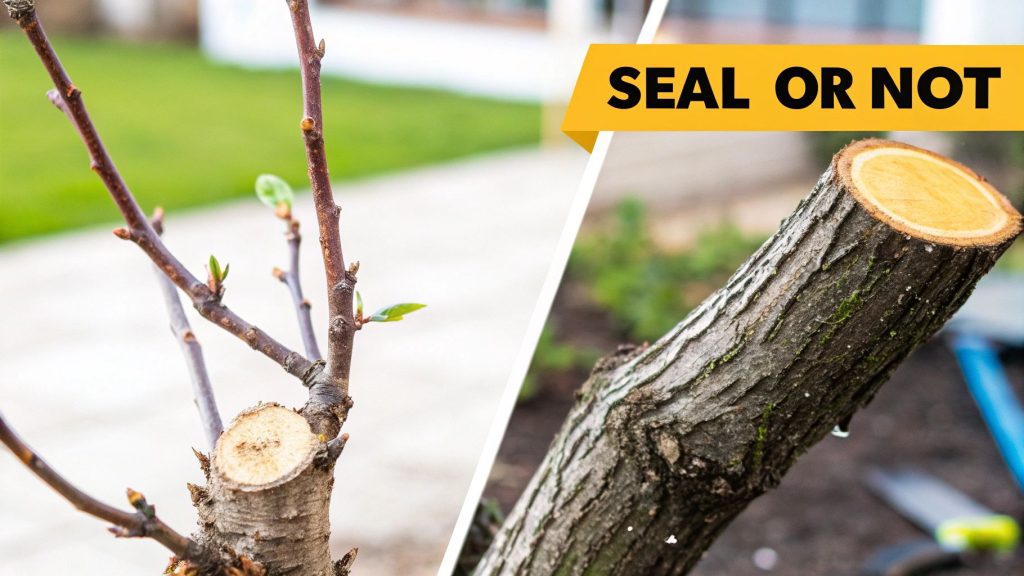
So, you’ve decided sealing a tree cut is the right call. Great. Now comes the most critical part: picking the right stuff for the job. Using the wrong product can do more harm than good, trapping moisture and encouraging the very decay you’re trying to prevent.
For years, the go-to advice was to slather on tar, asphalt, or even leftover house paint. We now know this is terrible for trees. These materials create a hard, non-breathable barrier that cracks as the tree sways and grows. Those cracks become perfect little pockets for water and pathogens to get in, creating a damp, fungus-friendly environment right on the wound.
What Modern Arborists Actually Use
Thankfully, modern arboriculture has moved on. Today, we use wound dressings specifically made for trees. Unlike old-school tar or paint, these products are designed to be breathable and flexible. They form a protective film that keeps pests out but still allows the wound to “breathe,” which is crucial for the tree’s natural healing process.
When you’re shopping, look for products that actually support tree health. A quality sealant will be:
- Asphalt-Free: Steer clear of anything with petroleum-based tar or asphalt.
- Flexible: The dressing needs to stretch and move with the tree as it heals.
- Breathable: It has to allow for gas exchange to prevent moisture from getting trapped underneath.
- Non-Phytotoxic: This just means the ingredients won’t poison the living cambium layer of the tree.
The goal isn’t to slather on a thick, heavy coat. Think of it more like a liquid bandage—a thin, protective shield that gives the tree’s own defenses time to kick in and do the real healing work.
Tree Wound Sealant Materials Pros and Cons
Choosing the right material is everything. Here’s a quick breakdown of what you might find and what to consider for each.
| Material Type | Pros | Cons | Best For |
|---|---|---|---|
| Horticultural Wound Dressings | Specifically formulated to be breathable and flexible; often contains ingredients to support healing. | Can be more expensive than other options; quality varies by brand. | Most pruning cuts on susceptible species like oaks and elms, especially when timed correctly. |
| Natural Waxes (e.g., Beeswax-Based) | Provides a natural, semi-permeable barrier; biodegradable and non-toxic. | May not adhere as well in very wet or cold conditions; less durable than synthetic options. | Grafting, and sealing smaller cuts on fruit trees or in organic gardening settings. |
| Shellac | Creates a thin, quick-drying seal; natural and non-toxic to the tree. | Can become brittle over time and may need reapplication. | Sealing small pruning cuts, especially on trees known for “bleeding” sap, like maples. |
| Asphalt/Tar-Based Sealants | Inexpensive and widely available (historically). | Traps moisture, cracks easily, can “cook” the wood in the sun, and is toxic to living tissue. | Not recommended. This is an outdated and harmful practice. |
| Latex/Oil-Based Paint | Readily available. | Contains chemicals harmful to the cambium layer; suffocates the wound and traps moisture. | Not recommended. Never use household paint on a tree wound. |
At the end of the day, a specially formulated horticultural dressing is almost always your safest and most effective bet.
Tools and Materials to Leave on the Shelf
Knowing what not to use is just as important. Bad advice is everywhere, and grabbing the wrong can of sealant or using the wrong tool can turn a minor cut into a major problem.
Here’s what to avoid:
- Latex or Oil-Based Paints: They’re loaded with chemicals that are toxic to a tree’s living tissues and will absolutely trap moisture.
- Asphalt Roofing Tar: It’s way too thick, cracks when it dries, and can literally cook the wound on a hot Florida day.
- Thick, Heavy Dressings: Even with a good product, piling it on is a mistake. A thin, even coat is all you need.
For applying the sealant, you don’t need anything fancy. A simple, clean 1-inch or 2-inch paintbrush is perfect for the job.
Of course, the best way to help a tree heal is to make a clean, proper cut in the first place. Pairing the right pruning technique with the right materials gives your tree its best shot at a full recovery. For more on that, check out our guide on the 8 essential methods for trimming limbs on trees in our guide here.
Applying Sealant Like a Pro: A Practical Walkthrough
Once you’ve got the right materials, the real secret to sealing tree cuts is all in the technique. Get it wrong, and you can actually trap moisture and invite decay. Think of it less like slapping paint on a fence and more like applying a first-aid dressing.
The whole point is to create a thin, breathable shield that protects the vulnerable cambium layer—that’s the living tissue just under the bark that does all the healing work. Getting this part right is what makes the difference between a tree that recovers and one that struggles.
But before you even pop the lid on the sealant, you’ve got to prep the wound. A clean wound is a fast-healing wound.
Preparing the Tree Wound for Sealing
Take a good look at the cut. If a storm tore a limb off, you’re probably looking at a jagged, splintered mess. Those rough spots are perfect little pockets for water and fungal spores to collect, which is exactly what you don’t want.
Your job is to clean it up and create a smoother surface. Here’s how to do it right:
- Trim Away Ragged Bark: Grab a sharp, sterilized knife or a good pruning tool. Carefully trim away any loose, torn, or ragged bits of bark around the edge of the wound.
- Create a Smooth Edge: You’re aiming for a neat oval or a rounded shape. Try to avoid making sharp corners or points, as the tree’s healing tissue (the callus) has a much harder time growing over them.
- Don’t Enlarge the Wound: This is key. Only remove the damaged tissue. Resist the urge to cut into healthy wood or make the wound bigger than it needs to be.
This simple cleanup step makes a huge difference. By smoothing out the edges, you’re giving the tree a head start on forming that callus tissue evenly. That’s the foundation for the healing “donut” you want to see forming over the next few seasons.
Safety First: Always wear protective gloves when you’re handling tree sealants. Even though modern formulas are way safer than the old tar-based stuff, they can still be sticky and irritate your skin. And don’t forget to clean your tools thoroughly before and after—you don’t want to accidentally spread diseases from one tree to another.
The Art of Applying a Thin Coat
Now for the main event. The single biggest mistake I see homeowners make is globbing the sealant on way too thick. A heavy layer doesn’t help; it cracks, traps moisture, and can suffocate the living tissue underneath. When it comes to tree sealant, less is truly more.
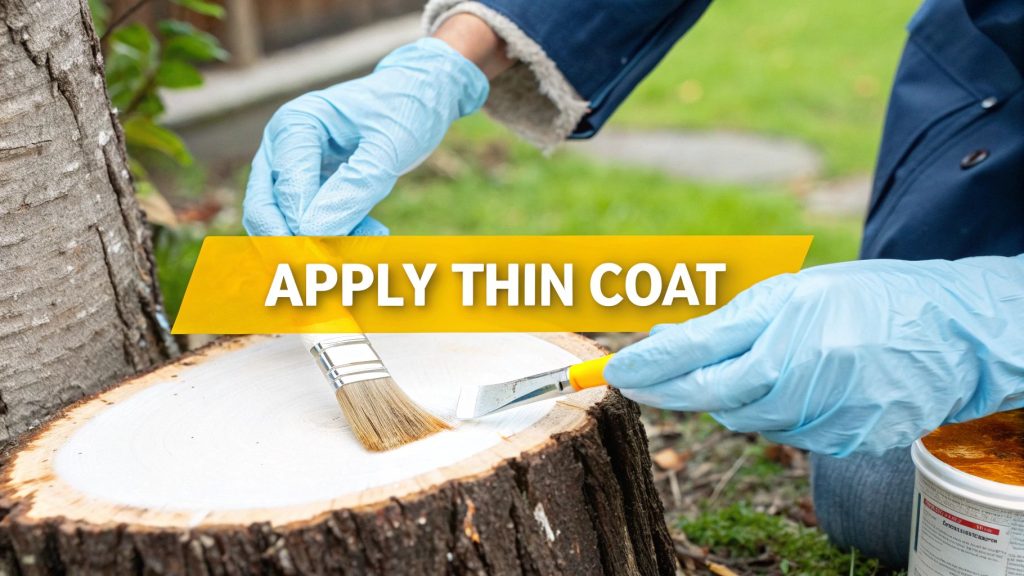
Using a small, clean paintbrush—a 1-inch brush is usually perfect for the job—apply a thin, even layer directly onto the exposed wood.
Imagine you’re applying a single, light coat of varnish. The layer should be just thick enough to cover the surface without any drips or pools. Make sure you extend the sealant just a little bit over the edge of the cut, covering the exposed cambium ring by about half an inch onto the surrounding bark. This creates a complete seal and protects the most critical healing zone from drying out or getting infected.
A thin application like this stays breathable and flexible. It will move and stretch with the tree as it sways and grows, which prevents the cracking that made old-fashioned tar applications so problematic. A proper seal is just a temporary barrier, buying the tree precious time to build up its own permanent, natural defenses. By following these steps, you’re working with the tree’s biology, not against it.
Special Considerations for Central Florida’s Climate
Tree care isn’t a one-size-fits-all job, and that’s especially true here in Central Florida. Our unique mix of year-round humidity, scorching sun, and local pests creates a tough environment for trees trying to heal. A pruning strategy that works wonders up north could be a disaster here, which is why local knowledge is so critical.
The constant moisture in our air means any open tree wound stays damp for a long time. This creates the perfect breeding ground for nasty fungal and bacterial infections. Because of this, the decision of when and how to apply a sealant becomes far more important than it is in drier climates. Good technique is all about shielding that wound while it fights off our relentless environmental pressure.
Oak Wilt and Citrus Tree Care
When it comes to certain tree species, sealing cuts is absolutely non-negotiable. Our iconic live oaks, for example, are extremely susceptible to oak wilt. This is a devastating fungal disease spread by tiny beetles that are drawn to fresh tree sap.
In Central Florida, every single cut on an oak tree, regardless of its size, should be sealed immediately. This is the single most effective thing you can do to stop oak wilt in its tracks and protect these magnificent heritage trees.
Citrus trees, another local staple, also need careful wound management. They aren’t as vulnerable to one big disease like oak wilt, but their thin bark can lead to problems if large cuts are left exposed. An open wound is an open invitation for pests like the citrus borer. A light, breathable sealant gives them the protection they need without smothering the tree’s natural healing process.
Timing Your Pruning and Sealing
When you make your cuts is just as important as how you seal them. Pruning at the wrong time of year can put a huge amount of stress on a tree.
- Avoid Hurricane Season: Try not to do any heavy pruning between June and November. This can leave trees with large, open wounds just as tropical storms are most likely to roll through, risking even more damage.
- Target the Cooler Months: The sweet spot for pruning is usually from late fall to early spring. During this time, pest activity is way down and trees aren’t growing as actively, which means less sap flow to attract hungry insects.
Getting a handle on these local details is the key to good tree care. If you plan your pruning around our unique climate patterns, you give your trees the best possible shot at a fast and healthy recovery. For a deeper look into this, check out our guide on the best time of year for tree removal in Central Florida, which covers similar principles for minimizing tree stress.
How to Monitor Your Tree After Sealing a Wound
Getting the sealant on is just the first step. The real work—and what truly determines success—is keeping a close eye on the tree in the months and years that follow. Think of yourself as shifting from a surgeon to a long-term caretaker. You’ve applied the bandage; now you have to watch how it heals and be ready to step in if complications arise.
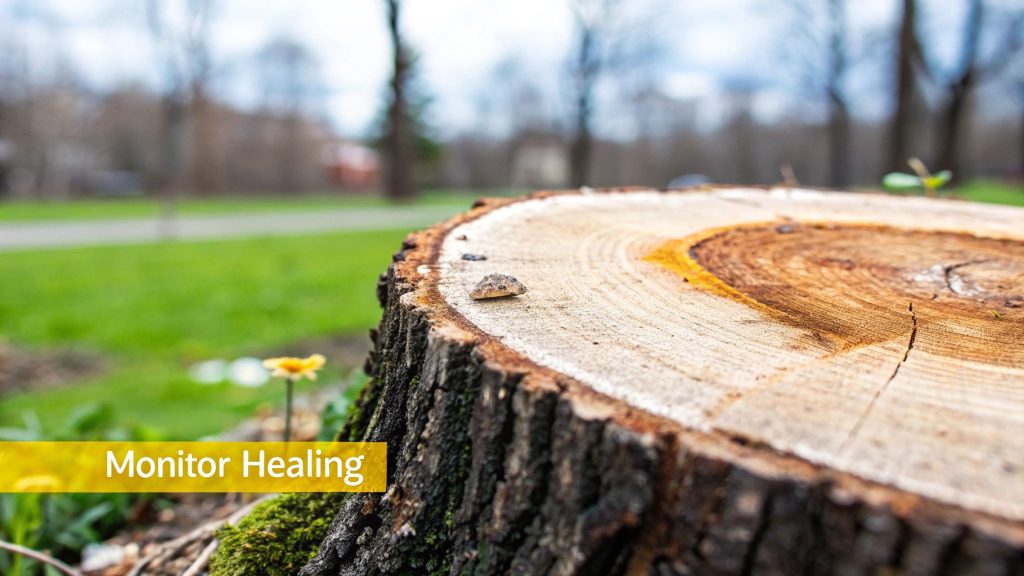
Your main goal is to look for the formation of callus tissue. This is the specialized, tough tissue the tree creates to cover the wound, almost like a scar. A healthy healing process looks like a “donut” of new growth slowly rolling in from the edges of the cut. This callus is the tree’s own natural seal, and seeing it grow steadily is the best sign that you did the right thing.
Reading the Signs: Good and Bad
A healthy, sealed wound should look stable and clean. The sealant itself needs to stay flexible and firmly stuck to the wood without any gaps. Over the first full growing season, you should start to see that callus tissue pushing up against the edges of the sealant.
But you also need to be on high alert for red flags that point to trouble brewing underneath. Be on the lookout for these warning signs:
- Cracking or Peeling Sealant: If the sealant is brittle and cracking, it’s no longer a protective barrier. This can easily happen with big temperature swings or as the tree sways in the wind.
- Fungal Growth: Spotting mushrooms, hard shelf-like conks, or any fuzzy mold growing on or right next to the sealed area is a major problem. It’s a classic sign that moisture got trapped, and decay is happening just beneath the surface.
- Sap Oozing from the Edges: A little sap right after the cut is normal, but if it keeps seeping out or you see discolored liquid, an infection is likely trapped inside.
- Insect Activity: Finding tiny boreholes or a sawdust-like material (called frass) near the wound means pests have found a way in.
Key Takeaway: A tree’s overall health is the ultimate indicator. If the branches above the wound suddenly look wilted, have discolored leaves, or are dropping them out of season, it could signal a systemic problem starting at the wound. Sometimes, the whole tree tells you more than the cut itself. Our guide on determining if your tree is dead or dormant can help you read those bigger clues.
A Simple Monitoring Timeline
Watching a tree heal is a long-term game. It’s not just about one tree; it’s about keeping our local ecosystem healthy. It’s a fact that well-monitored restoration projects have reported tree survival rates as high as 93% when this kind of proactive care is involved. You can learn more about how monitoring impacts global reforestation efforts to see the bigger picture.
Here’s a practical schedule for checking on your tree:
- First Month: Pop outside once a week to check for any immediate problems, like the sealant failing or way too much sap flowing.
- First Year: During the growing season, a monthly inspection is perfect. You’re looking for those first signs of callus tissue and making sure no cracks or fungus have appeared.
- Annually Thereafter: After the first year, a yearly checkup should be enough. See how the callus is progressing and make sure the sealant is holding up, especially after a rough storm season. If you spot any issues, you might need to carefully remove the old sealant and put on a fresh, thin layer.
Knowing When It Is Time to Call a Certified Arborist
While sealing a small, accessible tree cut can feel like a straightforward weekend task, there are plenty of situations that are too complex or just plain dangerous to handle on your own. Knowing your limits is just as important as knowing how to apply sealant correctly.
A certified arborist brings a level of expertise and specialized equipment that is essential for high-stakes tree care. Recognizing when to make that call ensures the safety of your property, yourself, and your most valuable trees. Some jobs absolutely demand a professional eye and a steady, experienced hand.
Scenarios That Demand Professional Help
It’s time to put down the sealant and pick up the phone if you’re staring up at any of these situations. These are clear signs that a job has moved far beyond a simple DIY fix.
- Massive Wounds on Mature Trees: A gash that takes up a huge chunk of a mature tree’s trunk isn’t just a surface problem. An arborist needs to assess the structural integrity and apply treatments that go way beyond a basic seal.
- Damage High in the Canopy: Any work that requires more than a step stool, especially when sharp tools are involved, is a major safety risk. Professionals have the climbing gear, training, and aerial lifts to work safely at height.
- Signs of Deep Decay: If you see fungal growth, hollow cavities, or wood that feels soft and spongy, a sealant will just trap the rot and make things worse. An arborist must first diagnose the issue and carefully remove all the decayed material.
- Complex Storm Damage: After a bad storm, a tree with multiple broken limbs or a split trunk is unstable. It requires a strategic approach to pruning and stabilization that only a trained professional can provide safely.
The True Value of an Arborist
Calling in an expert is an investment in your property’s most valuable green assets. An arborist does a lot more than just slap on some wound dressing; they perform a comprehensive health assessment from root to crown.
Their expertise allows them to accurately diagnose underlying diseases, identify structural weaknesses that could lead to future failure, and use specialized tools to make precise cuts that promote optimal healing.
This professional oversight is vital. With 38% of the world’s tree species facing extinction risks, the proper care of our established urban trees is more critical than ever. In certain situations, having a professional perform tasks like sealing cuts contributes to preserving our local canopy for years to come. You can find more insights on this from the IUCN’s work on global tree conservation on iucn.org.
Still Have Questions About Sealing Tree Cuts?
It’s completely normal to have a few lingering questions, even after you’ve got the basics down. When you’re dealing with the health of your trees, you want to be sure you’re doing it right. Let’s walk through some of the most common things people ask me to help clear up any confusion before you start.
Can I Just Use Regular Paint to Seal a Tree Cut?
Absolutely not. This is probably the biggest mistake I see people make. Regular house paint is loaded with chemicals that are flat-out toxic to the tree’s living cambium layer—the part responsible for healing.
Worse yet, paint creates a waterproof, non-breathable seal. This traps moisture right against the raw wood, creating the perfect damp, dark environment for fungal growth and decay to set in. You’ll end up doing more harm than good. Always, always use a proper horticultural wound dressing made for trees.
How Long Does It Take for a Sealed Wound to Actually Heal?
This is one of those “it depends” answers, but it’s the honest one. Healing time can vary wildly based on the tree’s species, its overall health, the size of the cut, and even the time of year you made it.
You might see a callus “donut” start to form around the edge of the wound within the first growing season. But for a large wound to close over completely? That can easily take many years. Think of the sealant as a temporary band-aid, not a magic fix. It’s there to protect the wound while the tree’s own amazing compartmentalization process does the real work.
Do I Really Need to Seal Every Single Branch I Prune?
Definitely not, and in many cases, you shouldn’t. For small, routine pruning cuts—think anything less than two inches in diameter on a healthy, vigorous tree—it’s best to just leave them alone.
Letting them air-dry allows the tree to start its natural healing process without interference. Sealing tiny cuts is unnecessary and can sometimes trap pathogens.
When you’re facing something bigger than a few pruning cuts, like clearing a lot or removing several large trees, it’s time to call in the pros. For a professional assessment and a free quote on your Central Florida property, contact Palm State Clear Cut by visiting us at https://palmstateclearcut.com.