
A Landowner's Guide to Forestry Mulching Service in Florida
- Mike Walker
- Dec 14, 2025
- 18 min read

Instead of bringing in a whole fleet of equipment, a forestry mulching service uses just one powerful machine to cut down, grind up, and spread out unwanted vegetation. Everything from thick underbrush and invasive plants to small trees gets processed right on the spot.
This single-step process instantly takes an overgrown, unusable plot of land and turns it into a clean, accessible area. The ground is left with a fresh layer of natural mulch, which means you can forget about hauling debris away or dealing with burn piles. It's a remarkably fast, clean, and earth-friendly way to clear your land.
Your Guide to Florida Land Clearing
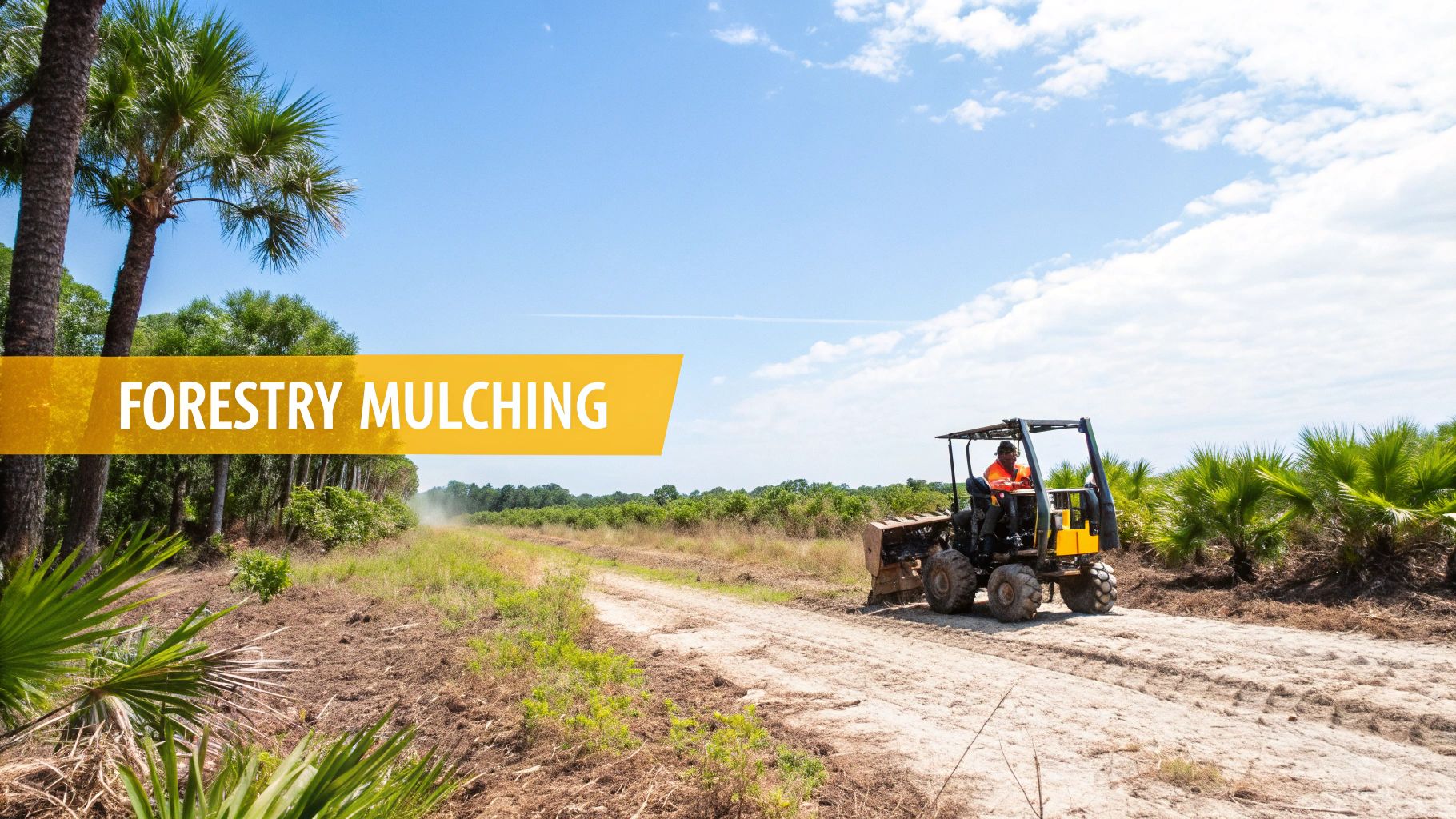
Picture a piece of your property that’s become a jungle of palmettos, Brazilian pepper trees, and a mess of tangled vines. The old-school way of clearing that would mean bulldozers, excavators, and dump trucks—a recipe for torn-up ground and piles of debris. A forestry mulching service cuts through all that complexity in one clean pass.
You can think of the machine as a heavy-duty lawnmower built for the woods. A skilled operator drives a compact, tracked machine with a specialized mulching head on the front. This head is armed with carbide steel teeth that absolutely shred vegetation on contact, turning dense brush into a fine layer of organic material that’s spread evenly over the soil.
This method is practically tailor-made for the unique challenges we face here in Central Florida. Property owners are in a constant battle with aggressive, fast-growing plants that can swallow up a property and tank its value. Forestry mulching is an immediate, effective solution.
Why Mulching Is a Smart Choice in Florida
The advantages go way beyond just getting the land cleared. That layer of mulch left behind actually becomes your best friend in keeping the property healthy and looking good.
Here’s a breakdown of what it does for you:
Natural Weed Suppression: That blanket of fresh mulch blocks sunlight, which keeps new weed seeds from sprouting. This dramatically cuts down on future maintenance.
Soil Health and Erosion Control: As the mulch breaks down, it feeds our sandy Florida soil with vital nutrients, improving its structure and ability to hold moisture. It also acts as a protective shield against our heavy rains, preventing precious topsoil from washing away.
No Debris Piles: Unlike clearing with a dozer, there are no ugly piles of vegetation left behind to haul away or burn. This saves you a ton of time, hassle, and money on disposal fees. The whole job is self-contained.
By turning unwanted vegetation into a resource, forestry mulching not only clears your land but actively improves it. It’s a single-investment solution that delivers both immediate results and long-term ecological benefits.
Key Benefits of Forestry Mulching at a Glance
To give you a clearer picture, here’s a quick summary of the main advantages you get with a forestry mulching service compared to traditional land clearing.
Benefit | Description |
|---|---|
Efficiency | One machine does it all, which means fewer workers and a much faster project timeline. |
Cost-Effectiveness | You skip the costs of hauling, burning permits, and site cleanup, bringing the total project price down. |
Environmental Impact | Creates a natural mulch that enriches the soil and stops erosion. No burning means no air pollution. |
Selective Clearing | A good operator can easily work around your beautiful oak trees or other sensitive spots, preserving the landscape you love. |
Immediate Usability | The moment the machine is done, your land is clean, accessible, and ready for whatever you have planned next. |
Ultimately, it’s a smarter way to manage your property, giving you a clean slate without the headaches and environmental toll of older methods.
Mulching vs. Traditional Land Clearing
When it’s time to clear your property, you're essentially at a crossroads. One path leads to the traditional methods we’ve seen for decades, and the other leads to the modern, efficient approach of forestry mulching. To really understand which is right for your land, it helps to walk through what each process actually looks like.
First, let’s consider the old-school route. This usually kicks off with a bulldozer pushing over trees and scraping the ground clear of brush. What you're left with is bare, compacted earth and giant piles of debris. That creates a whole new problem: what do you do with all those uprooted trees and tangled vines? Most often, this means bringing in more heavy equipment—like excavators and dump trucks—to haul everything off to a landfill. This adds a ton of cost and logistical headaches to the project.
Another classic method is to burn the debris piles. But that’s easier said than done. You’ll need to get burn permits, which are often tough to secure in Central Florida counties, especially during our long dry seasons. Burning also pumps smoke into the air and leaves you with charred mounds that still have to be dealt with. Both bulldozing and burning are messy, multi-step jobs that really tear up the land.
A Smarter Way to Clear Land
Forestry mulching completely flips the script. Instead of a whole crew of different machines, a single, specialized piece of equipment drives onto your property. This machine targets the unwanted vegetation—whether it's stubborn palmettos, invasive Brazilian pepper, or young pines—and instantly grinds it all down into a neat, uniform layer of natural mulch.
There are no piles of debris to haul away. No permits, no fire, no smoke. The whole operation is self-contained. It takes what was a liability (your overgrown brush) and turns it into a valuable asset (nutrient-rich mulch that protects your soil). It’s a clean, one-and-done deal.
The real difference is simple: Traditional methods treat cleared vegetation as waste to be hauled off and forgotten. Forestry mulching sees it as a resource to immediately improve the health of your land.
This change in mindset is why forestry mulching has become such a dominant force in modern land management. The market for this kind of equipment was recently valued at $2.3 billion and is only expected to grow. For property owners, the savings are undeniable, with many saving up to 60% on disposal costs alone compared to burning or trucking debris away. You can read more about the growth of mulching equipment and its impact.
Comparing Key Differences
To see how these methods really stack up, let's put them head-to-head on the factors that matter most for any land clearing project. The contrast makes it clear why so many property owners in Florida are making the switch.
Factor | Traditional Clearing (Bulldozing/Burning) | Forestry Mulching Service |
|---|---|---|
Soil Impact | High. Causes severe soil compaction, scrapes away valuable topsoil, and greatly increases erosion risk. | Low. The machinery has a light footprint, and the mulch layer actively protects topsoil from wind and rain erosion. |
Debris | Creates massive piles of vegetation that must be hauled off or burned, adding extra steps, time, and costs. | None. All vegetation is processed on-site into mulch, leaving your property clean and ready to use right away. |
Cost | Often much higher. You're paying for multiple machines, extra labor, hauling fees, and potential landfill charges. | More cost-effective. A single machine and operator get the job done, with zero disposal or hauling expenses. |
Speed | Slow. The process is broken into phases: clearing, piling, hauling or burning, and then final cleanup. | Fast. A forestry mulcher can clear acres in a fraction of the time, often finishing the entire job in just one day. |
Environmental Effect | Can be harmful. Burning releases pollutants into the air, while exposed soil is vulnerable to runoff and nutrient loss. | Beneficial. The mulch enriches the soil with organic matter, helps it hold moisture, and naturally suppresses weed regrowth. |
In the end, it all comes down to your project goals. If you need to completely strip and grade a site to pour a foundation, a bulldozer still has its place. But for almost every other land clearing scenario—from reclaiming overgrown pasture and clearing fence lines to prepping a homesite—a forestry mulching service delivers a faster, more affordable, and ecologically superior result.
The Forestry Mulching Process From Start to Finish
Hiring a forestry mulching service might seem like a huge undertaking, but the process itself is actually quite simple and transparent. We treat it like a partnership, starting the conversation long before any machinery rolls onto your land to make sure the final result is exactly what you envisioned.
The whole job is broken down into four distinct phases. Each one logically builds on the one before it, so you’ll always know what’s happening and what to expect next. This isn’t about just showing up and tearing through the brush; it’s a careful, methodical approach to transform your property the right way.
Phase 1: Initial Consultation And Site Assessment
It all begins with a conversation and a walk around your property. This is easily the most critical part of the entire process because it lays the groundwork for everything else. We’ll meet you on-site to get a feel for your goals—maybe you’re clearing a lot for a new home, carving out a pasture, or just taking your backyard back from overgrown brush.
During the assessment, we figure out what stays and what goes. We’ll cover key details like:
Property Boundaries: Pinpointing the exact work area for total precision.
Keeper Trees: Marking those beautiful, mature oaks or pines you want to keep as features.
Potential Hazards: Looking for hidden obstacles like old debris, wells, or tricky terrain.
Sensitive Areas: Identifying any wetlands or protected spots that need to be left untouched.
This first meeting is all about creating a shared game plan. It’s the perfect time for you to ask every question you have and for us to give you our professional advice on the best way to hit your goals.
Phase 2: Site Preparation And Project Kickoff
Once we’ve got a solid plan in place, we get the site ready for action. This is all about preparing the area so our machinery can work safely and efficiently. Our team will clearly mark off the work zones, property lines, and any keeper trees or sensitive spots we noted during our walk-through. Think of it like taping off a room before you paint—it guarantees clean lines and protects what matters most.
Before we fire up the first machine, we’ll touch base to confirm the schedule and give the plan one final review. Good communication is everything, and we make sure you’re completely in the loop.
Phase 3: The Mulching Operation
This is where the real magic happens. A skilled operator brings in a specialized mulching machine—basically a powerful grinder on all-terrain tracks. Unlike a big, clumsy bulldozer, these machines are built for precision and have a light footprint, which means minimal soil compaction. If you want to see what these machines are capable of, check out our complete guide to the ASV forestry mulcher.
The operator moves methodically through the designated areas, grinding down everything from thick underbrush to small trees into a consistent layer of mulch.
What was once an impassable jungle of vegetation becomes a clean, open space in just a matter of hours. Best of all, every bit of that organic material is put right back into the soil to enrich it.
This infographic gives you a great side-by-side look at how forestry mulching stacks up against old-school land clearing.
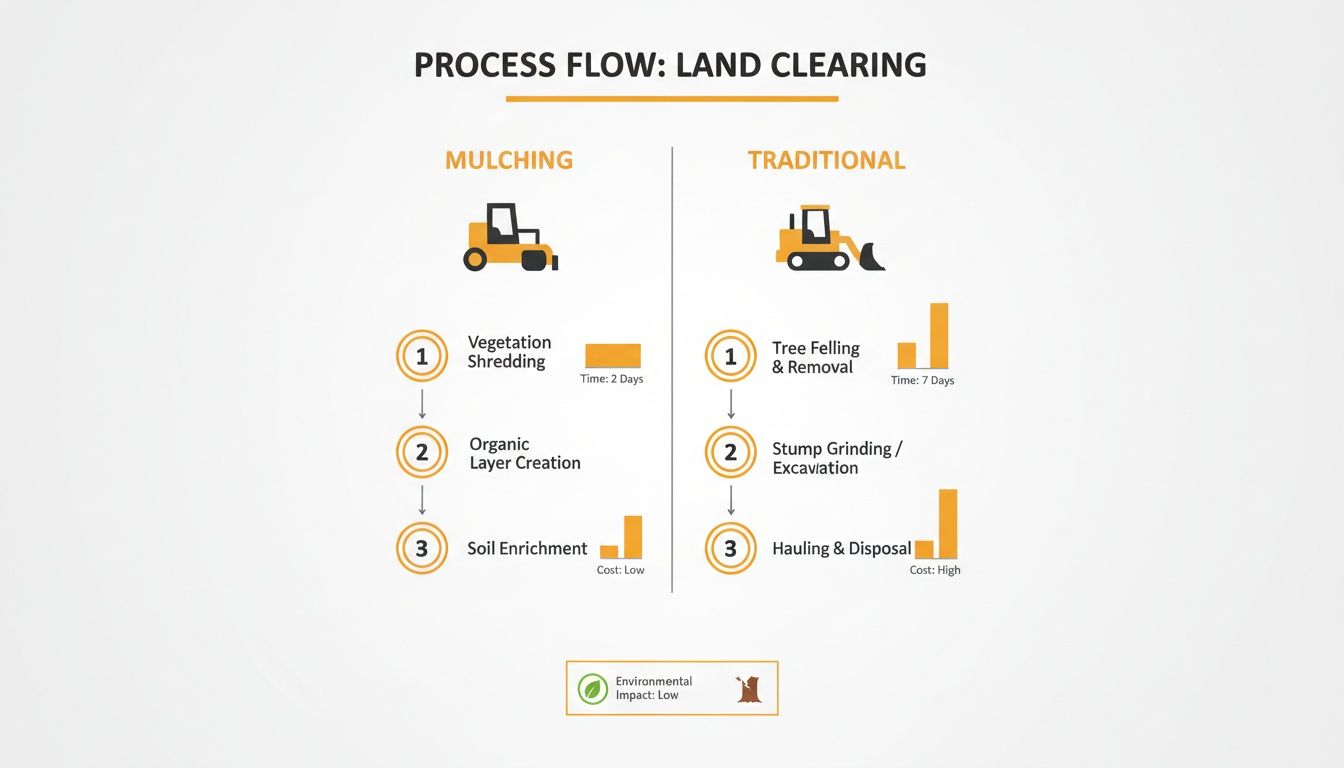
As you can see, mulching is a clean, one-step solution. The traditional way involves a whole lot more mess, more steps, and more disruption to your land.
Phase 4: Final Walkthrough And Project Completion
Just because the mulching is done doesn’t mean the job is over. We’re not finished until you are 100% satisfied. We’ll do a final walkthrough with you, inspecting the entire area together. We’ll check our work against the plan we made, making sure every last detail is perfect.
This is your opportunity to see the transformation up close and confirm that we brought your vision to life. Once you give us the thumbs-up, the project is officially complete. You’re left with a clean, revitalized property that’s ready for whatever you have planned next.
How Forestry Mulching Costs Are Calculated in Florida
So, what’s this going to cost? It’s usually the first question on any landowner's mind, and for good reason. Unlike buying a product off a shelf, forestry mulching isn't something with a simple price tag. The final cost is a direct reflection of your property's unique landscape and what it takes to clear it effectively.
Think of it like getting a quote from a professional painter. The price to paint a small, empty room with smooth walls is going to be wildly different from a massive room with vaulted ceilings, detailed trim, and tons of furniture to work around. In the same way, the cost to mulch a flat, sparsely wooded acre is much lower than tackling a dense, hilly parcel with tricky access.
Key Factors Driving the Price
Several core variables directly influence how much time and effort a project will take, which ultimately determines the cost. Any professional contractor worth their salt will walk your property to assess these factors and give you a realistic, custom quote.
The method for calculating these costs is pretty similar to how other specialized trades work. To get a better feel for the professional's perspective, it's helpful to see how to estimate construction costs, as many of the same principles apply.
Here are the big ones we look at:
Vegetation Density: This is the single biggest factor. A property choked with stubborn palmettos, invasive Brazilian pepper, and tangled vines will demand far more machine time than a plot with just scattered pines and light brush.
Type of Material: Grinding up softwoods and small brush is relatively quick and easy on the equipment. Chewing through dense hardwoods, on the other hand, demands more power and puts a lot more wear and tear on the machine's teeth.
Terrain and Accessibility: A flat, open field is a walk in the park. But start adding in slopes, wet spots, or rocky ground, and the operator has to slow down and maneuver carefully, which adds to the project time.
Total Acreage: While bigger projects obviously cost more in total, the price per acre often drops as the size increases. This is all thanks to the efficiencies we gain from mobilization and continuous operation on a larger scale.
To help you see how these pieces fit together, we’ve put together a quick overview of the variables that shape the final price of a mulching job.
Key Factors Influencing Forestry Mulching Costs
Cost Factor | Impact on Price (Low to High) | Example Scenario |
|---|---|---|
Vegetation Density | Low to Very High | A 1-acre lot with light brush vs. a 1-acre lot with a dense wall of palmettos and invasive trees. |
Vegetation Type | Low to High | Clearing soft pine and myrtle is much faster than grinding down tough oak and hickory. |
Terrain | Low to High | A flat, dry pasture is easy to access, while a sloped, swampy area requires more time and caution. |
Total Acreage | High to Low (Per Acre) | A 10-acre project will have a lower cost-per-acre than a single-acre job due to economies of scale. |
Obstacles | Low to Medium | The presence of old fences, rocks, or debris requires the operator to work more slowly and carefully. |
Understanding these factors makes it clear why a one-size-fits-all price just doesn't work for land clearing.
Understanding Pricing Models
Here in Central Florida, you'll typically run into two main ways forestry mulching services are priced.
Hourly Rate: This is the go-to for smaller jobs (usually under two acres) or really complex sites where it's tough to predict the exact time needed. You can expect rates anywhere from $175 to $350 per hour, depending on the size and power of the machine being used.
Per-Acre Rate: For larger, more straightforward properties, a per-acre price makes more sense. This can range from $400 all the way up to $2,000 per acre. That huge spread really shows you how much of an impact vegetation density and terrain have on the final number.
For a much deeper dive into these figures, check out our complete guide on forestry mulching cost per acre.
The most reliable way to budget for your project is to get a custom quote. An experienced contractor can assess your land's specific challenges and provide a transparent, all-inclusive price.
This entire service has been transformed by huge leaps in equipment technology. The market for mulching machines is on track to become a $3.2 billion industry by 2035, with modern mulchers capable of tackling trees up to 12 inches in diameter and clearing one to three acres per day. These efficiencies create massive savings, with operators often reporting 50% lower expenses than old-school chainsaw crews and slashing labor from a team of seven down to just one or two operators.
Navigating Florida Land Clearing Permits and Regulations
Clearing land here in Florida involves more than just firing up the heavy machinery. It’s about doing the job correctly and, just as importantly, legally. Before a single tree gets turned into mulch, you have to get a handle on the local and state rules that oversee land management.
These regulations aren't just bureaucratic hoops to jump through. They’re in place to protect Florida’s incredibly unique ecosystems, our precious water resources, and the native wildlife that calls this place home.
Trying to bypass these rules is a recipe for disaster. You could be hit with a stop-work order and some pretty hefty fines, quickly turning your dream project into a major headache. The good news? A professional forestry mulching service does more than just clear your land—they guide you through this tangled web of regulations. That partnership is your best bet for keeping the project compliant from day one.
Understanding Key Environmental Regulations
Here in Central Florida, a few specific environmental concerns always come first. Knowing what they are ahead of time will help you plan your project without running into legal trouble. Honestly, working with a contractor who already knows the local rules is the smartest first move you can make.
These are the most common regulations you'll likely come across:
Gopher Tortoise Protection: The gopher tortoise is a threatened species in Florida, and both the animal and its burrow are protected by state law. It's illegal to disturb a burrow without the right permits from the Florida Fish and Wildlife Conservation Commission (FWC). A good contractor knows how to spot potential burrows and can walk you through the next steps, which usually involves a formal survey and sometimes relocation by a licensed specialist.
Wetland Delineation: A lot of Florida properties have wetlands, which are critical to our water supply and are protected by county, state, and even federal agencies. Clearing inside a designated wetland or its buffer zone requires special permits. Professionals can spot the signs of wetlands and help you get a formal delineation to make sure your clearing work stays well within legal lines.
Heritage Tree Ordinances: Many counties have specific rules to protect large, significant trees, often called "heritage" or "specimen" trees. You typically need a permit to remove them, and you might even be required to replace them somewhere else on your property.
Your Contractor as Your Compliance Partner
Trying to figure all this out on your own can feel like a full-time job. But you don't have to go it alone. An experienced local contractor already understands the specific requirements for counties like Brevard, Osceola, and Orange. They know exactly who to call and what paperwork needs to be filed.
Think of your mulching contractor as your guide through the red tape. Their expertise helps ensure your project respects Florida's natural heritage while achieving your goals, preventing costly delays and environmental missteps.
This focus on doing things the right way for the environment isn't just a local thing. The worldwide forestry mulching service market is expanding fast, with North America leading the charge, largely due to wildfire prevention efforts.
Over in Europe, strict environmental laws have made mulching a go-to method for reforestation. In countries like Germany and Sweden, it’s used in 40% of projects specifically to improve soil health. You can dig deeper into these global trends and the forestry mulching market on archivemarketresearch.com.
By choosing a knowledgeable local company like Palm State Clear Cut, you’re making sure your land is cleared not just efficiently, but also responsibly. That's how you keep your project on track and in full compliance with Florida law.
How to Choose the Right Mulching Contractor
Picking the right forestry mulching contractor is easily the most critical part of your land clearing project. The right team isn't just a person operating a machine; they're a partner who understands how to get the job done safely, efficiently, and with respect for your property.
On the other hand, an inexperienced operator can do some serious damage. From tearing up valuable trees you wanted to keep to compacting the soil, a bad choice can turn your smart investment into a costly headache.
Making a good decision comes down to doing your homework. You have to look past the price tag and dig into a company’s experience, professionalism, and how they approach their work. This process isn't just about getting a good result—it's about protecting yourself from liability.
Non-Negotiable Contractor Credentials
Before you even start talking about the specifics of your land, there are a few absolute must-haves. These are the basics that separate a real professional from someone who just bought a machine and a business card. Don't even think about moving forward if a company can't show you proof of these:
Proper Licensing: First things first, make sure they hold all the necessary business licenses to operate legally right here in your Florida county. It’s the baseline for a legitimate operation.
Comprehensive Insurance: Ask to see certificates for both general liability and worker's compensation insurance. This is what protects you and your wallet if an accident happens on your property.
Local Experience: You want someone who knows their way around Central Florida's unique landscape. Ask them about their experience grinding through tough palmettos and getting rid of our local invasive species. That local know-how is priceless.
Once you’ve checked these boxes, you can start getting into the details. A reputable company will have all this information ready and won't hesitate to share it.
An experienced contractor's value is in their ability to anticipate challenges. They can identify potential issues like hidden debris or sensitive root systems and adjust their plan accordingly, preventing problems before they start.
Essential Questions to Ask Every Contractor
With the basics out of the way, it’s time to ask the questions that really show you what a contractor is made of. Their answers will tell you everything you need to know about their work ethic and expertise.
What equipment do you use for a project like mine? The machine absolutely matters. A good contractor will explain why their specific equipment—like a tracked versus a wheeled machine—is the right choice for your terrain and how it will minimize soil impact.
How do you protect desirable trees and property boundaries? A true pro will have a clear process for marking off keeper trees and staying well away from fence lines. You need to know they won’t cause any accidental damage.
What is your process for equipment maintenance? Machines that are well taken care of are less likely to break down, which means no frustrating delays for your project. It’s also a great sign of a company’s overall professionalism and commitment to safety.
Can you provide references or show examples of similar past projects? There's no better way to judge their work than by seeing it for yourself. Looking at their past projects and talking to previous clients will give you a real feel for the quality you can expect from their forestry mulching service.
Choosing the right partner is crucial. You can dive deeper into this process by checking out our guide on finding forestry mulching services near you.
It's also worth noting that the best companies make themselves easy to find and vet. That's why many successful contractors leveraging local SEO are often the ones you can trust. Taking these steps ensures you hire a team that will do the job right.
Answering Your Forestry Mulching Questions
It’s completely normal to have a few questions rattling around before you pull the trigger on a land clearing project. Getting straight answers is the best way to feel confident about moving forward. We hear a lot of the same great questions from property owners across Central Florida, so let's tackle them head-on.
These answers are based on our direct experience working with our local climate, vegetation, and unique landscape challenges.
How Long Does the Mulch Take to Decompose in Florida?
This is one of the most common questions we get, and for good reason! In Central Florida’s signature high heat and humidity, the decomposition process is actually quite fast. You’ll see the fresh mulch start to break down in just a few months.
Over the next one to two years, that organic material will fully work its way into the topsoil. As it does, it acts like a slow-release fertilizer, continuously enriching our sandy soil with vital nutrients. This natural cycle boosts water retention and gives you a long-term, no-effort solution for keeping weeds at bay.
Think of the mulch as more than just a temporary ground cover. It’s a soil amendment that works for years to make your land healthier and more resilient—all without any extra cost or work from you.
Can Your Machines Handle Dense Florida Palmettos?
Yes, absolutely. Honestly, this is a non-negotiable for any legitimate forestry mulching service in our state. Our specialized equipment was built to tear through the tough, fibrous plants that define the Florida landscape.
We deal with this stuff every single day:
Dense stands of saw palmetto: We know all about their stubborn root systems and tough-as-nails fronds.
Invasive species: Brazilian pepper, in particular, which can create thickets so dense you can’t walk through them.
Thick vine growth: Things like muscadine and other aggressive vines that will literally choke out your good trees.
Our mulchers grind this challenging vegetation down into fine mulch, turning an impassable mess into clean, open space without leaving a single pile of debris behind. The whole process is designed to handle exactly what makes Florida properties so tough to clear any other way.
Is Mulching Safe for the Large Oak Trees I Want to Keep?
Protecting your mature, valuable trees is always our top priority. When done by a skilled and experienced operator, forestry mulching is completely safe for the trees you want to keep. The process is inherently selective, which lets us clear right up to the base of your prize trees without harming them.
When we do our initial on-site consultation, we'll walk the property with you and mark every single tree you want to save. From there, our operators maneuver the equipment with real precision, carefully taking out the unwanted brush while staying clear of the trunks and sensitive root systems of your legacy oaks, pines, and other important trees.
What Happens to Tree Stumps During the Mulching Process?
This is one of the biggest advantages of our method. Unlike old-school land clearing that leaves stumps all over the place, our forestry mulchers can grind them down perfectly flush with the ground. In many cases, we can even take them down an inch or two below the soil surface. What you're left with is a smooth, safe, and ready-to-use property.
The ground-up stump material just blends right into the mulch layer. It decomposes along with everything else, adding even more organic matter back into your soil. This means you don't have to hire a separate stump grinding company, saving you a good chunk of time and money while giving you a much cleaner final look.
Ready to see how a professional forestry mulching service can completely transform your Central Florida property? Contact Palm State Clear Cut today for a free, no-obligation quote and let our experts build a plan that gets the job done right. Visit us at https://palmstateclearcut.com to get started.
Comments