
When Is the Best Time of Year to Remove a Tree in Florida
- Dec 30, 2025
- 13 min read
When it comes to tree removal, timing is everything. If you’re planning to take a tree down in Central Florida, the sweet spot is almost always during its dormant season. That typically means from late fall through winter. This window usually offers the safest, most efficient, and most cost-effective opportunity for any planned removal.
Unpacking the Best Time for Tree Removal
While the simple answer is "winter," the real best time depends on a mix of Florida's unique seasonal conditions, the tree's biology, and how urgently the job needs to be done. An emergency removal after a storm, for instance, can't wait for the calendar to cooperate. But for a scheduled project, understanding the pros and cons of each season is key to protecting your property and your wallet.
There are a few critical factors that influence the ideal removal time:
Weather Patterns: Here in Florida, our distinct dry and wet seasons have a huge impact on ground stability and the overall safety of the job.
Tree Dormancy: A tree's biological state—whether it's actively growing or dormant—changes its weight, structure, and how easily a crew can dismantle it.
Wildlife Activity: We have to be mindful of seasonal cycles like bird nesting season, which can bring both legal and ethical considerations into the picture.
Arborist Availability: Demand for tree services definitely ebbs and flows with the seasons, which can affect scheduling and even pricing.
This quick timeline gives a good visual breakdown of how different seasons line up with different tree care needs.
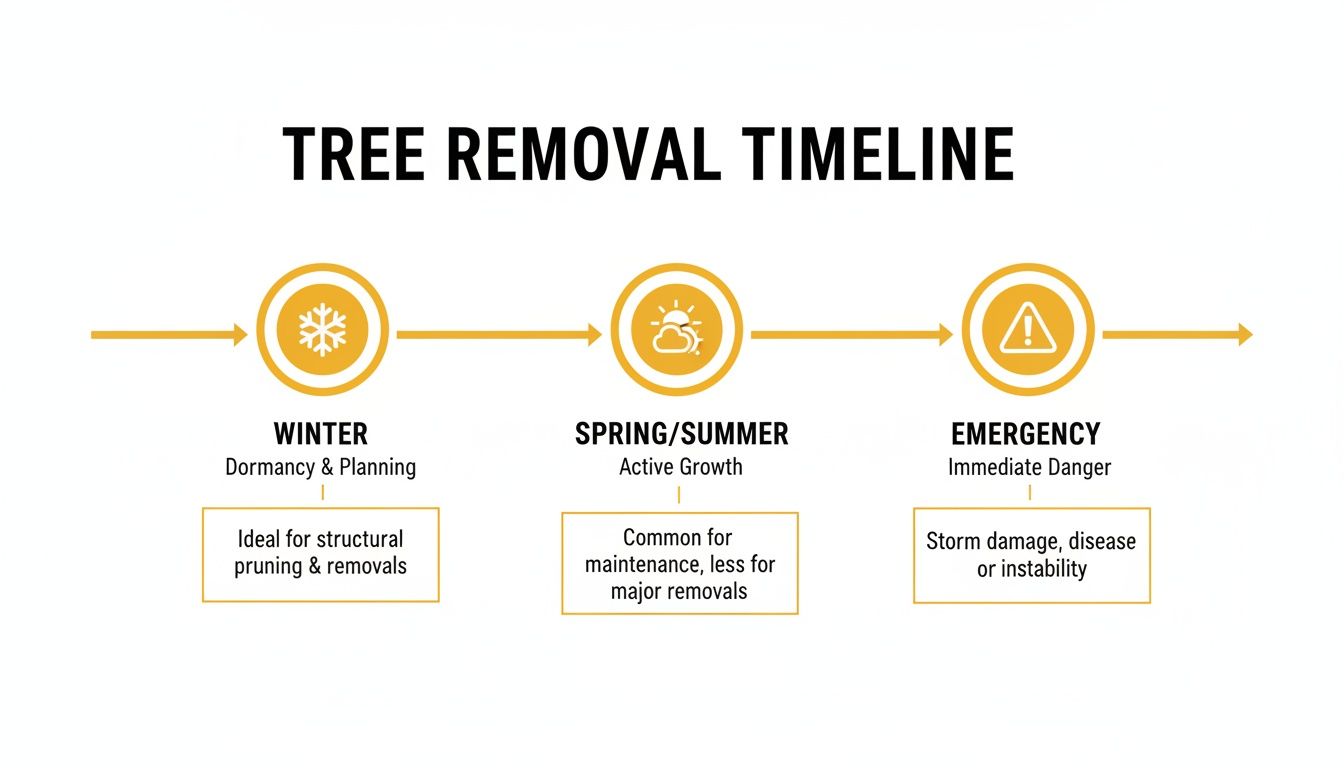
As you can see, while emergencies can happen anytime, planned removals are best saved for the cooler, drier, dormant months of winter.
A Seasonal Snapshot
So, why is the dormant season so ideal? When a tree is dormant, it's leafless. This makes it significantly lighter and gives an arborist a crystal-clear view of the entire branch structure. Better visibility means better safety and more precise cuts.
On the flip side, trying to do a major removal during our summer wet season often means dealing with saturated, soft soil. Bringing in heavy equipment can tear up your lawn and create a muddy mess.
To get a clearer picture of how these factors play out, here’s a quick comparison of removing trees during Florida's primary seasons.
Seasonal Tree Removal in Central Florida at a Glance
Season | Key Advantages | Potential Disadvantages |
|---|---|---|
Winter (Dormant Season) | - Tree is leafless, lighter, and easier to work on.- Better visibility of branch structure for the crew.- Firm, dry ground minimizes damage to your lawn.- Less disruption to wildlife. | - Can be a busier season for arborists; may need to schedule in advance. |
Spring/Summer (Growing Season) | - Arborists may have more availability for non-emergency work. | - Heavy, leaf-filled trees are harder and riskier to remove.- Wet, soft soil is easily damaged by equipment.- Risk of disrupting nesting birds and other wildlife.- High heat and humidity can be tough on crews. |
Fall (Transition Season) | - Cooler weather and drier ground return.- Trees begin entering dormancy, making them easier to handle. | - Hurricane season is still active, which can create scheduling conflicts with storm-cleanup work. |
This table really highlights why professional arborists in our area almost always recommend a winter removal for planned projects. Their advice is based on years of working with these exact factors to ensure a smooth, safe, and clean process. This local expertise, combined with a broader understanding of how our climate works, is what helps define the best time of year to remove a tree in Central Florida.
Why Late Fall and Winter Are the Gold Standard
While emergencies don't wait for the perfect season, any planned tree removal is best scheduled for late fall and winter. This isn't just a matter of convenience; it’s a strategy rooted in tree biology, practical safety, and the unique weather patterns of Central Florida. Timing your project during this window leverages natural cycles to make the whole process safer, cleaner, and far more efficient.
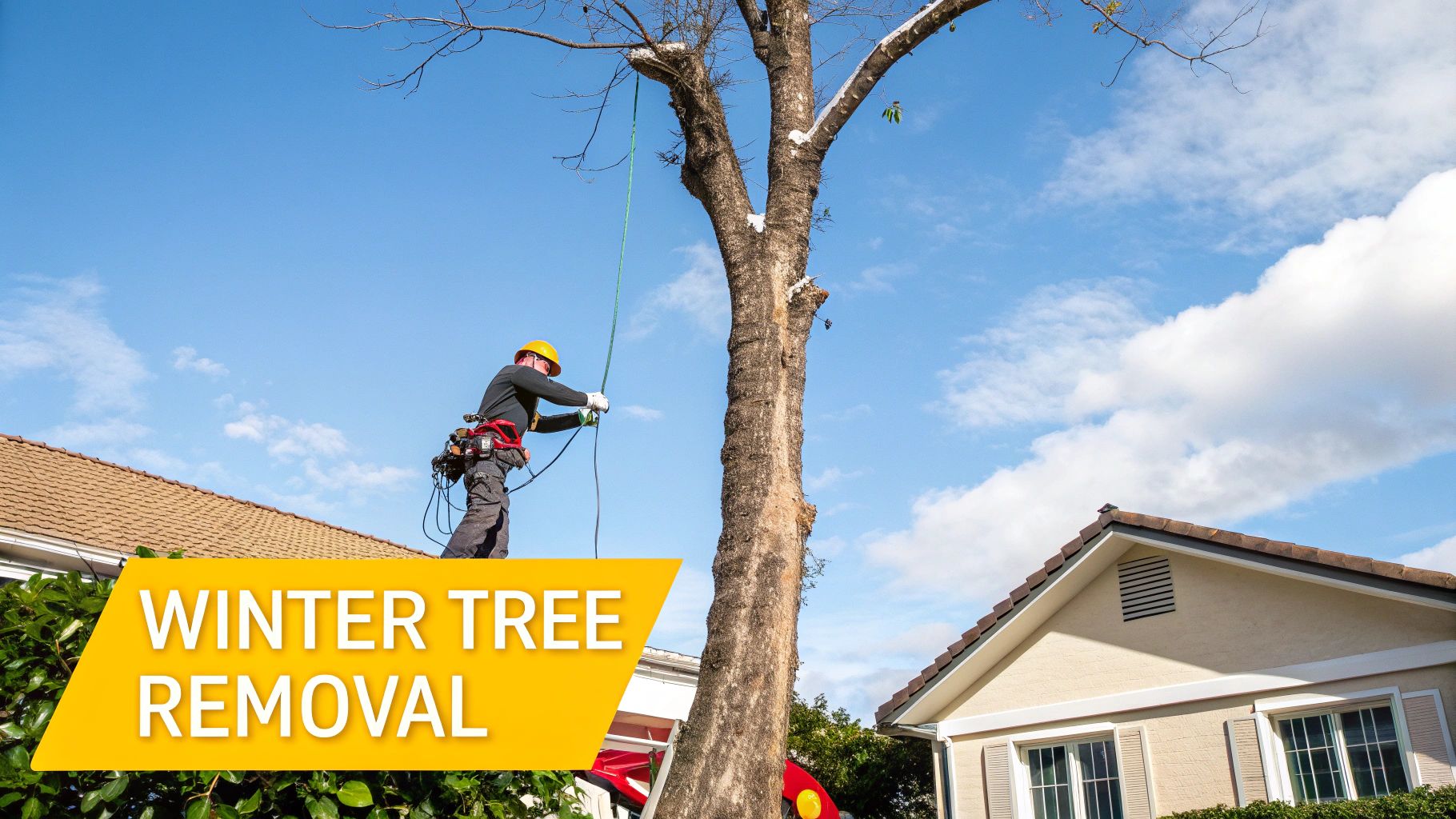
The biggest advantage comes from the tree entering a dormant state. Think of it like a bear hibernating—the tree's metabolism slows way down, and if it's a deciduous species, it drops all its leaves. This natural pause is a massive benefit for both the removal crew and your property.
The Advantage of Dormancy
During this resting phase, the tree is at its lightest. It’s not holding onto thousands of leaves or the high volume of water needed for active growth, which can substantially reduce its overall weight. This makes the heavy work of handling large branches and the main trunk much more manageable and predictable for the crew.
Plus, the bare canopy gives arborists a clear, unobstructed view of the tree's entire structure. They can spot weak points, assess the health of each branch, and plan their cuts with near-surgical precision. Better visibility is a huge factor in job site safety. If you want to dive deeper into this key biological phase, you can learn more about dormancy in trees with our practical guide for Central Florida land management.
Key Insight: A leafless tree essentially provides a blueprint for its own deconstruction. Arborists can map out the removal sequence with far greater accuracy, which minimizes the risk of unpredictable limb behavior and potential damage to your home or other structures.
Optimal Ground and Environmental Conditions
It’s not just about the tree—the condition of your yard is a major factor. Winter in Central Florida is our dry season, and that means the ground is firm and stable. This provides a solid foundation for the heavy equipment that’s often needed for large-scale removals.
Minimized Lawn Damage: Firm soil prevents the deep, ugly ruts that heavy trucks and machinery can carve into the soft, saturated ground of our wet season.
Reduced Erosion Risk: With less soil disturbance and no torrential downpours to wash it away, the threat of topsoil erosion is significantly lower.
Cleaner Worksite: Dry conditions mean less mud and debris get tracked across your property, which makes for a much tidier and more straightforward cleanup.
On top of all that, the dormant season aligns with a lull in pest and disease activity. When a tree is cut, the fresh wood can be a magnet for insects or airborne pathogens. In the cooler, drier winter months, these threats are at their lowest ebb, which helps protect the other healthy trees and plants on your land. This makes the dormant season the best time of year to remove a tree not just for the one being removed, but for the health of your entire landscape.
When it comes to planned tree removal in Central Florida, timing isn't just a suggestion—it's everything. While winter offers a clear window of opportunity, our climate throws a couple of major curveballs for a huge chunk of the year: the wet season and hurricane season.
These two seasons, which stretch from late spring all the way through fall, create a perfect storm of hazardous conditions. They introduce significant risks that can turn a straightforward job into a dangerous and expensive mess, which is why this is often the worst time for any planned tree work.
Florida's Wet Season: A Slippery Situation
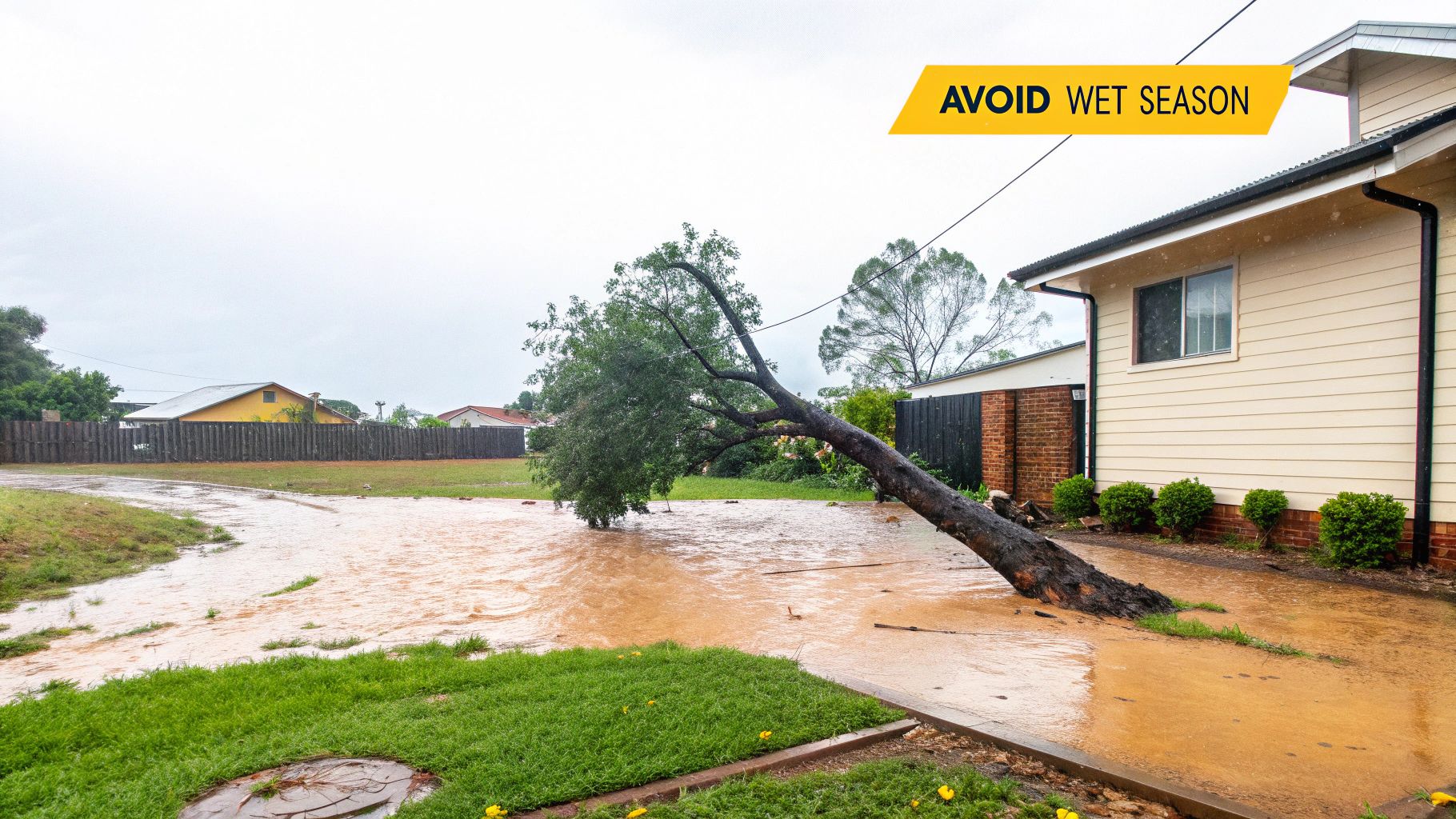
Florida’s wet season typically runs from May to October, and anyone who lives here knows it means one thing: near-daily downpours. All that rain quickly saturates the ground, turning what was firm soil into a soft, muddy liability.
Imagine trying to drive a heavy truck across a soaked sponge—that’s basically what we’re dealing with. The ground just can't support the weight of the specialized equipment needed for safe tree removal. That machinery can easily leave deep, ugly ruts in your yard, compact the soil, and cause lasting damage to your lawn and landscaping. It's damage that can be very costly to fix.
But it’s not just about your lawn. Saturated soil creates a serious safety hazard. A tree’s root system is its anchor, and its grip is much, much weaker in waterlogged earth. This instability dramatically increases the risk of the tree shifting or even toppling over unexpectedly during the removal process, putting both the crew and your property in jeopardy.
The Double Threat of Hurricane Season
Overlapping with our wet season is the Atlantic hurricane season, which officially runs from June 1st to November 30th. This period dials up the unpredictability and danger to a whole new level. Trying to schedule a tree removal when a storm is brewing isn't just a bad idea; it's downright reckless.
Here’s a breakdown of why this is the riskiest time for scheduled removals:
Unpredictable Weather: Out of nowhere, violent thunderstorms can roll in, bringing high winds and lightning. This forces crews to stop work immediately, leading to frustrating delays and extra costs.
Increased Risk: High winds are a tree crew's worst enemy. They can make branches—or the entire tree—swing erratically during cutting, sending the risk of a serious accident through the roof.
Emergency Backlog: The moment a hurricane is forecast, reputable tree services get flooded with emergency calls from people desperate to remove hazardous trees. This creates a massive backlog, making it incredibly difficult and much more expensive to book routine work.
A Word of Caution: It’s incredibly smart to be proactive and remove a vulnerable tree before hurricane season hits. But that work needs to be done during the dry season. Waiting until a storm is on the radar is simply too late and puts everyone at risk.
At the end of the day, while emergency removals are sometimes unavoidable, planned projects are best kept out of Florida’s wet and stormy months. The combination of saturated soil, pop-up thunderstorms, and the looming threat of hurricanes creates a period filled with higher risks, more potential for property damage, and inflated costs. This is exactly why understanding our local climate is the key to figuring out the best time of year to remove a tree safely and efficiently.
Recognizing Urgent Tree Removal Warning Signs
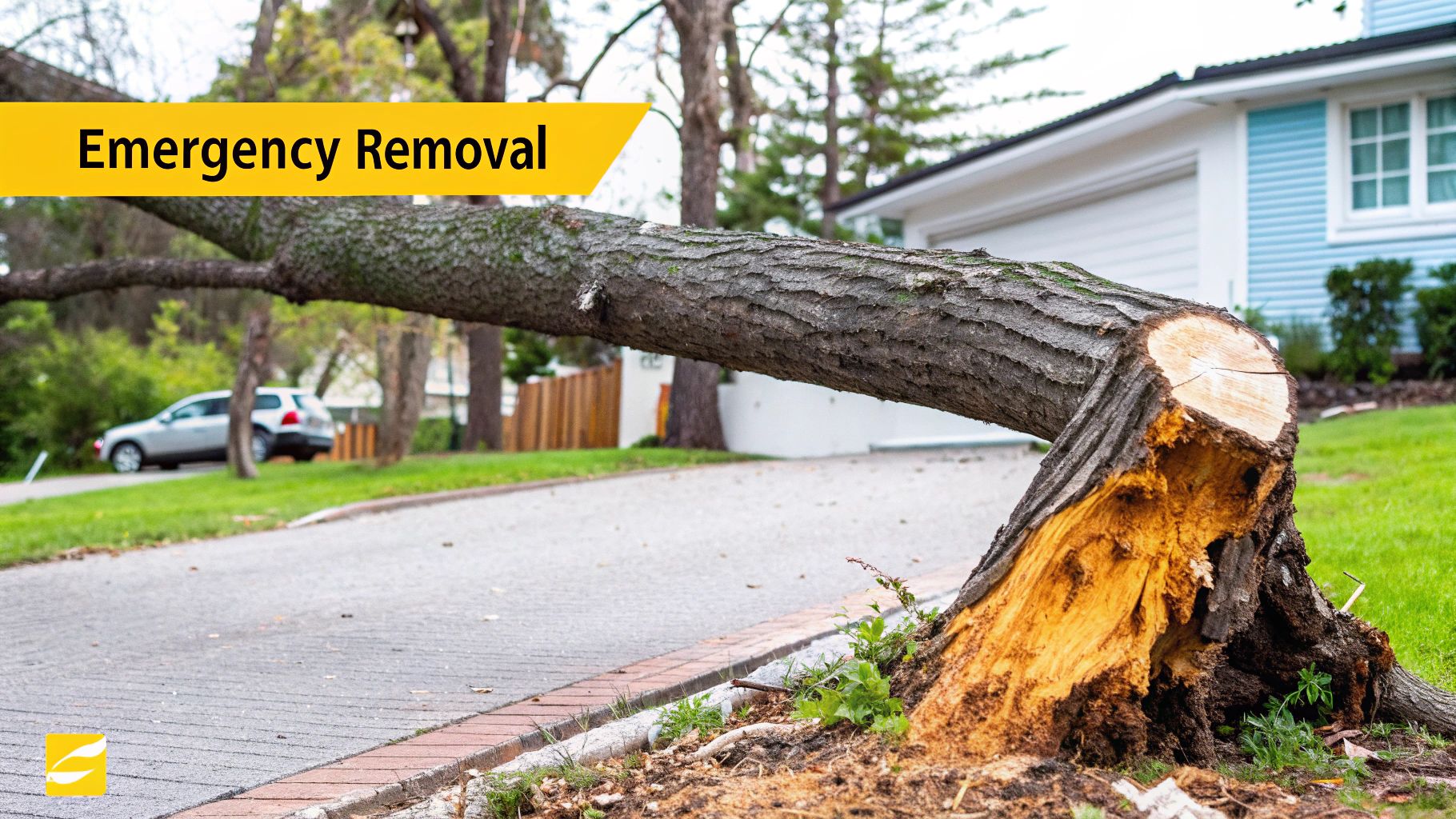
While we often talk about the ideal season for tree work, some situations simply can't wait. The hard truth is, sometimes the best time of year to remove a tree is right now. A tree that’s become a hazard is an emergency, plain and simple. Learning to spot the warning signs is critical for protecting your home, your property, and your family, especially here in Florida where high winds and sudden storms are just a part of life.
Think of a hazardous tree like a ticking clock—ignoring it doesn't stop the countdown. Knowing what to look for empowers you to act decisively, turning a potential disaster into a managed project. Waiting for the "right" season when you have a dangerous tree on your property is a gamble you can't afford to take.
Your Emergency Checklist
It’s a good habit to walk your property and give your trees a once-over every now and then, particularly after a big storm rolls through. Keep a sharp eye out for these red flags that mean you need a professional assessment, and likely a removal, immediately.
Sudden or Significant Leaning: If a tree that used to stand straight is now tilting—and especially if the ground around the base is heaving up—the root system could be failing. This is one of the most urgent signs that a collapse is imminent.
Deep Cracks or Splits in the Trunk: Large, deep vertical cracks are a huge problem. They compromise the tree's entire structural integrity, acting like a fault line that makes it incredibly vulnerable to snapping during the next gust of wind.
Large, Dead Branches: Arborists call these "widowmakers" for a reason. These dead limbs are a major liability and can break off without any warning, posing a severe risk to anything—or anyone—below. If more than 50% of the tree looks dead or is losing its leaves out of season, it's often beyond saving.
It can sometimes be tough to tell if a tree is just dormant or truly dead. If you're not sure, our guide on how homeowners can tell if a tree is dead or dormant can help you figure it out.
Less Obvious but Equally Dangerous Signs
Not all warning signs are as dramatic as a cracking trunk. Some are more subtle but just as serious if you know what they mean. You’ll want to pay close attention to the base of the tree and the soil around it for clues.
Expert Insight: Fungi, like mushrooms or those shelf-like growths on the trunk or near the roots, are almost always an external sign of a much larger internal problem. They typically mean significant decay has set in, which severely weakens the tree's core strength from the inside out.
Visible root decay is another critical red flag to watch for. While spotting these warning signs can help you prevent a disaster, sometimes the unexpected still happens. When a tree does fall, homeowners often face the challenge of navigating potential insurance claims after a tree has fallen.
If you spot any of these signs, don't put it off. Get a professional arborist on the phone right away for an emergency assessment. When a tree is a clear and present danger, the season no longer matters—safety becomes the one and only priority.
Choosing The Right Tree Removal Professional
Knowing the best time of year to remove a tree is only half the battle. Picking the right professional to do the work is just as critical, if not more so.
Hiring a tree service isn’t like finding someone to mow your lawn. This is a job that involves heavy machinery, serious risks, and the long-term health of your property. It’s a decision that demands careful thought.
There’s a world of difference between a basic "tree cutter" with a chainsaw and a professional land clearing company. A true pro offers a complete, end-to-end solution—one that protects your property, follows local regulations, and leaves your land clean and ready for whatever’s next.
Essential Questions to Ask Your Tree Removal Contractor
Before you even think about looking at a quote, you need to do your homework and verify a company’s credentials. An unqualified or uninsured operator can turn a straightforward job into a legal and financial nightmare. Arm yourself with the right questions to ensure you're hiring a legitimate, capable professional.
This table provides a checklist of what to ask to make sure you're covered from every angle.
Question Category | Specific Question to Ask | Why It Matters |
|---|---|---|
Credentials & Insurance | "Can I see your current license and proof of insurance?" | This is non-negotiable. They need general liability insurance for property damage and workers' compensation for their crew. If they don't have it, you could be held liable for any accidents. |
Property Protection | "What's your plan to protect my house, driveway, and landscaping?" | A pro will have a clear process. They should explain how they’ll use protective mats for heavy equipment or manage the drop zone to prevent damage from falling debris. |
Equipment & Methods | "What kind of equipment will you use for this specific job?" | The tools have to fit the task. A full-service company will have access to everything from aerial lifts for tricky limbs to low-impact machinery like forestry mulchers for clearing acreage without wrecking the topsoil. |
Scope of Work | "Does your quote include stump grinding and full debris removal?" | You need to know exactly what you're paying for. A comprehensive quote should cover everything from the first cut to the final cleanup, so there are no surprises or hidden fees later on. |
Asking these questions upfront sets the stage for a smooth project and protects you from potential headaches. A professional contractor will have no problem providing clear answers and documentation.
When you're evaluating companies, it's also helpful to understand the General Contractor Insurance Requirements that a legitimate business must carry. And if you're looking for more local advice, our guide on finding a land clearing contractor in Central Florida offers more specific tips for our region.
Beyond The Cut: What Happens After The Tree Is Down?
A top-tier company doesn’t just fell a tree, pack up, and leave you with a giant stump and a mountain of wood. Comprehensive service means they handle the entire site restoration process, which is absolutely vital for the future health and usability of your property.
Here's what a complete post-removal service should look like:
Stump Grinding: This is the standard for getting rid of stumps. A machine grinds the stump and major roots down several inches below the ground, letting you lay new sod or plant right over the area. It’s far less destructive than trying to dig the whole stump out.
Forestry Mulching: For larger areas with lots of brush and smaller trees, this method is a game-changer. It grinds up vegetation right where it stands, turning it into a natural layer of mulch. This instantly enriches the soil, helps prevent erosion, and keeps weeds from popping back up.
Complete Site Cleanup: The job isn't done until your property is clear. This means hauling away all logs, branches, and debris, leaving the site looking clean, tidy, and well-managed. No mess, no stress.
Common Questions About Florida Tree Removal
Even when you know the ideal seasons for tree work, specific questions always pop up. It's completely normal. Getting straightforward answers is the key to planning your project with confidence and making sure there are no surprises down the road.
We've pulled together some of the most common questions we hear from property owners in Central Florida. Our goal is to give you the clarity you need to budget correctly, follow local rules, and understand exactly what a professional tree service should deliver.
How Much Does Tree Removal Cost in Central Florida?
This is the big question, but there’s no single price tag. The cost depends entirely on the specific tree and its situation. A small, easy-to-reach tree might only set you back a few hundred dollars. On the other hand, a massive, dying oak hanging precariously over your roof could easily cost several thousand.
Here are the key things that swing the price:
Size and Height: It’s simple—taller, wider trees demand more time, labor, and specialized equipment to bring down safely.
Location and Accessibility: A tree sitting in an open field is a straightforward job. One wedged between two houses or tangled in power lines is a whole different ballgame.
Tree Health and Condition: A dead, brittle tree is dangerously unpredictable. It often requires more complex rigging and a higher degree of caution from the crew, which can add to the cost.
Scope of Services: Does the quote you received include hauling away every last branch and grinding the stump? Always double-check that the price covers the entire job, from start to finish.
Do I Need a Permit to Remove a Tree on My Property?
The answer is a firm "it depends." Tree ordinances vary wildly from one city or county to the next here in Central Florida. Many local governments have tree preservation rules that protect certain species, especially "grand oaks" or any tree over a certain trunk diameter.
Critical Takeaway: Never, ever assume you can just cut down a tree without checking the local rules first. A reputable tree service will know the permitting process in your area like the back of their hand and can guide you through the necessary steps.
Trying to bypass this step can lead to some hefty fines. It's not worth the risk.
What Is the Difference Between Stump Grinding and Removal?
People often use these terms interchangeably, but they are two completely different services. Knowing the difference will help you choose what's right for your property.
Stump grinding is what most people need. A special machine with a cutting wheel chews the stump into small wood chips, grinding it down several inches below ground level. It's less invasive, more affordable, and lets the leftover roots decay naturally in the soil.
Full stump removal is a much bigger operation. It involves digging out the entire stump and its main root ball with heavy machinery. This is a far more destructive process that leaves a giant hole in your yard and is usually only necessary for major construction or development projects. For almost every homeowner, grinding is the way to go.
Is It Safe to Remove a Tree During Hurricane Season?
This is a great question that needs a careful answer. Trying to take down a tree during a hurricane or even a strong tropical storm is incredibly dangerous and should never be done. The combination of high winds and torrential rain creates an unacceptably high-risk situation for any crew.
However, proactively removing a weak, damaged, or poorly located tree before hurricane season is one of the smartest things a property owner can do. The perfect time for this preventive work is during the dry season (late winter and early spring), which gets your property secured long before the first storm clouds gather on the horizon.
When you're ready to tackle a tree project, you need a team with the right equipment and local expertise. Palm State Clear Cut offers comprehensive tree removal, stump grinding, and site preparation services across Central Florida. Contact us today for a free, no-obligation quote to get your property clean, safe, and ready for its next chapter at https://palmstateclearcut.com.


Comments