
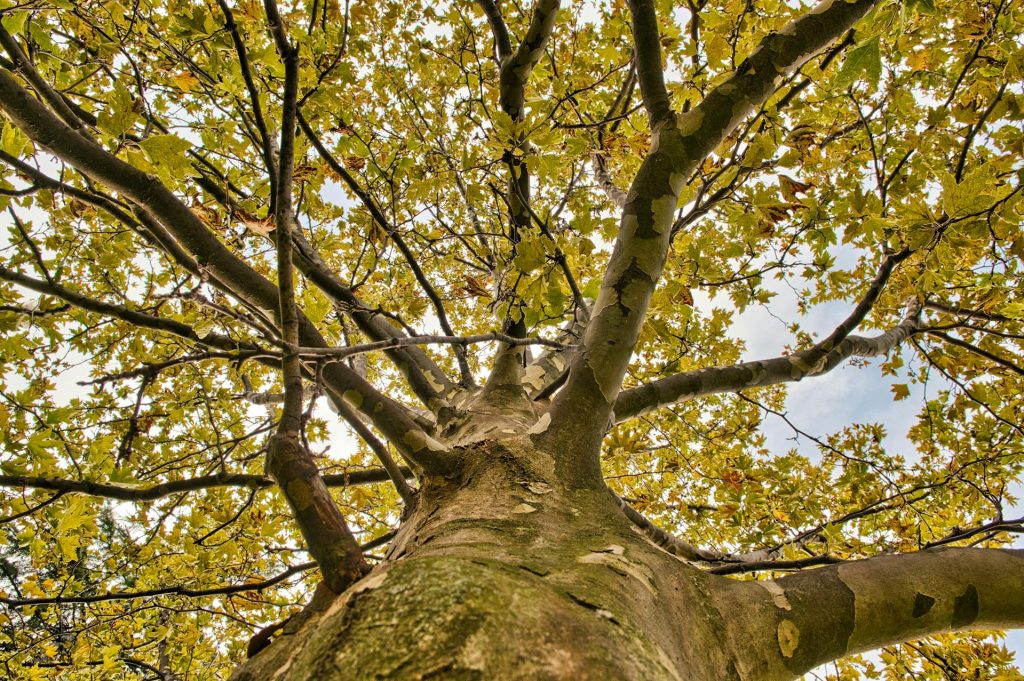
For landowners in Central Florida, understanding tree dormancy isn’t just a bit of trivia—it’s your strategic advantage for managing property the smart way. You can think of it as a tree going into a deep sleep or a ‘power-save’ mode. This natural shutdown is your key to smarter, more efficient land management.
Why Tree Dormancy Is Your Secret Weapon
Knowing when a tree is dormant is like knowing the perfect time to strike. When a tree is “asleep,” its entire system slows to a crawl. It’s not actively growing, sap isn’t flowing with the same force, and all its energy is pulled down and stored in the roots.
Working with this natural rhythm, instead of fighting against it, completely changes how you tackle land management. It lets you get better results with less effort and a lighter environmental footprint.
By timing your projects to this biological calendar, you can tap into some serious benefits:
- Reduced Regrowth: When you clear dormant vegetation, you often see less aggressive regrowth. That saves you a lot of time and money on future maintenance.
- Healthier Landscapes: Pruning during this rest period minimizes shock and lowers the risk of spreading disease, keeping the trees you want around healthy for the long haul.
- Efficient Site Preparation: Jobs like forestry mulching are just plain easier and more effective when plants aren’t in active growth mode. Our guide on unlocking the power of mulching for sustainable land management digs deeper into how these two practices go hand-in-hand.
- Maximized Herbicide Effectiveness: If you need to use treatments, applying them right before dormancy can be incredibly effective. The plant naturally pulls the product down into its root system for you.
The True Meaning of Rest
Dormancy is a tree’s brilliant survival strategy, built to endure everything from a cold winter to one of Florida’s brutal dry seasons. It’s a pause, not an end. The tree is simply conserving every last drop of energy, waiting for the right conditions to burst back to life.
When you schedule land clearing during this phase, you’re working on a landscape that’s temporarily on hold. It makes the whole process cleaner, more predictable, and ultimately more successful.
A tree’s dormancy is nature’s own project schedule. By reading its signs, you can plan land clearing and site preparation with precision, ensuring the work you do today has a more lasting and positive impact on your property tomorrow.
Interestingly, while dormancy is a game-changer here, it’s not a universal shutdown for all trees, especially in tropical climates. For instance, in the rainforests of Suriname, ancient trees are busy proving that they don’t slow down with age. A study found that even trees over 200 years old kept growing and packing on carbon, with some storing up to 50% of their total carbon in the last quarter of their lives. You can explore the full study on tree growth in tropical forests to see how these giants keep working. It’s a great reminder that while dormancy is key in our region, a tree’s life cycle is always full of surprises.
The Three Types of Dormancy in Trees Explained
If you want to truly work with nature on your property, you need to understand that not all “sleep” for a tree is the same. Just like we have light naps and deep, restorative sleep, trees experience different levels of dormancy triggered by completely different things. It’s a common mistake to see dormancy as a simple on/off switch; in reality, it’s a sophisticated process with three distinct types.
Knowing the difference is a game-changer for anyone managing land here in Central Florida. It explains why some oaks stay stubbornly dormant even on a warm February day, while other species seem ready to burst into life at the first hint of spring. This insight directly impacts the timing and success of just about everything we do, from land clearing and pruning to vegetation control.
The three main types of dormancy in trees are endodormancy, paradormancy, and ecodormancy. Each one follows its own set of rules.
Endodormancy: The Biological Clock
Think of endodormancy as a tree’s non-negotiable internal calendar. This deep sleep is controlled by factors inside the plant, like its hormones, not the weather outside. Once a tree enters this state, it’s all in. It absolutely will not wake up, even if we get a surprise warm spell in January.
This is the tree’s ultimate survival strategy. It has picked up on the primary cue—shortening daylight hours—and has committed to a long rest for the winter. The tree is essentially ignoring any misleading warm weather, which prevents it from budding out too early only to get zapped by a later frost. For us, a tree in endodormancy is at its absolute lowest point of activity, making it the perfect time for major clearing or heavy pruning.
Endodormancy is a mandatory shutdown. The tree is internally programmed to stay dormant until it fulfills its “chilling requirement.” It doesn’t care about the outside temperature, making this the most predictable and reliable phase for planning major land management projects.
Paradormancy: The Internal Hierarchy
Paradormancy is all about what’s happening within the tree’s own structure—think of it as internal politics. The main bud at the very tip of a branch acts like a boss. This leader, known as the apical bud, produces hormones that actively stop the smaller, lateral buds further down the stem from growing.
This process is called apical dominance, and it’s how a tree focuses its energy on growing upward and outward instead of just becoming a messy bush. You can see this firsthand when you prune the tip of a branch. Suddenly, those side buds are “released” from the boss’s control and start sprouting. This dormancy is localized to specific parts of the tree, not the entire organism.
Ecodormancy: The Cautious Opportunist
Finally, there’s ecodormancy, which is the most straightforward type of rest. A tree in this state is simply waiting for better conditions. It has already passed through its deep, internal sleep and is physically ready to grow, but the environment isn’t cooperating.
The trigger here is purely external—a sudden cold snap, a period of drought, or even poor soil. It’s like a person waiting inside for a nasty thunderstorm to pass. The moment the weather clears and temperatures rise or the rains return, the tree springs back to life. This is a very common state for many of our Florida trees, especially during the dry season.
To get a clearer picture of how these three types of dormancy differ and why it matters for your land management plans, here’s a simple breakdown.
A Practical Comparison of Tree Dormancy Types
This table breaks down the key differences between Endodormancy, Paradormancy, and Ecodormancy, highlighting what triggers them and how that impacts our work on the ground.
| Dormancy Type | Primary Trigger | Simple Analogy | Relevance for Land Clearing |
|---|---|---|---|
| Endodormancy | Internal cues (photoperiod, hormones) | A biological alarm clock set for spring | Ideal time for clearing; tree is in its deepest rest, minimizing stress and regrowth. |
| Paradormancy | Chemical signals from other parts of the plant | A boss (apical bud) telling employees (lateral buds) to wait | Less relevant for whole-tree removal but important for strategic pruning to shape growth. |
| Ecodormancy | External environmental conditions (cold, drought) | Waiting for a storm to pass before going outside | Good for clearing, but be aware that the tree can resume growth very quickly once conditions improve. |
As you can see, each type of dormancy presents different opportunities and challenges. Recognizing which state a tree is in helps you make smarter, more effective decisions.
Understanding these distinctions is more important than ever as our weather patterns change. Shifting climate conditions are messing with these ancient rhythms, especially in warmer regions like ours. Inconsistent chilling can confuse trees, leading to poor flowering and fruit yields. One study on apple trees, for instance, showed how erratic winters delayed budbreak by several weeks—a major problem for agriculture. You can read the full research about how climate change affects tree dormancy to see just how deep these challenges run.
The infographic below shows how this knowledge gives you a strategic edge.
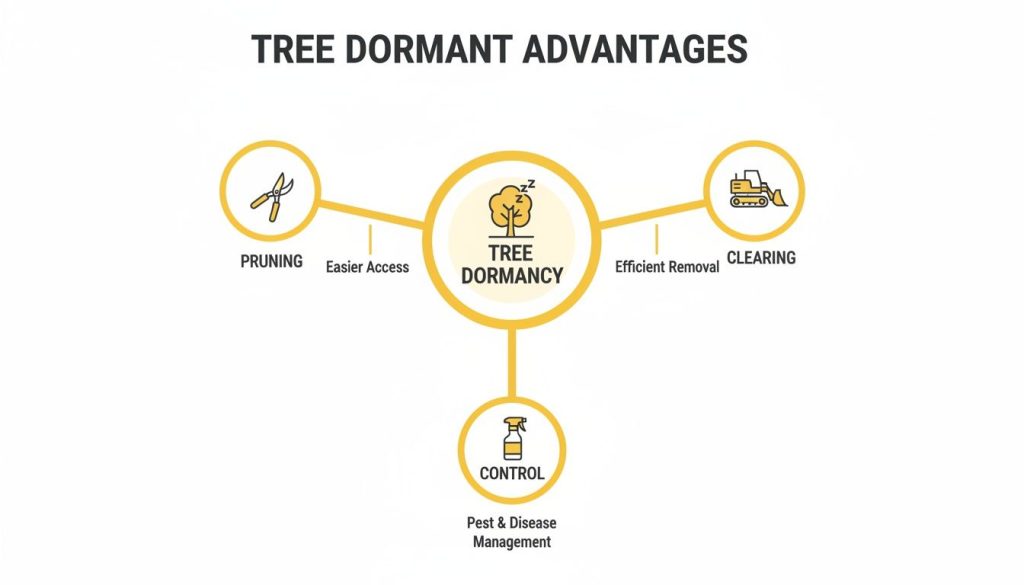
This isn’t just theory; it’s about practical results. By aligning your land clearing, pruning, and vegetation control with a tree’s natural rest cycle, you get the job done more efficiently and sustainably.
Decoding the Dormancy Triggers in Central Florida
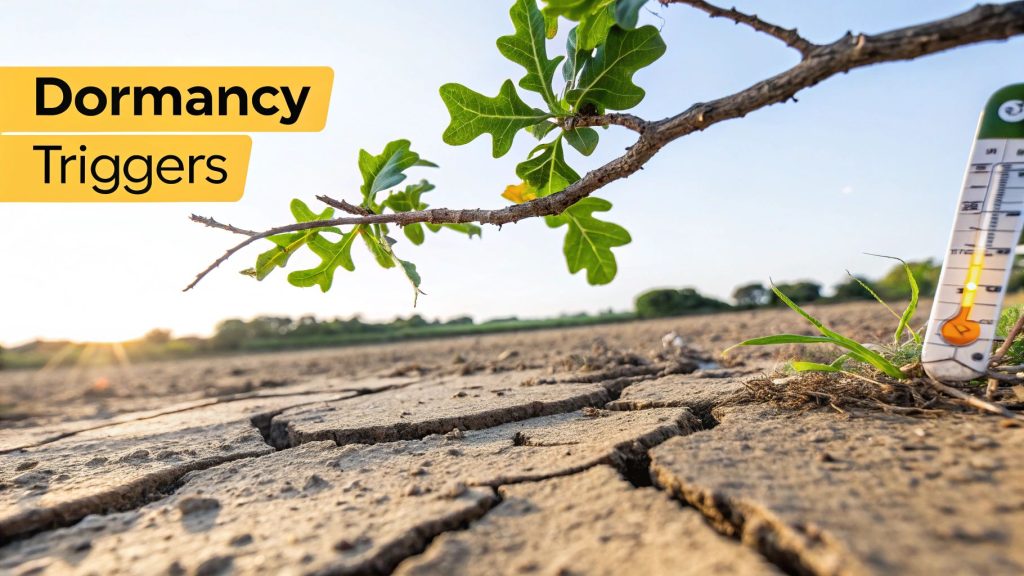
So, what exactly tells a tree in Central Florida it’s time to take a break? Unlike up north with their dramatic, snow-covered winters, our region sends much more subtle signals. A tree’s ability to slip into dormancy really comes down to how well it can read these environmental cues. Figuring them out is the key to predicting a tree’s behavior before you start any land management project.
For most trees, this process isn’t like flipping a switch. It’s more like listening to a symphony of different triggers. Daylight hours, temperature swings, and water availability all have a part to play, and their importance shifts depending on the species and the time of year. Knowing these triggers helps you get a sense of what a tree is doing internally before you ever fire up the equipment.
Photoperiod: The Most Reliable Calendar
For many temperate trees, the most dependable signal to start shutting down for the year is the photoperiod—the length of daylight. As fall rolls in, the shortening days send a clear message that colder, less productive times are on the way. This cue is far more reliable than temperature, which can bounce all over the place here in Florida.
This internal clock is what really drives endodormancy, that deep, pre-programmed sleep we talked about earlier. Even if we get a surprise warm spell in October, the shrinking daylight tells trees like hickories and some maples to start prepping for their rest. They’ll begin by slowing down growth and pulling valuable nutrients out of their leaves and back into the stems and roots for safekeeping.
Temperature: A Double-Edged Sword
In Central Florida, temperature plays a much more complex role. It’s not just about the cold. Both dropping temperatures and intense heat can push a tree into a dormant state.
- Cooler Nights: As fall gives way to our mild winter, cooler nights reinforce the message sent by the shorter days. This gradual cooling helps trees acclimate and settle into a deeper dormancy.
- Intense Heat: On the flip side, extreme summer heat can also trigger a type of dormancy. A tree might dramatically slow its growth to conserve water and energy during the hottest, driest stretches of the year—a pure survival move against heat stress.
Our notoriously mild winters can throw a wrench in this cycle. When trees don’t get enough “chill hours”—a specific amount of time below a certain temperature—their internal clocks get confused. This is a huge problem for fruit trees, which might fail to flower or produce fruit properly the following spring.
For many Florida trees, the dormancy trigger isn’t a single event but a cumulative effect. It’s the combination of shorter days and cooler nights that provides the definitive signal to enter a state of rest, conserving energy for the next growing season.
Water Stress: Florida’s Dominant Trigger
While daylight and temperature are important, the most powerful and common trigger for ecodormancy here in Central Florida is water stress. Our distinct wet and dry seasons mean that for countless native and adapted species, a lack of water is the number one cue to shut down.
When the rain stops during our dry season (usually late fall through late spring), trees simply can’t afford the massive amount of water they lose through their leaves. To survive, they enter a state of dormancy that’s purely a reaction to this environmental stress. This isn’t a pre-programmed sleep; it’s a direct, real-time response to the conditions on the ground.
A classic example is the Laurel Oak, a tree you see everywhere in our landscape. During a long dry spell, it’s not unusual to see a Laurel Oak drop a huge number of its leaves, even if it’s not “fall.” The tree isn’t dying—it’s intelligently cutting back on its water needs to wait for the summer rains to return. That’s ecodormancy in action, and understanding it is crucial for timing projects like forestry mulching or herbicide application, as the tree’s internal systems are primed for minimal activity and maximum root absorption.
How to Spot the Signs of Dormancy in Local Trees
To really get the timing right for your land management projects, you have to become a bit of a tree detective. Spotting the signs of dormancy in trees here in Central Florida is a whole different ballgame compared to what folks see up north. You can’t just wait for bare branches; our landscape is full of evergreens that demand a closer, more observant eye.
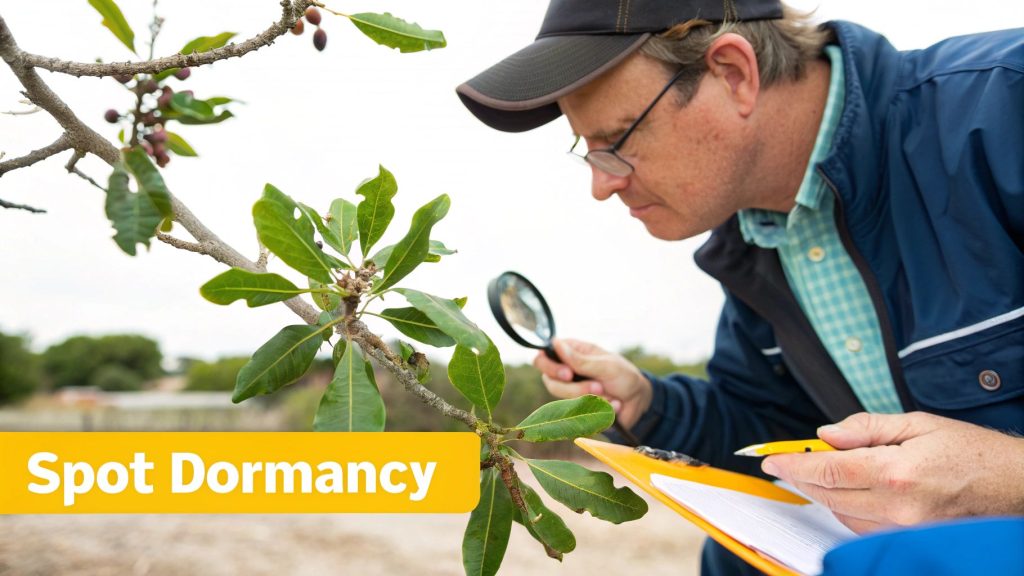
Learning to recognize these subtle cues is the key to scheduling jobs like land clearing or pruning at the perfect moment. It’s not just about working more efficiently—it’s about minimizing stress on the trees you want to keep, leading to a healthier property in the long run.
Beyond Bare Branches: What to Look For
With a classic deciduous tree like a maple, dormancy is impossible to miss. It drops every single leaf. But for Florida’s signature evergreens, the signals are much quieter. You’re looking for a slowdown, not a complete shutdown.
Here are the key indicators to watch for:
- Halted New Growth: Take a look at the very tips of the branches. During the growing season, you’ll see bright green, tender new shoots. A dormant evergreen will have zero new growth. Instead, the terminal buds at the branch tips will be hardened and sealed shut.
- Duller Leaf Sheen: Actively growing leaves often have a vibrant, almost waxy shine. As a tree slides into dormancy, its metabolism slows, which can give the foliage a slightly duller or less lustrous look.
- Slight Canopy Thinning: While they don’t go bare, evergreens like Live Oaks often shed some of their older, less productive leaves as they prep for their quiet season. This can make the canopy look a little thinner than it did at the peak of summer.
Sometimes, the line between a dormant tree and a struggling one can feel blurry. If you’re not sure about a particular tree’s health, our guide on figuring out if a tree is dead or dormant offers more specific tests you can perform.
The most reliable sign of dormancy in any tree, evergreen or deciduous, is a fully formed, hardened terminal bud at the end of each stem. Think of it as the tree’s sealed promise of next year’s growth, safely tucked away until the time is right.
Dormancy Cues in Common Florida Species
Every species has its own dormant “personality.” Learning the specific signs for trees common in Central Florida makes your observations much more accurate. A Southern Magnolia doesn’t hit the brakes the same way a Sabal Palm does.
Live Oaks and Laurel Oaks: These iconic trees are masters of subtle dormancy. Watch for a pause in new twig growth and a slight thinning of the inner canopy as they drop old leaves. Their deep summer green might also fade to a more subdued, olive tone.
Pines (Slash, Loblolly, Longleaf): Pines don’t give away many visual secrets, but their growth comes in distinct surges. During dormancy, you won’t see any new “candles”—that fuzzy, upright new growth at the branch tips. The tree’s activity becomes almost entirely internal.
Magnolias: Southern Magnolias slow down dramatically. Check for those hardened, brown-cased buds at the branch tips. They’ll also cut back significantly on their leaf drop, which happens pretty steadily during their growing season.
Palms (Sabal, Washingtonia): Palms don’t really do dormancy in the traditional sense, but their growth slows to a near standstill when it gets cooler and drier. The most obvious sign is a complete stop in new frond production from the central spear.
Comparing Dormancy Signs Side-by-Side
To really drive these differences home, let’s put the signs of dormancy in a classic deciduous tree next to our local Florida evergreens and palms. This table is a quick visual guide to what you should be looking for on your property.
Identifying Dormancy in Deciduous vs Florida Evergreen Trees
| Sign of Dormancy | Classic Deciduous Tree (e.g., Maple) | Florida Evergreen Tree (e.g., Live Oak) | Florida Palm Tree (e.g., Sabal Palm) |
|---|---|---|---|
| Leaf Status | Complete leaf drop, bare branches. | Retains most leaves; may have a slightly thinner canopy. | Retains all green fronds; older, brown fronds may hang. |
| Buds | Visible, dormant buds are set along bare stems. | Hardened terminal buds are present at the tips of leafy branches. | No new fronds emerging from the central bud (spear). |
| Growth | No active growth is visible anywhere on the tree. | No new shoots, leaves, or “flushes” of growth are visible. | Frond production completely stops until warmer weather returns. |
| Overall Look | Stark, skeletal appearance. | Appears slightly less vibrant or full than in summer. | Looks largely the same, just with no active new growth. |
Once you master these observational skills, you can read your landscape like a seasoned pro. You’ll be able to confidently schedule land management tasks to work with nature’s calendar, not against it. This patient, informed approach is what makes projects more effective and sustainable for years to come.
Timing Your Land Projects with Tree Dormancy
Knowing the science behind dormancy in trees is one thing. Turning that knowledge into a real-world advantage for your property is where the magic really happens.
For landowners and developers, timing is everything. Syncing up your land management projects with a tree’s dormant season isn’t just a “best practice”—it’s a secret weapon for getting more effective, efficient, and sustainable results.
Think of dormancy as nature’s own scheduled downtime. A tree’s internal systems are dialed way back, creating a perfect window for work that would be stressful or even harmful during the peak growing season. It’s all about working with the natural calendar, not against it.
Pruning for Health and Vigor
One of the most obvious wins of dormant-season work is in pruning. When you cut a tree while it’s actively growing, you’re essentially creating an open wound while the sap is flowing freely. This is like sending an open invitation to all the pests and diseases that thrive in the warmer, humid months.
Pruning during dormancy flips the script entirely.
- Minimized Stress: With its metabolism on low, a dormant tree barely registers the cut. This dramatically reduces the shock to its system.
- Lower Disease Risk: Most of the nasty fungal pathogens and insects are also dormant in the cooler weather, so the odds of an infection taking hold are slim to none.
- Clearer Structure: On deciduous trees, the lack of leaves gives you an unobstructed view of the branch structure. This makes it so much easier to make precise, strategic cuts that will benefit the tree for years to come.
This approach means that when the tree wakes up in spring, it can pour all its energy into healing those small cuts and pushing out healthy new growth, instead of wasting resources fighting off an infection.
Maximizing Herbicide and Vegetation Control
Timing is also a game-changer for vegetation control, especially if you’re using herbicides to knock back invasive species or stop cleared areas from bouncing back. Applying treatments right before a plant goes dormant can make them incredibly effective.
As a tree gets ready for its winter nap, it starts pulling resources from its leaves down into the root system for safekeeping. If you apply a systemic herbicide during this window, the tree does the heavy lifting for you, delivering the product straight to the roots—the very part you need to eliminate for good. It’s a smarter approach that not only works better but often requires less product overall.
Aligning land management with tree dormancy is the ultimate efficiency hack. It turns the tree’s own survival mechanisms into a tool, whether you’re pruning for health, clearing for development, or treating invasive species at their most vulnerable point.
This kind of proactive timing is especially crucial for major projects like land development clearing services, where working with dormant plants makes the whole process smoother and more predictable. You can dive deeper into this topic in our complete guide on the best time of year to remove trees in Central Florida.
Enhancing Land Clearing and Wildfire Mitigation
For bigger jobs like lot clearing or carving out firebreaks, the dormant season gives you a clear strategic advantage. Tackling overgrown vegetation when it’s dormant offers several benefits that make your property safer and easier to manage.
First off, dormant brush and trees have a much lower moisture content. This makes them easier to cut, grind, or mulch, which can seriously speed up the clearing process.
More importantly, it helps you get a handle on future regrowth. When you clear unwanted species while their energy reserves are locked away in their roots, you slow down their ability to spring back to life. This is especially vital for wildfire mitigation. Creating firebreaks is all about removing fuel, and dormant vegetation is less dense and contains fewer volatile oils. Clearing these critical safety zones during dormancy ensures they are as clean and effective as possible heading into the drier seasons when fire danger peaks. You’re not just clearing land; you’re proactively managing your property’s long-term health and safety.
Common Questions About Dormancy and Land Clearing
Even after getting a handle on tree dormancy, the real questions pop up when it’s time to apply that knowledge to your property. Here in Central Florida, we face some unique hurdles, from stubborn regrowth to invasive species that play by their own rules.
Let’s dig into the most common questions we hear from landowners. My goal is to give you straight, practical answers so you can make decisions with confidence and get the best possible results from your land management efforts.
Does Clearing Dormant Trees Mean They Won’t Grow Back?
This is the big one, and it’s a great question. Clearing trees during their dormant season drastically reduces the chances of aggressive regrowth, but it’s not always a one-and-done solution. Think of it this way: when a tree is dormant, all its energy is packed away in the root system for the winter.
When we remove the top of the tree during this “sleep,” we’re putting it at a huge disadvantage. Come springtime, it has to burn a massive amount of its stored energy just to try and push out new growth. For many weaker trees, it’s too much to handle. However, some of our more tenacious local species, like Brazilian Pepper or certain oaks with deep, established roots, might still manage to send up new shoots.
That’s why the most effective long-term strategy is often a one-two punch: clear during the dormant season, then follow up with a targeted vegetation management plan to handle any stragglers.
Is It Cheaper to Clear Land During the Dormant Season?
While the sticker price for a clearing job might not change much season to season, working in the dormant period is almost always more cost-effective in the long run. The real savings aren’t necessarily on the initial invoice, but in the reduced follow-up work you’ll have to do later.
Here’s why it adds up:
- Less Green Waste: With all the leaves gone from deciduous trees, the total volume of debris we need to haul or mulch is lower.
- Less Fight-Back: As we just covered, you’ll spend less time, money, and frustration battling relentless regrowth from stumps and roots in the years that follow.
- Better Visibility: When our operators can see the ground clearly without a dense canopy, the job is safer and more efficient. They can easily spot hazards and precisely target the trees that need to go.
The real financial win with dormant-season clearing isn’t a cheaper upfront cost—it’s getting a higher return on your investment through less maintenance and a cleaner property down the road.
Can I Prune My Palm Trees When They Are Dormant?
This is a bit of a trick question, because palm trees don’t really go dormant like an oak tree does. Instead, their growth just slows way down during the cooler, drier months. And yes, this “slowdown” phase is a fantastic time for pruning.
The golden rule for palms is to only remove fronds that are completely brown and dead. Trimming them during the cooler winter months is perfect because the risk of spreading nasty fungal diseases like Ganoderma is much lower. Whatever you do, resist the urge to cut off green or yellowing fronds—the palm is still pulling valuable nutrients from them to support itself.
How Does Dormancy Affect Invasive Species Control?
Understanding dormancy is a game-changer for controlling invasive species in Florida. Many of these aggressive plants have different dormancy schedules than our native species, which is part of what gives them a competitive advantage.
Timing is everything. Applying a systemic herbicide right when an invasive plant is starting to shut down and pull resources into its roots can be incredibly effective. The plant does the work for you, carrying the herbicide deep into its root system where it can do the most damage. This is far more effective than just spraying leaves during peak growing season when all the energy is flowing upward.
This concept also applies to the soil itself. We talk a lot about the dormancy of buds on a branch, but seeds in the soil also have their own form of dormancy. This is a huge factor in forest regeneration, and for land managers, it’s a critical piece of the puzzle. Interestingly, research on global forest patterns shows that seed dormancy is much more common in temperate climates. Here in subtropical Florida, our climate actually encourages rapid germination from the seed bank after a clearing project. This means invasive species can spring up quickly, making vigilant post-clearing management essential. You can learn more about these global dormancy findings and how they influence forest recovery.
Ultimately, when you align your land management strategy with the science of tree dormancy, you stop just reacting to problems and start proactively managing your property for long-term health, safety, and value.
Ready to transform your overgrown property into a clean, build-ready site? The experts at Palm State Clear Cut use state-of-the-art equipment and deep knowledge of Central Florida’s ecology to deliver efficient, effective land clearing solutions. Contact us today for a free quote!