
Florida Land Clearing for Agriculture Guide
- Mike Walker
- Nov 13, 2025
- 18 min read
Updated: Nov 15, 2025
If you've got your eyes on a piece of overgrown Florida land, dreaming of turning it into a productive farm or pasture, you know the first real work starts with clearing it. Land clearing for agriculture isn't just about knocking down trees; it's the foundational step of removing trees, stumps, and all that stubborn vegetation to get your site ready for planting, grazing, or whatever you have planned.
Getting it right from the get-go is everything. A successful project moves in phases, starting with a good, hard look at the site, navigating the permit process, picking the best clearing method for your specific land, and thinking about soil preservation from day one.
Your Blueprint for Agricultural Land Clearing
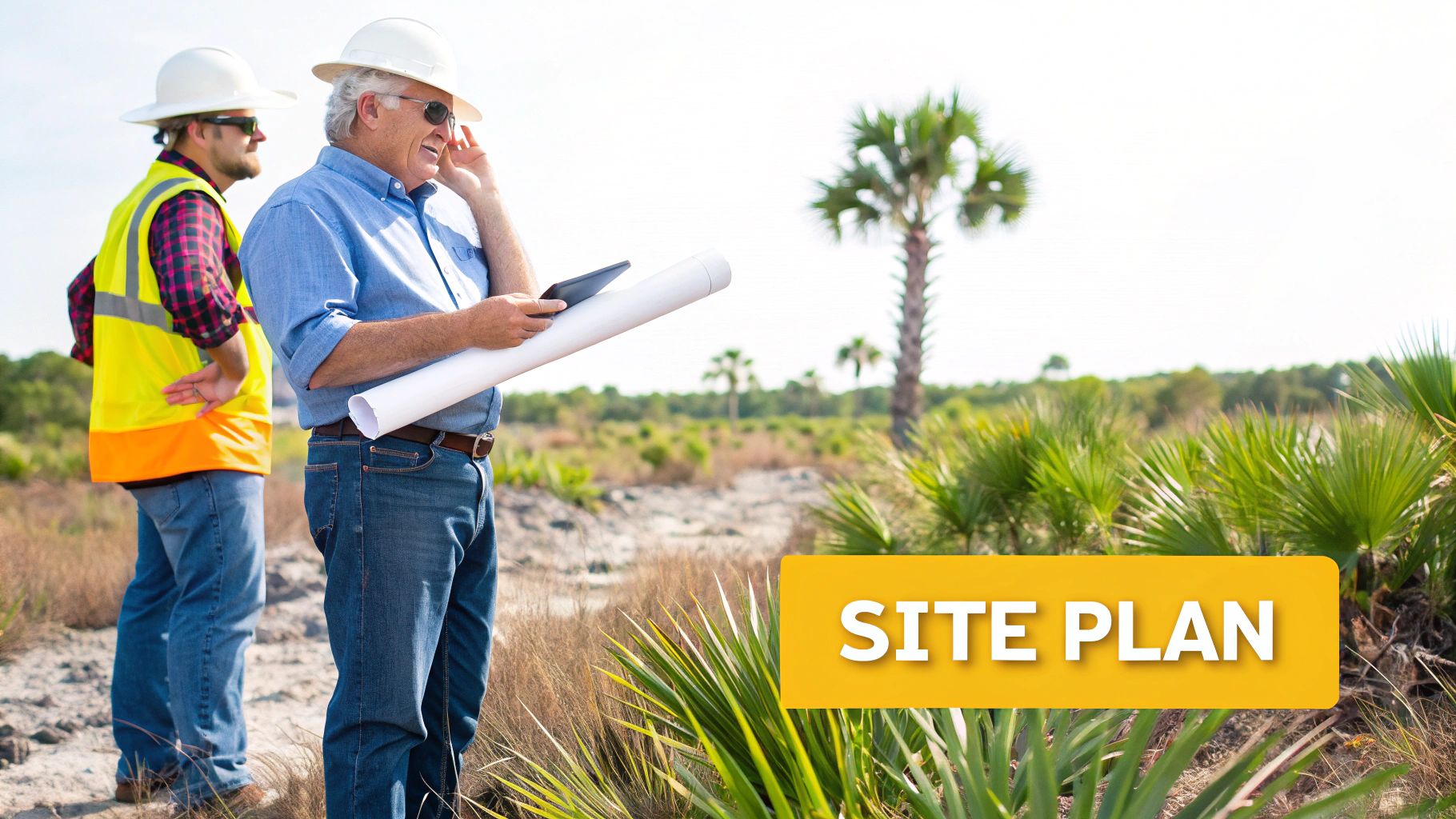
Starting a land clearing project in Central Florida is a lot more than just firing up a bulldozer and pushing brush around. Think of it as a strategic investment in the future of your property. That wild, tangled piece of land has potential, but turning it into a thriving farm requires a solid plan that respects our region’s unique environmental and logistical challenges.
Without a real blueprint, you're setting yourself up for expensive delays, potential environmental fines, and—worst of all—long-term damage to your most valuable asset: your soil.
This guide is your practical roadmap. We're cutting through the noise to give you a clear path forward, from the first time you walk the property to the final touches of soil prep.
Navigating Florida's Unique Challenges
Central Florida's landscape has a personality of its own, and it can throw some serious curveballs if you're not ready. Our sandy soils, for instance, are a dream to work with until they're not. Once you strip away the protective vegetation, they're incredibly vulnerable to erosion. One of our classic intense summer downpours can wash away your precious topsoil and nutrients, leaving you with less fertile ground.
And then there's the vegetation itself. We're talking about notoriously stubborn growth—thick stands of palmetto, dense undergrowth, and resilient hardwoods that require specialized equipment and know-how. Just pushing it all into a pile often creates new headaches, like inviting pests or giving invasive species a perfect place to regrow.
Here’s what you need to be thinking about:
Soil Type and Health: You have to know what you're working with. Understanding your soil's composition is key to picking clearing methods that don't wreck it and helps you plan for any amendments you'll need later.
Vegetation Density: What are you up against? The type and thickness of the growth will directly influence the equipment you need, your timeline, and your budget.
Regulatory Hurdles: Florida doesn't mess around with its regulations protecting wetlands and endangered species like the Gopher Tortoise. Missing a permit or ignoring a guideline can lead to stop-work orders and hefty fines.
Long-Term Goals: What's the end game? Whether you're planning for row crops, a new citrus grove, or a pasture for cattle, that goal shapes every decision you make along the way.
A well-planned land clearing project isn't an expense; it's the foundational investment in your farm's success. Skipping due diligence on permits or soil health can cost you far more in remediation and lost productivity down the road.
The Importance of a Strategic Approach
Jumping into a clearing project without a strategy is a recipe for disaster. A methodical approach ensures every step you take builds toward your agricultural goals while protecting the land. This means mapping out the entire process, from that initial site walk to the final soil stabilization measures.
It’s about understanding the pros and cons of different clearing methods. For example, should you go with forestry mulching or traditional root raking? Forestry mulching can be a game-changer here because it grinds up vegetation and incorporates that organic matter right back into the soil—a massive benefit for our sandy terrain.
This is where you start making those critical decisions that will set you up for a productive and sustainable farm.
Getting to Know Your Land: Permitting and Site Assessment
Before you even think about firing up the heavy machinery, the most important work happens on foot, with a notebook in hand. Successfully clearing land for agriculture in Florida starts with two things: a meticulous site assessment and a solid grasp of the state's complex environmental rules. I've seen it time and again—skipping this step is the fastest ticket to stop-work orders, steep fines, and a headache you don't want.
This isn't just about red tape. It's about smart planning. A good walkthrough shows you the real character of your property. It helps you see the challenges coming, protect the good stuff, and make a clearing plan that actually works for your farming goals and stays on the right side of the law.
Your Initial Walkthrough: Boots on the Ground
First thing's first: you need to know every acre of your property like the back of your hand. Grab a map, a notebook, and start walking. You're looking for the specific features that will shape your entire project, from where you can clear to the methods you're allowed to use.
Think of this as creating an inventory of your land's assets and liabilities. This isn't optional; it's what every serious person does before turning Florida land into a productive farm.
So, what are you looking for?
Wetlands or Low Spots: Keep an eye out for standing water, soil that feels spongy underfoot, or plants like cypress trees, cattails, and sawgrass. Remember, an area doesn't have to be wet year-round to be classified as a wetland, and these are heavily protected.
Signs of Protected Wildlife: Here in Central Florida, the Gopher Tortoise is a big one. Their distinct, half-moon-shaped burrows are an immediate red flag. If you see one, you need to stop and call a professional. Disturbing a tortoise or its burrow without a relocation permit from the Florida Fish and Wildlife Conservation Commission (FWC) can lead to some serious penalties.
The Lay of the Land: Pay attention to the slopes and natural drainage. Knowing how water moves across your property is key to preventing erosion and making sure your future fields don't turn into a swamp after the first big rain.
Let me be clear: ignoring a wetland or a protected species isn't just a simple mistake—it's a violation. The cost of fixing the damage and paying fines to agencies like the Florida Department of Environmental Protection (FDEP) can easily cost more than the entire clearing job itself.
Making Sense of the Permitting Maze
Once you’ve mapped out the sensitive spots on your land, it's time to look at permits. Here’s the single most important piece of advice I can give you: never assume your project is exempt. While some small-scale farm work might not need a permit, clearing a large tract of land almost always requires a green light from several agencies.
For instance, if your clearing plan touches a wetland, you’ll likely need an Environmental Resource Permit (ERP) from your local Water Management District—like the St. Johns River or South Florida Water Management Districts—and maybe from the FDEP, too. These applications are no joke; they require detailed site plans and a solid plan for mitigating any impact.
Don't Skip the Soil Test
Beyond the regulations, your site assessment needs to look at the very foundation of your future farm: the dirt itself. Just looking at the soil won't tell you what you need to know. A professional soil test gives you the hard data to figure out if the land can even grow what you want it to.
A soil test breaks down:
Nutrient Levels: It tells you if you're low on the big three—nitrogen, phosphorus, and potassium.
pH Balance: You'll find out if your soil is too acidic or alkaline for your crops.
Soil Makeup: It analyzes the blend of sand, silt, and clay, which dictates everything from drainage to how well roots can develop.
Imagine clearing 50 acres only to find out the soil is completely wrong for your high-value crop and needs thousands of dollars in amendments. A soil test is cheap insurance against a disaster like that. It guides your entire farming strategy, from fertilizer to crop choice, making sure your land clearing for agriculture investment actually pays off.
Choosing The Right Land Clearing Method
Once you've walked the property and have a handle on the permits, it's time to decide how you're actually going to clear the land. This isn't just about knocking down trees; it's a choice that directly impacts your budget, your timeline, and—most importantly—the future health of your soil. The right method for land clearing for agriculture is never a one-size-fits-all answer. It’s a strategic decision based on what you’re trying to grow and the unique character of your property.
Think about it this way. If you’re clearing a dense tangle of palmettos and scrub oak to create new pasture for your cattle, your priorities are probably speed and cost, leaving a surface that’s easy to manage. But if you’re prepping a former pine stand for a new citrus grove, you have to get every last stump and root out of the ground to prevent disease and give your new trees the best start. Each scenario demands a completely different playbook.
Making the wrong call here can set you back with problems like severe soil erosion or a relentless battle with regrowth. Let's break down the most common methods we see here in Central Florida so you can match the right technique to your vision.
Forestry Mulching: The Modern Approach
Forestry mulching has become the go-to for many Florida landowners, and it’s easy to see why. This method uses a single, powerful machine to cut, grind, and spread all the vegetation right back onto the ground in one clean pass. It’s incredibly efficient for tearing through the thick underbrush, palmettos, and small-to-medium trees that are so common around here.
But the real magic is what it does for the soil. Instead of piling up debris to be burned or hauled away, mulching returns all that organic matter to the earth. This fresh layer of mulch acts like a protective blanket over our sandy soils, helping them hold onto precious moisture, suppressing new weed growth, and slowly breaking down to enrich the topsoil with nutrients. It's a method that clears your land while kicking off the soil improvement process at the same time.
Key Takeaway: Forestry mulching is often the best choice for improving soil structure on sandy Florida terrain. It minimizes soil disturbance, which is crucial for preventing erosion, and jump-starts the nutrient cycle without the need for burning or hauling debris.
Traditional Clearing Methods: Dozer And Root Rake
The classic "push and pile" method is what many people picture when they think of land clearing. It involves using a bulldozer to clear the vegetation and a root rake to comb through the dirt, pulling up stumps and major root systems. This is the brute-force approach, and it’s effective when you need a completely clean slate with no underground obstacles. It's often the required method for projects like row crops or orchards where leftover roots could interfere with planting equipment.
However, this method comes with some serious downsides, especially for Florida's delicate ecosystems. It’s extremely disruptive, scraping away the most fertile layer of topsoil and leaving the ground bare and exposed. This makes your land incredibly vulnerable to our heavy rains and strong winds, which can easily strip away nutrients and create serious runoff problems.
Then there's the issue of the debris piles, often called "burn piles," which have to be managed. While some smaller-scale manual methods can be an option, as we cover in our guide on how to clear land without heavy equipment, large projects almost always require mechanical piling and careful disposal.
To help you weigh your options, here’s a quick comparison of the most common techniques for agricultural projects here in Central Florida.
Comparing Land Clearing Methods for Florida Agriculture
Method | Best For | Soil Impact | Cost | Speed |
|---|---|---|---|---|
Forestry Mulching | Pasture creation, general clearing, invasive species control where stumps can remain. | Low. Mulch layer protects soil, adds nutrients, and prevents erosion. | Moderate to High | Fast |
Dozer & Root Rake | Row crops, orchards, or construction prep needing a completely clear subsurface. | High. Strips topsoil, increases erosion risk, and compacts the ground. | High | Moderate to Fast |
Selective Clearing | Silvopasture, wildlife habitat improvement, preserving valuable mature trees. | Very Low. Minimal disturbance, targets only specific vegetation. | Moderate to High | Slower |
Controlled Burn | Pasture maintenance, undergrowth reduction in pine stands, prairie restoration. | Varies. Can add nutrients but risks soil sterilization if too hot. | Low (but requires professionals) | Very Fast |
As you can see, the "best" method really depends on the end goal. A dozer might be necessary for an orange grove, but it would be overkill and damaging for establishing a new cattle pasture where forestry mulching excels.
Selective Clearing For Targeted Results
Not every project means wiping the slate clean. Selective clearing, or thinning, is a much more surgical approach. The goal here is to remove specific unwanted trees and undergrowth while intentionally preserving desirable ones, like those beautiful mature live oaks that provide essential shade for livestock or act as a natural windbreak.
This method is ideal for:
Silvopasture systems, where you integrate trees and forage into a single, productive system for livestock.
Improving wildlife habitats by taking out invasive species and giving native vegetation room to thrive.
Preparing land for specialty crops, like coffee or certain herbs, that actually do better with partial shade.
Selective clearing is less about brute force and more about thoughtful stewardship of your land. It helps maintain the ecological balance of your property and can dramatically improve both its function and its beauty.
Controlled Burns: A Specialized Tool
Controlled burns, also known as prescribed fires, are a powerful and traditional land management tool. When done right, they are incredibly effective for reducing underbrush, controlling pests, and encouraging the growth of fire-adapted native grasses. A properly managed burn can clear large areas of light vegetation quickly and return nutrients to the soil.
But let me be clear: this is absolutely not a DIY job. The risks are enormous, and the process is heavily regulated by the state of Florida for good reason. You need permits, a professionally written burn plan, and perfect weather conditions to even consider it. For most agricultural clearing projects where you need to get rid of trees and stumps, a burn is more of a supplementary tool than a primary clearing method. It’s best used for maintaining existing pastures or managing pine forests, not for the heavy lifting of turning raw land into a farm.
This decision tree can help you visualize some of the first questions you'll need to answer in the clearing and permitting process.
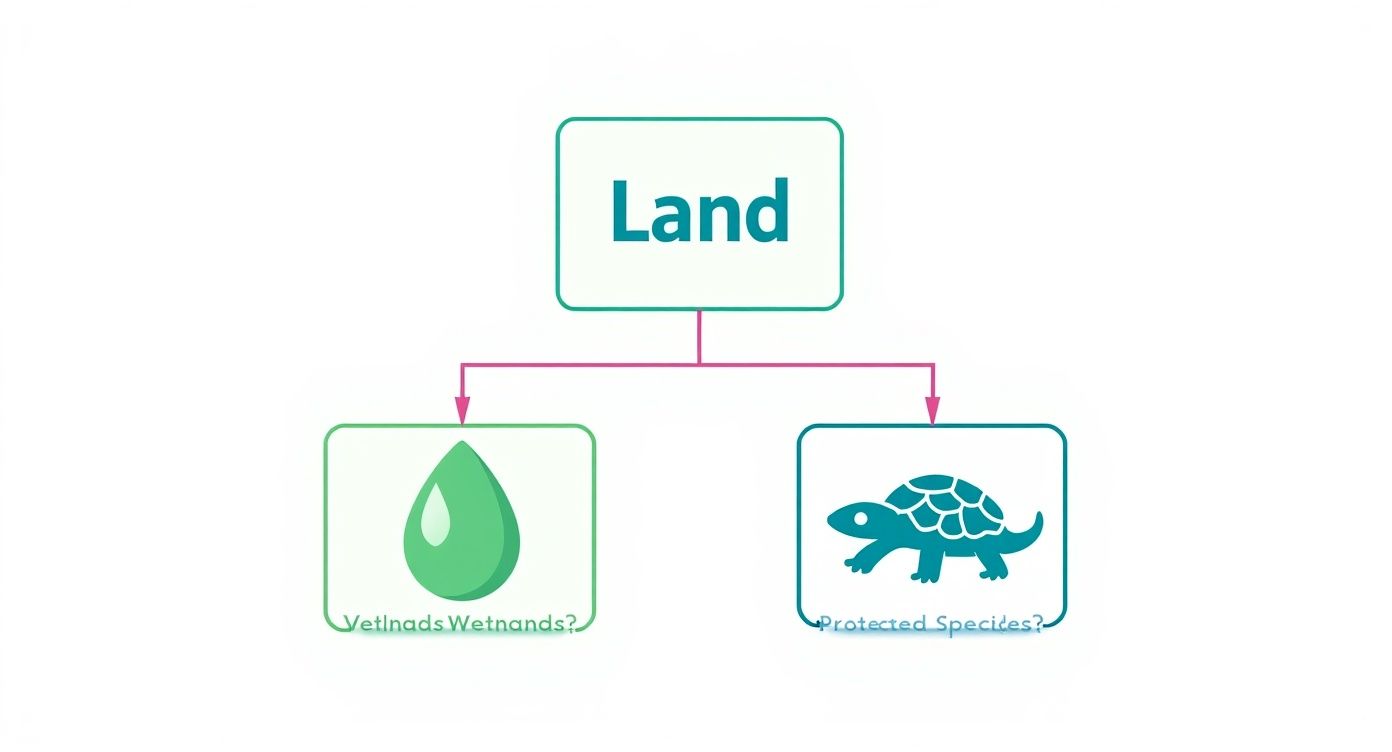
As the chart shows, the second you identify potential wetlands or protected species, your project is immediately guided down a specific regulatory path. It’s just one more reason why that initial site assessment is the most important step you’ll take.
Protecting Your Soil from Erosion
Once the heavy machinery parks and the dust settles, it’s tempting to think the hard work is done. But here in Central Florida, the next phase is just as critical: protecting your newly exposed soil.
Our sandy, loose soils are notoriously vulnerable. A single one of our famous torrential downpours can wash away your valuable topsoil—and your investment—in just a few hours.
This isn't just about preventing a muddy mess. Real erosion control is about preserving the very foundation of your farm's future. Bare soil quickly loses nutrients, struggles to hold water, and creates environmental headaches when it runs off into nearby waterways. Proper stabilization isn’t an added expense; it's a non-negotiable step in successful land clearing for agriculture.
Your First Line of Defense
Right after clearing, the main goal is to get that bare ground covered as fast as you can. The longer it’s exposed, the higher the risk. Thankfully, some simple, proactive measures can make a massive difference in holding everything together while you prep for planting.
Here are a few essential techniques we use all the time:
Silt Fences: These are temporary fabric barriers staked along the contours of your land, especially on the low side. They don’t block water but slow it down, allowing sediment to drop out instead of washing away. Think of them as a filter that keeps your soil on your property.
Diversion Swales: These are just shallow, strategically graded ditches that catch and redirect surface water. A well-placed swale can guide runoff away from vulnerable slopes and into a stable area, stopping destructive gullies before they even start.
Mulch and Cover Crops: If you went with forestry mulching, you're already ahead of the curve. That layer of organic material is fantastic for immediate erosion control. If not, spreading straw or planting a fast-growing cover crop like rye or clover will quickly establish a root system to hold the soil. You might want to learn more about unlocking the power of mulching for sustainable land management benefits.
Long-Term Soil Stabilization Strategies
While those temporary fixes are crucial, your long-term plan should focus on building a resilient, healthy soil structure that can handle Florida's weather. This means putting permanent systems in place to manage water and anchor the soil for good. The goal is to make your land self-sufficient in its fight against erosion.
Protecting your soil isn't just an environmental box to check—it's a direct investment in your bottom line. Every bit of topsoil lost is a loss of nutrients, water-holding capacity, and future crop yield.
This long-term mindset is vital. While the global conversation often focuses on large-scale deforestation for commodity production, responsible practices at the local level are what ensure sustainability. For context, agriculture-driven clearing accounts for nearly a third of global deforestation, with over 75% of this conversion in the US occurring in the South. You can discover more insights about these regional agricultural trends from the USDA Forest Service.
Building a Resilient Landscape
To build that resilience, think about more permanent installations. Terracing, for example, involves creating step-like platforms on steeper slopes. It’s a classic, highly effective method for farming hilly terrain because it dramatically slows down water flow.
You should also consider planting windbreaks—rows of trees or shrubs along the edges of your fields. They can significantly reduce wind erosion, another common headache for our fine, sandy soils once the protective tree cover is gone.
Hydroseeding is another powerful tool in the arsenal. This is where a slurry of seed, mulch, fertilizer, and water is sprayed over the cleared land. It’s an all-in-one application that kicks off rapid, uniform germination, creating a protective blanket of green in a fraction of the time of traditional seeding. For large, open areas, it’s one of the most efficient ways to achieve total stabilization and get your farm on the fast track to productivity.
Final Site Prep and Invasive Species Management
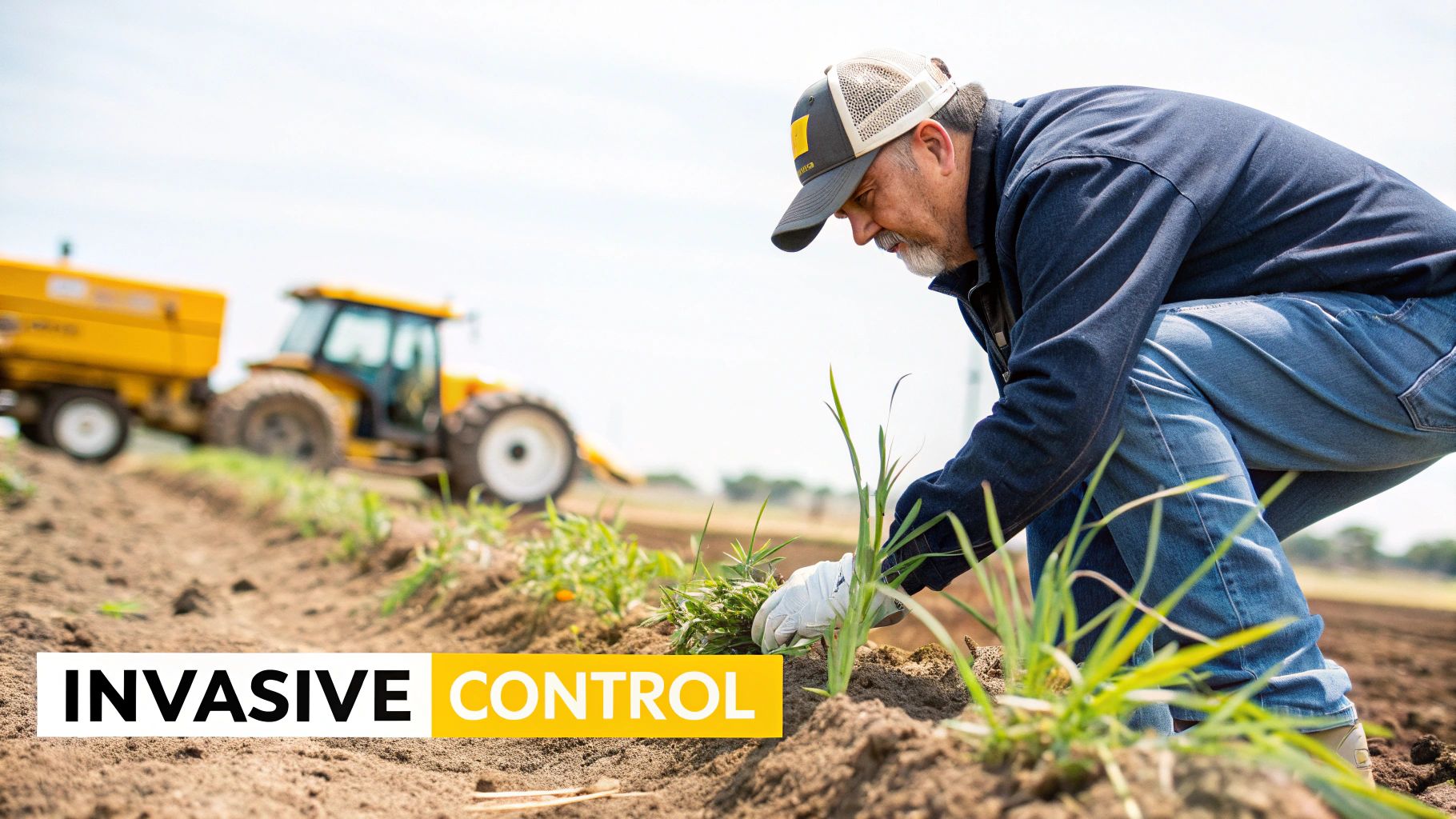
With the heavy lifting behind you, the land is finally starting to look like the farm you envisioned. But don't break out the seed just yet. The work you do now—the final site preparation—is what separates a thriving agricultural venture from one that's constantly battling poor growth and stubborn weeds.
This last stage of land clearing for agriculture is less about brute force and more about finesse. It’s all about creating the perfect seedbed for your future crops while launching a full-scale war on the invasive plants just waiting to take over that freshly cleared soil.
Identifying Florida’s Most Unwanted Invaders
Florida's warm, humid climate is a paradise for some of the planet's most aggressive invasive plants. The moment your land is cleared, these opportunists are the first to try and colonize the bare ground. Simply ignoring them isn't an option; they'll quickly outcompete your crops for water, sunlight, and nutrients.
Two of the worst offenders here in Central Florida are:
Brazilian Pepper (Schinus terebinthifolia): This nasty shrub forms dense thickets so thick you can't walk through them, choking out everything in its path. Birds spread its seeds everywhere, so it can pop up unexpectedly.
Cogongrass (Imperata cylindrica): Often called one of the world's worst weeds, Cogongrass spreads through a massive underground root system. It creates a dense, sharp-bladed mat that not only smothers native plants but is also highly flammable.
Keep an eye out for others like Old World climbing fern and Chinese tallow, too. You absolutely need a proactive plan to keep these invaders from wrecking all your hard work. For a closer look at these problem plants, check out our guide on how to remove invasive plants.
An Integrated Strategy for Weed Control
Getting rid of these invaders for good takes more than just a mower. You need an integrated approach that combines mechanical removal with a smart, targeted herbicide strategy. Just mowing them down often makes things worse, especially with something like Cogongrass, which will just resprout with a vengeance from its roots.
A professional strategy is like a one-two punch. First, we mechanically remove as much of the plant as we can. Then, we apply a specific, approved herbicide to the regrowth right when it's most vulnerable. This targeted approach uses minimal chemicals and is far more effective than just spraying everything. It’s a precise science, and getting it right means you won't be fighting the same battle again next season.
Don’t underestimate how resilient these invasive species are. A half-hearted removal effort is a wasted effort. A professional, integrated management plan is the most cost-effective solution in the long run, saving you years of frustration and lost productivity.
Creating the Ideal Seedbed
While you're tackling the invasive threat, the other critical job is getting the soil ready. The goal is to create a smooth, well-aerated seedbed to give your crops the best possible start. This usually involves a couple of key steps, guided by the soil test you did earlier.
Disking and Harrowing: These are tillage methods where we pull implements behind a tractor. Disking breaks up big clumps of soil and turns over any leftover debris. Harrowing comes next, creating a finer, smoother surface that’s perfect for planting.
Applying Amendments: This is where that initial soil test becomes worth its weight in gold. Based on its recommendations, now is the time to apply lime to adjust the pH or add nutrients like phosphorus or potassium to fix any deficiencies before you even think about planting.
This final prep work is what ensures good seed-to-soil contact, helps your crops germinate uniformly, and sets the stage for a healthy, productive harvest.
This kind of responsible land stewardship is more important than ever. While expanding agriculture is a reality, sustainable practices can make a huge difference. Globally, deforestation rates have thankfully slowed, but the world still lost about 10.9 million hectares of forest each year between 2015 and 2025 due to land clearance. Efforts in South America and Asia have helped reduce this number, showing just how much impact thoughtful management can have. You can dig into these global deforestation trends from the UN report.
When Professional Expertise Is Essential
These final stages are where professional experience truly pays off. A company like Palm State Clear Cut doesn't just bring the specialized equipment for disking and harrowing. We also have licensed technicians who know exactly which herbicides and application rates will work on Florida’s toughest invasive plants.
Bringing in a professional service ensures the job is done right, done safely, and complies with every environmental regulation. It’s that last, crucial investment to turn your cleared property into a fertile, productive, and manageable farm.
Your Top Agricultural Land Clearing Questions Answered
When you're looking at a piece of raw Florida land, ready to turn it into a productive farm or pasture, a lot of questions pop up. It’s only natural. From figuring out the budget to getting the timing right, getting straight answers upfront is key to moving forward without costly surprises. Let's dig into some of the most common questions we hear from landowners right here in Central Florida.
How Much Will Agricultural Land Clearing Cost in Florida?
This is always the first question, and the honest-to-goodness answer is: it really depends. The price can swing wildly based on what’s actually on your property. A parcel with scattered pines and light brush is a completely different ballgame than a dense jungle of stubborn palmettos and mature oaks.
Here’s a breakdown of what really drives the per-acre cost:
Vegetation Density: Just how thick is the growth? Clearing a tangled, overgrown mess simply takes more machine time and horsepower, and that's a direct hit to the budget.
Type of Trees: Big hardwoods and their deep, stubborn root systems are a much tougher fight than smaller pines or scrub brush.
Method of Choice: Forestry mulching often has a different price point than traditional dozer work, especially when you factor in the extra costs of hauling away or burning massive debris piles.
The Lay of the Land: Is your property flat and dry, or are you dealing with slopes and soggy spots? Tough terrain slows everything down, which means more hours on the clock.
As a ballpark, you can expect to see prices anywhere from $1,500 to over $5,000 per acre here in Central Florida. The only real way to nail down a number is to have a professional walk the land with you and give you a detailed quote based on what they see.
What Is the Best Time of Year to Clear Land?
Nailing the timing on your project can save you a surprising amount of money and prevent a ton of future headaches. Without a doubt, the best time to clear land in Florida is during our dry season, which generally runs from late fall through late spring—think November to May.
There are some serious advantages to working during these drier months. The ground is firm, so heavy equipment can move efficiently without getting stuck in the mud. This also means you get far less soil compaction, which is a big deal for future crop health. On top of that, clearing in the dry season sidesteps the massive erosion risk that comes from our heavy summer thunderstorms hitting bare soil.
Planning your land clearing for the dry season isn't just about making things easier; it's a strategic move. It protects your topsoil, keeps the job running smoothly, and almost always results in a lower final bill.
Do I Really Need a Permit to Clear My Land for a Farm?
In nearly every situation, the answer is yes. It's a common and very expensive mistake to assume you can just fire up the equipment without getting the green light from the right agencies. While some very minor agricultural activities might be exempt, any significant land clearing in Florida is going to require permits.
The specific permits you'll need will vary based on your property's location and the scale of your project. You will almost certainly need to talk to:
Your Local County: Every county has its own rulebook for land clearing, grading, and development.
Florida Water Management Districts: If your property touches or is even near wetlands, a permit from your district (like the St. Johns River WMD or South Florida WMD) is non-negotiable.
Florida Department of Environmental Protection (FDEP): Larger projects, or those with unique environmental factors, may also require FDEP involvement.
Whatever you do, don't start the work before you have approvals in hand. The fines for unpermitted clearing can be staggering, and you could even be forced to pay for expensive restoration work. Your safest bet is to work with an expert who knows the local regulatory maze inside and out.
Getting answers to these questions is the first step, but turning that overgrown property into productive agricultural land takes the right people and the right iron. At Palm State Clear Cut, this is exactly what we do. For a free, on-site quote and expert advice for your project, get in touch with us at https://palmstateclearcut.com.