
Finding Site Preparation Near Me A Florida Landowner's Guide
- Feb 1
- 18 min read
When you type "site preparation near me" into a search bar, you're really looking for peace of mind. You're searching for that crucial first step that ensures your construction or landscaping project starts on solid ground—literally. This process is all about transforming an overgrown, uneven, or messy plot into a clean, stable, and perfectly prepared canvas for what comes next. It’s the professional groundwork that prevents future headaches like poor drainage, foundation cracks, and soil erosion.
What Does Site Preparation Actually Involve?
Think of a professional chef getting their ingredients ready before cooking a big meal. Everything is washed, chopped, and organized so the final dish comes out perfect. Site preparation is the exact same idea for your land. It’s the methodical, upfront work that sets the stage for a successful build, protecting your investment from costly problems down the road. Skipping this step is like trying to build a house on a pile of rocks and weeds—you’re just asking for trouble.
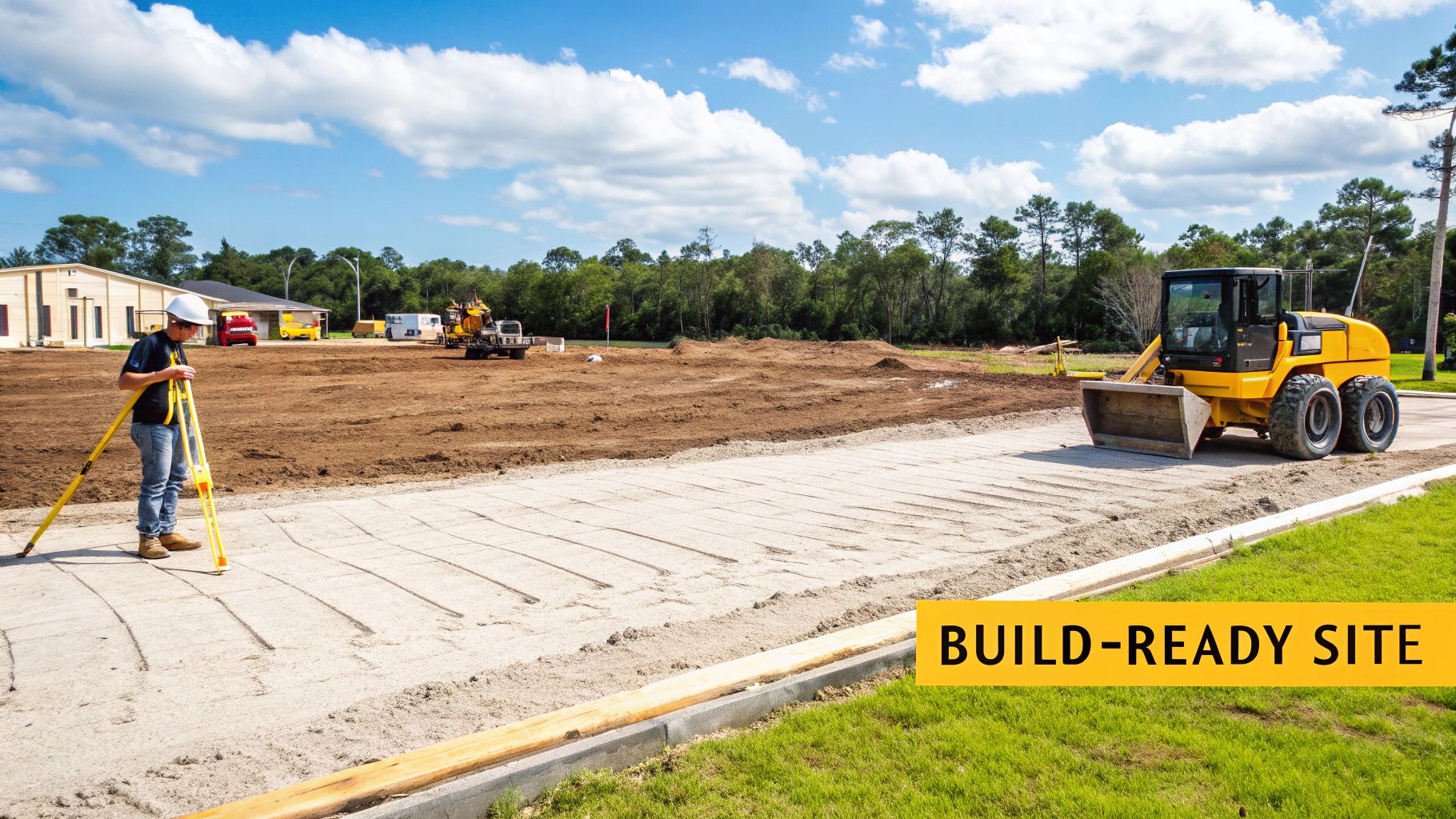
This foundational stage is so much more than just pushing dirt around with a bulldozer. Modern site prep uses specialized equipment and techniques to hit very specific goals, especially here in Central Florida with our unique sandy soils and torrential downpours.
Core Elements of Professional Site Prep
The end goal is simple: create a safe, stable, build-ready plot. This is usually done through a mix of services tailored to what your specific property needs. Each step tackles a different challenge, from thick vegetation to sloped terrain, ensuring the land is totally optimized for your project.
To help you get a clearer picture, here's a quick look at the key services that make up professional site preparation.
Essential Site Preparation Services Overview
This table breaks down the core services involved, what they do, and when they're most needed. It’s a great way to identify what your land might require for a successful project.
Service | What It Achieves | Ideal For |
|---|---|---|
Clearing & Mulching | Removes trees, dense brush, and undergrowth that get in the way of construction. Forestry mulching is a popular choice because it clears the land while turning vegetation into a nutrient-rich layer for the soil. | Overgrown lots, properties with dense vegetation, or preparing land for new pasture or construction pads. |
Stump & Debris Removal | Gets rid of stumps, large rocks, and old construction debris completely. Stump grinding is often used to pulverize stumps below the surface, removing tripping hazards and clearing the way for foundations. | Land with leftover trees from previous clearing, old farm properties, or sites with buried construction waste. |
Land Grading | This is maybe the most important step. Grading involves sculpting the terrain to create a level building pad and, crucially, to make sure water flows away from your future structures. This prevents flooding and water damage. | Any project involving a new foundation, driveway, or structure; properties with drainage issues or uneven ground. |
Understanding these core components helps you see how they all work together to create a perfectly prepared site.
A properly prepared site is the best insurance policy you can get against future structural failures. It's been shown that over 90% of foundation problems trace back to poor soil compaction and bad water drainage—both of which are solved by professional site preparation.
Why It Matters So Much in Central Florida
Around here, professional site prep isn't just a good idea; it's a flat-out necessity. Our sandy soil needs expert grading and compaction to create a stable base that won’t shift or wash away under a new foundation.
Even more important is managing our intense seasonal rainfall. A skilled contractor will grade your property to handle those heavy downpours, channeling water away from your home or building. When you search for "site preparation near me," what you're really looking for is a local expert who gets these challenges and knows how to deliver a truly build-ready property that can stand up to Florida's unique climate.
Exploring Your Land Clearing And Prep Options
Once you realize site prep is more than just pushing dirt around, the different services start to click. Each one is a specialized tool for a specific job, and knowing the difference helps you have a smarter conversation with a contractor. Think of it like a builder’s toolkit; you wouldn’t use a sledgehammer for finish work, and you shouldn't call in a bulldozer when forestry mulching is the right fit.
Let’s walk through the most common and effective land clearing options you'll find when searching for "site preparation near me." We'll break down what each service actually does, why you’d use it, and how it all comes together to create a perfectly prepared property.
Forestry Mulching: The Modern Clearing Method
Imagine clearing out a badly overgrown yard. The old way involved cutting everything down, piling it up, and then paying to haul it all away—a slow, messy, and expensive process. Forestry mulching is the modern answer. It’s a single-step solution that turns overgrown vegetation into a valuable resource, right on the spot.
A forestry mulcher uses a powerful, rotating drum armed with steel teeth to shred trees, brush, and undergrowth where they stand. It instantly turns all that vegetation into a natural, protective layer of mulch that blankets the soil. This approach is incredibly efficient and brings a ton of benefits over traditional clearing.
No Hauling or Burning: Unlike bulldozing, which leaves you with massive debris piles to get rid of, mulching recycles everything on-site.
Soil Health: That fresh layer of mulch is a game-changer. It helps the ground hold onto moisture, prevents erosion from our heavy Florida downpours, and slowly breaks down to feed the soil with nutrients.
Minimal Ground Disturbance: Mulchers are designed to tread lightly, causing far less soil compaction than heavy dozers. This keeps your valuable topsoil intact.
This eco-friendly method is quickly becoming the go-to for responsible land clearing. The demand for these machines tells the story. The market for forestry mulching equipment, valued at USD 561 million in 2025, is expected to jump to USD 771 million by 2031. This surge is driven by landowners who want faster, greener results. In many cases, these "3-in-1" machines can slash project timelines by as much as 60% compared to manual methods. You can learn more about the industry trends for these powerful machines and see the data for yourself.
Stump Grinding: For a Flawless Finish
After clearing trees, stumps are the last thing standing between you and a usable piece of land. You could try digging them out, but that often leaves behind giant craters, can damage the roots of nearby trees you want to keep, and creates a massive, heavy stump you now have to dispose of. Stump grinding is the smarter, more surgical approach.
A stump grinder is a specialized machine that basically chews the stump away, chip by chip, until it's several inches below ground level. The wood chips left behind can be spread as mulch or easily hauled away.
Think of it this way: pulling a stump is like major surgery that leaves a huge scar and requires a long recovery. Grinding, on the other hand, is like a minimally invasive procedure—it’s fast, precise, and leaves the area ready for whatever’s next with almost no collateral damage.
Land Grading: Sculpting for Success
If mulching clears the canvas, land grading is the art of shaping it for your masterpiece. This is arguably the most crucial step for any future construction. Grading is all about reshaping the land to create a solid, level base for a foundation (the "building pad") and ensuring the rest of the property has the right slope.
Why does slope matter so much? It all comes down to one critical thing: positive drainage. Proper grading makes rainwater flow predictably away from your home or building. In a state like Florida, where we can get several inches of rain in a single afternoon, expert grading isn't just nice to have—it's essential protection against pooling, flooding, and costly foundation damage.
Debris Hauling: For a Truly Clean Slate
Sometimes, your land is cluttered with more than just trees and brush. You might be dealing with old construction waste, piles of rock and concrete, or trees that came down in the last hurricane. While mulching takes care of the organic stuff, debris hauling is the service that gets rid of everything else.
A professional crew brings in the right equipment, like skid steers and dump trailers, to load up and properly dispose of any inorganic junk. This is the final cleanup that ensures your site is truly a clean slate—safe, clear, and free of hidden obstacles before construction can begin.
Erosion Control: Protecting Your Investment
Finally, after your land is cleared and graded, you have to protect that hard work. Freshly graded soil is vulnerable, especially on slopes. Erosion control is all about putting measures in place to keep your soil where it belongs.
Some of the most common erosion control methods you’ll see are:
Silt Fences: These temporary fabric barriers are placed to catch sediment while letting water pass through, preventing runoff from polluting nearby waterways.
Hydroseeding: A quick and effective way to get vegetation growing. A slurry of seed, mulch, and fertilizer is sprayed onto the soil to establish a root system that will lock it in place.
Erosion Control Blankets: For very vulnerable spots, these biodegradable mats are rolled out to shield the soil from wind and rain while new grass takes root.
These protective steps are the final insurance policy on your project, making sure all the effort put into site preparation isn't washed away by the next big storm.
Navigating The Site Preparation Process From Start To Finish
Taking an overgrown, wild piece of land and turning it into a clean slate ready for construction can feel like a massive undertaking. But when you work with an experienced crew, the process isn't chaotic at all. It’s a methodical, step-by-step journey.
Knowing these steps ahead of time demystifies the whole thing, showing you exactly what to expect from the first phone call to the final handshake. Think of it like a chef preparing a complex meal—every ingredient is prepped and every step is timed perfectly to get the best result. The same idea applies here, making sure nothing is left to chance.
The Initial Consultation And Site Assessment
Every project starts with a simple conversation. When you first call about site preparation near me, we’ll talk about your vision. Are you planning a new home, clearing land for a pasture, or just putting in a driveway? This initial chat sets the stage for the most crucial part: the on-site assessment.
When an expert walks your property, they're doing more than just looking at trees—they're reading the land itself. They're sizing up:
Vegetation Density: How thick is the brush? What kinds of trees are we dealing with, and how big are they?
Topography: Is the ground flat, or does it have slopes and hills? We’re looking for low spots where water will inevitably pool.
Soil Type: Is the soil sandy, clay-based, or full of rocks? This detail dictates the equipment we bring and how we approach grading.
Access Points: How can we get heavy machinery onto your property safely and without causing damage?
Obstacles: Are there old sheds, utility lines, or protected trees we need to work around?
This hands-on inspection is what separates a vague guess from an accurate, detailed quote. It’s how we build a realistic game plan tailored specifically to your land.
Permitting And Compliance
This is the behind-the-scenes work that’s easy to overlook but is absolutely essential, especially here in Central Florida. Before a single engine starts, we have to make sure the project is fully compliant with all local and county regulations. This means checking for things like wetland boundaries, protected species like grand live oaks, and any specific clearing restrictions in your zoning area.
A seasoned local contractor already knows the rulebook for your county, whether it’s Polk, Brevard, or Orange. They’ll handle the paperwork and coordinate with the right agencies, saving you from the headaches of potential fines or stop-work orders. It’s all about peace of mind, knowing your project is above board from day one.
The Execution Phase: Getting The Sequence Right
With permits in hand and a solid plan, the real work begins. The secret to an efficient job site is tackling everything in the right order. Jumping the gun can create more work and drive up costs.
Clearing and Mulching: First, we attack the bulk of the vegetation. Forestry mulching is usually the first wave, instantly turning overgrown brush and small trees into a layer of protective mulch.
Stump Grinding and Debris Removal: With the main overgrowth gone, we go back through and grind down any remaining stumps. This is also when we haul away any non-organic debris that was hiding in the brush.
Rough and Final Grading: Now that the site is clear, it’s time to shape the land. Rough grading carves out the basic contours and drainage paths. Then, final grading smooths everything out, creating a perfect, level pad for your foundation.
This infographic gives a great visual of how raw land is systematically transformed into a prepared site.
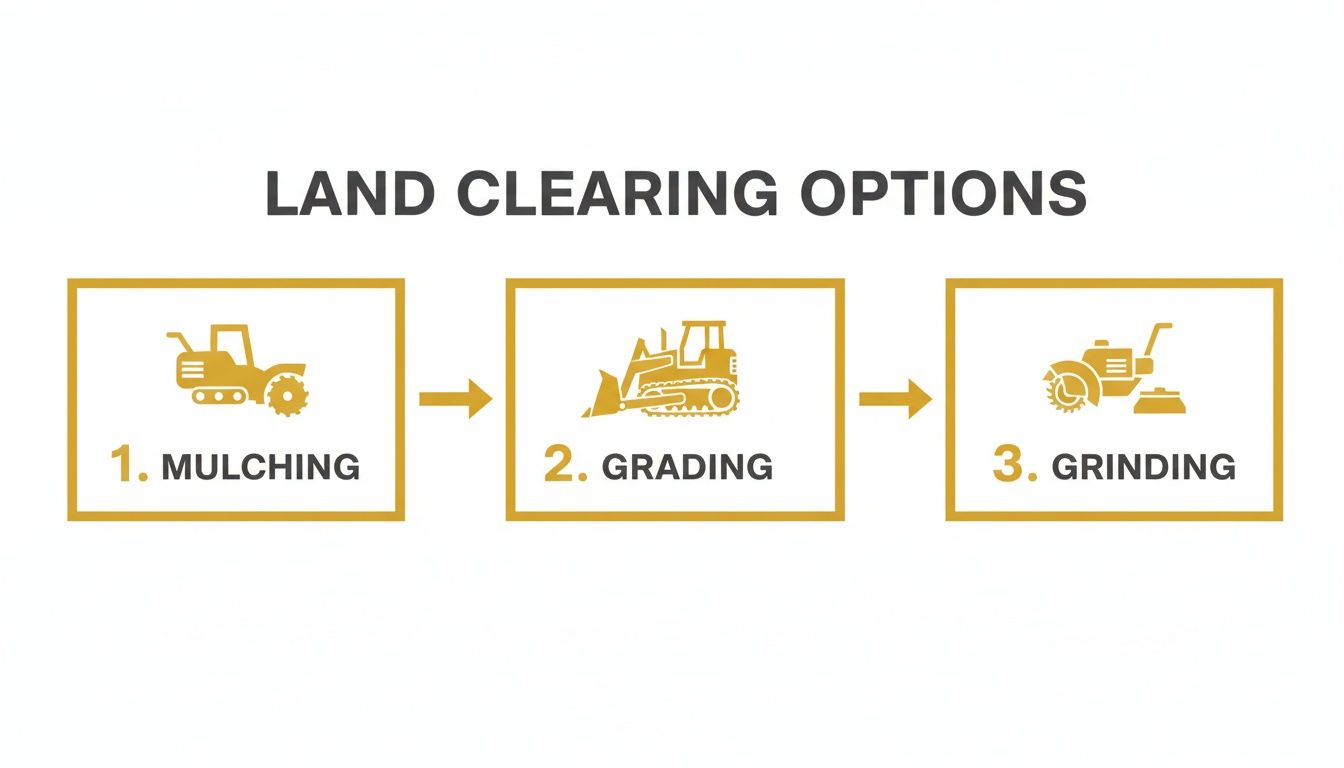
As the graphic shows, each task sets the stage for the next, moving from heavy-duty clearing to the fine-tuning of grading. As you learn to master land preparation for building with key steps, you'll see why this sequence is so critical for getting a top-notch result without wasting time or money.
Final Walkthrough And Approval
A job isn’t done just because the equipment is gone. The project is finished when you’re 100% satisfied. The very last step is a final walkthrough with your project manager. This is your chance to inspect the work, confirm every goal was met, and get answers to any last-minute questions.
A professional contractor's job isn't done when the machines are loaded back on the trailer. It’s done when the client walks the property and agrees that the result perfectly matches the vision discussed in the very first meeting.
This final check ensures your property drains correctly, all the debris is gone, and the site is truly ready for whatever comes next. It’s the satisfying handshake that turns a complex project into a simple, successful outcome.
Solving Central Florida's Unique Land Challenges
Site preparation isn’t a one-size-fits-all service you can just order up. What works for the rocky hills of Tennessee is a world away from what’s needed for the flat, sandy terrain right here in Central Florida. When you search for "site preparation near me," you're really looking for a team that gets our state’s specific environmental quirks.
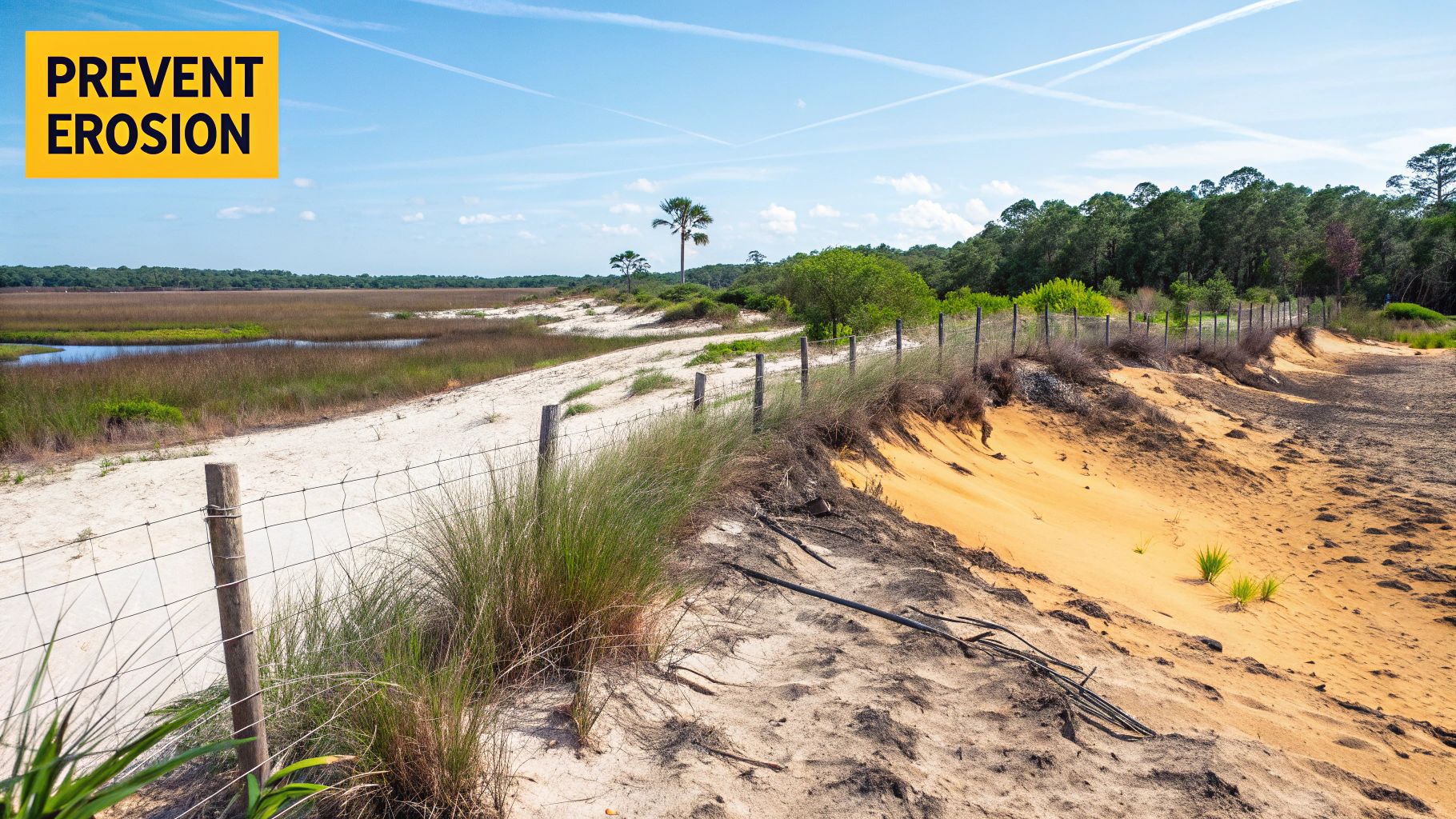
Here, the ground beneath our feet presents a unique set of challenges that demand local experience. From our sugar-sand soils to aggressive invasive plants and the ever-present threat of wildfires, clearing land in this region is a specialized skill. A contractor without this hands-on knowledge can easily create more problems than they solve.
Taming Florida's Sandy Soils
Central Florida's soil is famously sandy. While it's great for growing citrus, it’s terrible at staying put. It’s loose, shifts easily, and is highly prone to erosion from our intense thunderstorms. Without the right approach, a freshly graded lot can start washing away with the very first big downpour.
This is exactly why professional soil stabilization and compaction are so critical. A knowledgeable crew understands how to grade the land not just for drainage but also for stability. They compact the soil in layers to create a firm foundation that can support a structure without sinking or shifting over time.
The Battle Against Invasive Species
Central Florida is a hotspot for some of the most aggressive invasive plants in the country. Species like Brazilian Pepper and Cogongrass aren't just annoying weeds; they're ecological bullies. They choke out native vegetation, degrade wildlife habitats, and can quickly overrun an entire property.
Just cutting them down is a temporary fix at best. These plants are incredibly resilient and will grow back with a vengeance if you don't tackle them correctly. Effective site prep requires a real strategy, including:
Complete Removal: Using methods like forestry mulching to shred the plants and their root systems.
Targeted Treatments: Applying specific herbicides to prevent regrowth without harming the native plants you want to keep.
Long-Term Monitoring: Making sure these aggressive invaders don’t re-establish themselves on your newly cleared land.
Dealing with invasive species is less like weeding a garden and more like a strategic military campaign. You need the right tools and a clear plan of attack, or you'll be fighting the same battle again next season.
Firebreaks and Wildfire Mitigation
As you move into the more rural areas of counties like Osceola, Polk, and Volusia, wildfire becomes a serious concern. Our dry season turns the beautiful natural landscape into a tinderbox. Creating firebreaks—cleared strips of land that act as a barrier to stop or slow a wildfire—is an essential part of responsible land ownership.
A professional site preparation service knows how to strategically clear vegetation around your home or property perimeter. This defensive space doesn't just protect your investment; it gives firefighters a safe area to work from if a wildfire threatens your property. It’s a proactive step that can make all the difference.
Navigating Local Regulations
Finally, Central Florida is a patchwork of environmental regulations designed to protect our natural resources. Many counties have strict rules about removing certain trees (especially heritage oaks), clearing land near wetlands, and managing stormwater runoff. Trying to navigate this web of permits and ordinances can be a massive headache for landowners.
A local contractor who works in your area every day will already be familiar with these rules. They know what permits are needed, how to work with local inspectors, and how to keep your project compliant, saving you from costly fines and delays. For a deeper dive into stabilizing our unique soils, you can learn what soil stabilization is and how it protects your land [https://www.palmstateclearcut.com/post/what-is-soil-stabilization-and-how-does-it-protect-your-land] in our detailed guide.
Decoding The Costs Of Professional Site Preparation
It’s the first question on every landowner's mind: "So, how much is this going to cost?" When you search for "site preparation near me," you quickly discover there's no simple price tag. The final cost is a direct reflection of the work it takes to get your specific piece of land from where it is now to a perfectly prepped, build-ready asset.
Think of it this way: you can’t get a flat price for a custom home without the builder seeing the blueprints. The same principle applies here. A small, flat lot with just a bit of brush will always be less expensive to prepare than a huge, sloped property choked with mature trees and buried stumps. That's why getting a detailed, on-site quote isn't just a good idea—it's essential.
Primary Factors That Influence Your Quote
A professional estimate isn't just a number pulled out of thin air. It’s a breakdown of the specific variables that shape your project, dictating the equipment, time, and manpower required. Understanding these moving parts helps you see exactly what you're paying for.
Here are the main cost drivers we look at:
Property Size and Accessibility: It’s simple math—a larger acreage takes more time and fuel. But don't forget access. If getting heavy machinery to a remote site is a challenge, that can add to the labor and transport costs.
Vegetation Density: Clearing out some light underbrush is a world away from tackling a dense forest of old-growth oaks. The type, size, and sheer thickness of the vegetation are huge factors in the final price.
Terrain Complexity: A flat, even parcel is a straightforward job. But add in steep slopes, rocky soil, or swampy low-lying areas, and the project gets more complex. These features often require specialized grading and serious erosion control work.
Specific Services Needed: A simple forestry mulching job is on the lower end of the cost spectrum. A full-scope project that also calls for stump grinding, significant grading, and hauling away debris will naturally be a larger investment.
As you start to plan your project, thinking about how you can reduce construction costs from the very beginning is key to keeping your budget on track.
The table below breaks down how these factors can swing your project's final cost. It's a great way to visualize what might be influencing the quote you receive.
How Project Details Shape Your Final Cost
Cost Factor | Lower-Cost Scenario | Higher-Cost Scenario |
|---|---|---|
Acreage | A small residential lot (less than 1 acre). | A large multi-acre commercial or agricultural plot. |
Accessibility | Easy access from a paved road. | Remote property with narrow, unpaved, or winding access roads. |
Vegetation | Light brush, small saplings, and grass. | Dense, mature hardwood trees and thick, tangled undergrowth. |
Terrain | Flat, level ground with stable, dry soil. | Steep slopes, rocky patches, or wetlands requiring special equipment. |
Services | Forestry mulching only. | Full-scope: mulching, stump grinding, grading, and debris hauling. |
Debris | All vegetation mulched on-site. | Large amounts of non-mulchable debris (rocks, old concrete) to haul away. |
As you can see, every property tells a different story, and the cost will always be tailored to the unique chapter we’re working on.
Why Modern Equipment Matters For Your Budget
The type of machinery a contractor brings to your site has a massive impact on your final bill. The global land clearing equipment market, valued at $3,863.5 million in 2025, is growing for a reason: modern machines work faster, safer, and more efficiently.
Here in Central Florida, using advanced equipment can cut clearing time by up to 50% compared to older, clunkier methods. That efficiency translates directly into savings for you. A lower hourly rate doesn’t mean much if the job takes twice as long to complete.
A lowball bid should always raise a red flag. It often means a contractor is cutting corners—maybe they’re skipping permits, using outdated and inefficient equipment, or planning to improperly dispose of the debris. A fair estimate reflects the true cost of doing the job right the first time, which is always cheaper than paying to fix someone else’s mistakes later.
Investing in professional site preparation isn't just another line item on your budget; it's a foundational investment in your property's future. It guarantees a stable base for whatever you build, prevents costly drainage nightmares down the road, and creates the clean slate your vision deserves.
How To Choose The Right Site Preparation Contractor
You’ve done the hard work of planning your project—now comes the most critical step. Finding the right partner to prepare your site isn't just about getting the cheapest quote. It’s about hiring a professional who understands your vision, protects your investment, and delivers a clean slate for whatever comes next.
Making the right choice here is the difference between a project that kicks off smoothly and one that’s bogged down by headaches and surprise costs. Think of a great contractor as your guide, the one who knows the terrain and makes sure every step is handled correctly from the start.

To hire with confidence, you need to ask the right questions. Treat it like a job interview, because that's exactly what it is. You're the hiring manager, and your goal is to make sure they have the right experience, equipment, and professionalism for the job.
Essential Questions For Every Contractor
Before you even think about signing a contract, have this checklist ready. Any reputable pro will have solid, confident answers for every single one. If you get vague replies or brush-offs, consider it a major red flag.
"Are you licensed and insured?" This is non-negotiable. Don't just take their word for it; ask to see proof of general liability and workers' compensation insurance. This is what protects you if an accident happens on your property.
"Can you give me a few recent, local references?" Talking to past clients is the single best way to get a real feel for a contractor's work ethic and the quality they deliver.
"What equipment do you plan to use for my specific project?" This question tells you more than you think. A true expert won't just list machines; they'll explain why they're choosing a forestry mulcher to enrich your soil or a compact skid steer to navigate tight areas without causing damage.
"How will you handle debris and disposal?" Get the plan upfront. Will they mulch everything on-site, or are they hauling it away? You need to ensure their method is clean, efficient, and compliant with local rules.
Verifying Local Expertise
General experience is good, but local experience is what truly matters. A contractor who spends most of their time working in another state won't have a clue about Central Florida's unique sandy soils, our specific invasive species, or the labyrinth of county permitting rules.
A contractor's deep familiarity with your county’s permitting office can be the difference between a project that starts on time and one that’s stuck in bureaucratic limbo for weeks. This local knowledge is one of the most valuable assets they bring to the job.
You need a team that knows the regulations in Polk, Brevard, or Orange County like the back of their hand. Ask them about similar projects they’ve completed nearby. That local proof is your best guarantee of a smooth, successful, and compliant site prep job.
For a complete guide, explore our tips on how to choose the right site prep pro [https://www.palmstateclearcut.com/post/site-preparation-contractors-near-me-how-to-choose-the-right-pro] and get ready to hire with total confidence.
Of course. Here is the rewritten section, crafted to sound completely human-written and match the expert, natural style of the provided examples.
Common Questions About Site Preparation
When you're looking at a piece of land, a lot of questions pop up. It doesn't matter if you're a first-time property owner or a seasoned builder—getting straight answers is key to moving forward with confidence. Here are some of the most frequent questions we get from folks looking for "site preparation near me."
How Long Does It Take To Prep A One-Acre Lot?
This is the classic "it depends" question, but I can give you a solid idea. For a pretty standard one-acre residential lot with some brush and small trees, the main work of forestry mulching and some basic grading can often be wrapped up in just 1-3 days.
But let's say that same acre is packed with dense, mature trees that need to be taken down, the stumps ground out, and then we have to do some serious grading to fix drainage problems. That project could easily stretch to a week or even longer. The only way to know for sure is to have a professional walk the property with you.
Is Forestry Mulching Better Than Using A Bulldozer?
For almost any residential or agricultural property here in Florida, the answer is a resounding yes. Forestry mulching is a modern approach that actually improves your land. It shreds all the vegetation right where it stands and turns it into a nutrient-rich layer of mulch that protects the soil.
This natural blanket of mulch is a lifesaver against our heavy Florida rains, preventing erosion and helping the ground hold onto moisture. A bulldozer, on the other hand, just scrapes off and compacts that precious topsoil, creating a hard, barren surface where water just runs right off. Mulching is faster, more efficient, and saves you the headache and cost of burn permits or hauling off debris. It’s simply the smarter way to clear land sustainably.
"Forestry mulching isn't just about clearing land; it's about improving it. You're recycling the existing biomass to create a healthier, more stable foundation for whatever comes next, which is a significant advantage over the destructive nature of traditional bulldozing."
Will I Need A Permit For Land Clearing?
This is a big one, and the answer comes down to your specific location and what exactly you’re doing. If you're just clearing out some light underbrush and a few saplings on your own property, you probably won't need a permit.
However, the game changes the moment your project involves any of these things. You can bet you'll need permits if you're doing:
Significant Tree Removal: Especially if you’re dealing with protected species like our beautiful live oaks.
Major Grading: Anytime you change how water flows across the land.
Work Near Wetlands: Anything close to a conservation area or body of water is a definite trigger.
Every county in Central Florida has its own playbook. A good local contractor will know these rules inside and out and can handle the entire permitting process for you. This ensures your project stays above board from day one.
Ready to get answers tailored to your specific property? The team at Palm State Clear Cut has the local expertise and modern equipment to handle any land clearing challenge in Central Florida. Contact us today for a free, on-site consultation at https://palmstateclearcut.com.


Comments