
A Landowner's Guide to Hiring Forestry Mulching Contractors in Central Florida
- Feb 14
- 17 min read
Forestry mulching contractors use a single machine to cut, grind, and turn overgrown vegetation into a layer of beneficial mulch, instantly transforming a tangled mess into clean, usable space. It’s a far more efficient and environmentally friendly approach than traditional land clearing, as it leaves a protective, nutrient-rich blanket on the soil. For anyone looking to prepare a homesite, manage farmland, or create vital firebreaks in Central Florida, this method is a true game-changer.
Why Forestry Mulching Is a Smarter Choice for Florida Land
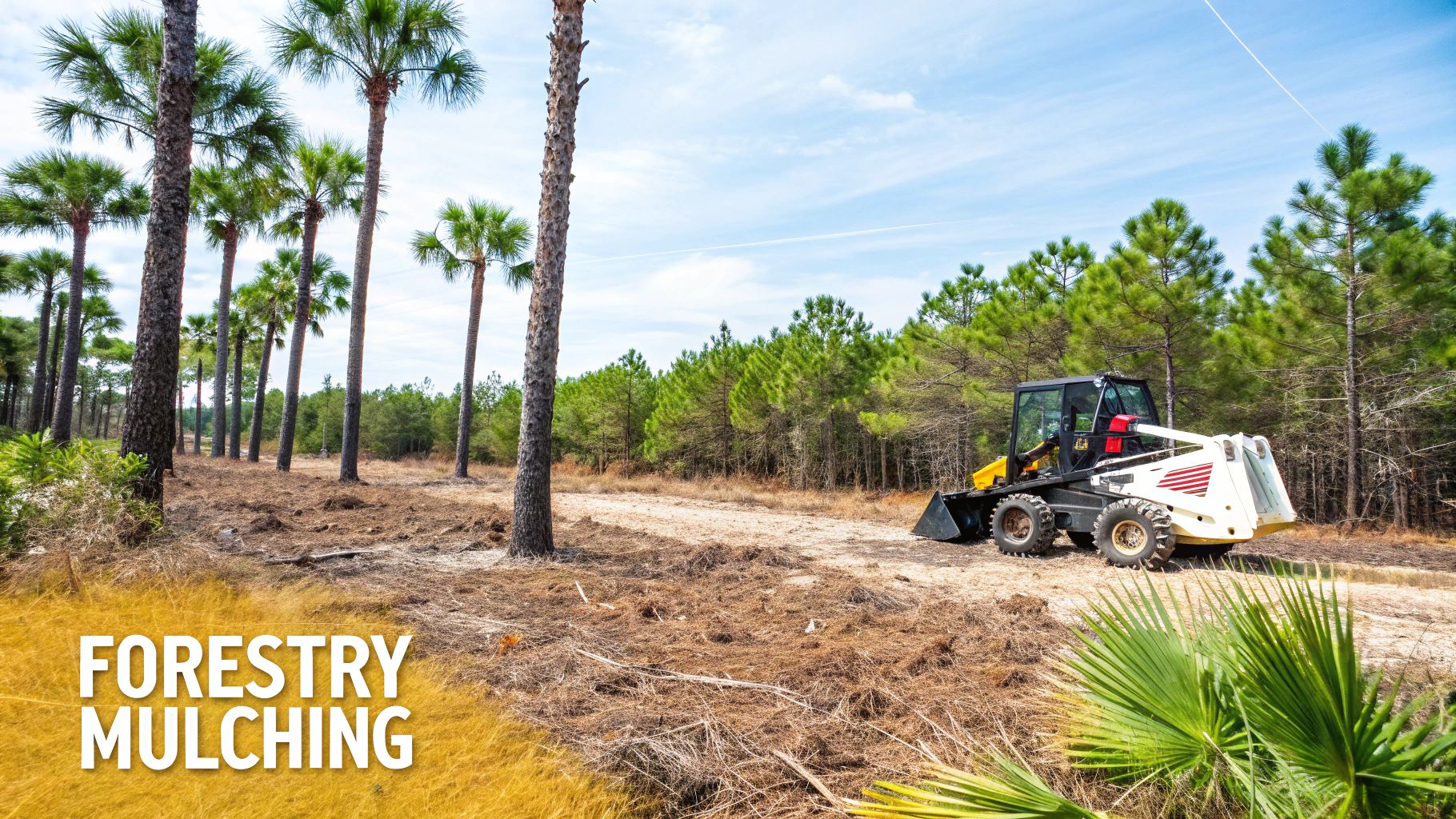
If you've ever battled an overgrown lot in Central Florida, you get it. The combination of intense sun and heavy rains means aggressive vegetation like palmettos, Brazilian Pepper, and scrub pines can completely take over in what feels like a single season.
In the past, clearing this dense growth meant calling in the heavy-hitters—bulldozers and excavators—for a messy, disruptive, and frankly, destructive process. This old-school approach involved uprooting everything, creating massive piles of debris that had to be burned or hauled away at a huge expense. It left the soil bare, scarred, and vulnerable.
For a state like ours, with its sandy soil and frequent downpours, that’s a recipe for serious soil erosion.
Forestry mulching offers a completely different, much smarter solution. A professional contractor operates one specialized machine that moves through the property, grinding up trees, brush, and undergrowth right where they stand. The result is a layer of organic mulch spread evenly across the ground.
The Mulch Advantage Over Traditional Methods
The difference is immediate and profound. Instead of tearing up the land, forestry mulching is a restorative process. The benefits are especially critical for landowners in counties like Volusia, Brevard, and Osceola, who are in a constant fight against aggressive vegetation and challenging soil conditions.
Here’s a practical look at how forestry mulching stacks up against old-school land clearing.
Forestry Mulching Vs Traditional Land Clearing
Feature | Forestry Mulching | Traditional Methods (Bulldozing & Burning) |
|---|---|---|
Debris | No piles. Everything becomes mulch. | Huge piles of debris to burn or haul away. |
Soil Impact | Protects topsoil and prevents erosion. | Strips topsoil, causing severe erosion risk. |
Permits | Often requires minimal to no permits. | Often requires burn permits and hauling permits. |
Cost | Typically lower overall project cost. | High costs for machinery, hauling, and disposal. |
Soil Health | Enriches soil with organic matter. | Depletes soil nutrients and leaves it barren. |
Timeline | Fast. A single machine does it all. | Slow. Multiple steps and machines are needed. |
As you can see, mulching isn't just a different method; it's a better one for our local environment. It eliminates the need for costly hauling or risky burning, protects the soil, and actually improves its health over time.
This shift toward more sustainable practices isn't just a local trend, either. The demand for efficient, eco-friendly land clearing is surging worldwide. The global forestry mulching machine market is projected to hit $2.5 billion by 2025, growing at a steady 7% annually. This growth is driven by the clear benefits; mulching can cut erosion risks by up to 90% and provides a much healthier foundation for whatever you plan to do with your land next.
Key Takeaway: Forestry mulching isn't just about clearing land; it’s about improving it. You're turning a liability—overgrown vegetation—into an asset that protects and nourishes your soil.
When Is Forestry Mulching the Right Call?
Hiring forestry mulching contractors is the ideal solution for a huge range of Central Florida land management needs. It provides a clean, fast, and responsible way to prepare a property for its next chapter, whether that's building a new home, creating pasture for livestock, or simply making the land safer and more accessible.
To dive deeper into the specifics of the process, you can check out our detailed guide on what forestry mulching is. It’s an investment that pays dividends in soil health, reduced maintenance, and ultimately, enhanced property value.
Decoding the True Cost of Your Forestry Mulching Project
Anyone thinking about forestry mulching asks the same question first: "What's the price per acre?" It’s a fair starting point, but the real answer is a lot more involved than a simple number. A professional quote isn't just a figure pulled from a hat; it's a careful calculation based on your property's unique challenges and what you want to achieve.
The cost isn't just about size. Think about it: a flat, one-acre lot in Seminole County with just some light brush is a world away from a one-acre wetland parcel in Osceola County that's choked with dense Brazilian Pepper and has no road access. The final price tag is always a blend of several key variables.
Key Factors That Shape Your Quote
Every piece of land in Central Florida has its own personality, and these traits directly impact the time, effort, and machinery needed for the job. Any reputable contractor will want to walk your property and assess these factors before giving you a price.
Vegetation Density and Type: Are you dealing with light underbrush and a few palmettos, or is it a jungle of hardwoods and invasive vines? Denser, tougher vegetation simply takes more time and machine power to chew through.
Tree Size and Material: Grinding up small saplings is a quick job. Mulching mature, 6-inch diameter pine trees? That’s a different story. The size and type of trees on the lot dictate the intensity of the work.
Terrain and Ground Conditions: A flat, dry pasture is a dream scenario. But in places like Lake County, you often run into steep slopes, soft sandy soil, or swampy, wet areas. These conditions slow everything down and require a much higher level of operator skill.
Property Accessibility: Can a large machine and trailer get to the work site easily? Narrow gates, long winding driveways, or no clear entry point at all adds time for just getting set up.
Hidden Obstacles: This is a big one. Old fencing, chunks of concrete, or scrap metal hidden in the undergrowth can destroy expensive mulching equipment. Finding and clearing these hazards is a crucial, time-consuming step that protects both the machine and the project timeline.
To nail down these variables, experienced contractors often use specialized tools to make sure their estimates are on the mark. Using professional landscaping and construction takeoff software helps create accurate bids and avoid surprise costs down the road.
Pricing Models: Hourly vs. Fixed Price
It helps to understand how contractors structure their pricing so you can pick the best fit for your project. You'll typically run into two common models.
An hourly rate often makes the most sense for smaller, less predictable jobs where the scope might shift. This is perfect for clearing a tangled fenceline or a small, debris-filled corner of your property.
On the other hand, a fixed-price quote is ideal for larger, well-defined projects, like clearing a 5-acre home site. It gives you a firm budget from the start, so there are no surprises.
A trustworthy contractor will walk your property with you and explain exactly which model they recommend and why. They should be able to justify their approach based on your land's specific conditions.
The industry data backs up the value here. Forestry mulching is now a $500 million global market and is projected to grow at an impressive 8% rate. Here in the U.S., it has completely changed the game for site prep. Traditional clearing methods can cost $3,000-$5,000 per acre and cause serious erosion. Mulching drops that cost to $1,500-$2,500 per acre, all while recycling the debris into a natural mulch that can cut future weed control by up to 60%.
The Hidden Cost of Inaction
Finally, you have to consider the cost of not doing anything. An overgrown property is more than just an eyesore—it’s a fire hazard, a haven for pests, and a liability that drags down your land's value. Waiting only allows the growth to get denser, making the eventual clearing job that much harder and more expensive.
Investing in professional mulching isn't just an expense. It's a strategic move to reclaim your land, protect it, and enhance its usability and worth. For a deeper dive into what goes into a professional quote, check out our guide on understanding forestry mulching cost. It gives you even more insight into making a smart financial decision for your property.
A Smart Checklist For Vetting Forestry Mulching Contractors
Choosing the right team is the single most important decision you'll make for your land clearing project. The difference between a true professional and a low-bid amateur can mean a pristine, ready-to-use property versus a landscape riddled with soil damage and potential safety liabilities.
This checklist goes beyond the basics. I'm going to give you specific, actionable questions to ask and red flags to watch for when you're talking to forestry mulching contractors.
First Things First: Credentials And Experience
Before you even think about price, your first step is to confirm you’re dealing with a legitimate, experienced business. A true pro will have their paperwork ready and won't hesitate to share it.
Start with these must-haves:
Business Licensing: Ask for their local and state business license numbers. This is a simple gut check to see if they're a registered company, not just some guy with a machine.
Proof of Insurance: This is absolutely non-negotiable. You need to see current certificates for both General Liability and Workers' Compensation insurance. If you skip this, any accident on your property—from a damaged fence to an injured worker—could become your financial nightmare.
Local Experience: Ask them about their work specifically in Central Florida. A contractor who knows the difference between Brevard County's sandy soil and Polk County's dense palmetto thickets will be far more effective than someone from out of town.
It's also a good idea to familiarize yourself with the standard General Contractor Insurance Requirements they should carry. Knowing what to look for empowers you to ask the right questions and ensures you're fully protected.
Ask Pointed Questions About Their Equipment
The machine makes the mulch, and not all equipment is created equal. A contractor’s investment in their fleet says a lot about their commitment to quality and efficiency.
Ask them directly, "What specific machine will you be using on my property?" A professional will tell you the make and model, like a high-flow skid steer with a dedicated mulching head. This matters because the right machine, often on tracks, minimizes ground pressure and prevents the soil compaction that heavy, wheeled equipment can cause.
There's a reason the forestry equipment market is exploding. By 2026, it's projected to hit $17 billion globally. Mulching carriers alone are expected to grow from $1.70 billion in 2025 to $3.2 billion by 2035. This boom fuels innovation, resulting in more powerful, efficient machines that get the job done right and protect your land in the process.
Pro Tip: Ask when their equipment was last serviced. A well-maintained machine is less likely to break down, preventing delays that could throw your entire project off schedule.
Scrutinize Their Process And Portfolio
How a contractor operates reveals their level of professionalism. They should be able to walk you through their entire approach, from the initial site visit to the final walk-through. A vague plan is a major red flag.
Here's what to look for:
Insist on a Site Visit: A quote given over the phone without ever seeing your land is just a guess. A reputable contractor will always want to walk the property to assess the terrain, vegetation density, and any potential hazards.
Get Local References: Don’t just ask if they have references—ask for names and numbers of recent clients in your area. Talking to a landowner who had a similar project done is the best way to gauge a contractor's reliability and the quality of their work.
Review Before-and-After Photos: A picture is worth a thousand words. Ask to see a portfolio of their completed projects. This gives you visual proof of their capabilities and shows you the kind of finish you can expect.
To make this easier, here’s a quick-reference table with questions you should ask every potential contractor. Pay close attention not just to what they say, but how they say it.
Contractor Vetting Questions and What to Listen For
Question to Ask | Green Flag Answer | Red Flag Answer |
|---|---|---|
"Can I see your current business license and certificates of insurance?" | "Of course, I can email them to you this afternoon. We carry $2 million in general liability and full workers' comp." | "Yeah, we're covered." (Without offering proof) or "We don't need that for a job this size." |
"What specific machine do you plan to use on my property?" | "For your sandy soil and palmettos, we'll use our Cat 299D3 with a Denis Cimaf head. It's a tracked machine, so it won't compact your soil." | "A big one." or "Our Bobcat." (Doesn't specify type or suitability) |
"Have you completed any similar jobs in this area recently? Can I speak to a reference?" | "Absolutely. We just finished 5 acres over in Geneva last month. I'll get you John's number, just let me check with him first." | "We're really busy, I don't have any off the top of my head." or "Our clients prefer not to be contacted." |
"What's your process for protecting existing trees or structures I want to keep?" | "We'll walk the property with you and mark everything you want saved with high-visibility flagging tape. My operator is very precise." | "We'll just be careful." or "We'll try to work around it." |
Seeing these answers in black and white makes the right choice pretty clear, doesn't it? A professional will have confident, specific answers.
This decision tree shows how project factors like vegetation density, terrain difficulty, and site access directly influence the final cost.
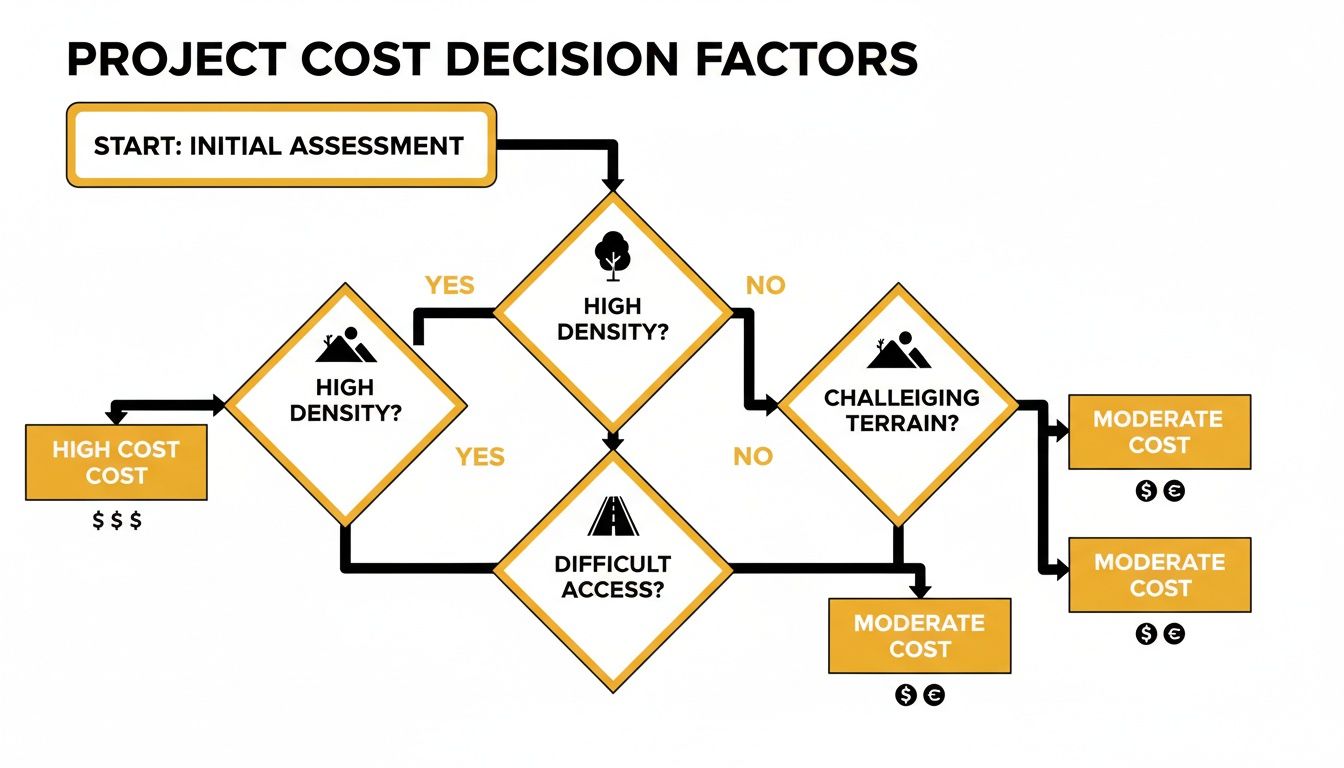
As you can see, a simple "per-acre" price is often misleading. The real quote depends on the unique challenges your property presents.
In the end, trust your gut. A contractor who communicates clearly, answers your questions confidently, and provides a detailed, written estimate is likely a professional you can count on. For more tips on finding the right pro, check out our guide on how to choose the right site preparation contractors near you. Taking these extra steps ensures you partner with someone who will protect and enhance your valuable land.
Navigating Central Florida Land Clearing Permits and Regulations
One of the biggest headaches for landowners is figuring out the world of permits. It’s confusing, and the rules aren't always crystal clear. The good news? Many straightforward forestry mulching jobs don’t need one.
But here’s where people get into trouble: assuming you're always in the clear is a risky gamble, especially in Florida, where environmental protections are taken seriously.
The need for a permit usually isn't about the mulching itself. It’s about what you’re mulching and where you’re doing it. Certain situations are automatic red flags for local authorities, and ignoring them can lead to some painful fines and stop-work orders that bring your project to a screeching halt.
An experienced mulching contractor is your best first call. They’ve seen it all and can usually spot potential permit triggers during that first walk-through. At the end of the day, though, the legal responsibility falls on you, the landowner, to make sure everything is above board.
When a Permit Is Almost Always Required
Rules can differ a bit from county to county—whether you’re in Orange, Seminole, or Brevard—but some things are almost universal triggers for the permitting office. If your project touches on any of these, you need to be making phone calls long before the first machine shows up.
Common red flags include:
Working Near Wetlands: Central Florida is crisscrossed with sensitive wetlands. If your land backs up to a swamp, marsh, or designated conservation area, there are strict buffers you can’t touch. Any work within that protected zone is a guaranteed permit situation.
Impacting Protected Tree Species: You can't just take down any tree you want. Florida has protections for species like mature Live Oaks and Bald Cypress. To remove or even significantly impact one, you’ll need a permit to prove you’re mitigating the impact. Fines for illegal removal are steep.
Clearing on Designated Conservation Land: If your property is part of a conservation easement or has specific environmental overlays on the zoning map, your hands are tied. Any clearing will be heavily restricted and require special permission.
Large-Scale Clearing for Development: This one’s a no-brainer. If you’re clearing multiple acres to prep for new construction, you’re well into site development territory and will absolutely need a permit from your local city or county.
A great contractor doesn’t get the permit for you, but they are a crucial partner. They provide the expertise and documentation you need to make your application smooth and successful, ensuring the work is done right and by the book.
How to Verify Your Project's Requirements
Don't guess. Seriously, just don't. The only way to get a definitive answer is to go straight to the source: your local government.
A quick call or visit to your county's Planning and Zoning Department or Environmental Protection Division is the smartest move you can make.
Have your property’s parcel ID number handy when you call. Tell them you're planning a forestry mulching project and need to know if you'll need a permit. They can look up your specific property and flag any restrictions, easements, or protected zones you need to be aware of.
Beyond Permits: Responsible Land Stewardship
Even when the county gives you the green light without a permit, that doesn't mean it's a free-for-all. A top-tier contractor thinks like a land steward, not just a machine operator. They’re your partner in doing what’s right for the land.
For instance, they might suggest holding off on the work for a few weeks to avoid disturbing the nesting season for a protected species like the Gopher Tortoise. A true pro also knows how to selectively thin out vegetation, which does more than just clear space—it actually improves the health of the trees you leave behind, creating a stronger, more resilient landscape.
This kind of proactive, thoughtful approach is what separates the best forestry mulching contractors from the rest. They get that the goal isn't just to clear land. It's to do it in a way that respects Central Florida’s unique ecology and sets your property up for a healthy future.
From Job Day to Long-Term Land Maintenance: What to Expect
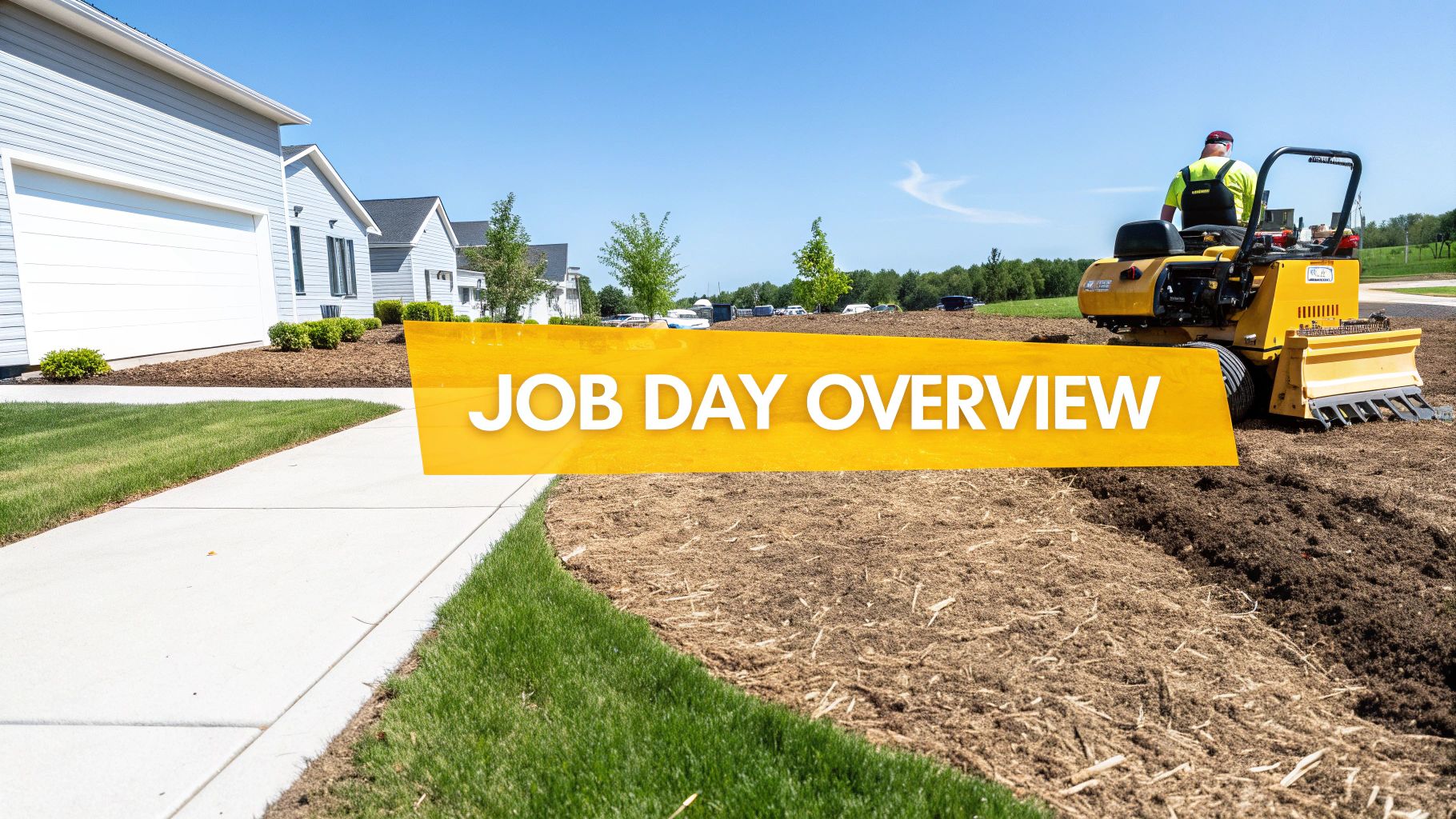
After you've vetted your contractor and signed the paperwork, the real fun begins—the day the land gets transformed. Knowing what to expect on job day and in the months afterward is key to a smooth project and getting the most out of your investment. A professional operation is so much more than just a machine grinding up brush; it’s a careful, strategic process from the moment they arrive until the last bit of mulch is settled.
The day shouldn't start with the roar of an engine. It should start with a final walk-through. Your contractor should meet you on-site to go over the scope of work one last time. This is your chance to point out that specific tree you want to save or remind them of delicate areas, like a septic tank or drain field, that need a wide berth.
Once everyone is on the same page, safety takes over. The crew will set up a clear safety zone, often with cones or tape. Those mulching heads are incredibly powerful and can throw debris a surprising distance, so keeping people, pets, and vehicles well out of the way is non-negotiable.
The Mulching Process and What a "Finished" Job Looks Like
You’ll get to watch as the operator methodically carves through dense walls of vegetation, turning it all into a fresh blanket of mulch. It’s a surprisingly precise art form. A skilled operator can selectively thin out trees, clear a perfectly straight fence line, or work around your prized mature oaks without so much as scratching the bark.
The immediate result is nothing short of dramatic. Land that was an impassable jungle is suddenly open, clean, and walkable. But what does a "finished" job really look like? That all depends on your goals, something your contractor should have clarified with you from the very beginning.
For a Future Home Site: Here, the goal is typically a fine, consistent layer of mulch. The operator might make multiple passes to grind the material down small, leaving a smooth surface that’s almost ready for final grading and pouring a foundation.
For a Firebreak or Trail: The finish can be a bit rougher. The focus is on removing the fuel load and creating a clear path, so some larger pieces of wood mixed into the mulch are perfectly fine. They even help with erosion control.
For Pasture Reclamation: The operator will concentrate on cutting everything flush to the ground to give grass the best shot at growing back. The mulch layer will be left thin, allowing sunlight to hit the soil and encourage new forage to sprout.
Key Insight: A freshly mulched property should look clean but not sterile. That layer of organic material left behind is the whole point. It shields your topsoil from Florida’s intense sun and torrential rains, suppresses the first wave of weeds, and slowly breaks down to feed the soil.
Shifting Gears to Long-Term Land Health
The work isn't finished when the machine gets loaded back onto the trailer. In fact, for the long-term health of your property, the most important phase is just starting. Without a follow-up plan, the same aggressive vegetation you just paid good money to remove will absolutely try to stage a comeback.
This is especially true here in Central Florida, where invasive species are a constant battle. Plants like Brazilian Pepper and Caesarweed are notoriously stubborn and can resprout right from their root systems, even after being mulched. Just clearing the land once is like hitting the pause button; you need a real strategy to hit "stop."
This is where a post-mulching vegetation management plan is absolutely essential. The best forestry mulching contractors don't just clear your land; they help you figure out how to keep it clear.
Creating a Sustainable Vegetation Management Plan
Your long-term plan needs to be proactive, not reactive. If you wait until your property is a jungle again, you’re right back where you started. A forward-thinking contractor will offer solutions tailored to your specific piece of land and how you plan to use it.
These solutions usually involve a mix of different approaches:
Keep an Eye on It: For the first few months, make a habit of walking the property regularly to spot any regrowth. Catching invasive sprouts when they're small and weak is infinitely easier and cheaper than tackling them once they’re established.
Get Targeted: For the really tough stuff like Brazilian Pepper, a targeted and precise herbicide application on new sprouts is often the most effective long-term fix. This isn’t about blanketing the property in chemicals—it’s a careful, surgical approach to eliminate the problem plant without harming the good stuff around it.
Encourage Good Growth: Nature hates a vacuum. If you don’t give desirable plants a chance to grow, the undesirables will happily take over. Seeding the area with native grasses or ground cover can help create a healthy, stable ecosystem that naturally outcompetes the invasive species.
By working with your contractor to develop this follow-up plan, you’re not just buying a one-time service. You’re making a smart investment in the sustainable, long-term health and usability of your property, ensuring it stays an asset for years to come.
Common Questions We Hear About Forestry Mulching in Florida
Even after we've walked through the whole process, a few specific questions always seem to pop up. We get it. This is a big investment in your property, and you want to be 100% confident before you pull the trigger. Here are some straight-up answers to the most common things we're asked by landowners all over Central Florida.
How Long Does It Take for the Mulch to Decompose?
In Florida's warm, humid climate, nature doesn't mess around. That fine layer of mulch from ground-up brush and smaller trees will usually break down quite a bit within just 6 to 12 months. The whole time, it’s slowly feeding valuable organic matter back into our often-sandy soil.
Now, if we're talking bigger wood chips from hardwoods like oak, those might hang around a little longer, maybe a year or two before they're completely gone. It all comes down to the moisture in the ground and what kind of plants we cleared. This slow-release fertilizer effect is one of the biggest unsung benefits of mulching.
Can You Do Forestry Mulching in the Rain?
Our machines can handle a light drizzle, no problem. But when one of those classic Florida downpours hits, any professional forestry mulching contractor is going to hit pause. There are two really important reasons for this.
First, it’s all about safety. Wet, muddy ground turns into a slip-and-slide for heavy machinery, and that's a risk no operator should take on your property. Second, we're trying to protect your land. Running a heavy machine over saturated soil causes deep ruts and compaction, which is the exact opposite of what mulching is supposed to do. A good contractor will always reschedule to get a safe, top-quality result.
The bottom line is this: a professional crew cares more about the long-term health of your land than about rushing to finish a job in bad weather. Waiting a day for things to dry out is always the right call.
Does Forestry Mulching Get Rid of Stumps Completely?
This is a great question because it really gets to the core of what mulching is designed for. Standard forestry mulching grinds trees and stumps down until they're flush with the ground, or even an inch or so below it. It leaves the root system right where it is, under the soil.
And that's on purpose. Those roots are fantastic at holding the soil together and preventing erosion. What you're left with is a smooth, walkable surface that’s ready for new trails, pasture management, or just making your property look a whole lot better.
However, if your plan is to pour a concrete slab for a foundation or a driveway, you'll need a different approach. For that kind of work, you’ll need a separate service like stump grinding to pulverize the stump and its main roots well below the surface. Your contractor can help you figure out the best game plan for your specific goals.
Is Mulching Good for Getting Rid of Invasive Species?
Absolutely. Forestry mulching is a knockout first punch against nasty invasive plants like Brazilian Pepper. The mulcher instantly wipes out all the growth above the ground, gets rid of the seed source, and puts a massive amount of stress on the root system. It's the fastest way to take back your land.
But—and this is a big "but"—for aggressive plants, mulching is just step one. Those stubborn invaders will try to resprout from their roots. That’s why having a solid follow-up plan is so crucial. Experienced contractors can offer a vegetation management plan, which might include targeted follow-up treatments to make sure those invasives are gone for good. It's all about protecting your investment and keeping your land clear long-term.
Ready to see what your property can become? The team at Palm State Clear Cut has the expertise and the right equipment to get your project done efficiently and responsibly. Contact us today for a free, no-obligation quote and let's get started on reclaiming your land.

Comments