You can’t just stick a mulcher on any old loader and call it a day, especially not in the demanding woodlands we see here in Florida. An ASV forestry skid steer isn’t just a beefed-up loader; it’s a completely different beast, engineered from the tracks up specifically for the punishing work of clearing dense forests.
Think of it this way: you wouldn’t take a family sedan to race in the Baja 1000. Sure, they both have an engine and four wheels, but only the race truck is built to survive that kind of brutal, unforgiving terrain. That’s the difference we’re talking about here.
What Makes an ASV a True Forestry Machine
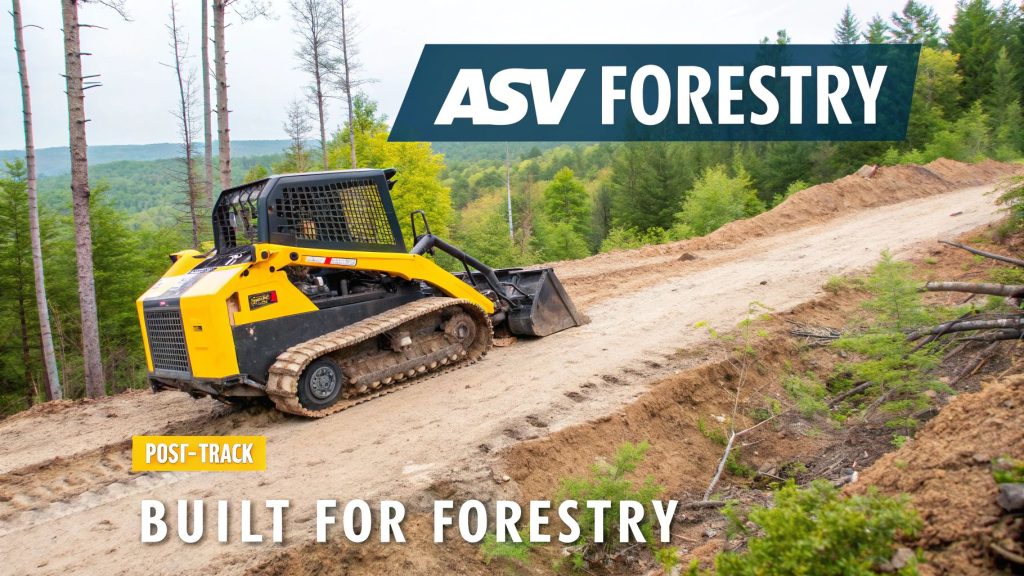
Try to take a standard landscaping loader into thick Florida brush, and you’ll spend most of your day getting it unstuck, waiting for it to cool down, or fixing what just broke. An ASV forestry machine is built to avoid all that because every single part was chosen with the woods in mind.
The real secret sauce is ASV’s signature Posi-Track system. Most compact track loaders have a rigid, unforgiving undercarriage. The Posi-Track, however, uses a flexible, all-rubber track that rides on dozens of bogie wheels. It’s more like the suspension on a high-end off-road vehicle, letting the tracks mold to the shape of the ground instead of fighting against it.
The Undercarriage Advantage
This unique undercarriage design gives us two massive advantages out in the field. First, the machine gets incredible traction, whether we’re dealing with sand, mud, or steep hills. Second, it spreads the machine’s weight out so evenly that it has ridiculously low ground pressure. It essentially “floats” over soft ground where other machines would dig ruts and get bogged down, which is a huge deal for minimizing soil damage.
A typical skid steer can press down with over 8 pounds per square inch (PSI). The ASV RT-135 Forestry model? It puts down as little as 4.4 PSI. That’s less pressure than the average person’s footstep, which means we can clear land without wrecking the ground and damaging the root systems of keeper trees.
Engineered for Extreme Conditions
Beyond the game-changing tracks, a genuine ASV forestry skid steer is basically a tank. It’s packed with specialized features you just won’t find on standard models, all designed to keep it running hard all day, every day.
You’ll find a whole suite of integrated components built for the job:
- Heavy-Duty Guarding: A steel cage surrounds the operator and protects everything that matters—lights, hydraulic hoses, the engine—from falling branches and flying debris. It’s non-negotiable protection.
- High-Capacity Cooling Systems: Running a mulcher full-tilt creates a staggering amount of heat. ASV forestry models come with oversized radiators and advanced cooling systems that keep the machine from overheating, even in the middle of a Florida summer.
- High-Flow Hydraulics: These forestry attachments are thirsty for hydraulic power. The machine’s hydraulic system is built to deliver the massive flow and pressure needed to run a mulcher at its absolute peak performance, hour after hour, without putting a strain on the engine.
What Makes an ASV Forestry Skid Steer Tick?
To really get why an ASV forestry skid steer is such a beast in tough environments, you have to look under the hood—or in this case, under the frame. These aren’t just bullet points on a sales brochure; they’re thoughtfully engineered systems designed to work together, delivering raw power and agility when you need it most. Every piece of this machine is a direct answer to a real-world problem you face when clearing dense woodland.
The secret sauce is the Posi-Track undercarriage. Forget the rigid, back-breaking undercarriages you find on a lot of other track loaders. ASV uses a flexible, all-rubber track that rides on a whole series of pivoting bogie wheels. This design lets the track literally mold itself to the ground, so it can crawl over logs, rocks, and uneven terrain with incredible stability.
This unique setup gives the operator a much smoother ride, which is a lifesaver on those long, grueling days. But more importantly, it keeps the tracks glued to the ground. That constant contact means you get superior traction in the mud, sand, and steep slopes where other machines would just spin out.
Powering the Business End of the Machine
Next up is the machine’s hydraulic system, and this is where the real muscle comes from. A forestry mulcher is one of the most power-hungry attachments you can run, and a standard-flow hydraulic system just can’t cut it. ASV forestry machines are armed with a high-flow hydraulic system specifically built to deliver a massive, continuous flow of power.
Think of it like a high-pressure fire hose versus a garden hose. The high-flow system shoves an enormous volume of hydraulic fluid to the attachment. This keeps the mulching head spinning at its peak speed without getting bogged down in thick brush, letting you clear land faster and more efficiently. If you want to dive deeper into other types of equipment, check out our guide to underbrush clearing machines.
Here’s a quick look at the range of track loaders ASV offers, which really shows the spectrum of power and size they have available.
You can see that models like the RT-135F are specifically labeled as “Forestry” machines. They’re the heavyweights, purpose-built with the highest horsepower and hydraulic output for serious clearing work.
Built Tough Enough for the Woods
Finally, there are two features that are absolutely non-negotiable for safety and survival out in the field: the cooling system and the protective guarding.
- Advanced Cooling: Running a mulcher all day long generates a staggering amount of heat. ASV forestry models come with oversized, heavy-duty cooling systems designed to keep the machine from overheating, even during the most intense jobs in the middle of a Florida summer.
- Comprehensive Guarding: These machines are armored up. From a reinforced polycarbonate door that can stop a projectile to steel plating that shields hydraulic lines and engine parts, every weak point is covered. This isn’t an add-on; it’s baked into the design to keep the operator safe and the machine running.
The global market for skid steer loaders hit roughly USD 9.7 billion in 2023, and forestry applications are a huge part of that growth. It just goes to show that the industry recognizes the need for specialized workhorses like the ASV forestry skid steer. You can dig into more stats on the skid steer market’s growth over at Allied Market Research.
Unlocking Versatility with Forestry Skid Steer Attachments
An ASV forestry skid steer is the powerhouse of any land clearing operation, but the attachments are what get the job done. Think of the machine as a world-class athlete—incredibly strong and versatile. The attachments are its specialized gear, like a slugger’s bat or a pitcher’s glove. Without the right tool for the task, even the most powerful machine is just spinning its tracks.
This plug-and-play ecosystem of attachments is what truly transforms the ASV from just another piece of heavy equipment into a precision land-clearing instrument. The ability to swap tools right on the job site is a huge advantage, letting a single operator fell trees, grind stumps, and stack logs—all with the same machine.
The Most Valuable Players in Forestry Work
While you can find dozens of different attachments, a few core tools are the undisputed champions of forestry and land clearing. These are the workhorses designed to handle the toughest jobs, day in and day out.
- Forestry Mulcher: This is the go-to attachment for turning dense brush, invasive species, and small trees into a clean layer of mulch. It uses a heavy-duty spinning drum armed with hardened steel teeth to shred vegetation right where it stands.
- Stump Grinder: Once a tree is down, the stump grinder makes sure it’s gone for good. This attachment uses a high-speed cutting wheel to chew the stump and its main roots into wood chips, taking it down well below ground level.
- Root or Log Grapple: A grapple is basically a giant, powerful claw. It’s absolutely essential for picking up and moving logs, stacking brush piles, or clearing heavy debris with surprising precision.
Each of these attachments is powered by the ASV’s core systems, which are purpose-built for the brutal demands of forestry work.
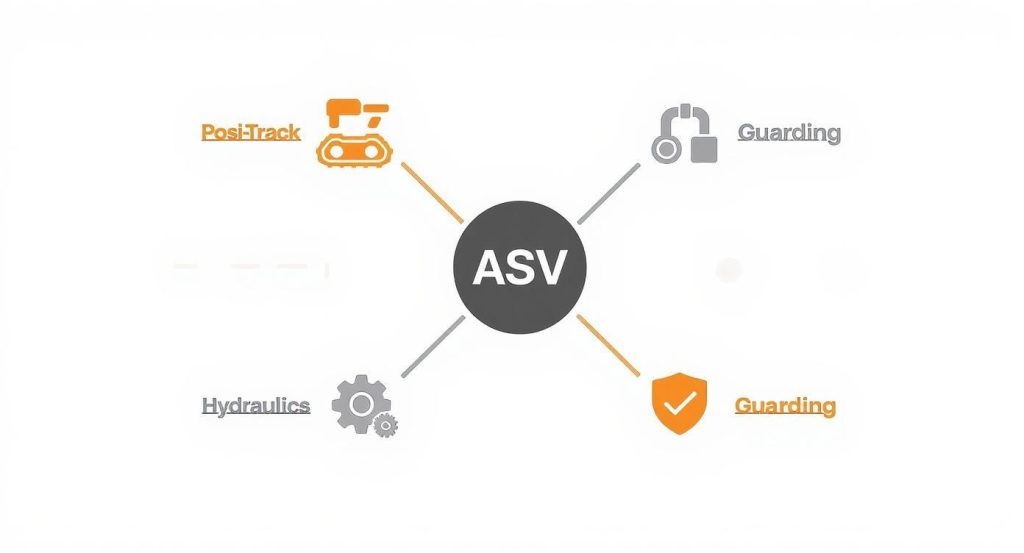
As you can see, the robust hydraulic system is the engine driving the attachment’s performance. Meanwhile, the Posi-Track undercarriage provides the stable, low-impact platform needed to wield these powerful tools effectively, even on Florida’s soft, sandy soil.
Matching the Tool to the Task
Every one of these heavy-duty attachments relies on the ASV’s high-flow hydraulic system. This system delivers the raw power needed for continuous, demanding work without bogging down. The forestry mulcher, in particular, is a real power hog—it needs a constant, high-volume flow of hydraulic fluid to keep its cutting head at optimal speed through thick vegetation.
You can dive deeper into this specific combo in our complete guide to the ASV forestry mulcher.
This need for versatility is driving incredible growth. The skid steer attachment market hit USD 2.6 billion in 2024 and is actually projected to grow faster than the machine market itself. It’s a clear signal that professionals need multiple, specialized tools to get the job done right.
Choosing the right combination of attachments is a strategic decision that directly impacts a project’s efficiency. For clearing a densely overgrown lot, a mulcher and a grapple are your essential one-two punch. If you’re prepping a site for a new home, adding a stump grinder to the mix ensures you have a perfectly clear and level foundation to work with. This on-the-fly adaptability is what lets us tackle pretty much any land management challenge thrown our way.
Real-World Benefits in Land Clearing and Site Prep
All the specs and high-tech features sound great on paper, but what does it all mean for your property? This is where the engineering of an ASV forestry skid steer shows its true colors, delivering results you can see and walk on. It’s about getting your land cleared faster, smarter, and with way less collateral damage.
The biggest win comes from the Posi-Track undercarriage. Its incredibly low ground pressure is a game-changer, especially on the soft, sandy soils we see all over Central Florida. Instead of chewing up your property and leaving deep ruts, the machine basically “floats” over the ground.
This isn’t just about keeping things looking neat. Minimizing soil compaction is vital for the health of the surrounding ecosystem. It protects the root systems of the beautiful, mature trees you want to keep, ensures water drains properly, and helps stop erosion in its tracks.
Precision and Efficiency in Action
The agility of an ASV forestry skid steer lets us take a surgical approach to land clearing. This isn’t about just plowing through everything in sight like a bulldozer.
The machine’s compact size and responsive controls mean we can move with real precision. We can selectively target invasive species like Brazilian pepper or overgrown palmettos while carefully working around the valuable native oaks and pines you want to preserve.
This selective clearing is the cornerstone of responsible land management. It allows us to improve the health and beauty of your property by taking out only what’s necessary, leaving you with a balanced and sustainable environment.
The core principle is simple: turn waste into a resource. By mulching all the cleared vegetation in place, we eliminate the enormous cost and logistical headache of hauling debris off-site. The machine instantly transforms overgrowth into a nutrient-rich layer of mulch.
This method gives you two huge benefits. First, it saves you a ton of money on disposal fees and trucking. Second, that fresh layer of mulch acts as a natural blanket for the ground. It helps retain moisture, keeps weeds from popping up, and slowly releases valuable nutrients back into the soil. It’s a self-sustaining cycle that starts improving your land’s health from day one.
Handling Florida’s Unique Challenges
From swampy lowlands to dense pine thickets, Florida’s landscape throws a lot at you. An ASV forestry skid steer is built to handle it all, delivering solid results where other machines would get stuck.
- Wet Terrain: The Posi-Track system gives it amazing traction in muddy or saturated ground, letting us keep the project moving safely even after a heavy rain.
- Dense Undergrowth: With a combination of serious horsepower and high-flow hydraulics, it powers through thick vegetation without getting bogged down.
- Environmental Sensitivity: The machine’s low impact means we can work near wetlands and protected areas with minimal disturbance, staying well within local regulations.
At the end of the day, using this specialized equipment means your project gets done with more control and a much smaller environmental footprint. It’s all about transforming your property thoughtfully, leaving it healthier and more valuable than when we started.
Smart Operation and Maintenance for Your Forestry Machine
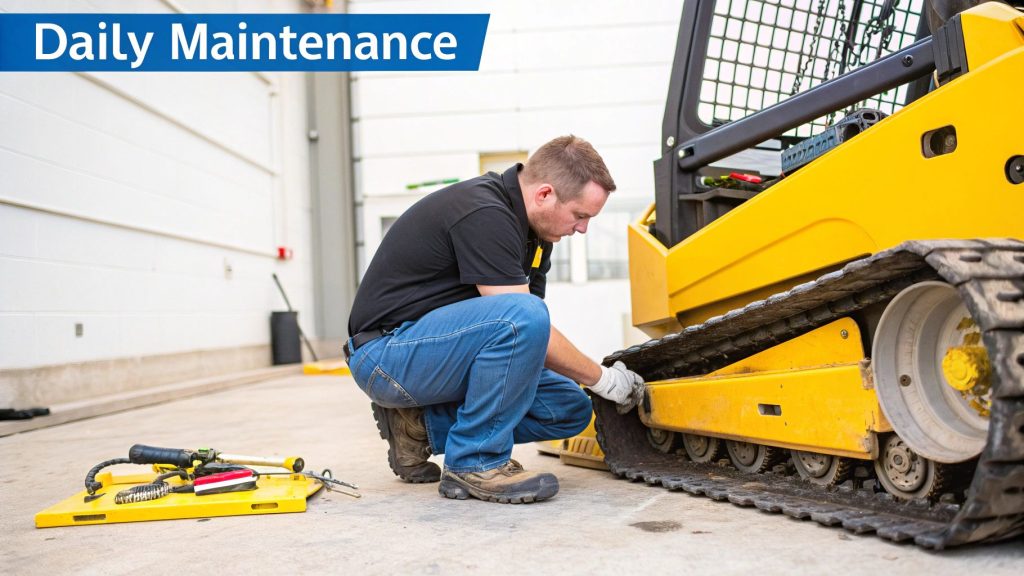
Getting your hands on a beast like an ASV forestry skid steer is just the starting line. The real work is in keeping that powerhouse running strong, and that comes down to smart upkeep. These machines are built to work in some of the most punishing environments you can imagine, so putting off maintenance isn’t an option—it’s a guarantee you’ll find yourself stuck with costly downtime right when you can least afford it.
Think of it this way: a quick five-minute check each morning is an investment that can save you thousands down the road. It’s about catching the small stuff before it snowballs into a catastrophic failure.
A simple equipment preventative maintenance checklist can be a great place to start, helping you build a routine that ensures your ASV works reliably for years to come.
Your Daily Pre-Operation Checklist
Before you even think about turning the key, make a habit of running through these critical points. This simple routine is your first line of defense against most common field failures.
- Undercarriage Inspection: The Posi-Track system is the heart and soul of your machine’s mobility. Take a minute to clear out any packed-in mud, rocks, or tangled debris from the tracks and bogie wheels. This prevents a ton of premature wear and tear.
- Fluid Level Checks: Always check your engine oil, hydraulic fluid, and coolant. Running low on any of these is one of the fastest ways to cause overheating and serious component damage.
- Visual Hose Inspection: Give your hydraulic hoses a good look-over, especially around the attachment points. You’re hunting for any leaks, cracks, or scuffs. A single blown hose can bring your entire operation to a grinding halt.
Smart Operating Habits for Longevity
How you run the machine is just as important as how you maintain it. Redlining the equipment day in and day out is a surefire way to wear it out fast. Smart, deliberate operation doesn’t just reduce wear and tear; it also makes the job site safer and more efficient.
When you’re mulching, for instance, don’t just slam the head into a dense thicket at full throttle. Ease into the brush and let the mulcher’s teeth do what they were designed for. This approach dramatically reduces the shock and strain on the hydraulic system and engine, which are your most expensive components to fix.
Maintaining situational awareness is just as critical as any mechanical check. Always know what’s around you—hidden stumps, rocks, or dips in the terrain. Operating at a controlled, steady pace minimizes risks to both you and the machine.
By making these simple routines a part of your daily workflow, your ASV forestry skid steer becomes more than just a piece of equipment. It becomes a reliable, long-term asset that delivers consistent, profitable performance, project after project.
Should You Buy an ASV or Hire a Professional Service?
This is the big question every landowner and contractor faces. Deciding whether to buy your own ASV forestry skid steer or just hire a professional service isn’t just about the sticker price—it’s a serious look at long-term costs, how you’ll use it, and what you’re capable of handling yourself.
Buying a machine is a huge financial commitment. A heavy equipment loan is often the first step, but the real costs go way beyond the monthly payment. You have to think about insurance, fuel, regular maintenance, hauling it to and from job sites, and buying all the different attachments you’ll need.
Calculating the True Cost of Ownership
Owning makes perfect sense if you have a steady stream of work to keep the machine busy and paying for itself. It’s no surprise the global skid steer market is valued at a massive USD 15 billion—these things are in high demand. For a business with enough work, owning one can be a very smart move. You can find more info on the global skid steer market on factmr.com.
But you also have to account for the “hidden” costs that can sneak up on you:
- Downtime: When your machine breaks down, the project stops, but the bills keep coming.
- Operator Skill: It takes hundreds of hours in the seat to get truly good—and safe—at running a forestry mulcher.
- Storage and Security: An ASV is a valuable piece of equipment. You need a secure place to park it when it’s not working.
For a lot of landowners, especially if you’re just tackling a single project or have occasional clearing needs, hiring a pro like Palm State Clear Cut is the smarter, more cost-effective route. It turns a massive capital investment into a simple, predictable operating expense.
When Hiring an Expert Makes More Sense
When you hire a service, all the headaches of ownership disappear. Instead, you get a skilled operator with a top-of-the-line, perfectly maintained ASV forestry skid steer showing up at your property, ready to get the job done right.
There are no surprise repair bills, no insurance policies to manage, and no steep learning curve. You just pay for the work and get professional, efficient results.
To get a better feel for what’s involved, our landowner’s guide to brush clearing services is a great place to start. When you weigh the total cost of owning a machine against the straightforward benefits of hiring an expert, you can make a solid financial decision that fits your project goals perfectly.
What’s the Real Difference Between an ASV and a Regular Skid Steer?
When you get right down to it, the biggest thing that sets an ASV machine apart is its undercarriage. Think of it like a tank. ASV’s Posi-Track system uses a flexible, all-rubber track that rolls over suspended bogie wheels.
This design is a game-changer because it spreads the machine’s weight out so evenly. The result is incredibly low ground pressure, which is exactly what you need to avoid tearing up sensitive ground. A traditional skid steer with its rigid frame just can’t compete on rough terrain and often leaves a much bigger footprint.
How Much Hydraulic Flow Do You Need for a Forestry Mulcher?
Forestry mulchers are absolute beasts. They’re some of the most power-hungry attachments you can run, and they need a serious hydraulic system to keep up. For an ASV forestry skid steer, you’re typically looking for a high-flow system that can push out 30-45 gallons per minute (GPM) at high pressure.
A word of caution from the field: Always, and I mean always, match the specs of your machine to the mulcher. A mismatch in hydraulic flow is a fast track to poor performance, overheating, and potentially frying some of the most expensive parts of your equipment. It’s a costly mistake to make.
Can I Just Use a Standard ASV for Tough Forestry Jobs?
You might be tempted, but it’s a bad idea. While a standard ASV track loader can handle a bit of light brush clearing, it’s simply not built for the abuse of real-deal forestry work. The dedicated forestry models come with critical upgrades for a reason.
These aren’t just nice-to-haves; they’re essential for safety and survival:
- Reinforced polycarbonate doors to stop flying wood chunks from coming into the cab.
- Heavy-duty steel guards protecting the engine and all those vulnerable hydraulic lines.
- Upgraded cooling systems designed specifically to handle the insane amount of heat generated from running a mulcher all day long.
Trying to tackle a serious forestry job with a standard machine is a shortcut that puts both the operator and the equipment in harm’s way. It almost always ends in expensive repairs or, worse, a dangerous accident.
Ready to see what a professional team with the right equipment can do for your property? Palm State Clear Cut has the expertise and the top-tier ASV machinery to handle your land clearing project safely and efficiently. Visit us online to get your free quote at https://palmstateclearcut.com.
