
Land clearing before and after: Dramatic Transformations in Central Florida
- Mike Walker
- 3 days ago
- 15 min read

Overgrown lots and tangled underbrush often mask the true potential of a Central Florida property. Transforming a wild, unusable parcel into a pristine, build-ready site requires more than just removing trees; it demands a strategic process that integrates state-of-the-art machinery, ecological expertise, and a clear vision for the land's future. The visual difference in land clearing before and after photos is often staggering, revealing the value and utility hidden beneath years of unchecked growth.
This guide provides a detailed, behind-the-scenes look at the methods, costs, and incredible results achieved across the region. We will dissect eight distinct projects, moving beyond simple pictures to offer a comprehensive breakdown of the strategies involved. You'll gain a deeper understanding of what it takes to execute these transformations successfully, from initial assessment to final site preparation.
Each case study functions as a practical blueprint, covering critical project details including:
Scope and Objectives: The client's initial goals and the property's unique challenges.
Methods and Machinery: Specific techniques like forestry mulching, stump grinding, and targeted herbicide application.
Project Timeline and Cost: Realistic expectations for project duration and investment.
Key Takeaways: Actionable insights you can apply to your own property, whether it's a residential lot or a large commercial tract.
From preparing a new homesite for construction to creating essential wildfire mitigation zones, these real-world examples showcase how professional land clearing unlocks a property’s full potential. You'll see firsthand how complex challenges are turned into valuable, functional spaces.
1. Residential Homesite Preparation for New Construction
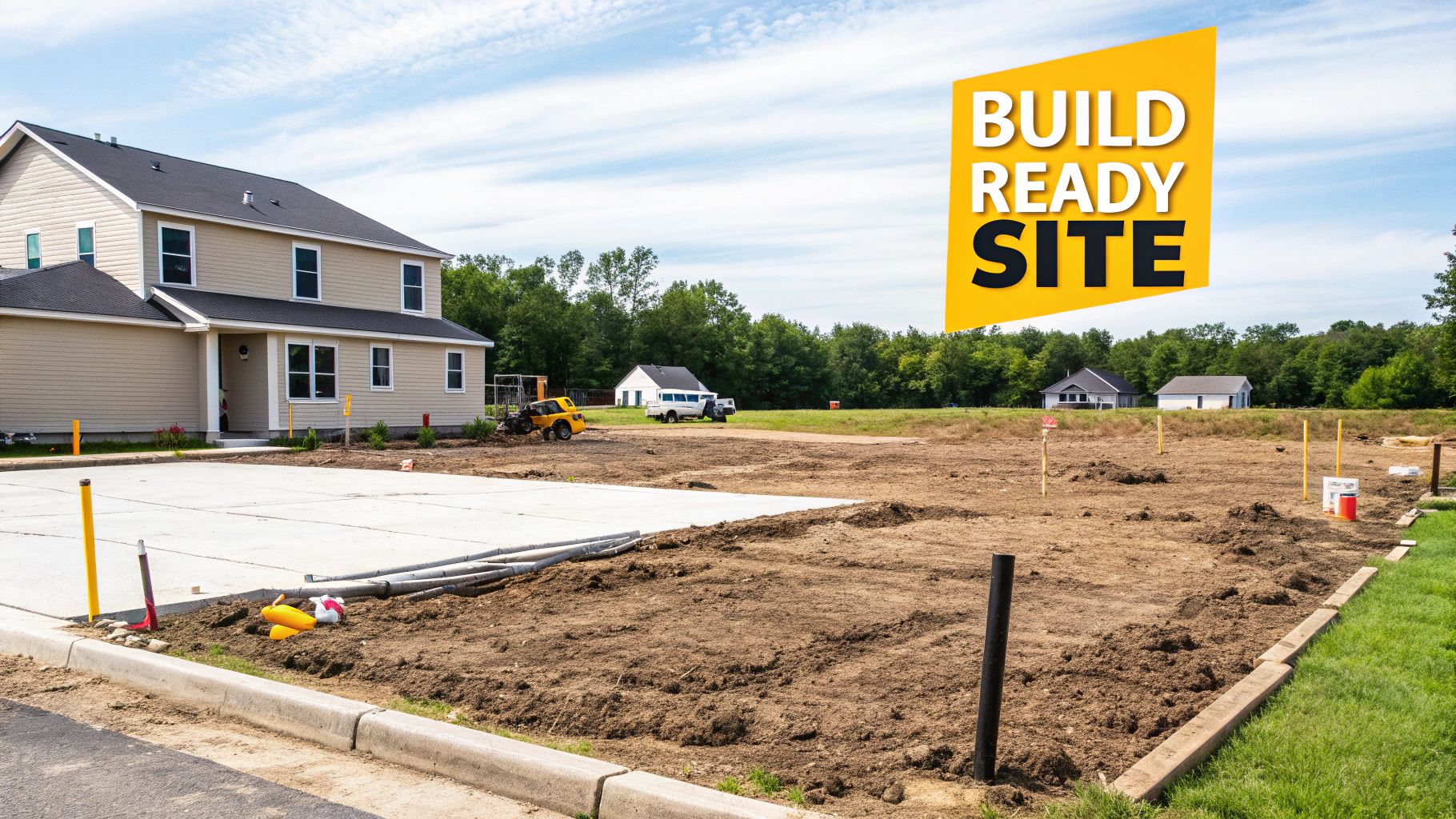
The journey from an overgrown, untamed parcel of land to a build-ready homesite is a foundational step in any new construction project. This process involves the comprehensive clearing of dense vegetation, unwanted trees, stumps, and underbrush to prepare the ground for foundation work, utility installation, and landscaping. The goal is to create a clean, stable, and properly graded canvas for builders, a critical transformation that sets the stage for the entire construction timeline. This essential preparation is a striking example of a land clearing before and after success story, turning unusable lots into valuable, construction-ready assets.
Strategic Approach & Benefits
Effective homesite preparation goes beyond simple clearing. It employs strategic methods like forestry mulching to return organic matter to the soil, improving its health and reducing erosion. Selective clearing is often used to preserve valuable, mature trees that enhance property value and aesthetic appeal. By establishing a clear, graded site, builders can avoid costly delays and begin foundation work immediately.
Once your residential homesite is prepared, ensuring the safety of the subsequent construction phase is paramount. For comprehensive protection during this critical stage, explore resources like a complete guide to construction site security to safeguard your investment.
Actionable Takeaways for Landowners
For those embarking on a new build in Central Florida, a proactive approach to land clearing is key.
Plan Ahead: Obtain clearing quotes early in your property search to accurately budget for total project costs. You can learn more about the specific steps involved in our guide to land preparation for building a house in Central Florida.
Identify Utilities: Always confirm the location of underground utilities before any heavy equipment arrives on-site to prevent dangerous and expensive accidents.
Retain Resources: Request that some of the organic mulch from the clearing process be left on-site. This provides a free, high-quality resource for future landscaping and garden beds.
Time it Right: Whenever possible, schedule land clearing during Florida’s drier seasons (typically May through October) to ensure optimal soil conditions and minimize weather-related delays.
2. Agricultural Land Reclamation and Pasture Restoration
Reclaiming overgrown agricultural land or restoring pastures is a vital process for ranchers, farmers, and property owners looking to maximize productivity. This involves clearing invasive species, dense brush, and unwanted trees that have encroached on valuable land, effectively turning neglected acreage back into a profitable asset. The objective is to prepare the land for livestock grazing, row crop farming, or other agricultural uses by restoring its health and accessibility. This transformation is a powerful demonstration of a land clearing before and after project, breathing new life into dormant or unusable properties across Central Florida.
Strategic Approach & Benefits
A strategic approach to agricultural clearing prioritizes the long-term health of the land. Methods like forestry mulching are used to eliminate unwanted vegetation while simultaneously returning nutrient-rich organic material to the topsoil, which enhances fertility and prevents erosion. This selective process is crucial for preserving native grasses and protecting the existing soil structure essential for sustainable farming. Reclaiming this land not only increases usable acreage for grazing or planting but also improves property value and operational efficiency for farmers.
For agricultural land reclamation, the goal is to move beyond the cleared ground toward establishing new growth. For instance, after clearing, some landowners might consider learning about fast-growing trees for transforming a bare patch of land into a lush haven to create windbreaks or diversify their property.
Actionable Takeaways for Landowners
For agricultural property owners in Central Florida, a well-planned reclamation project is essential for success.
Verify Boundaries: Before beginning fence line clearing or any large-scale project, have your property boundaries professionally surveyed to prevent disputes and ensure accuracy.
Time it with Operations: Plan your clearing schedule around critical agricultural timelines, such as cattle breeding, calving, or planting and grazing seasons, to minimize disruption.
Assess Soil Health: Request a soil test after clearing is complete. This will provide valuable data on fertility and potential erosion risks, guiding your next steps for planting or pasture management. Our guide to agricultural land clearing in Florida offers more detailed insights.
Plan for Regrowth: Establish an ongoing vegetation management plan or contract to control the regrowth of invasive species, ensuring your newly reclaimed land remains productive for years to come.
3. Right-of-Way and Utility Access Corridor Maintenance
Ensuring uninterrupted utility service and safe access for maintenance crews requires specialized land clearing focused on rights-of-way and access corridors. This process involves the methodical removal of vegetation, trees, and obstructions along critical infrastructure routes like power lines, pipelines, and drainage canals. The objective is to prevent vegetation from interfering with essential services, reduce fire risks, and maintain clear passage for emergency and maintenance vehicles. This transformation from an impassable, overgrown corridor to a safe, accessible route is a vital example of a land clearing before and after project that directly impacts community safety and resilience.
Strategic Approach & Benefits
Maintaining utility corridors is not a one-time job but a continuous, strategic effort. Techniques like forestry mulching are often deployed to process vegetation on-site, which helps stabilize the soil and prevent erosion along sensitive routes. Selective clearing is critical to remove only the vegetation that poses a direct threat to infrastructure, preserving the surrounding ecosystem where possible. The primary benefit is reliability; by preventing tree-related power outages and ensuring pipeline integrity, this work safeguards essential community services. Well-maintained corridors also provide crucial firebreaks, protecting both the infrastructure and adjacent properties.
Actionable Takeaways for Managers and Utilities
For municipalities, utility companies, and property managers overseeing infrastructure in Central Florida, a structured maintenance plan is non-negotiable.
Verify and Comply: Before mobilizing any equipment, verify the exact location of all underground and overhead utilities. Always request written specifications from the utility owner to ensure all clearing activities meet their strict compliance standards.
Schedule Strategically: Coordinate all maintenance activities during designated utility windows or off-peak seasons. This proactive scheduling minimizes service disruptions for customers and ensures safer working conditions for crews.
Document Everything: Meticulously document all work with before-and-after photos, GPS data, and detailed measurements. This documentation is essential for proving compliance, managing records, and planning future maintenance cycles.
Secure Long-Term Contracts: Establish multi-year maintenance contracts with a trusted land clearing provider. This approach provides cost certainty, ensures consistent service quality, and simplifies annual budget planning.
4. Firebreak Creation and Wildfire Mitigation Zones
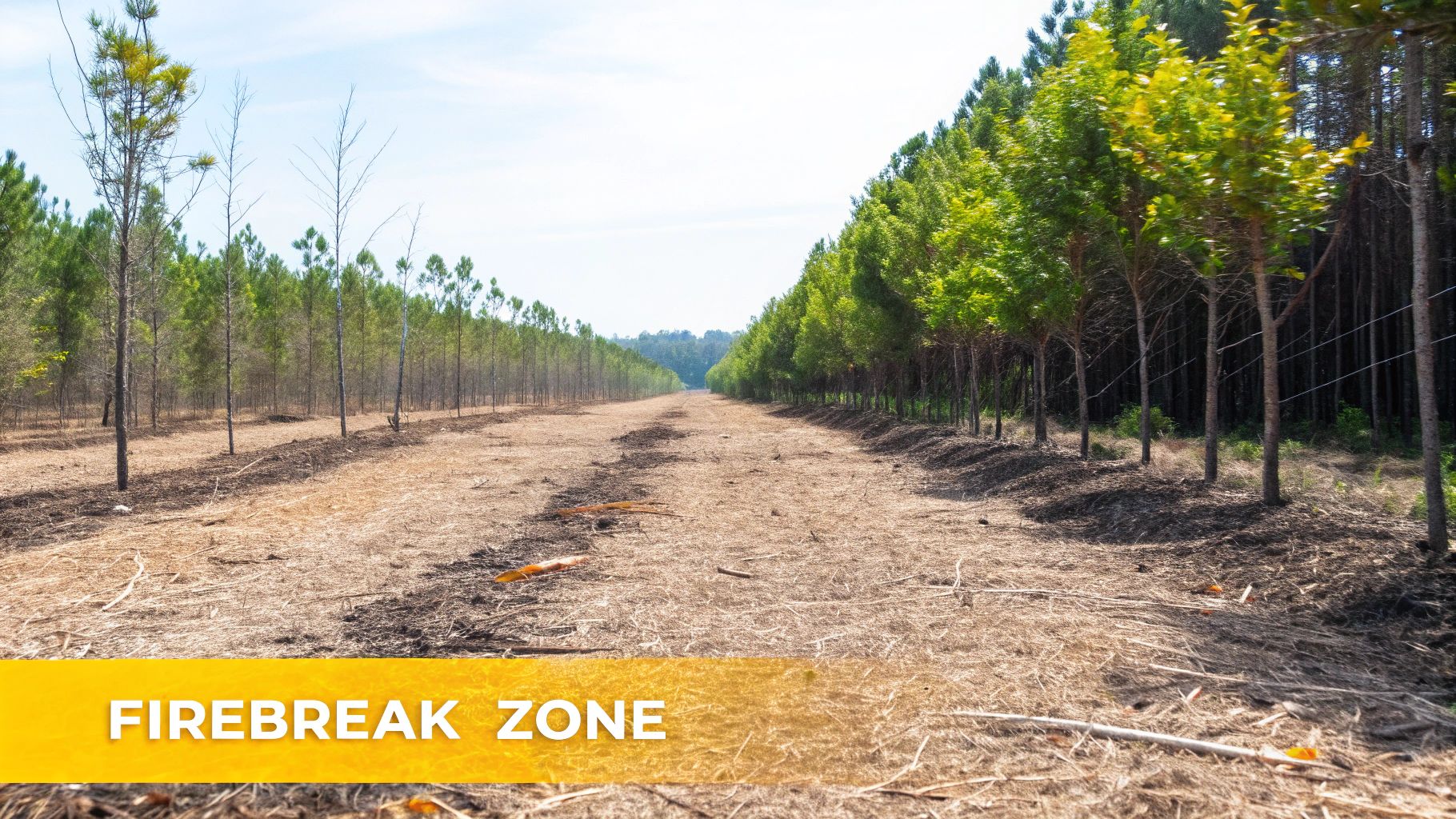
In Central Florida's seasonally dry and fire-prone landscapes, strategic land clearing is a critical defense mechanism against devastating wildfires. This process involves creating firebreaks, which are carefully planned corridors of cleared land designed to slow or stop the spread of a fire. By removing flammable vegetation like dense brush, dead trees, and low-hanging limbs, these zones create a defensible space around homes, farms, and valuable infrastructure. This preventative clearing is a powerful example of a land clearing before and after project, transforming a high-risk, overgrown area into a managed, protective buffer that significantly enhances safety and resilience.
Strategic Approach & Benefits
Effective wildfire mitigation involves more than just removing trees; it's a calculated effort to manage fuel loads. Methods like forestry mulching are ideal for this application, as they shred vegetation in place and create a layer of mulch that retains soil moisture, further reducing fire risk. This approach is common in high-risk areas like Brevard and Volusia counties, where residential communities and ranches must establish defensible space to protect assets and comply with local ordinances or insurance requirements. The primary benefit is creating a zone where firefighters can safely operate and make a stand against an advancing wildfire, potentially saving homes and lives.
Actionable Takeaways for Landowners
For property owners in Central Florida's fire-risk zones, taking proactive steps to create and maintain defensible space is essential.
Consult Experts: Before starting, consult with your local county fire marshal to understand the specific firebreak dimensions and clearance requirements recommended for your property.
Check Insurance Benefits: Contact your property insurance provider before clearing. You may be eligible for significant premium reductions for implementing certified wildfire mitigation measures.
Time Your Work: Schedule clearing activities during Florida's wetter season to minimize the risk of equipment sparks igniting dry vegetation.
Document Everything: Keep detailed records, including photos and invoices, of all mitigation work. This documentation is vital for insurance compliance and any necessary permits.
Plan for Upkeep: Firebreaks are not a one-time fix. Budget for annual maintenance to remove new growth and ensure the zone remains effective year after year.
5. Commercial Development Site Preparation and Environmental Compliance
Transforming large, raw parcels into compliant, development-ready sites for commercial or industrial use is a complex, high-stakes process. This type of land clearing involves far more than just removing vegetation; it requires meticulous coordination with environmental consultants, municipal permitting departments, and stormwater management agencies. The objective is to prepare a site for large-scale construction, such as shopping centers, office parks, or industrial facilities, while adhering to stringent environmental regulations and local ordinances. This careful balancing act is a prime example of a land clearing before and after project, turning unusable acreage into a valuable, legally compliant commercial asset.
Strategic Approach & Benefits
A strategic approach to commercial site preparation prioritizes environmental compliance from the outset. This involves conducting Phase I and Phase II Environmental Site Assessments to identify potential contaminants or protected habitats before any clearing begins. Methods are then tailored to meet regulatory demands, incorporating robust erosion control measures like silt fencing and stormwater retention ponds early in the process. This foresight prevents costly fines, project delays, and long-term environmental liability.
Properly executed, this process creates a stable, graded, and fully documented site that meets all municipal requirements. This allows developers to move seamlessly from land preparation to vertical construction, ensuring a smooth project timeline and maximizing the return on their investment.
Actionable Takeaways for Developers
For developers undertaking projects in Central Florida, integrating environmental compliance into the earliest stages of planning is non-negotiable.
Engage Experts Early: Bring environmental consultants and civil engineers into the project during the initial planning phase to identify and address compliance needs before they become obstacles.
Secure All Permits: Coordinate closely with municipal and county planning departments to understand specific zoning requirements, stormwater management codes, and tree ordinances before mobilizing any equipment.
Plan for Water Management: Design and implement stormwater management systems and retention areas as a first step in the clearing process, not an afterthought. This is critical for managing Florida's heavy rainfall.
Document Everything: Maintain a thorough photographic and written record of all environmental protection measures implemented on-site. This documentation is invaluable for regulatory inspections and compliance verification.
6. Trail Development and Recreation Area Clearing
Transforming an impassable, overgrown property into a network of accessible recreational trails is more than just clearing a path; it's about unlocking the full potential and enjoyment of your land. This specialized process involves carving out defined corridors for hiking, biking, or equestrian use by removing dense vegetation, overhanging limbs, and hazardous obstacles. The result is a functional and beautiful system that enhances property value, promotes land stewardship, and provides safe, enjoyable access to nature. This meticulous work provides a compelling land clearing before and after showcase, turning tangled woods into thoughtfully designed recreational assets.
Strategic Approach & Benefits
Effective trail development requires a strategic vision that balances access with environmental preservation. Rather than simply bulldozing a straight line, professional clearing follows the natural contours of the land to minimize erosion and create a more engaging experience. Methods like forestry mulching are ideal, as they simultaneously clear the path and create a natural, stable trail surface that helps suppress weed growth. This approach not only creates safe and usable trails but also improves the overall health and aesthetics of the surrounding ecosystem.
The benefits extend far beyond simple recreation. Well-planned trails can serve as effective firebreaks, create access for property maintenance, and significantly boost the appeal and market value of large residential estates, ranches, and community properties. In Central Florida, creating trail networks on properties in areas like Lake County or for equestrian use in Indian River County has become a popular way to maximize land utility.
Actionable Takeaways for Landowners
For property owners in Central Florida looking to develop trails, a strategic plan is crucial for a successful and sustainable outcome.
Plan with the Land: Design trail routes that follow the natural topography. This reduces the need for extensive grading, minimizes soil erosion, and creates a more scenic and enjoyable path.
Establish Clear Corridors: Maintain a minimum overhead clearance of 10 feet to ensure safety for hikers, bikers, and especially equestrians. A clear path prevents accidents and improves sight lines.
Implement Water Management: To prevent washout and erosion on your new trails, incorporate drainage features like swales or water bars every 50 to 75 feet, particularly on sloped sections.
Schedule Proactive Maintenance: Plan for quarterly maintenance checks to trim back encroaching vegetation, address any erosion spots, and ensure the trail surface remains safe and stable year-round. You can learn more about maintaining your property in our guide to the importance of land clearing maintenance in Central Florida.
7. Invasive Species Eradication and Native Habitat Restoration
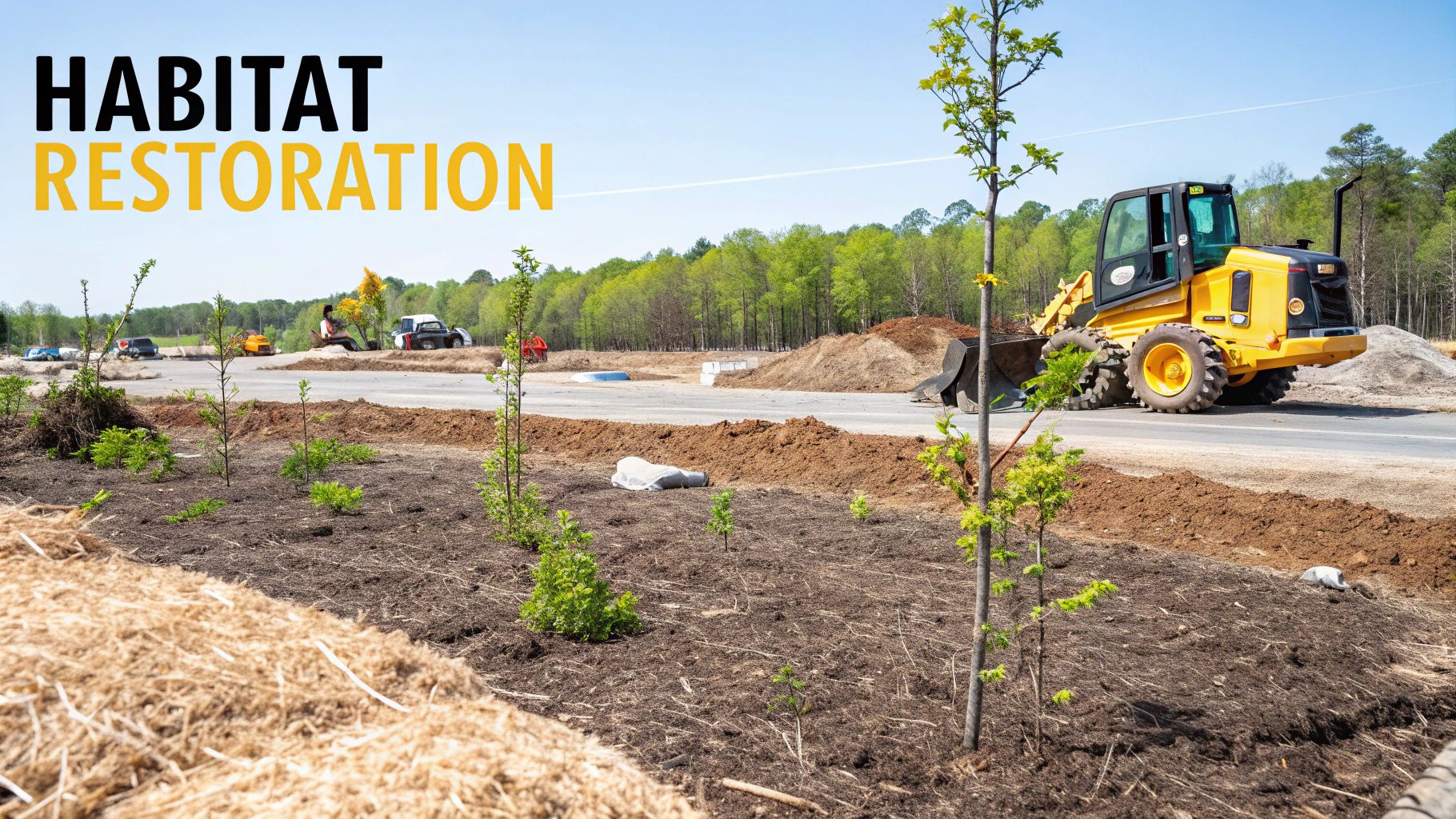
Beyond simple clearing, ecological restoration focuses on systematically removing aggressive, non-native plants to allow native Florida ecosystems to recover. This process targets destructive species like Brazilian pepper, Australian pine, and climbing fern, which outcompete local flora and degrade wildlife habitats. The goal is to not just clear the land but to heal it, creating a healthy, self-sustaining environment that supports biodiversity. This specialized approach showcases a profound land clearing before and after transformation, turning a compromised landscape into a thriving native habitat.
Strategic Approach & Benefits
Effective habitat restoration requires a multi-faceted strategy. It begins with the targeted removal of invasive species using methods like forestry mulching, which shreds vegetation in place to suppress the existing seed bank. This is often followed by precise herbicide applications to prevent regrowth. The final, critical step is reintroducing native plant species that are appropriate for the specific site, such as a Brevard County coastal dune or a Seminole County wetland. This promotes long-term ecological stability and resilience.
This process not only enhances the aesthetic and ecological value of a property but is also vital for landowners with conservation easements or properties adjacent to natural preserves.
Actionable Takeaways for Landowners
For Central Florida property owners committed to environmental stewardship, a strategic approach is essential for successful restoration.
Document and Plan: Before starting, document the types and locations of invasive species on your property. This record is valuable for tracking progress and for any conservation reporting requirements.
Time Your Attack: Plan herbicide applications during the invasive species' most active growth seasons to ensure maximum effectiveness and prevent re-infestation. You can find more details in our guide on 7 practical tips for invasive species control.
Partner with Experts: Collaborate with local native plant nurseries to select and source species best suited for your property’s specific soil, light, and moisture conditions.
Stay Vigilant: Restoration is an ongoing process. Monitor your property at least once a year to identify and remove any new invasive seedlings before they can become established.
8. HOA and Community Property Vegetation Management Programs
Maintaining common areas, perimeters, and natural spaces within a homeowners association or community is a constant challenge. An ongoing vegetation management program offers a structured, proactive solution to this need, transforming overgrown, unruly common areas into safe, aesthetically pleasing, and valuable community assets. These programs move beyond one-time clearings, establishing a routine maintenance schedule for brush clearing, firebreak management, and invasive species control, ensuring the community remains pristine and secure year-round. This sustained effort is a perfect illustration of a long-term land clearing before and after commitment, preventing landscapes from reverting to their wild state.
Strategic Approach & Benefits
A successful HOA vegetation management program is built on consistency and clear goals. By implementing a contractual, recurring service, communities in areas like Orange and Seminole counties can budget effectively and prevent small issues from becoming large, expensive problems. Methods like forestry mulching are often used to manage overgrowth in common areas and perimeters, which improves sightlines, enhances security, and enriches the soil. These programs significantly boost curb appeal, support property values, and create safer environments for residents by reducing fire hazards and eliminating habitats for pests.
Actionable Takeaways for Landowners
For HOA boards and property managers in Central Florida, establishing a clear and effective vegetation program is crucial for long-term success.
Establish Clear Specifications: Define the exact scope of work, service areas, and performance expectations in a detailed contract to ensure accountability and consistent results.
Communicate with Residents: Proactively inform residents about upcoming clearing schedules. This simple step helps manage expectations and minimizes disruptions or complaints.
Plan for Emergencies: Build emergency response capacity into your contract for rapid storm debris cleanup. This ensures your community can recover quickly after a hurricane or severe storm.
Optimize Scheduling: Schedule routine services during Florida's slower growth periods. This strategic timing can often extend the intervals needed between maintenance cycles, saving money.
Document Everything: Require photo documentation of all completed work. This creates a valuable record for community archives, justifies budget expenditures, and helps in planning for the following year.
Before & After: Land Clearing — 8 Examples
Service | 🔄 Implementation complexity | ⚡ Resource requirements | 📊 Expected outcomes (⭐) | Ideal use cases | 💡 Key insights/tips |
|---|---|---|---|---|---|
Residential Homesite Preparation for New Construction | Moderate — clearing, grading, utility locates | Heavy equipment (excavator, grinder), crews, hauling & disposal | Build-ready lots; faster construction start (⭐⭐⭐⭐) | Homebuilders, residential landowners | Obtain quotes early; verify utilities; preserve value trees |
Agricultural Land Reclamation and Pasture Restoration | Moderate — selective clearing, invasive control, repeat treatments | Forestry mulcher, targeted herbicide, fencing & soil stabilization | Restored pasture/productivity; may need follow-ups (⭐⭐⭐) | Ranchers, farmers reclaiming acreage | Schedule around grazing; request soil tests; plan long-term mgmt |
Right-of-Way and Utility Access Corridor Maintenance | High — strict specs, safety protocols, permits | Specialized crews, compliance reporting, periodic maintenance | Reduced outages & hazards; regulatory compliance (⭐⭐⭐⭐) | Utilities, municipalities, public works | Verify specs/permits; document work; schedule utility windows |
Firebreak Creation and Wildfire Mitigation Zones | Moderate — strategic clearing, recurring maintenance | Mulchers, crews, ongoing maintenance and herbicide programs | Significant reduction in wildfire risk; insurance benefits (⭐⭐⭐⭐⭐) | High‑risk residential, agricultural, municipal properties | Consult fire marshal; document for insurance; plan annual maintenance |
Commercial Development Site Preparation and Environmental Compliance | Very high — environmental assessments, multi‑agency permits | Multidisciplinary teams, erosion controls, long timelines | Development-ready, compliant sites; fewer mid‑project delays (⭐⭐⭐⭐) | Developers, large commercial/mixed‑use projects | Engage enviro consultants early; run Phase I/II assessments |
Trail Development and Recreation Area Clearing | Low–Moderate — corridor layout, drainage & surfacing | Small crews, drainage features, mulch, signage | Safe, usable trails; increased recreational value (⭐⭐⭐) | Parks, residential estates, equestrian properties | Follow natural contours; install drainage; schedule frequent maintenance |
Invasive Species Eradication and Native Habitat Restoration | High — ID, mapping, multi‑phase eradication & planting | Ecologists, precision herbicide, native plant sourcing, monitoring | Restored native habitat & biodiversity; long timeline (⭐⭐⭐⭐) | Properties near conservation areas, wetlands, nature stewards | Partner with nurseries; monitor annually; expect repeat treatments |
HOA and Community Property Vegetation Management Programs | Moderate — ongoing coordination, scheduled intervals | Recurring crews, documentation, multi‑year contracts | Consistent aesthetics, reduced emergency costs (⭐⭐⭐⭐) | HOAs, community managers, municipal properties | Define specs in contracts; document work; build emergency response capacity |
Your Property's Transformation Awaits
The journey through these diverse land clearing before and after case studies reveals a powerful truth: transforming a property is about more than just removing vegetation. It is a strategic process that unlocks potential, enhances safety, and dramatically increases value. Each project, from a residential homesite in Polk County to a large commercial tract in Brevard, serves as a testament to the idea that thoughtful planning and precise execution are the cornerstones of successful land development in Central Florida.
We have seen how the right techniques can turn an impassable jungle of invasive species into a build-ready lot, or a fire-prone thicket into a secure, defensible space for a family home. The key insights from these examples are not just about the final, dramatic visuals; they are about the strategic decisions made at every step.
From Overwhelmed to Opportunity: Key Takeaways
The most critical lesson from these before and after scenarios is that every property has a unique story and a unique set of challenges. A one-size-fits-all approach simply does not work.
Methodology Matters: Forestry mulching is not just a clearing method; it is a soil enrichment strategy that recycles nutrients back into the ground, preventing erosion and promoting healthy regrowth. Stump grinding is not just about aesthetics; it is a crucial step for ensuring a smooth, hazard-free surface for construction or agricultural use.
Planning Prevents Problems: The most successful projects began with a comprehensive plan. This involved understanding local regulations in counties like Orange and Osceola, assessing environmental sensitivities, and defining clear, long-term goals for the property.
Safety is Non-Negotiable: Creating firebreaks and managing vegetation for wildfire mitigation is not a luxury but a necessity in our region. These proactive measures, as demonstrated in our case studies, are a property owner's first line of defense against natural disasters.
Actionable Insights for Your Central Florida Property
Seeing these transformations should inspire you to look at your own land with fresh eyes. That overgrown parcel or neglected acreage is not a liability; it is a blank canvas. The difference between the "before" and the "after" is a clear vision and the right professional partner.
Consider the common threads weaving through each success story:
Clarity of Purpose: Was the goal to prepare for new construction, restore a pasture, or create recreational trails? A clear objective dictates the entire project's scope and methods.
Ecological Awareness: Successful projects work with the Central Florida environment, not against it. This means managing water flow, preserving valuable native trees when possible, and effectively eradicating invasive species like Brazilian Pepper.
Long-Term Vision: The work does not stop when the heavy machinery leaves. Effective land clearing includes a plan for ongoing maintenance, whether it is for an HOA community area or a utility right-of-way, ensuring the property remains in its ideal state.
These land clearing before and after examples are more than just impressive pictures. They are a practical roadmap for property owners, developers, and land managers across Central Florida. They prove that with strategic insight and expert execution, any piece of land can be sculpted to meet its highest and best use, transforming from a source of problems into a source of pride and opportunity. Your property’s transformation is not a distant dream; it is an achievable reality waiting for the right plan to be put into action.
Ready to write your own success story and see a dramatic land clearing before and after on your property? The experts at Palm State Clear Cut have the experience and equipment to turn your vision into reality across Central Florida. Contact us today for a free, no-obligation quote and let's begin your property's transformation. Palm State Clear Cut
Comments