
How to Grow Grass Under a Tree in Central Florida
- Jan 24
- 16 min read
Ever tried to grow a lush lawn under a big, beautiful Florida tree and ended up with a sad patch of dirt? You're not alone. It often feels like an impossible task, but the solution is usually more about prep work than planting.
Success comes down to managing the environment before you even think about laying down seed or sod. We need to get more sunlight to the ground and cut down on the tree's root competition. It's all about creating a balance where the tree and the turf can actually live together.
Why Growing Grass Under Trees Is So Hard
That barren spot under your favorite live oak isn’t a reflection of your gardening skills. It’s the result of an intense, nonstop battle happening both above and below the ground. Trying to grow grass under a mature tree, especially here in Central Florida, means you're fighting nature on multiple fronts. Understanding what you're up against is the first step to winning the war.
The most obvious enemy is shade. A dense tree canopy can block up to 95% of the sunlight from ever hitting the soil. Grass is a sun-worshipper; it needs that light for photosynthesis to survive. Without it, the blades get thin and leggy, stretching for light that isn't there, and eventually just give up.
The Unseen Competition Below Ground
What you can't see is often the real killer. Mature trees have massive, aggressive root systems that create a hostile environment for tiny grass seedlings. These roots are absolute masters at hoarding resources.
Water Hogging: On a hot day, a single large tree can suck hundreds of gallons of water from the soil, leaving practically nothing for your thirsty lawn.
Nutrient Theft: Those established tree roots are far more efficient at soaking up essential nutrients like nitrogen and potassium, basically starving out any new grass before it gets a foothold.
Soil Chemistry: As leaves and needles from oaks and pines break down, they make the soil more acidic. Most turfgrasses hate acidic soil, which locks up nutrients and stunts their growth.
The combination of deep shade, relentless root competition, and acidic soil creates a perfect storm for lawn failure. You can't just solve one of these problems; you have to tackle all three to stand a chance.
On top of all that, some trees even wage chemical warfare. It's a phenomenon called allelopathy, where the tree releases chemicals from its roots or fallen leaves that actively stop other plants from growing nearby. Black Walnut trees are notorious for this, but plenty of other species do it to a lesser degree.
This is why just throwing down some seed is a waste of time and money. Preparing the land correctly is everything, and that often starts with managing the tree itself. Learning the ropes with a homeowner's guide to pruning tall trees safely is a great first step. When you invest that initial effort into creating a better environment, everything that follows—from planting to watering—becomes so much more effective.
Preparing the Ground for a Thriving Lawn
If you want to grow grass under a tree, you have to stop thinking like a weekend gardener and start thinking more like an ecosystem manager. Tossing down some seed after raking the leaves is a surefire way to get frustrated, especially under the dense canopy of a mature tree. The real work—the work that actually gets results—happens long before a single seed is sown. It's all about changing the ground conditions to give your new lawn a fighting chance.
The name of the game is balance. You're not trying to get rid of the tree; you're creating a shared space where both tree and turf can coexist. This often means calling in professionals to undo years of unchecked growth, compacted soil, and depleted nutrients.
Reclaiming Overgrown Land with Forestry Mulching
On many Central Florida properties, the first thing you're up against is a thick mess of underbrush, invasive plants, and a matted layer of old leaves and debris. Trying to clear this out by hand is a back-breaking job that can easily tear up the topsoil and damage the tree's delicate surface roots. This is where professional services make all the difference.
Forestry mulching is an incredibly efficient method that uses a single machine to cut, grind, and process all that unwanted vegetation right on the spot. It shreds brush and small trees, instantly turning them into a beneficial layer of natural mulch. The best part? This process clears the land without scraping away your valuable topsoil or leaving you with huge piles of debris to haul away. You can learn more about the sustainable benefits of mulching in our detailed article.
By clearing out all the clutter, forestry mulching immediately improves airflow and lets more ambient light hit the ground. It creates a clean canvas, setting the stage for everything else you need to do.
Creating Dappled Sunlight Through Canopy Management
Once the undergrowth is gone, it’s time to look up. Grass needs light for photosynthesis, but blasting it with direct sun isn't the answer either. What you’re aiming for is dappled sunlight—a shifting pattern of light and shadow that moves across the ground as the day goes on.
This is something best left to the pros, achieved through selective tree thinning and canopy lifting.
Selective Thinning: This isn't just random branch cutting. It's the strategic removal of specific branches to reduce the canopy's density, a delicate task that requires an arborist's expertise to protect the tree's health and structure.
Canopy Lifting: Also called crown raising, this involves removing the lowest branches. This doesn't thin the canopy itself but rather lifts it higher, letting more of that crucial morning and late-afternoon sun sneak underneath.
The old idea that trees and grass are mortal enemies isn't quite right. A global meta-analysis revealed that a sparse tree canopy can actually help grass grow, with the sweet spot being when sunlight levels are between 60%-80%. This is especially true for the C4 grasses we have here in Florida during our seasonal droughts. By having a company like Palm State Clear Cut thin the canopy to under 50% cover, you can create the perfect light conditions for a healthy lawn to grow right under the tree.
Dealing with Stumps and Roots
After clearing and thinning, the last major hurdle is often old tree stumps. If you want a smooth, healthy lawn, leaving them is not an option. Stumps are tripping hazards, they can harbor pests and disease, and they’re notorious for sending up new, unwanted shoots.
Stump grinding is the only real solution here. A specialized machine grinds the stump and its main roots into wood chips, taking it down well below the soil surface. This leaves you with a smooth, safe, and plantable area, getting rid of any obstacles that would ruin the look and health of your new turf. And don't forget, good drainage is critical. If you see water pooling after prepping the ground, figuring out how to fix yard drainage will make a huge difference in your success.
Choosing the Right Grass for Shaded Florida Lawns
After you’ve put in the work to prep the ground, the next big decision is the grass itself. This isn't the time to grab a generic bag of seed from the big-box store—that’s a surefire way to end up with a patchy, struggling lawn, especially under a tree. Central Florida’s unique mix of intense heat, high humidity, and sandy soil already presents a challenge, and the microclimate beneath a sprawling live oak or pine is even tougher.
Your success really comes down to choosing a turfgrass variety that’s been specifically developed and proven to handle lower light. While no grass truly loves deep shade, several types can do more than just survive; they can actually look fantastic with only a few hours of filtered sun each day. It’s all about matching the right plant to the right spot.
Top Turfgrass Contenders for Shady Spots
When you're dealing with shade here in Florida, you're usually looking at two main champions: St. Augustine and Zoysia. But even within those families, some specific cultivars perform way better than others. It really pays to know their names and ask for them when you're buying sod or plugs.
St. Augustine Cultivars
For a long time, St. Augustine has been the default choice for shady Florida yards, but the newer varieties have seriously raised the bar.
‘CitraBlue’ St. Augustine: Developed right here at the University of Florida, this variety is a real star. It has exceptional shade tolerance and can get by on as little as four hours of sunlight. It also has a unique blue-green color and is much more disease-resistant than older types.
‘Palmetto’ St. Augustine: This one’s been a favorite for a while, and for good reason. Palmetto is known for its finer texture and solid performance in the shade. It's a reliable workhorse that has proven its toughness in countless Florida lawns, holding its color well even with limited light.
Zoysia Grass Varieties
Zoysia is often seen as a more premium turf, and honestly, the reputation is deserved. It creates a dense, luxurious carpet that feels incredible under your feet, and certain varieties are fantastic in the shade. The initial cost for sod is higher, but you often make that back in lower maintenance and greater durability down the road.
‘Innovation’ Zoysia: This is a surprisingly versatile Zoysia that handles shade very well. Its fine blade and dense growth pattern are great for choking out weeds, which can be a real nuisance in thinner, shaded grass.
‘Zeon’ Zoysia: Famous for its "barefoot grass" feel, Zeon is another top-tier choice for areas with filtered sun. It holds its quality beautifully under a tree canopy, making it a go-to for high-end landscape designs.
A crucial thing to remember: "shade-tolerant" doesn't mean "no-sun." These grasses still need a minimum amount of dappled or indirect sunlight to photosynthesize and stay healthy. This is where professional canopy thinning makes all the difference—it unlocks their true potential.
To make the choice a bit easier, it helps to see how these top contenders stack up for a shaded Central Florida lawn.
Comparing Shade-Tolerant Grasses for Central Florida
Here’s a side-by-side look at the top turfgrass varieties for shaded areas, evaluating their light requirements, drought tolerance, and typical maintenance needs.
Grass Type | Minimum Daily Sunlight | Drought Tolerance | Best For |
|---|---|---|---|
‘CitraBlue’ St. Augustine | ~4 Hours | Good | Homeowners looking for a tough, disease-resistant lawn with a distinctive color. |
‘Palmetto’ St. Augustine | ~4-5 Hours | Moderate | A reliable, proven option that offers a great balance between cost and shade performance. |
‘Innovation’ Zoysia | ~4-5 Hours | Very Good | Anyone wanting a durable, fine-bladed lawn that is also relatively low-maintenance. |
‘Zeon’ Zoysia | ~5 Hours | Very Good | Creating a premium, soft, dense lawn in moderately shaded, high-end landscapes. |
Seeing the options laid out like this can help clarify which grass best fits your property's conditions and your personal goals for the space.
When Grass Is Not the Answer
Let's be realistic. Sometimes, you're up against a spot with such dense shade that even the toughest turfgrass is doomed to fail. This is pretty common right under the trunk of a massive, low-branched oak where you might get less than three hours of sun. In those situations, trying to force a lawn to grow is a losing battle.
This is the perfect chance to switch gears and use a groundcover alternative. Instead of a sad, struggling patch of grass, you can create a beautiful, low-maintenance feature that adds texture and interest.
Mondo Grass (Ophiopogon japonicus) is a fantastic choice for this. It looks a lot like grass but isn't a true turfgrass, and it absolutely thrives in the same shady, moist conditions that kill St. Augustine. It forms a dense, dark green mat that needs virtually no mowing and chokes out weeds once it’s established. It’s an elegant, practical solution for those impossible spots, turning a problem area into a purposeful part of your landscape.
Planting Your Lawn Without Harming Tree Roots
You’ve prepped the site and picked the perfect grass—now comes the most delicate part of the entire project. This isn't just about planting; it's about doing it without damaging the very tree you're trying to showcase. The whole game here is about a gentle touch that improves the soil without stressing the tree's essential, shallow root system.
The single biggest mistake I see homeowners make is firing up a rototiller. While it's a great tool for open spaces, a tiller will absolutely shred a tree's fine feeder roots, which are concentrated in the top few inches of soil. These are the roots doing all the heavy lifting for water and nutrient absorption. Damage them, and you're inviting stress, disease, and decline into the tree.
Amending the Soil the Right Way
Instead of aggressive tilling, the goal is to add a thin, nutrient-rich layer right on top of the existing soil. You are not trying to raise the grade significantly, as this can literally suffocate the tree's roots. A shallow layer of high-quality organic matter is all it takes to give your new grass a fighting chance.
Here’s how to do it without causing any harm:
Spread a Thin Layer: Apply no more than 1-2 inches of a 50/50 mix of good compost and topsoil over the area. If you go any deeper, you risk cutting off precious oxygen to the tree's root zone.
Use a Hand Rake: Gently work this new material into the top inch or so of the existing soil. A sturdy leaf rake or a simple hand rake is perfect. The idea is to lightly mix, not to dig deep. This creates a fantastic seedbed without disturbing that delicate root network just below the surface.
This visual guide shows how getting the environment right from the start leads to a better grass selection and, ultimately, a healthier lawn.
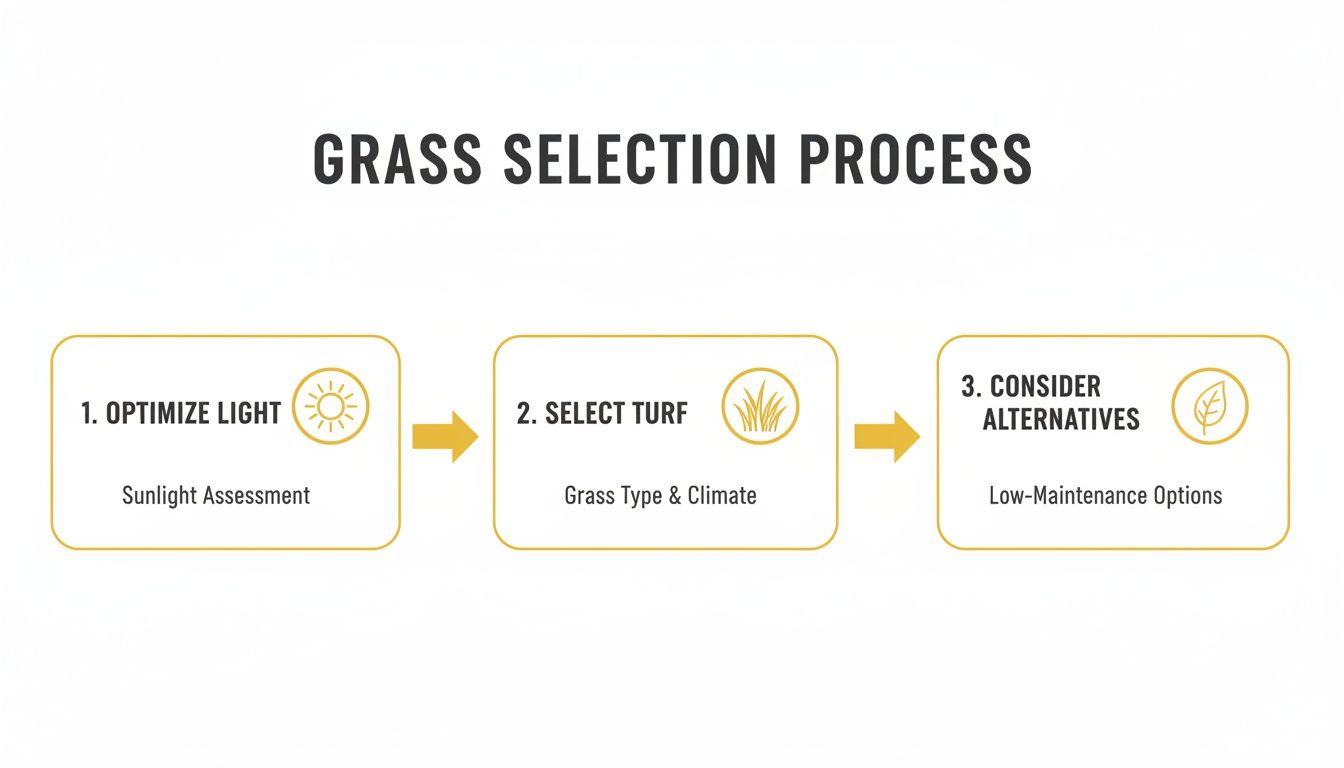
As you can see, choosing the right turf is just one piece of the puzzle. Success really begins with creating the ideal light conditions for it to thrive in.
Sodding vs. Seeding in Shaded Areas
Now you’re facing the classic choice: sod or seed? In a tough, shady spot, the answer isn’t always obvious. Sod gives you that instant green lawn and comes with a mature root system that can compete better from day one. The downside? It's more expensive and can struggle to root into the often-compacted soil under trees.
Seed, on the other hand, is much more budget-friendly and lets you establish roots directly into the soil you just prepped. But the major drawback is vulnerability. Seedlings can be washed away by a single heavy Florida downpour or simply be outcompeted by the tree for water and nutrients during that critical early growth phase.
For most situations under a tree, plugs or sod are a much better bet than seed. Their established root systems give them a huge head start in the competition for water and nutrients against the tree's massive root network.
Applying a Smart Starter Fertilizer
The final touch before planting is applying the right kind of fertilizer. Your new grass definitely needs a boost, but the last thing the tree needs is the extra stimulation from a high-nitrogen fertilizer. A nitrogen-heavy formula encourages weak, leafy grass growth that’s a magnet for fungal diseases—a common problem in shady, damp areas.
Instead, look for a low-nitrogen, high-phosphorus starter fertilizer. Phosphorus is the key nutrient for developing strong, vigorous roots, which is exactly what your new grass needs to establish itself quickly and hold its own against the tree.
Always follow the application rates on the bag carefully. In this case, more is definitely not better. It’s all about a precise application that balances the needs of the new lawn without creating problems for the mature tree. This idea of careful management is a lot like what we discuss in our practical guide to sealing tree cuts for healthier trees—where small, correct actions lead to long-term health for the whole system.
Long-Term Care to Keep Your Under-Tree Lawn Healthy
Getting that new grass to take hold is a huge win, but the real work starts now. Keeping it lush and healthy for years to come is the true test. The environment under a tree isn't static—the canopy thickens, roots spread, and the competition for resources never really ends. This means your long-term maintenance has to look a lot different than how you'd care for a lawn basking in full sun.
Think of it as an ongoing balancing act. A few smart adjustments to your watering, mowing, and feeding routine can be the difference between a thriving lawn and a patch that slowly gives up and reverts to bare dirt.
Specialized Watering and Fertilization
Water is the biggest battleground between your tree and your turf. A mature tree is an incredibly thirsty plant, constantly pulling moisture from the soil and often leaving your grass high and dry. The answer isn't to just water more often; it's to water more deeply.
Shallow, frequent watering is a mistake. It encourages both the tree and the grass to develop weak, surface-level roots, which actually ramps up their competition right where it matters most. Instead, your goal should be a "deep and infrequent" watering strategy.
Water Deeply: Give the area a good, long soak about once a week. You want to deliver roughly one inch of water in that session. This pushes both the grass and the tree to send their roots further down into the soil for moisture, which dramatically cuts down on that surface-level competition.
Water Early: Always get your watering done in the early morning. This simple habit minimizes evaporation and gives the grass blades plenty of time to dry before nightfall, which is your best defense against fungal diseases in a damp, shady spot.
When it's time to feed your lawn, remember that less is usually more under a tree. Pushing weak, spindly growth with high-nitrogen fertilizers is a recipe for disease. Stick with a slow-release, low-nitrogen fertilizer and use it sparingly—once in the spring and again in the fall is often plenty.
Mowing Taller and Pruning Smarter
How you mow is probably the single most important factor in keeping shaded grass alive. Every blade of grass is a tiny solar panel, and in a low-light area, you need to give it as much surface area as possible to capture sunlight for photosynthesis.
This means you need to set your mower to its highest possible setting. It might go against your instincts if you love a tightly manicured look, but longer grass blades mean more energy production and, in turn, stronger roots. As a rule, never remove more than one-third of the blade's height in a single mowing, as this can severely stress the plant.
Mowing tall is non-negotiable for shaded lawns. It provides the grass with the extra leaf surface it needs to capture every possible ray of filtered sunlight, building the energy reserves required to compete with the tree.
Of course, your tree will keep growing, making the shade denser over time. A light, selective pruning once a year is essential to keep that crucial dappled sunlight hitting the ground. This isn't a major overhaul—just a strategic thinning to keep things in balance.
Long-term success also means keeping an eye out for hidden threats. Protecting your new lawn from pests burrowing from below is key; professional services like mole and vole removal can be a lifesaver if these critters start damaging your new grass roots.
Common Questions About Growing Grass Under Trees
Let's be honest, growing grass under trees can feel like a constant battle. Even when you think you've done everything right, new challenges pop up. This is one of those projects where a little bit of real-world experience goes a long way.
So, I've gathered some of the most common "what if" scenarios and practical questions I hear from Florida homeowners. Think of this as your troubleshooting guide, filled with straightforward answers to help you navigate the tricky spots.
How Much Sun Does Shade-Tolerant Grass Actually Need?
This is the big one—the question I get asked more than any other. The term "shade-tolerant" can be a bit of a trap; it definitely doesn't mean "no sun." Every type of grass, even the toughest shade-loving varieties, needs some sunlight to photosynthesize and survive.
For the go-to choices in our area, like ‘CitraBlue’ St. Augustine or ‘Zeon’ Zoysia, you need to aim for a minimum of four to five hours of sunlight per day. This doesn't have to be five straight hours of harsh, direct sun. It can be a mix of morning sun, some dappled light filtering through the leaves midday, and a bit of late afternoon sun.
If your spot gets less than four hours, you’ll start seeing the classic signs of a struggling lawn. The grass will look thin, weak, and almost "stretchy" as it desperately reaches for light that isn't there. This is where professional canopy thinning isn't just a good idea—it's essential. Strategically opening up the tree’s canopy is often the single most effective thing you can do to give your grass the energy it needs.
The goal isn't to blast the area with full sun. It's about finding that sweet spot of dappled light. That's what separates grass that just hangs on from grass that actually looks great.
What Are the Best Non-Grass Options for Deep Shade?
Sometimes, the smartest move is knowing when to stop fighting a losing battle. There are always going to be certain spots—usually right under the thickest part of a mature oak's canopy or near the base of the trunk—that are just too dark for any turfgrass. Period. Trying to force grass to grow there is a surefire way to end up with a muddy, barren patch of dirt.
Instead, look at these problem areas as a chance to get creative. Hardy groundcovers can create a beautiful, lush green carpet that requires way less effort.
Here are a few of my favorites:
Mondo Grass (Ophiopogon japonicus): This is a top-tier choice for good reason. It forms a thick, dark green mat that has a grass-like look but thrives in the deep shade that would kill regular turf. Once it's established, it's incredibly durable.
Asiatic Jasmine (Trachelospermum asiaticum): If you need to cover a large, difficult area where nothing else will grow, this is your plant. It’s an extremely vigorous groundcover that forms a dense, glossy green blanket.
Cast Iron Plant (Aspidistra elatior): As the name suggests, this plant is nearly indestructible. For those truly dark, forgotten corners of your yard, its large, upright leaves add great texture and can handle incredibly low light.
By choosing the right groundcover, you transform a frustrating problem spot into an intentional, attractive part of your landscape.
Is It Safe to Aerate My Lawn Around a Tree?
Aerating is fantastic for lawn health. It breaks up compacted soil and lets water and nutrients get down to the roots. But when you're working under a tree, you have to be careful. A tree’s most important feeder roots are packed into the top 6-12 inches of soil, and they stretch out way further than you might think.
Using a heavy, mechanical core aerator is risky business here. Those deep tines can tear right through these crucial surface roots, putting the tree under a lot of stress. That damage can become an open invitation for pests and diseases, jeopardizing the tree's health down the road.
Instead of rolling the dice with mechanical aeration, try a gentler approach:
Topdress with Compost: This is the safest and most beneficial method. Just spread a thin layer (about a quarter-inch) of good-quality compost over the area once a year. The earthworms and microbes will do the hard work for you, pulling the organic matter down and naturally loosening the soil without harming a single root.
Liquid Aeration: Another solid option is a liquid soil conditioner. These products use compounds that help break up clay and loosen compacted soil particles, improving drainage without any physical disruption.
These methods get you the same results as mechanical aeration, but they do it gently, protecting that delicate relationship between your tree and your lawn.
When Is the Best Time to Plant Grass Under Trees in Florida?
Timing is everything, especially with Florida’s unique climate. You want to plant when the conditions are perfect for root establishment, not just for seeing a little green on top. For our warm-season grasses, that sweet spot is from late spring to early summer.
Planting anytime from May through July lets the new turf take full advantage of warm soil, long days, and our consistent summer rains. That combination fuels rapid root growth, which is exactly what your grass needs to get a foothold before the tree starts competing aggressively for water.
Whatever you do, avoid planting in the fall. It might seem like a good idea, but the shorter days and cooler soil will slow root growth to a crawl. A lawn planted in October will limp into winter with a weak root system, making it vulnerable. Give it the whole summer growing season, and you’ll have a lawn that’s tough enough to handle its shady home.
Ready to create the perfect environment for your new lawn? The first step is often clearing the way for sunlight and healthy soil. The team at Palm State Clear Cut specializes in selective tree thinning and forestry mulching to prepare your property for success. Get a free quote today and start your transformation!


Comments