
Growing Grass Under Trees: growing grass under trees in Florida
- Jan 21
- 14 min read
Growing grass under a big live oak or a towering pine isn't as simple as just scattering some seed. It really boils down to tackling three main challenges: the dense shade, the intense competition from tree roots, and the acidic soil they create. Get these three things right, and you're on your way to a lush lawn.
The Challenges of Growing Grass Under Trees
Let's be real—that beautiful, dense canopy that provides so much relief from the Florida sun can block up to 80% of the sunlight. For most types of grass, that's a death sentence. Photosynthesis grinds to a halt.
Without enough light, grass blades start to look thin and yellow almost immediately. Before you know it, you’ve got more bare dirt than green turf.
Understanding the Impact of Shade
But it's not just the lack of direct sunlight. The problems compound:
Constant leaf litter and pine needles build up, acting like a smothering blanket that blocks moisture and chokes out new seedlings.
The reduced light stunts growth and prevents the grass from developing a deep, healthy root system.
Lingering moisture in shady spots creates the perfect breeding ground for fungal diseases.
Even if you could solve the shade issue, you'd still have to deal with what's happening underground.
Managing Relentless Root Competition
That tree and your hopeful turf are locked in a fierce battle for water and nutrients, right in the top few inches of soil.
The tree's fine feeder roots are everywhere, occupying the same top 6 inches of soil your grass desperately needs to survive.
Those heavy, established roots also compact the soil, squeezing out the oxygen new turf needs to breathe.
This constant competition means any new grass you plant is incredibly vulnerable to drying out during our frequent dry spells.
Without first addressing the competition from tree roots, new seedlings simply don't stand a chance. It's an unfair fight from the start.
Tackling Acidic Soil
As if that weren't enough, all those fallen leaves and pine needles slowly decompose, pushing the soil's pH down. It's common to see a pH around 5.0 under mature trees. That’s a problem because our warm-season grasses are happiest in a pH range of 6.0 to 7.0.
When you see those tell-tale yellowing blades, it's often a sign of nutrient lockout caused by acidic soil.
Low pH also harms the beneficial microbes that are essential for a healthy, living soil.
A quick soil test from a local garden center can tell you exactly where your pH stands. This simple step is your roadmap for applying the right amount of lime or compost to get things back in balance.
Once you understand these three interconnected problems—shade, roots, and soil acidity—it's easy to see why just tossing some seed and hoping for the best is a recipe for failure.
Success means creating a balanced micro-ecosystem where both the tree and the turf can thrive. This involves carefully selecting the right grass, prepping the soil, and adopting a specialized maintenance routine.
Before you even think about planting, it's a smart move to improve light penetration by selectively pruning the tree's canopy. You can learn more about how to do this safely in our guide, A Homeowner’s Guide to Pruning Tall Trees Safely.
Throwing seed on compacted, acidic soil under a dense canopy is just an invitation for birds to have a feast, leaving you with the same bare patches you started with.
In the sections ahead, we'll walk through the specific strategies to overcome these hurdles—from choosing the right turf species to proper soil prep, irrigation, mowing, and troubleshooting.
Choosing The Best Shade-Tolerant Grass For Florida
Let's be honest: getting a lush lawn under a big oak or pine tree in Central Florida feels like an uphill battle. If you've tried and failed, you're not alone. The single most important decision you'll make is picking the right grass variety from the get-go. This isn't the place for just any old turf; you need a specific warm-season grass that's been bred to handle filtered sunlight instead of the full, blazing sun most lawns depend on.
Before you do anything else, take a hard look at the area you want to plant. How much sun does it really get? The dappled light under a tall pine is a world away from the deep, all-day shade cast by a mature live oak. Most grasses labeled "shade-tolerant" still need a bare minimum of four to five hours of filtered sunlight each day just to survive.
This infographic really puts the core challenges into perspective.

As you can see, it's a triple-threat: the tree canopy blocks sunlight, the massive root system hogs all the water and nutrients, and the soil quality is often poor. It's a tough environment for turf.
Top Grass Varieties For Florida Shade
When it comes to Central Florida's unique climate, two names consistently rise to the top for shady spots: St. Augustine and Zoysia. But here's the key—it's not just about the species, but the specific cultivar you choose.
St. Augustine GrassCertain types of St. Augustine are the undisputed champions of shade in our region. Known for their wide, coarse blades, they have an aggressive growth habit that gives them a fighting chance against invasive tree roots.
‘Floratam’: This is the most common St. Augustine you'll find, but it's a sun-lover. It needs at least six hours of direct sun and will thin out quickly in the shade.
‘Seville’: A fantastic choice for shady areas. It has a slightly finer texture than Floratam and shows genuinely good shade tolerance.
‘CitraBlue’: A newer player on the scene, this one is gaining popularity for its unique blue-green color and, more importantly, its strong resistance to diseases that often plague damp, shady lawns.
Zoysia GrassIf you want that dense, "barefoot grass" feel, Zoysia is an excellent option. It forms a thick, carpet-like turf and certain varieties are surprisingly good in low light. It's also more drought-tolerant than St. Augustine once it's established, though it can be a bit slower to bounce back from stress.
‘Zeon’: Famous for its soft, fine texture, Zeon has fantastic shade tolerance and is a top contender for lawns with big trees.
‘Innovation’: Another modern cultivar bred for better performance, Innovation holds up well in shade and has solid disease resistance.
To make it easier, here's a quick comparison of the top contenders.
Comparing Shade-Tolerant Grasses For Central Florida
This table breaks down the key characteristics of each popular variety to help you match the right grass to your yard's specific needs.
Grass Type | Shade Tolerance Level | Water Needs | Best For |
|---|---|---|---|
St. Augustine ‘Seville’ | High | Moderate to High | Areas with dense, consistent shade and homeowners who don't mind regular mowing. |
St. Augustine ‘CitraBlue’ | High | Moderate | Shady spots prone to fungus or disease; offers a unique color. |
Zoysia ‘Zeon’ | High | Low to Moderate | Yards with filtered sunlight and homeowners wanting a soft, low-mow lawn. |
Zoysia ‘Innovation’ | Moderate to High | Low to Moderate | Homeowners looking for a good balance of shade tolerance and drought resistance. |
Ultimately, the best choice depends on finding the perfect balance between your yard’s light conditions and your willingness to maintain it.
Your success is less about the species (St. Augustine vs. Zoysia) and more about the specific cultivar. Always check the specifications for a variety like ‘Seville’ or ‘Zeon’ rather than buying a generic sod pallet.
Making The Right Choice For Your Yard
Before you head to the sod farm, map out the light in your yard. The area under a slash pine that lets bits of sun through all day is very different from the solid, dark shadow of a magnolia.
You also have to be realistic about your own commitment. St. Augustine varieties tend to be aggressive growers, which means more frequent mowing during the summer. Zoysia is the opposite—it grows slower, requiring less time behind the mower.
Matching the right grass to your yard's unique light signature and your lifestyle is the foundational step. Get this part right, and you're well on your way to growing a healthy, green lawn, even in the most challenging parts of your landscape.
How To Prepare The Soil For Success
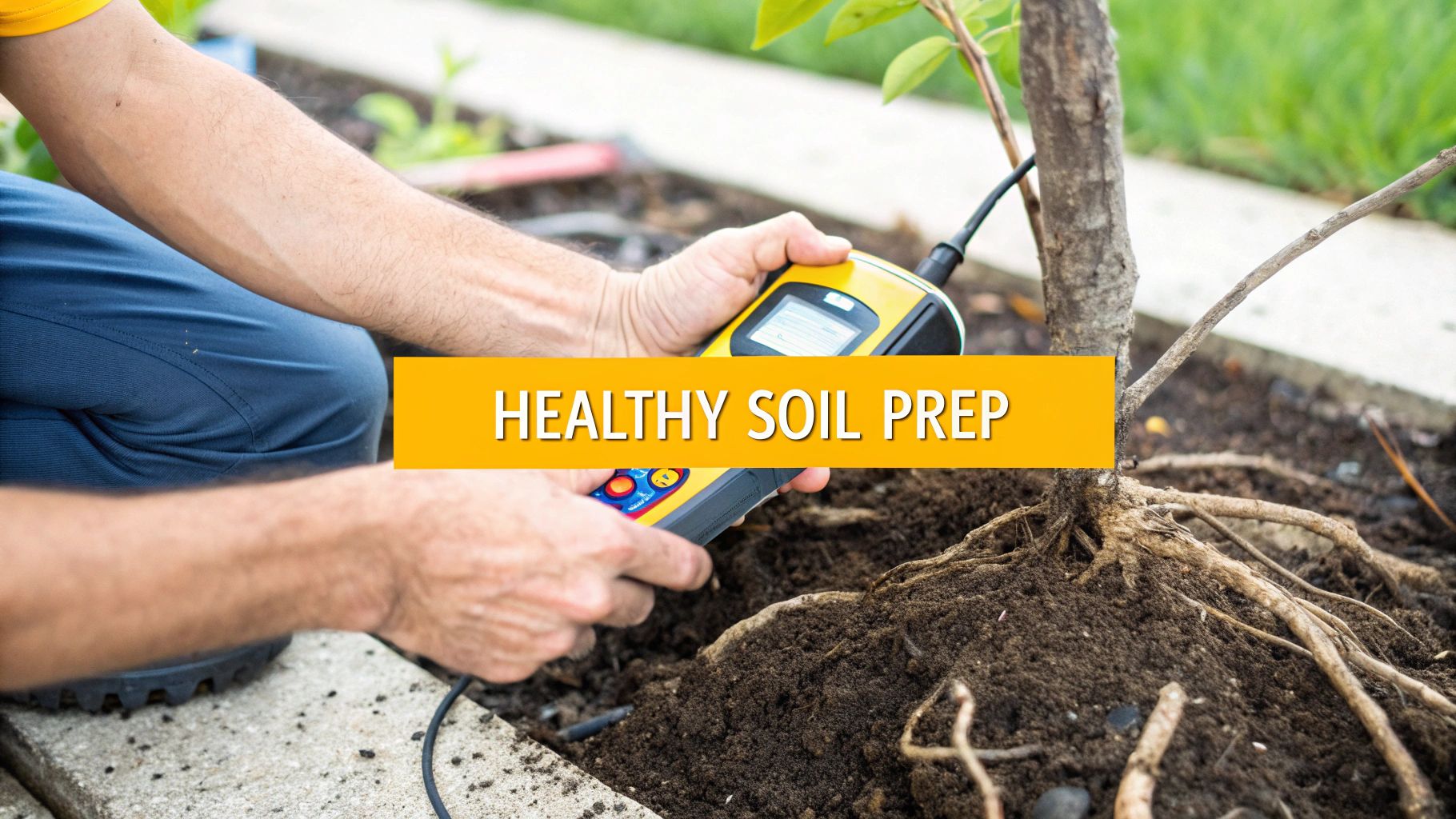
Successfully growing grass under trees isn't about the seed you choose—it's almost entirely about the quality of the soil you start with. Let's be honest, the ground beneath a mature oak or pine is often a pretty hostile environment. We're talking compacted, acidic, and stripped of nutrients.
Your main goal here is to transform this poor soil into a welcoming bed where new turf can establish strong roots and actually stand a chance.
Simply tossing down seed or laying sod on unprepared ground is a guaranteed way to waste time and money. I've seen it happen too many times. Before you even think about planting, you have to get the soil’s chemistry and structure right. And the only way to do that is to understand what you’re working with.
A simple soil test kit from a local garden center is your best friend here. It’ll tell you your soil's pH level, which is usually acidic under trees thanks to all those decomposing leaves and pine needles. Most warm-season grasses we grow in Florida prefer a pH between 6.0 and 7.0. Anything lower, and the soil locks up essential nutrients, making them unavailable to the grass, no matter how much you fertilize.
Amending And Revitalizing Your Soil
Once you have your pH reading, you can start making corrections. If your soil is acidic (below 6.0), you’ll need to apply lime to raise the pH. The test results should give you a good idea of how much to use for your specific area.
Next up is tackling the soil's structure and fertility. Tree roots and years of foot traffic can make the ground as hard as a rock, starving new grass roots of oxygen. The fix for this is incorporating good old organic matter.
Spread a Layer of Compost: Get a one- to two-inch layer of high-quality organic compost and spread it over the entire area. Compost is a game-changer; it improves drainage, adds vital nutrients, and brings in beneficial microbes.
Loosen the Topsoil: Gently work that compost into the top four to six inches of soil. You can use a hard rake or a tiller on a low setting. Just be incredibly careful to avoid nicking or damaging major tree roots.
Never, ever pile a thick layer of new topsoil over existing tree roots. This is a common mistake that can suffocate the tree by burying its flare—that spot where the trunk widens at the base. It’s a slow death sentence for the tree.
Managing The Root Competition
Even with perfect soil, your new grass is still locked in a direct fight with the tree for resources. The competition for water, nutrients, and oxygen is most intense in the top few inches of soil, right where both turf and tree feeder roots live. This constant battle is a core challenge when trying to get anything to grow under trees.
To give your grass a fighting chance, I highly recommend creating a mulched area directly around the tree's base. A three- to four-foot mulch ring eliminates that intense zone of competition and, as a bonus, protects the tree trunk from mower and string trimmer damage.
This one small change can make a massive difference for both your tree and the surrounding turf. If you're interested in learning more about preventing erosion and keeping your ground stable, check out our practical guide to soil stabilization techniques.
By taking these steps, you’re creating an environment where your new, shade-tolerant grass has a real shot to not just survive, but actually thrive.
Getting Your New Grass Planted: Sod, Plugs, or Seed?
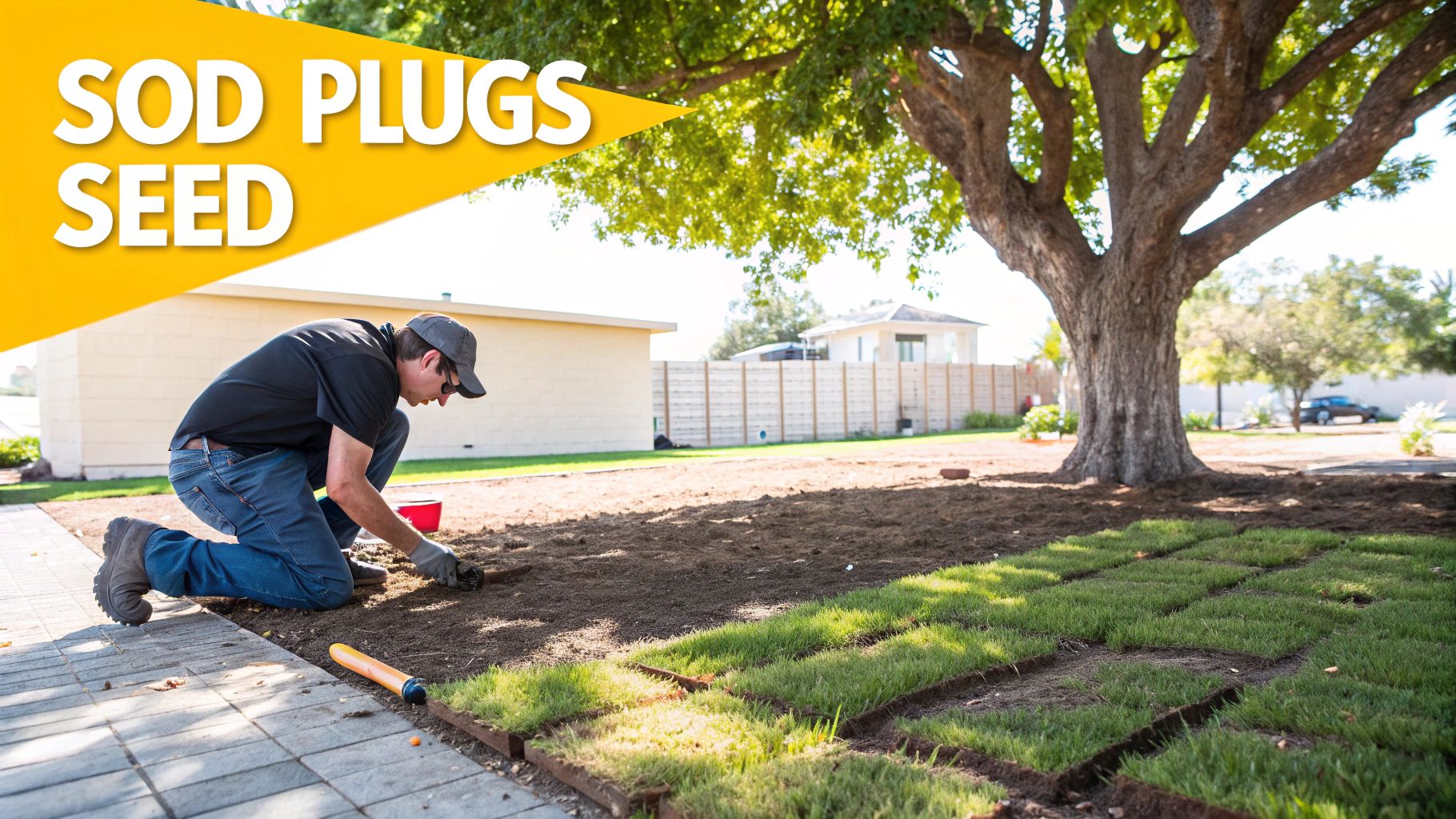
Alright, your soil is prepped and ready to go. Now comes the big decision: how are you going to get that new, shade-loving grass into the ground? Your choice between laying sod, planting plugs, or spreading seed will have a huge impact on your budget, the work involved, and how fast you see a lush, green lawn.
When you're trying to grow grass under trees, each method has its own set of pros and cons.
There's no denying the appeal of sod. It delivers that "instant lawn" satisfaction that everyone loves. Laying down fresh turf immediately covers the bare ground, which is great for controlling erosion and giving you a finished look right away. The catch? Success with sod in a shady spot hinges entirely on getting perfect root-to-soil contact.
Any air pockets trapped between the sod and the ground will create dry spots that are a death sentence for the new roots. You absolutely have to stagger the seams—think of it like laying bricks—and use a lawn roller to gently press the sod down. This ensures it makes solid contact everywhere.
Plugs vs. Seed: Finding the Right Fit
Turf plugs are a fantastic middle-of-the-road option, especially if you're tackling a larger area where a full sod installation would break the bank. Plugs are just small, individual chunks of mature turf that you plant in a grid pattern. It's way more budget-friendly than sod and lets the grass establish itself directly in your own soil.
If you go with plugs, here are a couple of tips from experience:
Space them out right: A good starting point is planting them 12 to 18 inches apart. The closer you plant them, the faster they'll grow together and fill in the bare spots.
Keep them watered: The little root balls on plugs can dry out incredibly fast. You can't slack on this—consistent, light watering for the first few weeks is non-negotiable.
Spreading seed is, without a doubt, the toughest path for growing grass under trees here in Central Florida. The combination of shade, dampness, and competition from tree roots creates a brutal environment for tiny seedlings. Fungal diseases can wipe out a whole batch of new sprouts in a damp, shady corner before they even have a chance.
While seeding is the cheapest way to go, its failure rate in shady areas is notoriously high. To succeed, you need to be incredibly meticulous about moisture—it can't be too wet or too dry—and you have to protect the seeds from birds and getting washed away by rain.
Timing is Everything for a Strong Start
No matter which method you land on, your timing is critical. Our warm-season grasses need to be planted during their active growing season to get the best possible head start. You should be aiming for late spring or early summer.
This timing lets the new grass use the warm temperatures and longer days to build a solid root system before it has to deal with any winter stress. Planting in this window gives your sod, plugs, or seeds the momentum they need to truly compete and thrive in their new, shaded home.
Mastering Shaded Lawn Maintenance
Once your new turf is in the ground, the real work begins. Keeping grass healthy under a tree canopy isn’t about brute force; it’s a game of finesse. The habits you start now will decide whether your shaded lawn thrives or slowly gives up the ghost.
Forget how you care for the sunny spots in your yard. This is a completely different ballgame, and the biggest mistake I see homeowners make is treating their entire lawn the same. Grass struggling in the shade is already stressed from limited light and intense root competition. Your job is to support it, not push it over the edge.
Adjust Your Watering Strategy
Deep, infrequent watering is the golden rule here. A light, daily sprinkle might feel right, but it only encourages shallow grass roots that can't compete with the tree's massive, established root system. It also keeps the surface constantly damp—an open invitation for fungal diseases that love shady, moist conditions.
Instead, commit to watering deeply just once or twice a week. This simple change forces the grass roots to grow downward in search of moisture, making them far more resilient. Your goal is to moisten the soil to a depth of six to eight inches with each session.
A simple trick I use is the screwdriver test. After watering, stick a long screwdriver into the soil. If it goes in easily to about six inches, you’re good. If not, let the sprinkler run a bit longer next time.
Rethink Your Mowing And Fertilizing Habits
How you mow and feed your shaded lawn can absolutely make or break it. These two practices directly impact the grass's ability to photosynthesize and find nutrients in such a challenging, low-light environment.
Mow Higher for More LightSet your mower blade to one of its highest settings, aiming for around three to four inches for St. Augustine or Zoysia. Taller grass blades mean more surface area, which allows them to capture every last bit of filtered sunlight that trickles through the canopy. Cutting shaded grass too short is probably the quickest way to kill it.
Fertilize with a Lighter TouchGrass growing in the shade grows much more slowly, so it doesn't need nearly as much fertilizer as its sun-soaked counterparts. Over-fertilizing just encourages weak, spindly growth that’s a magnet for disease.
Reduce the Amount: As a rule of thumb, use about half the amount of fertilizer you'd apply to the sunny parts of your lawn.
Time it Right: A slow-release nitrogen fertilizer applied in the fall is often your best bet. It supports root development without forcing a bunch of weak top growth.
Interestingly, while trees and grass compete for resources, they can also create a beneficial microclimate. Research shows that the positive effects of trees on grass peak when they filter sunlight down to about 60%-80% of full intensity. This finding really drives home why selective pruning is so effective. In a tropical climate like Florida's, this canopy can even help reduce heat stress on the turf during droughts.
Even with the best care, pests like gophers can quickly unravel all your hard work. To truly protect your investment, you might need to incorporate effective gopher control strategies into your overall plan. A healthy lawn requires a multi-faceted approach, and managing pests is a crucial piece of that puzzle.
Smart Alternatives When Grass Just Won't Grow
Let's be realistic for a moment. Sometimes, no matter what you try, a spot is simply too shady or choked with roots for any kind of grass to really thrive. Seeing this isn't admitting defeat—it's the first step toward creating a landscape that's not just beautiful, but sustainable and low-maintenance.
If an area under a tree gets less than four hours of dappled, filtered sunlight a day, you are fighting a losing battle with turf. Period. Instead of pouring more time, money, and frustration into a patch of ground that's destined to be bare, it’s much smarter to work with nature instead of against it.
Embrace Shade-Loving Groundcovers
Once you stop trying to force a lawn where it doesn't want to be, a whole world of elegant and practical solutions opens up. Many plants are perfectly adapted to the low-light, competitive environment under a tree canopy. They offer fantastic texture and color, and they require far less upkeep than a struggling patch of grass ever will.
Some excellent choices for our Central Florida climate include:
Mondo Grass (Ophiopogon japonicus): This stuff is tough. It forms dense, dark green clumps that look like grass but handle shade like a champ. Once it's established, it's incredibly drought-tolerant, making it perfect for creating a lush, no-mow carpet under our big live oaks.
Asiatic Jasmine (Trachelospermum asiaticum): If you need something hardy that spreads fast, this is your answer. Asiatic jasmine creates a thick, glossy green mat that is fantastic at smothering weeds. It can even handle a surprising amount of foot traffic.
Mulched Beds: Never underestimate the classic, clean look of a well-defined mulch bed. Creating a wide ring of mulch around your tree solves the grass problem instantly. Better yet, it protects the tree's trunk from mower and trimmer damage. You can leave it as a simple mulch ring or get creative by planting shade-tolerant plants like hostas to add layers of interest.
Choosing a groundcover alternative isn't just a landscaping decision; it’s a strategic shift. You stop fighting the environment and start enhancing it, resulting in a healthier ecosystem for your trees and a more visually appealing yard for you.
Professional Solutions For Overgrown Lots
For larger properties, especially those in more rural or agricultural settings, the tug-of-war between trees and open ground is a constant challenge. For Central Florida's ranchers and landowners, making the right vegetation management decisions has a direct and long-term impact on property value and usability.
When a property is so overgrown that creating any kind of usable space seems impossible, it's time to call in the pros. This is where professional land clearing can completely change the game.
Services like forestry mulching can selectively thin out dense undergrowth and small trees, instantly letting more sunlight reach the ground. This process can transform a previously inhospitable, tangled mess into a blank canvas. It suddenly becomes possible to establish healthy grass or other groundcovers in areas where it was once unthinkable. This professional approach is often the most effective first step in reclaiming and redesigning a challenging piece of land.
When your property needs a major transformation to make way for a healthy, beautiful landscape, the experts at Palm State Clear Cut are here to help. Our professional forestry mulching services can clear overgrown areas efficiently, creating the perfect canvas for your landscaping vision. Visit us at https://palmstateclearcut.com to get your free quote today.


Comments