
Forestry Mulching Rates: A Clear Guide to Costs and Quotes
- Jan 18
- 18 min read
When you start looking into clearing an overgrown property, the first big question is always the same: "What's this going to cost?"
Forestry mulching rates in Central Florida usually fall somewhere between $550 to $1,700 per acre or $150 to $450 per hour. The final price tag hinges on whether the job is quoted by the acre or by the hour, a decision that comes down to things like how thick the vegetation is, what the terrain is like, and just how complex your project is overall.
Your Quick Guide to Forestry Mulching Rates
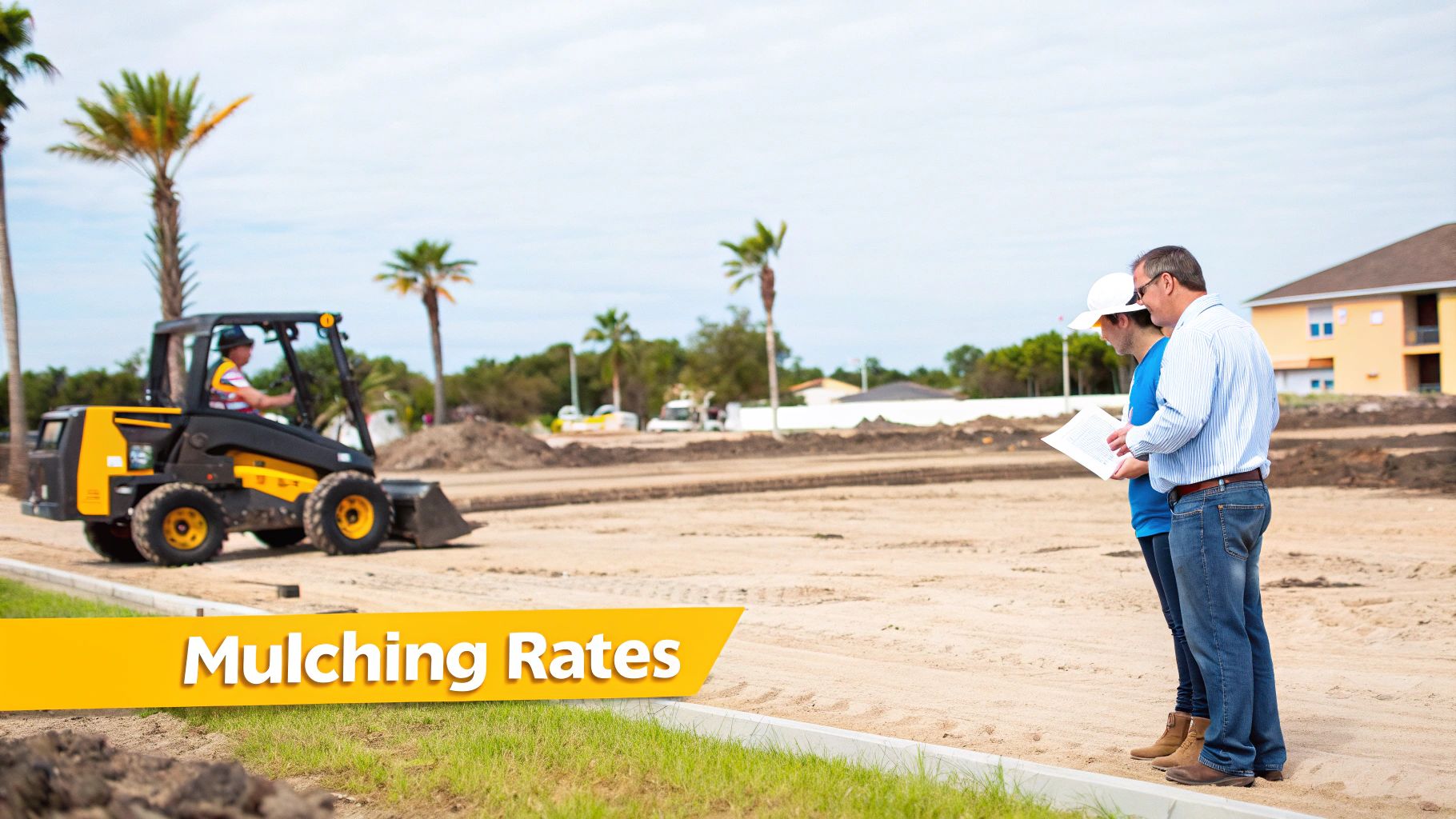
Think of pricing a mulching job like booking a ride-share. A long, straight shot down the highway is predictable, so you'll likely get a flat fee—that's your per-acre rate. But a complicated trip through downtown traffic with a bunch of stops? That’s better priced by the minute, which is your hourly rate.
The same logic applies to your land. The "traffic" is the density of the brush, the "road conditions" are the slopes and soil, and the "vehicle" is the size of the mulching machine needed for the job.
This guide will break down the two main ways contractors price their work, so you can walk into a conversation feeling confident and prepared.
The Two Core Pricing Models
Every piece of land is different, but contractors almost always build their quotes using one of two pricing structures. Understanding how each one works will help you figure out what to expect and why a pro might recommend one over the other for your property.
Per-Acre Rate: This is a straightforward, flat-fee model. It's perfect for larger, fairly uniform properties where the job is predictable. If you have ten acres of mostly flat land with consistent overgrowth, a per-acre rate gives you a solid, predictable number for your budget.
Hourly Rate: This approach works best for smaller, trickier, or more unpredictable jobs. Picture a one-acre lot choked with dense palmetto thickets, a few steep spots, and some big rocks to work around. An hourly rate makes sure the contractor is fairly paid for the detailed, time-consuming work that’s required.
Here in Central Florida, the choice often comes down to the local landscape. The sandy soils in Polk County might let a machine work faster, making a per-acre price a good fit. But the wet, mucky areas you find in parts of Osceola County can really slow things down, which makes an hourly rate much more practical.
Forestry Mulching Pricing Models at a Glance
To make it even clearer, let's look at a simple comparison. The table below shows which scenarios usually call for each pricing model. Getting a handle on these differences is the first real step in understanding what forestry mulching is and how the costs are put together.
Pricing Model | Typical Rate Range (Central FL) | Best For | Key Consideration |
|---|---|---|---|
Per Acre | $550 – $1,700 | Large, open, and uniform properties (5+ acres) with predictable vegetation and flat terrain. | Provides a fixed, predictable cost for the entire project, making budgeting straightforward. |
Per Hour | $150 – $450 | Small, dense, or complex lots with varied terrain, obstacles, or selective clearing needs. | Offers flexibility for jobs where the total time is hard to estimate upfront due to unknown conditions. |
Ultimately, a good contractor will assess your property and explain exactly why one model makes more sense than the other. This transparency is a key sign you're working with a true professional.
Decoding Per Hour vs. Per Acre Pricing
When you start getting quotes for forestry mulching, you'll see they almost always come in two flavors: by the hour or by the acre. It's a bit like choosing between a taxi and a flat-rate airport shuttle. The taxi's meter (hourly rate) is great for short, unpredictable trips, while the shuttle (per-acre rate) gives you a set price for a known route.
Neither one is better than the other—it all comes down to the specifics of your property. A good contractor will walk your land and recommend the pricing structure that makes the most sense, ensuring you don't overpay for a simple job or get a lowball quote for a really complex one.
The Logic Behind Hourly Forestry Mulching Rates
Hourly pricing is the way to go when the job is full of unknowns. This is especially true for smaller lots, usually under five acres, where a few tricky spots can throw a time estimate way off. With a rate typically between $150 and $450 per hour, this model protects both you and the contractor from surprises.
So what does that hourly rate get you? In most cases, it covers a single heavy machine—like a skid steer with a serious mulching head—and the skilled operator running it. Think of it as a package deal: you’re paying for both the machine's muscle and the operator's experience to use it safely and efficiently.
An hourly rate is a perfect fit for a few common scenarios:
Jungle-Like Growth: If your land is a tangled mess of thick palmettos, stubborn vines, and invasive Brazilian Pepper, the operator has to chew through it slowly and carefully.
Tricky Terrain: Steep hills, soggy ground, or land littered with rocks and old stumps means the operator has to navigate with caution, which takes more time.
Surgical Clearing: When you need someone to carve out winding nature trails or clear underbrush while saving your prized live oaks, it’s all about precision, not speed.
Basically, when a project requires more finesse than brute force, an hourly rate makes sure the final bill is a fair reflection of the actual work performed.
When Per-Acre Pricing Makes More Sense
On the flip side, you have the per-acre pricing model. This is the standard for larger, more consistent properties where a contractor can confidently predict how long the job will take. If you have 20 acres of relatively flat land with the same type of brush throughout, a per-acre quote gives you a solid, all-in number for your budget.
A fixed per-acre rate gives landowners peace of mind. You know the final cost before the first machine ever touches your property, eliminating any surprises from unexpected delays or challenges. This predictability is invaluable for large-scale projects.
This model shines when the job is straightforward. Clearing an old pasture that’s been reclaimed by light brush or thinning out a uniform stand of pines are predictable tasks. The operator can move at a steady, efficient pace without constantly stopping to deal with obstacles, which allows the contractor to lock in a reliable flat fee.
Comparing the Two Models: A Landowner’s View
Figuring out which model is best isn't just for the contractor; it has a direct impact on your budget and what you can expect. Knowing the pros and cons from your perspective is the key to comparing quotes like a pro.
Pricing Model | Pros for the Landowner | Cons for the Landowner | Best Fit Example |
|---|---|---|---|
Hourly Rate | You only pay for the time the machine is actually working. For smaller, clear-cut tasks, this can be very cost-effective. | The final cost is a moving target. If the crew hits unexpected problems, it can run higher than the estimate. | A two-acre lot with dense thickets and a few tricky slopes needing careful clearing for a new homesite. |
Per-Acre Rate | The total cost is locked in. It makes budgeting simple and gets rid of any "what if" financial stress. | It might not be the cheapest option for very small jobs or plots where a flat rate could overestimate the actual work needed. | A flat, 15-acre pasture that needs consistent brush clearing to be used for grazing again. |
What Really Drives Your Forestry Mulching Cost
Thinking about your final forestry mulching quote is a lot like pricing out a custom home build. You have a base price, sure, but the real cost comes from the specific "materials" and "site conditions" of your land. A flat, clean acre is one thing; a sloped property choked with dense oak scrub is a completely different project.
When you understand the key variables that influence forestry mulching rates, you start to see your property through a contractor's eyes. It helps you grasp exactly why your quote is structured the way it is and what elements are pushing the bottom line up or down. Every factor tells a piece of the story about the time, effort, and equipment needed to do the job right.
This isn't just a local trend, either. The demand for professional land clearing is booming. The global forestry mulching market is projected to climb from roughly $500 million in 2025 to $850 million by 2033, showing just how many people are recognizing mulching as a smart, efficient way to manage land.
Vegetation and Density: The Thicker the Jungle, the Higher the Cost
The single biggest factor driving your cost is simply what we need to clear. An operator can fly through sparse grass and light palmettos, but dense, woody vegetation is a different beast entirely. It’s the difference between mowing a lawn and clearing a jungle.
Light Growth: Think thin brush, small saplings (under 2 inches), and scattered palmettos. This stuff is relatively easy to process, which keeps forestry mulching rates on the lower end of the spectrum.
Moderate Growth: A mix of thicker palmetto clumps, larger saplings (2-4 inches), and stubborn vining plants will slow the machine down. This means more time and more fuel.
Heavy and Dense Growth: Tackling a solid wall of old-growth palmettos, invasive Brazilian Pepper trees, or thick oak scrub is the most time-consuming and costly scenario. The equipment has to work much harder, and the operator has to move methodically to get the job done safely and effectively.
To get a better feel for the powerful machines we use to tear through this kind of vegetation, check out our complete guide to land clearing mulchers.
Terrain and Soil Conditions: The Lay of the Land
Right after vegetation, the ground itself plays a massive role in the final price. A flat, dry, sandy field is the perfect canvas for a mulching machine. But Central Florida is known for its diverse—and often tricky—terrain, which can add significant time and complexity to the project.
It’s just like driving a car. A smooth, paved highway lets you travel quickly and efficiently. But a muddy, rutted backroad forces you to slow way down, navigate carefully, and burn more fuel. The exact same logic applies to heavy mulching equipment.
In places like Osceola or parts of Brevard County, unexpectedly wet or mucky soil can turn a straightforward job into a complex one. A skilled operator knows how to navigate these areas safely, but it inevitably takes more time and care, which is reflected in the final cost.
Site Accessibility: Can the Equipment Even Get In?
Even the most powerful mulching machine is useless if it can’t get to the work area. Site access is a huge logistical factor that directly impacts your quote. Moving heavy equipment, which can easily weigh over 20,000 pounds, is a serious operation.
Here are a few common access challenges we run into:
Remote Locations: Properties far down long, unpaved roads might require extra time and transport costs.
Narrow Gates or Fences: If the existing entrances are too small, we might have to temporarily remove a section of fence and reinstall it later, which adds labor to the job.
Obstacles: Low-hanging tree limbs, overhead utility lines, or ditches can prevent equipment from safely reaching the site without some extra prep work.
This chart breaks down how forestry mulching rates are categorized, helping you see where your project might fit.
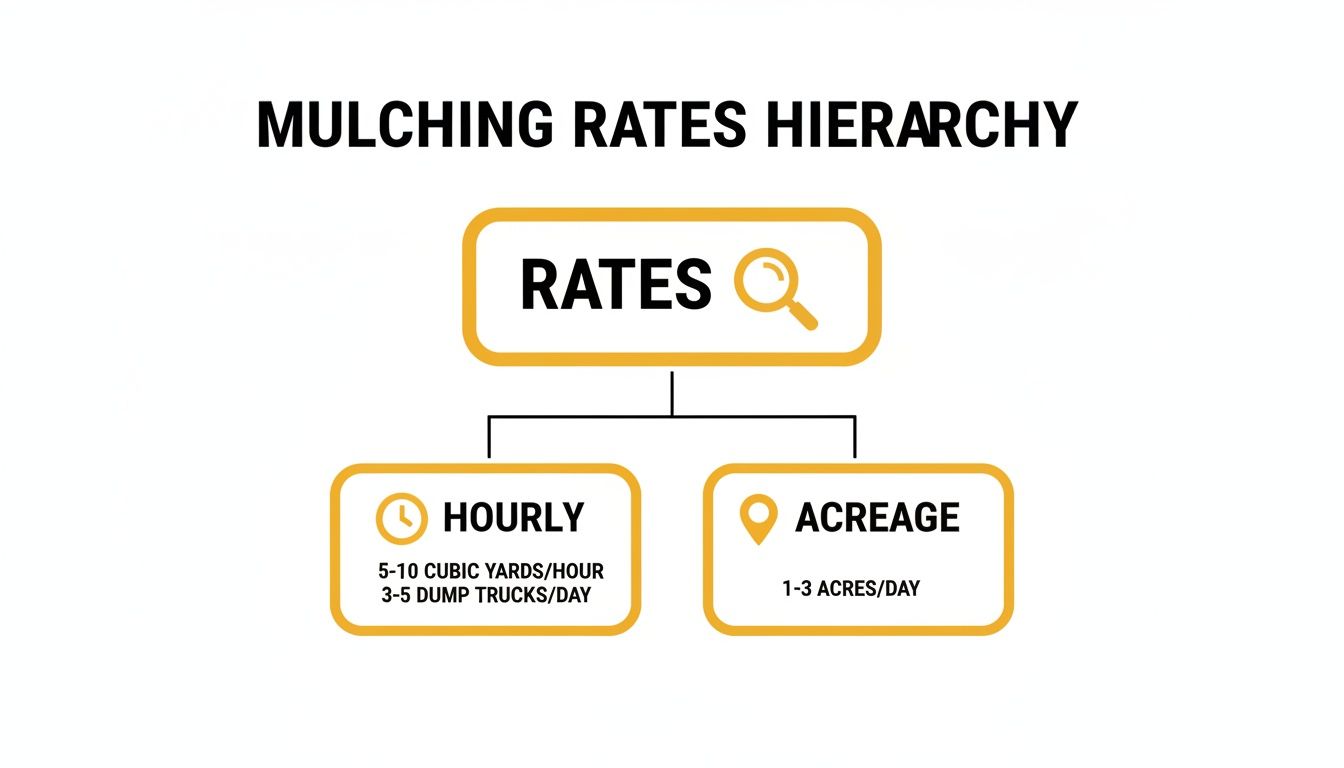
As you can see, the two main pricing structures—hourly and per acre—are just the starting points. From there, all the site-specific factors we're discussing come into play.
To make this crystal clear, here’s a table showing how different on-the-ground conditions can swing your quote from one end of the spectrum to the other.
How Different Factors Impact Your Mulching Quote
Cost Factor | Low-Cost Scenario Example (Central FL) | High-Cost Scenario Example (Central FL) | Estimated Cost Impact |
|---|---|---|---|
Vegetation Type | Sparse grass, young palmettos, saplings under 2" diameter | Dense Brazilian Pepper, old-growth oak scrub, thick vines | Can increase cost by 50-150% |
Terrain | Flat, dry, sandy soil with no standing water | Hilly, wet, or swampy terrain with hidden stumps/rocks | Can increase cost by 25-75% |
Site Access | Property abuts a paved road with a wide, clear gate | Remote location down a narrow dirt road with overhanging trees | Can increase cost by 10-30% |
Desired Finish | Single pass "bulk clearing" to knock everything down | Selective clearing around mature trees with a fine "park-like" finish | Can increase cost by 20-60% |
These numbers are estimates, of course, but they show how dramatically the final price can change based on the unique challenges your specific property presents.
Project Goals and Desired Finish
What do you want the land to look like when we're done? Your answer heavily influences the work involved. A simple "clear it all" job is very different from a detailed, selective clearing project that requires a more delicate touch.
Bulk Clearing: The goal here is pure speed and efficiency. The operator clears everything within a defined boundary. This is typically the most straightforward and cost-effective approach.
Selective Clearing: This requires precision. Maybe you want to save mature oak trees, create winding trails, or clear specific fence lines. This "surgical" work takes more time and a higher level of operator skill.
Fine Mulch Finish: If you're looking for a finer, more park-like finish, the operator might need to make a second pass over the area. This extra step grinds the mulch into smaller pieces but adds time and cost to the project.
Debris Management and Extra Services
Finally, what happens after the mulching is done? Standard forestry mulching leaves the shredded material on the ground, where it acts as a natural, beneficial ground cover that helps prevent erosion and returns nutrients to the soil. However, some projects have different needs.
These are a few additional services that can affect your final cost:
Debris Hauling: If you need the mulch completely removed from the property, that will involve extra labor and equipment for loading and transport.
Stump Grinding: While our mulchers can handle small stumps, larger ones may need to be ground down separately with specialized equipment.
Herbicide Application: To prevent aggressive regrowth, especially with invasive species like Brazilian Pepper, a follow-up herbicide treatment might be a good idea. It's a separate service that adds to the initial investment but can save you a ton of money on future clearing.
Putting It All Together with Real-World Scenarios
Understanding the different factors that shape forestry mulching rates is one thing, but seeing how they play out in the real world makes it all click. Let's walk through three realistic scenarios you'd find right here in Central Florida.
Each example breaks down a property's unique challenges and connects them to a final estimated cost. This way, you can see the "why" behind the numbers.
Scenario 1: The Overgrown Suburban Lot
First, imagine a one-acre lot in a budding Orlando suburb. It’s been left to its own devices for years and is now a solid wall of palmetto bushes, small volunteer oaks, and invasive Brazilian Pepper. The average tree diameter is around 2-4 inches. Fortunately, the ground is flat and sandy, with easy access from a paved road.
The Goal: The owner wants to clear the entire acre to get it ready for new home construction, basically hitting the reset button for the builders.
Key Cost Factors: The biggest cost driver here is the sheer density of the vegetation. Even though the terrain is a piece of cake, the mulcher has to work slowly and methodically to chew through all that growth. The easy access is a plus, keeping mobilization fees low.
Pricing Model: An hourly rate makes the most sense. Trying to set a per-acre price would be a guessing game because of how dense and unpredictable the growth is. An hourly model is fair—the owner only pays for the time it actually takes to do a thorough job.
For projects with a ton of vegetation packed into a small footprint, hourly rates are the most transparent way to go. The contractor can focus on getting the job done right without worrying about a flat fee that might not cover the effort needed.
Estimated Cost Calculation:Given how thick the growth is, a powerful skid steer mulcher would likely need 6-8 hours to clear this acre completely. At a hypothetical rate of $300 per hour, the total project cost would fall somewhere between $1,800 and $2,400.
Scenario 2: The Large Agricultural Property
Now, let's head out to a ten-acre agricultural property in rural Polk County. Most of it is open pasture, but the fence lines and one corner have been taken over by thick brush and invasive species. The land is flat, the soil is firm, and there's wide-open access for any size machine.
The Goal: The farmer needs to reclaim the pasture for grazing cattle and create clear, maintainable fence lines. This job involves clearing about three acres of heavy growth and thinning out another two acres of lighter brush.
Key Cost Factors: The project's large, uniform nature and easy terrain make it very efficient. The only real variable is the difference in density between the overgrown fence lines and the lighter pasture brush.
Pricing Model: A per-acre rate is perfect for this. A contractor can look at the two distinct areas and provide either a blended rate or two separate per-acre prices. This gives the landowner a fixed, predictable number to budget for.
Estimated Cost Calculation:A contractor would likely quote this project in two parts:
Three acres of dense fence line clearing at $1,200 per acre = $3,600
Two acres of light brush thinning at $600 per acre = $1,200
This brings the total estimated cost for clearing the five targeted acres to $4,800. It's a clear, straightforward approach that works great for large-scale jobs.
Scenario 3: The Selective Clearing Project
Finally, picture a five-acre property in Lake County, with the sandy, slightly rolling hills common to the area. The owner doesn't want to clear everything. Instead, they want to create firebreaks around the property's edge and carve out a network of ATV trails, all while carefully preserving the beautiful, mature live oaks.
The Goal: This is a precision job. The operator has to navigate carefully, removing underbrush and small trees while leaving the valuable ones untouched.
Key Cost Factors: The main drivers here are the need for precision and the slightly tricky terrain. The operator's skill is everything; this is more like surgery than bulk clearing. The sandy soil might also slow the machine down a bit.
Pricing Model: An hourly rate is the only way to go. A per-acre quote just can't account for the detailed, stop-and-go work required for selective mulching. The project’s success is all about careful maneuvering, not speed.
Estimated Cost Calculation:This kind of careful, detailed work might take 12-16 hours to complete across the five acres. Using a rate of $325 per hour—which reflects the higher level of operator skill needed—the project estimate would be between $3,900 and $5,200.
How to Get an Accurate Forestry Mulching Quote
Getting a quote that truly reflects your final cost is the single most important step in any land clearing project. It’s not just about finding the lowest number—it's about getting a transparent, well-thought-out estimate that sets your project up for success from day one.
To get there, you need to do a little homework before you pick up the phone and know exactly what to ask when a contractor arrives on-site. This prep work builds your confidence and makes sure there are no costly surprises down the road.
Questions to Ask Yourself Before Calling
The clearer you are about your needs, the clearer the quote will be. Before you reach out to a professional, take a walk around your property and get solid answers to these key questions.
What are my exact property boundaries? You need to know precisely where your land begins and ends. Use survey markers or a property app to clearly define the work area so the contractor knows exactly what to quote.
What is my ultimate goal for this land? Are you prepping for a new home build, reclaiming an overgrown pasture, carving out some ATV trails, or just improving the view? Your end goal helps the contractor recommend the best approach and the right type of finish.
What specific areas need clearing, and what should be saved? If you have prized live oaks or a patch of native vegetation you want to keep, mark them clearly. Brightly colored flagging tape works perfectly.
Are there any known hazards? Make a quick list of any old wells, hidden stumps from past clearing, large rocks, or low-lying wet spots that could be a challenge for heavy equipment.
Questions to Ask the Contractor On-Site
Once a professional is on your property, it's your turn to interview them. The way they answer will tell you a lot about their experience, professionalism, and the real value they offer beyond just a price tag. And if you're curious about how reputable pros find you, it's interesting to see the strategies home service companies use to attract ready-to-hire clients.
A reputable company will welcome these questions:
Are you fully licensed and insured? This is non-negotiable. Ask to see proof of both general liability and worker's compensation insurance. This protects you from being held liable for any accidents on your property.
What specific equipment will you use for my project? The machine has to fit the job. A big, dedicated mulcher is fantastic for wide-open acreage, but a more agile skid steer is often better for smaller, more complex lots with obstacles.
How do you handle unexpected obstacles? What’s the plan if they hit a patch of extremely rocky soil or find a hidden ditch? A real pro will have a clear contingency plan and won't be caught off guard.
Is debris hauling or stump grinding included? Standard forestry mulching leaves the mulched material on-site to enrich the soil. Make sure you confirm if any extra services like hauling are part of the quote or will be billed separately.
Can you provide a written, itemized quote? A verbal estimate just doesn’t cut it. A professional quote should break down the costs, scope of work, and give you an estimated timeline.
That equipment question is a big one. The mulching equipment market is booming, projected to hit $2.32 billion by 2032 as the technology keeps getting better. Newer machines have improved fuel efficiency and give the operator finer control over the mulch size, which directly impacts the quality of the finish on your property.
Comparing quotes isn't just about the bottom-line price. An experienced, insured team with modern equipment might have a higher quote, but they also bring efficiency, safety, and a higher-quality result that prevents costly fixes later.
By arming yourself with this checklist, you can confidently evaluate different contractors. This proactive approach helps you compare quotes "apples-to-apples" and choose a true partner who delivers real value. For more tips, check out our guide on finding the best forestry mulching services near you.
Why the Cheapest Quote Is Rarely the Best Value
After digging into all the factors that go into forestry mulching rates, it's really tempting to just go with the lowest bid. But that's a common mistake, and it can be a costly one. This isn't like buying a standard product off the shelf; it's a long-term investment in your property's health, safety, and overall value.
That rock-bottom price often hides costs that won't show up on the first invoice. An unusually low quote can be a huge red flag, often pointing to an operator who is under-equipped, inexperienced, or cutting corners somewhere. These risks aren't just theoretical—they can cause real, lasting damage to your land.
The Hidden Costs of a Bargain Bid
Choosing a contractor based on price alone might feel like a win at first, but it can lead to some serious headaches down the road:
Severe Soil Disturbance: A rookie operator can easily scalp the topsoil, kicking off an erosion problem and destroying the delicate root systems of the trees you actually want to keep.
Damage to Valuable Trees: Protecting those beautiful mature oaks and pines takes skill and precision. A cheap service might not have the right equipment or the finesse needed, leaving you with scarred trunks and broken limbs.
Incomplete Work: A "bargain" job often means one quick, sloppy pass. This leaves behind uneven mulch, entire missed sections, and a messy finish that you’ll end up paying a true professional to come and fix later.
An experienced, insured company isn't just selling you machine time—they're providing expertise. They know the local ecosystem, use modern equipment designed for minimal impact, and make safety and efficiency a priority to protect your investment.
The Professional Difference
When you partner with a professional firm like Palm State Clear Cut, you're hiring a team that sees the big picture. This focus on quality is a growing trend across the industry. Strict environmental regulations are pushing demand for advanced mulching equipment that barely disturbs the soil, and North America is leading the charge because of our massive forestry and land development sectors. Our entire approach to mulching is built around meeting these high standards. You can learn more about the trends shaping the mulcher market and see why this matters.
At the end of the day, a quality job makes your property more usable, boosts its curb appeal, and drastically improves fire safety. When you invest in getting the job done right the first time, you’re not just clearing land—you're laying a solid foundation for your property's future.
Your Top Questions About Forestry Mulching Costs
After getting a handle on the pricing models, most landowners we talk to have a few more practical questions. Getting straight answers to these common queries is a big help when you're trying to finalize your budget and figure out what to expect.
Let's dive into some of the questions we hear all the time.
How Long Does It Really Take to Mulch One Acre?
This is probably the number one question we get, and the honest answer is: it completely depends. Think of it this way—mowing a clean, flat acre of lawn might take you half an hour. But what if that same acre was a tangled mess of thorny vines and dense brush? That’s a whole different story.
Forestry mulching works the same way.
An acre of light grass and a few scattered palmettos on dry, level ground? A skilled operator could knock that out in just two to three hours. But take that same acre and cover it in thick oak scrub, stubborn invasive species, and put it on a hill? That could easily take a full eight-hour day, sometimes even more. The density of the vegetation is always the biggest variable.
Will I Need a Permit for This?
Here in Central Florida, the rules can change from county to county, which can be confusing. For the most part, standard forestry mulching—clearing out underbrush and smaller trees where you're not digging up the earth—doesn't require a permit.
That said, you should always double-check with your local county or city planning office. Some areas have specific rules about removing trees of a certain size, working near wetlands, or any activity that disturbs the land. A professional, local contractor will know the ins and outs of these regulations and can guide you.
Does Forestry Mulching Actually Increase My Property Value?
Without a doubt. Think of it as a direct investment in your land. You get a tangible return by making your property better in a few key ways:
More Usable Space: Once the land is cleared, it's ready for whatever you have planned—building, farming, or just enjoying it.
Serious Curb Appeal: An overgrown, inaccessible lot doesn't look appealing. Transforming it into a clean, park-like space makes it instantly more attractive to anyone looking to buy.
Better Safety: Clearing out dense undergrowth creates crucial firebreaks. In Florida, reducing wildfire risk is a huge selling point and gives you peace of mind.
What Happens to All the Mulch When You're Done?
Standard practice is to leave the shredded material spread evenly across the ground. This isn't just about leaving a mess—this fresh layer of organic mulch is incredibly good for your land. It acts like a natural blanket, preventing soil erosion, locking in moisture, and slowly feeding nutrients back into the soil as it decomposes.
If your project plans require the mulch to be hauled away, that's definitely an option. It's just considered an additional service that would be quoted separately.
Ready to see what your property could become? If you want a clear, accurate quote for your project, the team at Palm State Clear Cut is here to help. Contact us today for a free, no-obligation site evaluation.

Comments