
Cost to Clear Acre of Land in Central Florida: cost to clear acre of land
- Dec 28, 2025
- 17 min read
When you ask, "How much does it cost to clear an acre of land in Central Florida?" you're asking a question with a dozen right answers. The truth is, the price tag can swing anywhere from $2,000 to $6,000, but that’s just a ballpark. I’ve seen light jobs come in as low as $1,200 and heavy-duty projects easily top $10,000.
It all comes down to what's actually on your property and the method we need to use to clear it.
Breaking Down Land Clearing Costs Per Acre
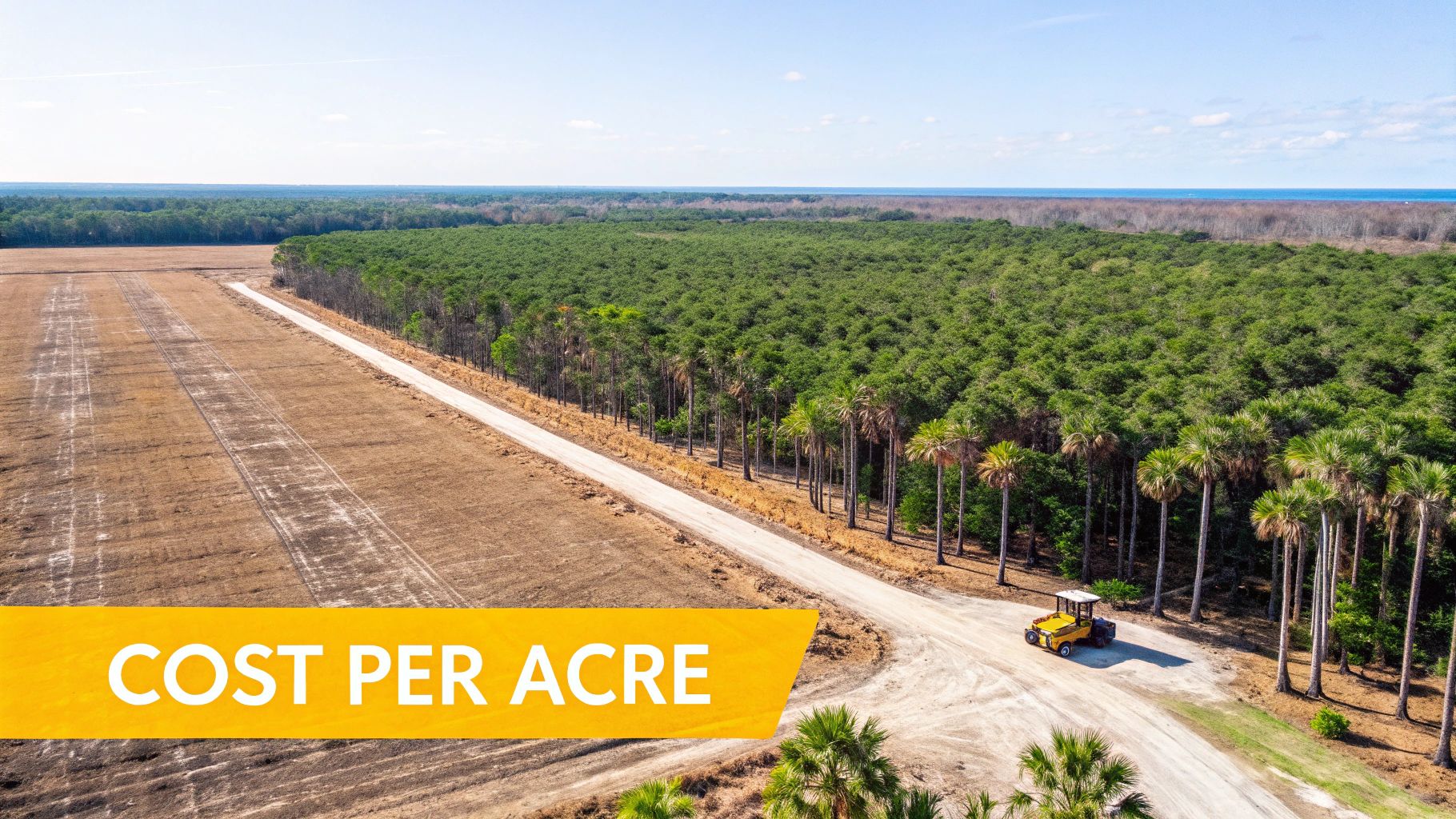
Think of your acre less like a fixed unit of measurement and more like a unique canvas. It could be painted with sparse grass and a few saplings or a dense jungle of old-growth oaks and stubborn palmettos. Each scenario demands a completely different set of tools, a different timeline, and a different level of effort, which is what really shapes the final cost.
A simple, flat pasture that just needs a quick brush hogging is on the lowest end of the spectrum. On the other hand, an acre packed with mature trees, thick underbrush, and buried stumps is a whole different beast—a far more complex and costly project.
Understanding the Price Tiers
To give you a clearer picture, it helps to break projects down by their intensity. Looking at national data from 2025 consumer guides, you can see just how much the vegetation impacts the bottom line. Light brush removal averages around $1,200–$2,500 per acre, while clearing a dense forest can climb to $6,000–$12,000 per acre. It’s a perfect illustration of how the same one-acre plot can have wildly different clearing costs.
For a snapshot of what to expect right here in Central Florida, we've put together a quick reference table. It breaks down the costs based on the kind of work your land needs.
Estimated Land Clearing Costs Per Acre in Central Florida
Clearing Intensity Level | Description | Estimated Cost Range Per Acre |
|---|---|---|
Light Clearing | Dominated by tall grass, weeds, and minimal light brush or small saplings. Easily managed with lighter equipment. | $1,200 – $2,800 |
Medium Clearing | A mix of thick brush, dense palmettos, and numerous small-to-medium trees (under 8 inches in diameter). | $2,800 – $5,500 |
Heavy Clearing | Characterized by mature trees, large stumps, and extremely dense undergrowth that requires heavy-duty machinery. | $5,500 – $9,000+ |
This table should give you a solid idea of where your project might fall. Remember, these numbers are a starting point, and a detailed, on-site assessment is the only way to get a firm quote.
Key Takeaway: The "per acre" price is a starting point, not a final quote. Your property’s unique characteristics—especially the density and type of vegetation—are the primary drivers of your total investment.
The 5 Factors Driving Your Land Clearing Cost
Figuring out the cost to clear an acre of land is a bit like getting a quote for a custom project—say, a home renovation. You know a simple bathroom refresh won’t carry the same price tag as a full kitchen teardown. It’s the same with land. No two acres are exactly alike, and the final price really comes down to the specific "ingredients" of your property.
Once you understand these factors, the pricing makes a lot more sense. You stop thinking in terms of a vague, generic per-acre number and start seeing a clear picture of the time, labor, and machinery your specific job will need. Let's break down the five core things that shape your final investment.
1. Vegetation Density and Type
This is, without a doubt, the biggest piece of the puzzle. An acre with just some tall grass and a handful of small saplings is a world away from an acre choked with mature, 24-inch-thick oak trees and a dense undergrowth of stubborn palmettos. One is a quick job; the other is a serious undertaking.
The kind of vegetation on your lot dictates the equipment we bring out. Light brush can often be handled fast with a skid steer and a brush cutter. But when you’re dealing with big hardwood trees, you need the heavy hitters—bulldozers, excavators, and the hands-on work of felling and stump removal.
Light Vegetation: Think grasses, weeds, and small shrubs. This is the fastest and most budget-friendly scenario.
Medium Vegetation: A mix of thick brush, palmettos, and smaller trees. This level calls for more powerful gear, like a forestry mulcher, and takes more time.
Heavy Vegetation: Mature hardwood trees, large stumps, and incredibly dense undergrowth. This is the most complex and costly work, often needing a combination of different clearing methods.
2. Terrain and Accessibility
The lay of the land itself plays a huge part in the logistics—and therefore, the cost. A flat, dry, open piece of property with easy road access is the dream scenario. Our crews can drive equipment right on-site and get straight to work.
But things get more complicated when the terrain throws a few curveballs.
A sloped lot might need specialized equipment built to work safely on an incline. If your parcel has wetlands or protected conservation zones, it demands careful planning and sticking to strict environmental rules, which can add both time and complexity.
Getting to the property can also be a major cost driver. If your land is locked in or has a narrow, winding driveway, just getting heavy machinery to the site becomes a logistical challenge. This can eat up labor hours and might even force us to use smaller, less efficient equipment, stretching out the project timeline.
3. Your Chosen Clearing Method
The "how" is just as important as the "what." The method we use depends entirely on your end goal, and each comes with a different price. You might need a perfectly clean, build-ready lot, or maybe you just want to thin out the undergrowth to make the property more accessible.
Forestry Mulching: This is often the most efficient and earth-friendly option. A single machine grinds up trees and brush right where they stand, turning them into a beneficial layer of mulch. This completely avoids the extra costs of hauling and disposal.
Traditional Clearing (Dozer Work): This classic method involves pushing over trees and scraping the land clean with a bulldozer. It’s effective for total site prep, but it leaves you with huge piles of debris that have to be burned or hauled away, adding to the final bill.
Stump Grinding and Removal: If you need a perfectly smooth surface for a foundation, driveway, or new landscaping, the stumps have to go. This is a separate service that adds to the cost, usually priced per stump or by the hour.
4. Debris Disposal Logistics
So, what do you do with all the cleared vegetation? The answer has a big impact on your budget. When you go the traditional dozer route, you’re left with massive piles of trees, stumps, and brush. Getting rid of it all is a major part of the job.
You generally have three options for disposal:
On-Site Burning: This can be a good way to save money, but it means getting the right burn permits from the Florida Forest Service and is always subject to local rules and active burn bans.
Hauling Off-Site: This is the most common approach, especially in more developed areas. It involves loading everything into large dump trucks and taking it to a landfill or processing facility. The costs here include labor, equipment, travel time, and the tipping fees at the disposal site, which can add up fast.
Burying On-Site: Sometimes debris can be buried on the property, but this involves more excavation and is governed by local environmental regulations.
This is where forestry mulching really shines. It neatly sidesteps the entire disposal issue by processing the debris on-site, which is a huge reason it’s become such a popular and cost-effective method.
5. Local Permitting and Regulations
Finally, you can't just fire up a bulldozer without making sure you're following the rules in your specific Central Florida county. Navigating local ordinances is a critical step. Different counties and cities have their own requirements for everything from tree removal and wetland protection to general land disturbance.
For example, many counties have laws protecting "specimen" or "heritage" trees—large, mature trees that might require special permits to take down. Trying to skip the permitting process can lead to huge fines and stop-work orders, which means expensive delays. An experienced land clearing company knows the local regulations inside and out and can guide you through the process, making sure your project runs smoothly and legally from start to finish.
Choosing The Right Land Clearing Method
Picking the right way to clear your land isn't just a technical detail—it's one of the biggest decisions affecting your budget. The method we use has a direct impact on the final cost to clear an acre of land, but it also determines the health of your soil and how quickly you can move on to the next phase of your project.
Think of it like this: you wouldn't bring a sledgehammer to a job that needs a scalpel. Each technique strikes a different balance between speed, cost, and the final look of the property. Your ultimate goal is the most important factor here. Are you clearing a path for a pristine building foundation, managing a pasture, or just thinning out an overgrown patch for recreational use? The answer will point us straight to the most efficient and budget-friendly solution for you.
Forestry Mulching: An Eco-Friendly Powerhouse
For most Central Florida landowners, forestry mulching is the most efficient and environmentally sound option on the table. This method uses a single, beastly machine that cuts down, grinds up, and spreads vegetation—everything from small trees to the thickest brush—all in one fluid motion. What’s left behind is a natural layer of mulch that protects the ground, helps stop weeds from coming back, and slowly feeds the soil as it breaks down.
This all-in-one process is what makes it so smart from a cost perspective. You're not paying for separate crews to fell trees, haul them away, and dispose of the debris. That cuts way down on labor hours and equipment rental. If you're looking to quickly tame an overgrown property and get it usable without tearing up the topsoil, mulching is almost always the answer. If you want to dive deeper, we have a whole guide explaining what forestry mulching is and how it all works.
Brush Clearing And Stump Grinding: For a Polished Finish
Mulching is fantastic for speed and soil health, but some projects just demand a cleaner, more manicured appearance. This is where the one-two punch of brush clearing and stump grinding comes into play. We start by cutting down the unwanted vegetation with specialized equipment, then come back to deal with the stumps left behind.
Stump grinding is absolutely essential if you need a perfectly flat surface for a home foundation, a new driveway, or a landscaped backyard. A powerful grinder literally chews the stump down below ground level, turning it into wood chips we can either haul away or use elsewhere on your property. While this approach is more hands-on and adds another line item to the invoice (stumps are often priced individually), it gives you a clean slate that other methods simply can't deliver.
Full Site Preparation: The Comprehensive Solution
When you’re talking about large-scale construction or a major commercial development, you need the heavy-hitter: full site preparation. This is the traditional "scrape and clear" approach, where bulldozers and excavators are brought in to remove every single tree, stump, and root from the site. The end goal is to create a totally bare, graded surface that’s ready for a concrete pour.
Important Note: This method has the biggest footprint on the land. It completely disturbs the topsoil and creates a massive amount of debris that has to be dealt with. We’ll either need to get a burn permit or haul it all to a landfill, both of which add significant costs to the project.
This flowchart does a great job of showing how all the pieces fit together—how the condition of your land points to a specific clearing method, which in turn drives the final cost.
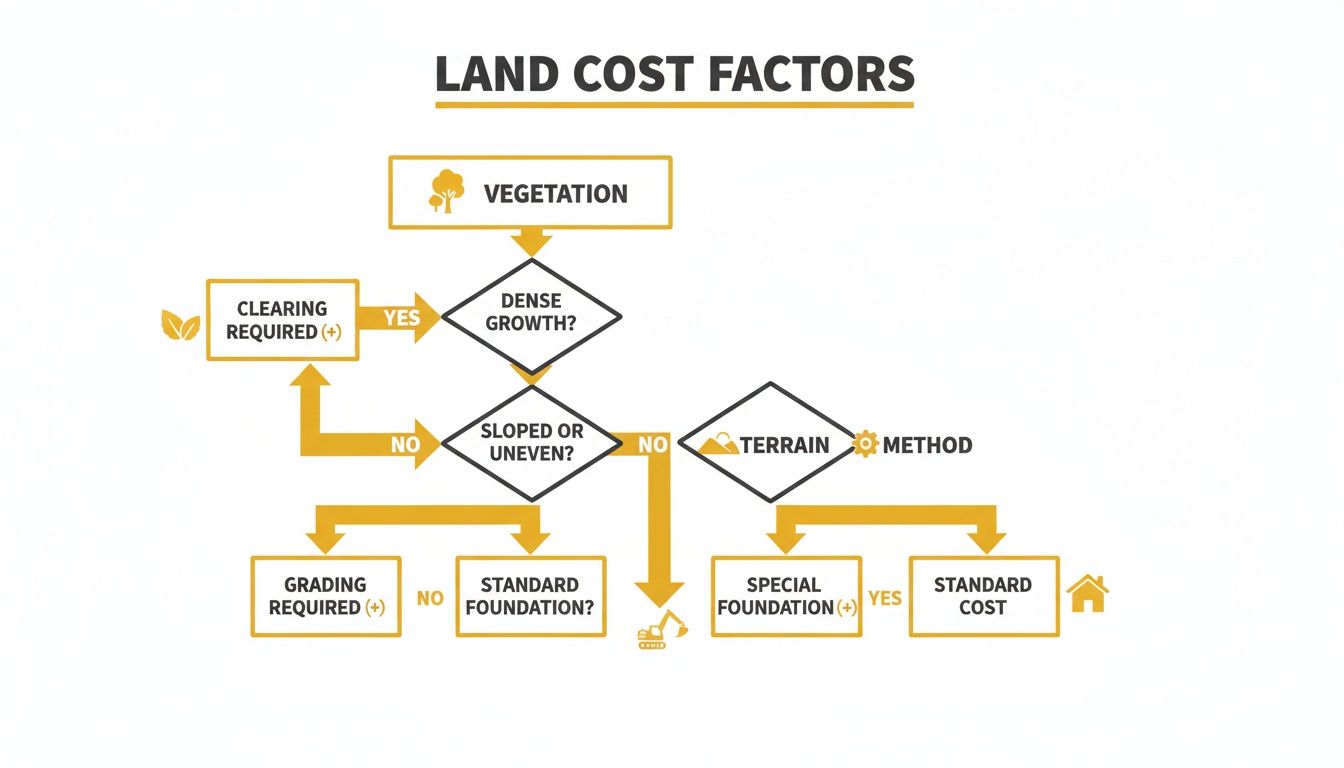
As you can see, what’s already on your property—the trees, brush, and terrain—is the starting point that connects directly to your bottom line through the clearing technique required.
To make this even clearer, here’s a simple side-by-side breakdown.
Comparison of Land Clearing Methods
This table breaks down the most common methods we use, giving you a quick look at where each one shines, how it impacts your soil, and what you can generally expect in terms of cost.
Method | Best For | Soil Impact | Typical Cost Per Acre | Key Benefit |
|---|---|---|---|---|
Forestry Mulching | Reclaiming overgrown land, creating trails, clearing underbrush, and eco-friendly projects. | Low. The mulch layer protects topsoil and prevents erosion. | $2,500 – $6,000 | No debris hauling costs; actually improves soil health. |
Brush & Stump Grinding | Prepping for landscaping, getting a polished look, or removing specific obstacles for a build. | Moderate. Minimal disturbance except where stumps are ground out. | $3,000 – $7,000 | Creates a perfectly smooth, obstacle-free surface. |
Full Site Preparation | New home construction, commercial developments, and projects needing total land clearing. | High. Removes topsoil and requires extensive grading and stabilization. | $5,500 – $9,000+ | Delivers a clean, build-ready pad for foundations. |
At the end of the day, the "best" method is the one that lines up perfectly with your vision and your budget. Knowing these differences helps you have a more productive conversation with your contractor and makes sure you’re putting your money into the right service for your property's future.
Putting It All Together: How Real Land Clearing Projects Are Priced
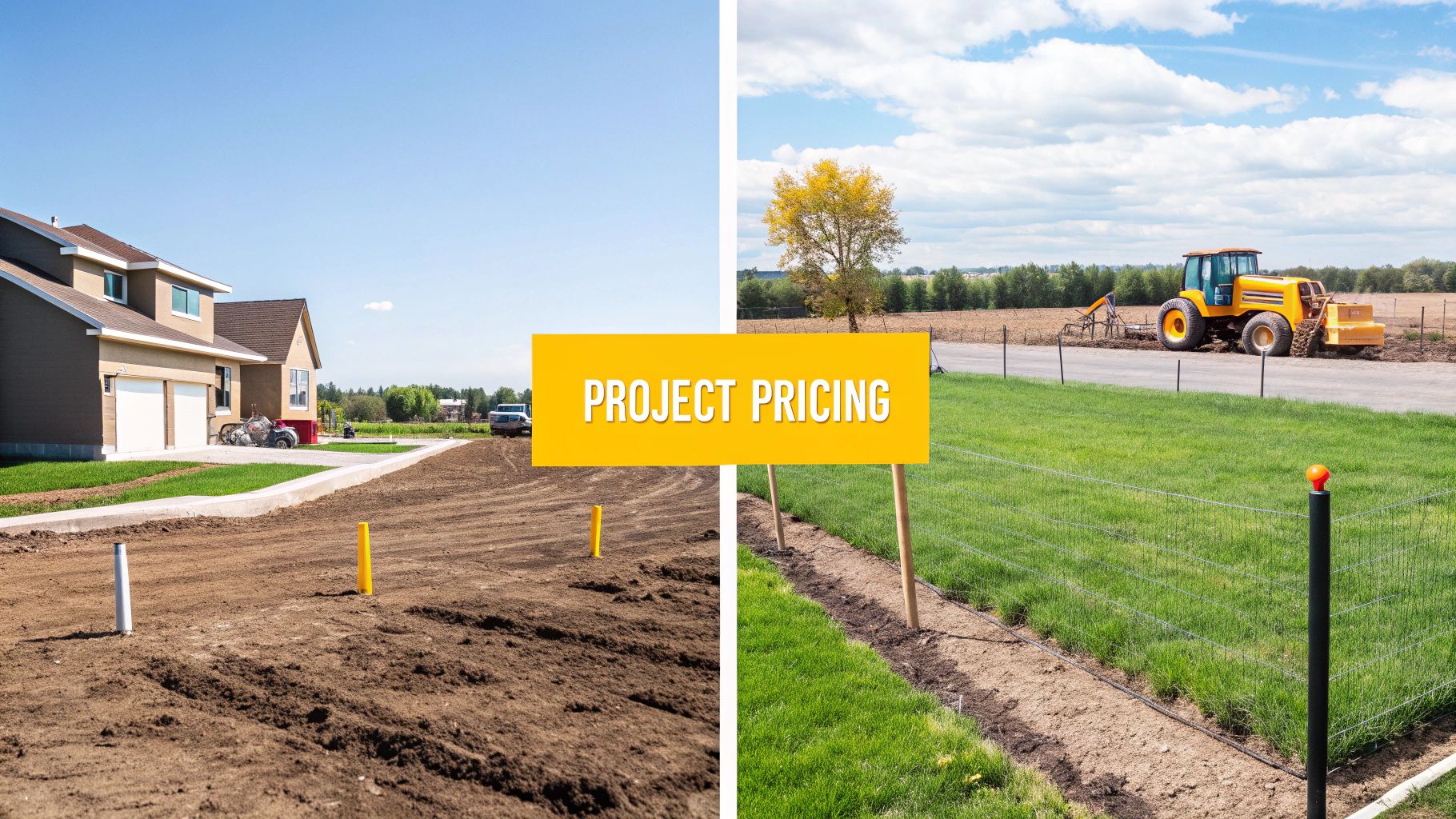
Numbers on a page are one thing, but seeing how they play out in the field is where it all clicks. The best way to really wrap your head around the cost to clear an acre of land is to look at a few common projects we tackle every day here in Central Florida.
Every piece of property has its own story, and the final price tag reflects that unique narrative. Let's walk through three distinct scenarios to make these costs tangible, especially since proper site prep is the foundation for everything from a new family home to a large commercial venture, like the boom in new construction homes in Sarasota.
Scenario 1: The Residential Homesite
Picture a one-acre lot in a budding Lake County neighborhood. The land is flat with easy road access—great! The problem? It's completely choked with a classic Florida jungle: dense palmettos, invasive Brazilian pepper, and a handful of smaller pine trees. The new owner needs a clean slate to build their dream home.
For a true build-ready site, just mowing it down won't cut it. The roots and dense growth need to be dealt with, which makes forestry mulching the perfect solution.
Chosen Method: Forestry Mulching. This is our go-to for situations like this. A single powerful machine moves through the property, shredding everything from palmettos to small trees right where they stand. It turns a tangled mess into a natural, protective layer of mulch, completely avoiding the extra cost of hauling debris away.
Key Cost Factors: The biggest variable here is density. The sheer volume of palmettos and thick brush means more time for the machine to do its work, which directly impacts the final cost.
Estimated Cost: For a job like this, the homeowner is likely looking at a cost between $3,500 and $5,500. Where it falls in that range really depends on how much of a fight that undergrowth puts up. If you want to dive deeper into the numbers, our guide on forestry mulching cost per acre breaks it all down.
Scenario 2: The Agricultural Parcel
Next up, let's head to a ten-acre farm property out in rural Polk County. The owner isn’t looking to wipe the slate clean. They need to carve out new pasture areas for livestock and clear pathways for new fence lines, all while leaving the beautiful, mature oak trees for shade.
This is a totally different ballgame. It’s not about total annihilation; it’s about smart, surgical clearing.
The goal here is pure function. We need to create usable space while preserving the valuable, mature trees that give the property its character. A combination of methods is the most strategic and cost-effective route.
Chosen Method: Selective Mulching and Brush Cutting. We’d bring in the forestry mulcher to chew through the really thick, tangled brush patches. For the lighter, grassier areas, a heavy-duty brush cutter is all that's needed. By working around the large oaks, we save a ton of time and money.
Key Cost Factors: The price is driven by the total area being actively worked on—not the full ten acres. The need for our operators to be precise and careful around the "keeper" trees also plays a role.
Estimated Cost: Because this work is so specific, it's often priced with a day rate or a custom quote based on the exact scope. A project of this nature could easily land in the $8,000 to $15,000 range—a fraction of what it would cost to clear the entire parcel from fence line to fence line.
Scenario 3: The Commercial Development Site
Finally, let's consider a five-acre commercial lot in Orange County, earmarked for a new retail center. This site is a different beast entirely. It's heavily wooded with mature pine and oak trees, and the developer needs it completely cleared, stumped, graded, and ready for a foundation.
This is the most intensive—and expensive—type of clearing project. The objective is total site preparation. Nothing gets left behind.
Chosen Method: Full Site Preparation. This is where we bring in the entire fleet. Bulldozers take down the trees, excavators dig out the massive stumps, and a convoy of dump trucks is needed to haul every last bit of timber and debris off-site.
Key Cost Factors: The costs stack up quickly here. You have the massive volume of large trees, which requires significant machine and manpower. Then come the debris hauling and disposal fees, which are substantial for five acres of timber. Finally, the job isn't done until the site is graded and compacted, making it a stable, build-ready pad.
Estimated Cost: A project of this scale is a major investment. The per-acre cost is at the absolute top of the spectrum. The total project price could easily run from $45,000 to $70,000, and potentially more, depending on the final tree count and local landfill fees.
Looking Beyond the Upfront Cost: The Long-Term Value of Professional Clearing
It's easy to look at the cost to clear an acre of land as just another bill to pay. But that’s like focusing on the cost of the foundation without considering the value of the house you’re about to build. Professional land clearing isn't just an expense—it's a powerful investment that pays you back in usability, safety, and a serious boost to your property's bottom line.
Think about it: an overgrown, tangled lot is just sitting there, its potential locked away. When you transform that same parcel into a clean, build-ready, or beautiful space, you completely change its character and function. You're turning a potential liability into a real asset.
Boosting Your Property’s Value and Usefulness
The most immediate and tangible return you’ll see is the increase in your property's market value. A clean, accessible lot is simply more desirable to potential buyers, whether it's a developer looking for an easy start or a family wanting a safe yard for their kids. This isn't just a hunch; the numbers prove it.
Multiple analyses have shown that taking a neglected, overgrown lot and making it usable can increase its perceived value by 10% to 30%. For most residential or rural properties, that lift is often in the 15–25% range. For land prime for development, a professional clearing and grading job can push its value up by 20–50%. You can learn more about how land clearing enhances property value on 5kland.com. Suddenly, that initial cost doesn't look like an expense anymore; it looks like a smart way to build equity.
You're not just spending money to clear your land. You're unlocking its true worth and making it work for whatever you have planned, now and in the future.
Cutting Down on Future Costs and Headaches
Beyond the immediate jump in value, professional clearing is a smart move to prevent future problems. Overgrown land is an open invitation for pests, a major fire hazard, and a constant battle against invasive species trying to take over.
Getting it cleared professionally does more than just fix the mess you see today. It sets your property up for a healthier, more manageable future.
Better Soil and Less Erosion: Modern techniques like forestry mulching do more than just get rid of vegetation; they actually improve the soil. The mulch left behind holds in moisture, smothers new weed growth, and stops the kind of soil erosion that can be a nightmare to fix later.
Smarter Regrowth Control: Just cutting down brush is a temporary fix—it often comes back even thicker. True professional vegetation management, which might include targeted herbicide use after the initial clearing, can cut down your need for future maintenance by 30–60% over the next few years compared to a basic cut-and-run job.
A Safer, More Accessible Property: A cleared lot is a usable lot. You get rid of hiding spots for pests like snakes and ticks, eliminate trip hazards from hidden stumps, and open up clear lines of sight. Your property instantly becomes safer, more secure, and a lot more enjoyable to be on.
When you add it all up, the cost to clear an acre is much more than a simple transaction. It's the first and most important step in turning your property into a safer, more valuable, and more useful space for years to come.
How to Get an Accurate Land Clearing Quote
Figuring out the cost to clear an acre of land gets a whole lot easier when you know what information to bring to the conversation. Being prepared not only makes the process faster but also guarantees the quote you get is a true reflection of the job. It's the best way to sidestep any surprise costs later on.
Think of it like asking a chef to price a meal before they see the ingredients. The more you can tell us upfront, the sharper our estimate will be. While any good contractor can give you a rough idea over the phone, a solid, locked-in quote really depends on us understanding your specific piece of land and what you want to do with it.
Just a few minutes gathering some key details before you call can make all the difference.
Your Pre-Quote Checklist
Having this information ready to go is the fastest way to an accurate quote. This is the toolkit for a great consultation, helping us see the full picture of your project right from the start.
Property Address: The exact location is crucial. It lets us use mapping tools to get our first look at the terrain, access points, and what’s around your property.
Total Acreage: The size of your parcel is the bedrock of any cost estimate. It all starts here.
Photos or Videos: A few pictures are genuinely worth a thousand words. Clear shots of the vegetation, the size of the trees, and the general lay of the land are incredibly helpful.
Project Goals: What’s the big picture? Are you prepping for a new home build, carving out pasture for livestock, or just making the land more usable? Your goal helps us pick the right clearing method.
Terrain Description: Is your land flat and dry? Or are we looking at slopes, soggy patches, or other tricky spots that need special attention?
When you have these details ready, it shows you're a serious property owner. It helps a contractor give you a quote based on real information, not just a guess. This is a vital step when you're finding a land clearing contractor near you in Central Florida.
With this checklist in hand, you’re all set to get a free, no-strings-attached quote from our team at Palm State Clear Cut. We’re ready to get to work and help you bring your vision for your property to life.
Common Questions About Land Clearing Costs
Even with all the numbers and factors laid out, you're bound to have a few more questions rattling around. It's completely normal. Getting clear, straightforward answers is what gives you the confidence to move forward with a project.
We get calls all the time from folks in Central Florida, and a few questions pop up more than others. Let's tackle them head-on so you know exactly what to expect.
Are Permits Always Required for Land Clearing in Florida?
Not always, but you absolutely have to ask. Whether you need a permit boils down to your exact location (your county and city have their own rules), how big the project is, and any environmental sensitivities on your property. If you're just clearing some light brush on a small residential lot, you might be in the clear.
But for most bigger jobs, especially when you're taking down mature trees or working anywhere near wetlands, you can bet a permit will be required.
Trying to get around the permitting process is a recipe for disaster. It can lead to hefty fines and stop-work orders that bring your project to a screeching halt. A good contractor knows the ins and outs of the regulations in counties like Orange, Polk, and Lake and will handle that whole process for you.
Does Forestry Mulching Prevent All Regrowth?
Forestry mulching does an incredible job of keeping regrowth at bay, but it's not a one-and-done permanent fix by itself. The thick blanket of mulch it leaves behind is fantastic—it blocks sunlight and chokes out a lot of weeds and invasive species before they can even get started. This dramatically cuts down on your future maintenance.
That said, some of Florida's more stubborn vegetation, like the infamous Brazilian pepper or certain tough vines, will eventually try to push their way through. For a truly long-lasting clear, we often follow up with a targeted herbicide application to make sure what's gone stays gone.
What Are the Most Common Hidden Costs?
No one likes surprises on their final bill. The most common ones usually come from things that weren't visible during the initial walkthrough. Knowing what they are ahead of time helps you get a much more solid quote from the start.
Unexpected Debris: You'd be amazed what we find buried underground. Old concrete foundations, chunks of asphalt, or a field full of rocks can pop up unexpectedly, and that requires different equipment and more time.
Difficult Access: Sometimes, the trickiest part is just getting our heavy machinery onto the site. A narrow gate, steep inclines, or very soft ground can add labor and time to the job, which will be reflected in the price.
Permit or Surveying Delays: Dealing with local government can sometimes be unpredictable. If there are unforeseen hiccups with getting approvals, or if it turns out a formal boundary survey is needed, those administrative costs and delays can extend the project.
Ready to see what your property can become? The crew at Palm State Clear Cut has the local experience and the right equipment to handle any clearing project you can throw at us here in Central Florida. Request your free, no-obligation quote today!


Comments