
A Landowner's Guide to Lot Clearing Services in Central Florida
- Jan 28
- 17 min read
Think of your Central Florida property like a masterpiece waiting to be revealed. Right now, it might be hidden under a tangled mess of palmetto thickets, invasive vines, and years of unchecked undergrowth. Lot clearing is the art of methodically pulling back that curtain to reveal the blank canvas underneath.
This isn't about just bulldozing everything in sight. It's a strategic process, carefully planned to unlock your land's potential and pave the way for your vision.
Without this crucial first step, building a home, setting up a pasture for livestock, or even managing your property for fire safety is a non-starter. Proper lot clearing tackles the unique challenges we face here in Central Florida, from dealing with our sandy soils to taming the aggressive vegetation that can swallow up a property in a single season.
The Core Purpose of Clearing Land
At its heart, the goal is simple: to create a safe, accessible, and buildable site. A professional team gets you there by focusing on a few key objectives:
Boosting Safety and Access: Overgrown brush and dead trees are major fire hazards. Clearing them out improves visibility and creates safe pathways for vehicles and equipment.
Prepping for Construction: You can't lay a foundation or run utilities on a plot of land choked with roots and debris. A clear, level site is non-negotiable for any building project.
Increasing Property Value: An overgrown, inaccessible lot is tough to use and even tougher to sell. A cleared property is instantly more appealing and functional, which can significantly lift its market value.
Restoring Usability: Whether you're planning to grow crops, create a pasture, or just carve out some trails for your family to enjoy, clearing unwanted vegetation is the first step to making your land usable again.
For a quick overview of the most common services involved, check out this table. It breaks down what each service does and when it's the right tool for the job.
Core Lot Clearing Services and Their Purpose
Service | Primary Function | Best For |
|---|---|---|
Forestry Mulching | Shreds trees & brush into mulch on-site. | Eco-friendly clearing, erosion control, creating trails. |
Stump Grinding | Grinds stumps below ground level. | Preparing for foundations, landscaping, or planting. |
Brush Clearing | Removes dense undergrowth and small trees. | Fire prevention, improving access, reclaiming overgrown areas. |
Hauling & Debris Removal | Transports cleared vegetation off-site. | Sites where leaving organic material isn't desired. |
Selective Thinning | Removes specific trees to improve forest health. | Enhancing views, promoting growth of desired trees. |
Erosion Control | Implements measures like silt fences & hydroseeding. | Sloped properties, sites near water, post-clearing stabilization. |
Invasive Species Treatment | Targets and removes non-native, harmful plants. | Restoring native habitats and preventing re-infestation. |
Each of these services plays a specific role in transforming a property. A professional contractor knows how to combine them to get the exact result you're looking for.
Professional lot clearing is less about destruction and more about purposeful restoration. It's the craft of seeing the potential in a piece of land and carefully removing only what stands in the way of its future use.
Ultimately, lot clearing is about taking control and preparing for what’s next. At its core, lot clearing is a comprehensive process that often includes significant excavation land clearing to transform overgrown land into a usable site for development or landscaping. It’s the foundational investment that ensures the success of any project, turning a wild piece of nature into a well-managed asset ready for its next chapter.
Exploring Modern Lot Clearing Methods
So, you understand what lot clearing services are all about. Now, let’s dig into the how—the actual techniques professionals use to get the job done. Forget the old-school image of a bulldozer just plowing everything down. Today’s land clearing is a precise craft, using specialized gear and smart methods to prep your land efficiently and with a light touch.
Every property is different, and the right approach depends entirely on your land and what you plan to do with it.
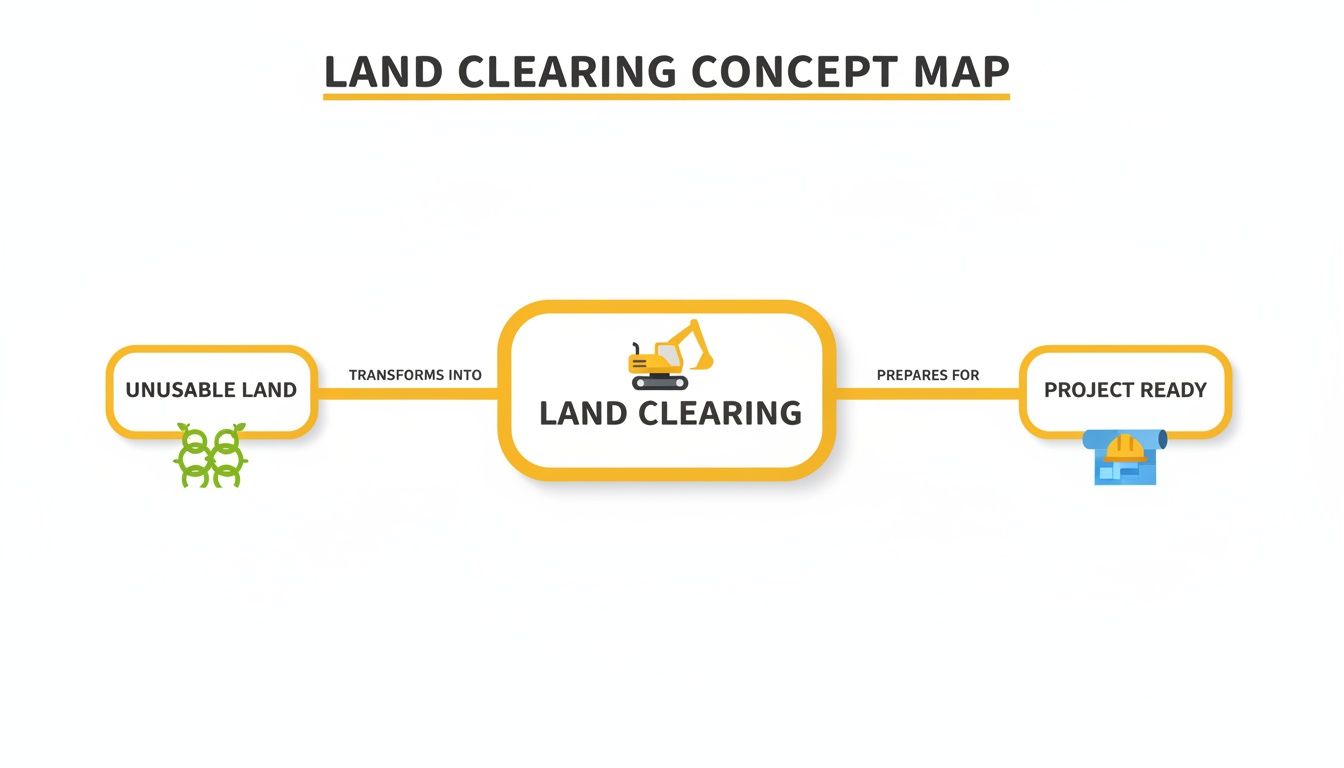
This process isn't just about destruction; it's about transformation. It’s the journey from a tangled, unusable plot to a clean slate, ready for your vision to take shape.
Forestry Mulching: The Eco-Friendly Powerhouse
Forestry mulching is easily one of the most effective and earth-friendly methods out there. Instead of ripping everything out of the ground and hauling it away, a beast of a machine with a rotating drum grinds trees and brush right where they stand. The result is a fresh, protective layer of mulch spread evenly across the soil.
This technique is a game-changer for a few key reasons:
No Hauling or Burning: All the vegetation is processed right on-site. That means no costly debris removal and no environmental headache from burning piles.
Soil Health and Erosion Control: That layer of mulch is gold for your soil. It locks in moisture, smothers weeds, and breaks down over time, feeding valuable nutrients back into the earth.
Minimal Soil Disturbance: Bulldozers scrape away precious topsoil. Mulching leaves the soil structure intact, preventing compaction and erosion.
It's no surprise this method is taking off. The market for these machines is expected to hit $771 million by 2031, mainly because it can cut disposal needs by up to 90%. For property owners, that often translates to project cost savings between 25-40% compared to older, messier techniques. If you want to dive deeper, we have a whole guide on the advantages of forestry mulching.
Stump Grinding: Creating a Truly Clear Canvas
Once the trees are gone, you're still left with the stumps. Leaving them behind is a bad idea—they’re tripping hazards, an open invitation for termites, and a major roadblock for any construction or landscaping plans. Stump grinding is the definitive fix.
A stump grinder uses a high-speed cutting wheel with razor-sharp teeth to chew away at the stump and its main roots, taking them down well below ground level. The stump becomes a pile of wood chips you can use as mulch somewhere else or just haul away. What you’re left with is a smooth, level surface, perfect for pouring a foundation, laying sod, or just enjoying a clean look.
Stump grinding isn't just about removal; it's about reclamation. It's the final step that fully liberates a piece of land from its past obstructions, making it truly ready for whatever you have planned next.
Brush Clearing: Reclaiming Overgrown Spaces
Dense undergrowth, thickets of palmettos, and invasive vines can swallow a property, making it unusable and flat-out dangerous. Brush clearing specifically targets this tangled, low-lying vegetation, which is a massive fire hazard here in Central Florida.
Professionals use everything from heavy-duty mowers to skid steers with special attachments to shred through that dense brush. This is critical work for a few reasons:
Fire Mitigation: It gets rid of "ladder fuels"—the stuff that lets a ground fire climb into the tree canopy and become a real disaster.
Improved Access: Clearing out the mess creates paths for vehicles, equipment, or even just a nice walking trail.
Pest Reduction: Ticks, snakes, and rodents love hiding in thick brush. Opening up the land makes it a much less inviting home for them.
Specialized Services for Unique Goals
Beyond these core methods, a good lot clearing company will offer more specialized techniques to match specific goals for the land.
Selective Thinning: This isn't about wiping the slate clean. It's a more surgical approach, strategically removing certain trees to improve the health and look of a wooded area. By thinning out crowded or unhealthy trees, you let more sunlight hit the forest floor and give the best trees room to really thrive.
Erosion Control: After clearing, especially on a slope or near water, the soil is vulnerable. Putting in erosion control measures, like silt fences or hydroseed, is vital for holding the soil in place. It protects your property and the local ecosystem from damaging runoff.
The key is finding a contractor who knows how to mix and match these modern methods. A true pro will walk your property, look at everything from the soil to the vegetation, and then recommend a plan that’s effective, responsible, and perfectly suited to your land.
Your Lot Clearing Project from Start to Finish
Taking on a lot clearing project can feel like a massive job, but with a professional crew, that complex process becomes a series of predictable, well-managed steps. When you understand how it all works, you take the guesswork out of the equation and feel more in control as a landowner. It’s all about turning that initial vision into a site that’s truly ready for what's next.
A solid plan is what separates chaotic demolition from strategic site preparation. It ensures every single action taken on your property is intentional, safe, and perfectly aligned with your end goals. Let’s walk through what you can expect, phase by phase.
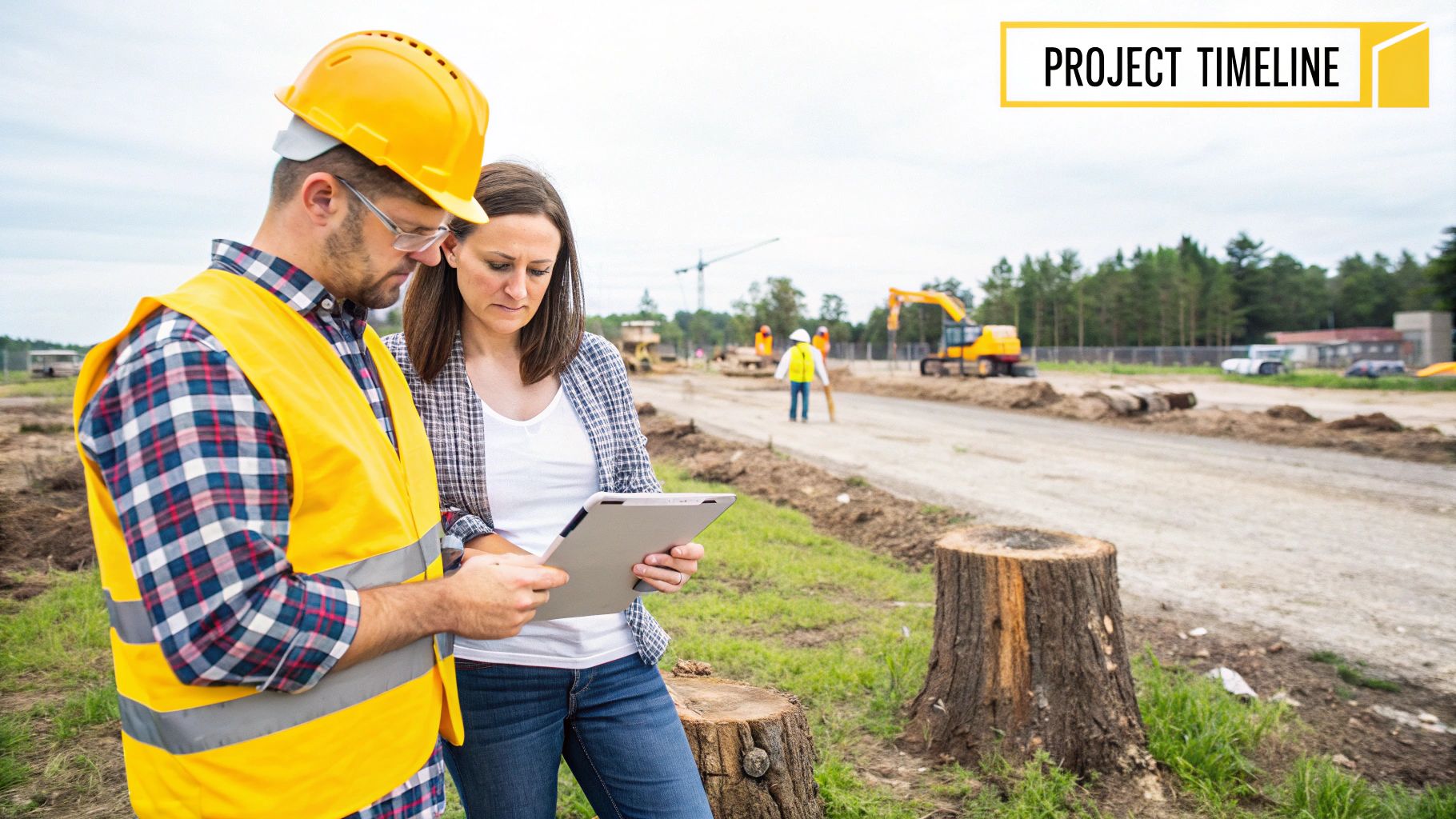
Step 1: Initial Consultation and Site Assessment
Every project kicks off with a simple conversation. During this initial chat, you'll lay out your objectives with the contractor. Are you prepping for a new custom home, carving out pasture for livestock, or just trying to beat back years of invasive overgrowth? This dialogue sets the stage and defines the vision for the entire project.
After that, the team gets boots on the ground for a detailed site assessment. This is far more than a quick look-around; it’s a deep dive into your property. The experts will:
Identify the valuable "keeper" trees you want to preserve.
Pinpoint potential hazards like old foundations, hidden debris, unstable ground, or overhead power lines.
Analyze the vegetation—both its type and density—to choose the right equipment and methods for the job.
Evaluate the lay of the land and soil type to plan for machinery access and proper erosion control.
This first phase is the bedrock of the entire project. A meticulous assessment heads off expensive surprises later on and ensures the final plan is a perfect fit for your specific piece of land.
A professional site assessment is like drawing up a detailed blueprint before you ever break ground on a house. It ensures the foundation of your project—the cleared land itself—is solid, safe, and perfectly prepared for what comes next.
Step 2: Permitting and Environmental Checks
Before a single piece of heavy machinery rolls onto your property, there’s some critical paperwork to handle. Here in Central Florida, many land clearing activities require permits, especially when you’re dealing with tree removal, wetlands, or protected species. A reputable contractor will navigate this complex world for you, handling all the local county and state regulations.
This step guarantees your project is 100% compliant, saving you from the headache of potential fines or work stoppages. It also involves checking for any environmental sensitivities on your property, making sure the work is done responsibly and with respect for our local ecosystem.
Step 3: Clearing Execution and Site Management
With the plan approved and permits in hand, the real work begins. This is where you get to see the transformation happen right before your eyes. Skilled operators get to work, using specialized equipment like forestry mulchers, excavators, and stump grinders to execute the plan with precision.
Throughout this phase, safety is the absolute top priority. The crew establishes a secure work zone, follows strict safety protocols, and manages the site to minimize any impact on neighboring properties. Whether they're carefully thinning out trees or mulching thick underbrush, every move is guided by that initial assessment to get the job done right and efficiently.
Step 4: Debris Management and Final Walk-Through
Once the main clearing work is done, the job still isn't over. The crew has to manage all the debris created during the process. Depending on the methods used, this might involve:
Leaving nutrient-rich mulch on-site to enrich the soil after forestry mulching.
Hauling away large logs, stumps, or other debris piles.
Grinding stumps down into chips that can be used elsewhere.
The very last step is a final walk-through of the property with you. This is your chance to review all the work, make sure it matches the plan you agreed on, and ask any lingering questions. A professional team won’t pack up and call it a day until you are completely satisfied, leaving you with a clean, safe, and perfectly prepared site.
Navigating Florida's Land Clearing Regulations
Getting your land ready in Central Florida takes more than just powerful equipment. You've got to have a solid handle on the local and state rules. Clearing a lot isn’t a free-for-all; it’s a process guided by regulations designed to protect our natural resources, from precious wetlands to native wildlife habitats.
Trying to bypass these rules is a recipe for hefty fines and frustrating project delays. That’s why it’s so important to work with a professional service that lives and breathes the legal landscape in counties like Brevard, Osceola, and Orange. They become your guide, making sure every move is fully compliant and above board.
Why Permits Are So Important
Think of a permit as the official green light from your local government, confirming your project meets all the legal and environmental standards. You'll almost always need a permit for any activity that could make a real impact on the local environment.
Here are a few key activities that typically require one:
Tree Removal: Most counties have ordinances protecting specific trees, especially those huge, old "specimen" trees or iconic native species like live oaks. A permit ensures you're only taking down what's allowed.
Working Near Wetlands: Florida is serious about protecting its wetlands, which are the lifeblood of our ecosystem. Any work within a certain buffer zone of these areas requires a careful review and formal approval.
Altering Shorelines: If your property touches a lake or river, any clearing that might affect the shoreline or water quality is going to need a permit.
Large-Scale Clearing: Tackling several acres at once usually triggers a much deeper review process to get a full picture of the project's environmental footprint.
A professional lot clearing contractor takes this whole headache off your plate. They know exactly which forms to file and which agencies to talk to, saving you from a trip down a bureaucratic rabbit hole.
Beyond Permits: Being a Good Steward of the Land
True compliance is about more than just paperwork; it’s about responsible stewardship. Modern lot clearing is designed to minimize the environmental impact and set your property up for long-term health. This approach is part of a much bigger, positive trend.
For example, global deforestation rates have actually slowed by 38% since the 1990s, dropping to 10.9 million hectares per year. This is partly due to smarter land management. Here in Central Florida, services like selective thinning and forestry mulching are prime examples of sustainable site prep that align with global efforts. You can learn more about how sustainable practices are making a difference worldwide on eco-business.com.
Responsible clearing isn't about dodging rules; it's about embracing a smarter approach that balances your project goals with the health of the local environment. It's the difference between a short-term gain and long-term value.
Protecting Florida's Unique Ecosystems
A huge part of responsible clearing is making sure we protect our native plants and animals. Professional crews are trained to spot sensitive areas and know how to work around them.
This includes things like:
Wildlife Protection: Skilled operators know all about protected species like the gopher tortoise. They’re trained on the proper protocols for identifying burrows and working with the Florida Fish and Wildlife Conservation Commission (FWC) when needed.
Minimizing Soil Disturbance: Techniques like forestry mulching are fantastic because they prevent the soil from getting compacted and washing away, which helps protect the water quality in our local streams and lakes.
Invasive Species Control: Proper clearing is one of the best ways to get rid of nasty invasive plants like the Brazilian pepper tree, giving our native species a fighting chance to come back strong.
When you choose a contractor who puts these practices first, you’re not just getting your project done. You’re making a positive contribution to the local ecosystem, safeguarding your investment, and preserving the natural beauty that makes Central Florida so special.
Understanding Your Lot Clearing Investment
When you get a quote for clearing a piece of land, that number isn't just pulled out of thin air. It’s a carefully calculated figure that reflects the unique challenges and characteristics of your specific property. Think of it like a custom home build—no two blueprints are the same, and understanding what goes into the price is the first step to seeing its real value.
The most obvious factor is, of course, lot size. It makes sense that clearing ten acres will cost more than clearing one. But here's something interesting: the cost per acre usually drops on larger jobs because we can work more efficiently. Another huge driver is accessibility. A flat, open lot right on a paved road is a world away from a sloped, landlocked parcel that forces us to get creative just to bring in heavy equipment.
Key Cost Drivers on Your Property
Beyond size and access, the real story is told by the land itself. The type and density of the vegetation are critical. A property choked with mature oaks and dense, stubborn palmetto thickets is a much bigger job—requiring more time and bigger machines—than a lot with just some light brush and a few small pines.
The specific services you need also shape the final cost. Just look at the difference between these common scenarios:
Forestry Mulching: This is often the most budget-friendly way to handle dense undergrowth. It chews up and spits out the material right on-site, which means you skip the hauling fees entirely.
Full Tree Removal and Stump Grinding: If you need a perfectly smooth, build-ready pad, that's a different ballgame. The extra steps of felling large trees, grinding every last stump below grade, and hauling away all the debris will naturally increase the total investment.
The ground itself matters, too. Wet, sandy soil can make it a real headache for our machines to get traction, slowing the whole project down. Likewise, rocky terrain or steep slopes demand a more careful, deliberate approach to keep everyone safe and prevent erosion. For a closer look at all these moving parts, check out our complete guide on how land clearing costs are calculated per acre.
The Value of Modern Equipment
When you hire a professional crew, you're also paying for efficiency. The global market for land clearing equipment is growing at a 5-7% CAGR, and for good reason. Modern machinery can slash project timelines by 30-50% compared to older, more brute-force methods. For you, the landowner, that means real savings in labor costs. Not only that, but modern techniques can cut long-term maintenance costs by up to 40%. You can learn more about the growth of the land clearing equipment market on archivemarketresearch.com.
Understanding the 'why' behind the price transforms it from a simple expense into a strategic investment. Every dollar is tied to a specific action—clearing dense brush, grinding a stubborn stump, or carefully navigating difficult terrain—that moves your property closer to its full potential.
At the end of the day, a transparent quote should spell all of this out. When you know what drives the cost, you can evaluate estimates with confidence. You’ll see that you aren’t just paying for a crew to show up—you’re investing in a safe, efficient, and professional transformation of your land.
How to Choose the Right Lot Clearing Contractor
Picking the right crew for your lot clearing project is easily the biggest decision you'll make. Get it right, and you’ve got a partner who brings skill and efficiency to the table. Get it wrong, and you could be looking at expensive delays, property damage, and a whole lot of headaches. A true pro's reputation isn't just built on a fleet of powerful machines; it's built on a solid foundation of safety, compliance, and happy clients.
Your vetting process needs to be more than just a quick Google search. Start with the absolute non-negotiables—the things any legitimate company should have ready to go. A trustworthy contractor won't hesitate to show you their Florida business license and proof of comprehensive insurance, which must include both liability and workers' comp. This isn't just red tape; it's your protection against any financial fallout if an accident happens on your property.
Digging Deeper with Key Questions
Once you’ve confirmed the basics, it’s time to really see what they’re made of. How they answer your questions will tell you everything you need to know about their experience and professionalism. Don't be shy—this is your land and your investment.
Get a list of questions ready for every contractor you talk to:
What specific equipment will you use for my property? A real expert won't just say "a bulldozer." They'll explain why a forestry mulcher is the better choice to protect your topsoil or why a certain excavator attachment is necessary to pull out stubborn root systems.
Can you provide local references and a portfolio? Seeing is believing. Ask for before-and-after photos of jobs similar to yours. Even better, ask to speak with a past client right here in Central Florida to get some honest, firsthand feedback.
How do you handle debris disposal? Their plan should match your vision. Do you want nutrient-rich mulch left on-site to enrich the soil? Or do you need every last twig hauled away for a perfectly clean slate?
What is your safety protocol? They should be able to walk you through their on-site safety plan without skipping a beat, from setting up a secure work perimeter to their daily equipment checks.
When you're looking into contractors, their online presence can also give you some clues about how they run their business. For example, knowing how top Google Display advertising companies help service-based businesses can give you an idea of how seriously they take their professional image and outreach.
Trusting Your Gut
At the end of the day, pay close attention to how they communicate. A great partner is responsive, upfront about costs, and happy to answer every single one of your questions. You should feel confident and informed after talking with them, not rushed or confused. That first conversation is a pretty solid preview of the kind of service you'll get for the entire project.
Choosing a contractor is like hiring a key member of your team. Their expertise, communication, and reliability will directly shape the final outcome, ensuring your land is prepared safely and effectively for its next chapter.
By asking the tough questions and demanding transparency, you can pick a contractor who will treat your property with the respect it deserves. For more advice geared specifically for our area, check out our guide on choosing land clearing companies in Central Florida.
Common Questions About Lot Clearing Services
When you're looking at a piece of land and imagining what it could be, a lot of questions pop up. It's only natural. People across Central Florida always want to know about timelines, the best ways to get the job done, and when to schedule the work. Getting solid answers to these questions is the first step to feeling confident about your project and making sure the final result matches your vision.
We've put together the questions we hear all the time to give you some real-world insight. These answers dig into the nitty-gritty variables that affect every single job, from how thick the brush is to the type of soil we're working with.
How Long Does It Take to Clear One Acre of Land?
There's no magic number for clearing an acre; it really comes down to what's on the land. If we're talking about a moderately overgrown lot with some light brush and smaller trees, a professional crew with a forestry mulcher can often knock it out in one to three days. That method is incredibly efficient because it deals with all the vegetation right on the spot, which saves a ton of time.
But, if that same acre is jam-packed with big, mature hardwoods that need to be cut down one by one, their stumps ground out, and all the debris hauled away, the project could easily stretch to a week or even longer. The land itself plays a huge part, too. Steep grades or soggy, sandy soil can slow down the heavy equipment, adding more time to the clock. The only way to get a truly accurate timeline is to have an expert walk the property with you.
Is Forestry Mulching More Effective Than Bulldozing?
For the vast majority of properties here in Central Florida, forestry mulching is the hands-down winner. It's a much gentler process that shreds trees and brush into a nutrient-rich layer of mulch. This natural blanket helps stop erosion, keeps moisture in the ground, and keeps new weeds from popping up—a massive advantage in our sandy soils.
Bulldozing, on the other hand, is brute force. It scrapes away your valuable topsoil, leaves you with giant piles of debris to burn or haul off, and can compact the ground so much that nothing wants to grow. While a dozer has its place for major grading jobs or digging a foundation, forestry mulching is almost always the more efficient, budget-friendly, and earth-friendly choice for clearing vegetation.
Think of it this way: forestry mulching is like a soil-enriching restoration, while bulldozing is more like a full demolition. If you want to improve the health of your land while clearing it, mulching is the way to go.
What Is the Best Time of Year to Clear Land in Florida?
One of the great things about living in Central Florida is that we can clear land pretty much any time of year. That said, the dry season, which usually runs from late fall through late spring, is often the sweet spot.
Working when the ground is drier means less soil compaction from the heavy machines and generally helps the whole operation run more smoothly. Clearing during this window also gets your property ready right before the summer rainy season kicks in, so it’s perfectly prepped for building or planting. Of course, a skilled team with the right equipment can tackle a project any time of year to hit your specific deadlines.
Ready to get clear answers for your own property? The team at Palm State Clear Cut is here to walk your land, listen to your plans, and give you a detailed, no-pressure quote. Let's turn that overgrown lot into a valuable asset. Visit us at https://palmstateclearcut.com to schedule your free consultation today.


Comments