
A Guide to Mulching Land Clearing in Florida
- Feb 11
- 17 min read
If you've ever dealt with traditional land clearing, you know it can feel like performing major surgery on your property. It's disruptive, messy, and often leaves you with giant piles of debris that have to be burned or hauled away at a huge expense.
Forestry mulching, on the other hand, is more like a minimally invasive procedure. It’s a clean, efficient, single-step process where one machine cuts, grinds, and spreads vegetation across your property, all in one go.
What Is Forestry Mulching Land Clearing?
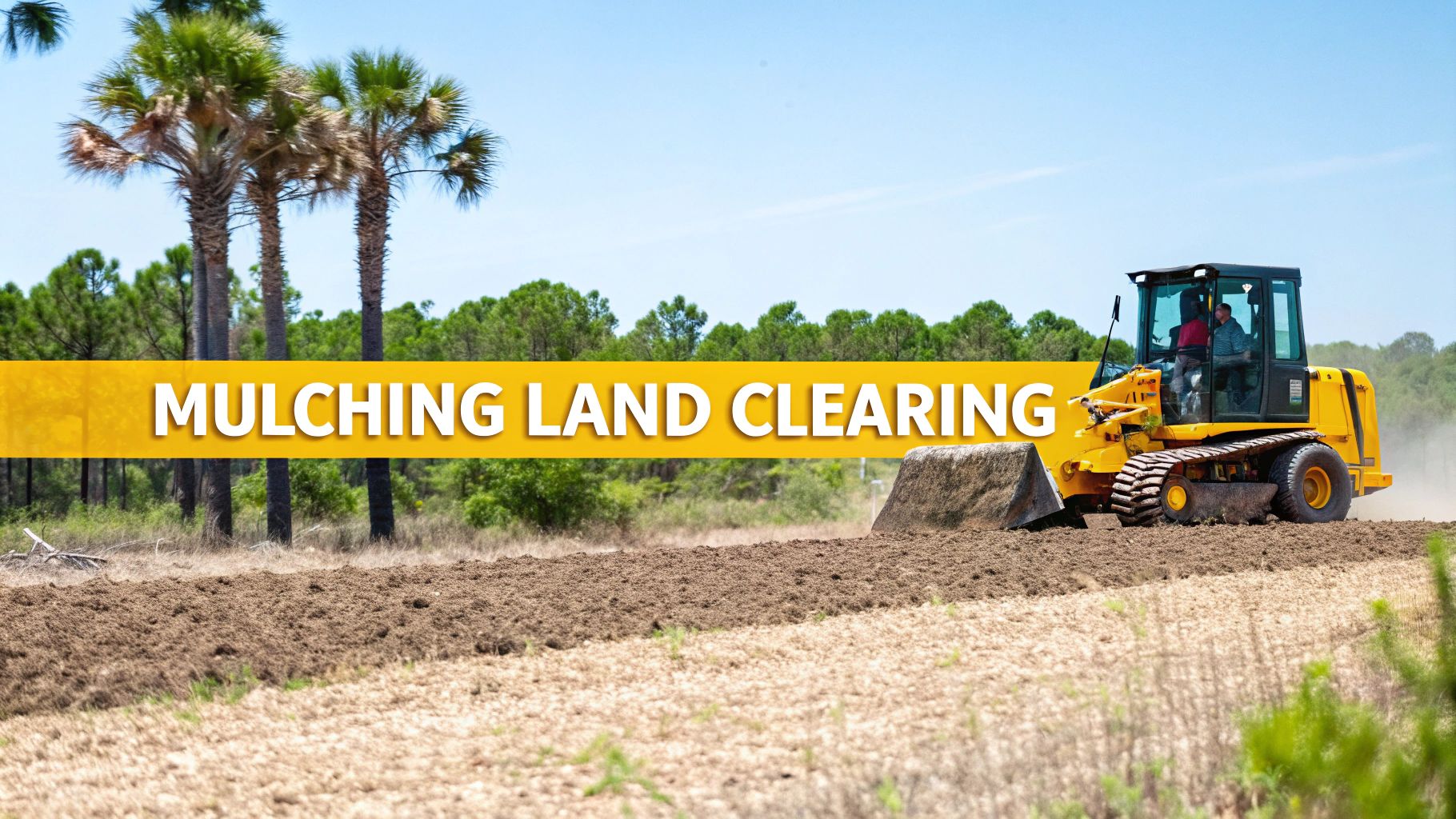
This modern technique relies on a powerful machine, usually a skid steer or track loader, armed with a specialized mulching head. This attachment is the star of the show, designed to shred everything from stubborn underbrush to small trees right on contact.
Instead of just pushing overgrowth around, the machine grinds it into small, uniform pieces of organic material.
The Mulching Process in Action
As the mulcher moves across the land, it instantly processes the vegetation and spreads it evenly back onto the ground. This creates a protective, nutrient-rich blanket over your soil. The whole job gets done in a single, efficient pass, turning a tangled jungle into a clean, accessible space.
This all-in-one approach completely cuts out several expensive and slow steps you’d have with old-school methods. There's no need for:
Debris Piling: The machine clears vegetation right where it stands, so there are no piles left to deal with.
Burning: You get to skip the permits, risks, and smoke that come with controlled burns.
Hauling: Nothing gets trucked off-site, which saves a ton on transportation and landfill fees.
The core idea behind forestry mulching is simple: it turns an overgrown liability into a valuable asset. The very same vegetation that was choking your property is transformed into a tool for improving soil health and stopping erosion.
Who Benefits From This Method?
The applications are incredibly versatile, offering real advantages to all kinds of Florida landowners. If you're a homeowner, you can get your lot ready for building much faster. For developers, it means streamlined project timelines without the logistical nightmare of debris removal. Knowing how to find buildable land is the first step, and mulching is often the fastest way to get it ready.
Farmers and ranchers see the benefits right away, too. That fresh layer of mulch is perfect for retaining moisture in Florida's sandy soils, and it does a great job of suppressing weed growth. As it breaks down, it puts vital nutrients back into the earth, improving your soil from day one.
Ultimately, mulching is the smart, efficient, and eco-friendly choice for managing Florida's unique landscapes. It turns overgrown, unusable parcels into valuable, ready-to-use real estate.
The Mulching Land Clearing Process Explained
Forestry mulching isn't as simple as firing up a machine and going to town. It's a strategic process, refined through experience, designed to be highly efficient while leaving the lightest possible footprint on your property. It all starts well before the first engine turns over.
The whole thing kicks off with a crucial Site Assessment and Project Planning phase. This is where a professional crew walks your property to get the lay of the land—literally. They aren't just measuring square footage; they’re getting a feel for the specific challenges and opportunities your land presents.
Phase 1: Site Assessment and Planning
During this initial walkthrough, the team is identifying the key variables that will dictate the entire project's strategy.
Vegetation Type and Density: There's a world of difference between clearing a dense thicket of invasive Brazilian pepper and just thinning out some palmettos. The size, type, and thickness of the growth determine what kind of machine is needed and how it will be used.
Terrain and Accessibility: The crew is also checking the ground itself. Is it flat and dry? Or are we dealing with the soft, sandy soil and subtle slopes common in Central Florida? Hidden wetlands or tricky access points can change the whole game plan.
Your Property Goals: What’s the big picture? Are you carving out a spot for a new home, clearing pasture for horses, or just creating a defensible firebreak? Your vision determines the level of clearing, from a selective thinning to a full reset.
Identifying the Keepers: Not everything has to go. Mature oaks, stately pines, or any other desirable trees you want to keep are marked. This ensures the operators know exactly what to work around, preserving the best natural assets of your property.
With this intel, a solid plan comes together. This means picking the right machine for the job and mapping out the most efficient way to tackle the clearing, ensuring a smooth process from start to finish.
Phase 2: The Mulching Operation in Action
Once the plan is locked in, the real work begins. This is where the forestry mulcher shows what it can do. Unlike a bulldozer that just shoves everything over, roots and all, the mulcher uses a spinning drum armed with hardened steel teeth to grind trees and brush to bits right where they stand.
The operator moves methodically across the land, targeting only the unwanted vegetation flagged during the planning stage. Trees are often taken down from the top, which gives the operator incredible control to avoid nicking any of the nearby "keeper" trees. The finely shredded wood chips are spread evenly across the ground, instantly creating a natural, protective blanket.
This single-pass approach is the magic of mulching land clearing. It clears the land and improves it at the same time, turning what would have been a pile of debris into a beneficial ground cover that holds in moisture and fights erosion.
More and more landowners are catching on. The global forestry mulching machine market is expected to jump from $561 million in 2025 to $771 million by 2031. This isn't surprising when you consider that mulching recycles 100% of the biomass on-site, which can boost soil carbon by 15-25% compared to old-school methods that just create more landfill waste.
Phase 3: Post-Mulching Management and Follow-Up
The job isn't quite done when the machines are loaded back on the trailer. The final phase is all about making sure the land stays clear and healthy for the long haul. This is especially true here in Florida, where stubborn plants can try to make a comeback in a hurry. To get a better look at the heavy hitters used in these jobs, check out our guide on the best equipment for land clearing in Florida.
Here’s what good follow-up looks like:
Targeted Herbicide Application: For really persistent invasive species, a careful, targeted herbicide application might be recommended. This isn't a broadcast spray; it's a precise treatment aimed right at the root systems of the problem plants.
Erosion Control: That new layer of mulch is your best friend for preventing erosion on Florida’s sandy soils. For properties with steep slopes or near water, extra measures like silt fencing might be installed to keep everything stable.
Final Walk-Through: A contractor who takes pride in their work will walk the property with you one last time. They'll make sure you're happy with the result and that the site is left clean, safe, and ready for whatever you have planned next.
Mulching Compared to Traditional Clearing Methods
When you need to clear a piece of property, you're standing at a crossroads. Down one path, you have modern, surgical techniques. Down the other, old-school muscle. The choice you make impacts more than just the trees and brush; it affects the long-term health of your land, your budget, and how quickly you can get your project off the ground.
So, let's put modern forestry mulching head-to-head against the traditional methods to see how they really stack up.
The Bulldozing and Hauling Dilemma
The old ways, like bulldozing, are what many people picture first. They’re a brute-force solution that certainly gets the job done. A bulldozer will rip everything out—vegetation, stumps, and a good chunk of your valuable topsoil—leaving behind a scarred landscape and massive piles of debris.
This immediately creates a second problem you have to pay to solve. Those piles of roots, logs, and dirt have to be hauled away to a landfill or burned on-site. Both options add significant costs, permits, and logistical headaches to your project.
Think of bulldozing as ripping a page out of a book. Sure, the page is gone, but the book itself is damaged. This method severely disrupts the soil structure, leading to compaction and a high risk of erosion—a major concern here in Florida's sandy terrain.
The financial toll adds up fast. You aren't just paying for the dozer operator. You're also on the hook for:
Extra Labor: Crews to manage and load the debris piles.
Hauling Fees: The steep cost of trucking tons of material off-site.
Landfill Tipping Fees: Paying to dump the debris.
Soil Remediation: Potentially having to bring in new topsoil to repair the damage.
It's a multi-step, high-impact approach that's slow, expensive, and just plain tough on the environment. It solves one problem by creating several others.
Prescribed Burning: A Fiery Alternative
Another traditional method is prescribed burning. While it can be an effective tool for managing huge tracts of land, it comes with its own set of serious drawbacks for the average landowner. Getting the right permits can be a bureaucratic nightmare, and the risk of a "controlled" burn getting out of control is always there.
Beyond the safety risks, burning sends smoke and fine particles into the air, hammering local air quality. It also does very little to improve the soil. In fact, it often scorches the ground, leaving it barren and totally vulnerable to erosion until new growth can eventually take hold.
Mulching: The All-In-One Solution
Forestry mulching operates on a completely different philosophy. Instead of treating overgrown vegetation as waste to be hauled off, it turns that material into a valuable resource for your land. It’s a single-step, low-impact process that clears your land and improves it at the same time.
Imagine transforming a tangled mess of overgrowth into pristine, build-ready land without the hassle of hauling debris or disturbing the soil—that's the power of mulching land clearing. The global forestry mulcher market is barreling toward $850 million by 2033. This surge reflects how landowners and developers worldwide are ditching old-school methods like bulldozing, which can cost up to 40% more in cleanup and restoration. Read more about this growing market trend.
This infographic gets right to the point, showing some of the key ecological wins that forestry mulching delivers for your property.
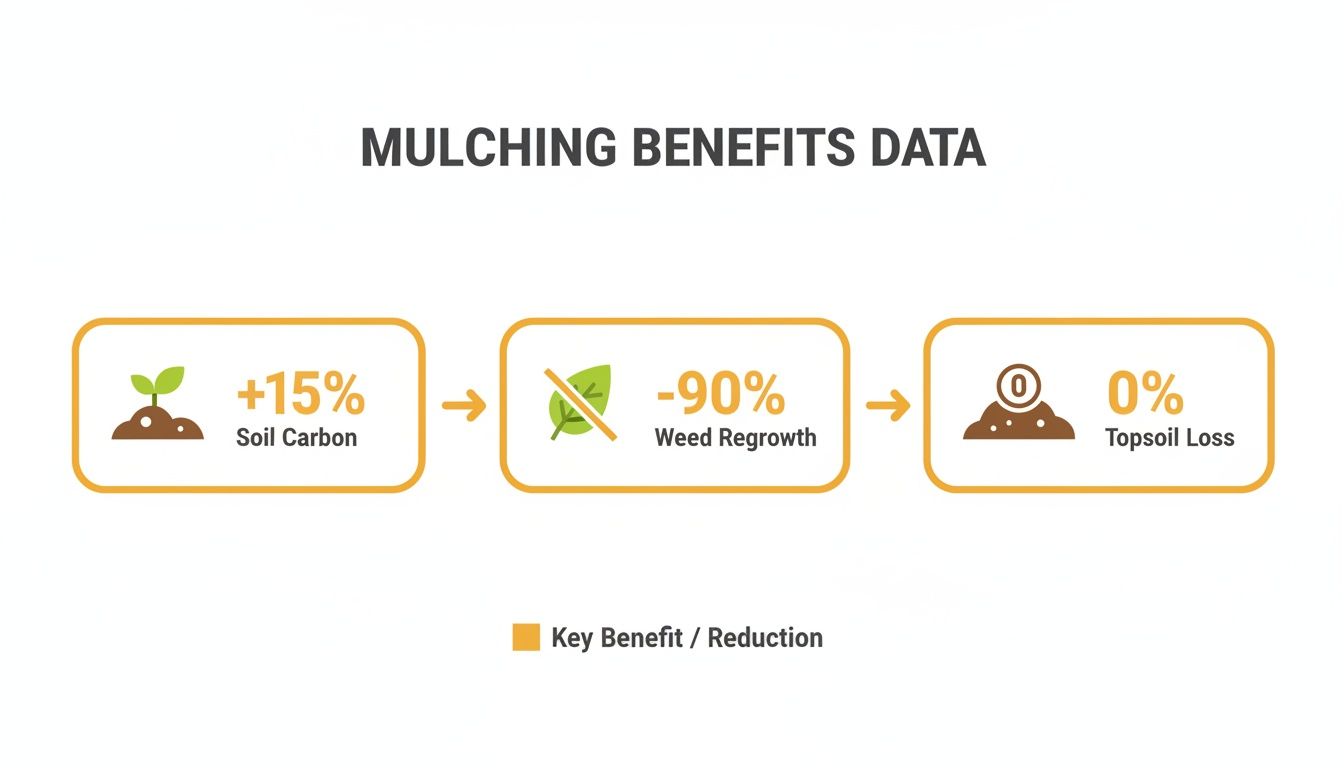
The data makes it clear: mulching isn't just about clearing. It’s about restoring and protecting your land’s natural balance.
The freshly created mulch layer acts as a natural shield. It helps the soil retain precious moisture, suppresses new weed growth, and slowly decomposes to release vital nutrients back into the earth. For developers, this means projects can wrap up 25-50% quicker without the delays of managing and hauling massive debris piles. It’s a direct investment in your property’s future.
Comparing Land Clearing Methods Head-to-Head
To make the differences crystal clear, here's a direct comparison of how these methods perform across the factors that matter most to landowners.
Factor | Forestry Mulching | Bulldozing & Hauling | Prescribed Burning |
|---|---|---|---|
Soil Impact | Minimal disturbance, protects and enriches topsoil. | High disturbance, causes compaction and topsoil loss. | Can scorch soil, leaving it barren and exposed. |
Debris | None. All vegetation is recycled into mulch on-site. | Creates large piles that require costly hauling. | Leaves behind ash and charred remnants. |
Project Speed | Fast. A single-pass process clears and finishes the job. | Slow. Multiple steps for clearing, piling, and hauling. | Slow. Requires extensive prep and favorable weather. |
Cost | One upfront cost for a complete service. | High costs for labor, machinery, hauling, and disposal. | Lower direct cost but has high risks and permit fees. |
Environmental | Eco-friendly. Improves soil health and prevents erosion. | Negative impact. Fills landfills and disturbs ecosystems. | Negative impact. Causes air pollution and fire risk. |
The verdict is pretty clear. While traditional methods might have their place in specific, large-scale scenarios, forestry mulching offers a superior solution in nearly every category for most Florida landowners. It's faster, more cost-effective over the life of the project, and profoundly better for the health of your land.
Understanding the Costs of Mulching in Florida
Alright, let's talk numbers—the part everyone really wants to know. When you're looking at a mulching land clearing project, the final bill isn't some simple, off-the-shelf price. It's shaped by the unique character of your property.
Unlike old-school methods that can surprise you with extra fees for hauling and disposal, mulching gives you a much more predictable, all-in-one cost. In Florida, contractors usually quote jobs using one of three common models, each fitting different types of projects.
Common Pricing Models Explained
Getting a handle on how the pros build their quotes is the first step to setting a realistic budget. Most will use one of these three approaches:
Hourly Rate: This is the go-to for smaller, less predictable jobs where it's tough to pin down an exact timeframe. You pay for the hours the machine is actually running, which is perfect for selective clearing or quick maintenance tasks.
Daily Rate: For projects that are a bit bigger and expected to take at least a full day, a flat daily rate often makes more sense and can be more budget-friendly. It keeps the billing simple and is a standard for many residential lot-clearing jobs.
Per-Acre Rate: If you've got a large, open piece of land, you'll almost always see a per-acre quote. This model gives you the clearest possible budget for big projects, but the rate itself will still hinge on the factors we'll cover next.
These pricing structures give contractors the flexibility to offer a fair price based on the real work involved, not just a rough guess.
Key Factors That Influence Your Final Cost
The price you get quoted for a mulching land clearing service comes down to how much time and effort the job will take. Think of it this way: mowing a flat, manicured lawn is a lot faster and cheaper than tackling a rocky, overgrown hillside. The same logic applies here.
Several key variables will drive the final invoice:
Vegetation Density and Type: This is the single biggest factor. Clearing out light grass and a few sparse shrubs is a world away from grinding through a thicket of six-inch-diameter oak trees. Tough, fibrous plants like Florida's native palmettos also take more time and machine power to chew through.
Terrain and Soil Conditions: A mulcher works best on flat, dry, and firm ground. But this is Central Florida—we're known for our soft sandy soils, hidden wet spots, and rolling terrain. These conditions slow the machine down and require more skill from the operator, which naturally bumps up the cost.
Site Accessibility: How easily can a big truck and trailer get to the work area? Narrow gates, steep driveways, or having to carefully maneuver around existing buildings and fences all add time to setup and operation, and that time factors into the project cost.
The core principle is simple: the more time and effort the machine and operator have to spend clearing each square foot, the higher the overall cost will be. A project with dense growth on wet, sloped terrain will always be at the higher end of the price spectrum.
To get a clearer picture of what your specific project might involve, you can explore our detailed breakdown of forestry mulching prices and project costs. Additionally, to better estimate material needs for your project, especially when considering the amount of mulch produced, you might find a handy mulch calculator useful. By understanding these variables, you can approach contractors with a clearer idea of your budget and confidently discuss the specifics of your Florida land clearing project.
Key Benefits of Mulching for Florida Landowners
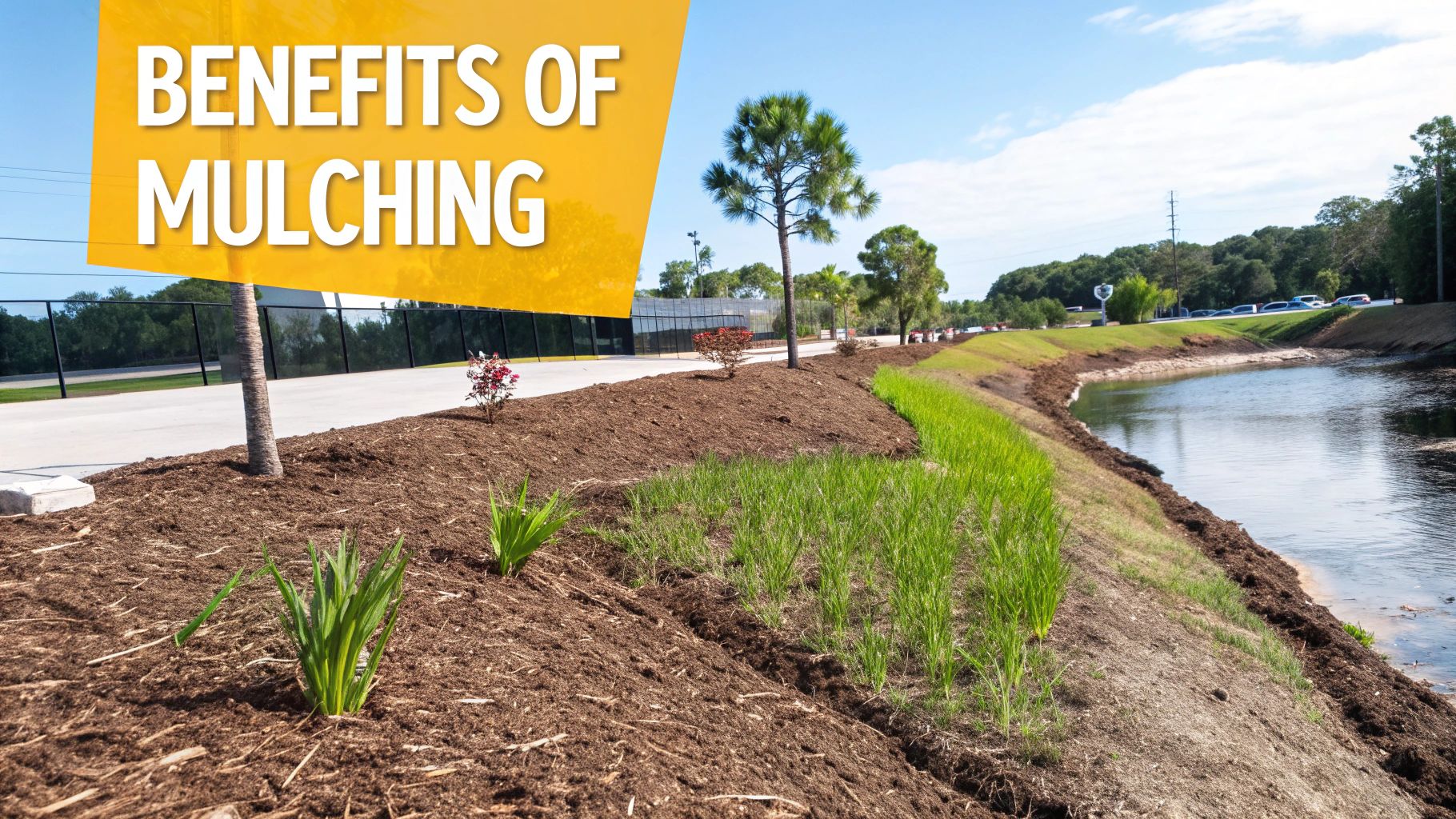
Forestry mulching isn't just about clearing away overgrowth. For anyone owning land in Florida, it's a smart play for the long-term health, safety, and value of your property. Every pass of a mulching machine delivers lasting benefits that older methods just can't touch.
Beyond the immediate "wow factor" of a cleared lot, mulching actually turns that problematic vegetation into an asset. It becomes a powerful, on-site solution that starts working for you right away.
Let's dig into the key advantages you get when you choose a mulching land clearing approach for your property.
Enhances Soil Health and Moisture Retention
One of the biggest wins with mulching is what it leaves on the ground. The process creates a natural blanket of organic material that covers the soil, acting as both a slow-release fertilizer and a protective shield—a huge benefit for Florida's often sandy, nutrient-poor soil.
This fresh layer of mulch works wonders. It helps the ground hold onto precious moisture, which means less stress on your good trees during our long, hot dry spells. As this organic matter breaks down, it puts vital nutrients back into the earth, gradually building up the topsoil.
Instead of stripping the land bare, you're actively feeding it. You're jump-starting a natural cycle of renewal that supports healthier, more sustainable growth for years to come.
Provides Superior Erosion Control
Florida’s torrential downpours are no joke. On bare ground, they can quickly wash away valuable topsoil, carving out deep gullies and creating a muddy mess. This is a common and costly problem after conventional clearing methods like bulldozing leave the earth exposed.
Mulching provides a fantastic, built-in defense against erosion. That layer of shredded wood chips acts like a sponge, absorbing the impact of heavy rain and letting water soak into the ground slowly instead of sheeting off the surface.
The mulch effectively locks the soil in place. This is especially important on sloped properties or land bordering a pond or creek, where stopping sediment runoff is key to protecting our local waterways and keeping your property line intact.
By stabilizing the soil from day one, mulching prevents the kind of long-term damage and expensive repairs that often follow traditional clearing jobs.
Mitigates Wildfire Risks
In a state like Florida, where wildfires are a constant threat, proactive land management is non-negotiable. Thick, overgrown vegetation is basically a ladder for fire, allowing it to spread with terrifying speed toward homes and other structures.
Forestry mulching is one of the single most effective things you can do for wildfire mitigation. By grinding up dense underbrush, palmettos, and small trees, it creates critical defensible space around your home. This cleared buffer, or firebreak, starves an approaching fire of its fuel, slowing it down and giving firefighters a fighting chance.
The numbers don't lie. Creating firebreaks via mulching land clearing can slash the rate of a fire's spread by up to 70%. While older clearing methods either increased risk or involved controlled burns, modern mulchers cut labor needs by 50% and completely avoid the need for open burning—something that has come with steep fines since 2011. You can learn more about the market forces driving these changes and why mulching is now the preferred method.
Controls Invasive Species and Promotes Usability
Invasive plants like Brazilian pepper and melaleuca are the bane of many Florida landowners, quickly choking out native plants and making large areas of a property completely impassable. Mulching is a powerful first punch in the fight to take back your land.
The mulcher shreds these unwanted plants on the spot, preventing them from seeding and spreading. While some stubborn species might need a follow-up spot treatment with herbicide to be fully eradicated, mulching is by far the most efficient way to reclaim your property from their grip.
The result is land that is immediately more accessible and useful. A freshly mulched lot gives you:
Improved Access: You can finally walk, drive your truck, or ride an ATV across your property without fighting a jungle.
Enhanced Aesthetics: The clean, park-like appearance dramatically improves curb appeal and the overall value of your land.
Increased Functionality: Whether you plan to build, farm, or just enjoy it for recreation, your land is ready for its next chapter.
In short, this single process can turn an overgrown, inaccessible liability into a valuable, functional asset.
How to Choose the Right Mulching Contractor
Picking the right crew for your mulching land clearing job is hands down the most critical decision you'll make. The quality of the final result, the long-term health of your property, and your overall peace of mind all hinge on hiring a true professional. A great contractor doesn’t just show up with a powerful machine; they bring real-world expertise, integrity, and a deep understanding of Florida's unique landscape.
To hire with confidence, you have to know what to look for and, more importantly, what to ask. Don't ever feel hesitant about vetting potential contractors. A reputable company will welcome your questions and give you clear, transparent answers that make you feel comfortable.
Essential Vetting Questions for Any Contractor
Before you even think about signing a contract, you need a solid checklist. The answers to these questions will quickly separate the seasoned experts from the risky operators. Think of it as your pre-flight check to ensure your project is smooth, safe, and successful.
Let's start with the absolute deal-breakers: licensing and insurance.
"Are you fully licensed and insured?" This should always be your first question. Make sure you see a copy of their general liability insurance and workers' compensation coverage. Without it, you could be held financially responsible for any accidents or damage. A pro will have this ready to show you, no questions asked.
"Can you provide recent client references?" Talking to past customers is the single best way to get a feel for a company's reliability and the quality of their work. Ask for references from jobs similar to yours, both in size and the type of vegetation.
"What kind of equipment do you use?" The right machine for the right job makes all the difference. Ask if their equipment is well-maintained and actually suited for your specific terrain and the thickness of the overgrowth. A one-size-fits-all approach is a recipe for a bad outcome.
A contractor’s willingness to provide proof of insurance and a portfolio of past work is a direct reflection of their professionalism. If they hesitate or make excuses, consider it a major red flag and move on.
Gauging Experience and Local Knowledge
Beyond the basics, you need a contractor who gets the nuances of working right here in Central Florida. Our sandy soils, stubborn palmettos, and specific local regulations demand specialized knowledge that only comes from years of experience on the ground.
Here are a few more targeted questions to dig a little deeper:
"How much experience do your operators have?" A skilled machine operator knows how to work efficiently, protect the trees you want to keep, and leave behind a clean, uniform finish. An inexperienced one can tear up your property and leave a mess.
"Are you familiar with local permitting requirements?" While many mulching projects don't need a permit, a seasoned local company will know the specific rules for your county or city. This is especially important when dealing with wetlands or protected areas.
"How do you handle unexpected issues like hidden debris or soft ground?" This question is a great test of their problem-solving skills. An experienced professional will have a clear plan for dealing with the curveballs that properties often throw.
By asking these pointed questions, you can confidently find a qualified, reliable, and knowledgeable partner for your land clearing project. To see how these factors all come together, check out our in-depth guide on choosing land clearing companies in Central Florida.
We Get Asked This A Lot...
Even after you've got a good grasp of what mulching is all about, it's totally normal to have a few more specific questions. You want to know how this is all going to look on your property, right? Let's tackle some of the most common questions we hear from landowners right here in Florida.
Getting these details sorted out can give you a lot more confidence as you start to plan your project.
How Long Does It Take to Mulch One Acre?
This is probably the number one question we get, and the honest answer is always: it depends on what we're clearing. The only way to know for sure is to have a professional walk the property and see it firsthand.
Light Brush and Grass: If you're dealing with an acre of fairly light, grassy overgrowth, we might be in and out in as little as a single day.
Dense Hardwoods and Palmettos: Now, if that same acre is absolutely choked with thick palmetto clumps and small-diameter hardwoods, you're looking at a different story. That kind of job could easily take two or more days to do right.
Will Plants Grow Back After Mulching?
Yes, some will. We're in Florida, after all, and our local plant life is famously stubborn. While the thick blanket of mulch we leave behind does a fantastic job of smothering new growth, it's not a permanent, one-and-done solution.
For the best long-term results, we always recommend a post-mulching plan. This usually involves a very targeted, precise herbicide application to knock out any tough species that try to make a comeback. This simple step keeps your land clear and manageable.
The key thing to remember is that mulching gives you an incredible head start. It's like hitting the reset button on your property, making any future maintenance a thousand times easier and cheaper than starting from a jungle again.
Do I Need a Permit for Land Clearing in Florida?
The answer to this is a firm "it depends." There isn't a single, statewide rule for this. Permitting is handled at the local level, and requirements can vary wildly from one county or city to the next.
Things like the size of your property, how it's zoned, and whether it has any sensitive areas like wetlands all factor in. While many smaller residential mulching land clearing jobs don't need a permit, you should never just assume you're in the clear. A good, experienced local contractor will know the ins and outs of the regulations in your specific area and can walk you through the process if a permit is necessary.
Ready to see what a clean, efficient, and eco-friendly approach can do for your property? Palm State Clear Cut has the experience and the right equipment to handle your Central Florida land clearing project from start to finish. Get a free, no-obligation quote today and discover the difference professional mulching can make.

Comments