
A Complete Guide to Land Clearing in Florida
- Jan 29
- 18 min read
Tangled vines, dense palmetto thickets, and unruly overgrowth—if you own a piece of land in Florida, that picture probably looks familiar. That raw, wild acreage is full of potential, but effective land clearing is the essential first step to transforming it into a valuable, functional asset. It’s the bridge between the vision in your head and a property that’s actually ready to build on.
Turning Florida Wilderness into Worthwhile Property
For landowners all over Central Florida, from Polk to Brevard County, a vacant lot is rarely a blank slate. More often, it’s a complicated puzzle of subtropical vegetation, leftover timber, and stubborn invasive species.
This is why land clearing here isn't just about knocking things down; it's a strategic process of reclamation. It's what unlocks a property's true potential, whether you're planning a new home, a commercial development, or a productive agricultural operation.
But the old-school approach of just scraping the earth bare doesn't cut it anymore, especially with our state's delicate, sandy soils. Today, it’s all about using modern, responsible techniques that balance your development goals with good environmental stewardship.
Think of it this way: professional land clearing isn’t demolition. It's the careful sculpting of a landscape. The real goal is to prepare a solid foundation for your project while respecting the surrounding ecosystem.
The sheer scale of development in our state is massive. Florida’s forests have changed dramatically due to urban and agricultural expansion. Between 2001 and 2024, the state lost 2.2 million hectares of tree cover, which is a staggering 29% reduction from where things stood in 2000. You can dig into the data and see the environmental impact for yourself over at Global Forest Watch. This history really drives home why sustainable practices are so critical today.
Your Roadmap to a Ready Site
Consider this guide your roadmap. It’s designed to walk you through every single stage of the process, from start to finish. We’ll cover:
Modern Methods: Getting to know eco-friendly options like forestry mulching.
Permits and Regulations: How to navigate the maze of local and state environmental rules.
Site Preparation: The steps that come after clearing to get your land truly build-ready.
Costs and Timelines: Setting realistic expectations for your budget and schedule.
Choosing a Pro: Finding a qualified contractor you can actually trust.
By the time you're done reading, you’ll have the knowledge you need to confidently take your project from a rough piece of land to a fully prepared site.
Understanding Modern Land Clearing Methods
Picking the right way to clear your land is a bigger deal than you might think. It’s not just about getting rid of trees and brush; the method you choose has a direct impact on your soil, your project's timeline, and your wallet. Here in Florida, with our sandy soils and delicate ecosystems, that choice is even more critical.
For a long time, land clearing meant one thing: bring in the bulldozers. This old-school "push and pile" method involves scraping the land bare, yanking everything out by the roots, and shoving it all into huge piles to be burned or hauled away. While it gets the job done for a total reset, this approach often creates more problems than it solves in our state.
A dozer blade aggressively strips away the thin, fragile layer of topsoil we have in Florida. This leaves the nutrient-poor sand underneath exposed, making it tough for anything you actually want to grow back and creating a perfect setup for erosion. Plus, those massive debris piles are a logistical nightmare, often needing special burn permits or expensive hauling services, which adds time and cost you probably didn't plan for.
This simple diagram shows the journey from a wild, overgrown lot to a clean, usable property when modern techniques are used.
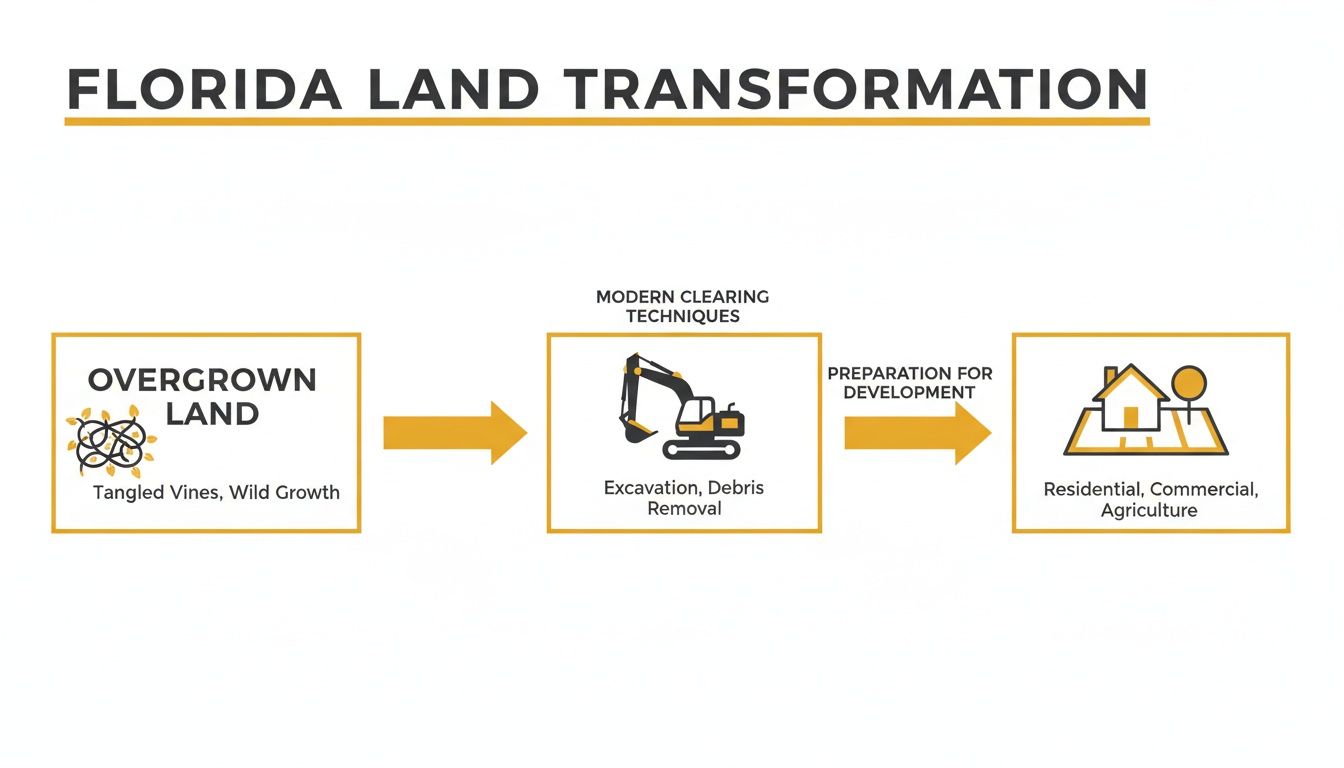
As you can see, it's a direct transformation. The right clearing method is the key that unlocks your property's potential.
Forestry Mulching: The Modern Standard
Thankfully, there's a much smarter, more eco-friendly way that has become the gold standard for land clearing in Florida: forestry mulching.
Picture a powerful, all-terrain machine that's like a monster lawn mower for the woods. Instead of scraping and piling, it shreds trees, vines, and undergrowth right where they stand, turning them into a beneficial layer of mulch that gets spread evenly across the ground.
This mulch blanket does several incredible things for your property:
Feeds the Soil: As the wood chips break down, they release valuable organic nutrients back into the sandy soil, improving its structure and fertility.
Stops Erosion: The mulch layer acts like a protective shield, holding soil in place and preventing it from washing away during Florida's heavy downpours.
Chokes Out Weeds: It helps smother the stumps and roots of unwanted plants and invasive species, making it harder for them to grow back.
No Debris Piles: Nothing needs to be burned or hauled off. The entire process is self-contained, saving you a ton of time, money, and headaches with permits.
Forestry mulching clears your land and preps it for the future in one single step. It's a true investment in the long-term health and stability of your property.
To help you visualize the differences, here’s a quick rundown of the most common land clearing methods used on Florida properties.
Comparing Land Clearing Methods for Florida Properties
This table breaks down the common techniques, showing where each one shines and what impact it has on your land.
Method | Best For | Soil Impact | Debris Management | Typical Cost |
|---|---|---|---|---|
Forestry Mulching | Most projects; selective clearing, creating trails, preparing homesites. Ideal for eco-conscious landowners. | Low Impact. Protects and enriches topsoil with a natural mulch layer, preventing erosion. | None. Vegetation is mulched in place, eliminating the need for hauling or burning. | $$ |
Bulldozing | Large-scale commercial development requiring a completely bare slate and major grading. | High Impact. Strips topsoil, leading to severe soil compaction and a high risk of erosion. | High Effort. Creates massive piles that must be burned (requiring permits) or hauled away at great expense. | $$$ |
Stump Grinding | Removing individual tree stumps after clearing to create a smooth, usable surface. | Minimal. Localized disturbance only where the stump was. Soil is left intact. | None. The stump is ground into wood chips that can be used as mulch or fill. | $ (per stump) |
Selective Clearing | Preserving desirable trees (like oaks) while removing underbrush and invasive species. | Very Low. Targeted removal means the vast majority of the soil and root systems remain undisturbed. | Minimal. Small debris is often mulched or chipped on-site. | $$ |
Choosing the right method is about matching the tool to your specific goals and the unique character of your land.
Specialized Techniques for Specific Goals
While forestry mulching is a versatile workhorse, sometimes a project needs a more specialized touch. A good contractor will often combine a few different methods to get you the exact result you're looking for.
Stump Grinding
After trees come down, the stumps are left behind as ugly, annoying obstacles. Stump grinding uses a high-speed cutting wheel to chew the stump into bits, grinding it down well below ground level. This leaves you with a smooth surface that’s ready for grading, sod, or construction, and gets rid of tripping hazards and a place for pests to move in.
Selective Clearing and Thinning
Not everything has to go. Selective clearing is the art of removing the junk—underbrush, invasive plants, and unwanted trees—while leaving the beautiful, mature ones like our majestic Florida live oaks. This is perfect for creating that park-like feel on a homesite, improving the health of a large wooded tract, or just clearing out fence lines and trails without tearing up the whole place. This targeted approach makes your property look great while keeping its natural character.
You can dive deeper into the specific machines used for this work in our post: A Complete Guide to Land Clearing Mulchers.
Knowing the difference between these methods helps you have a much more productive conversation with a contractor. You’ll be able to explain exactly what you want, whether you're prepping a lot for a new home in Seminole County or managing acreage in Indian River, and make sure you get the right approach for a successful project.
Navigating Florida's Land Clearing Permits
So you're ready to clear some land in Florida. Before the first machine rumbles onto your property, there’s a crucial step that’s part planning, part paperwork: permits. Navigating the state and local regulations can feel like a tangled mess of rules, but they're there for a good reason—to make sure development doesn't come at the expense of Florida's incredible natural environment. Skipping this step isn't an option; it's a surefire way to get hit with steep fines and grinding project delays.
Think of a permit as the official green light for your project. It's the state and county's way of saying, "Okay, we've reviewed your plans, and they line up with our environmental and building codes." Before you do anything else, it’s absolutely vital to do your homework and figure out exactly what permits you need. This isn't just a box to check; it's the foundation for a smooth, legal, and successful project.
Who Oversees Land Clearing Permits
In Florida, you're not just dealing with one agency. A few key players have a say in what you can and can't do on your land. The big ones are the Florida Department of Environmental Protection (FDEP), which sets the broad environmental rules for the state, and your local Water Management District. The Water Management Districts are laser-focused on protecting our water resources, which means they pay very close attention to anything happening near wetlands.
On top of that, your local county and city governments have their own specific ordinances. The rules for tree removal in Orange County can be quite different from those in Volusia or Osceola County, especially when it comes to protected species or heritage trees. This is where having a seasoned local contractor becomes a game-changer. They've been through this process countless times and know the specific ins and outs of your area.
When Is a Permit Typically Required
Not every tiny project needs a full-blown permit, but there are some definite red flags that almost always require getting official approval. Knowing what they are ahead of time will save you a lot of headaches.
You'll almost certainly need a permit if your project involves:
Work Near Wetlands: Florida is serious about protecting its wetlands. Any clearing, filling, or building activity even near these sensitive areas will trigger a thorough review and require a permit.
Protected Species: If your property is a habitat for protected wildlife, like the gopher tortoise, you can't just start clearing. You'll need special permits from the Florida Fish and Wildlife Conservation Commission (FWC) to ensure any animals are relocated safely and legally before work begins.
Large-Scale Clearing: Clearing several acres for a new subdivision or a commercial development is a major undertaking. These projects always require a comprehensive permit that covers everything from stormwater management to erosion control.
Removal of Large or "Heritage" Trees: Many towns and counties have rules to protect large, mature trees like our iconic live oaks. If a tree is over a certain diameter, you’ll likely need a specific tree removal permit to take it down.
The key takeaway is that compliance isn't a burden; it's a fundamental part of responsible land stewardship in Florida. Working with the regulations ensures your project contributes positively to the community without harming the environment. You can get a clearer picture by reviewing our guide on Orlando's land clearing regulations, which offers insights applicable to many Central Florida areas.
Responsible Clearing and Conservation Efforts
Florida’s strict permitting process didn't come out of nowhere; it's a direct response to a long history of rapid development. To balance things out, the state has poured a ton of resources into conservation. Just look at the Florida Forever program—since 1999, it has spent nearly $3.5 billion to acquire and protect over 921,000 acres of land, directly fighting the loss of our natural tree cover. For a deeper dive, check out some more info about understanding the necessary permits.
This commitment to preservation is exactly why following the rules on private land is so important. When you get the right permits and use environmentally-friendly methods, you're doing your part to make sure development and nature can exist side-by-side. A great contractor doesn’t just clear your land; they help you do it the right way, making sure every step you take aligns with Florida's long-term environmental vision.
Preparing Your Site for Construction
You've successfully cleared your Florida property, and that’s a huge milestone. But the job isn't quite done. The next phase, site preparation, is what turns that cleared patch of earth into a stable, secure, and genuinely build-ready foundation. This is where you deal with leftover debris, get ahead of future growth, and shield your land from the elements.
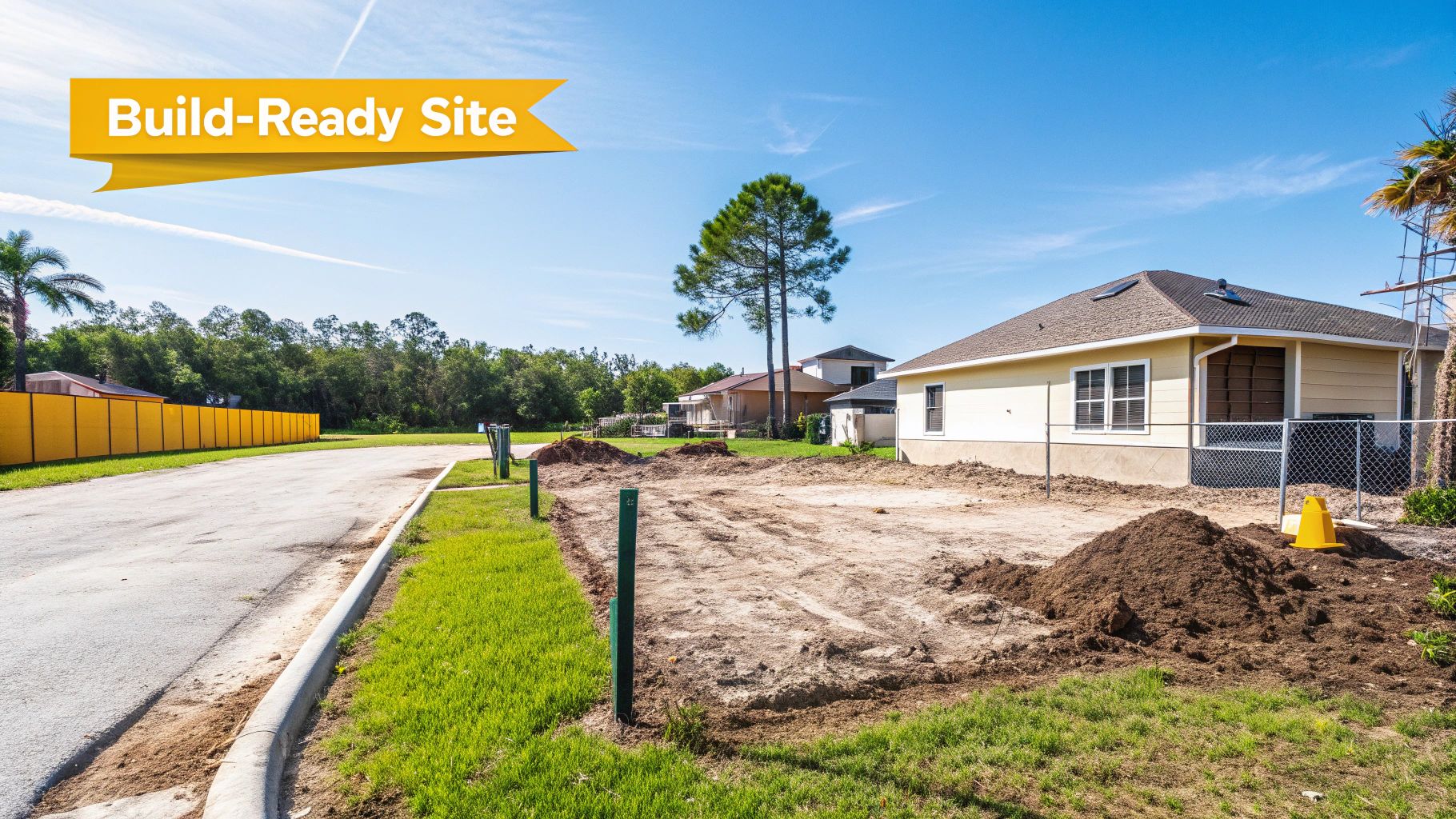
Think of it like getting a canvas ready for a painting. You wouldn't just throw paint on a rough, dirty surface, right? You'd clean it, prime it, and make sure it's perfect. Site prep does the exact same thing for your land, making sure the investment you just made in clearing pays off for years to come.
Managing Debris After Clearing
Once the heavy equipment rolls away, the first question is always what to do with all the leftover vegetation. How you handle this has a big impact on your budget and the long-term health of your property.
On-Site Mulching: As we’ve talked about, forestry mulching takes care of this step automatically. The shredded vegetation becomes a natural, beneficial ground cover, so there's nothing left to haul away. It’s easily the most efficient and eco-friendly option for land clearing in Florida.
Debris Hauling: If you went with more traditional clearing methods, hauling is a common choice. All the logs, stumps, and brush get loaded up and taken to a proper disposal facility. It leaves your site spotless but definitely adds a significant cost.
Controlled Burning: While you might see this in rural areas, it requires special permits from the Florida Forest Service and involves strict safety rules. Given the fire risks and smoke issues, it's becoming much less common for residential or commercial projects.
Vegetative debris from development is a massive chunk of our state's solid waste. In 2023, Florida's recovery facilities processed huge amounts of this material, especially in Central Florida where urban projects are booming. This really underscores why efficient management like mulching and responsible hauling are so important. You can dig deeper into these Florida debris management findings on floridadep.gov.
Building a Resilient and Safe Property
Getting rid of debris is just the start. Proper site prep involves taking proactive steps to protect your land and whatever you plan to build on it. These aren’t optional add-ons; they are essential for creating a low-maintenance and secure property in Florida’s tough environment.
A professional site prep plan tackles three key areas.
Site preparation is where you solve future problems before they even start. It’s about controlling water, preventing runaway vegetation, and creating a defensible space against natural risks.
First up is managing the risk of wildfires—a constant worry for any Florida property owner.
Creating Essential Firebreaks
A firebreak is basically a gap in vegetation designed to act as a barrier, slowing or even stopping a wildfire in its tracks. Carving out these strategic clearings around your property's perimeter and near future buildings is one of the smartest things you can do to protect your investment.
These aren't just random strips of dirt. A well-designed firebreak is typically 30 feet wide or more and is kept clear of anything flammable, like thick brush, trees, and dry grass. And it's not a one-and-done job; maintaining these breaks is a critical part of owning property in Florida.
Preventing Erosion and Invasive Regrowth
With the natural ground cover gone, your property is exposed. Florida's famous torrential downpours can quickly wash away precious topsoil, creating gullies and making the whole site unstable.
To stop this from happening, contractors will install erosion control measures:
Silt Fencing: This is a temporary fabric barrier staked into the ground. It catches sediment while letting water filter through, keeping your soil where it belongs.
Grading and Swales: By carefully contouring the land, you can direct water flow in a controlled way, preventing it from pooling up and causing damage.
Finally, the battle against regrowth begins. Stubborn invasive species can reclaim a cleared lot with shocking speed. A pro will often use a precision herbicide application, targeting only the stumps and roots of nuisance plants. This stops them from sprouting back, ensuring your property stays clean without harming desirable plants or the surrounding environment. It's a step that saves you countless hours and dollars in future maintenance.
Estimating Your Project Cost and Timeline
Two questions always come up first: "How much is this going to cost?" and "How long will it take?" The truth is, there's no simple answer because every piece of Florida land has its own personality. Figuring out the variables that shape your project's price and schedule is the first real step toward a solid budget and plan.
It’s a bit like planning a road trip. The cost and how long it takes all depend on where you're going (your project goals), what you're driving (the clearing method), and what the roads are like (the terrain and vegetation). A quick drive down a smooth highway is a world away from a long haul through rugged, winding backroads.
Key Factors Driving Your Land Clearing Cost
The final price tag for land clearing in Florida comes down to the time, labor, and machinery needed to get the job done right. No two properties are the same, which is why you’ll always need a custom quote based on an actual site visit to get an accurate number.
Here's what a contractor is really looking at when they walk your property:
Acreage: This is the starting point. More land simply means more work, plain and simple.
Vegetation Density: Is your lot lightly wooded with some brush, or is it a tangled mess of palmettos, vines, and mature trees? A property choked with thick growth is going to cost a lot more per acre than one with just a few scattered trees.
Type of Vegetation: Hardwoods like oak are stubborn and take more power and time to chew through than softer woods like pine. If you’ve got invasive species that are tough to kill, that can add another layer of complexity and cost.
Terrain and Accessibility: A flat, dry, wide-open lot is a dream for heavy equipment. But a property with steep hills, swampy spots, or only a narrow path to get in? Those are logistical hurdles that add to the bottom line.
Chosen Clearing Method: As we've covered, some methods like forestry mulching can be cheaper upfront. Why? Because you skip the extra step and cost of hauling all the debris away, which can be a huge expense on its own.
You might see ballpark figures for forestry mulching in Florida anywhere from $1,500 to over $4,000 per acre, but treat that as a rough guide. Only the specific conditions of your land can lock in the final price.
For a deeper dive into the numbers, check out our complete guide on how much land clearing costs per acre.
Setting a Realistic Project Timeline
The timeline follows the same logic as the cost—it’s all shaped by the same variables. A small, one-acre lot for a new home with just some light brush might be completely cleared in a day or two. This is just one small piece of the puzzle, so it's also smart to understand the bigger picture of how long it takes to build a house to keep your expectations in check from start to finish.
On the other hand, a big 20-acre commercial site that looks like a jungle could easily take a few weeks of non-stop work. You also have to factor in Mother Nature, especially Florida’s famous afternoon thunderstorms in the summer, which can shut down operations in a hurry.
A good, experienced contractor knows this. They'll build potential delays into their estimate and give you a clear, honest schedule so you can confidently plan your next moves.
How to Choose the Right Land Clearing Contractor
Picking the right partner for your land clearing project is probably the single most important decision you'll make. This isn't just about hiring a crew with a bulldozer; it's about finding a professional who truly understands Florida's unique ecosystems, knows the local regulations like the back of their hand, and has the skill to bring your vision to life safely and on budget.
A great contractor is your guide through the entire process. The wrong one? They can leave you with a mess of costly mistakes, property damage, and serious legal headaches.

Think of it like hiring a surgeon. You wouldn't just go with the cheapest option. You’d want to see their credentials, understand their experience, and hear their plan. Applying that same level of care here will protect your investment and make sure the job gets done right the first time.
Verifying Essential Credentials
Before you even get into the nitty-gritty of your project, there are a couple of non-negotiables you have to confirm. These credentials are the bedrock of any professional operation and are your first line of defense against liability.
Any legitimate contractor must be able to show you proof of:
General Liability Insurance: This is what covers any accidental damage to your property or even your neighbor's property during the clearing work. Without it, you could be left holding the bag for any repairs.
Workers' Compensation Insurance: This one is absolutely critical. It covers the contractor's crew if someone gets hurt on your land. If they don't have it, you could be on the hook financially for their medical bills.
And don't just take their word for it. Ask to see the actual insurance certificates and double-check that they're current. This simple step weeds out the risky operators from the true professionals.
Key Questions to Ask Every Potential Contractor
Once you've confirmed they have their insurance in order, it's time to dig a little deeper. The answers to these questions will tell you everything you need to know about their experience, their process, and their professionalism. This is how you find the best fit for your land clearing in Florida project.
Come to the conversation prepared with a few targeted questions for each candidate:
How long have you been clearing land in Central Florida? You're looking for a team with years of hands-on experience dealing with our sandy soils, stubborn palmettos, and subtropical vegetation.
What kind of equipment do you own and use? A serious company owns and maintains its own modern equipment, like forestry mulchers. A company that relies on rentals is a company prone to delays.
How do you handle the debris? Do they mulch everything in place, haul it all away, or have other recommendations? Their answer says a lot about their approach to efficiency and environmental stewardship.
What's your process for protecting the trees I want to keep? If you have a majestic live oak you want to save, you need a contractor who can work around it with precision and genuine care.
Can you give me a few references from recent projects similar to mine? Talking to past clients is one of the best ways to get a real feel for their reliability and the quality of their work.
How do you handle surprises, like finding a gopher tortoise burrow? A pro will have a clear, FWC-compliant plan for this and won't be caught flat-footed.
You're listening for answers that are direct, confident, and clear. Vague responses or hesitation to provide documents are major red flags.
A detailed, written contract isn't just a formality—it's your project's blueprint and your primary protection. It should clearly outline the full scope of work, a payment schedule, the estimated timeline, and specific details on debris removal and site cleanup. Never start a project on a verbal agreement alone.
What to Look for in a Written Quote
The quote itself can tell you a lot about the contractor. A professional proposal is much more than a number scribbled on a piece of paper; it’s a detailed breakdown that walks you through every part of the job.
A solid quote should clearly itemize:
The specific areas to be cleared.
The exact methods they'll be using (e.g., forestry mulching, stump grinding).
How they plan to protect property lines and existing structures.
A clear payment schedule tied to project milestones.
The total cost, with absolutely no hidden fees.
Taking the time to vet contractors properly is an investment that pays for itself. A reliable, transparent, and experienced partner won't just transform your property—they'll give you peace of mind from start to finish.
Of course. Here is the rewritten section, crafted to sound completely human-written and natural, following the style of your provided examples.
Common Questions We Hear About Florida Land Clearing
Even after walking through the whole process, you're bound to have a few more questions about your specific piece of land. That's perfectly normal. Here are some direct answers to the questions that come up most often, designed to give you the clarity and confidence you need to take the next step.
Is Forestry Mulching Really Better Than Bulldozing?
For most Florida properties, the answer is a clear and simple yes. Traditional bulldozing is a brute-force method. It scrapes away Florida’s thin layer of vital topsoil and compacts the sandy earth underneath, which is a recipe for serious erosion issues. On top of that, you're left with massive piles of debris that you have to pay to haul away.
Forestry mulching is a much smarter, more surgical approach. Instead of scraping and piling, a mulcher shreds the vegetation right where it stands. This process blankets the ground with a natural, nutrient-rich layer of organic material that protects the soil from erosion, helps it hold onto precious moisture, and improves its health over the long haul. Best of all, there are no debris piles, which means no costly hauling and no burn permits.
What Do I Do If I Find a Gopher Tortoise?
If you spot a gopher tortoise or one of its tell-tale burrows on your land, you need to stop all work immediately. This isn't just a suggestion; it's the law. The gopher tortoise is a threatened species in Florida, and disturbing one or its habitat can lead to hefty fines and bring your project to a dead stop.
The rule is simple: if a gopher tortoise is on your property, you have to call in a licensed agent authorized by the Florida Fish and Wildlife Conservation Commission (FWC). These are the only people legally allowed to handle the humane relocation of the tortoise, and it requires a specific FWC permit to do so. An experienced contractor will know this protocol inside and out and can guide you through the steps to keep your project compliant.
Do I Still Need a Permit for a Small Lot?
Don't let the size of your lot fool you; permit requirements aren't always about acreage. While clearing a small residential lot might seem simple enough, local rules, especially around tree removal, can get surprisingly complicated.
Many counties and cities across Florida have ordinances to protect what they call "heritage" trees—think of those beautiful, mature live oaks. If a tree's trunk is over a certain diameter, you'll often need a permit to remove it, even on a tiny lot. Permits are also almost always required if your land has or is near wetlands or falls within a designated conservation area, no matter how small the job.
The safest bet is to never make assumptions. Always check with your local building or zoning department before you start any work. A professional land clearing company will make this a priority, verifying the requirements for your specific parcel as part of their initial walkthrough to ensure everything is done by the book.
Ready to turn your overgrown property into a clean, usable asset? The team at Palm State Clear Cut has the local expertise and modern equipment to handle your project the right way. Contact us today for a free, no-obligation quote!


Comments