
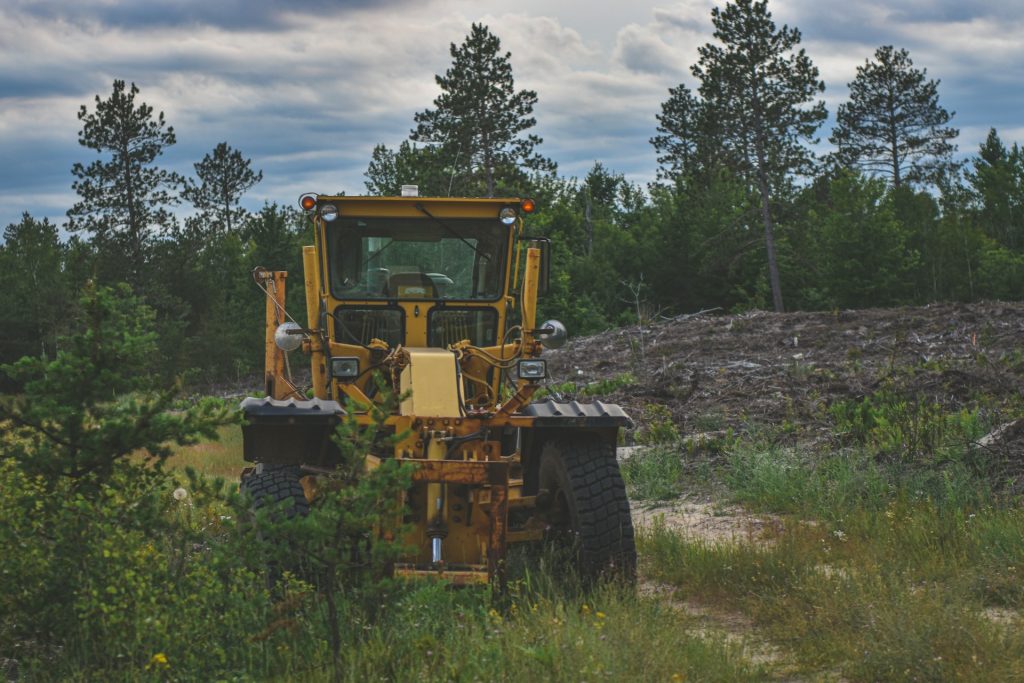
When you hear “land clearing,” you might picture bulldozers, massive burn piles, and trucks hauling away debris for days. A forestry mulcher service offers a smarter, more modern alternative. It’s a clean, one-step process that uses a single, powerful machine to cut down, grind up, and spread unwanted vegetation right where it stands.
The result? No hauling, no burning, just a fresh layer of natural mulch that immediately benefits your property.
What Is Forestry Mulching and How Does It Work
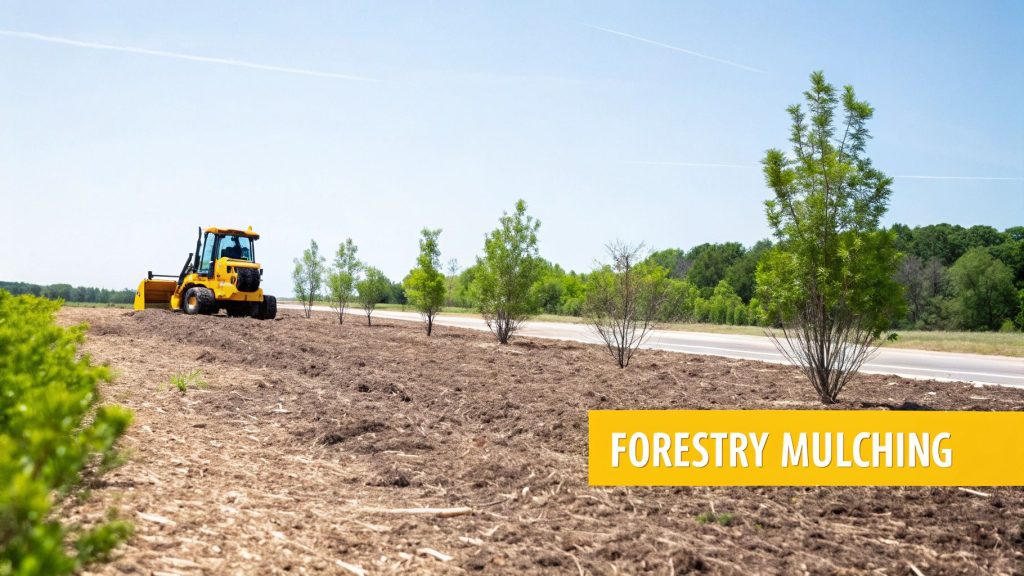
Imagine a machine that’s part beastly lawnmower, part industrial woodchipper, all mounted on a rugged, maneuverable base. That’s a forestry mulcher. It’s built to go where standard mowers can’t, taking on the dense brush, thickets, and small trees that have taken over a piece of land.
At the heart of the operation is a rotary drum spinning at high speed, armed with incredibly tough steel teeth. As the operator drives through the property, this drum grabs vegetation—from thick palmettos to stubborn saplings—and shreds it into small pieces in seconds. This material is then spread evenly back onto the ground, creating a protective blanket over the soil.
The Mechanics of On-Site Processing
This single-pass approach is what makes a professional forestry mulcher service so incredibly efficient. Everything happens right there. The entire clearing job is contained within the machine’s footprint, leaving you with a clean, park-like finish instead of giant piles of debris.
This method completely sidesteps the disruptive and expensive steps of old-school land clearing. You don’t need bulldozers creating burn piles, and you definitely don’t need a parade of dump trucks hauling away logs and brush.
Forestry mulching is a selective and low-impact clearing method. Unlike bulldozing, which scrapes the topsoil away, mulching leaves the soil structure intact, promoting faster ecological recovery and preventing erosion.
The design of these machines allows for surgical precision. A skilled operator can weave around the beautiful heritage oaks you want to keep, clear right up to a fence line, and navigate sensitive areas without causing collateral damage. This makes it a perfect fit for all kinds of land management goals.
Common Applications for Forestry Mulching
A forestry mulcher service is a true problem-solver, especially for the kinds of challenges we face here in Central Florida. It’s the go-to solution for a surprising number of projects:
- Homesite Preparation: Clearing an overgrown lot for new construction without turning the entire property into a mud pit.
- Fence Line and Trail Clearing: Cutting clear, usable paths for property boundaries, ATV trails, or walking paths through the woods.
- Pasture Reclamation: Taking back overgrown fields from invasive brush and nuisance trees to make them productive for livestock again.
- Wildfire Mitigation: Getting rid of “ladder fuels”—all that thick underbrush that allows a ground fire to climb into the tree canopy—to create a defensible space around your home.
The specific machine for the job can vary, as some are better suited for swampy terrain while others excel in dense vegetation. For a closer look at the equipment, you can check out this complete guide to the ASV forestry mulcher, one of the most popular and powerful machines in the industry.
Ultimately, forestry mulching transforms a tangled, unusable piece of land into a blank canvas, all while feeding the soil for whatever you have planned next.
Why Choose Mulching Over Traditional Land Clearing Methods
When you need to clear a piece of land, the old-school options were pretty straightforward: either bring in the bulldozers or hire a small army of workers for a manual clearing. But there’s a third way that’s smarter, faster, and often lighter on the wallet. A professional forestry mulcher service changes the game entirely, rolling multiple, back-breaking steps into one clean, efficient process.
Instead of tearing everything out of the ground and leaving you with massive piles of debris, a mulcher grinds up unwanted trees and vegetation right where they stand. This single-pass approach means no separate hauling or burning operations. The whole project just got a lot simpler.
Forestry Mulching vs. Traditional Land Clearing Methods
To really understand the difference, it helps to see the methods side-by-side. Traditional clearing often feels like a brute-force approach, while mulching is more of a surgical strike. Each has its place, but for many Central Florida landowners, the advantages of mulching become clear pretty quickly.
| Feature | Forestry Mulching | Bulldozing & Piling | Manual Clearing & Hauling |
|---|---|---|---|
| Soil Impact | Minimal disturbance; topsoil and roots are preserved. | High impact; topsoil is stripped, and soil is heavily compacted. | Low impact, but very slow and labor-intensive. |
| Debris Management | No debris piles; mulch is spread evenly on-site. | Creates large piles that require burning or hauling. | Generates piles of limbs and logs for disposal. |
| Environmental Effect | Excellent for erosion control; mulch enriches the soil. | High risk of erosion and long-term soil damage. | Labor-intensive; requires extensive use of small machinery. |
| Cost & Time | One-step process is fast and cost-effective; no haul-off fees. | Requires multiple steps (piling, burning/hauling), adding costs. | Very high labor costs due to slow, manual work. |
| Permitting | Usually requires minimal to no permits for burning/hauling. | Often requires burn permits and creates smoke/air quality issues. | Hauling may require permits depending on the volume. |
| Final Result | A clean, park-like finish with a protective mulch layer. | Bare, disturbed dirt that is prone to weeds and erosion. | Cleared land, but often requires additional grading and prep. |
Seeing it laid out like this, you can see why mulching has become the go-to for landowners who care about both their budget and the long-term health of their property. It’s about working with the land, not just clearing it.
The Economic Advantage of Mulching
The first thing most landowners notice is the savings. Traditional methods sneak in a lot of extra costs that can blow up a budget. Bulldozing means you’re left with giant piles of debris. You either have to burn them (which involves permits and constant monitoring) or pay a crew to haul everything away in trucks, racking up huge disposal fees.
Manual clearing, while it can be more precise, is painfully slow. The cost of labor adds up hour by hour, day after day. Forestry mulching cuts all that out.
By processing all vegetation in place, forestry mulching removes the need for hauling, chipping, or burning. This integrated approach not only saves time but directly translates to lower overall project costs for the landowner.
The savings go beyond just the initial job. Forestry mulching combines clearing, chipping, and erosion control into a single pass. Real-world projects often show total cost reductions of 20–50% compared to clearing and hauling everything away. That’s because the mulch is left on-site to do its job, and you skip the landfill fees entirely. The financial win continues long-term, too—with the right follow-up, you can lower recurring vegetation management costs by an estimated 30–60%. If you’re curious about the machinery behind these numbers, you can explore more insights on the forestry mulcher rental market.
Protecting Your Most Valuable Asset: Your Soil
Money isn’t everything. Forestry mulching also delivers huge ecological benefits, starting with your soil. Bulldozing is rough on the land—no way around it. The blade scrapes away the nutrient-rich topsoil, and the machine’s sheer weight compacts the ground, crushing the delicate root systems that hold it all together. After a dozer is done, the land is left wide open to erosion, a serious problem during Florida’s heavy downpours.
A forestry mulcher, on the other hand, has a much lighter footprint. The machines are built to move across the land without causing deep compaction. More importantly, the process leaves the soil structure and the root systems of the trees you want to keep completely intact. The layer of fresh mulch left behind acts like a natural, protective blanket.
This mulch layer is a triple threat for soil health:
- Erosion Control: It acts as a shield against pounding rain and wind, keeping your valuable topsoil right where it belongs.
- Moisture Retention: The mulch helps the ground hold onto water, which is a lifesaver for the remaining trees and any new plantings, especially in our hot climate.
- Nutrient Cycling: As that mulch slowly breaks down, it feeds the soil with rich organic matter, essentially giving your land a slow-release natural fertilizer.
Bulldozing strips the land of its vitality. Forestry mulching actively works to improve it. It’s the perfect choice for anyone who wants to clear a space without sacrificing the future health of their property. It’s a method that works with nature, not against it, giving you a clean slate that’s truly ready for healthy, sustainable growth.
The Forestry Mulching Process from Consultation to Completion
So, what really happens when you hire a forestry mulcher service? It’s more than just a machine showing up. A professional job unfolds in a clear, logical sequence, transforming your overgrown lot into a usable space without wrecking the land. The whole thing breaks down into three main stages: the initial walkthrough, the actual mulching, and the final follow-up.
This step-by-step approach isn’t just for show. It ensures the work is tailored to your specific property and what you want to achieve. Think of it as a partnership between you and your contractor, aimed at getting the best possible results safely and efficiently.
This diagram nails why modern mulching leaves old-school, high-impact clearing methods in the dust.
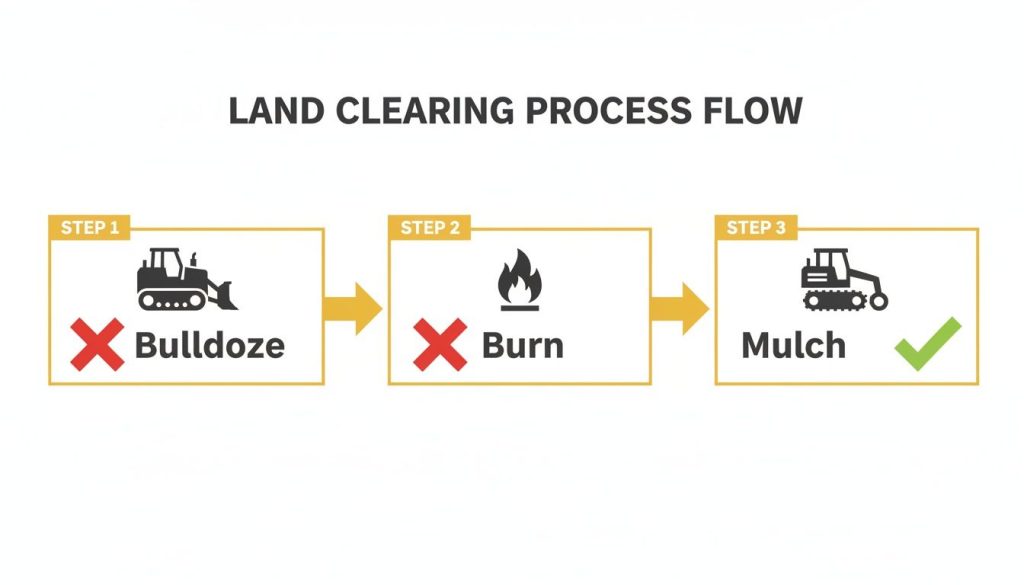
It’s easy to see why forestry mulching is the go-to choice for anyone who cares about getting the job done right and being smart about the environment.
Step 1: Initial Site Assessment and Planning
It all starts with a conversation and a walk around your property. Any reputable contractor will tell you they can’t give a real quote over the phone—they need to see the land first. This first visit is arguably the most important step, as it lays the groundwork for the entire project.
During this walkthrough, the contractor is sizing up a few key things:
- Vegetation Type and Density: They’ll get eyes on what needs to be cleared—is it a sea of palmettos, tangled Brazilian pepper, or young oaks? How thick is it? A dense jungle of invasive growth is a completely different beast than a lightly wooded area.
- Terrain and Topography: They’re checking the lay of the land. Are there steep inclines, soggy low spots, or hidden ditches? This tells them which machine is right for the job and how they’ll need to approach the work.
- Property Boundaries and Hazards: Finding the property lines is a must. They’ll also be on the lookout for hidden hazards like old wells, buried junk, power lines, or underground utilities that need to be flagged and avoided.
This detailed look allows the contractor to give you a solid quote and a realistic timeline. It also prevents any nasty surprises after the equipment arrives.
Step 2: The Mulching Operation
With a clear plan locked in, the real work begins. This is where the forestry mulcher comes to life, methodically turning that dense overgrowth into a neat carpet of mulch. A skilled operator is the key here; they can maneuver the machine with surgical precision.
The operator will carefully work their way through the terrain, taking out the unwanted vegetation while leaving the beautiful, mature trees you want to keep. That’s one of the biggest wins of mulching—it’s not the all-or-nothing blitz you get with a dozer. The machine grinds down everything from thick brush to small trees, usually up to 6-8 inches in diameter.
The goal isn’t just to clear the land; it’s to do it with the lightest touch possible. The mulcher travels over the soil, leaving the root systems of your good trees alone and avoiding the deep soil compaction that comes with heavier equipment.
The change is instant. As the machine finishes a section, you see a dramatic transformation from a chaotic, impassable mess to a clean, open landscape covered in a protective layer of fresh mulch.
Step 3: Post-Clearing and Long-Term Management
Once the mulcher has done its job, the project moves into its final phase. Right away, you have a fresh layer of organic mulch covering the ground. This mulch acts as a natural weed suppressor, helps the soil hold onto moisture, and stops the erosion that’s so common with other clearing methods.
But the work isn’t always done. To keep the land clear for good, especially with the aggressive plants we have here in Florida, a little follow-up might be needed. Your contractor will walk you through a few options:
- Targeted Herbicide Application: For stubborn plants that try to re-sprout from their roots, a careful, precise herbicide treatment can stop them in their tracks without harming the surrounding area.
- Ongoing Maintenance: Depending on your long-term plans, a schedule for future mowing or the occasional touch-up can keep your property looking sharp for years.
This final step makes sure your investment in a forestry mulcher service pays off for the long haul. You’re left with land that’s not just clear and beautiful but also healthy and easy to manage.
Reducing Wildfire Risk and Enhancing Property Safety
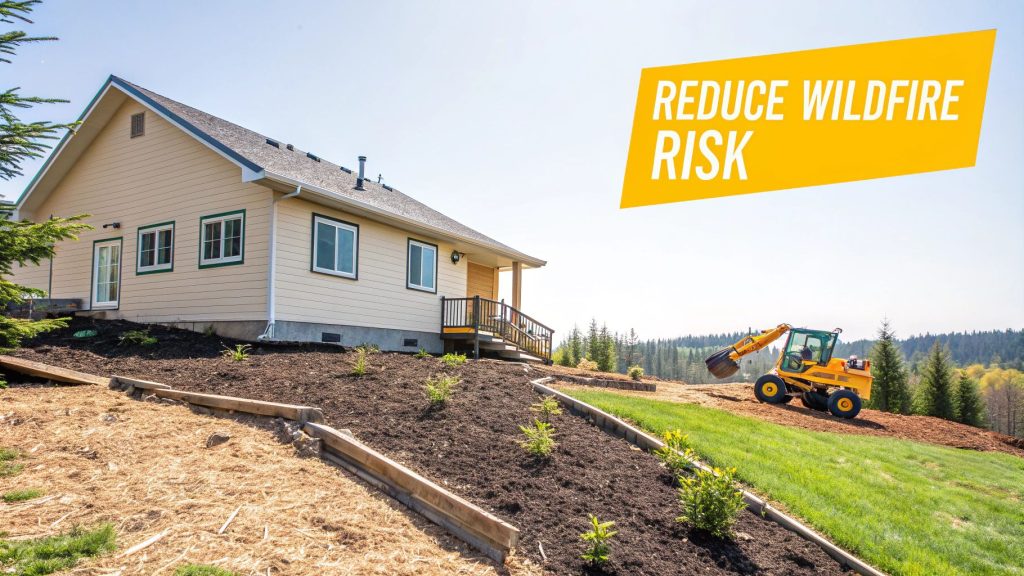
If you own land in a fire-prone region like Central Florida, you know that overgrown vegetation is more than just an eyesore—it’s a real hazard. A forestry mulcher service isn’t just about clearing land; it’s a powerful tool for proactive wildfire mitigation, turning a dangerous liability into a safer, more defensible property.
Think of it as a direct investment in the safety of your home and land. By responsibly managing the vegetation around your property, you’re taking a critical step in protecting what matters most from the ever-present threat of wildfires.
Eliminating Dangerous Ladder Fuels
A wildfire becomes truly catastrophic when it climbs from the ground up into the treetops, creating what’s known as a crown fire. This devastating jump happens because of something firefighters call ladder fuels. Just imagine it: dense underbrush, overgrown shrubs, and low-hanging tree limbs all act like rungs on a ladder, giving a small ground fire an easy path to explode into the main tree canopy.
Forestry mulching hits this problem head-on. A mulcher moves right through the understory, grinding up these ladder fuels and turning them into a layer of chips spread across the forest floor. This instantly breaks the connection between the ground and the treetops, effectively kicking the ladder out from under the fire.
Creating Defensible Space Around Your Home
A core strategy in protecting any home from fire is creating defensible space. This is simply a buffer zone around your house where the vegetation has been thinned out, making it much harder for an approaching fire to reach the structure. Forestry mulching is one of the most effective ways to establish this critical safety perimeter.
A professional mulching crew can selectively clear vegetation to create a clean, low-fuel zone. This not only slows or stops an approaching fire but also gives firefighters a much safer area to work in if they need to defend your home.
By converting volatile, standing brush into a compact layer of ground mulch, you drastically reduce a fire’s intensity and rate of spread. This simple act can be the difference between a manageable ground fire and an unstoppable inferno.
The process is incredibly targeted. An experienced operator can clear right up to your home’s foundation, around sheds and barns, and along driveways without disturbing the beautiful, mature trees you want to keep. It’s the perfect blend of safety and aesthetics.
Establishing Strategic Firebreaks
For larger properties, a forestry mulcher service can create firebreaks—wide corridors of cleared land specifically designed to stop a wildfire in its tracks. By removing all the flammable undergrowth in a strategic path, these breaks act as a barrier that an approaching fire will struggle to cross. They are absolutely essential for protecting large acreages, farms, and remote homesites.
Because forestry mulching grinds vegetation down to the ground, it’s become a widely recommended tool in official wildfire risk reduction plans. Government agencies and industry experts are investing more in these mechanical treatments because they effectively convert dangerous fuels into a state that reduces flame spread. This is why a forestry mulcher service is increasingly the first choice for HOAs, public agencies, and private landowners serious about vegetation management. You can find more details on these industry trends in this market analysis on forestry equipment.
Making Sense of Project Costs and Local Rules
Once you understand what forestry mulching is, the conversation naturally shifts to two very practical questions: “What’s this going to cost me?” and “What rules do I have to follow?” A professional forestry mulcher service offers a pretty clear-cut value, but getting a handle on the pricing and local regulations is the key to a smooth project from start to finish.
Unlike old-school land clearing where you get separate bills for cutting, hauling, and dumping, mulching rolls all of that into a much simpler pricing model. Most of us here in Central Florida will price a job either by the hour or by the acre. Hourly rates are great for smaller, trickier jobs that need a careful touch, while a per-acre price usually makes more sense for bigger, wide-open properties.
Key Factors That Influence Your Final Quote
No two pieces of land are identical, and the cost of a mulching job will always reflect the unique character of your property. Any contractor worth their salt will insist on walking the property with you before giving you a hard number. During that walkthrough, we’re sizing up a few critical things that directly affect how much time and effort the job will take.
Here’s what’s on our checklist:
- Vegetation Density and Type: A tangled mess of invasive Brazilian pepper and stubborn palmettos is a whole different ballgame than a lightly wooded area with some thin underbrush. The thicker and tougher the growth, the more time it takes to chew through.
- Terrain and Accessibility: Steep grades, surprise swampy spots, or hidden ditches can really slow down the machinery and might even call for specialized equipment. Just as important is how easily we can get the big machines onto the site in the first place.
- Size of the Trees: Our mulchers can make quick work of small-to-medium trees, but if your property is dotted with a lot of trees bigger than 8-10 inches in diameter, those might need to be dropped by hand first, which will affect the quote.
- Desired Finish: There’s a big difference between a quick “rough cut” to create a firebreak and a fine, “park-like” finish for your future backyard. A polished look means more passes with the machine and more time on the job.
For us contractors, being able to efficiently track jobs and costs is what allows us to give fair quotes and keep billing transparent. To really dive into how these factors add up, take a look at our detailed guide on forestry mulching cost per acre explained.
Navigating Local Land Clearing Regulations
Beyond the budget, making sure your project is 100% by the book is non-negotiable. Forestry mulching lets you skip the hassle of burn permits, but that doesn’t mean it’s a free-for-all. The rules can change quite a bit as you move across Central Florida, from Polk to Osceola to Lake County.
Always, always check with your local county or city planning department before you start clearing land. A good contractor will know the local landscape and can help point you in the right direction, but at the end of the day, the landowner is responsible for compliance.
You might need permits, especially if your property touches any environmentally sensitive areas. This is particularly true for:
- Protected Wetlands: If you’re working anywhere near a designated wetland, you can bet you’ll need permits and oversight from agencies like the Florida Department of Environmental Protection (FDEP) or the local water management district.
- Protected Species: Is your land home to protected wildlife, like the gopher tortoise? If so, there are very specific rules and relocation protocols that have to be followed before a single machine can start working.
It’s no surprise that property owners are leaning more towards low-impact clearing methods like this. The demand for forestry mulchers is growing worldwide for everything from wildfire prevention to general land upkeep. This global market, which is expected to grow by 4–7% each year, means better and more advanced equipment becomes available to local pros like us.
Working with an experienced local forestry mulcher service is your best bet to ensure your project not only fits your budget but also sails smoothly through all these critical local rules.
How to Choose the Right Forestry Mulching Contractor
Choosing the right team for your land clearing project is just as important as deciding to mulch in the first place. The final result—and the future health of your property—rides heavily on the operator’s skill and professionalism.
The truth is, not all contractors are created equal. You have to look past the initial price quote to find a true partner for your project, someone who understands your vision and the land itself.
Hiring the right forestry mulcher service isn’t just about clearing brush; it’s about finding a team with the right machines, proven experience, and a deep understanding of Central Florida’s unique environment. A great contractor enhances your property’s value and potential, all while working safely and efficiently. Making the right choice upfront saves you from costly mistakes, potential property damage, and frustrating delays down the road.
Vetting Your Potential Contractor
Before you sign on the dotted line, it’s time to do a little homework. Think of it as an interview for a very important job—because that’s exactly what it is. A few direct, specific questions can quickly separate the seasoned pros from the weekend warriors. A reputable contractor will be happy to provide clear answers and show you the paperwork to back up their claims.
Start with the absolute essentials. Any legitimate company operating heavy machinery on your property must have both liability insurance and workers’ compensation coverage. This is non-negotiable.
“A contractor’s insurance protects you, the landowner, from any liability in the unfortunate event of an accident on your property. Never hire a team that cannot provide a current Certificate of Insurance.”
Once you’ve confirmed they’re properly insured, it’s time to dig a little deeper into their real-world qualifications and track record.
Key Questions to Ask Every Contractor
Arm yourself with a checklist of questions to make sure you’re making a truly informed decision. This simple step helps you compare different bids on an apples-to-apples basis and pinpoint the most qualified team for your specific piece of land.
Here are the critical questions you should be asking:
- Can I see your license and proof of insurance? This should always be question number one. It verifies they are a legitimate business and, more importantly, protects you from liability.
- What specific equipment will you use for my project? An experienced pro knows that a sandy, open acre requires a different machine than a dense, wet one. Their answer will reveal a lot about their expertise.
- Do you have examples or references from similar local jobs? Seeing is believing. Before-and-after photos or a quick chat with a past client can give you invaluable insight into the quality of their work.
- How do you handle protected species or potential environmental concerns? Anyone working in Central Florida should know about gopher tortoises, wetlands, and other local regulations. Their familiarity here is a huge green flag.
- Is debris hauling or any follow-up care included in the quote? Make sure you understand exactly what your money is paying for. Getting a clear scope of work prevents surprise charges later on.
Taking the time to ask these questions will give you the confidence that you’re hiring a skilled, responsible, and professional forestry mulcher service. For more tips on locating a qualified local expert, check out our guide on finding forestry mulching services near me.
Your Forestry Mulching Questions, Answered
Even with a good grasp of the process, it’s completely normal to have a few lingering questions before you hire a forestry mulcher service. You want to be sure it’s the right move for your property.
To help you feel confident, we’ve put together answers to some of the most common questions we get from landowners right here in Central Florida. Think of this as the final piece of the puzzle, giving you the clarity needed to get your project started.
What Size Trees Can a Forestry Mulcher Actually Handle?
This is probably one of the most practical questions we hear, and for good reason. A professional-grade forestry mulcher can make quick work of trees up to 6-8 inches in diameter, turning them into a layer of mulch in a single pass. Some of our more powerful machines can even take on trees up to 10-12 inches thick.
So, what about the bigger stuff? For anything larger than that, the standard approach is for our crew to safely fell the tree with a chainsaw first. Once it’s on the ground, the mulcher comes in and processes the entire tree—trunk, limbs, and all. This ensures nothing is left behind but that useful layer of mulch. A good contractor will spot these larger trees during the initial walkthrough and build that step right into the project plan.
Will All That Mulch Attract Termites?
It’s a fair question, but thankfully, this is one concern you can put to rest. The mulch created during forestry mulching is a coarse, woody material spread in a relatively thin layer across your land. It dries out fast in the Florida sun.
This is completely different from the damp, concentrated pile of wood chips that termites and other pests love.
Unlike a static pile of wood left to rot for months, the mulch from a forestry mulcher service becomes a natural, breathable ground cover. It integrates back into the soil and simply doesn’t create the kind of environment termites are looking for.
Because the mulch is in direct contact with the soil, it encourages decomposition by beneficial fungi and microorganisms, not destructive pests. It’s a world away from having a pile of untreated lumber stacked up against your house.
How Long Will the Mulch Layer Last?
The lifespan of the mulch really depends on a few things, like the type of trees that were cleared and how thick the layer is. Here in our hot, humid Central Florida climate, natural decomposition happens pretty quickly. You can generally expect the mulch to last anywhere from 1-3 years.
In that time, it provides some fantastic immediate benefits:
- Keeps Weeds Down: The mulch blocks sunlight, stopping new weed seeds from getting a foothold.
- Prevents Erosion: It acts like a protective blanket, shielding your soil from heavy rains.
- Holds in Moisture: The layer helps the soil retain water, which is a huge plus for any future planting.
As it breaks down, all that organic matter enriches the soil, boosting its long-term health. It’s a win-win, giving you a clean slate while naturally preparing the ground for whatever you have planned next, whether it’s new construction, planting pasture, or just enjoying your reclaimed space.
Ready to see how a professional forestry mulcher service can transform your overgrown property? The team at Palm State Clear Cut has the equipment and local expertise to handle your project safely and efficiently. Contact us today for a free, no-obligation quote and take the first step toward reclaiming your land.