
A Florida Landowner's Guide to Land Clearing Mulching
- Jan 30
- 16 min read
Imagine turning a tangled mess of overgrown brush and trees into a healthy, protective blanket for your land, all in a single pass. That's the power of land clearing mulching. This modern technique uses specialized machinery to instantly shred vegetation right where it stands, creating a nutrient-rich layer without the hassle of hauling or burning.
What Is Land Clearing Mulching Actually?
Think of it like a heavy-duty, eco-friendly lawnmower for your woods. Instead of cutting grass, these powerful machines grind up thick underbrush, shrubs, and even small-to-medium-sized trees. A single piece of equipment moves through the property, processing unwanted vegetation into a coarse mulch that it spreads evenly across the ground.
This is a world away from traditional land clearing methods. The old way usually involved a whole crew of machines—bulldozers to knock everything down, excavators to pile it up, and trucks to haul it all away. The alternative? Burning the debris, which pumps smoke and pollutants into the air. Forestry mulching gets the entire job done with one machine, in one go.
The Modern Approach To Site Preparation
This single-step efficiency is what makes mulching so incredibly effective. By shredding and returning organic matter right back to the earth, the process kickstarts a natural cycle of decomposition. This not only helps prevent soil erosion but also locks in moisture and suppresses future weed growth. It’s a cleaner, quieter, and fundamentally better way to prepare a site.
Land clearing mulching is less about removal and more about transformation. It takes unwanted overgrowth and converts it into a valuable asset for the soil, leaving the land healthier than it was before.
Historically, clearing land was often a destructive process. Over the last 10,000 years, humanity has cleared about one-third of the world’s forests, mostly for agriculture. You can explore more data on global forest changes on Our World in Data. Thankfully, modern methods offer a more sustainable path forward.
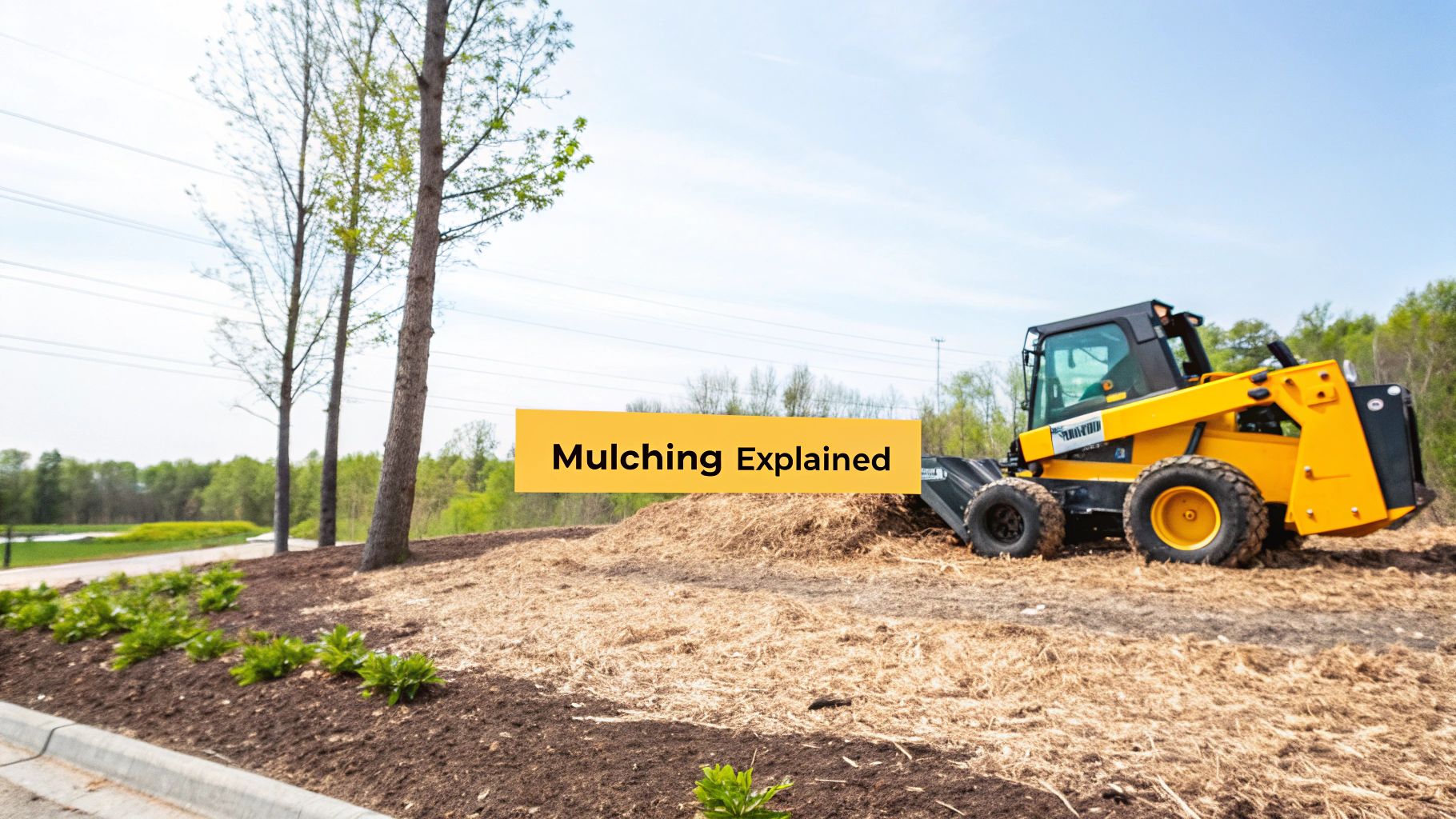
Here in Florida, forestry mulching can prep a site with up to 80% less environmental impact than older techniques. By getting rid of the need for burning and preventing huge debris piles that attract pests, it's a win for both your property and the local ecosystem.
This method also puts project timelines on the fast track. High-powered mulchers can chew through 5 to 10 tons of biomass per hour, making site prep up to three times faster than conventional methods. That speed and efficiency is a game-changer for contractors and landowners facing tight deadlines.
To give you a clearer picture, here's a quick look at how the process unfolds from start to finish.
The Land Clearing Mulching Process At A Glance
This table breaks down the key stages of a typical forestry mulching project.
Stage | Action | Outcome |
|---|---|---|
Assessment | A professional evaluates the vegetation density, terrain, and property goals. | A clear plan is established for selective clearing and machine selection. |
Execution | A mulching machine systematically grinds trees, brush, and undergrowth. | Unwanted vegetation is converted into a layer of natural mulch on-site. |
Completion | The land is left clear, accessible, and covered in a protective mulch layer. | The property is immediately usable and primed for healthy regrowth or construction. |
As you can see, it’s a straightforward process that moves from careful planning to efficient execution, leaving you with a clean, protected, and ready-to-use property.
How Mulching Benefits Your Florida Property
Forestry mulching is far more than just a quick way to get rid of unwanted vegetation—it's a direct investment in the long-term health and value of your Florida property. Instead of just scraping the land bare, this process transforms overgrowth into a protective, organic layer, tackling some of the most common challenges we face as landowners in the Sunshine State, from soil erosion to wildfire risk.
What you're left with isn't a mess to clean up, but a valuable resource. That layer of shredded wood and plant matter gets to work right away, improving the land from the ground up.
Protecting And Enriching Your Soil
We all know Florida's sandy soil. It's notoriously prone to washing away, especially during the intense downpours of our summer storm season. A fresh layer of mulch acts like a natural suit of armor for your topsoil. It cushions the impact of heavy rain, preventing that precious soil from disappearing and keeping your land stable.
But this protective blanket does more than just stop erosion. As all that organic material decomposes, it slowly infuses the sandy soil with vital nutrients. It's a natural fertilization process that improves the soil's structure, helps it hold more water, and creates a much healthier environment for whatever you plan to do next, whether it's planting or building. Understanding this is key to appreciating how much mulching improves soil health.
The mulch layer isn't just a byproduct; it's the beginning of a healthier ecosystem on your property. It acts as a slow-release fertilizer and a natural weed barrier, reducing the need for chemical treatments and future maintenance.
Unlike traditional bulldozing that tears up the ground and leaves a muddy, erosion-prone mess, forestry mulching grinds everything up right on-site. This method minimizes soil disruption by up to 90% and helps prevent the invasive regrowth that plagues 70% of cleared sites that don't get follow-up treatments. For homeowners in Central Florida turning overgrown lots into buildable homesites, this is a game-changer because it keeps topsoil organic matter at levels 20-30% higher than conventional clearing.
Creating Defensible Firebreaks
Wildfire is a very real threat in many parts of Florida, especially during the dry season. All that overgrown underbrush, dead trees, and dense vegetation is just fuel waiting for a spark, allowing fires to spread with terrifying speed. Forestry mulching is one of the most effective tools we have for wildfire mitigation.
By strategically clearing strips of vegetation—especially around your home, barn, and property lines—you create what are known as firebreaks. These cleared areas are critical for two reasons:
They starve a potential fire of fuel, which can slow it down or even stop it completely.
They provide safe access for firefighters and their equipment to get in and fight the blaze.
Taking this proactive step doesn't just protect your own property; it contributes to the safety of your entire community. A well-placed firebreak can be the deciding factor in whether a home makes it through a wildfire.
Winning The Battle Against Invasive Species
Florida's climate is a perfect breeding ground for aggressive, non-native plants that can completely take over a property. We've all seen species like Brazilian Pepper, Melaleuca, and Australian Pine choke out our native plants, disrupt the local ecosystem, and become an absolute nightmare to remove.
Forestry mulching offers a powerful, one-two punch against these invaders. The mulching head shreds these plants on the spot, cutting off their life cycle and stopping them from dropping seeds that would just start the problem all over again. It's the critical first step in reclaiming your land.
Here’s why it works so well:
Immediate Removal: The mulcher simply obliterates the existing invasive plants, instantly clearing the area.
Long-Term Suppression: The layer of mulch left behind covers the ground, smothering new seedlings and making it much harder for invasive species to get a foothold again.
By tackling these persistent threats, forestry mulching helps restore your land's natural balance and gives our native Florida plants a chance to thrive again. It’s a core part of being a responsible steward of your land.
Mulching Compared To Traditional Land Clearing
To really get why forestry mulching is such a game-changer, you have to look at how it stacks up against the old ways of clearing land. For years, the only real options were bulldozing or controlled burns. They get the job done, sure, but they come with a hefty price in time, money, and environmental damage.
Choosing how to clear your land isn't just about getting rid of trees. It's about setting your property up for success for years to come. Let's put these three methods head-to-head and see which one really makes sense for Florida landowners.
The Bulldozing Approach And Its Drawbacks
The old-school method of bulldozing, sometimes called "push and pile," is as brute-force as it sounds. A dozer plows through, pushing over trees and scraping the ground bare, leaving behind giant mounds of debris. It definitely clears the land, but it also creates a whole new set of problems you'll have to deal with later.
First off, that heavy equipment seriously compacts the soil. Packed-down earth makes it tough for rainwater to soak in and for any new plants to put down healthy roots. Then you’re stuck with those massive debris piles. You either have to pay a small fortune to have them hauled off or try to burn them, which is its own can of worms.
Bulldozing is a brute-force solution that often creates more problems than it solves. The process strips away valuable topsoil, invites erosion, and leaves you with a costly disposal headache, turning a single project into a multi-step ordeal.
The Burning Method And Its Complications
Burning those debris piles might seem like a cheap way out, but it’s a risky and complicated business. Here in Florida, getting the right burn permits can be a slow, bureaucratic nightmare. They often come with tight restrictions based on the time of year, weather, and local rules.
And it’s not just about the red tape. Burning pumps smoke, carbon dioxide, and other pollutants into the air. Plus, there’s always the very real risk that a "controlled" burn gets out of control, threatening your property and your neighbors'. It’s a method that comes with a lot of responsibility and environmental baggage.
A Head-To-Head Comparison Of Methods
The visual below really drives home how forestry mulching offers a complete package of benefits for your property, from boosting soil health to creating essential firebreaks.
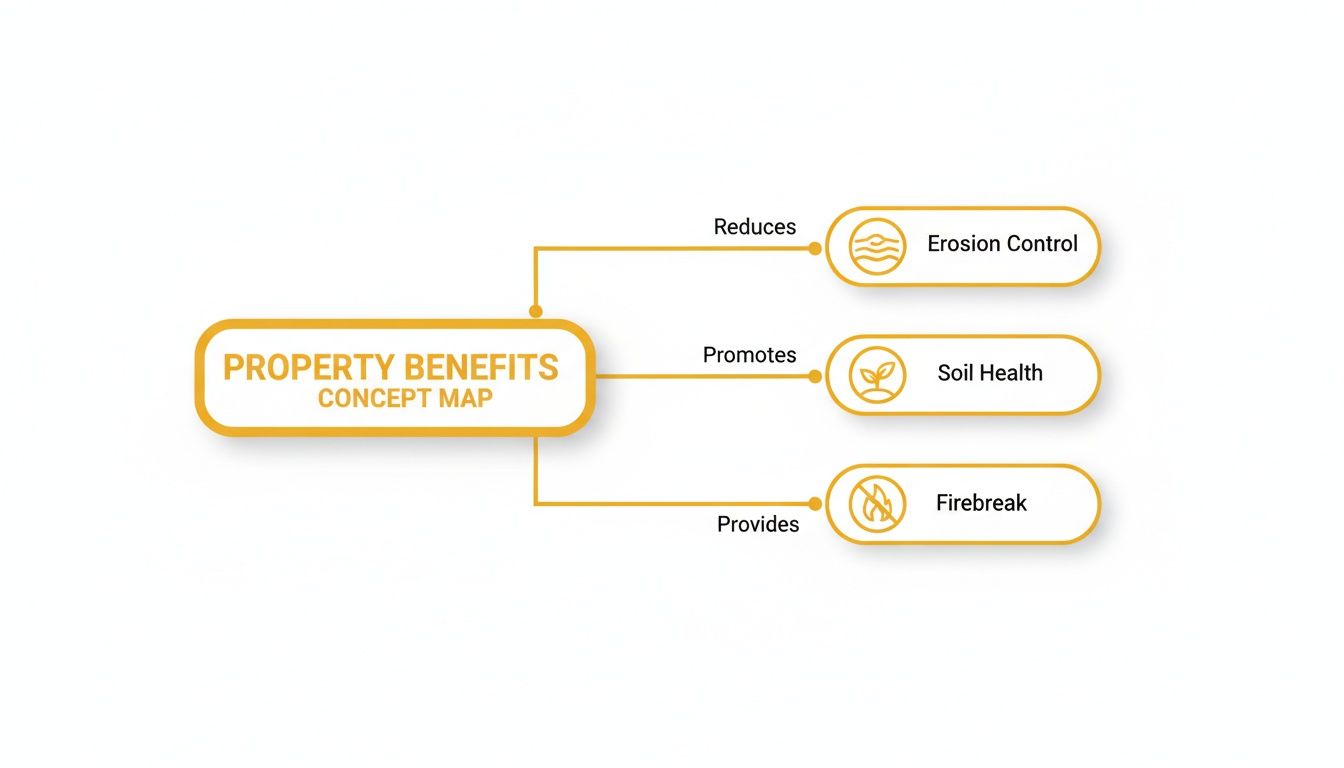
This graphic makes it clear that the perks of mulching go way beyond just clearing the land; they actively contribute to its long-term health and resilience. To make the choice even more obvious, let's break it down in a simple table.
Mulching Vs Traditional Methods A Head To Head Comparison
This table lays out the core differences between forestry mulching and the conventional alternatives—bulldozing and burning. For any landowner weighing their options, seeing the trade-offs side-by-side makes the decision much clearer.
Factor | Forestry Mulching | Bulldozing & Hauling | Burning |
|---|---|---|---|
Soil Impact | Minimal disturbance. Creates a protective mulch layer that enriches the soil. | High compaction. Scrapes away valuable topsoil, leading to severe erosion. | Can damage soil. Intense heat can sterilize the topsoil, killing beneficial microbes. |
Debris | No debris. All vegetation is processed on-site and returned to the land as mulch. | Creates massive piles. Requires costly hauling or burning to remove. | Reduces debris. Leaves behind ash and charred remains that need to be managed. |
Permitting | Generally not required for the clearing process itself. | Often requires permits for grading and debris disposal. | Strict permits required. Heavily regulated with burn bans and weather restrictions. |
Timeline | Fast and efficient. A single machine completes the entire job in one pass. | Slow and multi-step. Involves pushing, piling, and then hauling or burning. | Time-consuming. Requires pile curing, permit acquisition, and monitoring. |
Final Result | A clean, usable site. The land is immediately ready for the next steps. | A messy site. Leaves behind compacted dirt, ruts, and debris piles. | A scarred landscape. Can leave blackened patches and sterilized ground. |
When you look at it this way, forestry mulching is the clear winner in almost every single category. It’s a one-and-done solution that’s faster, less destructive, and far better for the long-term health of your property. By choosing mulching, you aren't just clearing your land—you're investing in its future.
Choosing The Right Mulching Equipment For The Job
Any successful land clearing mulching project boils down to one simple thing: using the right tool for the job. You wouldn't use a butter knife to chop down a tree, and the same logic applies here. A professional knows that matching the machine to the property's unique challenges is non-negotiable.
Showing up with underpowered equipment can turn a one-day job into a week-long headache. On the flip side, bringing in an oversized monster of a machine can cause more harm than good, tearing up ground that should have been left untouched.
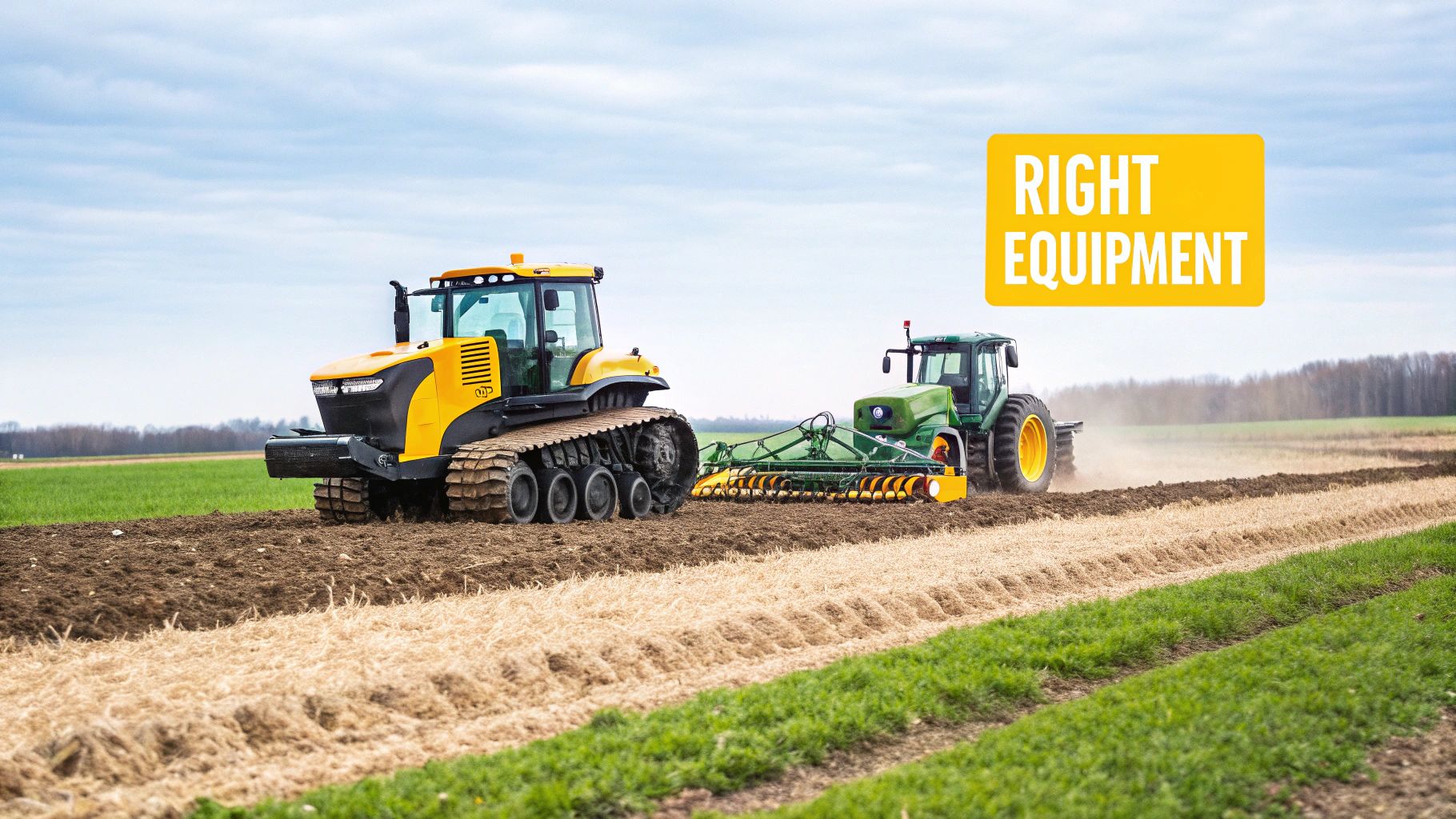
This is exactly why having a basic grasp of the machinery is so helpful. It lets you spot a true professional and feel confident that the team you hire has the right stuff to get your project done efficiently, safely, and with a clean finish.
The Powerhouse Carriers
First, you have the "carrier." Think of this as the main vehicle—the tractor, skid steer, or excavator that brings the muscle and mobility. The choice of carrier depends entirely on the terrain and the sheer scale of the work ahead.
Skid Steer Loaders: These are the nimble workhorses of the fleet. Their compact frame and tight turning radius make them perfect for smaller residential lots, carefully clearing around treasured oak trees, or carving out new walking trails where you need a delicate touch.
Compact Track Loaders (CTLs): A lot like a skid steer, but with one key difference: tracks instead of wheels. Those tracks give it fantastic traction and spread the machine's weight out, which is a huge advantage here in Florida. They float over our soft, sandy, and often wet ground, minimizing soil disturbance.
Dedicated Mulching Tractors: Now we're talking about the heavy hitters. These machines are purpose-built for one thing: devouring vegetation at an impressive pace. They're designed for clearing large acreage, tackling dense undergrowth, and prepping commercial sites. They make quick work of larger trees and cover ground far faster than their smaller cousins.
Getting the carrier right is the first crucial decision in any mulching operation.
The Business End: The Mulching Head
If the carrier is the body, the mulching head is the teeth. This is the attachment where all the action happens. It’s a spinning drum armed with specialized "teeth" or "knives" that shred everything from vines to small trees into a layer of fresh mulch.
A professional operator knows that the carrier is only half the equation. The mulching head's design—specifically its tooth type—determines the final texture of the mulch and the machine's ability to process everything from thick brush to hardwood trees.
The two main players here are carbide teeth and knife-style teeth. Carbide teeth are incredibly tough, built to grind through dense wood and even handle the occasional rock. Knife teeth, on the other hand, produce a finer, more uniform mulch but aren't as forgiving in rough, rocky soil. A top-tier contractor will have different heads ready to go.
Want to get into the nitty-gritty? We break it all down in our guide to the best equipment for land clearing in Florida.
This careful selection process is what separates the pros from the amateurs. When a contractor shows up with the perfect combination of carrier and mulching head for your specific property, you know you’re in good hands. That attention to detail is what makes the difference between a quick, clean job and a long, messy ordeal.
Budgeting For Your Land Clearing Project In Florida
For any Florida landowner, two questions almost always come first: "What's this going to cost?" and "Do I need a permit for this?"
Every single land clearing mulching project is different, but getting a grip on the factors that drive the price is the best way to build a realistic budget. It’s never about a simple, flat rate per acre; it’s about understanding what goes into the time and effort on your specific piece of land.
Think of the final quote as a story told by your property. A few key characters determine how that story plays out.
What Shapes The Cost Of Mulching
The price tag isn't just about how many acres you have. A single, one-acre lot choked with dense, mature trees can be a much bigger job than five acres of scattered, wispy brush.
Here’s what a professional crew is looking at when they assess your property:
Vegetation Density: Just how thick is the overgrowth? A jungle of Brazilian Pepper and thick vines will take way more time to chew through than a field with a few saplings.
Type of Vegetation: Grinding up softwoods and brush is one thing; tackling hardwoods like live oak is another. The tougher the wood, the more machine time it's going to take.
Terrain and Accessibility: Is your land flat and easy to get to, or is it a maze of hills and swampy spots? Tricky terrain slows everything down and demands more skill from the operator, which naturally affects the timeline.
Project Goals: Are you looking for a total clear-cut, or do you want a more selective thinning to save certain trees? A surgical approach requires more precision and, you guessed it, more time.
To really dig into these variables, check out our detailed guide on the factors influencing forestry mulching cost per acre.
Navigating Florida's Permitting Maze
The word "permit" can sound a little intimidating, but for most forestry mulching projects in Florida, the process is often simpler than you’d think. Unlike major earthwork or burning, mulching is a pretty low-impact activity, which means it frequently doesn't trigger the need for a permit.
However, "frequently" doesn't mean "always." You'll almost certainly need to chat with your local county or city planning department if your project touches on:
Wetlands: Any work happening near or inside designated wetlands is a big deal. It will almost certainly require permits from local and state agencies like the Florida Department of Environmental Protection (FDEP).
Protected Trees: Many counties in Florida have rules to protect "specimen" or "heritage" trees, like those gorgeous, sprawling live oaks. Taking one of those down usually requires special permission.
Large-Scale Development: If clearing your land is just the first step in a bigger construction project, it will be bundled into your overall building permits.
The best rule of thumb is to always check with your local municipality first. One quick phone call can save you from big fines and frustrating delays, making sure your project gets started on the right foot.
As you budget, it's smart to think about all the potential costs, including protections like builders risk insurance to cover your investment from day one. By understanding both the on-the-ground factors and the local rules, you can move forward as an informed landowner, ready to transform your property the right way.
Why Hiring A Professional Is The Smartest Move
It’s tempting to look at an overgrown plot of land and think, "I can handle this myself." Renting a machine for the weekend or hiring a cheap handyman might seem like a smart way to save a few bucks upfront. But when it comes to land clearing mulching, that approach almost always backfires, leading to bigger costs, dangerous situations, and a messy, unusable result.
The real difference between an amateur and a pro isn't just about the equipment. It's the years of experience, the proper insurance, and the sheer efficiency a seasoned crew brings to your property. If you want the job done right, safely, and on time, investing in an expert isn't just an option—it's the only real choice.
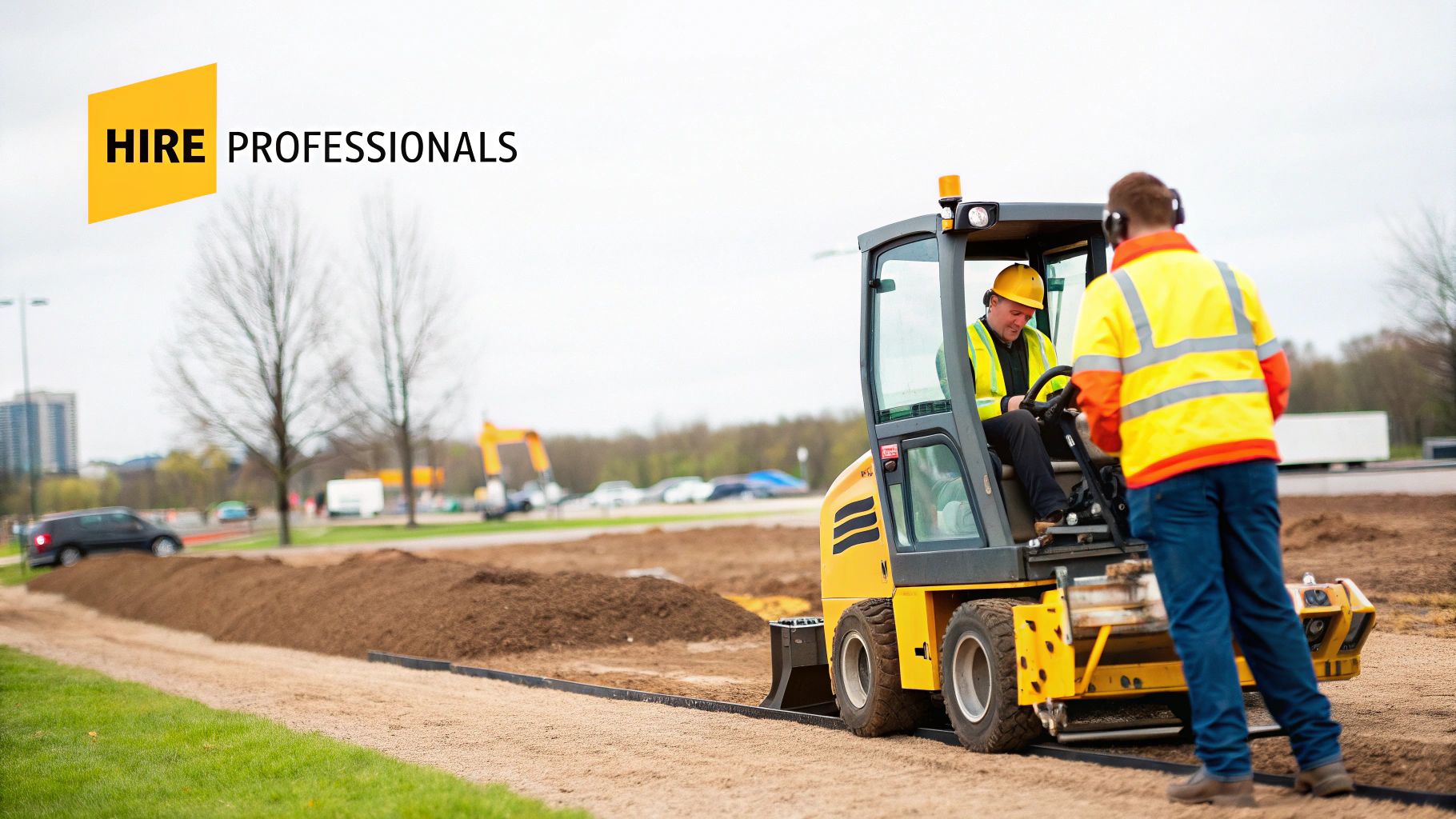
The Critical Importance Of Safety And Insurance
Forestry mulchers are absolute beasts. These are machines weighing several tons, operating with thousands of pounds of hydraulic pressure. Without extensive training, an inexperienced operator can easily cause catastrophic damage or serious injury. The risk of sending debris flying like a missile, rolling the machine on uneven ground, or striking a hidden utility line is incredibly high.
This is where a professional company’s insurance becomes your shield. They carry comprehensive liability insurance and workers' compensation, and this is non-negotiable.
If an uninsured handyman gets hurt on your land or their machine damages a neighboring property, you could be held financially responsible. A professional's insurance policy protects your assets and gives you complete peace of mind, making it a critical part of any legitimate land clearing project.
Professional Speed And Efficiency
The second game-changer is speed. A professional-grade, dedicated mulching tractor can tear through several acres of dense Florida brush in a single day. A smaller rental machine? It could take a week to do the same job, all while you're burning expensive fuel and wasting your valuable time.
This massive efficiency gap comes down to a few key things:
Superior Equipment: Pros use larger, more powerful, and better-maintained machinery designed for heavy-duty, continuous work.
Operator Skill: An experienced operator reads the terrain like a book. They know how to process vegetation efficiently and maneuver the machine with a precision that minimizes wasted time and fuel.
Logistical Support: A professional team handles everything from machine transport to on-site fueling and maintenance, ensuring the project runs smoothly without delays.
Hiring an expert means your land is ready for the next step in days, not weeks. We've actually written a detailed guide on what to look for when choosing land clearing companies in Central Florida that you might find helpful.
The Superior Final Result
Finally, and maybe most importantly, is the quality of the finish. An amateur job just looks… messy. You’re often left with ugly, unevenly cut stumps, big chunks of debris scattered everywhere, and compacted soil from the operator driving back and forth inefficiently.
A professional, on the other hand, delivers a truly build-ready site.
They know exactly how to create a consistent, fine mulch layer that actually benefits the soil. They grind stumps flush with the ground, leaving behind a smooth, walkable, and visually appealing surface. The final outcome is a clean property that’s truly ready for whatever you have planned, adding immediate value and usability to your land.
Of course. Here is the rewritten section, crafted to sound completely human-written and natural, following the provided style guide and examples.
Common Questions About Forestry Mulching
Even with a good grasp of the benefits, it's natural to have a few lingering questions. We get it. Think of this as the final check-in, where we tackle the specific, practical questions we hear most often from property owners just like you.
Getting these details ironed out helps you see the full picture—from what your land will look like a year from now to how we handle tricky spots on your property.
How Long Does It Take For The Mulch To Decompose In Florida?
Here in Central Florida, our warm, humid climate puts the decomposition process into overdrive. You can expect that fresh layer of mulch to break down significantly within 6 to 12 months. This is a huge win for our sandy soil, as it constantly feeds the ground with organic matter, helps it hold onto moisture, and naturally keeps weeds at bay.
Of course, the exact timeline depends on a few things, like the type of wood we mulched, how thick the mulch layer is, and how much rain your property gets.
Can Mulching Be Done On Land With Rocks Or Steep Slopes?
Yes, absolutely. This is where modern tracked machinery really shines. Our equipment is built to handle the challenging terrain we sometimes see in Central Florida, including rocky ground and moderate slopes. Our operators are pros at reading the land and choosing the right machine and technique for the job, always putting safety and a great result first.
While really tough terrain might affect the project's cost or timeline a bit, forestry mulching is almost always a better—and far less destructive—choice than trying to get a bulldozer up a tricky slope.
A big myth we hear is that forestry mulching attracts termites. The truth is, the thin layer of shredded wood dries out way too quickly to be a good home for them. By getting rid of the big, damp debris piles that traditional clearing leaves behind, mulching actually makes your property less attractive to pests.
What Happens To The Stumps After Forestry Mulching?
This is one of the best parts of the whole process. Our powerful mulching heads don't just clear brush; they grind stumps down to or even slightly below ground level. This single step leaves your land smooth, clear, and ready to use right away for walking, driving on, or starting your site prep.
It's a huge step up from traditional stump grinding, which is a whole separate job that leaves you with a field of holes to fill. Mulching folds stump removal right into the main clearing work, giving you a clean, uniform finish across the entire property without the extra hassle.
Ready to transform your property with a smarter, more efficient land clearing solution? The team at Palm State Clear Cut has the professional equipment and expertise to handle your project safely and effectively. Contact us today for a free quote.

Comments